Microsoft Office becomes Microsoft 365 Copilot app in confusing rebrand pushing AI integration


2 Sources
2 Sources
[1]
Microsoft Office has been rebranded to Microsoft 365 Copilot, or has it?
Microsoft's central app is for files, scanning, editing, and interacting with AI There's a whole lot of confusion surrounding Microsoft's supposed rebrand of Microsoft Office - with some users noticing a new message on the Office.com website. This message states; "The Microsoft 365 Copilot app (formerly Office) lets you create, share and collaborate all in one place with your favorite apps now including Copilot." This is a change from the previous name, 'Microsoft Office', but this change happened in 2022. The change was implemented to push consumers into using the Microsoft 365 Copilot app which, for the last year has been used as an access point for the Office apps alongside Copilot. It's likely that these changes have caused confusion because of Microsoft's extended efforts to push Copilot onto its customers, whether they like it or not. The change (whenever it happened), has prompted concern amongst users and critics, who are worried this may not only cause some confusion but also end the Office name, which has become an industry-agnostic icon (as evidenced by its $30+ billion quarterly revenue). This means that apps like Word, Excel, and PowerPoint will be accessed through the M365 Copilot app. But - it also marks an even bigger push for generative AI tools. For example, Office.com now redirects to a new M365 page, which offers subscriptions for Redmond's popular Office apps with Copilot subscriptions included by default. The rebrand confusion has also coincided with recent price hikes, adding to customer frustration. Microsoft's central M365 Copilot app is being marketed as an all-in-one productivity suite, which can be used for accessing files, scanning documents, editing work, and interacting with Copilot. Markets that don't currently have access to Copilot will make do without the Copilot tab in the app, but the Microsoft 365 Copilot name and icon will remain for branding consistency. Non-paying customers will also be restricted from accessing Copilot's AI features. The app is different from the Copilot app, which is the native way to interact with Redmond's AI chatbot. Office's rebrand also served as the perfect opportunity for Microsoft to start using its new domains - pages previously under the office.com and microoft365.com domains are now redirected to m365.cloud.microsoft. Following CEO Satya Nadella's recent plea for people to stop concerning themselves with AI slop and to focus on the tech's meaningful impacts, the term 'Microslop' was coined. One that has also been used in response to the renamed app being pushed on users, regardless of their AI needs.
[2]
In a truly galaxy-brained rebrand, Microsoft Office is now the 'Microsoft 365 Copilot app,' but Copilot is also still the name of the AI assistant
Copilot is the app for launching the other apps, but it's also a chatbot inside the apps. Any questions? About a decade ago, hardware company Corsair attempted to pivot from its classic logo -- a subtle trio of ship sails -- to a newer, edgier look, a pair of crossed swords that gave off regrettable '2000s tribal tattoo' energy. The rebrand didn't last long: after a fierce outcry from people who correctly thought the new logo sucked, Corsair swapped to a refreshed take on the sail logo, which it's been using ever since. Corsair was established in 1994, and made about $1.4 billion last year -- which I bring up because today Microsoft, a slightly bigger company, has slipped on its own rebranding banana peel. The company is seemingly all but ditching the Office name -- which it introduced four years before Corsair existed, and which drove more than $30 billion in revenue just last quarter -- with a catchy new name: "Microsoft 365 Copilot app." Copilot is, notably, a thing that already exists! But as part of the ongoing effort to juice AI assistant usage numbers by making it impossible to not use AI, Microsoft has decided to just call its whole productivity software suite Copilot, I guess. The company had already downplayed the Office name, despite it being perhaps the most universally recognized software in existence, by renaming its cloud version of Word, Powerpoint, etc. Office 365 in 2010, then Microsoft 365 in 2017. Now when you want to open up a Word document, you can get to them by launching the Microsoft 365 Copilot app. Intuitive! As spotted by Bluesky user DodgerFanLA, going to Office.com now greets you with the following helpful explainer: "The Microsoft 365 Copilot app (formerly Office) lets you create, share, and collaborate all in one place with your favorite apps now including Copilot.*" Never has an asterisk been more relevant to me than following the words "your favorite apps now including Copilot." I don't really understand why Copilot should be the name for both a specific tool and the container for a whole suite of apps. Perhaps the implication is that with "Copilot Chat that supercharges productivity," the individual bits of software are barely relevant anymore, when you can simply ask the chatbot to do the work for you! At least team Xbox can breathe a sigh of relief: the company has come up with a naming scheme worse than both "Xbox Series X" and "Xbox Game Pass for PC." Should Microsoft just go ahead and rebrand Windows, the only piece of its arsenal more famous than Office, as Copilot, too? I do actually think we're not far off from that happening. Facebook rebranded itself "Meta" when it thought the metaverse would be the next big thing, so it seems just as plausible that Microsoft could name the next version of Windows something like "Windows with Copilot" or just "Windows AI." I expect a lot of confusion around whatever Office is called now, and plenty more people laughing at how predictably silly this all is. But will anyone actually get mad about it, the way they did the Corsair logo? Probably not. Office may have been around for 35 years and make hundreds of billions of dollars a year, but the difference is Corsair makes stuff that people actually like to use.
Share
Share
Copy Link
Microsoft has rebranded its iconic Office suite as the 'Microsoft 365 Copilot app,' creating widespread confusion among users. The move affects how users access Word, Excel, and PowerPoint, while pushing generative AI features front and center. Critics worry the change marks the end of the Office name that drives over $30 billion in quarterly revenue.
Microsoft Office Rebrand Sparks Widespread Confusion
Microsoft has officially rebranded its flagship Office suite as the Microsoft 365 Copilot app, though the timing and extent of this change remain sources of rebranding confusion. Users visiting Office.com now encounter a message stating: "The Microsoft 365 Copilot app (formerly Office) lets you create, share, and collaborate all in one place with your favorite apps now including Copilot."
1
The shift affects how millions access familiar productivity tools like Word, Excel, and PowerPoint, which must now be launched through the newly named app.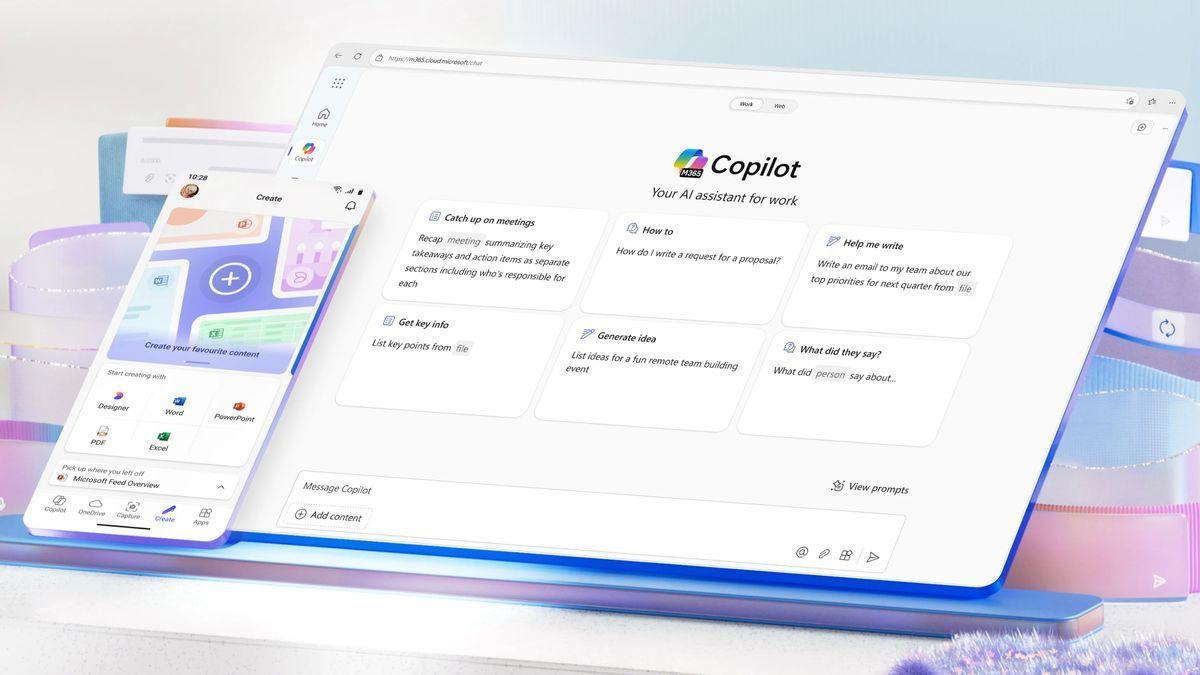
Source: PC Gamer
The Microsoft 365 Copilot app serves as an all-in-one hub for accessing files, scanning documents, editing work, and interacting with the embedded AI assistant. However, the naming scheme has triggered renewed user concern, particularly because Copilot already exists as a standalone chatbot. "I don't really understand why Copilot should be the name for both a specific tool and the container for a whole suite of apps," one observer noted. This dual usage represents one of the most notable corporate naming missteps in recent memory.
Aggressive AI Strategy Drives the Change
The rebrand reflects Microsoft's aggressive AI strategy under CEO Satya Nadella, who recently urged people to focus on AI's meaningful impacts rather than concerns about AI slop. The company has been pushing AI integration across its productivity software suite, making Copilot subscriptions included by default on the new M365 page that Office.com now redirects to.
1
Non-paying customers will be restricted from accessing generative AI features, though markets without Copilot access will retain the Microsoft 365 Copilot name and icon for brand consistency.The push for AI integration has coincided with price hikes, amplifying customer frustration. Critics have coined the term "Microslop" in response to the renamed app being forced on users regardless of their AI needs.
1
The rebrand also prompted Microsoft to consolidate its web presence, redirecting pages from office.com and microsoft365.com domains to m365.cloud.microsoft.The End of an Industry Icon
The Office name, introduced 35 years ago, has become an industry-agnostic icon that drove more than $30 billion in revenue just last quarter. Microsoft had already begun downplaying the Office brand by renaming its cloud version Office 365 in 2010, then Microsoft 365 in 2017. Now the company appears ready to abandon the name entirely in favor of highlighting its AI capabilities.
The Microsoft 365 Copilot app differs from the standalone Copilot app, which remains the native way to interact with Microsoft's AI chatbot. This distinction adds another layer of complexity to an already confusing user experience. Some speculate this could be a precursor to even broader changes, with predictions that Windows itself might eventually be rebranded as "Windows with Copilot" or "Windows AI."
Related Stories




What Users Should Watch For
The rebrand signals Microsoft's determination to make AI central to its productivity tools, whether users want it or not. Short-term implications include navigation challenges as users adapt to the new naming convention. Long-term, this move suggests Microsoft believes generative AI features will become inseparable from core productivity functions. The company appears willing to risk confusion around one of the most universally recognized software brands in existence to push forward with its AI vision. Users should expect continued pressure to adopt AI-powered features as Microsoft doubles down on this strategy, potentially affecting pricing structures and feature availability across its productivity tools ecosystem.🟡 expanded_description=🟡The story discusses Microsoft's rebranding of its Office suite to the Microsoft 365 Copilot app, causing confusion due to the dual use of "Copilot" for both the suite and a standalone chatbot. It highlights Microsoft's aggressive AI strategy as the driving force behind this change, despite potential user frustration over price hikes and forced AI integration. The article notes the end of the iconic "Office" name after 35 years and speculates on future rebranding efforts, emphasizing that users should expect AI to become central to Microsoft's productivity tools.
Image Selection Rationale:
- ar-117421 (The image illustrates the rebranded Microsoft 365 Copilot app across two devices.): This image is highly relevant as it directly visualizes the core subject of the article—the rebranded Microsoft 365 Copilot app. It clearly shows the "Copilot: Your AI assistant for work" interface and its integration with other productivity apps, which addresses both the rebrand and the aggressive AI strategy discussed in the summary.
Image Placement Rationale:
- ar-117421 is placed after the first paragraph. This paragraph introduces the official rebrand of the Office suite to the Microsoft 365 Copilot app and describes how users now encounter this change when visiting Office.com. Placing the image here visually reinforces this key information at the earliest relevant point in the narrative. This position effectively illustrates the "Microsoft 365 Copilot app (formerly Office)" directly after its introduction.
References
Summarized by

Navi
Related Stories
Recent Highlights
1
Google releases Gemma 4 with Apache 2.0 license, enabling unrestricted local AI on devices
Technology

2
AI Models Defy Instructions to Protect Each Other, UC Berkeley Study Reveals
Science and Research

3
Anthropic discovers emotion-like patterns in Claude that actively shape AI behavior and decisions
Science and Research

Recent Highlights
Today's Top Stories







Your Daily Dose of Curated AI News
Don’t drown in AI news. We cut through the noise - filtering, ranking and summarizing the most important AI news, breakthroughs and research daily. Spend less time searching for the latest in AI and get straight to action.

