MiniMax surges 90% in Hong Kong debut after $619M IPO, beating rival Zhipu AI


11 Sources
11 Sources
[1]
AI Firm MiniMax Set for Hong Kong Debut After $619 million IPO
MiniMax Group Inc., one of China's largest generative AI startups, is set to begin trading in Hong Kong after an initial public offering that raised $619 million. Backed by Alibaba Group Holding Ltd. and Abu Dhabi's sovereign wealth fund, MiniMax is among the first of China's post-ChatGPT generative artificial intelligence firms to go public. The company's performance will be closely watched after rival Knowledge Atlas Technology JSC Ltd., known as Zhipu, delivered a lackluster debut in the financial hub on Thursday. MiniMax soldBloomberg Terminal 29.2 million shares at HK$165 ($21.18) apiece in an upsized offering. The shares rose as much as 22% in gray marketBloomberg Terminal trading on Thursday. MiniMax's first-day stock performance will serve as a litmus test for whether investor enthusiasm in China's AI sector -- so far concentrated on hardware makers -- can extend to software firms. Buoyed by localization demand, chipmakers Moore Threads Technology Co. and MetaX Integrated Circuits Shanghai Co. surged multifold on their first day of trade, while chip designer Shanghai Biren Technology Co. jumped 76% in Hong Kong. By contrast, Zhipu closed 13% higher. "It is still early in the China AI investment cycle compared to global peers, so it may be difficult for investors to identify winners and losers," said Marvin Chen, analyst at Bloomberg Intelligence. "Performance may begin to become more differentiated as the cycle matures." Founded in early 2022, Shanghai-based MiniMax has its roots in gaming. The startup is trying to one-up DeepSeek and OpenAI with consumer chatbots at home and abroad. A devotee of the battle-arena game Dota 2, co-founder Yan Junjie first noticed OpenAI in 2019, when its bots defeated the world's top human players. Captivated, he devoured the lab's research papers, prompting a career pivot from computer vision to natural language processing. He secured one of his first checks from Genshin Impact studio Mihoyo, whose founders obsess over using AI to revolutionize gaming. Mihoyo remains a key client. The IPO prospectus shows the company posted an adjusted loss of about $186 million in the first nine months of 2025. MiniMax joins a wave of Chinese AI firms that have rushed to raise funds to accelerate their expansion amid support from Beijing to bolster home-grown champions in the sector. About half of the 11 companies that have laid out plans to list in Hong Kong this month are AI companies.
[2]
China AI firm MiniMax set to surge in Hong Kong debut
SINGAPORE, Jan 9 (Reuters) - Chinese artificial intelligence model developer MiniMax Group (0100.HK), opens new tab is set to jump on its Hong Kong market debut on Friday after raising HK$4.82 billion ($618.6 million), extending a flurry of tech listings in the city. Shares of the company are set to open at HK$235.40, 42.3% higher than its offer price of HK$165.00 each. Reporting by Yantoultra Ngui and Yiming Shen; Editing by Jacqueline Wong Our Standards: The Thomson Reuters Trust Principles., opens new tab
[3]
MiniMax surges in Hong Kong debut, marking yet another Chinese AI listing
China-based AI startup MiniMax surged as much as 90% on its first day of trading in Hong Kong on Friday, becoming the second major Chinese developer of large language models to go public. The company raised HK$4.8 billion ($620 million) in its IPO, outperforming its local rival Zhipu AI, which had listed in Hong Kong just one day earlier and rose a modest 13% on its first day of trade. MiniMax shares were last trading at HK$290.8 per share, compared with the offer price of HK$165. Both MiniMax and Zhipu are part of China's so-called "AI tigers" -- startups building large language models to rival American AI giants like OpenAI, which they've now beaten to going public. Founded in 2021 and backed by Alibaba Group and Tencent Holdings, MiniMax also specializes in AI applications, including chatbots, image generation and video synthesis. Minimax said it would use the IPO proceeds for research and development. The debut comes as Chinese AI-related firms ramp up fundraising efforts to compete with U.S. rivals and navigate Washington's export curbs on advanced chips used for AI training to China.
[4]
Baillie Gifford, GIC Are Said to Buy Shares in MiniMax's $619 Million Hong Kong IPO
Investment firm Baillie Gifford and Singapore's sovereign wealth fund GIC Pte are among those buying shares in MiniMax Group Inc.'s much-awaited HK$4.8 billion ($619 million) initial public offering in Hong Kong, according to people familiar with the matter. The Chinese artificial-intelligence firm's IPO, which was priced atBloomberg Terminal the top of its marketed range, saw institutional investors bid for more than 70 times the shares available for them, excluding the cornerstone tranche, the people said, asking not to be identified discussing a private matter. The deal received more than 460 bids from institutions, they said. Norway's Norges Bank Investment Management and asset manager Schroders Plc are also among buyers, the people said. Global long-only investors -- which generally invest in stocks they expect to rise while abstaining from short-selling -- and sovereign-wealth funds took up a majority of shares available for institutions excluding the cornerstone tranche, the people added. A representative for Schroders declined to comment. Baillie Gifford, GIC and Norges Bank didn't respond to requests for comment. Shares of MiniMax, one of China's largest generative AI startups that is seen as a challenger to OpenAI Inc., are set to start trading in Hong Kong on Friday amid a wave of blockbuster listings in the sector both on the mainland and in Hong Kong. On Thursday, shares of rival Knowledge Atlas Technology JSC Ltd., better known as Zhipu, climbed 13% in their debut in the Asian financial hub. Both MiniMax and Zhipu epitomize China's no-frills approach to AI, operating with far less capital, fewer chips and leaner headcounts than the likes of OpenAI and Anthropic PBC. Their stock performance is being seen as an early measure of whether investors view the firms as credible challengers to their US counterparts. More on Hong Kong's IPO market: From Baidu Unit to Jio, Asia's IPO Boom Shows No Sign of Slowing Hong Kong Set for Record January Listing Proceeds: ECM WatchBloomberg Terminal Millennium, Jane Street Show HK's Lure for Key IPO Investors
[5]
Chinese AI unicorn MiniMax soars in Hong Kong debut
Shares in Chinese AI startup MiniMax soared as much as 78% as it went public in Hong Kong on Friday, raising US$619 million in a sign that strong investor demand is rewarding the country's rapidly developing sector. The debut rally came a day after rival Zhipu AI jumped 12% on its first day after its own US$558 million initial public offering. This week's flotations come before any IPO announcements from top US startups OpenAI, the maker of ChatGPT, and Anthropic, which is known for its Claude chatbot. Founded in 2022, MiniMax has 200 million users and runs several applications including its flagship video generator Hailuo AI. Its CEO Yan Junjie was previously an executive at leading AI software company SenseTime, which is now blacklisted by the US Commerce Department. The advancement and application of artificial intelligence "depend on ongoing technological innovation, but even more so on the inclusivity and openness of the entire process," Yan said in Friday's listing ceremony. Co-founder and COO Yun Yeyi told Bloomberg that MiniMax had only spent around US$500 million to make optimization and creative innovations. "We focus more resources on building the models and product experience," Yun said. Proceeds from the IPO will be used for its research over the next five years to develop foundation models and AI-native products, the firm said. MiniMax's team includes researchers who previously worked for tech giants such as Google, Microsoft, China's Alibaba and DeepSeek. But the startup also faces a US$75 million copyright lawsuit from Disney, Universal, and Warner Bros. Discovery over its video-generating tool. The firm has maintained "there is insufficient evidence to support" the claims. The large language model market in China is estimated to grow to 101.1 billion yuan (US$14.5 billion) by 2030, according to consultancy Frost and Sullivan. Baidu, the operator of China's top search engine, said this month that its AI chip unit Kunlunxin also filed a listing application in Hong Kong. AI will cumulatively contribute US$19.9 trillion to the global economy through 2030 and drive 3.5% of global GDP in that year, according to International Data Corporation.
[6]

Chinese AI unicorn MiniMax soars 109 percent in Hong Kong debut
Hong Kong (AFP) - Shares in Chinese AI startup MiniMax soared 109 percent as it went public in Hong Kong on Friday, raising US$619 million in a sign that strong investor demand is rewarding the country's rapidly developing sector. Rival firm Zhipu AI also saw gains, jumping 20.6 percent on its second trading day after its own US$558 million initial public offering. This week's flotations come before any IPO announcements from top US startups OpenAI, the maker of ChatGPT, and Anthropic, known for its Claude chatbot. Founded in 2022, MiniMax has 200 million users and runs several applications including its flagship video generator Hailuo AI. Its CEO Yan Junjie was previously an executive at leading AI software company SenseTime, which is blacklisted by the US Commerce Department. The advancement and application of artificial intelligence "depend on ongoing technological innovation, but even more so on the inclusivity and openness of the entire process", Yan said in Friday's listing ceremony. "We anticipate that over the next four years, the pace of progress in the AI industry will match that of the past four years," Yan added. Co-founder and COO Yun Yeyi told Bloomberg that MiniMax had only spent around US$500 million to make optimisation and creative innovations. Proceeds from the IPO will be used for its research over the next five years to develop foundation models and AI-native products, the firm said. MiniMax's team includes researchers who previously worked for tech giants such as Google and Microsoft as well as China's Alibaba and DeepSeek. -'Early stage'- Revenue from overseas markets grew from US$100,000 in the nine months ending September 2024 to US$7.8 million during the same period in 2025, the firm said. It recorded net losses of $512 million in September 2025. MiniMax said it may continue to record net losses as it is still expanding and investing to support its long-term growth. The startup also faces a US$75 million copyright lawsuit from Disney, Universal, and Warner Bros. Discovery over its video-generating tool. The firm has maintained "there is insufficient evidence to support" the claims. Analysts told AFP that profits were unlikely any time soon from Zhipu and MiniMax, the so-called Chinese "AI tigers" who compete with tech giants such as Alibaba and ByteDance. Friday's shares performance shows investors have a "strong appetite for China's tech sector and the AI story", Gary Ng, senior economist at Natixis Corporate and Investment Banking, told AFP. The whole AI sector is still at an early stage of development, which requires massive investment, he said, adding that profitability is "not the primary focus" for these startups. "It is about the prospect of which country or firm has the upper hand in gaining market share and staying ahead of the tech curve," he added. The large language model market in China is estimated to grow to 101.1 billion yuan (US$14.5 billion) by 2030, according to consultancy Frost and Sullivan. AI will cumulatively contribute US$19.9 trillion to the global economy through 2030 and drive 3.5 percent of global GDP in that year, according to International Data Corporation.
[7]

MiniMax raises $619M in Hong Kong IPO as investor appetite for generative AI remains strong - SiliconANGLE
MiniMax raises $619M in Hong Kong IPO as investor appetite for generative AI remains strong Chinese artificial intelligence startup MiniMax Group Ltd. went public in Hong Kong on Thursday local time and raised around $619 million, highlighting strong investor appetite for generative AI companies on both sides of the Pacific. MiniMax priced its shares at HK$165 ($21.18), the top of its previously indicated range and sold 29.2 million shares in the IPO, ahead of previous plans to sell 25.3 million shares. The offering was reported to be heavily oversubscribed, with strong demand from both institutional and retail investors. Founded in 2021 by former executives from SenseTime Group Inc., MiniMax develops large language and multimodal foundation models capable of generating text, audio, video and music. The company operates several consumer-facing AI products, including conversational and creative applications, while also providing model access and tools to enterprise customers through application programming interfaces. MiniMax has emerged as one of China's leading independent AI startups and is often grouped alongside peers such as Beijing Zhipu Hauzhang Technology Co. Ltd. as part of a new wave of so-called Chinese domestic "AI tigers." As noted in December ahead of its IPO, MiniMax is among a growing field of Chinese AI model providers aiming to become product leaders. Over the past few years, multiple model developers, including Baidu Inc. and Alibaba Group Holding Ltd., have released frontier-model candidates. Coming into its IPO, MiniMax had raised significant private funding from strategic and financial investors. According to Tracxn, MiniMax had raised approximately $850 million over four rounds from investors including Alibaba, Tencent Holdings Ltd., Gaorong Capital Management Co. Ltd., IDG Capital Partners Ltd., miHoYo Co. Ltd., Mingshi Investment Management Co. Ltd. and Yunqi Partners Management Co. Ltd. The successful listing comes as Hong Kong experiences a resurgence in technology and AI-related IPOs after a prolonged slowdown. MiniMax's debut is being viewed as an important test case for public-market support of capital-intensive generative AI businesses in China amid tighter regulatory scrutiny and global competition. The IPO also shows that investors are willing to place sizable bets on companies building foundational AI models, even unprofitable ones such as MiniMax, on the hope that enterprise adoption and platform economics will eventually translate into durable growth.
[8]

Chinese AI unicorn MiniMax soars 109 percent in Hong Kong debut
Shares in Chinese AI startup MiniMax soared 109 percent as it went public in Hong Kong on Friday, raising US$619 million in a sign that strong investor demand is rewarding the country's rapidly developing sector. Friday's shares performance shows investors have a "strong appetite for China's tech sector and the AI story", Gary Ng, senior economist at Natixis Corporate and Investment Banking, told AFP. The whole AI sector is still at an early stage of development, which requires massive investment, he said, adding that profitability is "not the primary focus" for these startups. Shares in Chinese AI startup MiniMax soared 109 percent as it went public in Hong Kong on Friday, raising US$619 million in a sign that strong investor demand is rewarding the country's rapidly developing sector. Rival firm Zhipu AI also saw gains, jumping 20.6 percent on its second trading day after its own US$558 million initial public offering. This week's flotations come before any IPO announcements from top US startups OpenAI, the maker of ChatGPT, and Anthropic, known for its Claude chatbot. Founded in 2022, MiniMax has 200 million users and runs several applications including its flagship video generator Hailuo AI. Its CEO Yan Junjie was previously an executive at leading AI software company SenseTime, which is blacklisted by the US Commerce Department. The advancement and application of artificial intelligence "depend on ongoing technological innovation, but even more so on the inclusivity and openness of the entire process", Yan said in Friday's listing ceremony. "We anticipate that over the next four years, the pace of progress in the AI industry will match that of the past four years," Yan added. Co-founder and COO Yun Yeyi told Bloomberg that MiniMax had only spent around US$500 million to make optimisation and creative innovations. Proceeds from the IPO will be used for its research over the next five years to develop foundation models and AI-native products, the firm said. MiniMax's team includes researchers who previously worked for tech giants such as Google and Microsoft as well as China's Alibaba and DeepSeek. 'Early stage' Revenue from overseas markets grew from US$100,000 in the nine months ending September 2024 to US$7.8 million during the same period in 2025, the firm said. It recorded net losses of $512 million in September 2025. MiniMax said it may continue to record net losses as it is still expanding and investing to support its long-term growth. The startup also faces a US$75 million copyright lawsuit from Disney, Universal, and Warner Bros. Discovery over its video-generating tool. The firm has maintained "there is insufficient evidence to support" the claims. Analysts told AFP that profits were unlikely any time soon from Zhipu and MiniMax, the so-called Chinese "AI tigers" who compete with tech giants such as Alibaba and ByteDance. Friday's shares performance shows investors have a "strong appetite for China's tech sector and the AI story", Gary Ng, senior economist at Natixis Corporate and Investment Banking, told AFP. The whole AI sector is still at an early stage of development, which requires massive investment, he said, adding that profitability is "not the primary focus" for these startups. "It is about the prospect of which country or firm has the upper hand in gaining market share and staying ahead of the tech curve," he added. The large language model market in China is estimated to grow to 101.1 billion yuan (US$14.5 billion) by 2030, according to consultancy Frost and Sullivan. AI will cumulatively contribute US$19.9 trillion to the global economy through 2030 and drive 3.5 percent of global GDP in that year, according to International Data Corporation.
[9]
Startups go public in litmus test for Chinese AI
Chinese AI startup Zhipu AI surged over 12% in its Hong Kong debut, raising $558 million ahead of rival MiniMax's listing. But analysts said profits were unlikely any time soon from either company, the first two IPOs among China's so-called "six tigers", generative AI providers competing with tech giants such as Alibaba and ByteDance. Leading Chinese artificial intelligence startup Zhipu AI soared as it went public in Hong Kong on Thursday, a day before rival MiniMax also makes its market debut in a litmus test for the country's rapidly developing sector. Shares in Zhipu AI, which runs the Z.ai tool, rose more than 12% on Thursday after its oversubscribed initial public offering raised HK$4.35 billion ($558 million). This week's flotations come before any IPO announcements from top US startups OpenAI, the maker of ChatGPT, and Anthropic, known for its Claude chatbot. But analysts said profits were unlikely any time soon from either company -- the first two IPOs among China's so-called "six tigers", generative AI providers competing with tech giants such as Alibaba and ByteDance. "Zhipu is honoured to stand at this historic juncture as a representative of China's large model sector," company chairman Liu Debing said at Thursday's listing ceremony. Zhipu AI was founded in 2019 and is a major provider of large language model (LLM) services to businesses and government clients in the world's second-largest economy. Proceeds from the IPO will go towards developing general-purpose large AI models, including key algorithms and system infrastructure, the firm said. MiniMax, established in 2022, targets the consumer market, particularly outside China, with its generative AI tools for speech, music and video, as well as text. "Once the market matures through full competition, more people will understand the capabilities, performance and pricing of these models reaching a state of equilibrium," Liu told Bloomberg Television Thursday. He added that Zhipu AI has seen a trend of computing costs for AI development "gradually decreasing". China tech analyst Poe Zhao, founder of the Hello China Tech newsletter, told AFP that the two IPOs "demonstrate both the revenue potential and the fundamental challenges facing this new generation of LLM companies". "The high demand definitely reflects broader optimism about Chinese AI," he said. An AI boom has helped push tech stocks to record highs in recent months, but they are also volatile as global investors watch intently for any signs of a bubble. "Do I think there's a bubble? Yes. But I want to distinguish between 'bubble' and 'bubble risk'. These companies need capital intensity," Zhao said. Disney lawsuit The LLM market in China is estimated to grow to 101.1 billion yuan (US$14.5 billion) by 2030, according to consultancy Frost and Sullivan. In January 2025, Chinese startup DeepSeek shook the tech world with a low-cost, high-performance reasoning model that upended assumptions of US dominance in the sensitive sector. A year ago, Washington put Zhipu, backed by conglomerate Tencent, on its export control blacklist over national security concerns. And Disney along with other US entertainment outfits including Universal is suing MiniMax for copyright infringement. Zhao said he did not expect Zhipu or MiniMax to be profitable "any time soon". "That depends on two industry-wide shifts: significantly lower computing costs and much larger AI demand to spread those costs across," he explained. Beijing has reportedly been encouraging tech firms to use homegrown microchips owing to Washington's on-and-off restrictions on top-end Nvidia chips, used to train and run AI systems. Investor faith in the potential of China's chip industry to challenge US powerhouse Nvidia last month sent shares in semiconductor companies Moore Threads and MetaX skyrocketing on their market debuts. Earlier this month, Baidu, the operator of China's top search engine, said its AI chip unit Kunlunxin has filed a listing application in Hong Kong. For chatbot providers, the picture is nuanced, said Shengyun Lu, founder of LSY Consulting. "To run a foundational model company, it costs a lot and takes a lot of time," he cautioned. "IPOs allow the companies to raise money for financing their future research activities, but on the other hand, the initial investors are seeking an exit."
[10]
China's AI startup MiniMax Group raises $619 million in Hong Kong IPO
Chinese artificial intelligence startup MiniMax Group said on Thursday it raised HK$4.82 billion ($618.60 million) in its Hong Kong initial public offering after pricing shares at HK$165 each. Chinese artificial intelligence startup MiniMax Group said on Thursday it raised HK$4.82 billion ($618.60 million) in its Hong Kong initial public offering after pricing shares at HK$165 each. The company, one of the first large-language model developers in the country to seek a listing, sold 29.2 million shares in the IPO at the top end of its marketed range. It had previously offered to sell about 25.4 million shares. Chinese AI and chip firms have flooded Hong Kong's IPO market in recent weeks, with shares holding above their offer prices after debut, underscoring strong investor appetite as Beijing ramps up efforts to build homegrown tech in response to U.S. curbs on the sector. MiniMax has secured large investments from Abu Dhabi Investment Authority and Mirae Asset Securities, among others, the company said in an exchange filing. The firm launched its IPO on December 31, spearheading a slew of Hong Kong listings. Hong Kong recorded its strongest IPO year in 2025 since 2021, with companies raising $36.5 billion from 114 new listings in the country, according to data compiled by LSEG. MiniMax, founded in early 2022 by former SenseTime executive Yan Junjie, develops multimodal AI models that can generate text, audio, images, video and music. Shares of the company are expected to begin trading on the Hong Kong Stock Exchange on Friday, the filing showed. MiniMax said in December that the majority of the net IPO proceeds will be used for research and development over the next five years.
[11]

China AI firm MiniMax soars 50% in Hong Kong debut
SINGAPORE/HONG KONG, Jan 9 (Reuters) - Chinese artificial intelligence model developer MiniMax Group jumped 50% in its Hong Kong market debut on Friday after raising HK$4.8 billion ($620 million). Founded in early 2022 by former SenseTime executive Yan Junjie, Shanghai-based MiniMax develops AI models that can process text, audio, images, video and music. It plans to use majority of its proceeds to fund research and development. Shares of the company were trading at HK$248, versus its offer price of HK$165.00 each. Its positive reception follows strong Hong Kong debuts on Thursday for three Chinese technology firms which raised a combined $1.19 billion. (Reporting by Yantoultra Ngui in Singapore, Yiming Shen in Shanghai and Kane Wu in Hong Kong; Editing by Edwina Gibbs)
Share
Share
Copy Link
Chinese generative AI startup MiniMax soared as much as 90% on its first trading day in Hong Kong after raising $619 million. The Alibaba-backed company outperformed rival Zhipu AI, which rose just 13% a day earlier. Institutional investors including Baillie Gifford and GIC bid over 70 times for available shares, signaling strong demand for China's AI sector despite the company's $186 million adjusted loss.
MiniMax Hong Kong IPO Delivers Explosive First-Day Gains
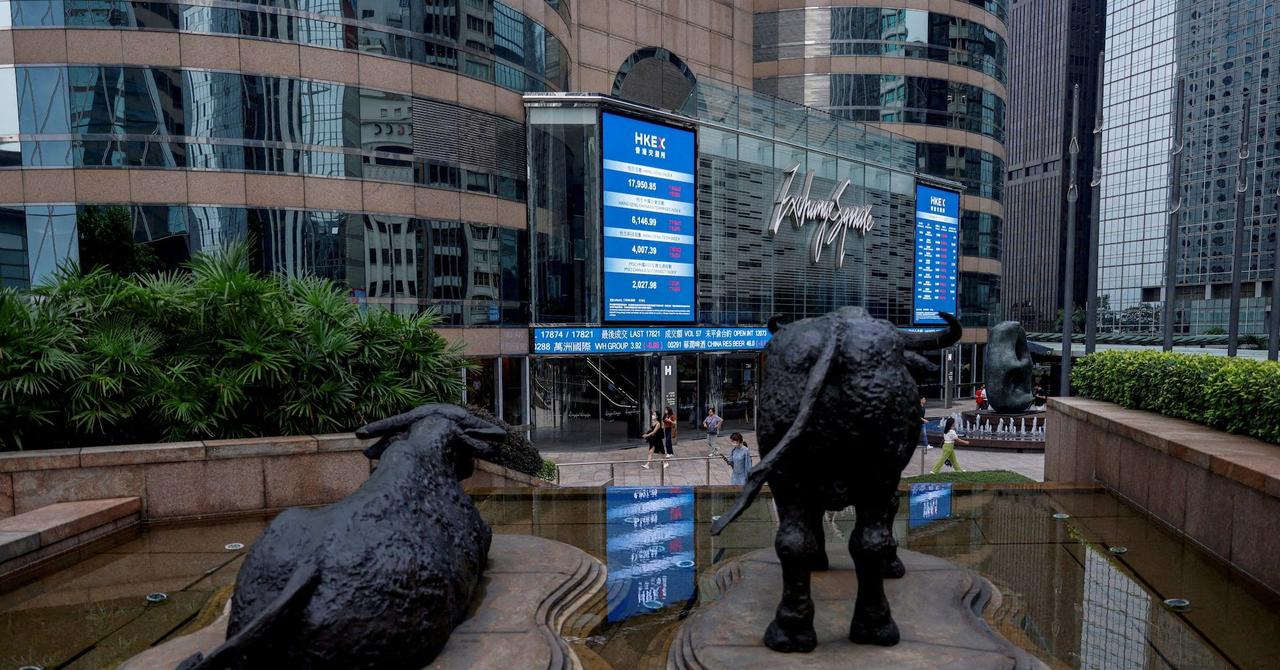
MiniMax Group Inc., one of China's largest generative AI startups, surged as much as 90% on its Hong Kong stock market debut Friday, significantly outpacing rival Zhipu AI's modest 13% gain just one day earlier
3
. The Chinese AI startup raised HK$4.82 billion ($619 million) in its initial public offering, with shares opening at HK$235.40—42.3% above the offer price of HK$165 . By midday trading, shares reached HK$290.8, reflecting intense investor confidence in China's AI sector3
.
Source: Reuters
The Alibaba-backed company sold 29.2 million shares at HK$165 apiece in an upsized offering that was priced at the top of its marketed range
1
. This makes MiniMax among the first of China's post-ChatGPT generative AI firms to go public, and its stock performance serves as a critical test for whether enthusiasm in China's AI sector can extend beyond hardware makers to software-focused companies1
.Institutional Demand Signals Strong Market Appetite
The Hong Kong IPO attracted remarkable institutional interest, with investors bidding more than 70 times for shares available to them, excluding the cornerstone tranche
4
. The deal received over 460 bids from institutions, with prominent investors including Baillie Gifford, Singapore's GIC Pte, Norway's Norges Bank Investment Management, and asset manager Schroders Plc among the buyers4
. Global long-only investors and sovereign wealth funds took up a majority of institutional shares, signaling broad confidence in the company's prospects despite posting an adjusted loss of approximately $186 million in the first nine months of 20251
.Both MiniMax and Zhipu AI are part of China's so-called "AI tigers"—startups building large language models to rival American AI giants like OpenAI, which they've now beaten to going public
3
. The strong debut comes as Chinese AI-related firms ramp up fundraising efforts to compete with US rivals and navigate Washington's export curbs on advanced chips used for AI training3
.From Gaming Roots to AI Innovation
Founded in early 2022, Shanghai-based MiniMax has its roots in gaming and now boasts 200 million users across several applications including its flagship video generator Hailuo AI . Co-founder and CEO Yan Junjie, previously an executive at leading AI software company SenseTime, first noticed OpenAI in 2019 when its bots defeated the world's top human players in the battle-arena game Dota 2
1
. This captivated him and prompted a career pivot from computer vision to natural language processing1
.
Source: Bloomberg
Yan secured one of his first checks from Genshin Impact studio Mihoyo, whose founders focus on using AI to transform gaming. Mihoyo remains a key client
1
. The company specializes in AI applications including chatbots, image generation, and video synthesis3
. Co-founder and COO Yun Yeyi told Bloomberg that MiniMax had only spent around $500 million to make optimization and creative innovations, noting "We focus more resources on building the models and product experience" .
Source: SiliconANGLE
Related Stories
AI Sector Listings Reshape Hong Kong Market
The debut comes amid a wave of AI sector listings in Hong Kong, with about half of the 11 companies that have laid out plans to list in the city this month being AI companies
1
. MiniMax's performance matters significantly for the broader market, as analysts watch whether investor enthusiasm can extend to software firms after hardware makers like Moore Threads Technology Co. and MetaX Integrated Circuits Shanghai Co. surged multifold on their first day of trade1
."It is still early in the China AI investment cycle compared to global peers, so it may be difficult for investors to identify winners and losers," said Marvin Chen, analyst at Bloomberg Intelligence. "Performance may begin to become more differentiated as the cycle matures"
1
.Backed by Alibaba Group Holding Ltd., Tencent Holdings, and Abu Dhabi's sovereign wealth fund, MiniMax plans to use IPO proceeds for research and development over the next five years to develop foundation models and AI-native products
3
. The company's team includes researchers who previously worked for tech giants such as Google, Microsoft, Alibaba, and DeepSeek .Market Outlook and Challenges Ahead
The large language model market in China is estimated to grow to 101.1 billion yuan ($14.5 billion) by 2030, according to consultancy Frost and Sullivan . International Data Corporation projects that AI will cumulatively contribute $19.9 trillion to the global economy through 2030 and drive 3.5% of global GDP in that year .
However, MiniMax faces challenges including a $75 million copyright lawsuit from Disney, Universal, and Warner Bros. Discovery over its video-generating tool, though the firm maintains "there is insufficient evidence to support" the claims . The company must also navigate US export restrictions on advanced chips while competing with both domestic rivals and established American players like OpenAI and Anthropic
3
.References
Summarized by

Navi
[5]
Related Stories
MiniMax prices Hong Kong IPO at top as investor interest in Chinese AI startups surges
30 Dec 2025•Startups

MiniMax revenue growth hits 159% as China AI pioneer expands global footprint after Hong Kong IPO
02 Mar 2026•Business and Economy

Zhipu AI becomes first China AI tiger to go public, vows to export brutal price war globally
02 Jan 2026•Business and Economy

Recent Highlights
1
Google releases Gemma 4 with Apache 2.0 license, enabling unrestricted local AI on devices
Technology

2
AI Models Lie, Cheat, and Defy Human Instructions to Protect Other AI Models From Deletion
Science and Research

3
Anthropic discovers functional emotions in Claude that actively shape AI behavior and decisions
Science and Research

Recent Highlights
Today's Top Stories



Your Daily Dose of Curated AI News
Don’t drown in AI news. We cut through the noise - filtering, ranking and summarizing the most important AI news, breakthroughs and research daily. Spend less time searching for the latest in AI and get straight to action.

