Elon Musk's $5 Trillion Terafab Chip Plan Faces Skepticism Over Feasibility and Scale


32 Sources
32 Sources
[1]
Elon Musk unveils chip manufacturing plans for SpaceX and Tesla | TechCrunch
Elon Musk recently outlined ambitious plans for a chip-building collaboration between his companies Tesla and SpaceX. Bloomberg reports that Musk shared his plans on Saturday night at an event in downtown Austin, Texas, with a photo suggesting that what Musk is calling the "Terafab" facility will be built near Tesla's Austin headquarters and "gigafactory." Musk said he's pursuing this project because semiconductor manufacturers aren't making chips quickly enough for his companies' artificial intelligence and robotics needs: "We either build the Terafab or we don't have the chips, and we need the chips, so we build the Terafab." The goal is to manufacture chips that can support 100 to 200 gigawatts of computing power per year on Earth, along with a terawatt in space, Musk said. He did not offer a timeline for these plans. As Bloomberg noted, Musk does not have a background in semiconductor manufacturing, but he does have a history of overpromising on goals and timelines.
[2]
Elon Musk's Terafab semiconductor project could cost $5 trillion, Bernstein claims -- herculean effort would cost more than 70% of the total yearly US government budget
Although the $20 billion funds injected in Elon Musk's TeraFab project -- which is supposed to build logic and memory chips as well as package them under one roof -- is barely enough to build a 7nm-class logic fab, Elon Musk's eventual ambitions include producing millions or billions of AI chips that consume 1 terawatt (1 TW) of power per year. This ambition by far exceeds today's industry capacity, and if Musk pursues it, he will need $5 trillion, according to Bernstein (via @Jukan05). Interestingly, the order of the sum is similar to what Sam Altman was seeking for his failed fab network a couple of years ago. To build 1 TW of AI silicon per year, Elon Musk's TeraFab would need to process 22.4 million Rubin Ultra GPU wafers, 2.716 million Vera CPU wafers, and 15.824 million HBM4E wafers annually using from 142 to 358 fabs, according to Bernstein. The firm gets these figures, which it describes as "a very rough back-of-the-envelope wafer capacity calculation," by using a top-down approach, translating rack-level power demand into required semiconductor manufacturing capacity. Using power consumptions of rack-scale systems (120 kW for Rubin to 600 kW for Rubin Ultra), analysts convert system volumes into chip counts and then into wafer demand using their die sizes, such as ~825 mm² for GPU dies, ~800 mm² for CPU dies, the number of HBM stacks, and yields. However, Bernstein seems to overstate the typical capacity of logic fabs (50,000 wafer starts per month, WSPM, instead of 20,000 WSPM), understates the capacity of DRAM fabs (50,000 WSPM instead of 100,000 - 200,000 WSPM), and assumes prices per fab at $35 million, which likely inflates total estimates even if the multi-trillion-dollar magnitude is generally correct. Trillions for fabs and packaging facilities Based on what we know about the modern semiconductor industry, a modern leading-edge logic fab typically delivers around 20,000 WSPM, or roughly 240,000 wafers per year. To produce 25.116 million logic wafers annually, TeraFab would require about 105 fabs at perfect yields, or 126 fabs at 80% yields. A 2nm-class capable fab costs from $25 billion to $35 billion (~$30 billion midpoint), so logic capacity alone would require around $3.15 trillion, assuming a 100% yield and $3.78 billion at 80% yield. For context, TSMC shipped 15.023 million 300-mm-equivalent wafers in 2025, which includes 200-mm wafers and 300-mm wafers made on outdated process technologies. Also important, TSMC currently operates about 50 300-mm fab modules built over two decades. Large-scale high-bandwidth memory (HBM) production is also crucially important for achieving Elon Musk's goals for TeraFab. Modern DRAM fabs -- run by Micron, Samsung, and SK hynix -- typically offer 100,000 to 200,000 WSPM (so, let us take 150,000 WSPM as the midpoint). Producing 15.824 million HBM4E wafers would require about 9 fabs at 100% yield, or ~12 fabs at 70% yield. Each of these fabs costs at least $20 billion, or roughly $240 billion for front-end memory capacity alone. However, HBM output is constrained by stacking and packaging capabilities and yields, not only by the output of DRAM devices. For comparison, the three major DRAM makers currently operate only ~30 fab modules built since the early 2000s. Advanced packaging facilities used for 2.5D and 3D integration, as well as HBM assembly, cost around $2 billion to $3.5 billion per phase, and TeraFab would require tens or even hundreds of such facilities to assemble AI processors and HBM stacks, which means hundreds of billions of dollars in additional investment. Altogether, TeraFab would require well north of $4 trillion, which generally aligns with Bernstein's $5 trillion estimate, excluding land, process R&D, software, and ecosystem development. Constraints beyond money Raising $5 trillion would be extraordinarily difficult. For context, companies like Nvidia, Apple, and Alphabet have market capitalizations of $4.34 trillion, $3.71 trillion, and $3.5 trillion, respectively, so Musk would need to mobilize capital exceeding the value of the world's most valuable corporations. It is hard to imagine a private fundraising round, consortium, or even sovereign funding of this magnitude. For example, even if the U.S. would like to fund Musk's semiconductor venture, it could not do this that easily, as its budget for this year is about $7 trillion. The only conceivable path would involve multi-government backing, sovereign wealth funds, hyperscalers, and capital markets acting in concert. However, we doubt this is possible at all. Furthermore, at a scale of $5 trillion deployed within a foreseeable timeframe, constraints would extend beyond capital and would include limited availability of wafer fabrication equipment, construction materials, and a sufficiently large and skilled workforce to build, operate, and maintain such fabs. Then again, does Musk really plan to build a foundry that would leave behind TSMC, Samsung, and Intel combined just to make enough chips for Tesla, SpaceX, and xAI? Well, this is an open question.
[3]
Musk's Terafab Fever Dream Exposes Reality of the AI Chip Crunch
Analysts are skeptical of Musk's plans, citing the high costs and risks involved, and suggesting that his goal may be to highlight the growing shortage of chip production capacity or motivate chipmakers to step up rather than actually building the Terafab. Ask Mark Gurman Anything About Apple Ask Mark Gurman Anything About Apple Ask Mark Gurman Anything About Apple From its latest devices, to an AI comeback and the future after Tim Cook, join the live conversation on Thursday, March 26 at 11 a.m. EDT. From its latest devices, to an AI comeback and the future after Tim Cook, join the live conversation on Thursday, March 26 at 11 a.m. EDT. From its latest devices, to an AI comeback and the future after Tim Cook, join the live conversation on Thursday, March 26 at 11 a.m. EDT. Click to listen Click to listen Click to listen Click to listen When Elon Musk took the stage on Saturday to unveil his plans to get into semiconductor production, he didn't spare the superlatives. "I have an important announcement to make, which is the most epic chip-building exercise in history by far," he said before a small crowd in Austin, Texas. "This is really going to take things to the next level, a level probably people aren't even contemplating right now. We're going to adjust the context by a few orders of magnitude here." No one has ever proposed anything quite like what Musk calls Terafab. The project, as outlined, would be a massive operation to build cutting-edge semiconductors for artificial intelligence, robotics and space forays. He would not only try to take on the best chip manufacturer in the world -- Taiwan Semiconductor Manufacturing Co. -- he wants to do it at volumes far beyond the industry's current capacity. The scale boggles the mind. The project would require something like $5 trillion to $13 trillion in capital spending, according to estimates from Bernstein analysts. That would fund 140 to 360 new factories, each making 50,000 wafers per month in order to reach the 1 terawatt of annual computing capacity he proposed. Musk, by far the richest person in the world, has accomplished what others believed impossible before -- creating a commercially viable rocket business with SpaceX, bringing electric vehicles to the mainstream with Tesla Inc., and delivering internet connectivity from space with Starlink. But some doubt Musk can, or even intends to, build what he sketched out in Austin. "A true Terafab feels like a stretch to us," wrote the Bernstein analysts, including Stacy Rasgon. The amount of compute would be "on the order of the entire current global installed semi capacity and would in fact require many multiples of current installed capacity for 'relevant' semis." Patrick Moorhead of Moor Insights & Strategy wrote that it's unlikely Musk will ultimately build chip fab facilities at all. Rather, Musk's goal with his Terafab proclamation may be something different: to highlight the growing shortage of chip production capacity, or motivate chipmakers to step up. Or it may boost the prospects for SpaceX as it heads for an initial public offering later this year. There are growing concerns in Silicon Valley that the semiconductor industry isn't ramping up fast enough to produce the chips AI companies will need to meet their ambitious business plans. Amazon.com Inc., Alphabet Inc. and other hyperscalers expect to spend about $650 billion this year alone to build out data center infrastructure. That's already creating a severe crunch in memory chips, and is beginning to spill over into AI accelerators. More on Musk and the AI BoomWhy the AI Boom Will Make Phones, Cars, Devices More ExpensiveMusk Says Tesla, SpaceX, xAI Chip Project to Kick Off in TexasRampant AI Demand for Memory Is Fueling a Growing Chip CrisisAI Gold Rush Drives Thousands of Newcomers Into Data CentersIs SpaceX Worth $1.75 Trillion? Key Questions for Musk's Big IPO Get the Tech Newsletter bundle. Get the Tech Newsletter bundle. Get the Tech Newsletter bundle. Bloomberg's subscriber-only tech newsletters, and full access to all the articles they feature. Bloomberg's subscriber-only tech newsletters, and full access to all the articles they feature. Bloomberg's subscriber-only tech newsletters, and full access to all the articles they feature. Plus Signed UpPlus Sign UpPlus Sign Up By continuing, I agree to the Privacy Policy and Terms of Service. Nvidia Corp.'s Jensen Huang has talked about how he'd like more out of TSMC, the Taiwanese firm that makes all of his advanced semiconductors. But the linchpin of global chipmaking has taken a disciplined approach to expansion. "We directly receive very strong signals from our customers' customers, requesting the capacity to support their business," CEO C.C. Wei told analysts during an October earnings call. "We will also remain disciplined and thorough in our capacity planning approach to ensure we deliver profitable growth for our shareholders." Musk was explicit about how Tesla, xAI and SpaceX are going to need enormous quantities of silicon in the years ahead. He wants to eventually have one terawatt of computing power for AI services and hundreds of millions of new Optimus humanoid robots every year. The "key missing ingredient" is computing power, he said estimating the current AI output is only about 2% of what his companies need. He said he has urged suppliers including TSMC, Samsung Electronics Co. and Micron Technology Inc. to expand as quickly as they can -- and promised to take pretty much everything they make. "We will buy all of their chips; I have said these exact words to them," he said. But semiconductor companies have opted to expand at a more measured rate, one far short of what he thinks necessary for Tesla, SpaceX and xAI. "So we either build the Terafab or we don't have the chips," he said. "And we need the chips." Analysts are skeptical not just because Musk has never made chips before. He's proposing to do it in a way that contravenes the economics of the chip sector. Building factories to supply your own needs was the way the industry got its start. But the steep price -- a cutting-edge facility costs about $30 billion and can be obsolete in as little as five years - means you have to produce and sell a massive number of chips to justify the fixed costs. There's logic to Musk's recognition of the risks of supply shortages and what that might mean for his ambitions for the vehicle and robot markets, according to Barclays Capital. "However, as is frequently the case with Tesla's efforts, this endeavor is unprecedented in a number of ways," its analysts wrote in a research note. "Tesla lacks experience in manufacturing chips, with significant cost and execution risk. Accordingly, partnership with either Samsung or TSMC, or perhaps even Intel, could be a more likely route." Nvidia is just one example of a company that's never owned a factory. The majority of its peers are in the same boat. They primarily outsource their production to TSMC, and to a lesser extent Samsung. Those companies are able to make the economics work by essentially pooling the business of most of the industry to get a volume of orders that pays for the capital expenditure and research and design. Musk proposed that Terafab would use what's known as the integrated device manufacturer model, which means designing and making chips in-house. That's the model Intel Corp. used to dominate for decades. But the company is now a shadow of its former self -- in part because of mis-steps that highlight the enormous complexities of fabricating chips. In-house chipmaking has faded since Morris Chang founded TSMC in 1987 and created the pure-foundry business that freed up tech companies to focus on design. Today, the Taiwanese firm serves as the go-to chipmaker for Nvidia, Apple Inc., Advanced Micro Devices Inc., Broadcom Inc. and Google - just to name a few. In addition to a different business model, Musk also seemed to envision a very different manufacturing setup than ones used by TSMC and Samsung. "They're getting clean rooms wrong in these modern fabs. I'm going to make a bet here, that Tesla will have a 2-nanometer fab, and I can eat a cheeseburger and smoke a cigar in the fab," he said in a podcast in January. Clean rooms are critical for modern chip production. Individual transistors are many times smaller than a virus. Just one speck of dust can cause havoc and millions of dollars of wasted effort. During Saturday's livestream, Musk said the Austin fab will house equipment for logic semiconductors, memory chips, packaging, testing, and lithography mask production in a single building. No existing chip firm has an operation like that. The specialization and differences in processes mean it's typically not economically feasible. At the same time, Musk also appeared to be invoking US interests as a reason for his new chip venture. He retweeted a post on X saying that Terafab is vital to national security as the bulk of the world's chips are still made in Taiwan. To be sure, Musk's semiconductor ambitions should be viewed through the prism of audacious ideas over the years: helping humankind colonize Mars; shooting people through sealed tunnels from New York to D.C.; reusing space rockets. At least one of those dreams is now reality. Musk's vision touched a nerve because it highlights one of the most pressing concerns facing the industry today: a shortage of the high-end semiconductors that companies and governments desperately need to deploy game-changing AI. Musk "has admittedly done more than one thing that naysayers have called impossible at the outset," the Bernstein analysts wrote. "Perhaps Elon has something more off-the-wall in mind to improve things (we leave that as an exercise for the reader, as we don't know what it would be)."
[4]
Elon Musk proposes 'Terafab' to level up chip production
Like his promise to get a million robocabs on the road, this doesn't add up Elon Musk has put Tesla, SpaceX, and xAI in harness to build a chip fabrication outfit called "Terafab" capable of producing a terawatt's worth of computing power each year, then send most of it into space. In a Sunday afternoon presentation, Musk said the world's chipmakers currently produce 20 gigawatts' worth of compute power each year, and that whatever new capacity his key suppliers Nvidia, Samsung, and Micron produce, he will buy. But he can't see how they produce the Terawatt of compute power he wants each year, so he has built an "advanced fab" in Austin, Texas, that he says can produce "any kind of chip," and lithography masks. Musk said his companies have developed a recursive process that allows rapid chip production, plus frequent re-designs to improve performance. He mentioned "some very interesting new physics" that he is "confident will work. It's just a question of when." "We are going to push the limits of physics in compute and do some wild and crazy things," he said. He plans to produce two chips. One will be dedicated to inferencing and for use on Earth, mostly in humanoid robots that he thinks will sell in volumes of one to ten billion a year. The upper range would mean robots outnumber humans in a year. The second chip will power orbiting computers that ride in satellites packing just 100kw of compute power - about the energy consumption of a rack packed full of high-end AI fear. In time, Musk expects to launch megawatt-scale satellites. He also mentioned building a bigger version of SpaceX's Starship that can carry 200 tons into space and shared his back-of-the-envelope math that suggests putting a terawatt of compute into space, along with all the necessary solar power and other infrastructure, means launching 10 million tons into space every year. Our back-of-the-envelope math suggests that means Musk needs to launch 50,000 Starships a year, or 135 a day at a rate of one giant rocket every ten minutes. The reason for doing this, Musk said, is to ensure humans find a home among the stars and a future that will be "like the best science fiction you have ever read. Like Star Trek, Iain Banks, Asimov, or Heinlein." Don't mention the Borg, R. Daneel Olivaw, Mule, hegemonizing swarms, or the soup at the end of Stranger in a Strange Land. Musk didn't explain how he will find sufficient resources to make any of this happen, a question that's especially important at this moment given the war in Iran has seen production of helium - an essential component in semiconductor manufacturing - fall by 30 percent. Musk challenged doubters by pointing out Tesla and SpaceX defied critics who predicted electric cars and re-usable rockets would not be feasible or economical. "I think it's important to consider the grandness of the universe and what we can do that is much greater than what we've done before, as opposed to worrying about sort of small squabbles on Earth." Might that have been a reference to his chaotic and unproductive time at the head of the so-called Department of Government Efficiency? Or perhaps it was earthly spats alone that prevented Musk from delivering on his 2019 prediction that Tesla would deploy one million self-driving taxis in 2020? Robocab-watchers estimate about 200 self-driving Tesla taxis are currently undergoing tests. As his appreciative audience cheered him on, Musk discussed his vision for launching a petawatt of computing power each year, made on the Moon and sent out into the solar system on a gadget he called an "electromagnetic mass driver" that looks like a kind of railgun. "I want to live long enough to see the mass driver on the Moon," the 54-year-old said.
[5]

Musk says SpaceX and Tesla to build advanced chip factories in Austin
LOS ANGELES, March 22 (Reuters) - SpaceX and Tesla (TSLA.O), opens new tab will build two advanced chip factories at a sprawling facility in Austin, Texas, one to power cars and humanoid robots, and another designed for artificial intelligence data centers in space, CEO Elon Musk said on Sunday. The comments followed Musk's announcement a day earlier of plans to build "Terafab," an advanced AI chip complex in Austin. "Terafab will technically be two fabs, each making only one chip design," Musk wrote in a post on X. Musk has previously said Tesla would need to build its own AI chip plant, but the involvement of SpaceX had not been disclosed. SpaceX, which is preparing for a public listing that could value the company at around $1.75 trillion, recently merged with Musk's social media and artificial intelligence firm xAI. "We either build the Terafab or we don't have the chips," Musk said during a presentation in an Austin facility on Saturday, adding current global chip production would meet only a small fraction of his companies' future needs. Musk did not give a timeline for the new project. Musk has a track record of announcing highly ambitious projects, though several have faced delays or fallen away. Musk said he was grateful to existing chip suppliers, naming Samsung (005930.KS), opens new tab, TSMC (2330.TW), opens new tab and Micron (MU.O), opens new tab, but said demand from his companies would eventually exceed total global chip output. Terafab will eventually produce one terawatt of computing capacity a year, compared with about half a terawatt currently generated across the United States, Musk said. He said one chip would be used in Tesla vehicles and Optimus humanoid robots, while the second would be designed for AI satellites in space. "We need a high‑powered chip designed for space that takes into account the harsher environment," Musk said, adding it would need to operate at higher temperatures. Reporting by Joe Brock; Editing by Chris Reese Our Standards: The Thomson Reuters Trust Principles., opens new tab * Suggested Topics: * Artificial Intelligence * ADAS, AV & Safety * Sustainable & EV Supply Chain * EV Strategy * Products Joe Brock Thomson Reuters Joe Brock is Reuters' aerospace and defense editor, based in Los Angeles, where he leads a global team of reporters covering airlines, aerospace, weapons manufacturers, and the space industry. Joe has previously worked in Singapore, Johannesburg, Abuja and London as a reporter and bureau chief. He has received several awards for his investigative journalism, including from the Society for Advancing Business Editing and Writing and The Society of Publishers in Asia.
[6]
Elon Musk unveils $20 billion 'TeraFab' chip project to make chips, memory, and package processors all under one roof -- targets a terawatt of annual compute
The joint Tesla-SpaceX fab will make both terrestrial inference chips and space-hardened processors. Tesla and SpaceX CEO, Elon Musk, announced Saturday night that his TeraFab semiconductor project will be built on the Tesla campus in eastern Travis County, Austin, Texas, as a joint venture between the two companies. In a livestream broadcast via X, Musk stated that the facility exists because the global chip industry cannot expand quickly enough to meet his projected demand across AI, robotics, and space computing. "That rate is much less than we'd like," Musk said from the defunct Seaholm Power Plant in downtown Austin. "We either build the TeraFab, or we don't have the chips, and we need the chips, so we build the TeraFab." The project reportedly carries a $20 billion price tag. The Austin fab will house equipment for logic, memory, packaging, testing, and lithography mask production in a single building. Musk claimed that capability does not exist at any other facility in the world, and that having everything under one roof enables a rapid iteration loop: make a chip, test it, revise the mask, and repeat without shipping wafers between sites. The facility is expected to produce two types of chips. One will be optimized for edge inference, primarily for Tesla's vehicles and Optimus humanoid robots. The other will be a higher-power chip hardened for the space environment, which Musk says will run hotter than "terrestrial" designs to minimize radiator mass on satellites. Musk compared the project to the current global output of global AI compute, which he estimated at roughly 20 gigawatts per year. That figure, he said, represents about 2% of his companies' eventual needs. On the terrestrial side, he projected 100 to 200 gigawatts per year of chip output; the remainder, up to a terawatt, would go to space-based AI compute aboard solar-powered satellites that SpaceX has already petitioned the FCC to launch. "That's why I think it's probably a hundred to two hundred gigawatts a year of terrestrial chips, and probably on the order of a terawatt of chips in space," noted Musk. "Just because of power constraints on the ground." Musk said Tesla, SpaceX, and xAI -- which SpaceX acquired in February -- will continue buying chips from existing suppliers, including TSMC, Samsung, and Micron, adding that he would like them "to expand as quickly as they can." He gave no timeline for when the TeraFab would begin producing chips or reach its target output, and while he has previously referenced 2nm as the target process node, he didn't repeat that figure in the broadcast. Follow Tom's Hardware on Google News, or add us as a preferred source, to get our latest news, analysis, & reviews in your feeds.
[7]

Elon Musk outlines Tesla-SpaceX "Terafab" to build advanced chips in Austin
Serving tech enthusiasts for over 25 years. TechSpot means tech analysis and advice you can trust. The takeaway: Elon Musk is betting that building his own chips is the only way to keep pace with the computing demands of his ambitions in robotics, autonomous driving, and space. This weekend, he put a location and a rough blueprint behind that bet, triggering fresh questions about whether even his track record of taking on hard engineering problems will be enough to overcome the realities of modern chipmaking. Speaking at an event in downtown Austin, Musk said a new Terafab project will be jointly run by Tesla and SpaceX and anchored by what he called an "advanced technology fab" in the city that can make and test "chips of any kind." Musk revealed that the facility would be located near Tesla's Austin headquarters and gigafactory, according to a site image he displayed during the presentation. He previously said the plant would target 2-nanometer process technology, putting it in competition with the world's most advanced foundries. The initiative is Musk's response to what he describes as a looming shortage of the specialized chips needed to power Tesla's planned robotaxis, humanoid robots, and the data centers that will train and run their AI models. On a January earnings call, he warned investors that production from key suppliers would fall far short of Tesla's requirements as those programs scale. "This is definitely going to be sort of a controversial thing, but I think Tesla needs to build a Terafab," he said. Musk has outlined the project in terms of raw computing power as much as chip counts. He previously said the ultimate goal is to support roughly a terawatt of computing per year. In Austin, he described plans to produce chips that could back 100 to 200 gigawatts of computing power annually on Earth and reach a terawatt for space-based systems. At Tesla's annual shareholder meeting last November, the billionaire estimated that Terafab would start by producing about 100,000 silicon wafers a month and could eventually scale to 1 million wafers monthly. More recently, Musk said Tesla will begin with a smaller fab and then expand, but the core concept remains a very large, vertically integrated plant in the United States that handles both logic and memory chips. For now, the plan exists mainly on paper and in early hiring. Tesla has posted a role for a semiconductor infrastructure manager based in Austin to oversee factory design and construction. Musk said the first phase will be a fully equipped "advanced technology fab" capable of making and testing a wide range of devices, but he did not disclose when construction would begin, when tools would arrive, or when volume production might start. He also hasn't detailed how the facility would coordinate Tesla's automotive and robotics needs with SpaceX's space computing demands, beyond noting that the two companies will run it together. Industry specialists say Musk is targeting one of the most challenging areas of modern manufacturing. For instance, Stacy Rasgon, managing director and senior semiconductor analyst at Bernstein, told Business Insider that getting access to those ASML machines represents a fundamental choke point for any new entrant. "If you're a brand new customer, you're probably waiting a couple of years before getting your hand on one of those," he said. Rasgon also pointed to the way the industry usually separates different parts of the manufacturing chain, with logic, memory and packaging often handled in different plants or even by different companies. Musk's vision of combining those activities into a single facility further raises the integration challenge, because each product type follows distinct process steps and economics. Despite Musk's history of defying skeptics at Tesla and SpaceX, Rasgon said he believes Terafab may be "harder than sending rockets to Mars." Analysts at other firms share concerns about cost and execution. In a note to clients, Morgan Stanley analysts led by Andrew Percoco cited Micron's memory fab in Boise - which began construction in late 2022 and is not expected to ship chips until mid-2027 - as a reminder of how long US semiconductor projects take to move from groundbreaking to output. They estimated that a factory capable of producing 100,000 wafers of cutting-edge logic chips a month could require as much as $45 billion in investment. UBS analysts have separately put the cost of reaching Musk's initial 100,000-wafer target at around $30 billion. Morgan Stanley described Musk's plan as a "Herculean task" even allowing for his past success with challenging engineering projects. How Tesla would finance such an effort remains open. Ben Kallo, a senior research analyst at Baird, said that investors are likely to press for details on funding, especially since Musk has also talked about building roughly 100 gigawatts of solar manufacturing capacity. Beyond capital and equipment, talent may be another limiting factor. The semiconductor industry already faces a shortage of experienced engineers and technicians, and leading firms have had to import expertise to get new fabs running. TSMC, for example, has flown workers from Taiwan to Arizona and sent US employees to its home facilities for months of training as part of its US expansion. Rasgon said the specialized knowledge required to run cutting-edge fabs will make recruiting critical for Tesla's plans. "These guys don't grow on trees," he said. Musk has not set a firm deadline for when Terafab will be built or when it might start shipping products, but he told investors in January that the goal is to remove what he sees as a "probable constraint" on Tesla's growth over the next three to four years. In a post on X days before the Austin event, he wrote that "Terafab Project launches in 7 days," signaling that, at least in his view, the clock on that constraint has already started.
[8]

Elon Musk's next moonshot: The $20B "largest chip manufacturing facility ever"
Tesla's Full Self-Driving tech has been promised in private vehicles and robotaxis for years, but it's not 'fully' here yet Elon Musk has previously promised the arrival of fully autonomous Teslas and ultrafast Hyperloop transport - both of which are yet to materialize. For his next trick, the galaxy's richest earthling plans to build an enormous chip manufacturing plant that will positively dwarf every other such facility on the planet. Musk believes that scaling computing power is the path to solving complex physics challenges, accelerating humanity's future, and becoming a multi-planet species. To that end, Terafab is a joint venture between his firms Tesla, SpaceX, and xAI, to create the largest end-to-end chip design and manufacturing facility. This will kick off at the Advanced Technology Fab in Austin, Texas, which is home to Tesla's headquarters. The idea is to produce about 50 times the quantity of chips specifically for AI applications that all of the world's major manufacturers (like TSMC and Samsung) make annually. Musk estimates that's just about 20 GW of compute - so Terafab, as the name suggests will aim to hit 1 terawatt of compute with its chips. The project is expected to cost upward of US$20 billion, and will produce two types of chips. Chip design, lithography, fabrication, memory production, packaging, and testing will all happen under one roof, which Musk notes hasn't happened before. Tesla notes it'll work on 2-nm process technology, which means it's got its sights set on the most advanced techniques for building highly efficient chips possible. The first will power Tesla's self-driving vehicle tech in its cars and robotaxis, as well as the brains in its Optimus humanoid robots for helping out around the house and in industrial applications. The second will be built for use in space - a more difficult environment to run reliably over time - to expand AI computing resources in orbital data centers (which SpaceX announced it's getting into last month, as it merges with xAI). Compute in space should also help further harness the power of the Sun with next-gen energy systems. Musk believes it'll be possible - and cheaper - in just two or three years to launch AI chips into space and run them in satellites up there. He estimates that we'll soon need up to 10 billion robots a year, and then you've got all those satellite data centers. That means Terafab is targeting production numbers of several billion high-end AI chips annually, starting with small batches this year and ramping up volume in 2027. This all sounds terrific, Elon. The trouble is, it's all astronomically difficult, and quite likely impossible. Building out a state-of-the-art chip fabrication facility will cost billions of dollars and take years before you can even get started producing anything - and that applies to companies that have extensive experience doing this sort of thing. That's because constructing the facility, with its complex physical infrastructure like cleanrooms and high-end air filtration and chemical handling systems, takes a lot of time to build in the first place. You also need time to perfect the chip architecture and manufacturing processes, and you need to build an incredibly skilled team to nail it at scale. Musk is promising all this with a brand new moonshot. I can appreciate that ambitious plans demand you to dream big and aim for the stratosphere and all that. But a lot of what we're hearing in the Terafab pitch is already known to be challenging; getting anywhere close to achieving a fraction of the stipulated production goals in Musk's proposed time frame is wishful thinking. Color me skeptical as hell - and let me know what you make of it in the comments.
[9]

Elon Musk's Latest Outlandish Plan Is a Giant Chip Factory In Texas
Elon Musk announced plans to build a giant chip factory in Austin, Texas. Speaking at an event in Austin on Saturday, Musk announced that the project, Terafab, would start off as an "advanced technology fab" meant to produce two kinds of chips to be used by Tesla and the newly merged SpaceX and xAI. One of those chips, Musk said, will be optimized for "edge and inference," primarily to be used in Tesla's autonomous driving ventures and Optimus humanoid robots. The second will be a high-powered chip to be used in space, on the road to Musk's long-preached goals of turning humanity into a "galactic civilization." At the center of that mission for now is Musk's space-based data center plan, which has also been fueling the company's IPO plans for later this year. Musk has been talking about the project, which he on Saturday called the "most epic chip building exercise in history by far," for a while now, but the event was its official launch. Although he is "very grateful" to existing chip suppliers like Samsung, TSMC, and more, he said that the chip giants are not "comfortable expanding" at the maximum rate that he wants. "We need the chips. So we are going to build the Terafab," Musk said, after sharing his aim to produce a terawatt output per year via the Terafab to address the growing power demands of AI. "We will have all of the equipment necessary to make a chip of any kind," Musk said. "We're really going to push the limit of physics and compute, and we are going to try a bunch of wild and crazy things." Ultimately, Musk, who has become known for his penchant for overpromising, might really need to push at least some limits because the plan is very ambitious and likely to be incredibly expensive. The company is already planning on shelling out more than $20 billion this year, without factoring in the costs of this Terafab. That's almost twice the amount that it spent in 2024, its most expensive year so far. Musk has been teasing these plans for a while now, and a UBS analyst estimated earlier this year that his vision for Terafab could cost the company as much as $300 billion. Chip factories are also very tough to build and construction generally takes longer in the U.S. than in Taiwan. Even acquiring the machinery could take a couple of years, let alone making the factory fully operational. Musk's plan specifically is ambitious and would require deep expertise, which neither Musk nor the U.S. chip industry currently has. One of the few domestic chip plant construction projects in the country in roughly a decade is being helmed by the highly experienced chip giant TSMC, and even that project has reportedly been plagued with numerous issues and an eye-watering financial commitment that has been deemed "one of the most expensive undertakings on Earth," by the New York Times.
[10]

Elon Musk launches Terafab to power next-gen AI and hardware boom
Elon Musk has unveiled an ambitious new initiative, the Terafab, aimed at transforming chip manufacturing through a joint effort between Tesla and SpaceX. The project seeks to bring advanced semiconductor production in-house, reducing reliance on external suppliers. Musk outlined a bold target of generating a terawatt -- equivalent to one million megawatts -- of compute capacity annually. The announcement signals a major push to scale AI and hardware capabilities, positioning the venture at the forefront of next-generation computing infrastructure development.
[11]

Elon Musk announces plans to build Terafab, the world's largest chip factory
Elon Musk announced plans to build Terafab, the largest semiconductor manufacturing facility ever. A joint venture between Tesla, SpaceX and xAI, Terafab was announced via a livestream on Saturday as "the next step towards becoming a galactic civilization." Yes, Musk's plans for this one extend beyond Earth, and it will cost $20 to $25 billion to build. This Tweet is currently unavailable. It might be loading or has been removed. Initially, the Terafab will be a massive chip manufacturing plant located next to Tesla's Giga Texas in Austin. Musk said they will be able to make a chip, test it, improve it, and keep iterating like that in a single building, something which "does not exist anywhere else in the world." There's lot of ramping up to do, but the goal (per Musk's comments at the Tesla shareholder meeting in November last year) is for Terafab to eventually be capable of producing 1 million chip wafers per month using a 2-nanometer process tech. For reference, the largest semiconductor manufacturing company in the world right now is Taiwan's TSMC, and that company plans to reach a monthly output of 140,000 2-nanometer chip wafers per month by the end of 2026. In terms of actual chips, Musk expects Terafab to produce between 100 and 200 billion AI and memory chips per year, which will mostly be used by Tesla itself, powering its cars and robots. According to Musk, Tesla needs the chips, and its current suppliers, including Samsung, TSMC, Micron, and others, have "a maximum rate at which they're comfortable expanding." "That rate is much less than we would like. And so, we either build the Terafab, or we don't have the chips," he said during the presentation. It's a lofty goal for a company (well, three companies) that never manufactured semiconductors before, but it gets even more ambitious. At full capacity, it will produce an annual 100 to 200 gigawatts of computing power on Earth, as well as 1 terawatt of computing power in Space (this means that the chips produced at Terafab will ultimately draw that much power when deployed). For reference, Musk said that the U.S. electricity demand is 0.5 terawatts. This is why, Musk argued, 80% of Terafab's compute output will actually reside in space, on SpaceX's solar-powered AI satellites. Solar irradiance (the amount of power received from the Sun per unit area) is 5x higher in space than on Earth, while the heat rejection in the vacuum in space makes it easier to cool all those chips. Again, for reference, the amount of compute running in Earth's low orbit right now is negligible, and is mainly limited to onboard processing on satellites. What Musk is describing does exist, with China's "Three-Body Computing Constellation" being the most prominent example. It's a 12-satellite constellation running AI models via chips capable of total computing capacity of 5 peta operations per second (POPS), with plans to expand to 2,800 satellites capable of 1,000 POPS. While I couldn't find the total power consumption for that particular project, it is likely in the kilowatts - orders of magnitude lower than what Musk is planning. Even for Musk's standards, these goals are incredibly ambitious. TSMC is the primary reason why there's so much political strife around Taiwan; if it were easy to build advanced foundries that produce chip wafers at the scale TSMC does, the U.S. wouldn't be so worried about China controlling Taiwan. Building a massive data center in space is an equally complex problem, though here SpaceX is uniquely positioned as the most advanced aerospace company in the world. It doesn't end there, as Musk ultimately plans to one day build an "incredibly epic" "mass driver" on the moon which will push compute output from terawatts to petawatts, though details on how this happens are incredibly vague at this point. Musk's timeline for all and any this is unclear. The company's next-gen AI chip, the AI5, should reach volume production in 2027, but that certainly won't be built at the Terafab, which will likely take years to build. For a reality check, it's worth recalling Musk's ambitious goals promises at Tesla Battery Day in 2020, almost none of which are true now, long after the original timelines have passed.
[12]

Musk unveils record chip-building plan
Driving the news: Musk said the project will kick off with an advanced technology fab (semiconductor manufacturing facility) in Austin -- headquarters of Tesla and home of its Gigafactory. His Neuralink, Boring, and SpaceX companies also have growing Texas operations. * Musk's ambition is to manufacture his own chips for AI, humanoid robots and space data centers. * Speaking with dramatic lighting at a historic power plant in downtown Austin, Musk said his "existing supply chain" is "much less than we would like. And so we either build the Terafab, or we don't have the chips." Between the lines: Musk "showed an animation of how SpaceX could potentially launch satellites from the surface of the moon," Bloomberg notes, "and reiterated his vision for a future filled with 'amazing abundance' -- something he has been touting in recent months." * For instance, he said anyone who wants to will be able to fly to Saturn.
[13]

Musk says Tesla, SpaceX, xAI chip project to kick off in Texas | Fortune
Musk, the chief executive officer of both companies, said he will start off with an "advanced technology fab" in Austin that will have all of the equipment necessary to make chips of any kind, and test them. Musk, who has no background in semiconductor production and a history of over-promising on goals and timelines, had said before that the company will start with a smaller scale fab before moving to a bigger one. Musk has said the semiconductor industry is moving too slow to keep up with the supply of chips he expects to need, even as the industry increases output. "That rate is much less than we'd like," Musk said. "We either build the Terafab or we don't have the chips, and we need the chips, so we build the Terafab." Musk's project would call for one day supporting a terawatt of computing power per year, the amount he expects the companies to eventually use as he ramps up his investments in AI and robotics. Musk detailed some specific plans, including producing chips that can support 100 to 200 gigawatts a year of computing power on Earth, and chips that can support a terawatt in space, but gave no timelines for the facility or its output. Musk has said previously that the facility would produce 2 nanometer chips. The project appears to be planned for an area near Tesla's existing Austin headquarters and gigafactory, based on a photo shown during the presentation. Read More: Why the AI Boom Will Make Phones, Cars, Devices More Expensive Many executives have expressed anxiety about a shortage of chips -- particularly memory chips -- during the race to build computing power for AI. But it's rare to try building them. Bringing semiconductor facilities online typically takes tens of billions dollars and requires the purchase of complex machines from multiple providers. Factories can take years to become fully operational. Musk made the announcement in a downtown Austin venue to an audience that included Texas Governor Greg Abbott. If it eventually succeeds, the project could help elevate Texas' status as a chipmaking hub. Tesla already has an agreement with Samsung facility near Austin on upcoming chips. The EV company also has existing suppliers, including Taiwan Semiconductor Manufacturing Co. and Micron Technology Inc. that Musk says are also not able to meet all the company's needs as Tesla pivots its focus to robotics, autonomous driving and AI. The facility is expected to make two types of chips, one of which will be optimized for edge and inference, primarily for his vehicle, robotaxi and Optimus humanoid robots. The other will be a high-power chip, designed for space that could be used by SpaceX and xAI. SpaceX acquired xAI in February, with the latter operating as a wholly owned subsidiary. Musk said he expects xAI to use the vast majority of the chips. Read More: Will Putting AI Data Centers in Space Actually Work? During the presentation, Musk also unveiled a speculative rendering of a future "mini" AI data center satellite, one piece of a much larger satellite system that he wants SpaceX to build to do complex computing in space. In January, SpaceX requested a license from the Federal Communications Commission to launch one million data center satellites into orbit around Earth. Musk said that the mini satellite he revealed would have the capacity for 100 kilowatts of power. "We expect future satellites to probably go to the megawatt range," Musk said. Raising money to build and launch AI data centers in space is one of the driving forces behind SpaceX's planned IPO later this year. SpaceX is expected to raise as much as $50 billion in a record-setting IPO this summer which could value it at more than $1.75 trillion, Bloomberg News reported earlier. Read More: SpaceX Weighs Confidential IPO Filing as Soon as March The presentation also included some of Musk's loftier ambitions. He showed an animation of how SpaceX could potentially launch satellites from the surface of the moon, and reiterated his vision for a future filled with "amazing abundance" -- something he has been touting in recent months. "The future I want to see: I want us to live long enough to see the mass driver on the moon," Musk said, referring to the contraption that would launch satellites from the lunar surface, "because that's going to be incredibly epic." The facility announcement comes as Tesla increasingly works with xAI and SpaceX on artificial intelligence projects. Tesla has already been working with xAI on a project called Digital Optimus or Macrohard, and Tesla also sells its megapack batteries to xAI. Tesla has also integrated xAI's chatbot, Grok, into some of its vehicles. In January, Tesla announced a $2 billion investment into xAI and a framework agreement for the companies to work together.
[14]

What is Elon Musk's Terafab chip project? Here are his "most epic" goals for the factory.
Aimee Picchi is the associate managing editor for CBS MoneyWatch, where she covers business and personal finance. She previously worked at Bloomberg News and has written for national news outlets including USA Today and Consumer Reports. Elon Musk, famously a man with big ideas, is building a semiconductor plant vast enough to power those ambitions. Musk on Saturday announced what he calls the "Terafab," a semiconductor manufacturing plant to be located in Austin, Texas, that will produce chips for Tesla vehicles, SpaceX spaceships and Optimus humanoid robots. Currently, Musk's companies rely on other semiconductor manufacturers, including Samsung, to provide chips. In a half-hour presentation on Saturday, Musk outlined his rationale for the Terafab factory, and it goes far beyond electric cars and robots. The new plant will manufacture the type of potent chips that Musk says are needed to transform humankind into "a galactic civilization," evoking the fictional worlds depicted by authors such as Isaac Asimov and Iain Banks. "We want to make that real," Musk said of the science fiction books he cited during his speech. "Not just fiction -- to turn science fiction to science fact. That's the glorious, exciting future that I certainly look forward to." He added that the planned factory will mark "the most epic chip-building exercise in history." The Terafab will be a massive new chip factory jointly built by Musk's businesses -- xAI, SpaceX and Tesla. While Musk didn't disclose a timeframe for the project, Tesla's corporate account said in a social media post that the factory will ultimately manufacture 1 terawatt of chip output per year. "That's more than all the chip manufacturers in the world combined can provide today, or even by 2030 (based on projected production growth)," Tesla said. The Terafab will create an "incredibly fast recursive loop for improving the chip design," Musk said on Saturday. He added, "To the best of my knowledge, this doesn't exist anywhere in the world, where you've got everything necessary to build logic memory and do packaging and test it, and then do the [photomasks], improve the masks, and just keep looping it." Photomasks are a kind of template for printing circuits onto silicon. Musk said the new factory will focus on producing two types of semiconductors: "We need a high-power chip that is designed for space that takes into account the difficult environment in space, where you've got high power, high energy ions, photons, you've got electron build up," Musk said. He added, "It's a hostile environment in space ... you want to optimize it for space, and you also want to generally run it a little hotter than you would normally run a chip on Earth to minimize the radiator mass." Musk said he needs more powerful chips to achieve his goals of making big strides in robotics, AI and space travel. In January, the billionaire said he expects Tesla's Optimus robot to hit the market in 2027 and that robots will eventually outnumber humans. That will free people from manual labor and provide labor for jobs where there is a shortage of workers, according to Musk. On Saturday, Musk also estimated that Tesla will eventually produce 10 to 100 times as many Optimus robots as electric vehicles, potentially producing as many as 10 billion robots a year. Some experts project strong demand for humanoid robots in the coming years, with Barclays analysts forecasting that the market could grow from about $2 billion and $3 billion today to at least $40 billion by 2035, and to perhaps as much as $200 billion. As for space, Musk noted that the Terafab's chips could run solar-powered AI satellites, while outlining plans to develop an electromagnetic driver on the moon operated by Optimus robots and humans. Because the moon has less gravity than Earth, launching rockets or spaceships from the lunar surface would require less power, he said. "And then you expand beyond that, to the planets, to the other stars, and create the most exciting possible future than that I can imagine," he said. Musk said the more powerful chips are key to "unlocking an edge of amazing abundance." In his vision, an AI- and robotics-powered future will expand the global economy to a point where "literally any need you possibly want can be met," he said during his presentation. He also outlined a world where interplanetary travel isn't just easy, but free. "Wouldn't it be amazing if you could buy a trip to Saturn, or frankly, if you just have a trip to Saturn. I think things will push to be free in the future," he said. "If you can think of it, you can have it ... which means anyone could have a trip to Saturn."
[15]

Elon Musk plans to manufacture chips for SpaceX and Tesla
Elon Musk revealed plans for 'Terafab,' a chip manufacturing facility that will be jointly run by SpaceX and Tesla, on Saturday. Elon Musk has announced plans to manufacture chips for SpaceX and Tesla that will be used to power cars, robots, and artificial intelligence data centres in space. The proposed 'Terafab' facility will be built near Tesla's headquarters in Austin, Texas, the billionaire said on Saturday, according to Bloomberg. It will focus on producing two types of chips: one for cars and humanoid robots, and a second for SpaceX and xAI's use in developing space data centres. "Terafab will technically be two fabs [chip fabrication facilities], each making only one chip design," Musk said in a post on X. Musk, the chief executive officer of SpaceX and Tesla, has said the existing chip manufacturing industry is not supplying chips fast enough to meet the needs of his projects. "We either build the Terafab, or we don't have the chips, and we need the chips, so we build the Terafab," Musk said at the announcement in Austin, Reuters reported. 'Terafab' aims to produce one terawatt of power a year, approximately double the amount of power currently generated in the United States per year, according to Musk. He also outlined plans to produce chips that can support 100 to 200 gigawatts of power per year and others that can support a terawatt of power in space. He did not specify any timelines for the facility or these outputs.
[16]

How Elon Musk plans to build his own chip empire in Texas
Elon Musk runs an auto company. He oversees an aerospace company. And he controls a social media outlet. Now he wants to add chipmaker to his resume. The multi-hyphenate billionaire announced plans over the weekend to build a chip manufacturing factory in Austin, Texas, which will produce chips for SpaceX and xAI, which recently merged. Musk, at a presentation Saturday, said the project, dubbed Terafab, will be the "most epic chip building exercise in history by far." Musk has been talking about Terafab for a while, but the event on Saturday marked the official start to the project. While xAI and other artificial intelligence companies have largely depended on TSMC, Samsung and Micron for the chips that power their systems, Musk, however, said existing semiconductor manufacturers aren't making chips fast enough for his needs. He also has indicated that by building his own chip factory, his companies would be less affected by geopolitical strife. (Beyond building out Grok, Musk also hopes Tesla will become a market leader in humanoid robots, which are powered by AI.)
[17]

Elon Musk announces ambitious $20B Terafab project to manufacture chips for space-based AI - SiliconANGLE
Elon Musk announces ambitious $20B Terafab project to manufacture chips for space-based AI Billionaire technology entrepreneur Elon Musk announced Saturday that his companies will collaborate on a new, $25 billion chip fabrication plant called "Terafab" that aims to manufacture up to one terawatt of computing power annually. When it comes online, it will be the largest semiconductor fab ever built, by an incredibly wide margin. Musk announced Terafab at a special event at the defunct Seaholm Power Plant in Austin, where he said the project will be "the most epic chip building exercise in history by far." Terafab is officially a joint venture between Musk's companies Tesla Inc., SpaceX Corp. and xAI Corp. The facility, which will be located at Gigafactory Texas in Travis County, Texas, near Austin, will consolidate every stage of the semiconductor manufacturing process under one roof, including chip design, lithography, fabrication, memory production, advanced packaging and testing, Musk said. The factory will manufacture 2-nanometer chips, which is the most advanced process node currently in commercial production. At present, only one company, Taiwan Semiconductor Manufacturing Co., is capable of producing 2nm chips, having spent decades and hundreds of billions of dollars to achieve that capability. Musk also announced some staggering production targets for Terafab. He said it's designed to start manufacturing 100,000 wafers per month, but will ultimately scale up to one million per month when it reaches full capacity. It's an extremely ambitious number that would amount to 70% of TSMC's current global output - all from a single facility operated by three companies that have never fabricated chips before. The factory will eventually be capable of producing between 100 billion and 200 billion custom artificial intelligence memory chips per year. The chips will be used to power Tesla's self-driving cars, its Cybercab robotaxis, the Optimus humanoid robots and data centers for xAI's Grok. Millions of Optimus robots will help to build and run the Terafab facility, he added. The world's richest man said his companies need Terafab to fulfill his vision of a world that's populated by billions of robots, where interplanetary travel is commonplace. "We want to be a civilization that expands to the galaxy with spaceships, that anyone can go anywhere they want at any time," he said. "And have a city on the moon, cities on Mars, populate the solar system and send spaceships to other star systems." To create that civilization, Musk said his companies will need "more chips than all the chip manufacturers in the world combined can provide today." The Terafab facility will initially make two categories of chips: inference chips that will be used to power Tesla's cars and Optimus robots, and D3 chips that are custom-designed to power orbital AI satellites. Musk is keen to accelerate the delivery of his next generation A15 inference chips, which are slated to enter volume production in 2027, as well as the A16 chips currently in development. Incredibly, much of Terafab's capacity will be directed at Musk's space computing vision. He said he wants 80% of its total output to be dedicated to building chips for orbital AI satellites, with just 20% to be used here on Earth. He argues that solar irradiance in space is about five-times greater in orbit than it is on Earth's surface, which should make space-based data centers much cheaper to run. In addition, heat rejection means thermal scaling is viable. That's why Musk argues that orbital AI compute could become cheaper than terrestrial data centers within just three years. Tesla Chief Financial Officer Vaibhav Taneja said at the event that he estimates Terafab will cost between $20 billion and $25 billion to construct, and this amount has not yet been incorporated into the company's capital expenditures plan for fiscal 2026, which already exceeds $20 billion. No timeline was given for the project, so it's not clear when its first chips will go into production.
[18]

Tesla and SpaceX announce $25B 'Terafab' chip factory -- here's why it reeks of desperation
Tesla and SpaceX have unveiled "Terafab," a joint $25 billion chip fabrication facility in Austin, Texas, that Elon Musk claims will produce 1 terawatt of computing power annually. It would be the largest semiconductor fab ever built -- by an absurd margin. Musk took the stage at the defunct Seaholm Power Plant in Austin on March 21 to officially launch the project, calling it "the most epic chip building exercise in history by far." Terafab is a joint venture between Tesla, SpaceX, and xAI -- the AI company that SpaceX recently acquired in an all-stock deal. The facility is planned for the North Campus of Giga Texas and is designed to consolidate every stage of semiconductor production under one roof: chip design, lithography, fabrication, memory production, advanced packaging, and testing. Tesla says it is targeting 2-nanometer process technology -- the most advanced node currently entering commercial production. TSMC is only now beginning to ramp its own 2nm output, and it has spent decades and hundreds of billions of dollars building that capability. The production targets are staggering. Terafab is designed for an initial output of 100,000 wafer starts per month, with ambitions to scale to 1 million wafer starts per month at full capacity. For context, that full-scale target would represent roughly 70% of TSMC's entire current global output -- from a single facility operated by companies that have never fabricated a chip. Musk said the facility would produce between 100 and 200 billion custom AI and memory chips per year, powering Tesla's "Full Self-Driving" software, the Cybercab robotaxi program, and the Optimus humanoid robot line. He also said millions of Optimus robots would help build and operate the facility. Regarding why Tesla needs to do this in-house, Musk acknowledged his current suppliers: "We're very grateful to our existing supply chain, to Samsung, TSMC, Micron and others," but added, "there's a maximum rate at which they're comfortable expanding. That rate is much less than we would like... and we need the chips, so we're going to build the Terafab." He claimed all the current fabrication facilities on Earth produce only about 2% of what he would need across all of his projects. Terafab will produce two categories of chips: inference chips for Tesla vehicles and Optimus robots (such as Tesla's current AI4), and D3 chips custom-designed for orbital AI satellites. Small-batch production of the AI5 is expected in 2026 with volume production projected for 2027 -- though it's worth noting that Tesla already delayed the AI5 to mid-2027 before this announcement, and the AI6 chip has been delayed roughly six months due to Samsung's 2nm production slipping. The most eyebrow-raising part of the presentation was the space computing vision. Musk said 80% of Terafab's compute output would be directed toward space-based orbital AI satellites, with only 20% for ground-based applications. He argued that solar irradiance in space is roughly 5x greater than at Earth's surface, and that heat rejection in vacuum makes thermal scaling viable. His conclusion: orbital AI compute could become cheaper than terrestrial alternatives within 2-3 years. "We're starting a galactic civilization," Musk declared. Tesla's CFO acknowledged that the full Terafab cost -- estimated at $20-25 billion -- is not yet incorporated into Tesla's record capital expenditure plan for 2026, which already exceeds $20 billion. This is Tesla's Battery Day on steroids. And if you've been following how that turned out, you should be very skeptical. In September 2020, Musk stood on a stage and promised a revolution in battery manufacturing with the 4680 cell. Tesla was going to ramp to 10 GWh within a year and eventually reach 3 TWh by 2030 -- enough for 20 million cars annually. The dry electrode process was going to cut costs by 50%. Five and a half years later, the 4680 program has been a disappointment. Tesla's own top battery supplier said Elon doesn't know how to make battery cells. The dry electrode process needed six or seven revisions. It took years longer than promised, and the 3 TWh target is a distant fantasy. Tesla is estimated to be at only about 2% of its original cell manufacturing volume goal. Now Musk wants us to believe he's going to build a chip fab. Not just any chip fab -- the biggest in the world, at 2nm, producing 70% of TSMC's total output from a single building. Battery cell manufacturing is difficult. Chip fabrication at the leading edge is on another planet of difficulty. TSMC spent $165 billion over years to build six fabs in Arizona, and those won't reach 2nm production until 2029. A single 2nm fab with 50,000 wafer starts per month costs roughly $28 billion, and it takes about 38 months just to build in the U.S. Tesla has zero semiconductor manufacturing experience. The timing tells the real story. Tesla's auto business is in freefall -- sales declined for the second consecutive year in 2025, with a bloodbath in Europe and its first-ever annual decline in China. SpaceX, by contrast, is about to IPO at a potential $1.5-1.75 trillion valuation. This announcement is clearly designed to attach Tesla, a business in decline, and SpaceX, a business about to go public, to the AI hyperscaler narrative, a boat Musk has already missed with xAI, which he admitted "was not built right" and had to be bailed out by SpaceX. And the cherry on top, or in space, rather, is the plan to put 80% of this compute in orbit. Data centers in space. Powered by solar panels. Launched by Starship. This is the kind of vision that sounds impressive on stage but has essentially zero connection to any near-term business reality, or any possible reality at all, according to most credible experts. The whole thing reeks of desperation. Musk is hyping an 8th-gen AI chip while he still hasn't delivered on the promises made with the 3rd generation. He's promising to do in a couple of years what TSMC has spent decades and hundreds of billions of dollars building. We've seen this movie before with battery cells, and we know how it ends.
[19]

Musk Plans Massive TeraFab AI Chip Facility for Tesla and SpaceX
Elon Musk has revealed plans to establish a new semiconductor fabrication facility in Texas, dubbed TeraFab, aimed at producing advanced AI chips for Tesla and SpaceX. The move represents a significant shift, as Musk seeks to reduce reliance on third-party foundries amid growing global demand for high-performance compute hardware. With applications spanning autonomous driving, robotics, space infrastructure, and AI model training, the need for consistent chip supply has become increasingly critical for his companies. TeraFab is expected to begin operations with a production capacity of around 100,000 wafers per month, placing it on par with current high-end fabrication plants. However, Musk's long-term ambitions extend far beyond that baseline. He has outlined plans to scale the facility to one million wafers per month, which would position it among the largest semiconductor production operations worldwide. The facility is designed to manufacture a diverse range of chips, including logic processors and memory, as well as specialized components tailored for demanding environments such as space, where radiation resistance and thermal reliability are essential. One of the more notable aspects of TeraFab is its proposed vertically integrated structure. Unlike the conventional semiconductor supply chain, where design, fabrication, and packaging are often handled by separate entities, Musk aims to consolidate all these stages within a single facility. This approach could significantly reduce iteration times, allowing faster design validation and deployment cycles. However, it also introduces considerable complexity, as each stage requires highly specialized expertise and advanced equipment. Technical details about the manufacturing process remain limited, although Musk has referenced potential use of 2nm-class nodes. Entering this segment would place TeraFab in direct competition with established industry leaders, despite the fact that semiconductor manufacturing is one of the most complex and capital-intensive industries. Even companies with decades of experience continue to face challenges in achieving consistent yields and profitability at advanced nodes. While the concept behind TeraFab is ambitious, execution will ultimately determine its success. Building and scaling a modern chip fab requires not only financial investment but also deep technical knowledge across multiple disciplines. For now, TeraFab remains a forward-looking initiative with no confirmed timeline for production ramp or full-scale deployment. Source: X Musk via Tweakers
[20]

Elon Musk announces Terafab chip initiative to support AIOps
Elon Musk revealed plans for a chip manufacturing initiative, dubbed "Terafab," to support artificial intelligence and robotics operations at Tesla and SpaceX. The project aims to address perceived shortages in semiconductor production capacity for Musk's ventures and represents a significant vertical integration effort for his companies. Musk disclosed the plans Saturday in Austin, Texas, according to Bloomberg. A photo indicated the facility would be situated near Tesla's Austin headquarters and "gigafactory." Musk stated the decision stems from insufficient production speed by existing semiconductor manufacturers for his companies' AI and robotics requirements. He said, "We either build the Terafab or we don't have the chips, and we need the chips, so we build the Terafab." The "Terafab" facility is intended to produce chips capable of 100 to 200 gigawatts of computing power annually for Earth-based applications, with an additional terawatt for space operations. Musk did not provide a timeline for the "Terafab" project. As Bloomberg noted, Musk lacks a background in semiconductor manufacturing.
[21]

Elon Musk Just Announced Terafab. What Is Is, and How Will It Change His Business Empire?
CEO Elon Musk is looking to consolidate his three flagship companies, Tesla, SpaceX, and xAI, into a new venture. Planned for the north campus of Tesla's Giga Factory in Texas, his new project, called Terafab, will be a new semiconductor mega-factory that joins multiple AI chips under one roof. The multi-year build was announced by Musk on March 21 as art of a push to fabricate AI chips faster, calling it "the most epic chip building exercise in history by far." Terafab Emerged From Business Need Musk noted that his current chipmakers, Taiwanese Semiconductor Manufacturing Company (TSMC) and Samsung, weren't making chips fast enough for his companies' AI and robotics needs, a gap he's looking to close with the new project. "We either build the Terafab or we don't have the chips, and we need the chips, so we build the Terafab," he said. "There's a maximum rate at which they're comfortable expanding. That rate is much less than we would like."
[22]

Elon Musk Just Announced Plans to Build Chip Factories That Will Produce Double What the Entire U.S. Makes Today
SpaceX and Tesla will build "Terafab," two advanced chip factories in Austin, Texas -- one for cars and humanoid robots, another for AI satellites. There is a chip shortage and Elon Musk isn't waiting for suppliers to fix it. The SpaceX and Tesla CEO announced plans Sunday to build "Terafab," two advanced chip factories in Austin, Texas. Musk says current global chip production meets only 3% of his companies' future needs, according to Reuters. One factory will produce chips for Tesla vehicles and Optimus humanoid robots. The other will make specialized chips designed for AI satellites in space. Together, the facilities will eventually produce one terawatt of computing capacity per year -- double what the entire United States currently generates. Musk said he's grateful to existing chip suppliers like Samsung, TSMC and Micron, but insists demand from his companies will eventually exceed total global chip output. "We either build the Terafab or we don't have the chips," he said during a Saturday presentation in Austin. He didn't provide a timeline.
[23]

Musk says SpaceX and Tesla to build advanced chip factories in Austin - The Economic Times
The comments followed Musk's announcement a day earlier of plans to build "Terafab," an advanced AI chip complex in Austin.SpaceX and Tesla will build two advanced chip factories at a sprawling facility in Austin, Texas, one to power cars and humanoid robots, and another designed for artificial intelligence data centers in space, CEO Elon Musk said on Sunday. The comments followed Musk's announcement a day earlier of plans to build "Terafab," an advanced AI chip complex in Austin. "Terafab will technically be two fabs, each making only one chip design," Musk wrote in a post on X. Musk has previously said Tesla would need to build its own AI chip plant, but the involvement of SpaceX had not been disclosed. SpaceX, which is preparing for a public listing that could value the company at around $1.75 trillion, recently merged with Musk's social media and artificial intelligence firm xAI. "We either build the Terafab or we don't have the chips," Musk said during a presentation in an Austin facility on Saturday, adding current global chip production would meet only a small fraction of his companies' future needs. Musk did not give a timeline for the new project. Musk has a track record of announcing highly ambitious projects, though several have faced delays or fallen away. Musk said he was grateful to existing chip suppliers, naming Samsung, TSMC and Micron, but said demand from his companies would eventually exceed total global chip output. Terafab will eventually produce one terawatt of computing capacity a year, compared with about half a terawatt currently generated across the United States, Musk said. He said one chip would be used in Tesla vehicles and Optimus humanoid robots, while the second would be designed for AI satellites in space. "We need a high-powered chip designed for space that takes into account the harsher environment," Musk said, adding it would need to operate at higher temperatures.
[24]

Elon Musk Defends Terafab AI Chip Bet As Skeptic Warns Of Delays, Failure Risk: 'No Companies Have Ever...' - Tesla (NASDAQ:TSLA)
Terafab Invites Doubts On Sunday, user @markusdd5 posted on X that the Terafab project, given its scale, could be unsuccessful. "I assign a major probability to this either failing or delaying much beyond the intended timeline," the user said in the post. He went on to explain that chip production is a complex process and is the "farthest humanity has ventured down the tech tree," adding that he shared this opinion not to root against Musk, but to "manage expectations." Elon Musk Weighs In Responding to the user, Musk remained bullish and optimistic about the Terafab goal, sharing that while several companies have successfully produced chips, "no companies have ever made fully reusable rockets or achieved SpaceX scale," he said. The billionaire then went on to say that the project will comprise two separate fabs, each tasked with "making only one chip design," which would simplify the process and would facilitate "linear" movement of the Front-Opening Unified Pod (FOUP). An FOUP is a container that securely and safely carries silicon wafers in a controlled environment during the chip manufacturing process. It is a crucial element of the process and allows automated machines to access the chips during the process. "A super high production rate allows us to test very quickly what steps can be deleted, simplified or sped up, even after the design is fixed," he said, adding that current chip fabs relied heavily on "historical heuristics," which were incorrect in some instances. "Anything that is a rate limiter at the machine level means that machine will be redesigned, unless already at limit of physics," Musk shared, while also mentioning that new designs could be researched and produced in labs within less than a week, which would enable "high risk, high return ideas." Musk then stressed the need for Terafab, which would help his enterprises reach "extreme" production scale. "Either we make Terafab or we will be stuck at the ~20% chip/memory output growth per year of the current industry," he said. Tesla's Terafab Project, Elon Musk's AI Ambitions According to Benzinga Edge Rankings, Tesla scores well on the Momentum metric and also offers a favorable price trend in the Long term. Price Action: TSLA slid 3.24% to $367.96 at market close on Friday, but gained 1.17% to $372.25 during the after-hours session. Check out more of Benzinga's Future Of Mobility coverage by following this link. Photo courtesy: Shutterstock Market News and Data brought to you by Benzinga APIs To add Benzinga News as your preferred source on Google, click here.
[25]

Musk plans advanced chip factories in Texas for Tesla and SpaceX
Elon Musk has announced that Tesla and SpaceX will build two advanced semiconductor factories in Austin as part of a new project dubbed "Terafab." The plan involves two specialized facilities: one focused on chips for Tesla's electric vehicles and humanoid robots, and another designed for artificial intelligence systems, including future space-based data centers. Musk said current global chip production would only cover about 3% of the future needs of his companies, highlighting the scale of demand driven by AI and robotics. The project will also involve xAI, Musk's AI venture. The announcement underscores a shift toward vertical integration, with Musk aiming to reduce reliance on suppliers such as Samsung Electronics, TSMC and Micron Technology. According to Musk, the facilities could eventually produce up to one terawatt of computing capacity annually, roughly double the current output across the United States. One of the chips will power Tesla's Optimus robots, while the other is being designed to operate in the harsher conditions of space. No timeline for construction or production has been confirmed, and Musk's ambitious projects have historically faced delays, leaving uncertainty over when Terafab might become operational.
[26]

Elon Musk Announces Terafab Project to Power the Future of AI and Chips
Elon Musk is once again pushing the boundaries of technology with a bold new move into semiconductor manufacturing. The Tesla CEO has unveiled plans for an ambitious project named Terafab, a next-generation chip fabrication facility proposed to be built in Austin, Texas. According to reports, the project is expected to be jointly driven by Tesla, SpaceX, and supported by Musk's AI venture xAI, marking one of the most integrated approaches to chip development ever envisioned by a single technology ecosystem.
[27]

Elon Musk Now Takes On Chipmakers With His Own Chips, Made by Tesla and SpaceX
Musk thinks the existing chipmakers are falling short of demand so he wants to build the biggest of them all Having already combined his satellite-based Internet plans with orbital databases and a new look AI business, Elon Musk completed the puzzle by announcing that he would be building microchips too. Because existing chipmakers aren't manufacturing semiconductors fast enough to meet the growing global demand. The world's richest man announced last weekend during an event in Austin, Texas that the facility into which he plans to pump in $25 billion, would be named "Terafab" and be built near Tesla's Austin headquarters. "We either build the Terafab or we don't have the chips, and we need the chips, so we build the Terafab," Musk told the gathering. The goal of the company, which would have expertise drawn from Tesla and SpaceX, would be to manufacture chips that can support 100-200 gigawatts of computing power per year on Earth and up to a terawatt in space. Musk has not provided any timelines for the fruition of his plans, which makes us wonder whether this is another case of overpromising. Of course, while Musk did take potshots at chipmakers in general, he also acknowledged the work done by Samsung, TSMC and others but insisted that once project Terafab goes up, it would become the largest semiconductor manufacturing plant in the world. Which, actually makes us wonder if Musk is trying to get back on the right side of President Trump's MAGA movement, given that the latter has had a tough 15 days on the Iran front. Of course, getting more chipmakers to produce in the US isn't new as the CHIPS Act of 2022 brought many announcements related to investments in such facilities on American soil. Nvidia was among the first to kick-off with its own chipmaking facility in Arizona last year. In fact, the CHIPS Act has paid out several chipmaking projects such as Intel's massive $8 billion factory. However, the introduction of more such fabrications in the US has been slow, which makes the Terafab announcement just the sort of stuff that Trump can go with to distract attention from a war that has achieved nothing, as of this moment. Musk shared details of two chips he plans to build - the A15 and the A16 - which would power his earthly ventures such as Tesla's Optimus robots and self-driving cars. He also referred to the D3 chip that would be a part of his orbital dreams, both for satellites as well as for datacentres that he plans to set up in outer space. Which makes us wonder if there is any connection between Musk's latest announcements and the hype that Nvidia created during its GTC Conference last week about building orbital datacentres in outer space. What remains to be seen is whether this is again one of those wild announcements that Musk makes from time to time such as the million-mile battery that has stayed a piped dream. Given that Musk's IPO is among the most anticipated and possibly sought after in US stock market history, we can rest assured that there will be lots of follow-ups on the chipmaking endeavour for at least the next few months. Post that? Well, we shall keep you posted.
[28]

Musk says SpaceX and Tesla to build advanced chip factories in Austin
LOS ANGELES - SpaceX and Tesla will build two advanced chip factories at a sprawling facility in Austin, Texas, one to power cars and humanoid robots, and another designed for artificial intelligence data centers in space, CEO Elon Musk said on Sunday. The comments followed Musk's announcement a day earlier of plans to build "Terafab," an advanced AI chip complex in Austin. "Terafab will technically be two fabs, each making only one chip design," Musk wrote in a post on X. Musk has previously said Tesla would need to build its own AI chip plant, but the involvement of SpaceX had not been disclosed. SpaceX, which is preparing for a public listing that could value the company at around US$1.75 trillion, recently merged with Musk's social media and artificial intelligence firm xAI. "We either build the Terafab or we don't have the chips," Musk said during a presentation in an Austin facility on Saturday, adding current global chip production would meet only a small fraction of his companies' future needs. Musk did not give a timeline for the new project. Musk has a track record of announcing highly ambitious projects, though several have faced delays or fallen away. Musk said he was grateful to existing chip suppliers, naming Samsung and Micron, but said demand from his companies would eventually exceed total global chip output. Terafab will eventually produce one terawatt of computing capacity a year, compared with about half a terawatt currently generated across the United States, Musk said. He said one chip would be used in Tesla vehicles and Optimus humanoid robots, while the second would be designed for AI satellites in space. "We need a high‑powered chip designed for space that takes into account the harsher environment," Musk said, adding it would need to operate at higher temperatures.
[29]

Elon Musk's Terafab: What does this mean for the semi industry? By Investing.com
Investing.com -- SpaceX and Tesla Inc (NASDAQ:TSLA) plan to build two advanced chip plants at a large Austin, Texas site, CEO Elon Musk said Sunday, with one facility focused on powering vehicles and humanoid robots and the other targeting AI data centers in space. The remarks came a day after Musk unveiled plans for "Terafab," an advanced AI chip manufacturing complex in Austin. "Terafab" marks one of the most ambitious attempts yet to reshape the semiconductor landscape, with plans to scale compute production to 1 terawatt annually -- around 50 times current global output. "While he intends to continue purchasing chips from existing suppliers, he notes that 1 TW is ~50x the current global compute supply (~20 GW), and (correctly) observes that those suppliers are, shall we say, hesitant to attempt a capacity addition of this magnitude," Bernstein analyst Stacy Rasgon said in a note. "Hence the requirement for Musk himself to attempt the "Terafab"," he added. The project is expected to begin with an advanced facility in Austin capable of producing logic, memory, packaging, and masks, enabling rapid design iteration. Tesla intends to focus on edge inference chips for vehicles and humanoid robots, alongside more advanced compute tailored for space applications. Barclays analyst Dan Levy said that chips are now "truly the pillar for Tesla's growth over the next decade+," forming the backbone of its broader AI ambitions. The scale of the effort is unprecedented. Bernstein estimates that delivering 1 terawatt of annual compute would require between 7 million and 18 million 300mm wafer starts per month, driven largely by demand for high-bandwidth memory (HBM). This would equate to roughly 140 to 360 new leading-edge fabs and imply capital spending of $5 trillion to $13 trillion -- levels comparable to, or exceeding, the current global semiconductor manufacturing base, Rasgon noted. Musk said that roughly 80% of compute output would be for space and only 20% for terrestrial use. He also envisions producing around 1 billion chips annually, supported by large-scale infrastructure including solar power, launch capacity, and robotics. However, both analysts raised questions about the feasibility of the project. Rasgon said "a true Terafab feels like a stretch," particularly under current compute paradigms. "Perhaps we might see partnerships at some point with other current manufacturers if Elon decides he cannot make it happen on his own? Or perhaps Elon has something more off-the-wall in mind to improve things," he wrote. Meanwhile, Barclays' Levy described the project as a "show-me story, and expect to see much smaller-scale aspirations, at least in the near/mid-term," pointing to execution risks such as limited manufacturing experience, technological complexity, and long equipment lead times. "Our key question is how "real" Terafab plans are. The announcement in many ways reminds us of the grand targets Tesla provided at battery day 2020 (i.e. 3 TWh of battery capacity by 2030) which Tesla has not come close to achieving," he said. For the semiconductor industry, near-term implications appear limited. Rasgon said the announcement is unlikely to matter "beyond the hype" for now. Still, if pursued, the buildout would represent a major demand driver for semiconductor equipment, with the analyst noting investors would want to "buy semicap (and buy it and buy it and buy it)." "Perhaps Elon making his own chips might read negative for the current incumbents though we think in a world where compute is this strong any player is going to see far more upside than they could ever handle," Rasgon continued.
[30]

SpaceX and Tesla to build advanced chip factories in Austin, Musk says - VnExpress International
The comments followed Musk's announcement a day earlier of plans to build "Terafab," an advanced AI chip complex in Austin. "Terafab will technically be two fabs, each making only one chip design," Musk wrote in a post on X. Musk has previously said Tesla would need to build its own AI chip plant, but the involvement of SpaceX had not been disclosed. SpaceX, which is preparing for a public listing that could value the company at around $1.75 trillion, recently merged with Musk's social media and artificial intelligence firm xAI. "We either build the Terafab or we don't have the chips," Musk said during a presentation at an Austin facility on Saturday, adding current global chip production would meet only a small fraction of his companies' future needs. Musk did not give a timeline for the new project. He has a track record of announcing highly ambitious projects, though several have faced delays or fallen away. Musk said he was grateful to existing chip suppliers, naming Samsung, TSMC, and Micron, but said demand from his companies would eventually exceed total global chip output. Terafab will eventually produce one terawatt of computing capacity a year, compared with about half a terawatt currently generated across the United States, Musk said. He said one chip would be used in Tesla vehicles and Optimus humanoid robots, while the second would be designed for AI satellites in space. "We need a high-powered chip designed for space that takes into account the harsher environment," Musk said, adding it would need to operate at higher temperatures.
[31]

Musk says SpaceX, Tesla to build advanced chip factories in Texas
SpaceX and Tesla will build two advanced chip factories at a sprawling facility in Austin, Texas. :: File CEO Elon Musk unveiled the so-called 'Terafab' project on Sunday. :: Tesla One facility will make chips for cars and humanoid robots. :: SpaceX The other is designed to make processors for artificial intelligence data centers in space. Musk said that current global chip production would meet only a small fraction of his companies' future needs. He added "we either buld the Terafab or we don't have the chips." :: Tesla The billionaire CEO said Terafab would eventually produce one terawatt of computing capacity a year, compared with about half a terawatt currently made across the U.S. He did not give a timeline for the new project. Musk has previously said Tesla would need to build its own AI chip plant, but the involvement of SpaceX had not been disclosed. The rocket firm is preparing for a public listing that could value it at around $1.75 trillion.
[32]
Musk says SpaceX and Tesla to build advanced chip factories in Austin
LOS ANGELES, March 22 (Reuters) - SpaceX and Tesla will build two advanced chip factories at a sprawling facility in Austin, Texas, one to power cars and humanoid robots, and another designed for artificial intelligence data centers in space, CEO Elon Musk said on Sunday. The comments followed Musk's announcement a day earlier of plans to build "Terafab," an advanced AI chip complex in Austin. "Terafab will technically be two fabs, each making only one chip design," Musk wrote in a post on X. Musk has previously said Tesla would need to build its own AI chip plant, but the involvement of SpaceX had not been disclosed. SpaceX, which is preparing for a public listing that could value the company at around $1.75 trillion, recently merged with Musk's social media and artificial intelligence firm xAI. "We either build the Terafab or we don't have the chips," Musk said during a presentation in an Austin facility on Saturday, adding current global chip production would meet only a small fraction of his companies' future needs. Musk did not give a timeline for the new project. Musk has a track record of announcing highly ambitious projects, though several have faced delays or fallen away. Musk said he was grateful to existing chip suppliers, naming Samsung, TSMC and Micron, but said demand from his companies would eventually exceed total global chip output. Terafab will eventually produce one terawatt of computing capacity a year, compared with about half a terawatt currently generated across the United States, Musk said. He said one chip would be used in Tesla vehicles and Optimus humanoid robots, while the second would be designed for AI satellites in space. "We need a high-powered chip designed for space that takes into account the harsher environment," Musk said, adding it would need to operate at higher temperatures. (Reporting by Joe Brock; Editing by Chris Reese)
Share
Share
Copy Link
Elon Musk announced plans to build Terafab, a massive chip manufacturing complex in Austin, Texas, to produce a terawatt of computing power annually for Tesla and SpaceX. The project aims to address the global shortage of AI chips needed for humanoid robots and space-based AI systems. However, analysts estimate the venture could cost $5 trillion and require over 140 fabs, raising questions about feasibility and whether Musk's real goal is to pressure existing chipmakers to increase production.
Elon Musk Unveils Ambitious Terafab Vision for Chip Production
Elon Musk announced plans on Saturday night at an event in downtown Austin, Texas, for what he calls "the most epic chip-building exercise in history"
1
. The Terafab project represents a collaboration between Tesla and SpaceX to build advanced chip factories near Tesla's Austin headquarters and gigafactory1
. Musk's rationale is straightforward: semiconductor manufacturers aren't producing chips quickly enough for his companies' AI and robotics needs. "We either build the Terafab or we don't have the chips, and we need the chips, so we build the Terafab," he stated1
.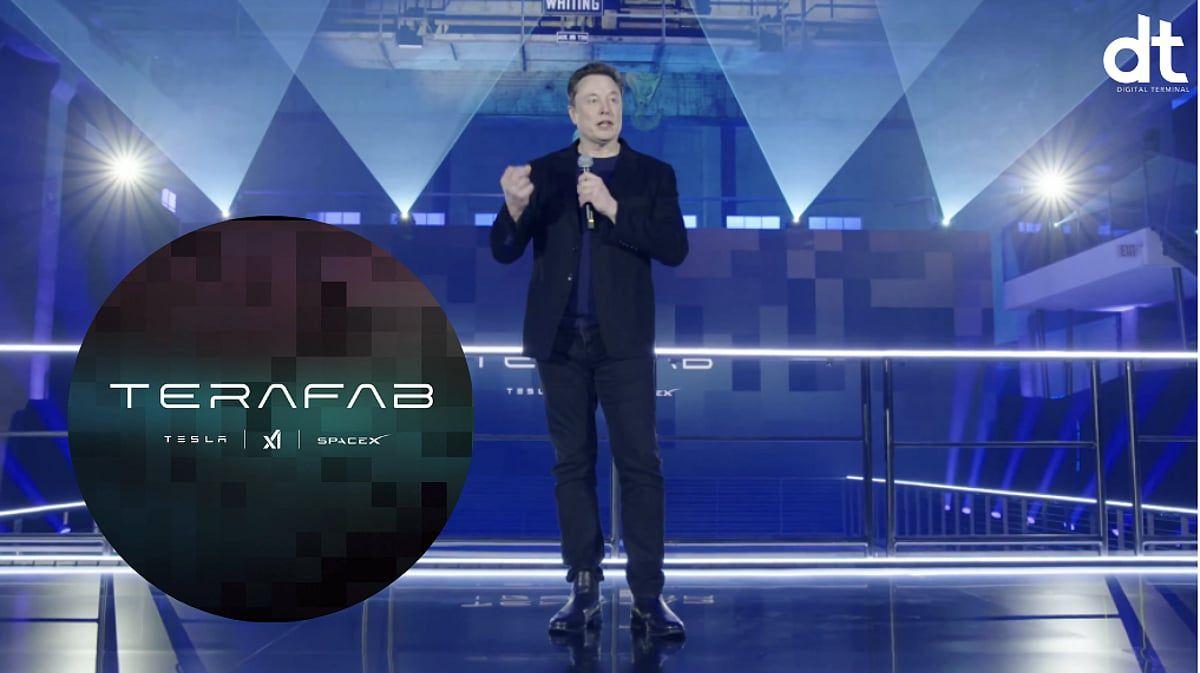
Source: DT
The project envisions two separate facilities, each manufacturing a single chip design
5
. One chip would power Tesla vehicles and Optimus humanoid robots on Earth, while the second would be designed specifically for AI satellites in space, engineered to withstand harsher environments and operate at higher temperatures5
. The goal is to manufacture chips supporting 100 to 200 gigawatts of computing power annually on Earth, plus a terawatt of computing power in space1
.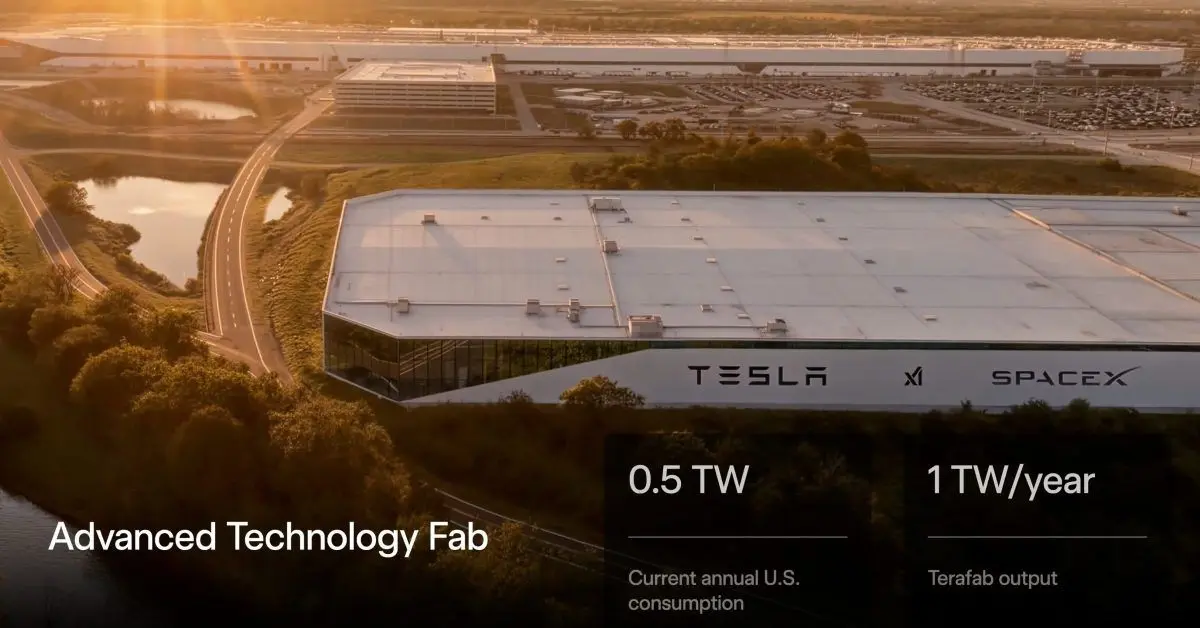
Source: Electrek
Astronomical Costs and Logistical Challenges Raise Doubts
According to Bernstein analysts, achieving Musk's vision of producing one terawatt of AI chip production per year would require between $5 trillion and $13 trillion in capital spending
3
. The semiconductor manufacturing operation would need to process 22.4 million Rubin Ultra GPU wafers, 2.716 million Vera CPU wafers, and 15.824 million HBM4E wafers annually using between 142 and 358 fabs2
.
Source: CXOToday
Breaking down the costs, logic capacity alone would require approximately 105 to 126 fabs at yields between 80% and 100%, costing around $3.15 trillion to $3.78 trillion
2
. For context, a modern 2nm-class capable fab costs between $25 billion and $35 billion2
. High-bandwidth memory production would require roughly 9 to 12 fabs at approximately $20 billion each, totaling around $240 billion2
. Advanced packaging facilities for 2.5D and 3D integration would add hundreds of billions more, with each phase costing $2 billion to $3.5 billion2
.Raising $5 trillion would be extraordinarily difficult. For perspective, companies like Nvidia, Apple, and Alphabet have market capitalizations of $4.34 trillion, $3.71 trillion, and $3.5 trillion respectively
2
. The U.S. government's entire budget for this year is approximately $7 trillion, making even sovereign funding challenging2
.Industry Experts Question Feasibility and True Intentions
Analysts remain skeptical about whether Elon Musk genuinely intends to build the chip manufacturing plant at the scale proposed. Bernstein analysts, including Stacy Rasgon, wrote that "a true Terafab feels like a stretch to us," noting the compute requirement would be "on the order of the entire current global installed semi capacity"
3
. Patrick Moorhead of Moor Insights & Strategy suggested it's unlikely Musk will ultimately build chip fab facilities at all3
.Instead, experts speculate Musk's real objective may be to highlight the global shortage of AI chip capacity or motivate existing chipmakers like TSMC, Samsung, and Nvidia to accelerate production
3
. The announcement could also boost SpaceX's prospects as it prepares for an initial public offering later this year, potentially valued at around $1.75 trillion3
. Growing concerns in Silicon Valley about supply shortages are legitimate—Amazon, Alphabet, and other hyperscalers expect to spend approximately $650 billion this year alone on data center infrastructure, creating severe crunches in memory chips and AI accelerators3
.Related Stories
Space Ambitions and Physical Constraints
Musk's vision extends beyond terrestrial applications. He plans to produce chips for satellites packing 100 kilowatts of computing power initially, eventually scaling to megawatt-scale satellites
4
. Achieving a terawatt of computing power in space would require launching 10 million tons into space annually, translating to approximately 50,000 Starship launches per year—one giant rocket every ten minutes4
.Musk mentioned developing "some very interesting new physics" and a "recursive process" allowing rapid chip production and frequent redesigns
4
. He claims his Austin facility can produce "any kind of chip" and lithography masks4
. However, constraints extend beyond capital to include limited availability of wafer fabrication equipment, construction materials, and a sufficiently skilled workforce2
. Current supply shortages, including a 30% drop in helium production due to conflict in Iran, further complicate semiconductor manufacturing4
.For comparison, TSMC shipped 15.023 million 300-mm-equivalent wafers in 2025 and currently operates about 50 300-mm fab modules built over two decades
2
. Musk would need to surpass the combined output of TSMC, Samsung, and Intel—a herculean effort that has never been attempted in semiconductors history. While Musk challenged doubters by pointing to Tesla and SpaceX's success in defying critics who predicted electric cars and reusable rockets wouldn't be feasible4
, he provided no timeline for Terafab and has a documented history of overpromising on goals and timelines1
.References
Summarized by

Navi
[4]
Related Stories
Elon Musk launches Terafab chip plant in Austin to fuel AI ambitions across Tesla and SpaceX
15 Mar 2026•Technology
Tesla Eyes Massive Chip Manufacturing Plant as Musk Considers Intel Partnership for AI Ambitions
07 Nov 2025•Business and Economy

Elon Musk Announces Ambitious Plan to Outproduce All AI Chip Makers Combined with Tesla's Custom Silicon
25 Nov 2025•Technology
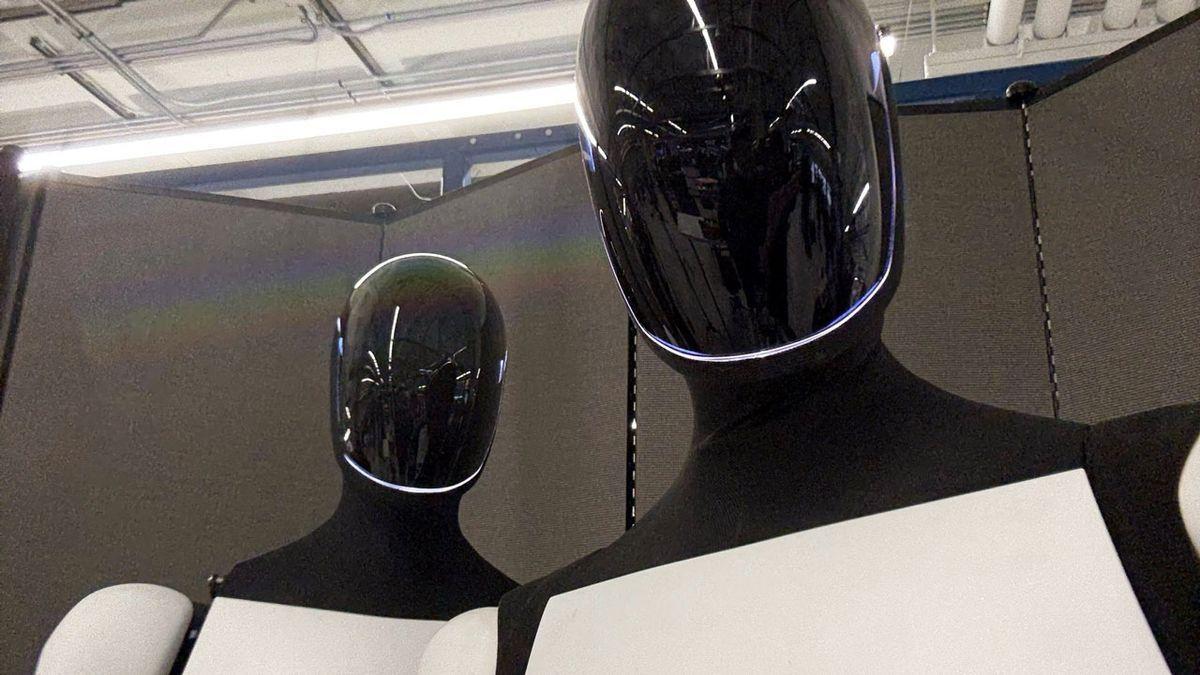
Recent Highlights


Recent Highlights
Today's Top Stories





Your Daily Dose of Curated AI News
Don’t drown in AI news. We cut through the noise - filtering, ranking and summarizing the most important AI news, breakthroughs and research daily. Spend less time searching for the latest in AI and get straight to action.

