Netflix's $82.7 billion Warner Bros. deal is really an AI play to counter Google's chip dominance


3 Sources
3 Sources
[1]
Top analyst says Netflix's $72 billion bet on Warner Bros. isn't about the 'Death of Hollywood' at all. It's really about Google | Fortune
Netflix's $72 billion play for Warner Bros. is as much a bet on the future of artificial intelligence (AI) and chips as it is on movies and shows, according to a top Wall Street analyst, who said in an interview with Fortune the deal cannot be understood without looking at Google's technology ambitions. Amid cries from the jilted Ellison family about a "tainted" sale process and indie producers and theater owners of the "death of Hollywood," Melissa Otto, Head of Research at S&P Global Visible Alpha, sees a different game being played. Otto said she thinks the tech angle of the industry is being overlooked. "I think there's this much bigger conversation that is being missed," she said: Google and its TPU chips. A key question for the future of entertainment, Otto told Fortune, is control over premium video at massive scale in an era when generative AI will increasingly create, remix, and personalize moving images. (Otto called it the "video corpus" that will train and power the next generation of AI models.) Over the long term, Otto added, that is a key part of the mystery behind why Netflix, long a builder rather than a buyer, would make Hollywood history by taking out one of its biggest rivals and one of the town's prestige legacy studios. Co-CEO Greg Peters was asked a blunt question about that same thing this morning on the call with analysts about the historic merger. Rich Greenfield of LightShed Partners cited Peters' own previous statement at a Bloomberg conference about how there's a long history of failed media mega-mergers, so he questioned: "Why is this going to end differently than every other media transaction essentially of this scale and history?" Peters, while clarifying his remarks at the conference were a bit more nuanced, acknowledged "historically, many of these mergers haven't worked, some have, but you really got to take a look at this on a case by case basis." Still, Peters argued most previous big deals showed a lack of understanding about the underlying business, and Netflix understands these assets and has a "clear thesis about how the critical parts of Warner Brothers accelerate our progress." He also acknowledged Netflix isn't expert at doing large-scale M&A. After all, this is expensive. "We are surprised that Netflix felt the need to spend $80bn+ and pay a premium for something Netflix disrupted," Barclays analysts wrote in reaction to the deal, "and it is not clear what problem or opportunity Netflix is solving for that couldn't have been achieved organically." In a statement emailed to Fortune, Dave Novosel, a Gimme Credit senior bond analyst, said the deal looks expensive to him as well, with Netflix assuming nearly $11 billion of debt. "While the WBD assets bring an amazing amount of attractive content, NFLX is paying a steep EBITDA multiple of more than 25x, which seems extravagant," Novosel wrote. Once it reaches the advertised synergies, he added, the resulting multiple of closer to 15x seems more reasonable. While those are pending, "the huge amount of debt that Netflix will need to raise to fund the deal will take leverage to well more than 4x initially." Novosel wrote investors may need to be patient. Bloomberg's credit team, meanwhile, reported the $59 billion bridge loan being taken out to finance this deal is among the biggest in corporate history. Here's what Otto sees happening in Northern California, far from Tinseltown, where the Warner deal is all anybody can talk about, and why Netflix took such a big swing. Part of Netflix's thesis, according to Otto, is that it's a tech company at heart and it recognizes Google's rapid advancements in AI, particularly its advancements in TPU chips. "What TPU chips do really, really well is in the modality of video in generative AI," Otto said, as they essentially turn mathematical representations into moving pictures in much the same way GPUs revolutionized natural language AI by tokenizing and modeling text. Instead of ChatGPT and text, think Gemini 3 and YouTube videos. Netflix already trails YouTube in total share of streaming time, with Bank of America Research recently citing Nielsen data showing YouTube held 28% of U.S. streaming, versus Netflix's 18%. Otto said this threatens to go up another notch when and if Google's TPU chips turbocharge content made with generative AI. "I'm sure that it's feeding into the strategy," Otto said. "If I were Netflix and I knew that Google, one of their formidable competitors, had this chip technology and was essentially plowing billions and billions of dollars into developing the infrastructure so that they could carve out the corpus of the video modality in generative AI, I would want to build a moat around my business." On the surface, Netflix is buying a legacy studio with a deep library, beloved franchises, and a global brand -- and paying up to do it. The combined streaming and studio business generates about $25 billion in revenue and roughly $4 billion to $5 billion in EBITDA, but margins on streaming remain thin, making the economics of the deal look tough in the near term. Executives have emphasized overlapping subscribers, obvious cost cuts and an expected $5.5 billion in efficiencies, the kind of "low‑hanging fruit" that can occupy management for the next 12 to 24 months, Otto said. But in a world where TPUs can make high‑quality video "basically for free," any player lacking both the chips and the content could find itself outgunned as AI reshapes how entertainment is produced and consumed. That makes Netflix's big splash for Batman, Harry Potter, and the like a different kind of moat, and a different kind of game than the classic Hollywood rivalries of yore. Otto said it was plausible generative AI entertainment could be seen as an extension of the recent IP wars that saw Hollywood deluged by floods of superhero movies and sequels, with Disney's Marvel Studios ushering in a computer generated revolution in the 21st century. "I think that's not an outrageous assumption." By absorbing Warner Bros., Netflix increases the volume and diversity of content it can feed into recommendation systems, experimentation and, eventually, its own AI‑driven video tools. Otto also noted the deal potentially gives Netflix more exposure to advertising, an area in which Alphabet has dominated and where Warner Bros. still generates $6 billion-$7 billion in ad revenue. While the ultimate destination of that ad talent remains unclear, as they may go to the spinco that includes WBD's cable assets such as CNN and TNT. (Netflix has only been active in ads since 2022, having been a premium subscription service since it pivoted from DVD rentals to streaming in the late 2000s.) Imagine a world, Otto said, where you could create your own versions of the crime classic Columbo starring an AI-generated version of legendary actor Peter Falk, who died in 2011. (Columbo had several homes on TV on neither Warner Bros. nor Netflix, as it was first an NBC property in the 1970s, and then an ABC property from the late '80s onward.) "In this day and age, boy, wouldn't it be interesting?" Otto asked rhetorically. In many ways, she added, this moment is remarkable because Netflix may end up neither a subscription nor an advertising business, but an AI-based one that doesn't quite exist yet. "It's kind of exciting because it means that it's anybody's game," Otto said. Otto also raised the spectre of TikTok, the social media giant partially under the control of Larry Ellison. "They're a formidable competitor as well," she said. What's likely, she added, is the future will be unpredictable. The rise of AI "could provide some really amazing innovation over the next couple of years." She agreed it could create a bonanza for show business lawyers who wrangle over the rights of things like the likeness of Falk, which was a major issue in the recent Hollywood strikes. "That may be the real story," she said.
[2]
Analyst Says Netflix-Warner Bros Merger Is About More Than Movies -- It's An AI Play - Alphabet (NASDAQ:GOOG), Alphabet (NASDAQ:GOOGL)
Netflix Inc.'s (NASDAQ:NFLX) $82.7 billion acquisition of Warner Bros. Discovery (NASDAQ:WBD) is a bet on artificial intelligence and chips as much as movies and shows, according to Melissa Otto, head of research at S&P Global Visible Alpha. Check out the current price of NFLX stock here. According to Otto, the deal can't be fully understood without considering Alphabet Inc.'s (NASDAQ:GOOG) (NASDAQ:GOOGL) technology ambitions, Fortune reported. Google TPU Chips Drive Strategy Otto told Fortune that a central question for the future of entertainment is who controls premium video at scale, as generative AI increasingly creates and personalizes moving images. She described this collection as the "video corpus" that will train next-generation AI models. "If I were Netflix and I knew that Google had this chip technology and was essentially plowing billions of dollars into developing infrastructure so they could carve out the corpus of the video modality in generative AI, I would want to build a moat around my business," Otto told Fortune. In the competitive AI landscape, Google's TPU chips are considered a fundamental threat to Netflix, as these chips are designed for media content generation, synthetic speech, and vision services. See Also: Netflix's Warner Bros. Bid Runs Into Trouble: Trump Officials, Theaters, and Hollywood Talent Push Back Netflix Trails YouTube In Viewership Battle Nielsen data from October shows why the Warner acquisition makes strategic sense for Netflix. Netflix is already losing to Google's YouTube in viewership. YouTube commanded 12.9% of total TV viewing time among persons aged 2 and older, while Netflix held 8%. Even combined with Warner Bros. Discovery's 1.3% share, the merged entity would still trail YouTube's reach. TPU Competition Adds Urgency To Netflix Deal Google's TPU chips have gained significant traction in recent months. They are not only a threat to Netflix, but some say they have challenged Nvidia Corp.'s (NASDAQ:NVDA) AI market dominance, though market strategist James E. Thorne of Wellington-Altus Private Wealth argues that hyperscalers turn to TPUs as a hedge against Nvidia's tight supply and long lead times for Blackwell and Rubin GPUs, rather than as a universal replacement. Read Next: Netflix-Warner Bros $82.7 Billion Mega-Merger Sparks Fierce Hollywood, Lawmakers Backlash -- Elizabeth Warren Calls It An 'Anti-Monopoly Nightmare' Photo: Shutterstock Disclaimer: This content was partially produced with the help of AI tools and was reviewed and published by Benzinga editors. GOOGAlphabet Inc$321.23-0.27%OverviewGOOGLAlphabet Inc$320.50-0.24%NFLXNetflix Inc$100.600.36%NVDANVIDIA Corp$182.35-0.03%WBDWarner Bros. Discovery Inc$25.89-0.73%Market News and Data brought to you by Benzinga APIs
[3]
Warner Bros.' Hidden Appeal to Netflix: AI Supercharger
A key asset that Netflix could be eyeing in the Warner Bros deal is one few people are talking about: an AI trove. Among the most important aspects of the coming automated age, say forward-looking insiders, is a rich well of content going back many decades, either to train your own studio on or to give consumers to play with. Warner Bros has it. Netflix doesn't. And if the deal goes through, the streamer will. Netflix executives on an investor call Friday morning announcing the lucrative deal didn't note this point explicitly; co-chief executive Ted Sarandos just said innovation several times while he and others alluded to "world-building." But the subtext was there -- since technology relies on a massive library, Netflix's AI efforts just got a big boost. Disney threw down the gauntlet several weeks ago when leader Bob Iger announced that the company will soon allow Disney+ subscribers "to create user-generated content and to consume user generated content -- mostly short-form -- from others." The conglomerate has a slew of franchises that users would want to meme-ify, from Star Wars to Pixar to the MCU. Warners offers a comparable set, from Harry Potter to Lord of the Rings to Looney Tunes. Heck, Netflix could even let people play with Casablanca and Citizen Kane, two library titles it shouted out to. Netflix also brings another advantage: technical machine-learning experience, honed by more than 15 years of gathering data on customers and building algorithms to serve them. Now armed with a content library, their Sora-like AI product, should they launch one, could be a juggernaut. And the company has been making a new push into games, which are a sort-of digital cousin of user-generated tools. Training would be trickier. While Netflix owning Warner Bros. would allow it to feed models with its thousands of titles uninterrupted by legal challenges, it remains to be seen what mechanisms the company would have to stop other studios or tech companies from feasting on them too, given the Wild West nature of training and lack of clear legal restrictions thus far. Conversely, Netflix might not want to limit itself to just WB titles. When Disney planted its flag on AI last month it was seen in part as a desire not to repeat the sins of the past, when it let Netflix get way too far in front on streaming before launching its own service in late 2019. That kind of territory-cede, Iger telegraphed, would not happen with this phase of the tech revolution. His company had the content and soon would have the tech, unlike Netflix which only had the latter. With one stroke of the pen (and $82 billion), Ted Sarandos just flipped the script.
Share
Share
Copy Link
Netflix's historic $82.7 billion acquisition of Warner Bros. Discovery isn't just about content—it's a strategic AI play. S&P analyst Melissa Otto reveals the deal targets Google's TPU chip advantage and control over the video corpus needed to train next-generation AI models, as Netflix builds a moat against YouTube's growing dominance in streaming.
Netflix Bets Big on AI with Warner Bros. Acquisition
Netflix's $82.7 billion acquisition of Warner Bros. Discovery represents far more than a traditional media merger. According to Melissa Otto, Head of Research at S&P Global Visible Alpha, the deal is fundamentally an AI play designed to counter Google's advancing chip technology and control over video content at scale . While critics decry the "death of Hollywood" and question why Netflix would pay such a premium for assets it once disrupted, Otto sees a different strategic calculus at work—one centered on artificial intelligence and the future of AI-driven entertainment.
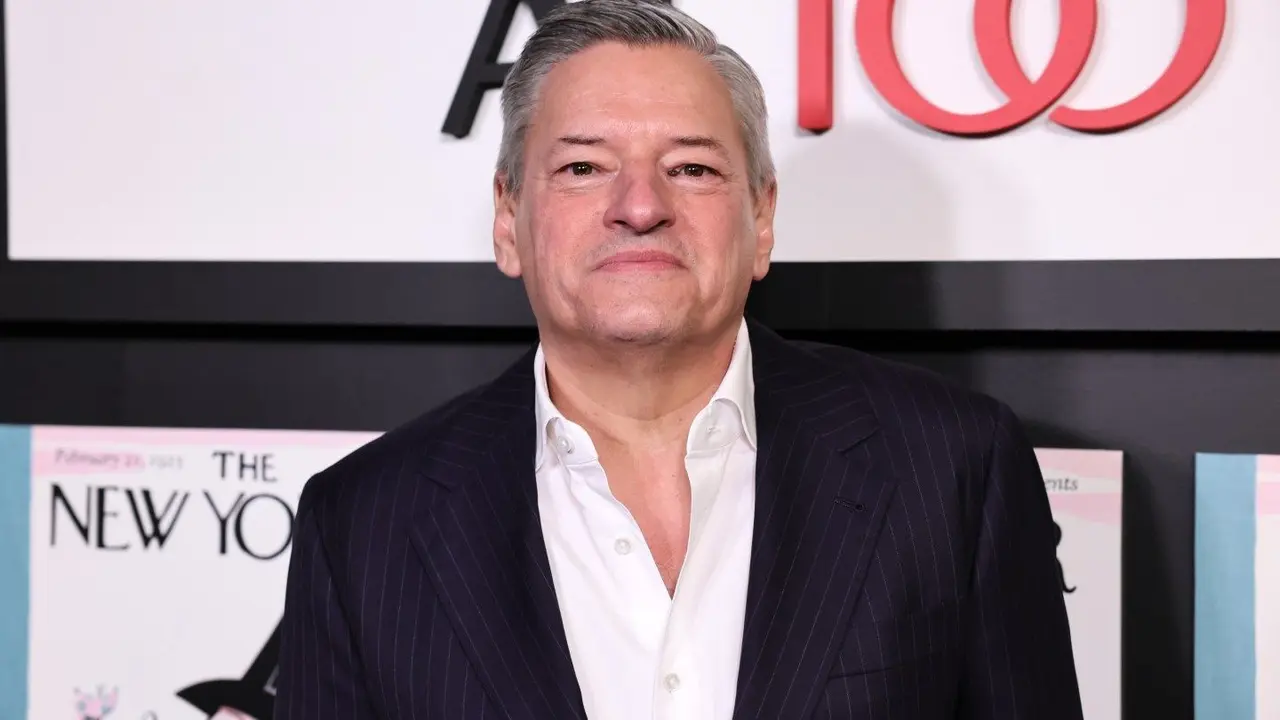
Source: THR
"I think there's this much bigger conversation that is being missed," Otto told Fortune, pointing specifically to Google and its TPU chips . The Netflix Warner Bros. merger cannot be understood without examining the competitive dynamics in AI infrastructure, particularly as generative AI increasingly creates, remixes, and personalizes video content. Otto describes this as the battle for the "video corpus"—the massive collection of premium video that will train AI models and power the next generation of entertainment technology
2
.Google's TPU Chips Drive Strategic Urgency
The technical foundation of this AI play centers on Google's Tensor Processing Unit (TPU) chips, which excel at video modality in generative AI. These TPU chips essentially transform mathematical representations into moving pictures, much as GPUs revolutionized natural language AI . "If I were Netflix and I knew that Google had this chip technology and was essentially plowing billions of dollars into developing infrastructure so they could carve out the corpus of the video modality in generative AI, I would want to build a moat around my business," Otto explained
2
.The competitive pressure is already visible in viewership data. Nielsen data from October shows YouTube commanded 12.9% of total TV viewing time among persons aged 2 and older, while Netflix held just 8%
2
. Bank of America Research recently cited separate Nielsen data showing YouTube held 28% of U.S. streaming versus Netflix's 18% . Even combined with Warner Bros. Discovery's 1.3% share, the merged entity would still trail YouTube's reach2
. This gap threatens to widen further if Google's TPU chips turbocharge content made with generative AI.Content Library Becomes AI Training Ground
A critical but overlooked aspect of the Warner Bros. deal is the decades-deep content library that Netflix will acquire—an asset that becomes exponentially more valuable in the age of AI. Warner Bros. offers franchises spanning from Harry Potter to Lord of the Rings to Looney Tunes, plus classic library titles like Casablanca and Citizen Kane
3
. This content library provides the raw material needed to train AI models and enable user-generated content experiences.Disney recently threw down the gauntlet when CEO Bob Iger announced that Disney+ subscribers will soon be able to create and consume user-generated content, mostly short-form, leveraging franchises from Star Wars to Pixar to the MCU
3
. Netflix brings technical machine-learning experience honed over more than 15 years of gathering customer data and building algorithms, but it lacked the extensive content library that Warner Bros. provides3
. Now armed with thousands of titles spanning decades, Netflix's potential Sora-like AI product could become a juggernaut in the space.Related Stories

Wall Street Questions the Premium Price
Despite the strategic AI rationale, Wall Street analysts remain skeptical about the financial terms. Barclays analysts wrote they were "surprised that Netflix felt the need to spend $80bn+ and pay a premium for something Netflix disrupted," questioning what problem or opportunity Netflix is solving that couldn't have been achieved organically . Dave Novosel, a Gimme Credit senior bond analyst, noted Netflix is paying a steep EBITDA multiple of more than 25x and assuming nearly $11 billion of debt . Bloomberg's credit team reported the $59 billion bridge loan financing this deal ranks among the biggest in corporate history .
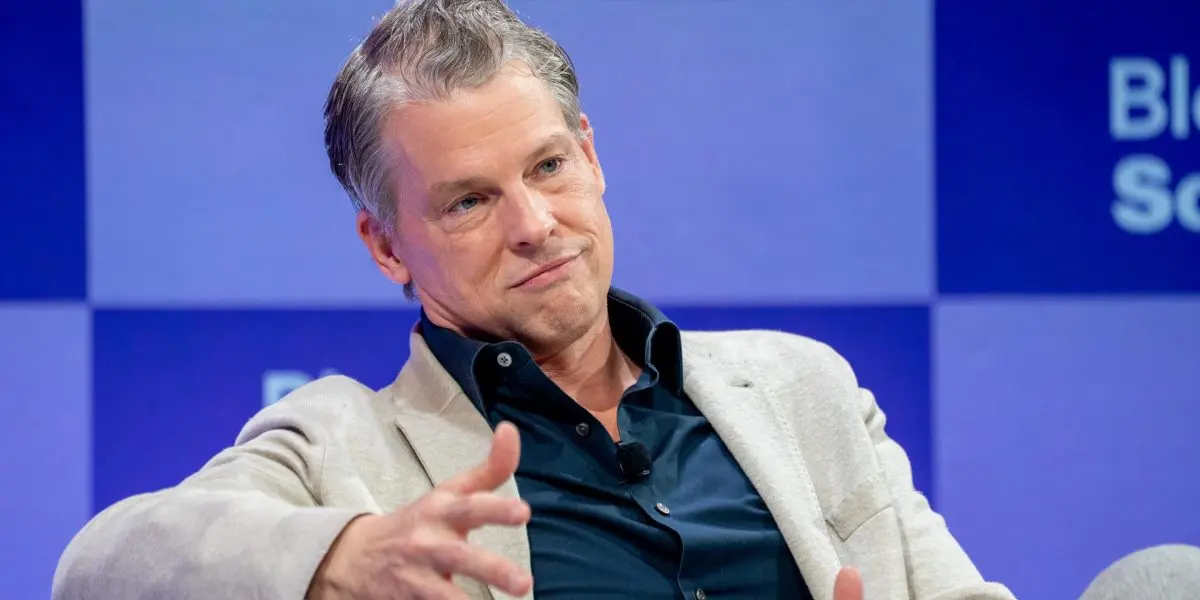
Source: Fortune
On the analyst call, co-CEO Greg Peters acknowledged Netflix isn't expert at large-scale M&A and that "historically, many of these mergers haven't worked." However, he argued Netflix understands these assets and has a "clear thesis about how the critical parts of Warner Brothers accelerate our progress" . The combined streaming and studio business generates about $25 billion in revenue and roughly $4 billion to $5 billion in EBITDA .
Future Implications for AI-Driven Entertainment
The Netflix Warner Bros. merger signals a fundamental shift in how streaming platforms view content—not just as entertainment to consume, but as data to train AI models that will shape the future of personalized, AI-generated video experiences. While training models on Warner Bros. content would allow Netflix to proceed without legal challenges, the Wild West nature of AI training and lack of clear legal restrictions means other studios or tech companies might still feast on these titles
3
. The deal represents Netflix's determination not to cede territory in the AI revolution the way traditional studios initially did with streaming. With one $82 billion transaction, Netflix positioned itself to compete not just with Disney's content empire, but with Google's technical infrastructure advantage in the race to dominate AI-driven entertainment.References
Summarized by

Navi
Related Stories
Netflix Embraces AI: A Game-Changer for Streaming and Content Creation
22 Oct 2025•Technology
Disney invests $1 billion in OpenAI, licenses 200+ characters for Sora video generator
11 Dec 2025•Technology

Netflix's Q2 Earnings: Strong Performance, AI Integration, and Adtech Expansion
19 Jul 2025•Business and Economy

Recent Highlights
1
Google Maps unveils Ask Maps with Gemini AI and 3D Immersive Navigation in biggest update
Technology
2
AI chatbots help plan violent attacks as safety guardrails fail, new investigation reveals
Technology
3
Three Tennessee teens sue xAI over Grok AI creating child sexual abuse material from real photos
Policy and Regulation

Recent Highlights
Today's Top Stories






Your Daily Dose of Curated AI News
Don’t drown in AI news. We cut through the noise - filtering, ranking and summarizing the most important AI news, breakthroughs and research daily. Spend less time searching for the latest in AI and get straight to action.

