New Open-Source Tool RNACOREX Maps Gene Regulation Networks to Predict Cancer Survival


2 Sources
2 Sources
[1]
A new tool is revealing the invisible networks inside cancer
Researchers at the University of Navarra in Spain have created RNACOREX, an open-source software platform designed to identify gene regulation networks linked to cancer survival. The tool was developed by scientists at the Institute of Data Science and Artificial Intelligence (DATAI), in collaboration with members of the Cancer Center Clínica Universidad de Navarra. Its performance has been tested using data from thirteen different tumor types provided by the international consortium The Cancer Genome Atlas (TCGA). RNACOREX was published in the journal PLOS Computational Biology. It can analyze thousands of biological molecules at the same time, allowing it to detect important molecular interactions that are often missed by traditional analysis methods. By producing a clear and interpretable molecular "map," the software helps researchers better understand how tumors function and offers new ways to explore the biological processes that drive cancer progression. Decoding Cancer's Hidden Genetic Structure Within human cells, different types of molecules such as microRNAs (miRNAs) and messenger RNA (mRNA) -- communicate through highly complex regulatory networks. When these networks fail to function properly, diseases including cancer can develop. "Understanding the architecture of these networks is crucial for detecting, studying, and classifying different tumor types. However, reliably identifying these networks is a challenge due to the vast amount of available data, the presence of many false signals, and the lack of accessible and precise tools capable of distinguishing which molecular interactions are truly associated with each disease," says Rubén Armañanzas, head of the Digital Medicine Laboratory at DATAI and one of the study's lead authors. RNACOREX was designed to overcome these challenges. It integrates curated information from international biological databases with real-world gene expression data to rank the most biologically meaningful miRNA-mRNA interactions. From this foundation, the software builds progressively more complex regulatory networks that can also function as probabilistic models for studying disease behavior. Predicting Survival With Interpretable Results To evaluate how well the tool performs, the research team applied RNACOREX to data from thirteen different cancers, including breast, colon, lung, stomach, melanoma, and head and neck tumors, using information from The Cancer Genome Atlas (TCGA). "The software predicted patient survival with accuracy on par with sophisticated AI models, but with something many of those systems lack: clear, interpretable explanations of the molecular interactions behind the results," says Aitor Oviedo-Madrid, a researcher at the Digital Medicine Laboratory of DATAI and first author of the study. Beyond survival prediction, RNACOREX can identify regulatory networks linked to clinical outcomes, detect molecular patterns shared across multiple tumor types, and spotlight individual molecules with strong biomedical relevance. These insights may help researchers generate new hypotheses about how tumors grow and progress, while also pointing toward promising future diagnostic markers or treatment targets. "Our tool provides a reliable molecular 'map' that helps prioritize new biological targets, speeding up cancer research," Oviedo-Madrid adds. An Expanding Open-Source Platform RNACOREX is freely available as an open-source program on GitHub and PyPI (Python Package Index). It includes automated tools for downloading databases, making it easier for laboratories and research institutions to integrate the software into their workflows. The project has received partial funding from the Government of Navarra (ANDIA 2021 program) and the ERA PerMed JTC2022 PORTRAIT. "As artificial intelligence in genomics accelerates, RNACOREX positions itself as an explainable, easy-to-interpret solution and an alternative to 'black-box' models, helping bring omics data into biomedical practice," says Armañanzas. The University of Navarra team is already working on expanding the software's capabilities. Planned additions include pathway analysis and new layers of molecular interaction data, with the goal of creating models that more fully explain the biological mechanisms behind tumor growth and progression. These efforts highlight the institution's broader commitment to interdisciplinary research that combines biomedicine, artificial intelligence, and data science to advance personalized and precision cancer medicine.
[2]
New open-source tool maps gene regulation networks in cancer
Universidad de NavarraDec 19 2025 University of Navarra (Spain) researchers have developed RNACOREX, a new open-source software capable of identifying gene regulation networks with applications in cancer survival analysis. The tool, created by scientists at the Institute of Data Science and Artificial Intelligence (DATAI), members of the Cancer Center Clínica Universidad de Navarra, has been validated with data from thirteen tumor types from the international consortium The Cancer Genome Atlas (TCGA). Published in PLOS Computational Biology, RNACOREX analyzes thousands of molecules simultaneously to detect key interactions that often remain undetected using conventional analytical approaches. The tool provides researchers with an interpretable molecular "map" that improves the understanding of tumors and opens new venues for revealing the mechanisms that drive tumor progression. Decoding cancer's hidden genetic structure Inside our cells, different types of molecules - such as microRNAs (miRNAs) and messenger RNA (mRNA)- communicate through highly complex regulatory networks. When these connections break down, cancers and other diseases can emerge. Understanding the architecture of these networks is crucial for detecting, studying, and classifying different tumor types. However, reliably identifying these networks is a challenge due to the vast amount of available data, the presence of many false signals, and the lack of accessible and precise tools capable of distinguishing which molecular interactions are truly associated with each disease." Rubén Armañanzas, head of the Digital Medicine Laboratory at DATAI and one of the study's lead authors RNACOREX addresses this problem by combining information from international databases with real gene-expression data analysis to rank the most biologically relevant miRNA-mRNA interactions. Using this information, it derives increasingly complex regulatory networks that could also serve as powerful probabilistic models. Better interpretation and prediction To assess its performance, researchers evaluated RNACOREX on thirteen cancer types - from breast and colon to lung, stomach, melanoma, and head and neck - using data from The Cancer Genome Atlas (TCGA) consortium. "The software predicted patient survival with accuracy on par with sophisticated AI models, but with something many of those systems lack: clear, interpretable explanations of the molecular interactions behind the results", adds Aitor Oviedo-Madrid, a researcher at the Digital Medicine Laboratory of DATAI and first author of the study. RNACOREX not only identifies regulatory networks associated with clinical outcomes, but also uncovers molecular patterns shared across tumor types and highlights individual molecules of particular biomedical interest. These findings open the door to new hypotheses about the mechanisms that regulate tumor growth and suggest valuable clues for future diagnostic or therapeutic targets. "Our tool provides a reliable molecular 'map' that helps prioritize new biological targets, speeding up cancer research", he concludes. An evolving open-source tool RNACOREX is an open-source program available on GitHub and PyPI (Python Package Index), and includes automated database downloads to streamline its use in laboratories and research centers. The project has been partially funded by the Government of Navarra (ANDIA 2021 program) and the ERA PerMed JTC2022 PORTRAIT. "As artificial intelligence in genomics accelerates, RNACOREX positions itself as an explainable, easy-to-interpret solution and an alternative to 'black-box' models, helping bring omics data into biomedical practice," says Armañanzas. The University of Navarra is already developing new functionalities - including pathway analysis and additional interaction layers - to develop models that better explain the mechanisms driving tumor growth and progression. These advances reflect the institution's commitment to interdisciplinary research that integrates biomedicine, AI, and data science to improve understanding and management of cancer through personalized and precision medicine. Universidad de Navarra Journal reference: Oviedo-Madrid, et al. (2025). RNACOREX - RNA coregulatory network explorer and classifier. PLoS Computational Biology. doi: 10.1371/journal.pcbi.1013660. https://journals.plos.org/ploscompbiol/article?id=10.1371/journal.pcbi.1013660
Share
Share
Copy Link
Researchers at the University of Navarra in Spain have developed RNACOREX, an open-source software platform that identifies gene regulation networks linked to cancer survival. The tool analyzes thousands of biological molecules simultaneously to detect molecular interactions often missed by traditional methods, providing an explainable alternative to AI models while predicting patient survival with comparable accuracy.

RNACOREX Emerges as Explainable Alternative to AI Models in Cancer Research
Researchers at the University of Navarra in Spain have introduced RNACOREX, an open-source software platform designed to identify gene regulation networks with direct applications in cancer survival analysis.
1
Developed by scientists at the Institute of Data Science and Artificial Intelligence (DATAI) in collaboration with members of the Cancer Center Clínica Universidad de Navarra, this tool addresses a critical gap in genomics research by offering interpretable insights into how tumors function at the molecular level.Published in PLOS Computational Biology, RNACOREX can analyze thousands of biological molecules simultaneously, detecting important molecular interactions that conventional analytical approaches frequently overlook.
2
The software has been validated using data from thirteen different tumor types provided by The Cancer Genome Atlas (TCGA), including breast, colon, lung, stomach, melanoma, and head and neck tumors.Decoding Complex Molecular Communication in Cancer
Inside human cells, different types of molecules such as microRNAs (miRNAs) and messenger RNA (mRNA) communicate through highly complex regulatory networks. When these networks fail to function properly, cancer and other diseases can develop. "Understanding the architecture of these networks is crucial for detecting, studying, and classifying different tumor types. However, reliably identifying these networks is a challenge due to the vast amount of available data, the presence of many false signals, and the lack of accessible and precise tools capable of distinguishing which molecular interactions are truly associated with each disease," says Rubén Armañanzas, head of the Digital Medicine Laboratory at DATAI and one of the study's lead authors.
1
RNACOREX overcomes these obstacles by integrating curated information from international biological databases with real-world gene expression data to rank the most biologically meaningful miRNA-mRNA interactions. From this foundation, the software builds progressively more complex regulatory networks that can also function as probabilistic models for studying disease behavior.
Predicting Patient Survival With Transparent Insights
The research team applied RNACOREX to data from thirteen different cancers to evaluate its performance. "The software predicted patient survival with accuracy on par with sophisticated AI models, but with something many of those systems lack: clear, interpretable explanations of the molecular interactions behind the results," says Aitor Oviedo-Madrid, a researcher at the Digital Medicine Laboratory of DATAI and first author of the study.
2
Beyond survival prediction, RNACOREX identifies regulatory networks linked to clinical outcomes, detects molecular patterns shared across multiple tumor types, and spotlights individual molecules with strong biomedical relevance. These capabilities may help researchers generate new hypotheses about tumor progression while pointing toward promising potential diagnostic markers or potential treatment targets. "Our tool provides a reliable molecular 'map' that helps prioritize new biological targets, speeding up cancer research," Oviedo-Madrid adds.
1
Related Stories

Open Access Advances Biomedicine and Data Science Integration
RNACOREX is freely available as an open-source program on GitHub and PyPI (Python Package Index), including automated tools for downloading databases to streamline integration into laboratory workflows. The project has received partial funding from the Government of Navarra (ANDIA 2021 program) and the ERA PerMed JTC2022 PORTRAIT.
1
"As artificial intelligence in genomics accelerates, RNACOREX positions itself as an explainable, easy-to-interpret solution and an alternative to 'black-box models,' helping bring omics data into biomedical practice," says Armañanzas.
2
The University of Navarra team is already working on expanding the software's capabilities, with planned additions including pathway analysis and new layers of molecular interaction data. These efforts aim to create models that more fully explain the biological mechanisms behind tumor growth and progression, reflecting the institution's commitment to interdisciplinary research that combines biomedicine, artificial intelligence, and data science to advance personalized and precision cancer medicine.References
Summarized by

Navi
[1]
[2]
Related Stories
NicheCompass: AI Tool Revolutionizes Cancer Treatment by Visualizing Cellular 'Social Networks'
19 Mar 2025•Science and Research

AI Tool Uncovers Five Distinct Cancer Cell Groups, Revolutionizing Tumor Characterization and Treatment
25 Jun 2025•Health
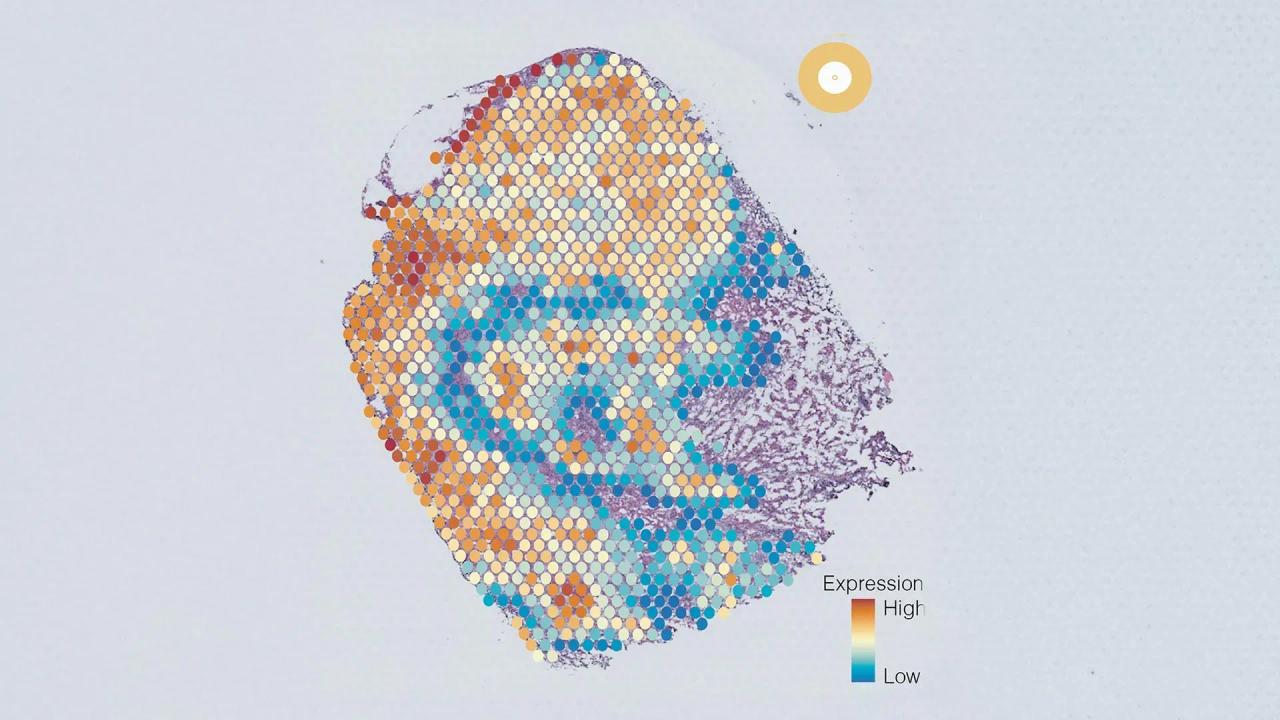
Stanford AI Tool Predicts Cancer Gene Activity from Biopsy Images, Potentially Revolutionizing Cancer Diagnosis
15 Nov 2024•Health

Recent Highlights
1
AI chatbots validate you too much, making you less kind to others, Stanford study reveals
Science and Research

2
Anthropic's Claude Code Source Leak Reveals Hidden AI Agent Plans and Extensive System Access
Technology

3
Judge blocks Pentagon from branding Anthropic a security risk over AI safety guardrails dispute
Policy and Regulation

Recent Highlights
Today's Top Stories










Your Daily Dose of Curated AI News
Don’t drown in AI news. We cut through the noise - filtering, ranking and summarizing the most important AI news, breakthroughs and research daily. Spend less time searching for the latest in AI and get straight to action.

