North Lincolnshire approves £10bn AI data centre despite climate emissions warnings


2 Sources
2 Sources
[1]
Plans for major AI data centre in North Lincolnshire approved
Plans for one of the UK's largest data centres to be built in North Lincolnshire have been approved. The artificial intelligence (AI) data centre campus, called Elsham Tech Park, will be developed next to Elsham Wolds Industrial Estate. North Lincolnshire Council said the facility could attract up to £10bn of investment and would bring about 900 highly skilled long-term jobs to the area. Council leader Rob Waltham said: "The numbers attached to this project are eye-watering... but what really matters is what it means for residents in North Lincolnshire." According to plans, the energy centre would comprise up to 15 individual data centre buildings and would produce up to 49.9MW of electricity a year. Next to it would be a greenhouse complex, using waste heat from the cooling of the data centre buildings to grow agricultural produce. The site would cover up to 435 acres (176 hectares) of agricultural field. The council said the project would produce up to 1GW (1,000MW) of computing capacity, placing it among the largest AI data centre campuses proposed in the UK. The development would also create thousands of construction roles over the course of a decade as the site is built out, the authority added. Waltham said: "This is a once-in-a-generation investment opportunity. "North Lincolnshire remains a place where major industries choose to invest, grow and create jobs." Listen to highlights from Lincolnshire on BBC Sounds, watch the latest episode of Look North. Download the BBC News app from the App Store for iPhone and iPad or Google Play for Android devices
[2]
Lincolnshire council approves AI datacentre despite emissions warnings
Campaigners say campus near Scunthorpe could generate emissions close to those from all UK domestic flights Plans for a new datacentre in Lincolnshire have been approved, despite warnings it could be a major new source of emissions. On Wednesday, North Lincolnshire council voted unanimously to approve planning permission for the Elsham Tech Park, a proposed AI datacentre campus near Scunthorpe, next to the Elsham Wolds industrial estate. According to the tech justice nonprofit Foxglove, the projected emissions produced will approach those generated by every domestic flight taken in the UK. Council documents estimate the proposed datacentre's "peak annual scope 2 emissions", or indirect greenhouse gases from generating electricity, will reach about 1m tonnes of CO equivalent in 2033-34. All of the UK's domestic flights total 1.2m tonnes of CO equivalent. The council concluded that, despite the "large absolute energy demand" of the development, the impact of emissions was not significant due to the datacentre's proximity to clean energy sources in the Humber region. According to Elsham Tech Park, construction is expected to begin in 2027, with a view to opening some parts of the campus in 2029. It plans to create up to 15 datacentre buildings across the site, generating up to 1GW of computing capacity, making it one of the largest datacentres proposed in the UK. Concerns remain about the feasibility of this level of power generation. A separate AI project by the tech firm Nscale was meant to build a datacentre that could provide 50MW of AI capacity - with a view to upgrading to 90MW. However, a Guardian investigation has found that, nine months before it is due to be completed, it remains a scaffolding yard in Essex. Elsham Tech Park claims the centre will create up to 900 long-term jobs and could attract up to £10bn of private investment, as well as giving priority to local businesses for supply chain opportunities. "The numbers attached to this project are eye-watering - almost hard to get your head around," said Rob Waltham, the leader of North Lincolnshire council, adding the centre was a "once-in-a-generation investment opportunity". He added: "This will bring thousands of construction jobs, hundreds of highly skilled, high-paid long-term roles, and the chance to build a new industry right here in Lincolnshire." On its environmental impact, Elsham Tech Park said the plan for the campus involves improving biodiversity, including new planting, bat and bird boxes and wildflower grassland. It added the centre will have a "highly water-efficient design" using closed-loop systems, which will use minimal water to cool its servers. Tim Squirrell, the head of strategy at Foxglove, said: "It is incredibly disappointing to see big tech's dubious claims of economic growth spurred by AI datacentres be put ahead of the ongoing climate crisis." Squirrell added North Lincolnshire council "ignored their own policy, which states 20% of energy must be generated through on-site renewables" and "credulously accepted the developer's incorrect figures, which underestimated the impact of this datacentre on the UK's carbon budget by a factor of five". A spokesperson for the developer behind the datacentre, Greystoke, said: "Elsham Tech Park in north Lincolnshire - next to the country's most advanced clean energy cluster - will see £10bn of private investment, generating thousands of well-paid operational and construction jobs in the region, and supporting local supply chains." Another proposed datacentre in north Lincolnshire, Humber Tech Park, was also backed by Greystoke. It was granted planning permission in August 2024, but construction has yet to begin.
Share
Share
Copy Link
North Lincolnshire Council has unanimously approved Elsham Tech Park, one of the UK's largest AI data centre campuses, promising £10bn in investment and 900 highly skilled long-term jobs. However, campaigners warn the facility could generate emissions approaching those from all UK domestic flights, with projected peak annual emissions reaching 1 million tonnes of CO2 equivalent by 2033-34.
North Lincolnshire Council Approves Major AI Data Centre Campus
North Lincolnshire Council has unanimously approved plans for Elsham Tech Park, positioning it among the UK's largest AI data center campus proposals with up to 1GW of computing capacity
1
2
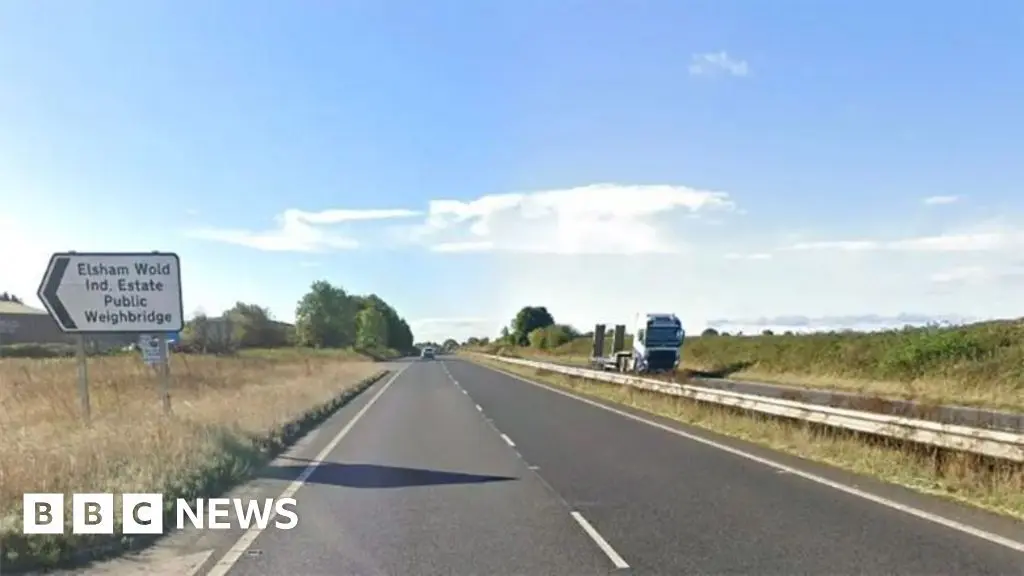
. The AI data centre will be developed next to Elsham Wolds Industrial Estate, covering up to 435 acres of agricultural field. Council leader Rob Waltham described it as a "once-in-a-generation investment opportunity," with the potential to attract £10bn in investment and create approximately 900 highly skilled long-term jobs in the region1
.
Source: BBC
The facility will comprise up to 15 individual data centre buildings, with construction expected to begin in 2027 and partial campus opening targeted for 2029
2
. Beyond permanent positions, the development would create thousands of construction roles over the course of a decade as the site is built out1
. The energy centre would produce up to 49.9MW of electricity annually, while an adjacent greenhouse complex will use waste heat from the cooling of servers to grow agricultural produce1
.Emissions Warnings Challenge Climate Commitments
Despite the economic promises, the approval has drawn sharp criticism over emissions warnings from environmental campaigners. According to tech justice nonprofit Foxglove, the projected emissions produced will approach those generated by every domestic flight taken in the UK
2
. Council documents estimate the proposed datacentre's peak annual scope 2 emissions will reach approximately 1 million tonnes of CO2 equivalent in 2033-34, compared to 1.2 million tonnes from all UK domestic flights2
.Tim Squirrell, head of strategy at Foxglove, expressed disappointment that "big tech's dubious claims of economic growth spurred by AI datacentres be put ahead of the ongoing climate crisis"
2
. He alleged that North Lincolnshire Council "ignored their own policy, which states 20% of energy must be generated through on-site renewables" and "credulously accepted the developer's incorrect figures, which underestimated the impact of this datacentre on the UK's carbon budget by a factor of five"2
.Clean Energy Sources and Environmental Policies Under Scrutiny
The council concluded that despite the "large absolute energy demand" of the development, the impact of emissions was not significant due to the datacentre's proximity to clean energy sources in the Humber region
2
. Developer Greystoke emphasized that Elsham Tech Park sits "next to the country's most advanced clean energy cluster" and will support local supply chains2
.On environmental policies, Elsham Tech Park stated the campus plan involves improving biodiversity, including new planting, bat and bird boxes, and wildflower grassland
2
. The centre will feature a "highly water-efficient design" using closed-loop systems for cooling, which will use minimal water2
.Related Stories

Questions About Power Generation Feasibility
Concerns remain about the feasibility of this level of power generation. A separate AI project by tech firm Nscale was meant to build a datacentre providing 50MW of AI capacity with plans to upgrade to 90MW, but nine months before its scheduled completion, it remains a scaffolding yard in Essex
2
. This raises questions about whether Elsham Tech Park's ambitious 1GW target can be achieved on schedule. Another proposed datacentre in North Lincolnshire, Humber Tech Park, was granted planning permission in August 2024 by the same developer Greystoke, but construction has yet to begin2
. These delays highlight the gap between approval and actual delivery of such massive infrastructure projects, making it critical to monitor whether this investment opportunity translates into the promised economic benefits for North Lincolnshire.References
Summarized by

Navi
Related Stories
Drax to build 100MW data centre at Yorkshire power station to meet surging AI energy demand
11 Dec 2025•Business and Economy
Ravenscraig Site Set to Become £3.9bn Green AI Data Centre in Scotland
27 Jun 2025•Business and Economy
UK Government Faces Legal Challenge Over Controversial Data Center Approval on Green Belt Land
21 Aug 2025•Policy and Regulation

Recent Highlights
1
Tennessee Teens Sue Elon Musk's xAI Over Grok AI-Generated Child Abuse Images
Policy and Regulation

2
Supermicro Co-Founder Indicted in $2.5 Billion Nvidia AI Chip Smuggling Scheme to China
Policy and Regulation

3
Val Kilmer to appear posthumously in As Deep as the Grave through AI-generated performance
Entertainment and Society

Recent Highlights
Today's Top Stories










Your Daily Dose of Curated AI News
Don’t drown in AI news. We cut through the noise - filtering, ranking and summarizing the most important AI news, breakthroughs and research daily. Spend less time searching for the latest in AI and get straight to action.

