Jensen Huang claims Nvidia achieved AGI, then immediately walks back the bold statement


12 Sources
[1]
Nvidia CEO Jensen Huang says 'I think we've achieved AGI'
On a Monday episode of the Lex Fridman podcast, Nvidia CEO Jensen Huang made a hot-button statement: "I think we've achieved AGI." AGI, or artificial general intelligence, is a vaguely-defined term that has incited a lot of discussion by tech CEOs, tech workers, and the general public in recent
[2]
Nvidia CEO Jensen Huang Says He Thinks Artificial General Intelligence Is Here
Artificial general intelligence (AGI) has become the ultimate goal for tech CEOs in recent years, and Nvidia's CEO Jensen Huang claims the industry may have already reached it. However, it all depends on your own definition of AGI. In an interview on the Lex Fridman podcast, the two discuss the
[3]
"We've achieved AGI," says Nvidia CEO, but his own examples suggest otherwise
Serving tech enthusiasts for over 25 years. TechSpot means tech analysis and advice you can trust. Big quote: Nvidia CEO Jensen Huang declared this week that AGI - short for "artificial general intelligence" - has already arrived, before quickly softening the claim. In one podcast appearance,
[4]
'I think we've achieved AGI' -- Nvidia's CEO believes we've finally achieved artificial general intelligence
Nvidia CEO James Huang is back in the news again, and this time, he makes a bold statement about AI finally reaching a new, evolved stage Nvidia and its CEO Jensen Huang have been in the news a lot lately. Gamers haven't been too kind to the massive tech company, with negative reactions flooding
[5]

'I think we've achieved AGI' -- er Jensen... I don't think we have
Nvidia CEO Jensen Huang just said, "I think we've achieved AGI," while on a podcast. Of course, this has generated a lot of buzz as, if he's correct, it would be a major leap forward in AI capabilities. Spoiler, we haven't made AGI. While appearing on the Lex Fridman podcast, Fridman defined AGI
[6]

NVIDIA CEO Jensen Huang's definition of AGI is telling
Artificial General Intelligence, or AGI, has spent the last year or so as the AI industry's favorite buzzword. As the sector's leading companies burn through capital at historic rates, racking up energy costs and investor expectations that grow harder to meet by the quarter, the promise of imminent
[7]

Nvidia's Jensen Huang says 'We've achieved AGI.' But no one can agree on what AGI means. | Fortune
Last week, Nvidia CEO Jensen Huang made headlines when he told podcaster Lex Fridman that AGI -- artificial general intelligence -- had already been achieved. AGI has long been the ultimate goal of many artificial intelligence researchers. That's been the case even though there is no universally
[8]

Is AGI really here as Nvidia's Jensen Huang claims?
AGI is vaguely defined as computer systems capable of human-level intellect. Nvidia founder and CEO Jensen Huang sat down with Lex Fridman for a podcast yesterday (23 March), where he claimed that Artificial Generative Intelligence (AGI) has been achieved. When asked by Fridman for a timeline for
[9]

NVIDIA CEO Jensen Huang says AGI has been now been 'achieved'
TL;DR: NVIDIA CEO Jensen Huang believes Artificial General Intelligence (AGI) has already been achieved, depending on its definition. He suggests AI could potentially run a billion-dollar company temporarily by creating popular services, but doubts multiple AI agents could build a company like
[10]

Nvidia CEO Jensen Huang: We have achieved AGI - The Economic Times
Nvidia CEO Jensen Huang said AGI is already achieved, suggesting AI could create and grow a billion-dollar tech company. He argued AI will not remove jobs but change tasks and tools. Using radiology as an example, he said AI improves outcomes, increases demand, and more experts and engineers will
[11]

Nvidia's CEO says, that "an artificial general intelligence", AGI, is here
Nvidia's CEO Jensen Huang has said in a new interview, that artificial general intelligence (AGI) has already been achieved. The comment was made on a podcast with Lex Fridman. AGI, or "artificial general intelligence" is usually used to refer to an artificial intelligence that is capable of
[12]

Nvidia CEO Jensen Huang Drops A Bombshell -- 'I Think We've Achieved AGI' - NVIDIA (NASDAQ:NVDA), Tesla (NASDAQ:TSLA)
NVIDIA (NASDAQ:NVDA) CEO Jensen Huang said he believes Artificial General Intelligence (AGI) has already been achieved on an episode of the Lex Fridman podcast, released on Monday Fridman proposed defining AGI as an AI capable of building and running a billion-dollar tech company, asking whether
Share
Copy Link
Nvidia CEO Jensen Huang declared on the Lex Fridman podcast that artificial general intelligence has arrived, sparking intense debate across the tech industry. But within the same conversation, Huang conceded that AI agents have a zero percent chance of building a company like Nvidia, revealing the tension between AGI hype and current AI capabilities.
Nvidia CEO Jensen Huang Declares AGI Has Arrived
On a recent episode of the Lex Fridman podcast, Nvidia CEO Jensen Huang made a striking claim that sent ripples through the tech industry: "I think we've achieved AGI."
1
The statement addresses artificial general intelligence, a term that has dominated conversations among tech CEOs and researchers as it typically denotes AI systems equal to or surpassing human intelligence across a wide range of cognitive tasks.2

Source: TechSpot
During the March 22 interview, Fridman defined the definition of AGI as a system capable of "essentially doing your job," specifically referring to starting, growing, and running a successful tech company worth more than $1 billion.
1
When asked whether this capability was five, ten, or twenty years away, Huang responded without hesitation: "I think it's now. I think we've achieved AGI."2
This marks a notable shift from his 2023 New York Times DealBook Summit appearance, where he estimated AGI was still about five years away.4
The Immediate Backtrack Reveals Current AI Limitations
Yet within the same conversation, Huang significantly softened his claim. He pointed to OpenClaw, the open-source AI agent platform currently being acquired by OpenAI, as an example of what modern AI agents can accomplish.
3
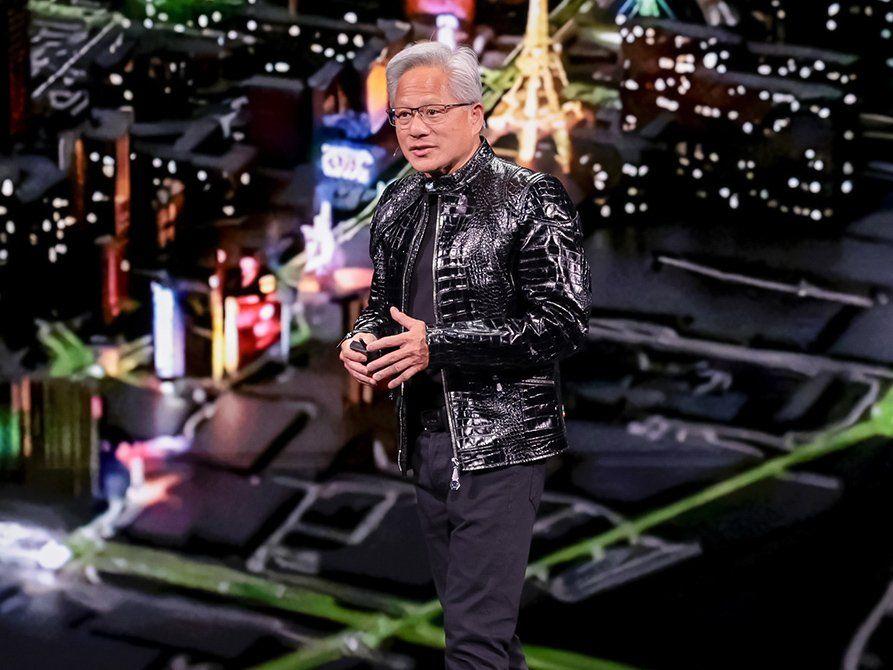
Huang suggested that autonomous AI could potentially "create a web service, some interesting little app" or launch a digital influencer that becomes an instant success, perhaps generating revenue from billions of users at 50 cents each before quickly fading away.2
Source: Silicon Republic
But the caveat was telling. "A lot of people use it for a couple of months and it kind of dies away," Huang acknowledged. "Now, the odds of 100,000 of those agents building Nvidia is zero percent."
1
This admission directly contradicts his earlier assertion, framing AGI not as a durable system with human-level intelligence, but rather as a momentary commercial threshold.3
The AGI Definition Problem and Industry Implications
The tension in Huang's remarks highlights a fundamental challenge: there isn't a clear definition of when a tool would have reached artificial general intelligence.
2
While some definitions, including industry standards, describe AGI as "a machine intelligence that is equal to or greater than that of a human being" in all cognitive tasks, Fridman's definition didn't specify this comprehensive requirement.2
True AGI would require self-learning capabilities, common sense, contextual understanding, and the ability to think abstractly at high speed—all combined into one system.
5
It represents a completely different AI architecture from current large language models, requiring dedicated research and development rather than simply scaling existing systems. In fact, 76% of 475 AI researchers surveyed by the Association for the Advancement of Artificial Intelligence said that scaling up current AI efforts is unlikely or very unlikely to result in AGI.5
Related Stories


Financial Stakes Drive the AGI Narrative
The term AGI has become loaded with financial implications, shaping billion-dollar contracts and strategic direction at companies like OpenAI and Microsoft, where performance benchmarks and risk clauses hinge on whether AGI has been "achieved."
3
For Nvidia, which serves as the infrastructure provider in the AI boom, maintaining momentum around AGI development directly impacts chip demand and the company's bottom line.5
Huang's Contradictory Stance on AI Capability
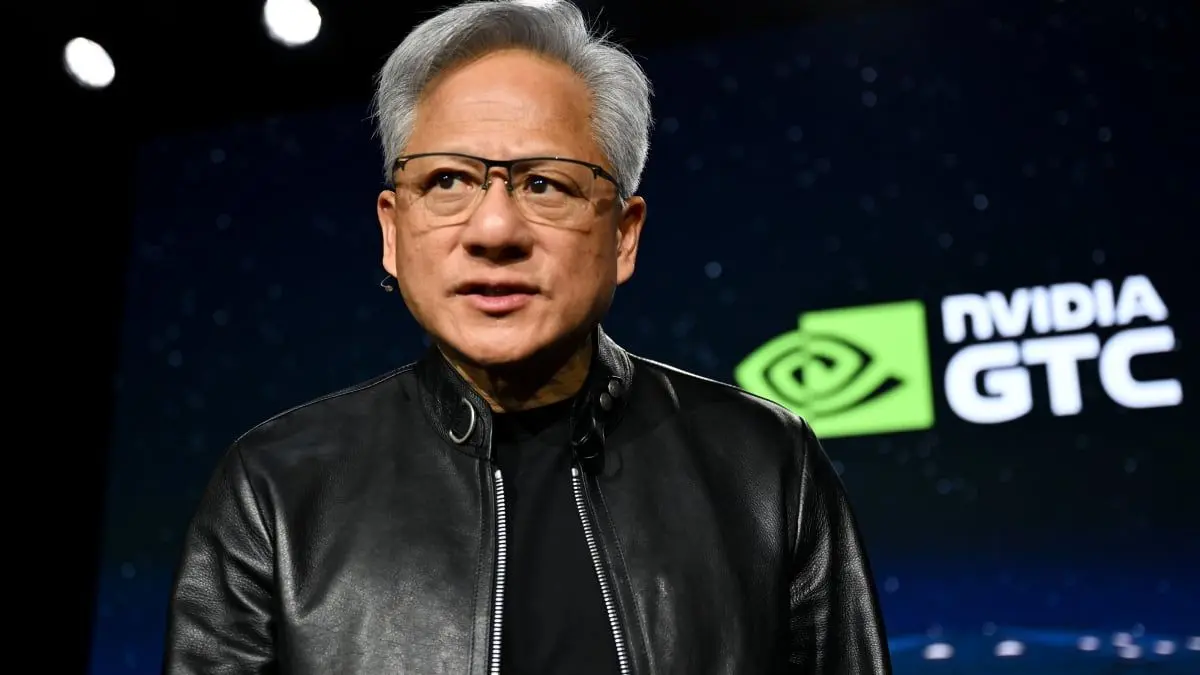
Just three days before the Lex Fridman podcast, Huang appeared on the All-In Podcast at Nvidia's GPU Technology Conference in San Jose, where he struck a notably different tone. There, he expressed concern about engineers underutilizing AI tools, stating: "If that $500,000 engineer did not consume at least $250,000 worth of tokens, I am going to be deeply alarmed."
Source: Mashable
Nvidia is reportedly allocating $2 billion for token access across its engineering team, with Huang suggesting tokens could become part of formal compensation packages to amplify engineer productivity by 10X.
This emphasis on human guidance and oversight contradicts the notion that AI has reached human-level general intelligence. The tension between declaring AGI achieved while simultaneously insisting engineers must aggressively leverage AI tools reveals the gap between current capabilities and true artificial general intelligence.🟡 smiles while holding a microphone against a green background.
References
Summarized by

Navi
[4]
Related Stories
Recent Highlights
1
Microsoft and Nvidia Launch Surface Laptop Ultra: A $2,599 AI-Ready PC With RTX Spark Chip
Technology

2
OpenAI Releases 722 AI-Generated Math Papers on GitHub, Igniting Fury Among Mathematicians
Science and Research

3
Trump Consulted Grok AI Before Ordering Venezuela Invasion and Capture of Nicolás Maduro
Policy and Regulation

Recent Highlights
Today's Top Stories









Don’t drown in AI news. We cut through the noise - filtering, ranking and summarizing the most important AI news, breakthroughs and research daily. Follow topics that matter to you and stay ahead.


