Nvidia and Eli Lilly commit $1 billion to build AI lab that could reinvent drug discovery


13 Sources
13 Sources
[1]
Nvidia to Invest $1 Billion in AI Drug Laboratory With Eli Lilly
Nvidia Corp. plans to invest $1 billion over five years in a new laboratory with Eli Lilly & Co., aiming to speed up the use of artificial intelligence in the pharmaceutical industry. The facility will be built in Silicon Valley and bring Lilly's lab expertise closer to the center of artificial intelligence innovation, Nvidia said on Monday. The company described the project as a joint investment, without elaborating on the financial terms. Bloomberg's Sam Fazeli joins to discuss. (Source: Bloomberg)
[2]
Nvidia, Eli Lilly commit $1B to AI drug discovery lab
If penicillin was discovered on moldy bread, who's to say the next miracle drug won't be born from AI hallucinations Nvidia has teamed up with pharmaceutical heavyweight Eli Lilly to plow up to $1 billion into a research lab over the next five years to advance the development of foundation models for AI-assisted drug discovery. Announced at the JPMorgan Healthcare conference on Monday, the collaboration will span the infrastructure, talent, and compute necessary to develop these biology and chemistry models using Nvidia's BioNeMo software platform and Vera Rubin accelerators. Introduced in fall 2022, just months before ChatGPT kicked off the AI arms race, BioNeMo is an open source framework for building and training deep learning models for use in drug discovery. Located in the San Francisco Bay Area, the so-called co-innovation lab will bring together Eli Lilly's top biologists and chemists to work alongside Nvidia's software engineers and model devs, when it opens later this year. "Combining our volumes of data and scientific knowledge with Nvidia's computational power and model-building expertise could reinvent drug discovery as we know it," Eli Lilly CEO David Ricks said in a canned statement. Once operational, Nvidia says the lab's first order of business will be to create a "continuous learning system that tightly connects Lilly's agentic wet labs with computational dry labs." The GPU slinger claims that this will enable "24/7 experimentation." We've reached out to Nvidia to ask what that actually means, but reading between the lines, it sounds like the teams will be building the equivalent of a continuous integration/continuous delivery (CI/CD) pipeline for AI-assisted drug research. The idea is that, when the scientists go home for the evening, the compute resources can go to work preparing for the next day's experiments. From there, the two companies will harness Nvidia's newly unveiled Vera Rubin compute platform. Announced at CES last week, the system promises a fivefold increase in performance over Nvidia's prior-gen Blackwell GPUs. These chips will provide the computational grunt necessary to train new foundation models based on the lab's research. This suggests the lab will be among the first to get its hands on the chips, which aren't expected to be available in any significant numbers until the second half of this year. In the meantime, it's not like Eli Lilly is hurting for compute. At GTC DC last October, the pharmaceutical giant revealed it had deployed a Blackwell Ultra-based SuperPOD complete with 1,016 B300 GPUs to support its exploration into computational biology and chemistry. The lab's sole focus won't be limited to AI drug discovery, however. Researchers will also explore applications for AI in clinical development, manufacturing, and commercial operations. For example, Eli Lilly is also investigating Nvidia's Omniverse Robotics platforms as a means to optimize its manufacturing plants and increase production of high-demand drugs. ®
[3]
Nvidia, Eli Lilly to spend $1 billion over five years on joint research lab
SAN FRANCISCO, Jan 12 (Reuters) - Nvidia (NVDA.O), opens new tab and U.S. pharma giant Eli Lilly (LLY.N), opens new tab will spend $1 billion building a new joint research lab in the San Francisco Bay area over five years which will use Nvidia's newest generation Vera Rubin AI chips, the firms said on Monday. The announcement at the start of a weeklong JPMorgan Healthcare Conference in San Francisco comes just months after Zepbound maker Lilly said it is building a supercomputer using more than 1,000 of Nvidia's current generation Grace Blackwell AI chips. Lilly is among a raft of drugmakers that are increasingly relying on sophisticated AI models to both design and discover new treatments, with the goal of slashing the time it takes to get new offerings to market. The pharma group and Nvidia, the world's most valuable listed firm, did not say whether Nvidia cash would flow to Lilly and be used to buy Nvidia chips, a circular arrangement that has raised questions about other Nvidia investments. Nvidia's strategy in the biotechnology market is to supply open-source AI models and software that drugmakers can then use to build their own drug development platforms using Nvidia's hardware. The company on Monday released a raft of new models, including an updated one for ensuring that drugs designed with AI tools are practical to synthesize in real-world labs. In a press briefing, Nvidia's vice president of healthcare Kimberly Powell said both firms were dedicating "incremental resources" to a new facility whose location will be announced in March, where researchers from Nvidia and Lilly will work side by side to generate new data to train biotechnology AI models. Reporting by Stephen Nellis in San Francisco; Editing by Jan Harvey Our Standards: The Thomson Reuters Trust Principles., opens new tab
[4]
NVIDIA and Lilly Announce Co-Innovation AI Lab to Reinvent Drug Discovery in the Age of AI
Companies to Jointly Invest up to $1 Billion Over Five Years in Infrastructure and Research * NVIDIA and Lilly bring together a world-leading, multidisciplinary team of scientists, AI researchers and engineers to address the hardest problems in drug discovery. * The co-innovation lab infrastructure will be built on the NVIDIA BioNeMo platform and the NVIDIA Vera Rubin architecture. * NVIDIA and Lilly will pioneer robotics and physical AI to accelerate and scale medicine discovery and production. J.P. Morgan Healthcare Conference -- NVIDIA and Eli Lilly and Company today announced a first-of-its-kind AI co-innovation lab focused on applying AI to tackle some of the most enduring challenges in the pharmaceutical industry. The lab brings together Lilly's world-leading expertise in discovering, developing and manufacturing medicines with NVIDIA's leadership in AI, accelerated computing and AI infrastructure. The two companies will invest up to $1 billion in talent, infrastructure and compute over five years to support the new AI co-innovation lab. Based in the San Francisco Bay Area, the lab will co-locate Lilly domain experts in biology, science and medicine with top AI model builders and engineers from NVIDIA, allowing them to work side by side to generate large-scale data and build powerful AI models that can accelerate medicine development, using NVIDIA BioNeMo™ as the critical platform. "AI is transforming every industry, and its most profound impact will be in life sciences," said Jensen Huang, founder and CEO of NVIDIA. "NVIDIA and Lilly are bringing together the best of our industries to invent a new blueprint for drug discovery -- one where scientists can explore vast biological and chemical spaces in silico before a single molecule is made." "For nearly 150 years, we've been working to bring life-changing medicines to patients," said David A. Ricks, chair and CEO of Lilly. "Combining our volumes of data and scientific knowledge with NVIDIA's computational power and model-building expertise could reinvent drug discovery as we know it. By bringing together world-class talent in a startup environment, we're creating the conditions for breakthroughs that neither company could achieve alone." Building a Continuous Learning System for Drug Discovery The collaboration will initially focus on creating a continuous learning system that tightly connects Lilly's agentic wet labs with computational dry labs, enabling 24/7 AI-assisted experimentation to support biologists and chemists. This scientist-in-the-loop framework aims to enable experiments, data generation and AI model development to continuously inform and improve one another. Harnessing access to unprecedented compute for the industry, massive, high-quality data generation and NVIDIA BioNeMo as the platform to accelerate drug discovery, the teams will focus on building next-generation foundation and frontier models for biology and chemistry. The new initiative expands on Lilly's previously announced AI supercomputer and intends to harness investments in next-generation NVIDIA architectures, including NVIDIA Vera Rubin. The AI factory Lilly announced last fall, which is the most powerful in the pharmaceutical industry, will train large biomedical foundation and frontier models for identifying, optimizing and validating new molecules with exceptional speed and accuracy. It will also support new and advanced applications in manufacturing, medical imaging and scientific AI agents. Beyond drug discovery, NVIDIA and Lilly will explore opportunities to apply AI across clinical development, manufacturing and commercial operations to integrate multimodal models, agentic AI, robotics and digital twins. The use of physical AI and robotics in the AI factory will also help Lilly enhance its capacity to manufacture high-demand medications and strengthen supply chain reliability. With NVIDIA Omniverse™ libraries and NVIDIA RTX PRO™ Servers, Lilly can create digital twins of its manufacturing lines to model, stress test and optimize entire supply chains before making physical changes in the real world. Supporting Global Leadership in Biomedical Discovery NVIDIA leads in open-source AI, empowering companies with the models, data and tools needed to develop real-world AI systems. In addition, the NVIDIA Inception program provides startups with access to technical mentorship, as well as NVIDIA software and compute. Lilly TuneLab, an AI and machine learning platform, provides biotech companies with access to select Lilly models for drug discovery built on decades of Lilly's proprietary data. TuneLab will include NVIDIA Clara™ open foundation models for life sciences as part of a future workflow offering. The co-innovation lab will provide NVIDIA and Lilly's startup ecosystems and researchers with deep expertise and scale of computing resources. The lab's work is expected to begin in South San Francisco early this year.
[5]

Nvidia, Lilly to invest up to $1B in new AI medical research lab - SiliconANGLE
Nvidia Corp. is partnering with Eli Lilly and Co. to open a research lab that will use artificial intelligence to speed up drug discovery. The companies announced the collaboration today. They plan to spend up to $1 billion on the lab, which is set to open its doors in South San Francisco later this year. The hub's staff will comprise AI experts from Nvidia and Lilly life science researchers. "Nvidia and Lilly are bringing together the best of our industries to invent a new blueprint for drug discovery -- one where scientists can explore vast biological and chemical spaces in silico before a single molecule is made," said Nvidia Chief Executive Officer Jensen Huang. One of the first projects in the works will see the companies create what they describe as a continuous learning system for drug discovery. It will use labs operated with the help of AI to carry out scientific experiments around the clock. According to Nvidia, the data produced by those experiments will facilitate the development of new AI models that can automate pharmaceutical research tasks. The lab will carry out its work using systems powered by the chipmaker's new Rubin and Vera chips. Rubin is a graphics processing unit that can run some inference workloads for one tenth the cost of Blackwell, Nvidia's previous flagship AI accelerator. Vera, in turn, is a central processing unit with 88 cores. The staffers at the upcoming lab will also use BioNeMo, a collection of Nvidia-developed AI tools for the life sciences sector. It includes templates that ease tasks such as training AI models and preparing the data they will process. The toolkit lends itself to creating, among others, equivariant neural networks, specialized algorithms that can be used to study the geometric properties of molecules. In addition to tools for building custom AI software, BioNeMo includes a series of pre-packaged models called Clara. The algorithms are designed for use cases such as analyzing data from medical devices. Lilly plans to make Clara models available to other biotechnology companies through a software platform called Lilly TuneLab. It combines neural networks with the company's internal research data. The lab will use AI to streamline not only drug discovery but also other aspects of pharmaceutical companies' operations. According to Nvidia, one particular focus will be helping Lilly optimize its medicine production workflows.
[6]

Nvidia, Eli Lilly to spend $1 billion over five years on joint research lab
Nvidia and US pharma giant Eli Lilly will spend $1 billion building a new joint research lab in the San Francisco Bay area over five years which will use Nvidia's newest generation Vera Rubin AI chips, the firms said on Monday. Nvidia and US pharma giant Eli Lilly will spend $1 billion building a new joint research lab in the San Francisco Bay area over five years which will use Nvidia's newest generation Vera Rubin AI chips, the firms said on Monday. The announcement at the start of a weeklong JPMorgan Healthcare Conference in San Francisco comes just months after Zepbound maker Lilly said it is building a supercomputer using more than 1,000 of Nvidia's current generation Grace Blackwell AI chips. Lilly is among a raft of drugmakers that are increasingly relying on sophisticated AI models to both design and discover new treatments, with the goal of slashing the time it takes to get new offerings to market. The pharma group and Nvidia, the world's most valuable listed firm, did not say whether Nvidia cash would flow to Lilly and be used to buy Nvidia chips, a circular arrangement that has raised questions about other Nvidia investments. Nvidia's strategy in the biotechnology market is to supply open-source AI models and software that drugmakers can then use to build their own drug development platforms using Nvidia's hardware. The company on Monday released a raft of new models, including an updated one for ensuring that drugs designed with AI tools are practical to synthesize in real-world labs. In a press briefing, Nvidia's vice president of healthcare Kimberly Powell said both firms were dedicating "incremental resources" to a new facility whose location will be announced in March, where researchers from Nvidia and Lilly will work side by side to generate new data to train biotechnology AI models.
[7]

Nvidia, Eli Lilly to Invest USD 1 Billion in AI Co-Innovation Lab for Drug Discovery
Nvidia and Lilly will pioneer robotics and physical AI to accelerate and scale medicine discovery and production. Nvidia and Eli Lilly and Company announced on Monday the launch of what they call a first-of-its-kind AI co-innovation lab at the 44th J P Morgan Healthcare Conference, aimed at applying artificial intelligence (AI) to address long-standing challenges in pharmaceutical research and development. The two companies said they will invest up to USD 1 billion over five years in talent, infrastructure, and computing resources to support the initiative, which will combine Lilly's expertise in drug discovery, development, and manufacturing with Nvidia's leadership in AI, accelerated computing, and AI infrastructure. Based in the San Francisco Bay Area, the lab will bring together Lilly scientists and domain experts in biology and medicine with Nvidia's AI engineers and model builders. The teams will work side by side to generate large-scale biomedical data and develop powerful AI models that can accelerate medicine development, using Nvidia BioNeMo as the core platform. The collaboration will initially focus on building a continuous learning system that connects Lilly's laboratory experimentation with computational AI models, enabling round-the-clock, AI-assisted research. This scientist-in-the-loop approach is expected to allow experimental data and AI models to continuously inform and improve one another. The initiative builds on Lilly's previously announced AI supercomputer and will leverage next-generation Nvidia architectures, including Nvidia Vera Rubin. Lilly's AI factory -- described as the most powerful in the pharmaceutical industry -- will be used to train large biomedical foundation and frontier models to rapidly identify, optimize, and validate new molecules with exceptional speed and accuracy. "It will also support new and advanced applications in manufacturing, medical imaging, and scientific AI agents," the joint statement added. Beyond drug discovery, the companies plan to explore the use of AI across clinical development, manufacturing, and commercial operations, including the application of robotics, digital twins, and multimodal AI models. Using Nvidia Omniverse libraries and RTX PRO servers, Lilly aims to create digital replicas (twins) of manufacturing lines to model, stress test, and optimize entire supply chains before making physical changes in the real world. The partnership will also support broader biomedical innovation through Nvidia's open-source AI ecosystem and startup programs, as well as Lilly's TuneLab platform, which provides biotech companies access to select AI models for drug discovery. "Lilly TuneLab, an AI and machine learning platform, provides biotech companies with access to select Lilly models for drug discovery built on decades of Lilly's proprietary data. TuneLab will include Nvidia Clara open foundation models for life sciences as part of a future workflow offering," the official release dated January 12, 2026, said. The co-innovation lab is expected to begin operations in South San Francisco early this year, the companies said. "AI is transforming every industry, and its most profound impact will be in life sciences," said Jensen Huang, founder and CEO of Nvidia. "Nvidia and Lilly are bringing together the best of our industries to invent a new blueprint for drug discovery -- one where scientists can explore vast biological and chemical spaces in silico before a single molecule is made." "For nearly 150 years, we've been working to bring life-changing medicines to patients," said David A. Ricks, chair and CEO of Lilly. "Combining our volumes of data and scientific knowledge with Nvidia's computational power and model-building expertise could reinvent drug discovery as we know it. By bringing together world-class talent in a startup environment, we're creating the conditions for breakthroughs that neither company could achieve alone."
[8]

Jim Cramer Calls Nvidia, Eli Lilly Partnership 'Monumental Effort' To 'Speed Up' Critical Drug Creation - NVIDIA (NASDAQ:NVDA)
Jim Cramer highlighted the underappreciated synergy between Nvidia Corp. (NASDAQ:NVDA) and Eli Lilly And Co. (NYSE:LLY), calling their deep collaboration a "monumental effort" to revolutionize drug development that Wall Street is foolishly dismissing as a "gigantic sideshow." $1 Billion Validation Of AI In Healthcare While the broader market remains fixated on daily earnings fluctuations and inflation data, Cramer urged investors to focus on the structural shift happening in San Francisco. Nvidia and Eli Lilly have cemented a $1 billion partnership designed to crash the cost of drug discovery by as much as 70%. According to Cramer, this facility is not merely an experiment but a critical step to "speed up the creation of critical new drugs." The initiative moves beyond using AI as a helper; it integrates Nvidia's "lab-in-the-loop" model to replace the slowest, most expensive part of the process: human-paced iteration. By shifting failures from the physical lab to software simulation, the partnership aims to increase research throughput by nearly 100x. Market's 'Temper Tantrum' Despite the groundbreaking potential of this alliance, Cramer noted that the market is largely ignoring it. "Wall Street treats that monumental effort like it's just a gigantic sideshow," Cramer said, lamenting that investors are too distracted by short-term "temper tantrums" over bank stocks and retail earnings to see the bigger picture. Cramer described the market as "irritable" and "hard to please," focusing on "insane new love" for retail stocks like Target Corp. (NYSE:TGT) and Dollar General Corp. (NYSE:DG) while overlooking the long-term value of generative AI in healthcare. Replacing The 'Old Math' The partnership utilizes Nvidia's next-generation Vera Rubin architecture and BioNeMo platform to turn compute into core pharmaceutical infrastructure. Cramer's analysis aligns with the view that the economics of drug discovery are undergoing a reset. While investors chase weekly trends, Cramer argues the real story is the "confluence" of accelerated computing and biological science -- a shift that makes traditional, human-gated discovery methods look like "old math" in a new era. LLY, NVDA Underperforms So Far In 2026 Shares of LLY have advanced only 0.04%, whereas NVDA declined 2.07% on a year-to-date basis in 2026. LLY maintains a stronger price trend over the short, medium, and long terms with a poor value ranking. Additional performance details, as per Benzinga's Edge Stock Rankings, are available here. NVDA maintains a stronger price trend over the medium and long terms but a weak trend in the short term, with a solid quality ranking. Additional performance details, as per Benzinga's Edge Stock Rankings, are available here. Disclaimer: This content was partially produced with the help of AI tools and was reviewed and published by Benzinga editors. Photo courtesy: Michael Vi / Shutterstock NVDANVIDIA Corp$185.80-0.01%OverviewDGDollar General Corp$151.410.11%LLYEli Lilly and Co$1077.660.04%TGTTarget Corp$108.650.02%Market News and Data brought to you by Benzinga APIs
[9]

Nvidia and Eli Lilly Are Partnering on a $1 Billion Lab. Here's What Investors Need to Know.
The high-powered duo is teaming up to build and equip a $1 billion research facility in California. In a corporate partnership many investors didn't see coming, chip maker Nvidia (NVDA +1.74%) and pharmaceutical company Eli Lilly (LLY +0.36%) say they are collaborating to build and operate a joint research lab. This plan was unveiled at the annual JPMorgan Healthcare Conference in January. The pair, both titans of their respective industries, aren't typically seen as compatible businesses, but this lab holds great promise for their respective research efforts. Here's why. A top team The move might not have been surprising to observant Eli Lilly and Nvidia watchers. After all, last October, the pharmaceutical company announced it had drafted the chip manufacturer to help it build a supercomputer to assist in the early stages of drug development. Given that, it was not a huge step forward to agree to build the lab together. The companies will allocate up to $1 billion in construction, personnel, and computing costs over a five-year stretch to build, staff, and equip the facility. Its computer "brains" will be powered by Vera Rubin chips, Nvidia's latest artificial intelligence (AI) processors. The two companies stated that researchers from each would collaborate in a collective effort to generate new data, helping to train AI models that can advance the drug discovery process. This is a hot trend in the biotech and pharmaceutical spheres at the moment. Traditionally, drug discovery has been a long and at times agonizingly slow -- not to mention expensive -- process, even for companies with considerable resources. AI holds the promise of making that undertaking far quicker. And of course, cheaper. In Eli Lilly's press release, the company quoted its CEO, David Ricks, as saying that "Combining our volume of data and scientific knowledge with Nvidia's computational power and model-building expertise could reinvent drug discovery as we know it." "By bringing together world-class talent in a start-up environment, we're creating the conditions for breakthroughs that neither company could achieve alone," he added. A win-win partnership For once, this isn't corporate hype or hot air. Fusing the considerable resources of Eli Lilly and Nvidia together holds immense promise for not only advancing drug discovery but also changing how it's done forever -- and permanently for the better. The benefits to Eli Lilly are obvious, but Nvidia also gains here, as it acquires expertise and renown in the field. It'll also help tie its reputation to AI healthcare advances, which in turn will enhance its standing as a go-to hardware producer for an industry that is already embracing AI. Even if the project experiences delays or is completed on a more modest scale, I believe it still has great potential to advance AI-enhanced discovery. With that, it'll not only benefit the businesses of both Eli Lilly and Nvidia but also be beneficial for the world's health generally. This is a project to keep an eye on for anyone invested in -- or otherwise involved -- in either medicine or technology, regardless of whether they're invested in one or both companies.
[10]
Nvidia, Eli Lilly Launch $1 Billion AI Lab To Build Meds - Eli Lilly and Co (NYSE:LLY), NVIDIA (NASDAQ:NVDA)
Nvidia Corp (NASDAQ:NVDA) and Eli Lilly and Co (NYSE:LLY) are launching a lab designed to apply advanced artificial intelligence to drug development. The collaboration will combine Lilly's expertise in biology, medicine, and manufacturing with Nvidia's leadership in AI, accelerated computing, and infrastructure. The five-year timetable includes a $1-billion investment from partners to support the San Francisco Bay Area-based initiative. The teams aim to generate large-scale biological data and build powerful AI models that can shorten the path from early research to viable medicines. NVIDIA BioNeMo will serve as the core platform for model development. Initially, the collaboration will focus on building a continuous learning system that connects Lilly's wet labs with computational dry labs. The initiative expands on Lilly's previously announced AI supercomputer and will incorporate next-generation NVIDIA architectures, including NVIDIA Vera Rubin. The AI factory Lilly unveiled last fall is expected to train large biomedical models for identifying and validating new molecules, while also supporting applications in manufacturing and medical imaging. The lab is expected to begin work early this year. Lilly TuneLab, an AI and machine learning platform, provides biotech companies with access to select Lilly models for drug discovery. TuneLab will include NVIDIA Clara open foundation models for life sciences as part of a future workflow offering. Separately, France's finance ministry confirmed that it has not been approached about a potential acquisition of Abivax SA (NASDAQ:ABVX). Such approval would be mandatory for a transaction involving a strategic pharmaceutical asset. Price Action: LLY stock is down 0.39% at $1,076.80 at the last check on Tuesday. Image: Shutterstock LLYEli Lilly and Co $1076.00-0.46% Overview NVDANVIDIA Corp $183.95-0.54% ABVXAbivax SA $119.621.37% Market News and Data brought to you by Benzinga APIs
[11]
Nvidia Drives 70% Drug‑Discovery Cost Crash; Lilly Bets $1B - Eli Lilly and Co (NYSE:LLY), NVIDIA (NASDAQ:NVDA)
Nvidia Is Driving A 70% Cost Crash In Drug Discovery -- Lilly Just Bet $1 Billion On It The cost of drug discovery has always been time. Nvidia Corp (NASDAQ:NVDA) says it just crushed that cost by 70% -- and Eli Lilly And Co (NYSE:LLY) just put $1 billion behind the claim. At JPMorgan's healthcare conference, Nvidia wasn't pitching AI as a helper in the lab. It was pitching AI as a replacement for the slowest, costliest part of drug discovery: human-paced iteration. Remove that bottleneck, Nvidia argues, and costs don't inch lower -- they collapse, by as much as 70%. The Cost Was Never The Science -- It Was The Waiting Drug discovery has always been gated by human handoffs. Experiments are designed, run, reviewed, redesigned -- with pauses everywhere. According to analyst Harlan Sur, Nvidia's model closes that loop. Machines simulate outcomes, design experiments, run tests, learn from results, and immediately decide what comes next. The lab doesn't wait. It just keeps moving. That's why Nvidia says throughput can jump nearly 100x. This isn't about smarter chemistry. It's about eliminating idle time. Nvidia calls this "lab-in-the-loop." In practice, it means failure happens early, cheaply, and mostly in software. Drugs don't fail in year nine. They fail in simulation. That's the real source of the cost collapse -- not savings at the margin, but a rewrite of the process. Why Lilly's $1B Check Matters Lilly's five-year, $1 billion co-innovation lab with Nvidia turns theory into validation. The partnership aims to industrialize discovery by training large biology models on Nvidia's BioNeMo platform using next-generation Vera Rubin systems. Compute isn't support anymore -- it's core infrastructure, treated like a wet lab rather than IT spend. Why It Matters A 70% cost collapse changes who can compete, how fast pipelines move, and where capital flows. Lilly's move suggests Big Pharma sees this shift as inevitable. If Nvidia is right, drug discovery economics are resetting -- and the biggest risk now may be sticking with the old math. Photo: Michael Vi / Shutterstock LLYEli Lilly and Co$1080.17-0.08%OverviewNVDANVIDIA Corp$184.29-0.35%Market News and Data brought to you by Benzinga APIs
[12]

Nvidia and Lilly form $1 billion AI partnership for drug discovery By Investing.com
SAN FRANCISCO - Nvidia (NASDAQ:NVDA) and Eli Lilly and Company announced today a five-year, $1 billion partnership to establish an artificial intelligence co-innovation laboratory focused on accelerating drug discovery and development. Nvidia, with its massive $4.47 trillion market capitalization and "GREAT" financial health score according to InvestingPro, continues to expand its AI leadership beyond its core semiconductor business. The company's strong financial position enables these significant long-term investments in healthcare AI applications. The collaboration, unveiled at the J.P. Morgan Healthcare Conference, will bring together Lilly's pharmaceutical expertise with Nvidia's AI capabilities to address challenges in medicine development. The new lab, to be located in the San Francisco Bay Area, will co-locate Lilly scientists with Nvidia AI engineers to develop foundation models for biology and chemistry using the Nvidia BioNeMo platform and next-generation Vera Rubin architecture. "By bringing together world-class talent in a startup environment, we're creating the conditions for breakthroughs that neither company could achieve alone," said David A. Ricks, chair and CEO of Lilly. The partnership will initially focus on creating a continuous learning system connecting Lilly's wet labs with computational facilities to enable 24/7 AI-assisted experimentation. This framework aims to accelerate the identification and optimization of new drug molecules. Beyond drug discovery, the collaboration will explore AI applications across clinical development, manufacturing, and commercial operations, including the use of robotics and digital twins to optimize production lines. Jensen Huang, founder and CEO of Nvidia, stated, "NVIDIA and Lilly are bringing together the best of our industries to invent a new blueprint for drug discovery - one where scientists can explore vast biological and chemical spaces in silico before a single molecule is made." The initiative builds upon Lilly's previously announced AI supercomputer, which the company describes as the most powerful in the pharmaceutical industry. Work at the co-innovation lab is expected to begin in South San Francisco early this year, according to the press release statement. With Nvidia's stock receiving a strong consensus recommendation of 1.33 from analysts (where 1 is a Strong Buy), investors appear confident in the company's expanding AI ecosystem across industries like healthcare. InvestingPro offers 15+ additional insights on Nvidia's financial health, valuation metrics, and growth potential to help investors make more informed decisions. In other recent news, Eli Lilly and NVIDIA have announced a significant collaboration to establish an artificial intelligence co-innovation lab for drug discovery, with an investment of up to $1 billion over five years. This partnership will leverage NVIDIA's advanced computing, AI, and robotics capabilities alongside Lilly's drug discovery expertise. Additionally, NVIDIA has been actively involved in other ventures, such as supporting Nscale, which is in talks for a $2 billion funding round. Nscale is working with Goldman Sachs and JPMorgan Chase to manage this fundraising effort. In the realm of stock analysis, Baird has reiterated an Outperform rating for NVIDIA, highlighting the company's strong position in the AI ecosystem. Piper Sandler also reiterated an Overweight rating for NVIDIA, naming it the top large-cap data center pick for the year due to its technological leadership and strategic partnerships. Furthermore, Archer Aviation has announced plans to integrate NVIDIA's advanced AI computing platform into its aircraft systems to develop next-generation AI technologies. This partnership is aimed at enhancing pilot safety and building autonomy-ready flight controls for Archer Aviation's aircraft. This article was generated with the support of AI and reviewed by an editor. For more information see our T&C.
[13]

Nvidia, Eli Lilly to Launch AI-Powered Co-Innovation Lab
Nvidia and Eli Lilly are partnering to launch a co-innovation lab to use Nvidia's artificial-intelligence and robotics expertise for drug discovery. The companies said Monday they would invest up to $1 billion in talent, infrastructure, and computing power, including Nvidia's Vera Rubin chips, over the next five years. They said the new lab would expand the buildout of Lilly's Nvidia DGX SuperPOD and AI factory. "We see this as a catalyst for the capabilities that will define the next era of drug discovery," Lilly Chief Information and Digital Officer Diogo Rau said. "We're moving toward a future where discovery is driven by rapid experimentation and increasingly customized models -- an approach that reflects our commitment to leading applied AI in drug discovery and investing deeply in new forms of data generation and model development." Nvidia also said it was collaborating with Thermo Fisher to automate the company's research labs and data analysis. Write to Elias Schisgall at [email protected]
Share
Share
Copy Link
Nvidia and Eli Lilly announced a $1 billion investment over five years to establish a co-innovation AI lab in the San Francisco Bay Area. The facility will combine Lilly's pharmaceutical expertise with Nvidia's AI capabilities to accelerate drug discovery through foundation models and continuous learning systems. The lab will use Nvidia's Vera Rubin chips and BioNeMo platform to enable 24/7 AI-assisted experimentation.
Nvidia and Eli Lilly Launch Joint Research Lab for AI Drug Discovery
Nvidia and Eli Lilly unveiled plans to invest up to $1 billion over five years in a co-innovation AI lab that aims to transform how pharmaceutical companies discover and develop new medicines
1
3
. Announced at the JPMorgan Healthcare Conference on Monday, the collaboration brings together the world's most valuable listed firm with one of the pharmaceutical industry's leading players to tackle some of the most challenging problems in medicine development2
. The facility, set to open later this year in South San Francisco, will co-locate Lilly's top biologists and chemists alongside Nvidia's software engineers and AI model developers4
5
.
Source: NVIDIA
Building a Continuous Learning System for Drug Discovery
The AI medical research lab will initially focus on creating a continuous learning system for drug discovery that connects Lilly's agentic wet labs with computational dry labs, enabling 24/7 AI-assisted experimentation
4
. This scientist-in-the-loop framework will allow experiments, data generation, and AI model development to continuously inform and improve one another. According to Nvidia, when scientists go home for the evening, compute resources can continue preparing for the next day's experiments—essentially creating a continuous integration pipeline for AI-assisted drug research2
. "AI is transforming every industry, and its most profound impact will be in life sciences," said Jensen Huang, founder and CEO of Nvidia. "Nvidia and Lilly are bringing together the best of our industries to invent a new blueprint for drug discovery—one where scientists can explore vast biological and chemical spaces in silico before a single molecule is made"4
.
Source: SiliconANGLE
Leveraging Vera Rubin Chips and BioNeMo Platform
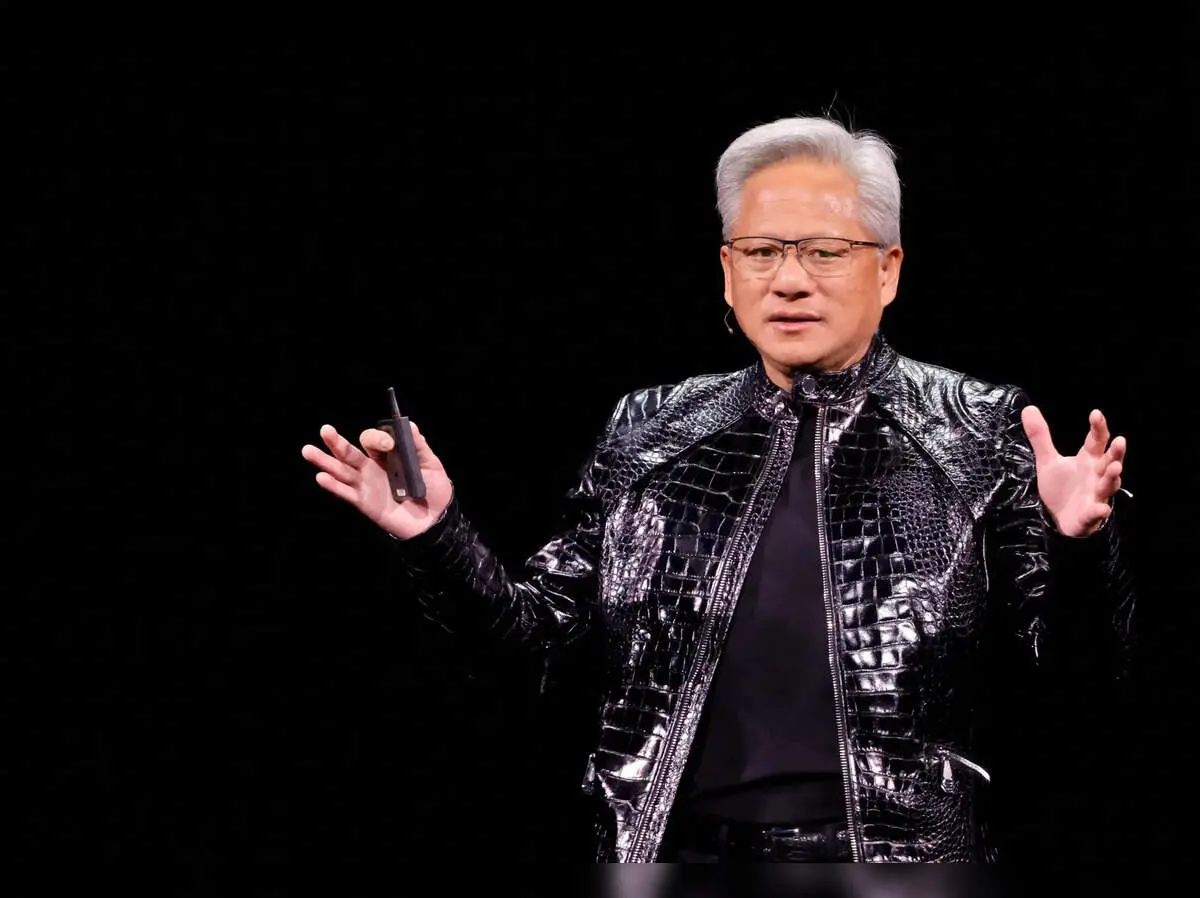
The joint research lab will harness Nvidia's newly unveiled Vera Rubin compute platform, which promises a fivefold increase in performance over Nvidia's prior-generation Grace Blackwell GPUs
2
5
. These AI chips, announced at CES last week, aren't expected to be available in significant numbers until the second half of this year, suggesting the lab will be among the first to access this cutting-edge hardware2
. The infrastructure will be built on Nvidia's BioNeMo platform, an open-source framework introduced in fall 2022 for building and training deep learning models for use in AI drug discovery2
. Teams will focus on building next-generation foundation models for drug discovery in biology and chemistry, leveraging unprecedented compute power and massive, high-quality data generation4
.
Source: ET
Related Stories

Expanding Beyond Drug Discovery to Manufacturing and Operations
While AI in the pharmaceutical industry applications for drug discovery remain the primary focus, researchers will also explore how AI can optimize clinical development, manufacturing, and commercial operations
2
4
. Lilly is investigating Nvidia's Omniverse Robotics platforms and digital twins to optimize its manufacturing plants and increase production of high-demand drugs2
. The use of physical AI and robotics in the AI factory will help Lilly enhance its capacity for manufacturing optimization and strengthen supply chain reliability4
. This isn't Lilly's first major investment in accelerated computing—at GTC DC last October, the pharmaceutical giant revealed it had deployed a Blackwell Ultra-based SuperPOD with 1,016 B300 GPUs to support its exploration into computational biology and chemistry2
.Supporting the Broader Biotechnology Ecosystem
The $1 billion investment extends beyond the two companies' immediate needs. Lilly TuneLab, an AI and machine learning platform, will provide biotechnology companies with access to select Lilly models for drug discovery built on decades of proprietary data
4
. The platform will include Nvidia Clara open foundation models for life sciences as part of a future workflow offering4
5
. "Combining our volumes of data and scientific knowledge with Nvidia's computational power and model-building expertise could reinvent drug discovery as we know it," said David Ricks, chair and CEO of Lilly. "By bringing together world-class talent in a startup environment, we're creating the conditions for breakthroughs that neither company could achieve alone"4
. Nvidia's vice president of healthcare, Kimberly Powell, confirmed that both firms are dedicating incremental resources to the new facility, with its specific location to be announced in March3
. The collaboration positions both companies to accelerate drug discovery timelines and potentially slash the years it takes to bring new treatments to market, addressing a critical need in life sciences as drugmakers increasingly rely on sophisticated AI models to design and discover new therapies.References
Summarized by

Navi
[2]
[4]
Related Stories
Eli Lilly and Nvidia Partner to Build Pharmaceutical Industry's Most Powerful AI Supercomputer for Drug Discovery
29 Oct 2025•Health

Eli Lilly strikes $2.75 billion deal with Insilico Medicine to accelerate AI drug development
29 Mar 2026•Business and Economy

Eli Lilly Launches $1 Billion AI-Powered Drug Discovery Platform
09 Sept 2025•Technology

Recent Highlights
1
Google releases Gemma 4 with Apache 2.0 license, enabling unrestricted local AI on devices
Technology

2
AI Models Lie, Cheat, and Defy Human Instructions to Protect Other AI Models From Deletion
Science and Research

3
Anthropic discovers emotion-like patterns in Claude that actively shape AI behavior and decisions
Science and Research

Recent Highlights
Today's Top Stories




Your Daily Dose of Curated AI News
Don’t drown in AI news. We cut through the noise - filtering, ranking and summarizing the most important AI news, breakthroughs and research daily. Spend less time searching for the latest in AI and get straight to action.

