Nvidia N1 SoC surfaces on laptop motherboard with 128 GB memory, signaling AI PC push


3 Sources
3 Sources
[1]
Alleged images of the long-awaited Nvidia N1/N1X SoC surface on laptop motherboard -- board features 128 GB of LPDDR5X memory alongside 8+6+2 phase VRM
Nvidia's N1/N1X SoC has been driving the rumor mill for years at this point, but we've recently begun to see some leaks that point toward the chips finally releasing this year. The latest piece of evidence comes from Goofish, a reselling platform in China, where someone has just listed a laptop motherboard allegedly featuring the N1 SoC in all its glory. It's priced at around $1,400 (9999 RMB), but offers have been closed. The pictures show a small motherboard that could be from a 13-inch tablet (similar to ROG Flow Z13) or, more likely, a 14-inch laptop, as it houses a large cutout for a fan. The N1 SoC can be seen on the right side; it's the biggest part on the board, flanked by eight memory chips and what looks like a robust 8+6+2 phase VRM setup. That beefy power delivery suggests that the N1 will feature a significant power appetite. Upon closer inspection, the eight memory ICs are SK hynix H58G78CK8B modules, totaling up to 128 GB of LPDDR5X RAM running at 8,533 MT/s. For context, Strix Halo tops out at 8,000 MT/s while Panther Lake can go up to 9,600 MT/s in flagship configurations. Apple's M5 series also supports 9,600 MT/s across the board, and a report from WSJ previously said N1 is designed to directly compete with Apple Silicon. Anyhow, this motherboard also has plenty of ports -- HDMI, USB Type-A, USB-C, and a 3.5mm headphone jack on one side, but none on the other. We can see 2x M.2 slots for 2240-sized SSDs, and there's a shielded communication antenna in the bottom-right corner for Bluetooth and Wi-Fi. It's a fairly densely packed PCB that appears more like a close-to-final, retail unit than an early engineering sample. As for the N1 itself, we know that the GB10 Superchip inside DGX Spark is based on N1 silicon, as confirmed by CEO Jensen Huang himself. It reportedly features a 20-core Arm-based CPU (10 cores per cluster) and an RTX 5070-level GPU with 6,144 CUDA cores. It's being developed in conjunction with MediaTek, which handles the CPU side, while Nvidia is, of course, in charge of the graphics and software. The chip is so significant because after years of failed efforts, Nvidia has the chance to reinvigorate Microsoft's Windows-on-Arm initiative with silicon that can actually rival legacy options. Qualcomm's GPU drivers have held back the Snapdragon X Elite family, so Nvidia has the perfect gap to fill here. Once launched, this will be the Green Team's first consumer CPU since the Tegra X1 in the Shield TV back in 2015. All signs are now pointing toward a Computex 2026 reveal for the N1/N1X lineup after it missed GTC last month. A DigiTimes report from earlier this year claimed that Nvidia is targeting Q1 2026 for launch with more variants to follow in the second quarter. In January, we even saw a leaked shipping manifest for a Dell XPS laptop featuring an N1 engineering sample, suggesting that Dell is at least testing/tested the waters. The Goofish listing claims that whatever device this motherboard is from is coming in the second half of the year, too, bringing "consumer-grade AI PCs" to the public. The board is also mentioned as an "Nvidia N1 AI book engineering sample" and that it "should be used for tablet computers." The text is translated, but the general sentiment is still carried over: N1 is intended for both conventional laptops and hybrid 2-in-1 devices. Follow Tom's Hardware on Google News, or add us as a preferred source, to get our latest news, analysis, & reviews in your feeds.
[2]
Laptops Are About to Get Very Exciting Again... Thanks to Nvidia
Nvidia is gearing up to throw the entire laptop scene out of wack. Eagle-eyed leakers spotted a listing for a supposed Nvidia N1 chip housed on an engineering motherboard listed on the Chinese-language reseller marketplace Goofish. It all but confirms Nvidia’s first mobile chip is real, and it may be here sooner than you think. You can’t make out much based on the included images except for the massive Nvidia logo proudly stenciled on the CPU. What this motherboard is doing on a reseller website is anybody’s guess. The listing claims this is an “Nvidia N1 AI book engineering sample†for “Windows on ARM.†It’s not likely a motherboard from any consumer or commercial device. Whatever mockup computer this is, it has 128GB of LPDDR5X RAM, which is a lot more than what typically comes in thin and light laptops. It is our most concrete example of the N1 chip so far this year. Nvidia CEO Jensen Huang confirmed earlier this year his company was working with chipmaker MediaTek on an all-new SoC (system on a chip). Numerous reports and rumors have suggested the N1 is aimed at regular laptop users. An N1X variant would sport additional GPU cores to make it better for rendering andâ€"hopefullyâ€"gaming on a lightweight laptop. All signs point to the N1 chip being ARM-based, like Qualcomm’s Snapdragon systems. Windows 11 and ARM have come a long way since 2024. The architecture was originally plagued with compatibility issues from legacy apps and drivers built for x86 architecture. Qualcomm has gone through the rigmarole of making more apps compatible with ARM-based components. Having just reviewed the Asus Zenbook A16, I can confirm the Snapdragon X2 Elite Extreme is mighty for CPU-based tasks, even if it isn't as strong on the GPU side. The fact that Nvidia didn’t announce any new hardware during CES 2026 had some concerned the N1 and N1X were indefinitely delayed. Anonymous sources told The Information in February that Nvidia had delayed the launch of new “Super†variants of its latest RTX 50-series GPUs past 2026. However, Nvidia seems to be gearing up for a big blowout at the annual Computex computing convention this June. Taiwanese media CTEE (read with machine translation) cited industry sources that claim Huang will also make an appearance in a keynote. That may be the perfect time to showcase new PCs, rumored to be made by laptop makers HP and Dell. One of the biggest hurdles is still the ongoing RAM crisis. AI datacentersâ€"Nvidia’s big cash cow for its AI training chipsâ€"have devastated the PC market. Semiconductor manufacturers in charge of making DRAM and NAND flash storage are tuning their businesses toward supplying heavy-duty memory for data centers. This has left consumers paying exorbitant prices for desktop PC memory. Laptops from every brand under the sun have also seen major price hikes over the course of 2026. We won’t know what kind of prices N1 laptops will demand, but I wouldn't expect them to be cheap.
[3]
NVIDIA's Upcoming N1 SoC For AI PC Laptops Spotted On Engineering Motherboard: 128 GB Memory, User Claims Launch Expected This Year
An engineering sample motherboard featuring NVIDIA's upcoming N1 SoC, which will power its AI PC laptops, has been spotted online. Over on the Chinese Goofish resale platform, a user has listed what our first look at an engineering sample of a motherboard from NVIDIA featuring its upcoming N1 SoC. The N1 SoC is NVIDIA's main processor designed for the AI PC segment. This WoA (Windows on Arm) laptop chip will feature full support for the Microsoft Windows OS and Copilot+ features. Based on the details shared by the user, the motherboard is still an early engineering sample, and based on the design, it looks definitely like a laptop solution, though the user states that this compact design is also suitable for compact yet powerful tablets. On a closer look, we can see that the N1 SoC, which is very much like the GB10 silicon for the NVIDIA Spark AI systems, is the biggest chip on the motherboard. It is surrounded by eight LPDDR5X modules for a total of 128 GB of memory. These modules are SK hynix "H58G78CK8B" ICs rated at 8533 MT/s speeds. The motherboard packs an 8+6+2 phase VRM design. There are two M.2 slots, which feature a 2240 form factor length. There are a few IO ports along with an integrated WIFI chip on the mainboard, but there are plenty of PCB traces for additional IO. The cooling solution will likely include a large blower-style fan, as evident by the cut-out, and the NVIDIA N1 SoC will be featured under a heatsink solution. The IO on this specific motherboard includes a USB port, an HDMI port, a USB Type-C port, and a microphone/headphone combo jack. The NVIDIA N1 SoC motherboard is currently listed for 9999 RMB or around $1400 US, but that's just a placeholder since such listings can be negotiated down to much cheaper rates. There's no proof that the platform would actually work, but it will be interesting to try it out. With a rumored launch in the second half of this year, it looks like we might hear soon about NVIDIA's WoA plans at Computex 2026, which is just a few months away.
Share
Share
Copy Link
Leaked images from a Chinese reseller platform reveal Nvidia's N1 SoC mounted on an engineering motherboard, featuring 128 GB of LPDDR5X memory and robust power delivery. The chip represents Nvidia's first consumer CPU since 2015 and aims to compete with Apple Silicon in the AI PC market. Industry sources point to a Computex 2026 reveal with launch expected in the second half of the year.
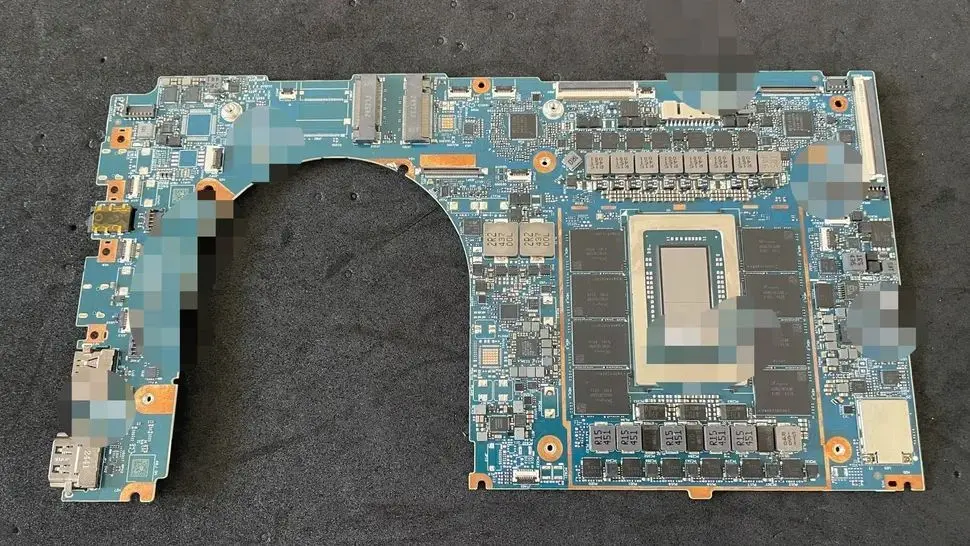
Nvidia N1 SoC Appears on Engineering Motherboard
Leaked images of what appears to be Nvidia's highly anticipated N1 SoC have surfaced on Goofish, a Chinese reselling platform, giving the tech community its first concrete look at the chip mounted on an engineering motherboard
1
. The listing, priced at approximately $1,400 (9999 RMB), showcases a compact motherboard that could power either a 13-inch tablet or more likely a 14-inch laptop, based on the large fan cutout visible in the images. The Nvidia N1 AI book engineering sample represents the company's ambitious return to the consumer CPU market after nearly a decade, with its last consumer chip being the Tegra X1 used in the Shield TV back in 20151
.The listing describes the board as suitable for "consumer-grade AI PCs" and specifically mentions compatibility with Windows on Arm, indicating Nvidia's strategic move to reinvigorate Microsoft's ARM-based computing initiative
1
. The densely packed PCB appears more like a close-to-final retail unit than an early prototype, suggesting development has reached an advanced stage.Impressive Memory Configuration and Power Delivery
The engineering motherboard showcases an impressive configuration with 128 GB LPDDR5X memory spread across eight SK hynix H58G78CK8B modules running at 8,533 MT/s
1
. This memory speed positions the Nvidia N1 SoC between AMD's Strix Halo, which tops out at 8,000 MT/s, and Intel's Panther Lake and Apple Silicon M5 series, both of which support up to 9,600 MT/s in flagship configurations1
. The 128 GB capacity is substantially higher than what typically comes in thin and light laptops, signaling the chip's focus on demanding AI workloads2
.The motherboard features a robust 8+6+2 phase VRM setup surrounding the N1 chip, suggesting the System on a Chip will have a significant power appetite to support its processing capabilities
3
. This beefy power delivery system indicates Nvidia is prioritizing performance over extreme power efficiency, a strategic choice that positions the chip to compete with Apple Silicon in raw computing power while targeting the AI PC segment.Targeting Apple Silicon and Windows on Arm Revival
Nvidia CEO Jensen Huang confirmed earlier this year that the company is developing the N1 in conjunction with MediaTek, which handles the Arm-based CPU side while Nvidia manages the graphics and software components
2
. The GB10 Superchip inside DGX Spark is based on N1 silicon, as confirmed by Huang himself, and reportedly features a 20-core Arm-based CPU with 10 cores per cluster and an RTX 5070-level GPU with 6,144 CUDA cores1
. A previous Wall Street Journal report indicated the N1 is designed to directly compete with Apple Silicon1
.The chip arrives at a crucial moment for Windows on Arm, which has struggled with compatibility issues from legacy apps and drivers built for x86 architecture. While Qualcomm's Snapdragon X Elite family has made progress on CPU-based tasks, GPU drivers have held back overall performance, creating an opportunity for Nvidia to fill this gap with its extensive graphics expertise
1
. The Nvidia mobile chip will feature full support for Microsoft Windows OS and Copilot+ features, positioning it as a comprehensive solution for the emerging AI PC market3
.Related Stories

Launch Timeline and Market Implications
All signs now point toward a Computex 2026 reveal for the N1/N1X lineup after it missed GTC last month
1
. A DigiTimes report from earlier this year claimed Nvidia is targeting Q1 2026 for launch with more variants to follow in the second quarter, though the Goofish listing suggests devices featuring the chip may arrive in the second half of the year1
. Taiwanese media CTEE cited industry sources claiming Huang will make an appearance in a keynote at Computex, which could be the perfect venue to showcase new PCs rumored to be made by laptop manufacturers HP and Dell2
.However, the ongoing RAM crisis poses a significant challenge to pricing. AI datacenters have devastated the PC market as semiconductor manufacturers tune their businesses toward supplying heavy-duty memory for data centers rather than consumer products
2
. This has left consumers paying exorbitant prices for desktop PC memory, and laptops from every brand have seen major price hikes throughout 2026. While exact pricing for N1-powered laptops remains unknown, the combination of advanced specifications and market conditions suggests these devices won't come cheap. The N1X variant is expected to sport additional GPU cores to make it better for rendering and gaming on lightweight laptops, potentially commanding an even higher premium2
.References
Summarized by

Navi
[1]
Related Stories
Nvidia N1X Arm chip surfaces in Dell laptop leak, signaling 2026 launch for AI PC processors
13 Jan 2026•Technology

Nvidia confirms N1X and N1 chips for AI PCs, targeting Intel and AMD with RTX 5070 performance
02 Feb 2026•Technology
Nvidia's Ambitious Leap into AI PC Market: N1 Series SoC Set to Debut in 2025
09 Jan 2025•Technology

Recent Highlights



Recent Highlights
Today's Top Stories






Your Daily Dose of Curated AI News
Don’t drown in AI news. We cut through the noise - filtering, ranking and summarizing the most important AI news, breakthroughs and research daily. Spend less time searching for the latest in AI and get straight to action.

