OpenAI acquires Python toolmaker Astral to strengthen Codex against Anthropic's Claude Code


9 Sources
9 Sources
[1]
OpenAI is acquiring open source Python tool-maker Astral
OpenAI announced Thursday that it has entered into an agreement to acquire Astral, the company behind popular open source Python development tools such as uv, Ruff, and ty, and integrate the company into its Codex team. The deal, whose financial terms were not publicly disclosed, will help OpenAI "accelerate our work on Codex and expand what AI can do across the software development lifecycle," the company said in an announcement post. Integrating Astral's tools more closely with Codex after the acquisition will "enable AI agents to work more directly with the tools developers already rely on every day," it continued. Astral's most popular open source projects include: * uv, a Rust-based Python package manager that helps manage the complex web of dependencies in Python coding environments (attracted over 126 million monthly downloads) * Ruff: A Python linter and code formatter (179 million monthly downloads) * Ty: A fast Python type-checker, currently in beta (19 million monthly downloads) Charlie Marsh, who founded Astral three years ago with $4 million in seed funding, promised in a blog post Thursday that OpenAI "will continue supporting our open source tools after the deal closes. We'll keep building in the open, alongside our community - and for the broader Python ecosystem - just as we have from the start." OpenAI echoed that, following the close of the acquisition, saying it will "continue to support these open source projects while exploring ways they can work more seamlessly with Codex." OpenAI's move comes amid an intense battle between Codex and Anthropic's Claude Code for dominance in the fast-growing market for AI-powered coding assistants. Back in November, Anthropic acquired Bun, a JavaScript runtime with 7 million monthly downloads that the company said would lead to "faster performance, improved stability, and new capabilities" after its integration into Claude Code. Earlier this month, OpenAI acquired Promptfoo, the makers of an open source security tool focused on LLMs.
[2]
OpenAI tries to build its coding cred by acquiring Astral
In a move clearly designed to strengthen its position among developers, OpenAI has acquired Python tool maker Astral. The house of Altman expects the deal to strengthen the ecosystem for its Codex programming agent. Since its founding in 2022 by Charlie Marsh, Astral has won over a substantial portion of the Python community with Rust-based tools like uv (package and project manager), Ruff (linting and formatting), and ty (type checker) that outperform Python-based tools like pip. OpenAI says that it plans to continue supporting these tools as open source projects while using them internally to improve Codex and make AI more useful as part of the software development lifecycle. "Our goal with Codex is to move beyond AI that simply generates code and toward systems that can participate in the entire development workflow - helping plan changes, modify codebases, run tools, verify results, and maintain software over time," the company said in a blog post. "Astral's developer tools sit directly in that workflow. By integrating these systems with Codex after closing, we will enable AI agents to work more directly with the tools developers already rely on every day." If Astral's tools can make AI-generated code more maintainable, that would be a significant win. One of the emerging concerns about the shift toward AI-generated code is that it's more difficult to maintain. The deal also looks to be an acquisition of talent. According to OpenAI, the Astral team will join those working on Codex in an effort to make the coding agent more adept. OpenAI's acquisition of Astral follows rival Anthropic's December 2025 purchase of Bun, a runtime, package manager, test runner, and bundler for JavaScript/TypeScript applications. In a blog post on Thursday, software developer Simon Willison remarked that the two deals have occurred amid intense competition between OpenAI and Anthropic. "Bun was already a core component of Claude Code and that acquisition looked to mainly be about ensuring that a crucial dependency stayed actively maintained," he wrote. "Claude Code's performance has increased significantly since then thanks to the efforts of Bun's Jarred Sumner. "One bad version of this deal would be if OpenAI start using their ownership of uv as leverage in their competition with Anthropic." But Willison also suggests a possible motive for the deal unrelated to competitive leverage. He points out that Marsh's post about the deal thanks investors who committed to Series A and Series B funding rounds. Those investors, he speculates, should now be able to exchange their stake in Astral for a stake in OpenAI, which reportedly could go public as soon as the end of this year. ®
[3]
OpenAI to Acquire Startup Astral, Expanding Push Into Coding
OpenAI plans to acquire Astral, a startup that makes Python tools for developers, marking the ChatGPT maker's latest investment in the fast-growing market for coding and developer services. The deal, which hasn't yet closed, will bring Astral's team into OpenAI's Codex effort, OpenAI said Thursday. Codex has more than 2 million users, the company said, a number that's tripled since the start of this year. Astral's suite of tools will push Codex -- which can write software features, fix bugs and run tests -- into a broader suite of developer services. "Astral has always focused on building tools that transform how developers work with Python -- helping them ship better software, faster," the startup's founder, Charlie Marsh, said in a statement, adding that the company will continue evolving its open-source tools within OpenAI. OpenAI is currently in a race with competitors including Anthropic, Microsoft Corp. and startups like Cursor to woo corporate customers using AI as coding assistants. Cursor is currently in talks with investors to raise money at a valuation of $50 billion, Bloomberg reported. Meanwhile, Anthropic is nearing an annual revenue run rate of $20 billion. Buying Astral is the latest in a string of purchases for OpenAI. This month, it agreed to buy AI security startup Promptfoo, adding tools to test and secure AI agents before deployment. Late last year, it also bought startups including Software Applications Inc. and Neptune.
[4]
OpenAI buys Python tools builder Astral
Astral tools and expertise will be leveraged in OpenAI Codex agentic coding app to expand AI capabilities across the software development life cycle. OpenAI is acquiring Python developer toolmaker Astral, thus bringing open source developer tools into OpenAI's Codex AI coding system. The acquisition was announced on March 19. Elaborating on the deal, OpenAI said Astral has built widely used open source Python tools, helping developers move faster with modern tools such as uv, Ruff, and ty. These tools power millions of developer workflows and have become part of the foundation of modern Python development, OpenAI said. By bringing in Astral's tools and engineering expertise, OpenAI said it will accelerate work on Codex and expand what AI can do across the software development life cycle. OpenAI's goal with the Codex ecosystem is to move beyond AI that simply generates code and toward systems that can participate in the entire development workflow, helping plan changes, modify codebases, run tools, verify results, and maintain software over time. Astral's developer tools sit in that workflow. With the integration of these systems with Codex, OpenAI said it will enable AI agents to work more directly with the tools developers already rely on every day. Python, OpenAI said, has become one of the most important languages in modern software development, powering everything from AI and data science to back-end systems and developer infrastructure. Astral's open source tools play a key role in that ecosystem, OpenAI said. These tools and their capabilities are cited in OpenAI's announcement:
[5]

OpenAI to buy Python toolmaker Astral to take on Anthropic
March 19 (Reuters) - OpenAI said on Thursday it will acquire Python toolmaker Astral, as the ChatGPT owner looks to strengthen its portfolio against rival Anthropic and gain more share in the artificial intelligence coding tools market. The companies did not disclose the financial terms of the deal, but said the acquisition will bring Astral's suite of developer tools into the Microsoft-backed (MSFT.O), opens new tab startup's AI coding system, Codex. Sam Altman-led OpenAI, which launched its Codex platform last year, is stepping up competition, as Anthropic has gained traction with its Claude Code tool among software developers. OpenAI launched a desktop app for its coding tools earlier this year. The company said on Thursday that Codex has more than 2 million weekly active users, marking a three-fold increase in users and a five-fold jump in usage since the beginning of the year. Astral has become a major player in the Python community. Its tools are designed to improve speed and reliability in Python development. "OpenAI will continue supporting our open-source tools after the deal closes," Astral founder and CEO Charlie Marsh said in a statement. Reporting by Jaspreet Singh in Bengaluru; Editing by Shinjini Ganguli Our Standards: The Thomson Reuters Trust Principles., opens new tab
[6]

OpenAI acquires open-source Python tooling startup Astral - SiliconANGLE
OpenAI Group PBC today announced plans to acquire Astral Software Inc., a startup with a set of widely used Python development tools. The terms of the deal were not disclosed. Astral's development tools are written in Rust, a programming language that is both more complicated and significantly faster than Python. As a result, the startup says that its software is 10 to 100 times more performant than competing products. That speed and certain other features have helped Astral build an installed base of several million developers. The company's flagship tool, uv, is a Python package manager. It enables developers to download open-source Python code components, or packages, and integrate them into their software projects. A built-in cache saves code components after the initial installation. That removes the need for developers to re-download the same package multiple times, which saves time. Software teams can also use uv to ease certain related tasks. The software automates simple, repetitive chores such as viewing what packages an application uses and upgrading its Python language implementation to the latest version. Astral's two other open-source tools are designed to help developers detect code quality issues. The first tool, Ruff, is a linter, a type of debugger optimized to spot small programming mistakes. For example, it can detect when a piece of code doesn't adhere to a company's style or formatting best practices. Ruff generates remediation suggestions for the issues that it finds. Astral offers the tool alongside ty, an even more specialized debugging tool. When developers write a Python code snippet that processes data, they must add in a keyword that specifies what type of data is being processed. Software teams can use ty to find code snippets in which the keyword is inaccurate. Such inconsistencies can lead to application errors if they're left addressed. OpenAI stated today Astra's open-source tools will continue to be maintained following the acquisition. The ChatGPT developer plans to integrate them with its Codex programming assistant. The Astral team is joining OpenAI to support the development effort. Besides enhancing Codex, the acquisition may also help the company create a new revenue stream. Astra's website indicates that it's working on a paid product called pyx. It's a cloud-based Python package registry, a kind of app store that software teams can use to store application building blocks. The service lends itself to hosting, among other projects, pre-configured versions of artificial intelligence frameworks such as PyTorch. "After joining the Codex team, we'll continue building our open source tools, explore ways they can work more seamlessly with Codex, and expand our reach to think more broadly about the future of software development," Astral founder and Chief Executive Officer Charlie Marsh wrote in a blog post.
[7]

OpenAI to acquire Astral to power its Codex AI agent - The Economic Times
Codex is OpenAI's cloud-based software engineering agent that can work on multiple tasks at the same time, such as answering questions about users' codebase, fixing bugs, and more. With the acquisition, OpenAI will look to move beyond simple code generation and build systems that can take part in the full development workflow.OpenAI, on Thursday, announced that it will acquire Astral, bringing its open source developer tools into its Codex ecosystem. Codex is OpenAI's cloud-based software engineering agent that can work on multiple tasks in parallel, like answering questions about users' codebase, fixing bugs and more. Taking to X, the Sam Altman-led company said, "We've reached an agreement to acquire Astral. After we close, OpenAI plans for @astral_sh to join our Codex team, with a continued focus on building great tools and advancing the shared mission of making developers more productive." However, the company said the deal will go through only after meeting standard conditions, including regulatory approval. Until then, OpenAI and Astral will continue to operate independently. OpenAI said its aim with Codex is to move beyond simple code generation and build systems that can take part in the full development workflow, from helping plan changes to modifying codebases, running tools, verifying results, and maintaining software over time. "Astral's developer tools sit directly in that workflow," OpenAI said. "By integrating these systems with Codex after closing, we will enable AI agents to work more directly with the tools developers already rely on every day." Thibault Sottiaux, Codex lead at OpenAI, said, "Astral's tools are used by millions of Python developers. By bringing their expertise and ecosystem to OpenAI, we're accelerating our vision for Codex as the agent most capable of working across the entire software developer lifecycle." Astral has become a major player in the Python community. Its tools are designed to improve speed and reliability in Python development. "OpenAI will continue supporting our open-source tools after the deal closes," Astral founder and CEO Charlie Marsh said in a statement. (With inputs from agencies)
[8]

OpenAI Continues Coding Push With Astral Acquisition | PYMNTS.com
The deal, announced Thursday (March 19), is part of the company's increasing focus on coding, and is designed to integrate Astral's team with OpenAI's Codex project. "Our goal with Codex is to move beyond AI that simply generates code and toward systems that can participate in the entire development workflow -- helping plan changes, modify codebases, run tools, verify results, and maintain software over time," OpenAI said in its announcement. "Astral's developer tools sit directly in that workflow. By integrating these systems with Codex after closing, we will enable AI agents to work more directly with the tools developers already rely on every day." The announcement notes that Python has become a key language in modern software development, powering things like AI, data science, and developer infrastructure. Astral's open source tools "already play a key role in that ecosystem," OpenAI added. These include uv, which simplifies dependency and environment management; Ruff, which offers "extremely fast" linting and formatting; and ty, which "helps enforce type safety across codebases," the company said. "Astral has always focused on building tools that transform how developers work with Python -- helping them ship better software, faster," said founder Charlie Marsh, adding that Astral will continue working on its open-source tools as part of OpenAI. The announcement follows reports from earlier this week that OpenAI is halting its side projects as it focuses more on coding and business users. Fidji Simo, the artificial intelligence (AI) startup's CEO of applications, previewed the company's new strategy in a recent "all-hands" with employees, The Wall Street Journal (WSJ) reported. "We cannot miss this moment because we are distracted by side quests," Simo said, per remarks seen by the WSJ. "We really have to nail productivity in general and particularly productivity on the business front." The company in the past year has rolled out several new products, like its Sora video generator, the Atlas web browser, a new hardware device and eCommerce capabilities for ChatGPT. CEO Sam Altman has likened this push to "betting on a series of startups" inside OpenAI, the WSJ added, helping build the startup's reputation as an AI pioneer. But now, OpenAI is facing mounting pressure for its rival Anthropic, whose Claude Code and Cowork tools have made it popular among businesses. OpenAI also recently announced plans to purchase Promptfoo, a startup that helps companies find vulnerabilities in AI systems during development, and integrate its technology into OpenAI Frontier, the company's enterprise platform for building and running AI agents.
[9]

OpenAI to acquire Astral bringing Python tools to Codex
OpenAI to acquire Astral, a developer of widely used open source Python tools, bringing these capabilities into the Codex ecosystem. Astral's projects, including uv, Ruff, and ty, are widely adopted in Python development and support millions of developer workflows. OpenAI will continue supporting Astral's open source products after the acquisition. Bringing Astral's tools and engineering expertise into Codex will enable AI systems to assist across the software development workflow, including planning changes, modifying codebases, running tools, verifying outputs, and maintaining projects over time. Codex has experienced threefold user growth and a fivefold increase in usage since the start of the year, reaching over 2 million weekly active users. With Astral's tooling, Codex can integrate more directly with developer workflows, allowing AI agents to operate alongside the tools developers already use. Python is a central language in modern software, supporting AI, data science, backend systems, and infrastructure. Astral's tools enhance this ecosystem: These tools help developers manage projects, maintain code quality, and catch errors early. OpenAI will continue supporting these tools while exploring integration with Codex to extend AI assistance throughout Python development. The acquisition remains subject to customary closing conditions, including regulatory approval. Once completed, the Astral team will join OpenAI's Codex group, enabling closer integration with developer tools and advancing Codex as a collaborative system across the software development lifecycle. Speaking on the acquisition, Charlie Marsh, Founder & CEO of Astral, said: Astral has always focused on building tools that transform how developers work with Python -- helping them ship better software, faster. As part of Codex, we'll continue enhancing our open source tools to push the frontier of software development. Commenting on the acquisition, Thibault Sottiaux, Codex Lead at OpenAI, said:
Share
Share
Copy Link
OpenAI is acquiring Astral, the company behind popular Python development tools like uv and Ruff, to integrate with its Codex platform. The deal brings tools with over 300 million combined monthly downloads into OpenAI's ecosystem as competition intensifies with Anthropic's Claude Code in the AI-powered coding assistant market.
OpenAI Acquisition of Astral Marks Strategic Push Into Developer Tools
OpenAI announced Thursday it has entered into an agreement to acquire Astral, the company behind widely-used open-source Python development tools, in a strategic move to strengthen its position in the rapidly expanding AI coding tools market
1
. The deal, whose financial terms remain undisclosed, will bring Astral's team and its suite of developer tools into OpenAI's Codex platform, which has grown to more than 2 million weekly active users—a three-fold increase since the beginning of this year5
.
Source: FoneArena
Founded in 2022 by Charlie Marsh with $4 million in seed funding, Astral has become a major player in the Python ecosystem by building Rust-based tools that outperform traditional Python-based alternatives
2
. The company's flagship products include uv, a package manager with over 126 million monthly downloads; Ruff, a linter and code formatter attracting 179 million monthly downloads; and ty, a fast type-checker currently in beta with 19 million monthly downloads1
.
Source: SiliconANGLE
Expanding OpenAI Codex Capabilities Across Software Development Lifecycle
The acquisition aims to accelerate OpenAI's work on Codex and expand what AI agents can accomplish throughout the software development lifecycle
4
. "Our goal with Codex is to move beyond AI that simply generates code and toward systems that can participate in the entire development workflow—helping plan changes, modify codebases, run tools, verify results, and maintain software over time," OpenAI stated in its announcement2
.By integrating Astral's developer tools with Codex after the deal closes, OpenAI will enable AI-powered coding assistant capabilities to work more directly with the tools software developers already rely on daily
1
. This integration could address emerging concerns about AI-generated code maintainability—if Astral's tools can make such code more maintainable, it would represent a significant win for the industry2
.Competition with Anthropic Intensifies in AI Programming Agent Market
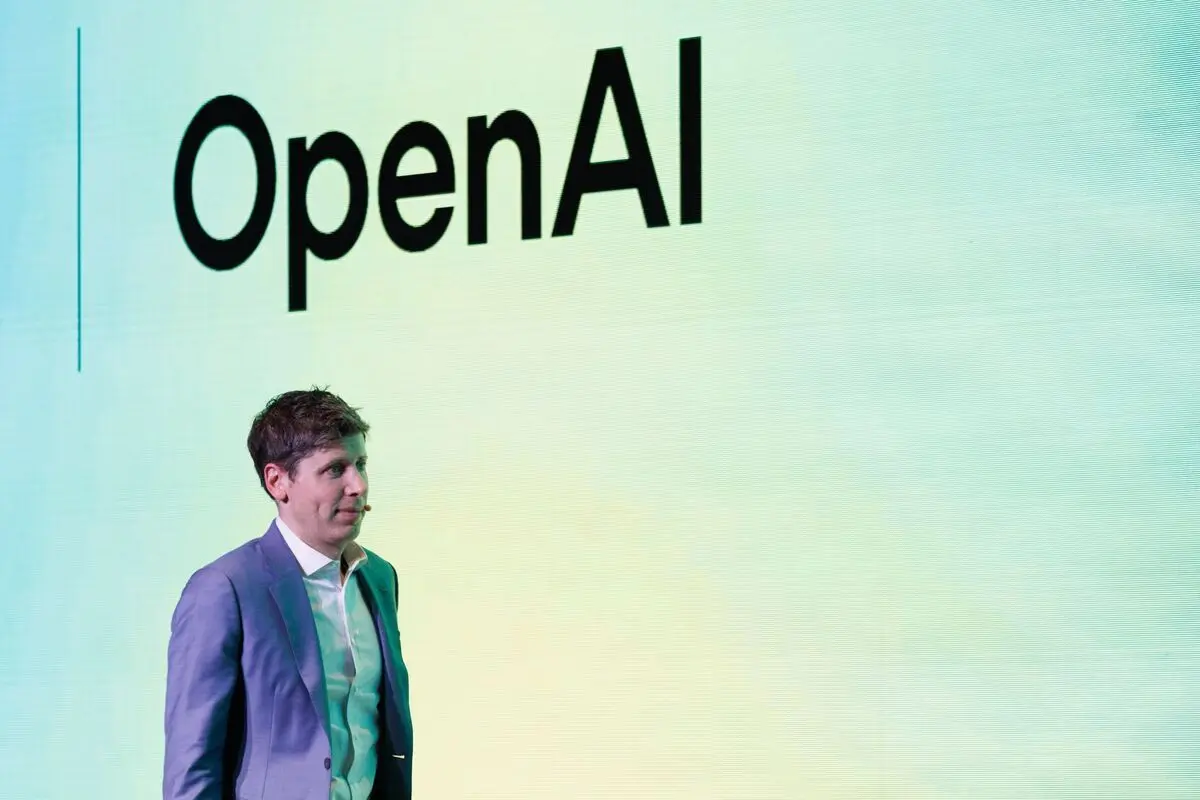
The acquisition comes amid intense competition with Anthropic for dominance in the fast-growing market for AI coding tools
1
. Anthropic has gained significant traction with its Claude Code tool among software developers and is nearing an annual revenue run rate of $20 billion3
. In December 2025, Anthropic acquired Bun, a JavaScript runtime with 7 million monthly downloads, which has since led to performance improvements in Claude Code1
.
Source: Bloomberg
The deal also represents talent acquisition, as Astral's team will join those working on Codex to make the coding agent more adept
2
. OpenAI is currently competing with rivals including Anthropic, Microsoft, and startups like Cursor, which is in talks to raise money at a $50 billion valuation3
.Related Stories

Open Source Commitment and Future Implications
Both OpenAI and Marsh have committed to continuing support for Astral's open source projects after the deal closes. "We'll keep building in the open, alongside our community—and for the broader Python ecosystem—just as we have from the start," Marsh promised in a blog post
1
. OpenAI echoed this commitment, stating it will continue supporting these projects while exploring ways they can work more seamlessly with Codex1
.However, developer Simon Willison raised concerns about potential competitive leverage, noting that "one bad version of this deal would be if OpenAI start using their ownership of uv as leverage in their competition with Anthropic"
2
. He also speculated that the timing might benefit Astral's investors, who committed to Series A and Series B funding rounds and could now exchange their stake for equity in OpenAI, which reportedly could go public as soon as the end of this year2
.This marks OpenAI's latest in a string of purchases, following its acquisition of AI security startup Promptfoo earlier this month and other startups including Software Applications Inc. and Neptune late last year
3
.References
Summarized by

Navi
[1]
[2]
[4]
Related Stories
OpenAI's $3 Billion Acquisition of Windsurf: A Strategic Move in the AI-Powered Coding Race
06 May 2025•Business and Economy

OpenAI acquires Promptfoo to secure its AI agents as enterprise deployment accelerates
09 Mar 2026•Technology

OpenAI and Anthropic Intensify AI Coding Race with Advanced Tools
05 Jun 2025•Technology

Recent Highlights



Recent Highlights
Today's Top Stories










Your Daily Dose of Curated AI News
Don’t drown in AI news. We cut through the noise - filtering, ranking and summarizing the most important AI news, breakthroughs and research daily. Spend less time searching for the latest in AI and get straight to action.

