OpenAI-backed Chai Discovery raises $130M at $1.3B valuation as AI transforms drug development


4 Sources
4 Sources
[1]
OpenAI-backed biotech firm Chai Discovery raises $130M Series B at $1.3B valuation | TechCrunch
Chai Discovery, a biotech startup with backing from OpenAI, announced an $130 million Series B round at a $1.3 billion valuation on Monday. The round was led by General Catalyst and Oak HC/FT, the company said. Other participants include Menlo Ventures, OpenAI, Dimension, Thrive Capital, Neo, Yosemite venture fund, Lachy Groom, SV Angel, and new investors Glade Brook and Emerson Collective. The firm's total funding now stands at over $225 million. The company is one in a growing industry that sees AI as a faster route towards drug development. In August, Menlo Ventures announced it was leading Chai's $70 million Series A round. The investor described Chai as a startup that was building foundation models tuned for drug discovery, specifically to predict interactions between biochemical molecules so they could be reprogramed for cures. Chai says that its ambition is to "build the "computer aided design suite" for molecules." Last year, the startup announced the Chai 1 AI model and is now offering Chai 2, it's latest model. The company says Chai 2 is achieving significant improvements in success rates over other methods for de novo antibody design, meaning building custom antibodies from scratch, not modifying existing ones. "Our latest models can design molecules that have properties we'd want from actual drugs, and tackle challenging targets that have been out of reach," Josh Meier, Chai's co-founder and CEO said in a prepared statement. Previously, Meier, who's background is in machine learning, worked in research and engineering at Facebook and, prior to that, worked for OpenAI, according to his LinkedIn. Chai Discovery was founded in 2024, the profile notes.
[2]
AI medical research startup Chai Discovery raises $130M in funding - SiliconANGLE
AI medical research startup Chai Discovery raises $130M in funding Chai Discovery Inc., a startup using artificial intelligence to accelerate drug development, today announced that it has closed a $130 million funding round led by Oak HC/FT and General Catalyst. The two investment firms were joined by more than a half dozen other backers. The consortium included OpenAI Group PBC and Thrive Capital, one of the ChatGPT developer's largest investors. Chai Discovery is now valued at $1.3 billion. The investment comes about six months after the company introduced Chai-2, a multimodal AI model optimized for medical research. It's designed to help scientists develop new drugs faster by automating some of the manual work involved in the process. According to Chai Discovery, the algorithm can provide a "100-fold improvement over previous computational methods" in certain areas. Many drugs are based on molecules known as mAbs antibodies. Those are large proteins that attach themselves to one specific section of a disease-causing virus or bacterium and neutralize it. According to Chai Discovery, competitors' AI models often don't design entire proteins but only protein fragments, which have limited usefulness. Chai-2, in contrast, can generate full-length mAbs antibodies. The company claims that the model can also generate other molecules with potential therapeutic applications. It's capable of designing nanobodies, which are antibodies derived from llamas and alpacas, along with miniproteins. Those are proteins that are a fraction of the size of mAbs antibodies. An antibody can only neutralize disease-causing viruses or bacteria after it successfully binds to their surface. As a result, so-called binding affinity is one of the main factors scientists evaluate when developing new drugs. However, it's not the only consideration: researchers also weigh details such as an antibody's manufacturability, safety and stability. Chai says that its AI can account for those factors more effectively than other models. One of the contributors to Chai-2's performance is that it evaluates antibodies with a high degree of granularity. According to Chai Discovery, the model "reasons about structures at sub-angstrom scale." An angstrom is a unit of measurement that corresponds to one ten-billionth of a meter, which is slightly more than the length of a hydrogen atom. Chai Discovery tested Chai-2's capabilities by having it design a set of antibodies with potential therapeutic applications. From there, the company evaluated the antibodies across four criteria that determine whether a molecule could be turned into medicine. Chai Discovery says that 89% of Chai-2's suggested designs contained either a single issue or none. "What looked like five-year problems just months ago are now getting solved in weeks," said Chai Discovery founder and Chief Executive Officer Josh Meier. "Our latest models can design molecules that have properties we'd want from actual drugs, and tackle challenging targets that have been out of reach ."
[3]
This Startup Backed By OpenAI and Jobs Family Is the Latest A.I. Drug Discovery Unicorn
Chai Discovery joins a growing wave of A.I. drug startups attracting backing from Silicon Valley's biggest names. Chai Discovery, a San Francisco-based startup backed by OpenAI, is the latest drug discovery company to benefit from a flurry of investments at the intersection of health care and A.I. In its latest funding round, the company raised $130 million to accelerate the development of new drugs. The Series B round, announced today (Dec. 15), was co-led by Oak HC/FT and General Catalyst. It brings Chai Discovery's total funding to more than $225 million and more than doubles its valuation to $1.3 billion. Sign Up For Our Daily Newsletter Sign Up Thank you for signing up! By clicking submit, you agree to our <a href="http://observermedia.com/terms">terms of service</a> and acknowledge we may use your information to send you emails, product samples, and promotions on this website and other properties. You can opt out anytime. See all of our newsletters Other participants included OpenAI, Thrive Capital and Menlo Ventures. Yosemite, the oncology-focused venture firm founded by Steve Jobs' only son, Reed Jobs, also joined the round, along with Emerson Collective, the investment firm led by Laurene Powell Jobs. Founded in 2024, Chai Discovery is led by CEO Josh Meier, a computer scientist who formerly worked at Facebook (now Meta) and OpenAI. The company aims to use A.I. to turn biology from a descriptive science into an engineering discipline. Chai released its latest model, Chai-2, which can design novel antibodies to target disease. Chai Discovery plans to deploy the new capital to expand its commercialization efforts while accelerating research and product development. "We're in awe of the rate of progress on the models -- what looked like five-year problems just months ago are now getting solved in weeks," Meier said in a statement. Chai Discovery is one of a growing number of drug discovery startups drawing intense interest from Silicon Valley. As enthusiasm builds around A.I.'s potential in health care, prominent tech leaders are backing ventures at a rapid clip. OpenAI CEO Sam Altman has invested in Formation Bio, while LinkedIn co-founder Reid Hoffman launched his own drug discovery startup earlier this year, Manas. Among the most well-funded companies in the space is Isomorphic Labs, an Alphabet subsidiary spun out of Google DeepMind in 2021. Led by Demis Hassabis, CEO of Google DeepMind, the company raised $600 million in March in its first external funding round. The capital is aimed at advancing its ambition to use A.I. to help cure many of the world's diseases. That optimism has been matched by a surge in investment. Venture funding for seed- through growth-stage A.I.-powered health tech companies has reached $10.7 billion this year, according to data from Crunchbase, representing a more than 24 percent increase compared to the $8.6 billion raised in all of 2024. Meier is confident the spending will pay off. "We're standing on the precipice of a new era for the biopharmaceutical industry," he said, adding that A.I. models "will unleash a new wave of first-in-class and best-in-class therapeutics, and the early adopters in pharma will be the big winners."
[4]
OpenAI-Backed Chai Discovery Hits $1.3 Billion Valuation: CEO Says 'Five-Year Problems' Now Solved In Weeks
Enter your email to get Benzinga's ultimate morning update: The PreMarket Activity Newsletter OpenAI-backed biotech startup Chai Discovery has raised $130 million in a Series B funding round, pushing its valuation to $1.3 billion. Chai Discovery Accelerates AI-Driven Drug Design In an announcement on Monday, the round was led by General Catalyst and Oak HC/FT, with participation from Menlo Ventures, OpenAI, Dimension, Thrive Capital, Neo, Yosemite Venture Fund, Lachy Groom, SV Angel and newcomers Glade Brook and Emerson Collective. With the Series B funding, Chai's total capital raised exceeds $225 million. The company announced that Annie Lamont of Oak HC/FT and Hemant Taneja of General Catalyst will join its board of directors. Earlier this year, Menlo Ventures led a $70 million Series A round. See Also: OpenAI Ends Vesting Cliff For Employee Stock Options Again As Competition For Top-Tier Talent Intensifies: Report AI Models Driving Rapid Progress Founded in 2024, Chai Discovery develops advanced AI models, including its latest Chai 2, to predict molecular interactions and design custom antibodies from scratch -- a process known as de novo antibody design. CEO Josh Meier, a former OpenAI and Facebook engineer, highlighted the speed of progress, saying, "We're in awe of the rate of progress on the models - what looked like five-year problems just months ago are now getting solved in weeks." Chai's platform aims to act as a "computer-aided design suite" for molecules, enabling scientists to engineer molecules with properties suitable for drugs and to target diseases previously considered out of reach. The company plans to use the funds to speed up research and product development while also expanding commercialization efforts. Read Next: Kevin O'Leary Flags Tariffs, Food Prices And Housing As Trump Starts Selling His Economic Record For The Midterms: 'I Don't Shill For Politicians' Disclaimer: This content was partially produced with the help of AI tools and was reviewed and published by Benzinga editors. Photo Courtesy: Prathmesh T on Shutterstock.com Market News and Data brought to you by Benzinga APIs
Share
Share
Copy Link
Chai Discovery, an OpenAI-backed biotech startup, secured $130 million in Series B funding at a $1.3 billion valuation. Led by General Catalyst and Oak HC/FT, the round brings total funding to over $225 million. The company's Chai 2 AI model designs custom antibodies from scratch, solving complex drug development challenges that previously took years in just weeks.
OpenAI-Backed Biotech Startup Achieves Unicorn Status
Chai Discovery announced a $130 million Series B funding round on December 15, reaching a $1.3 billion valuation and officially joining the unicorn ranks
1
. The round was co-led by General Catalyst and Oak HC/FT, with participation from OpenAI, Thrive Capital, Menlo Ventures, Dimension, Neo, Yosemite venture fund, Lachy Groom, SV Angel, and new investors Glade Brook and Emerson Collective1
. The investment more than doubles the company's previous valuation and brings its total funding to over $225 million . This OpenAI-backed biotech startup represents one of the most prominent examples of Silicon Valley's increasing focus on the intersection of AI and healthcare.
Source: Benzinga
Rapid Progress in AI Drug Discovery
Founded in 2024, Chai Discovery builds foundation models specifically tuned for predicting molecular interactions to accelerate drug development
1
. The company's ambition centers on creating a computer-aided design suite for molecules, fundamentally transforming how scientists approach drug design1
. CEO Josh Meier, who previously worked at OpenAI and Facebook, emphasized the accelerating pace of innovation: "We're in awe of the rate of progress on the models -- what looked like five-year problems just months ago are now getting solved in weeks"4
. This dramatic compression of development timelines signals a fundamental shift in the biopharmaceutical sector's approach to drug discovery.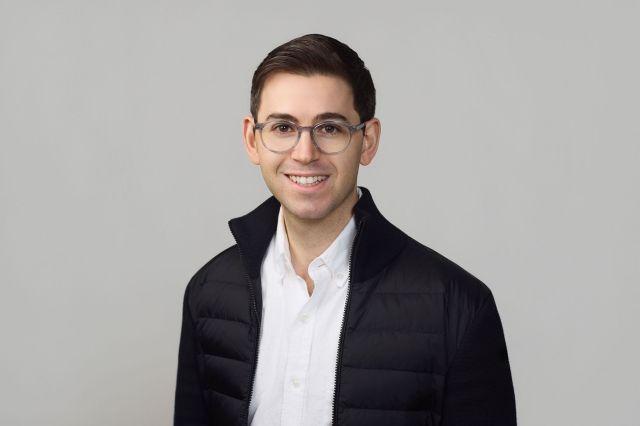
Source: Observer
Chai 2 AI Model Delivers Breakthrough Performance
The AI medical research startup released its latest Chai 2 AI model, which achieves significant improvements in success rates for designing custom antibodies from scratch, a process known as de novo antibody design . Unlike competitors' models that often design only protein fragments, Chai 2 can generate full-length mAbs antibodies, along with nanobodies derived from llamas and alpacas, and miniproteins
2
. The model provides a "100-fold improvement over previous computational methods" in certain areas2
. In testing, 89% of Chai 2's suggested antibody designs contained either a single issue or none when evaluated across four critical criteria determining whether a molecule could become medicine2
.Related Stories

Technical Precision Drives Drug Design Success
Chai 2 evaluates antibodies with exceptional granularity, reasoning about structures at sub-angstrom scale—one ten-billionth of a meter, slightly more than the length of a hydrogen atom
2
. This precision allows the model to account for multiple factors beyond binding affinity, including manufacturability, safety, and stability—considerations that determine whether a molecule can successfully become a drug2
. Meier stated that "our latest models can design molecules that have properties we'd want from actual drugs, and tackle challenging targets that have been out of reach"1
.
Source: SiliconANGLE
Silicon Valley Bets Big on AI-Powered Healthcare
Chai Discovery joins a surge of AI drug discovery companies attracting substantial investment from tech leaders. Yosemite, the oncology-focused venture firm founded by Steve Jobs' son Reed Jobs, participated in the round, along with Emerson Collective, led by Laurene Powell Jobs . OpenAI CEO Sam Altman has invested in Formation Bio, while LinkedIn co-founder Reid Hoffman launched his own drug discovery startup, Manas, earlier this year . Venture funding for seed- through growth-stage AI-powered health tech companies reached $10.7 billion this year, representing more than 24% increase compared to the $8.6 billion raised in all of 2024, according to Crunchbase data . The company plans to deploy the new capital to expand commercialization efforts while accelerating research and product development . Meier expressed confidence that "we're standing on the precipice of a new era for the biopharmaceutical industry," predicting that AI models "will unleash a new wave of first-in-class and best-in-class therapeutics, and the early adopters in pharma will be the big winners" .
References
Summarized by

Navi
[1]
Related Stories
Chai Discovery Secures $70M for AI-Driven Molecular Discovery in Drug Development
08 Aug 2025•Science and Research

OpenAI and Thrive Capital Invest in AI Drug Discovery Startup Profluent
10 Sept 2024

Alphabet's AI Drug Discovery Spin-off Isomorphic Labs Secures $600M in Landmark Funding Round
31 Mar 2025•Business and Economy

Recent Highlights
1
Tennessee Teens Sue Elon Musk's xAI Over Grok AI-Generated Child Abuse Images
Policy and Regulation

2
Supermicro Co-Founder Indicted in $2.5 Billion Nvidia AI Chip Smuggling Scheme to China
Policy and Regulation

3
Val Kilmer to appear posthumously in As Deep as the Grave through AI-generated performance
Entertainment and Society

Recent Highlights
Today's Top Stories








Your Daily Dose of Curated AI News
Don’t drown in AI news. We cut through the noise - filtering, ranking and summarizing the most important AI news, breakthroughs and research daily. Spend less time searching for the latest in AI and get straight to action.

