OpenAI Pauses Stargate UK Data Center Project Over Energy Costs and Regulatory Concerns


16 Sources
16 Sources
[1]
OpenAI puts Stargate UK on ice over energy cost, regulations
Sam Altman's datacenter dreams hit a wall of watts and wonkery, cooling Britain's AI ambitions OpenAI is pausing its planned Stargate datacenter project in the UK just months after announcing it, citing the regulatory environment and cost of energy as reasons for putting it on hold. The US large language model (LLM) pioneer unveiled its plans for Stargate UK last September, to coincide with a state visit by President Trump. It was hailed by the British government at the time as a boost for its own ambitions to make the country a world leader in AI. But OpenAI has now got cold feet and put its infrastructure plans on hold, though it still intends to proceed when conditions are right, according to a statement it sent to The Register. "We see huge potential for the UK's AI future. London is home to our largest international research hub, and we support the Government's ambition to be an AI leader," an OpenAI spokesperson said. "AI compute is foundational to that goal - we continue to explore Stargate UK and will move forward when the right conditions such as regulation and the cost of energy enable long-term infrastructure investment. In the meantime, we are investing in talent and expanding our local presence, while also delivering on the commitments under our MOU with the Government to adopt frontier AI in UK public services." Rising energy costs - likely exacerbated by President Trump's misadventures in the Middle East - may be a contributing factor, though the reference to regulation remains unclear. As part of one of the government's "AI Growth Zones," the project should already benefit from streamlined planning and priority grid access. We asked OpenAI for clarification. Stargate UK, if it goes ahead, will span multiple sites across the country, including Cobalt Park, a business park in North Tyneside. It is expected to form part of the newly designated AI Growth Zone for the North East. The project also involves British rent-a-GPU biz Nscale, which was set to significantly grow its planned UK capacity for Stargate UK. We contacted Nscale to find out more, but the company declined to comment. At the announcement, OpenAI said it expected to buy 8,000 Nvidia GPUs for the project, with the potential to scale to 31,000 over time. This will enable OpenAI's models to run on local, sovereign compute infrastructure for use cases such as critical public services, regulated industries like finance, research projects or national security partnerships, it claimed. As an aside, we note that OpenAI not too long ago hired former UK Chancellor of the Exchequer George Osborne to head up its expansion of the Stargate project to other nations beyond the US. As if that weren't enough, Nscale now has former deputy prime minister Sir Nick Clegg sitting on its board, meaning that Stargate UK is, in a way, bringing together two, er, shining lights of the British political scene. ®
[2]
OpenAI Pauses Stargate UK Data Center Effort Citing Energy Costs
OpenAI is pausing its Stargate infrastructure project in the UK, citing the high cost of energy and regulatory environment. "We see huge potential for the UK's AI future," the company said in an emailed statement on Thursday. "AI compute is foundational to that goal -- we continue to explore Stargate UK and will move forward when the right conditions such as regulation and the cost of energy enable long-term infrastructure investment." OpenAI announced the project in September, part of a wave of investments from American technology giants during Donald Trump's visit to the UK. The ruling Labour party has made artificial intelligence and data centers a pillar of its economic growth plan, but the country has some of the highest energy costs in Europe. After unveiling its Stargate data center project in the US, OpenAI has said it will expand the effort other countries. In the UK, the private company said it was working with Nvidia Corp. and Nscale, a British data center developer, on the Stargate project, but didn't disclose how much it was planning to invest in the project. OpenAI said on Thursday that it will continue to work with the UK government on an agreement to provide ChatGPT and other services for public services. Politico reported earlier on the pause of its Stargate plan.
[3]
OpenAI pauses UK data centre project over regulation, costs
LONDON, April 9 (Reuters) - ChatGPT-maker OpenAI is pausing its main data centre project in Britain over an unfavourable regulatory environment and high energy costs, dealing a blow to the UK government's push to position the country as a global AI hub. Microsoft-backed OpenAI, which has emerged as a leading player following the widespread adoption of ChatGPT, said on Thursday it would proceed with the data centre once conditions were in place to support sustained, long-term investment. OpenAI launched the Stargate UK project in partnership with Nvidia and Nscale last September, timed to coincide with U.S. President Donald Trump's visit to Britain that generated 150 billion pounds ($201.14 billion) of inward investment overall. Billed by the company as a "major step" forward in the technology partnership between the two countries, the project was aimed at strengthening Britain's sovereign compute capabilities and supporting faster AI adoption in the UK. Sovereign compute refers to a country's capacity to develop and control its own AI infrastructure. OpenAI has been ramping up global investment in large-scale data centre infrastructure, working with partners such as Microsoft, Oracle and Nvidia to meet surging demand for AI compute. When asked about the company's decision to pause the UK phase of the project, a government spokesperson said it was continuing to work with OpenAI and other leading AI companies "to strengthen UK compute capacity". Prime Minister Keir Starmer, trailing in opinion polls ahead of a national election due by 2029, has placed AI at the centre of his growth strategy to attract international investment and reinvigorate a stagnant economy. Last year, Starmer pledged to take a pro-innovation approach to regulation, which Microsoft (MSFT.O), opens new tab has also criticised in the past, along with plans to make public data available to researchers and create zones for data centres. "We see huge potential for the UK's AI future. London is home to our largest international research hub, and we support the Government's ambition to be an AI leader," OpenAI said. "We continue to explore Stargate UK and will move forward when the right conditions such as regulation and the cost of energy enable long-term infrastructure investment," it added. ($1 = 0.7458 pounds) Reporting by Muvija M and Akash Sriram; Editing by Catarina Demony and Jane Merriman Our Standards: The Thomson Reuters Trust Principles., opens new tab
[4]
OpenAI halts Stargate UK data centre project
OpenAI has put its flagship UK data centre project on hold, dealing a blow to Britain's efforts to build "sovereign" computing power for AI. The Silicon Valley-based company blamed high energy costs and regulatory uncertainty for the delay to Stargate UK, which was originally scheduled to be built in north-east England in the first quarter of 2026. The plan to deploy thousands of AI chips through data centre start-up Nscale was launched in September alongside US President Donald Trump's state visit to the UK. It was part of a touted investment package worth tens of billions of dollars led by Big Tech groups Nvidia and Microsoft. The project was expected to bring hundreds of millions of dollars of investment to one of the UK's flagship "AI growth zones". Sir Keir Starmer's government has put AI and technology at the heart of its growth agenda, heralding September's tech deal with the US as a "decisive step towards the UK becoming a world leader in AI". The decision to put Stargate UK on an indefinite hold, with no timetable to revisit the project, marks the latest shift in OpenAI's investment strategy, despite completing a record $122bn fundraising just last month. OpenAI and its partners including Oracle and SoftBank had originally claimed Stargate would be a $500bn project to build vast AI computing facilities around the world. In recent weeks, OpenAI has also scaled back its commitments to its flagship Stargate data centre in Abilene, Texas, and shut down its AI video app, Sora, as it seeks to refocus resources on competing with Anthropic and a resurgent Google. OpenAI said that concerns about the UK government's AI policy, in particular a decision to delay contentious changes that would have made it easier for AI companies to include copyrighted content in their training data, contributed to the delay. "We continue to explore Stargate UK and will move forward when the right conditions such as regulation and the cost of energy enable long-term infrastructure investment," OpenAI said. The company added it remained committed to expanding in London, its largest international research hub. The UK government said: "Our focus is on continuing to create the right conditions for investment in the UK's AI and data centre infrastructure. We are continuing to work with OpenAI and other leading AI companies to strengthen UK compute capacity." Nscale, which raised $2bn in new funding last month as it added former Meta executives Sheryl Sandberg and Nick Clegg to its board, declined to comment. The UK-headquartered start-up, which is valued at $14.6bn, has also been working with OpenAI on a Stargate project in Norway as well as striking multibillion-dollar deals with Microsoft.
[5]

OpenAI halts UK stargate project amid regulatory and energy price concerns
OpenAI's Stargate project in the U.K. is being paused, with the company pointing towards the cost of energy and the country's regulatory environment. The U.S. AI startup announced plans for the major infrastructure project in September, saying it would deploy up to 8,000 GPUs in partnership with Nscale and Nvidia. Politico first reported on Wednesday that the project was on hold. "We continue to explore Stargate U.K. and will move forward when the right conditions such as regulation and the cost of energy enable long-term infrastructure investment," an OpenAI spokesperson told CNBC in a statement. Nscale declined to comment when approached by CNBC. Nvidia has been approached for comment. OpenAI and Nscale are still in discussions about the project in the future, a source with direct knowledge of the matter told CNBC. "We see huge potential for the U.K.'s AI future," the OpenAI spokesperson added. "London is home to our largest international research hub, and we support the Government's ambition to be an AI leader." "In the meantime, we are investing in talent and expanding our local presence, while also delivering on the commitments under our MOU with the Government to adopt frontier AI in UK public services," the statement continued.
[6]

OpenAI 'pauses' its Stargate UK data center plan
OpenAI is putting the brakes on Stargate UK, according to Bloomberg. That's the company's AI infrastructure project with NVIDIA that's meant to help the UK build out its sovereign computing capabilities. The company announced Stargate UK back in September, but it launched a strategic partnership with the UK government months before that. Stargate UK would enable the government to run top AI models locally from data centers inside the region, "particularly for specialist use cases where jurisdiction matters." But now OpenAI is pausing the project due to high cost of energy and regulatory issues. In a statement provided to the publication, the company said that it still sees a "huge potential for the UK's AI future." It added that "AI compute is foundational to that goal" and that it continues "to explore Stargate UK and will move forward when the right conditions such as regulation and the cost of energy enable long-term infrastructure investment." Upon announcing Stargate UK, OpenAI said that it would offer the same deal to other countries that want to expand their sovereign AI capabilities. It's unclear if those plans are affected, as well, but it's worth noting that the initiative, OpenAI for Countries, is also working with Australia, Greece, the UAE, Slovakia, Kazakhstan and other regions.
[7]

Dropping of Tyneside AI investment 'reflects national challenges'
The pausing of a scheme to create a data centre aimed at boosting the country's AI infrastructure is "disappointing" but "reflects national challenges around energy pricing", local political chiefs say. ChatGPT-maker OpenAI announced on Thursday it was halting its Stargate UK scheme, which would have included the data centre at Cobalt Park in North Tyneside among a wider £31bn technology agreement. It cited concerns about high energy costs and regulation, saying it would only move forward when the "right conditions" could "enable long-term infrastructure investment". The North East Combined Authority (Neca) said the region remained "open for business". When the data centre project was announced last September, OpenAI said it would help strengthen the UK's "sovereign compute capabilities" and bolster its native AI development. North East mayor Kim McGuinness, of Labour, was approached for comment but was unavailable. Instead, a spokesperson for Neca told the BBC political leaders retained a focus on securing jobs and investment. "It is disappointing news that this is on hold, but it reflects national challenges around energy pricing and regulatory certainty rather than the strength or ambition of our region. "However, we will continue to work with government to explore ways to remove the barriers and ensure this can move forward. "The North East remains one of the UK's designated AI Growth Zones, with strong assets in power, land, skills and applied innovation, and our direction has not changed." MP Chi Onwurah, chair of the Science and Technology Committee, had earlier described the news as a "blow". Speaking to BBC Radio 4's Today programme on Friday, Onwurah, who represents the Newcastle Central and West constituency within a few miles of the Cobalt Park site, said the plan had been "very long on ambition and short on detail" when it was announced in September to tie in with President Donald Trump's state visit. She said while she backed the government's move to use AI and technology innovation as "key drivers of economic growth", she believed the country's dependency on US investment was "too great". Onwurah said the Labour government had "already moved to reduce energy costs for energy-intensive industries such as AI" but more needed to be done. However, she added "there are certainly some problems in the Open AI business model, and also the energy spike as a consequence of the Iran war is a global energy increase". Following the announcement on Thursday, a government spokesperson said the UK's AI sector had attracted more than £100bn in private investment since Labour came into office, and this was delivering jobs and opportunities for workers. Follow BBC North East on X, Facebook, Nextdoor and Instagram.
[8]

OpenAI pauses Stargate UK as energy costs and copyright rules block the path
In short: OpenAI has paused its Stargate UK data centre project, citing the high cost of industrial electricity in Britain and an unfavourable regulatory environment around AI copyright. The project, announced in September 2025 alongside Nvidia and Nscale, had planned to deploy 8,000 GPUs at sites in north-east England, scalable to 31,000 over time. OpenAI says it will move forward "when the right conditions" allow, though it has given no timeline. The pause is a significant setback for the UK government's AI Growth Zones initiative and arrives as OpenAI prepares for a public listing. Stargate UK was announced in September 2025 as a sovereign AI infrastructure project: a partnership between OpenAI, Nvidia, and British cloud provider Nscale to build data centre capacity in north-east England that would allow OpenAI's models to run on local computing power. The sites earmarked were Cobalt Park near Newcastle and Blyth, both within the UK government's designated AI Growth Zones, a framework the government had positioned as a centrepiece of its industrial strategy for artificial intelligence. The project was unveiled during US President Donald Trump's state visit to Britain, giving it diplomatic as well as commercial significance. The initial phase involved off take of approximately 8,000 Nvidia AI processors, with an ambition to scale that to 31,000 GPUs over time, capacity that would have enabled OpenAI to serve critical public services, regulated industries such as finance, and national security partnerships without routing data through US-based infrastructure. OpenAI never disclosed the total investment figure associated with the UK project. The broader US Stargate project remains on track with data centre construction under way across the United States, backed by a $40 billion bridge loan SoftBank secured to finance its participation, making the UK pause a geographic exception rather than a signal of retreat from AI infrastructure spending overall. The most concrete obstacle OpenAI identified is the cost of electricity in Britain. UK industrial electricity prices are among the highest of any IEA member state, more than four times those in the United States, Finland, Norway, and Sweden. For a data centre drawing 100 megawatts, that differential is not a line-item concern but a structural one: the economics of running large-scale AI inference workloads at a site where power costs four times as much as they do in Virginia or Texas are fundamentally different, and that gap compounds as capacity scales. The problem is not simply a matter of electricity tariffs. Grid connection requests in the UK surged from 41 gigawatts in November 2024 to 125 gigawatts by June 2025, with an estimated 75 gigawatts of that queue attributable to data centre projects. Buildings can be constructed in 18 to 24 months; grid connections take three to eight years. That mismatch means that even if a project clears the financial hurdle, it faces an infrastructure queue that the current regulatory and planning framework has not been designed to process at AI-infrastructure speeds. The UK government's AI Growth Zones policy, published in November 2025, was intended in part to address exactly this bottleneck, but the zone designations do not resolve the underlying grid constraints, and OpenAI's decision to pause suggests that the policy framework has not yet translated into the conditions that would make the investment viable. The regulatory concern OpenAI cited alongside energy costs points to a separate and more politically charged problem: the UK's unresolved approach to AI copyright. UK lawmakers have been working to update the rules governing how AI models are trained on copyrighted material. The government's preferred approach, a broad text and data mining exception with an opt-out mechanism for rights holders, was rejected by the majority of respondents to the government's own consultation, with creative industries, publishers, and news organisations arguing that a broad exception would allow generative AI companies to train on their works without compensation or meaningful consent. The consultation produced no consensus, and the government has since delayed any legislative change. For OpenAI, which trains large language models on text scraped from the internet, the uncertainty about whether that training will be lawful, and on what terms, is a material business risk. A UK data centre is not simply a power facility, it creates legal jurisdiction. If the UK eventually adopts a copyright framework that restricts training data use more tightly than the US, operating infrastructure in Britain could expose OpenAI to liability or compliance costs that do not apply to its US operations. The pause allows OpenAI to wait for that regulatory picture to clarify before committing capital. OpenAI's statement was calibrated to leave the door open. "We continue to explore Stargate U.K. and will move forward when the right conditions such as regulation and the cost of energy enable long-term infrastructure investment," the company said, framing the decision as contingent rather than final. The timing, however, is notable. OpenAI closed a $122 billion funding round at an $852 billion valuation in late March 2026, extending participation to retail investors for the first time in a move widely interpreted as groundwork for a public offering analysts expect as early as the fourth quarter of 2026. Companies approaching an IPO typically tighten their capital allocation discipline, avoid open-ended international commitments that could weigh on reported cash burn, and reduce exposure to projects with uncertain timelines. Pausing a data centre project that faces both energy cost headwinds and an unresolved copyright regime fits that pattern. The UK government, which had promoted Stargate UK as a signal of international investor confidence in Britain's AI ambitions, described the decision as disappointing and said it remained in dialogue with OpenAI. OpenAI's international Stargate expansion has not been without complications elsewhere either, its Abu Dhabi data centre plans drew an explicit threat from Iranian authorities amid escalating regional tensions, suggesting that sovereign AI infrastructure projects carry geopolitical risk profiles that are becoming a distinct factor in OpenAI's site selection calculus. Meanwhile, Oracle appointed a new CFO this week to manage its $50 billion data centre construction programme as the central operating partner in the US Stargate project, a contrast that illustrates where AI infrastructure spending remains active and where it is being reconsidered. The year 2025 established infrastructure access and energy as the primary competitive variables in AI, and for the UK, OpenAI's pause is a signal that it has not yet solved either.
[9]
OpenAI pauses UK investment deal over energy costs and regulation
ChatGPT-maker OpenAI is pausing a multi-billion pound UK data centre project aimed at boosting its AI infrastructure, citing concerns about high energy costs and regulation. Its project, dubbed Stargate UK, included a large data centre in Northumberland and making thousands of powerful chips for AI development available as part of a partnership with tech firms Nvidia and Nscale. The agreement came alongside a wider £31bn package of UK tech investment, lauded as a sign of the country's potential to become an "AI superpower". But an OpenAI spokesperson said on Thursday it would only move forward with Stargate UK when the "right conditions" could "enable long-term infrastructure investment". "We see huge potential for the UK's AI future. London is home to our largest international research hub, and we support the Government's ambition to be an AI leader," an OpenAI spokesperson said in a statement. "AI compute is foundational to that goal - we continue to explore Stargate UK and will move forward when the right conditions such as regulation and the cost of energy enable long-term infrastructure investment," they added. The BBC has approached the government for comment. OpenAI said when announcing its UK data centre project in September it would help strengthen the UK's "sovereign compute capabilities" and bolster its native AI development. "This will help power the UK's future economy, boost its global competitiveness and deliver on the country's national AI Opportunities Action Plan," the company wrote. Stargate UK, based at Cobalt, Northumberland, was much smaller than OpenAI's US-based Stargate project - which committed a $500bn investment over four years to build new AI infrastructure. But its announcement on Thursday comes as a potential blow to the government, which has championed home-grown tech and AI development as a way to bolster economic growth. Technology secretary Liz Kendall said in a speech in January that the UK's AI sector had grown 23 times faster than the economy as a whole. OpenAI added in its statement it would continue to invest in talent and expanding its presence in the UK, alongside delivering on commitments set out with the government about deploying powerful AI systems in UK public services. The reasons given by the US tech giant are energy costs and regulation issues: but the reality is neither are particularly new. Even before the Iran war sent costs soaring, Britain's energy prices had long been significantly higher than in the US. And the UK's regulatory approach to AI has not changed much either. However, OpenAI's move also reflects how big tech does big business. Earlier this week, the company outlined a set of "initial" policy ideas which included incentivising workers in the era of more powerful, capable AI systems with a four-day week on full pay - something it described as an "efficiency dividend". The BBC understands concerns about the UK's regulatory environment include uncertainty over whether it would change the law to allow AI firms to train their systems using copyrighted works. It had previously been set to make this an "opt out" decision for creators - something that would have made it easier for AI firms to use copyrighted works to develop their systems. But it angered artists, including some household names like Sir Elton John. Sign up for our Tech Decoded newsletter to follow the world's top tech stories and trends. Outside the UK? Sign up here.
[10]

OpenAI halts £31 billion Stargate UK project over rising energy costs and regulatory deadlock
UK energy costs are spiraling, making building a data center more expensive * OpenAI has paused its planned Stargate UK data center project * The company cited energy costs and regulation as causes for the halt * Stargate UK was slated to be well underway by Q1 2026, but little progress had been made OpenAI has pressed pause on its Stargate UK data center project over rising energy costs and regulatory uncertainty in the country. The project would have seen a large data center built in north-east England, alongside £31 billion in wider tech investments across the UK. For now, Stargate UK will not be going ahead, but the project could resume if the "right conditions" were to "enable long-term infrastructure investment," an OpenAI spokesperson said. What is Stargate UK? When announced in September 2025, OpenAI said Stargate UK would "help power the UK's future economy, boost its global competitiveness and deliver on the country's national AI Opportunities Action Plan." The project, in partnership with Nvidia and Nscale, was scheduled to "explore offtake up to 8,000 GPUs in Q1 2026 with the potential to scale to 31,000 GPUs over time," with Nvidia CEO Jensen Huang stating that the project would help the UK become an "AI superpower." The project has missed this key milestone. While it did not rival its US sister project in a similar scale of investment, the UK project was expected to act as a catalyst for business growth and innovation. The construction of data centers and supercomputers within UK territory was also intended to help protect the sovereignty of British data - whether originating from research projects from educational institutions such as Oxford or enterprise AI development. Why has Stargate UK been paused? The main factors preventing the go-ahead of Stargate UK are the cost of energy, which has become the highest in Europe, and regulatory uncertainty. Energy costs have risen steadily in the UK, with the war in Ukraine and the uncertainty surrounding the recent conflict in the Middle East contributing to steep jumps in energy prices. The price of energy in the UK is set by the most expensive form of energy production, and the UK relies heavily on natural gas for heat and power. When supplies are threatened or when demand exceeds supply, the cost of natural gas rises and brings the wholesale cost of electricity in the UK up with it. OpenAI also listed a lack of dedicated infrastructure that would enable datacenters to access reliable energy supplies among reasons for putting the project on hold. As for regulatory concerns, OpenAI omitted specifics in its statement. But the concerns could surround the UK government's recent U-turn on AI copyright after proposed legislation received serious criticism and backlash from UK artists such as Sir Elton John and Dua Lipa. OpenAI has a history of publicly advocating for strong regulations on AI while simultaneously lobbying to weaken AI regulations and advocating for voluntary commitments over legally binding regulation. A real project or a paper tiger? There are other questions surrounding the feasibility of the project. For example, Nscale - one of the partners in the Stargate UK project - was set to build a supercomputer that would open in 2026. However, a Guardian investigation found development on the supposed site of the supercomputer had not started, and the site remained a scaffolding yard. Despite Nscale having stated publicly it had purchased the site, at the time, the scaffolding yard remained under ownership by a different company, with land records showing no evidence of Nscale's ownership. Additionally, the UK government issued a press release stating a £1.9 billion investment contract had been signed with Nscale. However, no such contract was signed, and the government admitted that it was "not playing an active role in auditing these commitments." The government also said that the full £2.5 billion investment earmarked for the development of the supercomputer was "not a formal contract, rather an intention to commit capital." The project has also been plagued by wider accounting errors, questionable contracts, and a lack of tangible commitments to investments. Follow TechRadar on Google News and add us as a preferred source to get our expert news, reviews, and opinion in your feeds. Make sure to click the Follow button! And of course you can also follow TechRadar on TikTok for news, reviews, unboxings in video form, and get regular updates from us on WhatsApp too.
[11]

OpenAI pulls out of landmark £31bn UK investment
Artificial intelligence company cites high energy costs and regulation as reasons for putting Stargate project on hold OpenAI has put plans for a landmark project to strengthen the UK's AI capabilities on hold, citing high energy costs and regulation. Stargate UK was a part of the landmark UK-US AI deal announced last September, in which US companies appeared to commit £31bn to the UK's tech sector, part of a larger series of investments intended to "mainline AI" into the British economy. A Guardian investigation last month revealed many of these were "phantom investments" and a supercomputer scheduled to go live in 2026 was this March still a scaffolding yard in Essex. That supercomputer was to be built by Nscale, a UK firm that had never built a datacentre before but said it was aiming to deliver the project in 2027. Nscale was also to build key datacentres for Stargate UK. The Stargate project was to support Britain in building out "sovereign compute" - infrastructure that would allow the government and other UK institutions to run AI models on datacentres in the country. This is in theory important to the security of British data, for both institutions and individuals. An OpenAI spokesperson said: "We see huge potential for the UK's AI future. We continue to explore Stargate UK and will move forward when the right conditions such as regulation and the cost of energy enable long-term infrastructure investment." OpenAI's exact commitments, under the Stargate project, were always vague. It was announced in September, during Donald Trump's visit to the UK, and came as the Labour government sought to make AI and datacentres central to economic growth plans. High energy costs, rising further because of the US-Israel war on Iran, stand to delay or derail AI datacentre projects worldwide. The UK's industrial electricity prices were already the highest in Europe before the start of the war.
[12]

OpenAI Pauses UK AI Tech Team-Up With Nvidia Over Energy Costs, Regulation - Decrypt
The company said it may move forward if energy costs and regulatory conditions become more favorable. OpenAI has paused its planned Stargate artificial intelligence infrastructure project in the United Kingdom, citing high energy costs and regulatory uncertainty, according to a report by CNBC that was confirmed by a company spokesperson. The ChatGPT giant first announced the Stargate UK infrastructure project in mid-September 2025, in partnership with chipmaker Nvidia and infrastructure provider Nscale. The plan called for deploying up to 8,000 GPUs beginning in the first quarter of 2026, with the potential to scale to about 31,000 GPUs over time. "Everything starts with compute," OpenAI CEO Sam Altman said in a statement at the time. "Compute infrastructure will be the basis for the economy of the future, and we will utilize what we're building with Nvidia to both create new AI breakthroughs and empower people and businesses with them at scale." The Stargate project had been expected to support local computing infrastructure for AI systems in the country. Proposed locations included sites such as Cobalt Park in northeast England, part of a designated "AI Growth Zone." A critical factor in the decision to halt the project stems from industrial electricity cost in the U.K., which averages about 24 pence per kilowatt-hour for medium-sized businesses -- and AI data centers require far more power than typical industrial sites. Often, data centers run at 50-100 megawatts continuously, and more than 140 projects are already waiting for grid connections totaling over 50 gigawatts. At current prices, operating a 100-megawatt data center could cost roughly $125 million to $250 million a year, highlighting the growing energy demands of AI infrastructure. The Stargate U.K. project followed OpenAI's July 2025 memorandum of understanding with the U.K. government, focused on adopting frontier AI systems in public services. It also comes months after the Trump administration announced a Stargate AI infrastructure initiative in January 2025. While Altman and OpenAI have not made a public statement regarding the status of Stargate UK, OpenAI told CNBC it continues to evaluate the project and may proceed if conditions improve. "We continue to explore Stargate U.K. and will move forward when the right conditions such as regulation and the cost of energy enable long-term infrastructure investment," OpenAI said in a statement.
[13]

OpenAI pauses Stargate UK over energy costs
Stargate UK will move forward when 'right conditions' enable 'long-term infrastructure investment', OpenAI said. OpenAI is pausing its Stargate initiative in the UK after citing energy costs and regulatory burdens. In a statement to major news publications, the company said that it is continuing to explore Stargate UK and will move forward when the "right conditions such as regulation and the cost of energy" enable it to make "long-term infrastructure investment". OpenAI first announced the project last September in collaboration with Nvidia and UK AI infrastructure provider Nscale. The initiative was seen as a step forward in cross-national technology partnership, with its announcement coinciding with US president Donald Trump's visit to the UK. For UK prime minister Keir Starmer, Stargate represented a major nod from Big Tech firms supporting the country's push to become a leader in the space. The OpenAI project was meant to support the UK's 'AI Growth Zone', expected to create 5,000 new jobs and bring in £30bn in private investment. Other companies, including Microsoft and Nvidia have also made multibillion-dollar investment commitments in the UK. A government spokesperson told Bloomberg that UK's AI sector has attracted more than £100bn since Starmer came into power in 2024. Launched early last year, Stargate is a $500bn private sector investment project into OpenAI's infrastructure. The project's initial equity funders include OpenAI, Oracle, MGX and SoftBank, with Microsoft, Nvidia and Arm among the key technology partners. A year since launching, Stargate's Texas facility is already training AI systems, while a number of projects are underway in the US, as well as in the UAE and Norway. The company also announced a tie-up with India's Tata Consultancy Services as part of Stargate. OpenAI has been shuttering plans to refocus towards enterprise tools as it plans for an initial public offering later this year. Late last month, it put plans for an erotic ChatGPT on hold "indefinitely", just days after it shut down its controversial AI video generator Sora. It recently announced a $122bn funding round, placing the AI giant at a post-money valuation of $852bn. Don't miss out on the knowledge you need to succeed. Sign up for the Daily Brief, Silicon Republic's digest of need-to-know sci-tech news.
[14]

OpenAI pauses Stargate UK data centre citing energy costs
OpenAI said it is pausing its Stargate artificial intelligence infrastructure project in the UK, as it reins in ambitious spending plans ahead of a highly anticipated public listing. "We see huge potential for the UK's AI future," the company said in an emailed statement on Thursday (Friday AEST). "AI compute is foundational to that goal -- we continue to explore Stargate UK and will move forward when the right conditions such as regulation and the cost of energy enable long-term infrastructure investment."
[15]

OpenAI pauses UK data centre project over regulation, costs - The Economic Times
OpenAI, the creator of ChatGPT, has halted its major data centre project in Britain. Unfavourable regulations and high energy costs are cited as reasons. This decision impacts the UK government's goal to become a global AI hub. OpenAI plans to resume the project when conditions improve for sustained investment.ChatGPT-maker OpenAI is pausing its main data centre project in Britain over an unfavourable regulatory environment and high energy costs, dealing a blow to the UK government's push to position the country as a global AI hub. Microsoft-backed OpenAI, which has emerged as a leading player following the widespread adoption of ChatGPT, said on Thursday it would proceed with the data centre once conditions were in place to support sustained, long-term investment. OpenAI launched the Stargate UK project in partnership with Nvidia and Nscale last September, timed to coincide with U.S. President Donald Trump's visit to Britain that generated 150 billion pounds ($201.14 billion) of inward investment overall. Billed by the company as a "major step" forward in the technology partnership between the two countries, the project was aimed at strengthening Britain's sovereign compute capabilities and supporting faster AI adoption in the UK. Sovereign compute refers to a country's capacity to develop and control its own AI infrastructure. OpenAI has been ramping up global investment in large-scale data centre infrastructure, working with partners such as Microsoft, Oracle and Nvidia to meet surging demand for AI compute. When asked about the company's decision to pause the UK phase of the project, a government spokesperson said it was continuing to work with OpenAI and other leading AI companies "to strengthen UK compute capacity". Prime Minister Keir Starmer, trailing in opinion polls ahead of a national election due by 2029, has placed AI at the centre of his growth strategy to attract international investment and reinvigorate a stagnant economy. Last year, Starmer pledged to take a pro-innovation approach to regulation, which Microsoft has also criticised in the past, along with plans to make public data available to researchers and create zones for data centres. "We see huge potential for the UK's AI future. London is home to our largest international research hub, and we support the Government's ambition to be an AI leader," OpenAI said. "We continue to explore Stargate UK and will move forward when the right conditions such as regulation and the cost of energy enable long-term infrastructure investment," it added. ($1 = 0.7458 pounds)
[16]

OpenAI suspends Stargate project in the UK amid economic headwinds
The group is pausing its AI infrastructure project in the UK, with high energy costs and regulatory uncertainty weighing on investment decisions. OpenAI has announced the suspension of its Stargate project in the UK, citing unfavorable conditions for the development of artificial intelligence infrastructure. The project, which it launched in partnership with Nvidia and Nscale, aimed to deploy massive computing power to support advanced AI applications. The company said that it could revive the initiative once economic and regulatory conditions become more supportive. The high cost of industrial electricity in the UK, which ranks amongst the highest in the world, represents a major hurdle, as do the delays in securing power grid access. These challenges are compounded by regulatory uncertainties, particularly regarding the use of protected content for model training. Such factors complicate the profitability of projects requiring heavy, long-term capex. Despite this pause, OpenAI says that it remains committed to the country, which hosts its primary research hub outside the US. The group is continuing its collaboration with British authorities and its investment in talent, while awaiting a more conducive environment for the deployment of large-scale infrastructure.
Share
Share
Copy Link
OpenAI has put its flagship Stargate UK data center project on indefinite hold, citing high energy costs and an unfavorable regulatory environment. The decision deals a significant blow to the UK government's AI ambitions and comes despite the company completing a record $122 billion fundraising last month. The project was expected to bring hundreds of millions in investment to Britain's AI infrastructure.
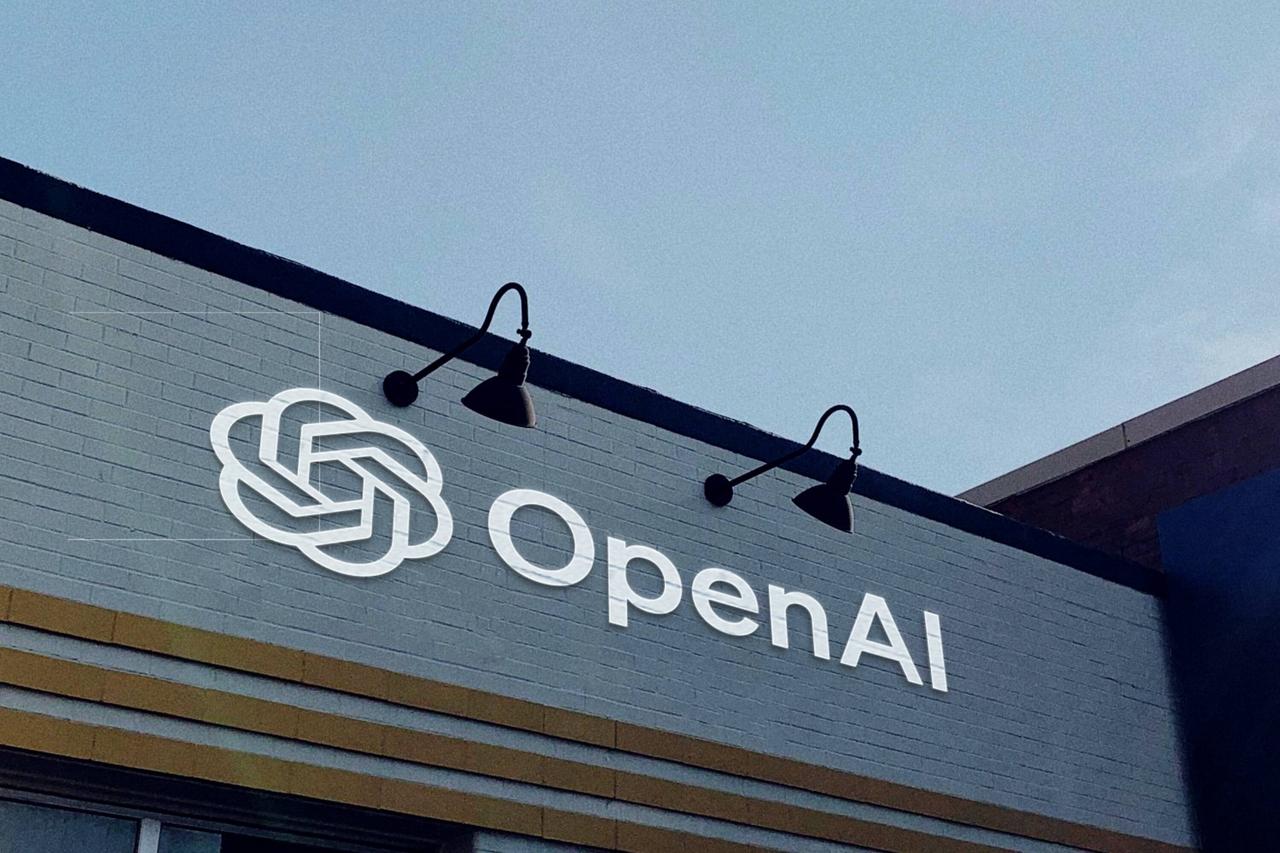
OpenAI Halts Major UK Infrastructure Investment
OpenAI has paused its Stargate UK data center project just months after announcing it, citing high energy costs and an unfavorable regulatory environment as primary reasons for the delay
1
3
. The decision marks a significant setback for the UK government's AI ambition to position Britain as a global AI leader, despite Prime Minister Keir Starmer placing artificial intelligence at the center of his economic growth strategy3
.The project was originally unveiled in September during President Donald Trump's state visit to the UK, forming part of a broader investment package worth 150 billion pounds that generated considerable excitement about Britain's technological future
3
. OpenAI had planned to deploy 8,000 Nvidia GPUs initially, with the potential to scale to 31,000 over time in partnership with British data center developer Nscale and Nvidia1
5
.Energy Costs and Regulatory Uncertainty Create Barriers
The UK faces some of the highest energy costs in Europe, creating a substantial challenge for data center operators requiring massive amounts of power for AI compute infrastructure
2
. Rising energy costs, potentially exacerbated by geopolitical tensions in the Middle East, have made long-term infrastructure investment increasingly difficult to justify1
.Regulatory uncertainty also played a critical role in the decision. According to sources, concerns about the UK government's AI policy, particularly a decision to delay contentious changes that would have made it easier for AI companies to include copyrighted content in their training data, contributed to the pause
4
. This comes despite the project being designated as part of an "AI Growth Zone" that should have provided streamlined planning and priority grid access1
.Impact on Sovereign AI Computing Capabilities
The Stargate UK data center project was intended to strengthen Britain's sovereign AI computing capabilities, enabling OpenAI's models to run on local, sovereign compute infrastructure for critical public services, regulated industries like finance, research projects, and national security partnerships
1
3
. The project was expected to span multiple sites across the country, including Cobalt Park in North Tyneside, forming part of the newly designated AI Growth Zone for the North East1
.The pause represents hundreds of millions of dollars in delayed investment for one of the UK's flagship AI growth zones
4
. Without this compute capacity, Britain's ability to develop independent AI capabilities and compete with other nations may be compromised, particularly as other countries continue to invest heavily in their own AI infrastructure.Related Stories

OpenAI's Shifting Investment Strategy
The decision to halt Stargate UK comes despite OpenAI completing a record $122 billion fundraising just last month
4
. The move reflects broader shifts in OpenAI's investment strategy, with the company recently scaling back commitments to its flagship Stargate data center in Abilene, Texas, and shutting down its AI video app, Sora, as it seeks to refocus resources on competing with Anthropic and a resurgent Google4
.OpenAI stated it would proceed with the project "when the right conditions such as regulation and the cost of energy enable long-term infrastructure investment," though no timetable has been provided for revisiting the decision
1
4
. The company emphasized that London remains home to its largest international research hub and confirmed it will continue investing in talent and expanding its local presence while delivering on commitments to adopt frontier AI in UK public services1
5
.Nscale, which raised $2 billion in new funding last month and recently added former Meta executives Sheryl Sandberg and Nick Clegg to its board, declined to comment on the pause
4
. Sources indicate that OpenAI and Nscale remain in discussions about the project's future5
. The UK government responded by stating it continues to work with OpenAI and other leading AI companies to strengthen UK compute capacity and create the right conditions for investment in AI infrastructure3
4
.References
Summarized by

Navi
[1]
Related Stories
OpenAI's $500 Billion Stargate Project Considers UK Investment Amid Global AI Infrastructure Expansion
17 Apr 2025•Business and Economy

OpenAI pledges Stargate AI data centers will fund own energy and not spike local utility bills
21 Jan 2026•Business and Economy

Nvidia and OpenAI Lead Multi-Billion Pound AI Investment in UK, Vowing to Forge 'AI Superpower'
12 Sept 2025•Technology

Recent Highlights


Recent Highlights
Today's Top Stories






Your Daily Dose of Curated AI News
Don’t drown in AI news. We cut through the noise - filtering, ranking and summarizing the most important AI news, breakthroughs and research daily. Spend less time searching for the latest in AI and get straight to action.

