OpenAI's first Jony Ive device is a $200-$300 smart speaker with a camera, launching in 2027


11 Sources
11 Sources
[1]
OpenAI's first ChatGPT gadget could be a smart speaker with a camera
OpenAI's first hardware release will be a smart speaker with a camera that will probably cost between $200 and $300, according to The Information. The device will be able to recognize things like "items on a nearby table or conversations people are having in the vicinity," The Information says, and it will have a Face ID-like facial recognition system so that people can purchase things. OpenAI acquired Jony Ive's hardware company last May in a deal worth nearly $6.5 billion. Details about their hardware products have been trickling out since then, including that the first device won't be a wearable and that it won't be released to customers earlier than March 2027. Other hardware companies are making a big push into AI gadgets, too -- including Apple, Ive's former employer, which is reportedly making its own smart glasses, an AI-powered pendant, and AirPods with cameras. In addition to the smart speaker, OpenAI is "possibly" working on smart glasses and a smart lamp, The Information reports. (Apple may also be working on a smart lamp.) But OpenAI's glasses might not hit mass production until 2028, and while OpenAI has made prototypes of gadgets like the smart lamp, The Information says it's "unclear" if they'll be released and that OpenAI's devices plans are in early stages.
[2]
OpenAI will reportedly release an AI-powered smart speaker in 2027
OpenAI is reportedly hard at work developing a series of AI-powered devices, including smart glasses, a smart speaker and a smart lamp. According to reporting by , the AI company has a team of over 200 employees dedicated to the project. The first product scheduled to be released is reported to be a smart speaker that would include a camera, allowing it to better absorb information about its users and surroundings. According to a person familiar with the project, this would extend to identifying objects on a nearby table, as well as conversations being held in the vicinity of the speaker. The camera will also support a facial recognition feature similar to Apple's Face ID that would enable users to authenticate purchases. The speaker is expected to retail for between $200 and $300 and ship in early 2027 at the earliest. Reporting indicates the company's AI-powered smart glasses, a space currently dominated by , would not come until 2028. As for the smart lamp, while prototypes have been made, it's unclear whether it will actually be brought to market. Last year OpenAI ex-Apple designer Jony Ive's startup io Products for $6.5 billion. Ive is considered largely responsible for Apple's design aesthetic, having been involved in designing just about every major Apple device since joining the company in the '90s before his departure in 2019. The acquisition of his sets the stage for Ive to lead hardware product development now for OpenAI. Since the partnership was forged, there have already due to technical issues, privacy concerns and logistical issues surrounding the computing power necessary to run a mass-produced AI device. Regardless of the behemoths behind the project, the speaker and other future products may still face a consumer that is always listening to and watching its users.
[3]
ChatGPT's first hardware may look familiar
This conventional approach could disappoint expectations for revolutionary AI hardware, as the smart speaker format may not fully showcase ChatGPT's unique capabilities compared to existing devices. When the news first broke that legendary Apple designer John Ive was joining forces with OpenAI on the first made-for-ChatGPT hardware, imaginations ran wild. What could the first ChatGPT hardware be? Not anything with a screen, insiders said (Ive and ChatGPT founder Sam Altman have remained mostly mum on the subject.) Maybe more a "pebble" that would fit in your pocket, a "third-core" device that would be "contextually aware" of its surroundings. Indeed, reports of a leaked OpenAI conference call detailed Altman calling the device the "coolest piece of technology that the world will have even seen," while Ive has called the upcoming ChatGPT hardware the beginning of a "new design movement." Well, a groundbreaking ChatGPT hardware device may yet be in the pipeline, but a new report says one of the first ChatGPT devices will be far more familiar: a plain-old smart speaker. The speaker, which might not arrive until February 2027, would ship with a camera and cost between $200 and $300, according to the Information and its anonymous sources. Other OpenAI hardware in the works include smart glasses and -- maybe -- a smart lamp, the report said, with the glasses not expected to be released until 2028 or later. OpenAI has yet to comment on The Information's story, and like any report from anonymous industry sources, it should be taken with a grain of salt. But if we are just getting a glorified, ChatGPT-powered Echo speaker as our first OpenAI product, it will be quite a letdown. I already have an AI-powered smart display in my kitchen -- the Google Nest Hub Max with Gemini inside -- and it mostly just sits there, displaying family photos, while the Alexa+-enabled Echo Dot in my office stays mostly silent. Personally, I haven't found many inspiring uses for AI in a smart speaker, and the same goes for ChatGPT's voice mode and Gemini Live on a phone; the conversations tend to be stilted, halting, or downright weird. ChatGPT has done a lot for me on a desktop, but in a smart speaker? I'm not so sure. The rumored ChatGPT smart glasses would be a little closer to the vision of an on-the-body device that gathers intel from your surroundings, but OpenAI would be heading into well-trod territory (hello, Meta, and possibly even Apple). A ChatGPT smart lamp? That's a little more out of the box, and we have seen similar smart lights with integrated smart speakers before. Personally, I'll be waiting for the ChatGPT pebble.
[4]
OpenAI's first Jony Ive device sounds like HomePod 2.0: report - 9to5Mac
A new report from The Information details OpenAI's hardware ambitions, and reveals that the first Jony Ive-designed device expected to launch is a smart speaker. Here are the details. OpenAI is working with Jony Ive to product its first line of hardware products, with a launch expected early next year. Per a new report, it sounds like the first Ive-OpenAI collaboration to launch could be a smart speaker -- HomePod 2.0 for Ive, you could say. Stephanie Palazzolo and Qianer Liu write at The Information: The smart speaker -- the first device OpenAI will release -- is likely to be priced between $200 and $300, according to two people with knowledge of it. The speaker will have a camera, enabling it to take in information about its users and their surroundings, such as items on a nearby table or conversations people are having in the vicinity, according to one of the people. It will also allow people to buy things by identifying them with a facial recognition feature similar to Apple's Face ID, the people said. The report mentions two other products both in active development: smart glasses and a smart lamp. Beyond the trio of devices, Palazzolo and Liu also offer some fresh insights into the collaboration between Ive, LoveFrom, and OpenAI. Ive's involvement with OpenAI is complicated. He still runs his design firm, LoveFrom, as an entity independent of OpenAI, even though it is LoveFrom that is in charge of coming up with potential OpenAI device designs. Meanwhile, OpenAI's internal devices team is in charge of making the hardware and the software powering it, as well as understanding how consumers will use the device. That division of responsibilities has sparked tensions. Some OpenAI staffers have complained that LoveFrom has been slow to revise its designs and shares little about its process of coming up with new ones, even with others working on devices within OpenAI Additionally, it sounds like there have been complications integrating Io members with OpenAI's existing hardware team following the Io acquisition. With Apple developing a trio of AI wearables plus new HomePod-related products, it will be interesting to see how the competition between the two companies pans out. Are you interested in getting an OpenAI smart speaker with a camera? Let us know in the comments.
[5]

Forget the HomePod -- OpenAI is launching a smart speaker designed by Jony Ive
ChatGPT's parent company is building a smart speaker, but can it stand out in a crowded market? OpenAI is quietly assembling one of its most ambitious projects yet: a family of AI-powered consumer devices, starting with a smart speaker for the home. But with Apple, Meta and Google already staking their claims in the space, the company has a steep climb ahead. According to a report from The Information, OpenAI has more than 200 people working on a lineup that could include a smart speaker, smart glasses and even a smart lamp. The smart speaker is expected to be the first product out the door, carrying a price tag somewhere between $200 and $300 -- though customers shouldn't expect to get their hands on it before February 2027 at the earliest. What we know about the device From what we can tell, the speaker won't be a passive listening device. It will reportedly feature a camera capable of observing its surroundings, recognizing faces for purchasing authentication -- similar to Apple's Face ID -- and even monitoring user behavior to offer proactive suggestions. For instance, it might nudge you to get to bed on time the night before an early flight on your calendar. Smart glasses are also in the pipeline, though mass production isn't expected until 2028. A market that's already moving fast OpenAI's hardware ambitions are coming together at a moment when the competition is anything but idle. Meta has already been selling its Ray-Ban smart glasses to consumers, with AI features baked in. Google has its own smart glasses efforts in motion. And Apple is reportedly developing an AI wearable pin alongside next-generation AirPods with enhanced sensors. For a company with no hardware track record, breaking into this market is a genuine challenge -- not just technically, but commercially. Consumers have become more selective about the devices they adopt, with surveys showing that smart home and wearable adoption rises only when products provide clear daily value and convenience. The team behind it OpenAI formed its devices division nine months ago following its acquisition of Io Products, a startup co-founded by CEO Sam Altman and legendary Apple design chief Jony Ive. Ive's design firm, LoveFrom, is handling the look and feel of the devices, while OpenAI's internal team manages hardware, software and consumer research. The group is led by Peter Welinder, a vice president and general manager at OpenAI, and includes several Apple veterans -- among them Tang Tan (hardware lead), Evans Hankey (industrial design), and Scott Cannon (supply chain). Bottom line OpenAI has the AI chops, the funding and the design pedigree to make a serious run at consumer hardware. But between a crowded market, a timeline stretching into 2027 and beyond and the inherent difficulty of building physical products from scratch, there's plenty that could go wrong before any of these devices reach store shelves. We'll be tracking this project closely and updating as new details surface. Follow Tom's Guide on Google News and add us as a preferred source to get our up-to-date news, analysis, and reviews in your feeds.
[6]

OpenAI may sell a smart speaker with facial recognition camera
Mister speaker? OpenAI chief Sam Altman at an AI summit in February. Credit: Prakash Singh/Bloomberg via Getty Images It's no secret that OpenAI, the company behind ChatGPT, is losing money at a rapid clip. Some estimates suggest the company will run out of cash sometime in 2027 -- and even a possible $100 billion investment round won't keep the lights on for long. What might help? A new product -- specifically, one designed by Sir Jony Ive, the Apple veteran brought on board last May at a cost of $6.5 billion -- assuming it can launch while the company still has cash in the bank. Despite multiple setbacks, OpenAI has said Ive's first product will be announced this year, even as they're staying tight-lipped about what it actually is. Now The Information says it has the details on that first launch: An AI-powered smart speaker with a facial recognition camera built in. Reportedly, it will cost between $200 and $300. But -- and given the situation, this is a huge but -- we won't get to see it until Feb. 2027 at the earliest. The camera will "allow people to buy things by identifying them with a facial recognition feature similar to Apple's Face ID," members of the company's 200-employee strong AI device group told the site. Whether facial recognition will facilitate the sign-in process or be used to actually purchase products (blink once for coffee maker, blink twice for frother?), is not yet clear. A smart speaker may not be the most inspiring product an AI company could dream up, but others are supposedly on the way. AI glasses are next, according to the report, but "likely won't be ready for mass production until 2028." An AI-powered smart lamp is also in the works. There's no word on another rumored OpenAI product -- smart earbuds. Will the smart speaker generate enough enthusiasm (and pre-orders) to keep the company afloat? To answer that, you have to wonder whether people really want a speaker with a camera that can scan their face in their living room. Apple might be more likely to get away with the creepiness factor of that -- after all, the iPhone maker constantly emphasizes its privacy features, and its business model doesn't include selling ads. But OpenAI does sell ads -- and consumers are already wary of how many ads the Amazon Echo smart home device gives them. Besides, the market for AI devices is likely to be a lot more crowded in 2027, with Apple said to be working on a smart pin. So what's the value proposition of a smart speaker? "The device will be able to observe users through video and nudge them toward actions it believes will help them achieve their goals," one of the Information's sources inside the company said. "You could imagine the device observing its user staying up late the night before a big meeting and suggesting that they go to bed, for example." If a creepy speaker being the boss of your bedtime works for you, then OpenAI may just have a pathway to profitability. Otherwise, CEO Sam Altman may be increasingly desperate to keep the company funded. Perhaps his smart speaker with camera could also look for loose change in your couch cushions.
[7]

OpenAI's Hardware Device Just Leaked, and You Will Cringe
Stuffing an AI chatbot into a consumer electronics device has proven extremely difficult. We've come across creepy and widely-hated pendants designed to listen to everything you say, as well as flawed AI "pins" that turned out to be a flaming dumpster fire, leading to frustration and sheer disbelief. Now Sam Altman's OpenAI, which recruited former Apple design lead Jony Ive for its own hardware effort, is gearing up to release its would-be showstopper -- and alas, it doesn't sound like it's managed to iterate beyond "gadget that pretty much does stuff your phone already does." As The Information reports, a team of over 200 employees has been working on a smart speaker that features a built-in camera to analyze its surroundings. Of course, the camera will be able to recognize faces and identify objects thanks to a dose of AI. It will reportedly retail for anywhere from $200 and $300 and ship no earlier than the beginning of next year. That's right: the best thing that the big brains at OpenAI could cook up is "a household gadget that talks to you" -- without a single clear differentiating feature from the phone you already have in your pocket, which can already run every major chatbot. The company is also reportedly working on a "smart lamp" -- but whether OpenAI is actually looking to bring it to market, let alone if such a product could conjure any enthusiasm among consumers, remains unclear. It's a critical juncture for OpenAI as it continues to explore potential revenue streams to stop hemorrhaging billions of dollars a quarter. The company is already turning to ads to bring in some much-needed revenue, despite Altman characterizing them as a "last resort." Even just a smart speaker may be difficult to bring to the market. In October, the Financial Times reported that OpenAI's partnership with Jony Ive was encountering "technical issues," delaying the first product's release date from last year to this year. Considering the latest news, problems may continue to haunt the company as the release date continues to slip. Other more recent attempts have struggled to gain much traction, even with significant resources. Amazon's AI-powered Alexa, which was launched in a barely half-working state last year, hasn't really moved the needle. Besides technical hiccups, OpenAI will have to tread carefully when it comes to user privacy. Marketing a device designed to ingest and analyze vast amounts of potentially intimate data isn't exactly straightforward. Consumers are already growing wary of AI, fearing that it's ushering in a new era of surveillance. Case in point, Amazon's home security subsidiary Ring completely missed the mark with its Super Bowl ad earlier this month, which showed off a new function that lets its security camera feeds scan an entire neighborhood. Netizens criticized the ad as being "Orwellian," leading some customers to reportedly disconnect and destroy their Ring cameras. How users will react to an OpenAI smart speaker remains to be seen. But considering the many missed attempts we've come across so far, the company has a lot to prove.
[8]

Is OpenAI developing a smart speaker?
OpenAI is reportedly developing a series of AI-powered devices, including a smart speaker, smart glasses, and a smart lamp, with a team of over 200 employees. The first product, a smart speaker equipped with a camera, is expected to ship in early 2027. This device will identify objects and nearby conversations and use facial recognition for purchase authentication. OpenAI acquired Jony Ive's startup in 2024 to lead hardware development, though the project has faced delays due to technical and privacy challenges. The smart speaker, which will likely retail between $200 and $300, represents the initial phase of the hardware rollout. Its integrated camera is designed to capture detailed environmental data, allowing the AI to identify objects placed on a nearby table. According to a person familiar with the project, the device will also monitor conversations held in its vicinity. This functionality supports a facial recognition system modeled after Apple's Face ID, enabling users to authenticate transactions securely. The release schedule targets early 2027, positioning this speaker as OpenAI's first major consumer hardware offering. Development of AI-powered smart glasses is proceeding on a separate timeline, with availability not expected until 2028. This product enters a market currently dominated by Meta, which has released several iterations of smart eyewear. The extended development window for the glasses suggests a more complex engineering challenge compared to the speaker. While the smart lamp has been prototyped, reports indicate uncertainty regarding its path to market. The status of this device remains fluid as the company prioritizes the speaker and glasses. In 2024, OpenAI acquired Jony Ive's startup, io Products, for $6.5 billion to spearhead these hardware initiatives. Ive, who departed Apple in 2019 after a tenure starting in the 1990s, is responsible for the design of major Apple devices. He will now lead hardware product development for OpenAI. The collaboration aims to apply his design expertise to AI-centric consumer electronics. However, the integration of his team has not been without friction. Since the acquisition, the project has experienced delays stemming from technical issues, privacy concerns, and logistical challenges regarding the computing power required for mass-produced AI devices. Consumer reception remains a variable factor for the product line. The devices, particularly the speaker, possess always-on listening and watching capabilities that may provoke reluctance among potential buyers. Despite the resources of the companies involved, market acceptance is not guaranteed. The tension between functionality and privacy concerns continues to influence the development timeline and design considerations.
[9]

OpenAI's Must Compete with Amazon & Apple as It Moves into AI Hardware in 2027
OpenAI has announced its entry into the hardware market with a series of AI-driven devices aimed at integrating artificial intelligence into daily routines. According to AI Grid, the lineup includes a smart speaker, smart glasses, and possibly a smart lamp, with features such as facial recognition and contextual awareness. The smart speaker is expected to launch in 2027, followed by the glasses in 2028. These products face challenges like privacy concerns and competition from established brands, but they represent a significant step for OpenAI in expanding beyond software. This deep dive examines the specifics of OpenAI's hardware plans, including the always-on functionality of the smart speaker and the augmented reality capabilities of the smart glasses. It also addresses potential risks, such as concerns over AI reliability and market saturation, while outlining how OpenAI intends to navigate these issues. By exploring these details, readers can better understand the practical applications and limitations of these devices in an evolving AI landscape. OpenAI's AI Hardware Plans What's in the Lineup? OpenAI's hardware initiative revolves around three key devices, each designed to showcase its AI expertise and redefine user interaction with technology: * Smart Speaker: Launching in 2027 with an estimated price of $200-$300, this device will feature advanced AI capabilities, including a camera for facial recognition and contextual awareness, allowing it to adapt to user needs in real time. * Smart Glasses: Expected in 2028, these glasses will combine Jony Ive's renowned design aesthetics with innovative AI technology to deliver a seamless augmented reality (AR) experience. * Smart Lamp: Still in the conceptual stage, this device may integrate AI to enhance functionality and user interaction, potentially serving as a hub for smart home ecosystems. These devices promise to enhance everyday interactions with technology, but their success will depend on overcoming critical challenges, including market competition and user trust. Challenges Facing the Smart Speaker As OpenAI's first hardware product, the smart speaker will serve as a litmus test for the company's ability to deliver innovative, reliable, and user-friendly devices. However, several challenges loom large: * Privacy Concerns: The speaker's always-on functionality and facial recognition capabilities could raise significant privacy issues. OpenAI will need to implement robust data protection measures and transparent policies to build user trust. * Technical Reliability: AI hallucinations, errors where AI generates incorrect or nonsensical outputs, pose a risk to user satisfaction. Making sure the speaker's reliability and accuracy will be critical to its success. * Market Competition: The smart speaker market is already dominated by established players like Amazon Alexa and Google Nest. OpenAI will need to offer unique features and superior performance to carve out a niche. * Cost and Monetization: Striking the right balance between affordability and profitability will be essential. OpenAI may also explore a subscription-based model for its AI services, which could add value but must be priced competitively. The smart speaker's performance in the market will set the tone for OpenAI's broader hardware strategy, making its success a critical priority. OpenAI'S New AI Devices : AI Glasses, Speakers & More Take a look at other insightful guides from our broad collection that might capture your interest in OpenAI. Smart Glasses: A High-Stakes Market The smart glasses, slated for release in 2028, represent OpenAI's entry into the competitive and rapidly evolving AR market. To succeed, the company must navigate several challenges: * Market Saturation: By 2028, the AR glasses market will be crowded with offerings from tech giants like Meta, Apple, and Google. Differentiation will be key to capturing consumer interest. * Design and Functionality: Partnering with Jony Ive positions OpenAI to deliver a visually appealing product, but the glasses must also be intuitive and functional to compete with established products like Meta's Ray-Ban glasses and Apple's AR devices. * AI Superiority: OpenAI's glasses will need to use advanced AI features, such as contextual awareness and seamless AR integration, to stand out in a crowded market. The smart glasses will test OpenAI's ability to combine innovative technology with user-centric design, a balance that will be crucial for success in this high-stakes market. Financial and Market Implications OpenAI's foray into hardware is part of a broader strategy to diversify its revenue streams and justify its high valuation. However, this move comes with both opportunities and risks: * Revenue Potential: The AR glasses market is projected to grow significantly, offering substantial revenue opportunities. However, OpenAI's late entry and lack of an established hardware ecosystem could limit its market share. * Reputational Stakes: A poorly executed product launch could damage OpenAI's reputation, undermining its credibility in both hardware and AI innovation. Conversely, a successful launch could enhance its standing as a leader in AI-driven technology. The financial success of these products will depend on OpenAI's ability to balance innovation with practicality, making sure that its devices meet consumer expectations while remaining cost-effective. Strategic Priorities for Success To thrive in the competitive hardware market, OpenAI must focus on several strategic priorities: * Building Consumer Trust: Addressing privacy concerns and making sure the reliability of its AI systems will be essential to gaining user confidence. * Pricing and Accessibility: Competitive pricing, potentially combined with AI subscription services, could make OpenAI's products more appealing while generating recurring revenue. * Product Differentiation: Delivering user-friendly devices with superior AI functionality will be critical to standing out in a crowded market. * Partnerships and Ecosystem Development: Collaborating with established brands and integrating with existing smart home ecosystems could enhance the appeal and functionality of OpenAI's devices. By addressing these priorities, OpenAI can position itself as a serious contender in the hardware market, using its AI expertise to deliver innovative and practical solutions. Opportunities Amid Challenges Despite the challenges, OpenAI's entry into the hardware market presents significant opportunities. If the company can overcome obstacles such as privacy concerns, technical reliability, and market competition, it has the potential to disrupt the industry. OpenAI's focus on AI innovation could provide a unique advantage, particularly if its models outperform those of competitors. Additionally, the dissatisfaction of some users with existing products like Amazon Echo and Google Nest could create an opening for OpenAI to capture market share. The success of OpenAI's hardware initiative will depend on its ability to deliver innovative technology that meets consumer needs while addressing the inherent challenges of entering a competitive and complex market. Media Credit: TheAIGRID Disclosure: Some of our articles include affiliate links. If you buy something through one of these links, Geeky Gadgets may earn an affiliate commission. Learn about our Disclosure Policy.
[10]

OpenAI developing AI devices including smart speaker, The Information reports
Feb 20 (Reuters) - OpenAI has more than 200 people working on a family of AI-powered devices that will include a smart speaker and possibly smart glasses and a smart lamp, the Information reported on Friday, citing a person with knowledge of the plans. The smart speaker, the first device OpenAI will launch, is likely to be priced between $200 and $300, the report said, citing two people with knowledge of it. The speaker, which, however, would not ship until February 2027 at earliest, will have a camera, enabling it to take in information about its users and their surroundings, the report said. The smart glasses likely would not be ready for mass production until 2028, the report said. OpenAI did not immediately respond to a Reuters request for comment. The ChatGPT owner entered the hardware industry with the $6.5 billion acquisition of former Apple designer Jony Ive's startup io Products, aiming to capitalize on the growing demand for physical AI and augmented reality. Facebook-parent Meta has seen strong success with its Ray-Ban smart glasses, which allows users to record and take pictures, and stream content through tiny cameras. Apple and Google are also reportedly working on their own smart glasses. (Reporting by Zaheer Kachwala in Bengaluru; Editing by Shilpi Majumdar)
[11]

OpenAI may launch ChatGPT smart speaker with camera: Expected price, launch timeline and other details
Facial recognition for purchases reportedly in development. Although there were some speculations that the first OpenAI hardware would be an advanced earbud codenamed 'Sweet Pea', the latest news is that the debut device could be a smart speaker with a built-in camera. The Information reports that this OpenAI speaker will be able to recognise objects placed nearby and understand conversations in its vicinity, marking a shift from purely text-based AI tools to ambient, always-aware computing. Here's everything else we know at the moment. OpenAI smart speaker could be priced between $200 (about Rs 18,000) and $300 (about Rs 27,000), according to the report. That places it in the premium smart speaker segment. The publication says the device is reportedly not expected before March 2027. The report suggests the speaker will include a facial recognition system similar to Apple's Face ID, potentially enabling users to authenticate purchases. If accurate, this would position the product as more than a voice assistant speaker; it would function as a context-aware AI hub designed for homes. This would position the product as more than a voice assistant speaker. OpenAI has not officially confirmed the product. However, the move aligns with the company's broader push into hardware following its acquisition of former Apple design chief Jony Ive's hardware startup, IO, in a deal valued at nearly $6.5 billion last year. That acquisition signalled OpenAI's intent to control both software and hardware, similar to the vertically integrated strategy long used by Apple. Also Read: India AI Impact Summit 2026: Top robots showcased at Bharat Mandapam In a declaration to the court by Tang Tan, the Co-Founder and Chief Hardware Officer of io Products, the product is not an in-ear device, nor a wearable device.' A speaker could be the first device because OpenAI doesn't want to force a behavioural change from the prospective buyers. The Information also reports that OpenAI is possibly working on smart glasses and a smart lamp. However, the glasses may not reach mass production until 2028, and the smart lamp is still at a prototype stage. It remains unclear whether these products will reach consumers. This places OpenAI in direct competition with companies expanding into AI-first hardware. Apple, Meta, and others are reportedly developing smart glasses and AI-enabled wearables. The broader market trend suggests a move toward devices that integrate generative AI into everyday environments rather than confining it to smartphones and laptops. Hopefully, the company addresses concerns around privacy, since the OpenAI speaker's core functionality could involve observing surroundings and analysing conversations. Let's see. Keep reading Digit.in for similar stories.
Share
Share
Copy Link
OpenAI is developing its first hardware lineup, starting with a smart speaker with a camera expected in early 2027. Designed by legendary Apple designer Jony Ive, the $200-$300 device will feature facial recognition and object recognition capabilities. The company has over 200 employees working on AI-powered hardware devices including smart glasses and a smart lamp, as it enters a consumer hardware market already crowded with competitors like Apple, Meta, and Google.
OpenAI Enters Consumer Hardware Market With Smart Speaker
OpenAI is preparing to launch its first hardware product, marking a significant shift for the AI company known primarily for ChatGPT. According to a report from The Information
1
, the company's debut device will be an AI-powered smart speaker equipped with a camera, priced between $200 and $300. The smart speaker with a camera won't reach customers before February 2027 at the earliest4
, giving the company over a year to refine what CEO Sam Altman has called the "coolest piece of technology that the world will have ever seen"3
.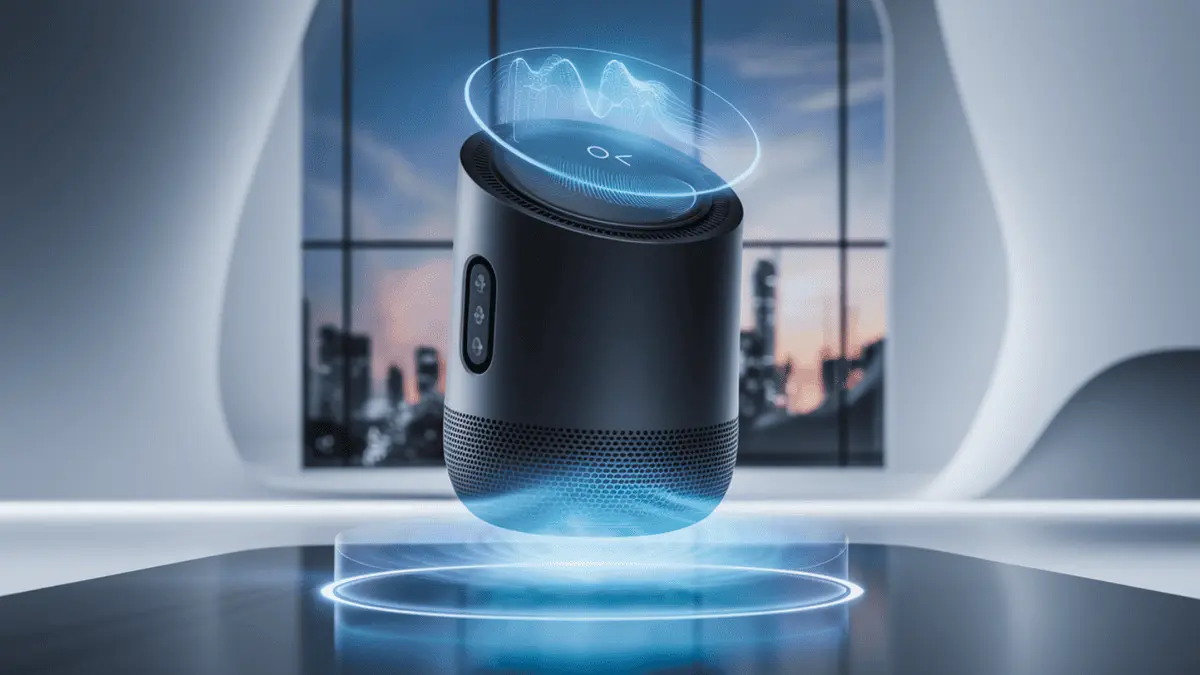
Source: Tom's Guide
The device represents OpenAI's first major push into physical products, backed by a team of more than 200 employees dedicated to developing a lineup of AI-powered hardware devices
2
. This ambitious effort follows the company's $6.5 billion acquisition of Io Products, a startup co-founded by Altman and legendary designer Jony Ive, who spent decades shaping Apple's iconic product aesthetic before his 2019 departure5
.
Source: Engadget
Advanced Features Beyond Traditional Smart Speakers
The OpenAI hardware product will distinguish itself through sophisticated sensing capabilities. The camera will enable object recognition of items on nearby tables and monitor conversations happening in the vicinity
1
. Perhaps most notably, the device will include a facial recognition system similar to Apple's Face ID, allowing users to authenticate purchases simply by looking at the speaker2
.These features suggest a ChatGPT gadget designed to be contextually aware of its environment, potentially offering proactive suggestions based on user behavior and calendar information
5
. However, this always-listening and always-watching approach may face skepticism from consumers concerned about privacy concerns2
, particularly in an era of heightened data sensitivity.Jony Ive Device Design Faces Internal Challenges
The collaboration between Jony Ive's design firm LoveFrom and OpenAI's internal devices team has encountered friction. LoveFrom handles the visual design of potential products, while OpenAI's hardware division manages engineering, software, and consumer research
4
. Some OpenAI staffers have complained that LoveFrom has been slow to revise designs and shares little about its creative process, creating tensions between the two groups4
.The devices division is led by Peter Welinder and includes several Apple veterans, including Tang Tan on hardware, Evans Hankey on industrial design, and Scott Cannon managing supply chain operations
5
. Despite this experienced team, the project has already faced delays due to technical issues, privacy concerns, and logistical challenges surrounding the computing power necessary for mass production of AI devices2
.Related Stories

Smart Glasses and Smart Lamp in Development Pipeline
Beyond the smart speaker, OpenAI is "possibly" working on smart glasses and a smart lamp
1
. The smart glasses wouldn't reach mass production until 2028 or later4
, entering a space currently dominated by Meta's Ray-Ban collaboration2
. While OpenAI has created prototypes of devices like the smart lamp, it remains unclear whether these will actually be released, as the company's device plans are still in early stages1
.Competing in a Crowded Consumer Hardware Market
OpenAI faces formidable competition from established players. Apple is reportedly developing its own smart glasses, an AI-powered pendant, and AirPods with cameras
1
. Google continues advancing its smart glasses efforts and Nest ecosystem, while Meta has already shipped AI-enabled smart glasses to consumers5
. Apple may even be working on a smart lamp similar to OpenAI's concept .For a company with no hardware track record, breaking into this market presents genuine challenges. Consumers have become selective about smart home adoption, with surveys showing that wearable and connected device purchases rise only when products deliver clear daily value
5
. The price point of $200-$300 positions the device as a premium offering comparable to HomePod4
, requiring OpenAI to demonstrate substantial advantages over existing alternatives to justify the investment.
Source: 9to5Mac
The launch timeline stretching into 2027 and beyond gives competitors ample opportunity to advance their own offerings, while OpenAI must prove it can manufacture, distribute, and support physical products at scale—capabilities entirely different from its software expertise.
References
Summarized by

Navi
[3]
Related Stories
OpenAI's Ambitious Hardware Push: AI-Powered Devices in Development
19 Sept 2025•Technology
OpenAI confirms first AI device launch for 2026, and leaked reports suggest it could be earbuds
19 Jan 2026•Technology

OpenAI's Jony Ive-Designed AI Hardware Delayed to 2027 as Company Drops io Branding
10 Feb 2026•Technology

Recent Highlights
1
Meta unveils Muse Spark AI model as Superintelligence Labs makes its debut
Technology

2
Anthropic restricts Mythos AI model release, citing unprecedented cybersecurity capabilities
Technology

3
Anthropic sends Claude AI to psychiatrist, discovers functional emotions that shape behavior
Science and Research

Recent Highlights
Today's Top Stories






Your Daily Dose of Curated AI News
Don’t drown in AI news. We cut through the noise - filtering, ranking and summarizing the most important AI news, breakthroughs and research daily. Spend less time searching for the latest in AI and get straight to action.

