OpenAI taps Samsung Exynos for Sweetpea earbuds as it builds AI hardware ecosystem


2 Sources
2 Sources
[1]
OpenAI's "Sweetpea" Earbuds To Use Samsung's 2nm Exynos Chip, Titan ASIC Launching By The End Of The Year
OpenAI seems intent on building a sprawling hardware ecosystem to complement its AI-based subscription services in order to lock in customers within its gated fortress, which would soon span across the various GPT-class AI models, dedicated AI ASICs, and a range of consumer devices, including the iPod Shuffle-like "Gumdrop" and AI earbuds "Sweetpea." According to the latest report out of Taiwan, OpenAI is apparently working on dedicated AI-powered earbuds that bear the internal codename "Sweetpea." While this tidbit is light on juicy details, the report does mention that the upcoming OpenAI earbuds would rely heavily on cloud-based AI processing, while featuring a 2nm Samsung Exynos chip for some on-device processing. The report, however, remains mum on exactly which Exynos variant the Sweetpea is likely to leverage. After all, Samsung's current-gen Exynos 2600 chip, which is expected to launch with the Galaxy S26 series next month, is based on the South Korean behemoth's 2nm (SF2) GAA process. Moreover, Samsung's next-gen Exynos 2700 is widely expected to leverage its SF2P process, replete with ARM C2 Cores, improved thermals, LPDDR6, and UFS 5.0. Of course, OpenAI is also working on another consumer device that is reportedly shaped like a pen and sports a size similar to that of the Apple iPod Shuffle. The device bears the internal codename "Gumdrop," and is entirely bereft of a dedicated screen. Additional details include: The report goes on to note that OpenAI is working with Broadcom on designing a dedicated AI-focused ASIC that bears the internal codename "Titan." The ASIC will be manufactured on TSMC's 3nm process, and is expected to debut by late 2026. This comes as Broadcom is already expected to provide advanced networking, optical links, and other hardware to make OpenAI's data centers run faster and smoother. Of course, by launching its own ASIC, OpenAI aims to reduce its reliance on NVIDIA's GPUs while also improving its negotiating position. We already know that Google is pursuing a similar strategy with its TPUs, while Amazon is banking heavily on its Trainium ASICs. Coming back, the report goes on to note that the next generation of the Titan chip (Titan 2) is expected to leverage TSMC's A16 process, which should result in a meteoric jump in overall performance.
[2]
Samsung close to supplying application processor for OpenAI's new device - The Korea Times
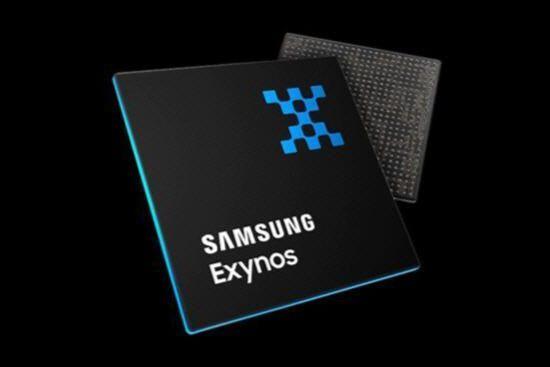
A promotional image fpr Samsung Electronics' Exynos 2600 / Captured from Samsung Electronics website Samsung Electronics is likely to supply its Exynos application processor for OpenAI's new earbud-type artificial intelligence (AI) device, expanding the chipset's reach beyond smartphones into the emerging AI-wearable device market while strengthening its partnership with the world's leading AI firm. According to industry sources with knowledge on the matter, Friday, Samsung Electronics is "very close" to supplying its latest Exynos application processor built with its 2-nanometer-class process for OpenAI's AI earbuds, known by its project name "Sweetpea." The sources' comments follow recent reports by tech news outlets that Samsung's Exynos application processor is currently "most favored," citing tech insider Smart Pikachu's post on X (formerly Twitter) alleging that OpenAI's debut hardware will be an earbud aimed at "replacing iPhone actions by commanding Siri." Samsung Electronics declined to comment, saying it is a client-related matter, and OpenAI also declined to comment. However, the sources said the partnership between Samsung and OpenAI appears to have strengthened since former Apple chief design officer Jonathan Ive joined OpenAI to work on its device projects. The new earbud is expected to be a wearable device that can operate independently without relying on a connected smartphone, rather than a simple wireless earbud. This would require a smartphone-level application processor and other advanced chips and components capable of supporting such performance. High-performance application processors typically consume significant power and generate heat, making it challenging to put into small devices such as earbuds. Samsung has said the Exynos 2600 significantly improves power efficiency and thermal performance over its predecessor by adopting a 2-nanometer-class gate-all-around (GAA) transistor architecture. Samsung has already built expertise in application processors for wearable devices through its Exynos W series used in the Galaxy Watch, which is believed to have worked in Samsung's favor. It remains unclear whether the Exynos chipset said to be used for the OpenAI device will be based on Samsung's smartphone-oriented Exynos 2600 or if it will be an evolved version of the Exynos W series. While performance considerations point to a chipset derived from the Exynos 2600, factors such as always-on low-power operation, a focus on sensor and voice processing and the fact that the most advanced Exynos W1000 is already built on a 3-nanometer GAA architecture suggest that an upgraded Exynos W platform also remains as a possibility. If the supply deal is finalized, it could mark a new breakthrough for Samsung's application processor business, as the OpenAI device is projected to ship between 40 million and 50 million units in its first year. Supplying Exynos chips could also help support a rebound in the company's System LSI and Foundry divisions, which have posted accumulated losses in recent years.
Share
Share
Copy Link
OpenAI is developing AI-powered earbuds codenamed Sweetpea that will feature Samsung's 2nm Exynos application processor for on-device processing. The partnership marks OpenAI's push into consumer hardware, with projected first-year shipments of 40-50 million units. Meanwhile, OpenAI continues work on its Titan AI ASIC with Broadcom to reduce dependence on NVIDIA GPUs.
OpenAI Builds Hardware Ecosystem with Samsung Partnership
OpenAI is expanding beyond software into a comprehensive OpenAI hardware ecosystem, developing AI-powered earbuds internally codenamed Sweetpea earbuds that will rely on Samsung Exynos application processors built on a 2nm process. According to industry sources, Samsung Electronics is "very close" to finalizing the supply deal for its latest Exynos chip, marking a shift for the AI company into consumer devices
2
. The move positions OpenAI to lock customers into an integrated ecosystem spanning AI models, dedicated ASICs, and consumer hardware including both Sweetpea and another device codenamed Gumdrop1
.The Sweetpea device is expected to function as a standalone AI wearable capable of independent operation without requiring a connected smartphone, according to tech insider Smart Pikachu's post on X. This design aims at "replacing iPhone actions by commanding Siri," suggesting direct competition with Apple's ecosystem
2
. The earbuds will feature cloud-based AI processing while leveraging the Samsung application processor for on-device processing tasks1
.Samsung's Exynos 2600 Brings Advanced Capabilities
While the exact Exynos variant remains unconfirmed, Samsung's current-generation Exynos 2600 chip launching with the Galaxy S26 series is based on the company's 2nm SF2 GAA process, offering improved power efficiency and thermal performance over predecessors
1
. These improvements address critical challenges for AI wearables, where high-performance application processors typically consume significant power and generate heat in compact form factors2
.
Source: Korea Times
Samsung's expertise in wearable application processor business through its Exynos W series used in Galaxy Watch devices likely strengthened its position for the OpenAI partnership
2
. Industry observers note the partnership appears to have strengthened since former Apple chief design officer Jonathan Ive joined OpenAI to work on device projects, bringing deep experience in consumer hardware design2
.Massive Market Potential for Samsung's Foundry Business
The OpenAI device is projected to ship between 40 million and 50 million units in its first year, representing substantial volume for Samsung's struggling semiconductor divisions
2
. Supplying Exynos chips could support a rebound in the company's System LSI and Foundry divisions, which have posted accumulated losses in recent years. This marks a potential breakthrough for Samsung's application processor business beyond its traditional smartphone market.Related Stories

OpenAI Develops Titan AI ASIC to Reduce Dependence on NVIDIA
Beyond consumer devices, OpenAI is working with Broadcom on designing a dedicated AI-focused ASIC codenamed Titan AI ASIC. The chip will be manufactured on TSMC's 3nm process and is expected to debut by late 2026
1
. By launching its own ASIC, OpenAI aims to reduce dependence on NVIDIA GPUs while improving its negotiating position for data centers infrastructure. This strategy mirrors approaches by Google with its TPUs and Amazon with its Trainium ASICs.
Source: Wccftech
Broadcom is already expected to provide advanced networking, optical links, and other hardware to accelerate OpenAI's data centers operations
1
. The next generation Titan 2 chip is expected to leverage TSMC's A16 process, which should deliver substantial performance improvements for AI processing workloads. This multi-pronged hardware strategy signals OpenAI's ambition to control more of its technology stack from data centers to consumer devices, reducing reliance on external GPU suppliers while building direct relationships with end users through AI wearables.References
Summarized by

Navi
[1]
Related Stories
OpenAI confirms first AI device launch for 2026, and leaked reports suggest it could be earbuds
19 Jan 2026•Technology

OpenAI in Talks with Samsung for Galaxy AI Integration, Challenging Google's Dominance
22 Nov 2024•Technology

OpenAI's Stargate Project Secures Massive Memory Supply from Samsung and SK Hynix
01 Oct 2025•Technology

Recent Highlights



Recent Highlights
Today's Top Stories












Your Daily Dose of Curated AI News
Don’t drown in AI news. We cut through the noise - filtering, ranking and summarizing the most important AI news, breakthroughs and research daily. Spend less time searching for the latest in AI and get straight to action.

