Oracle faces bondholder lawsuit over $18 billion debt sale tied to OpenAI data center buildout


5 Sources
5 Sources
[1]
Shareholders sue Oracle over misleading statements related to $300 billion OpenAI data center build-out -- disgruntled plaintiffs say the company lied about how much money it needed to borrow
Oracle is facing a class action lawsuit from a group of disgruntled bondholders who claim they lost money after the company misled them over how much money it needed to borrow to finance its AI infrastructure commitments. Specifically, they say the company's claim that it "may" need to borrow more money was false and misleading, because it was already planning to issue another set of bonds. According to Reuters, Oracle sold $18 billion of notes and bonds on September 25, 2025, to support its $300 billion deal with OpenAI. However, investors were surprised when the company released another set of bonds worth $38 billion almost two months later. "The bond market's reaction to Oracle's additional debt was swift and bracing," the suit reads. The market saw Oracle's additional debt as an increased credit risk that the company is taking on. Because of this, the original series of bonds and notes have fallen in value and is now trading like debt from companies with lower ratings. The bondholders, led by the Ohio Carpenters' Pension Plan, contend that the statements for the initial bonds said that the company was only considering another set of loans. However, they argue that Oracle already knew at this point that it was going to issue another, much larger, loan to fund its expansion. The plaintiffs said that Oracle and some of its chief executives, as well as the 16 banks that were underwriting the loan, were liable under the Securities Act of 1933. As experts repeatedly warn about AI bubble fears, Oracle has been borrowing aggressively to fund its AI dreams. When the company launched its initial bond drive for $18 billion in September, the demand was so high that it was four times oversubscribed. But just three months later, investors are now reportedly sitting on $1.3 billion in paper losses. And even though S&P and Moody's still rate Oracle as investment grade, its BBB or Baa2 rating places it just a couple of notches above junk rating. More than that, these rating agencies have put it on the negative watch, meaning there's a chance that they will downgrade the company's rating, depending on the risk that it's taking on. The massive AI buildout requires billions, if not trillions, of dollars in investment. This is likely not a problem for tech giants like Microsoft, Meta, and Amazon, who have massive war chests and can likely afford to keep pouring money into the infrastructure without breaking a sweat. However, other smaller companies will probably require additional funding -- either through bonds and notes, private equity, selling shares, or a mixture of these. More than that, there's also the intricate web of investments, projects, sales, and loans that multiple AI companies have built, so a failure of just one of the companies involved in it could mean a complete collapse for the entire system.
[2]
Oracle sued by bondholders over losses tied to AI buildout
NEW YORK, Jan 14 (Reuters) - Oracle (ORCL.N), opens new tab was sued on Wednesday by bondholders who say they suffered losses because the company led by billionaire Larry Ellison failed to disclose it needed to sell significant additional debt to build out its artificial intelligence infrastructure. The proposed class action was filed in a New York state court in Manhattan on behalf of investors who bought $18 billion of notes and bonds that Oracle issued in September. Ellison and Oracle's banks were also named as defendants. Reporting by Jonathan Stempel in New York Our Standards: The Thomson Reuters Trust Principles., opens new tab
[3]
Oracle sued by bondholders over losses tied to AI buildout
The Oracle logo is displayed on a building at an Oracle campus on Sept. 10, 2025 in Redwood Shores, California. Oracle was sued on Wednesday by bondholders who say they suffered losses because the company chaired by billionaire Larry Ellison failed to disclose it needed to sell significant additional debt to build out its artificial intelligence infrastructure. The proposed class action was filed in a New York state court in Manhattan on behalf of investors who bought $18 billion of notes and bonds that Oracle issued on Sept. 25, two weeks after Oracle announced a $300 billion, five-year contract to supply OpenAI with computing power. These investors said they were blindsided when Oracle returned to the capital markets seven weeks later to obtain $38 billion of loans to fund two data centers to support the OpenAI agreement. "The bond market's reaction to Oracle's additional debt was swift and bracing," as prices fell and yields rose on Oracle's debt because investors perceived higher credit risk, the bondholders said. According to the complaint, Oracle, Ellison, former Chief Executive Safra Catz, Chief Accounting Officer Maria Smith, and the company's underwriters are strictly liable under federal securities laws for false and misleading statements in offering documents for the $18 billion debt sale. The bondholders are seeking unspecified damages. Oracle did not immediately respond to a request for comment.
[4]
Lawsuit Alleges Oracle Made Misleading Statements Around Debt Sale for AI Infrastructure | PYMNTS.com
By completing this form, you agree to receive marketing communications from PYMNTS and to the sharing of your information with our sponsor, if applicable, in accordance with our Privacy Policy and Terms and Conditions. The proposed class action lawsuit includes investors who bought $18 billion of notes and bonds issued by Oracle on Sept. 25, after the company announced two weeks earlier that it had gained a $300 billion, five-year contract to supply computing power to OpenAI, Reuters reported Wednesday. The lawsuit alleges that the investors then suffered losses when Oracle returned to the capital markets seven weeks later, seeking $38 billion of loans to fund data centers to support that agreement, and prices fell and yields rose as investors perceived higher credit risk, according to the report. The suit seeks unspecified damages, per the report. Reached by PYMNTS, Oracle declined to comment on the report. It was reported in September that Oracle's $300 billion agreement to provide cloud services to OpenAI was one of the largest technology contracts on record. The five-year deal secures vast amounts of computing power and requires 4.5 billion gigawatts of electricity, roughly equal to what 4 million U.S. homes consume, the Wall Street Journal reported at the time. PYMNTS reported that for Oracle, the deal strengthened its standing in a competitive cloud market and, by tying the company to one of the most visible providers of artificial intelligence, positioned it as a central player in a fast-growing segment. Later in September, PYMNTS reported that OpenAI and Oracle's contract was the most visible example of how the AI boom's second act is being financed not just by venture dollars but also by borrowing, as companies race to build the data centers and buy the chips needed to train and run large language models. Oracle said in a December blog post that it was building a new data center in Michigan that will be equipped with the latest technology for its client, OpenAI. The company said that this is one of 64 data centers that Oracle is building, and that these will join the 147 such facilities that the company already operates around that world.
[5]

Oracle stock falls amid tech weakness and bondholder lawsuit By Investing.com
Investing.com -- Oracle (NYSE:ORCL) stock fell 5% Wednesday as part of a broader technology sector decline, with the Nasdaq 100 down 1.7% midday. The drop comes as the software giant faces a new legal challenge from bondholders who filed a proposed class action lawsuit in a Manhattan court. According to Reuters, investors who purchased $18 billion of Oracle's notes and bonds issued in September are suing the company, claiming it failed to disclose that it would need to sell significant additional debt to build out its artificial intelligence infrastructure. The lawsuit names both Oracle and its billionaire co-founder Larry Ellison as defendants, along with the company's banks. Plaintiffs allege they suffered financial losses due to the company's lack of transparency regarding its AI investment plans and associated financing requirements. The legal action adds to pressure on Oracle shares, which were already facing downward momentum amid a broader tech sector selloff. The company's stock movement reflects both industry-wide concerns and company-specific challenges related to its AI infrastructure buildout strategy and disclosure practices. Oracle has been investing heavily in expanding its cloud computing and AI capabilities to compete with larger rivals in the enterprise technology space, but this lawsuit suggests some investors believe the company wasn't forthcoming about the full financial requirements of these initiatives. This article was generated with the support of AI and reviewed by an editor. For more information see our T&C.
Share
Share
Copy Link
Oracle is facing a class-action lawsuit from bondholders who claim the company misled them about its financing needs for AI infrastructure. Investors who purchased $18 billion in bonds in September say they suffered losses after Oracle issued another $38 billion in debt just weeks later, causing bond prices to plummet and raising concerns about increased credit risk.
Bondholders Claim Oracle Concealed Debt Requirements
Oracle is confronting a class-action lawsuit from bondholders who allege the company led by billionaire Larry Ellison failed to disclose the full extent of its borrowing needs to build out its artificial intelligence infrastructure buildout
1
2
. The proposed class action was filed in a New York state court in Manhattan on Wednesday on behalf of investors who purchased $18 billion of notes and bonds that Oracle issued on September 25, just two weeks after announcing a $300 billion, five-year contract to supply computing power to OpenAI3
4
.
Source: PYMNTS
The lawsuit centers on misleading statements Oracle allegedly made about its capital requirements. Plaintiffs, led by the Ohio Carpenters' Pension Plan, contend that offering documents for the initial debt sale stated the company was only considering additional borrowing, when Oracle had already planned to issue substantial additional debt
1
. The bondholders were blindsided when Oracle returned to capital markets just seven weeks later to secure $38 billion in loans to finance data centers supporting the OpenAI agreement3
.Market Reaction Triggers Significant Bondholder Losses
"The bond market's reaction to Oracle's additional debt was swift and bracing," the lawsuit states, as investors perceived increased credit risk from the company's aggressive borrowing strategy
1
3
. The drop in bond prices was immediate, with yields rising as the market reassessed Oracle's creditworthiness. Investors who participated in the initial debt sale are now reportedly sitting on $1.3 billion in paper losses just three months after the bonds were issued1
.
Source: Reuters
The original series of bonds and notes have fallen in value and are now trading like debt from companies with lower credit ratings
1
. While S&P and Moody's still rate Oracle as investment grade, its BBB or Baa2 rating places it just a couple of notches above junk status. Both rating agencies have placed the company on negative watch, signaling potential downgrades depending on the risk Oracle continues to assume1
.Legal Claims Target Oracle Leadership and Underwriters
The complaint alleges that Oracle, former Chief Executive Safra Catz, Chief Accounting Officer Maria Smith, and 16 underwriting banks are strictly liable under the Securities Act of 1933 for false and misleading statements in offering documents for the $18 billion debt sale
1
3
. The bondholders are seeking unspecified damages for their losses. Oracle declined to comment when reached about the lawsuit4
.
Source: Tom's Hardware
Oracle's stock fell 5% on Wednesday as the Oracle lawsuit news emerged, though the decline was part of a broader technology sector selloff with the Nasdaq 100 down 1.7%
5
. The legal challenge adds pressure on a company already navigating the massive financial demands of competing in cloud computing and AI infrastructure against larger rivals with deeper pockets.Related Stories
AI Buildout Financing Raises Broader Industry Questions
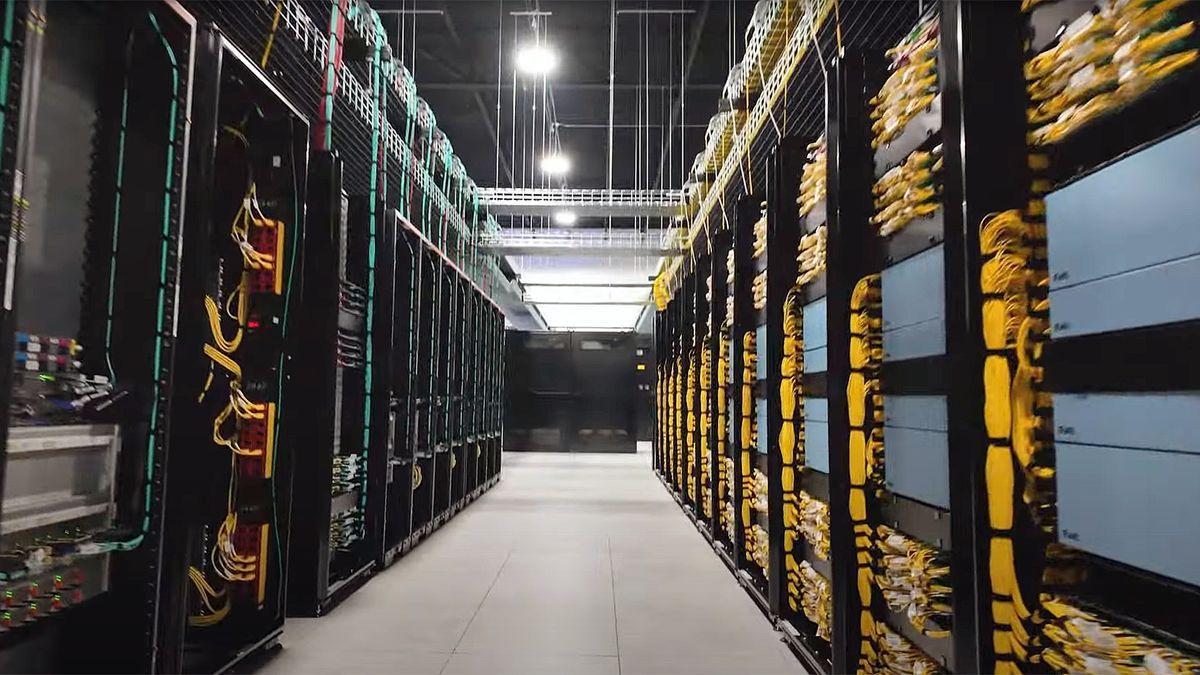
The Oracle lawsuit highlights the financial strain companies face as they race to build AI infrastructure. The five-year OpenAI deal requires vast computing resources and 4.5 billion gigawatts of electricity, roughly equal to what 4 million U.S. homes consume
4
. Oracle announced in December it was building a new data center in Michigan for OpenAI, one of 64 facilities under construction to join the 147 data centers the company already operates globally4
.While tech giants like Microsoft, Meta, and Amazon possess massive war chests to fund AI infrastructure without strain, smaller companies like Oracle require additional funding through bonds, private equity, or share sales
1
. The intricate web of investments, projects, and loans connecting AI companies means a failure by one player could trigger broader market consequences, especially as concerns about an AI bubble intensify1
.References
Summarized by

Navi
Related Stories
Oracle unveils $50 billion AI funding plan as investors worry about mounting debt and OpenAI exposure
02 Feb 2026•Business and Economy

Oracle's AI Gamble Triggers Market Concerns as Debt Soars Past $100 Billion
17 Nov 2025•Business and Economy
Moody's Raises Concerns Over Oracle's Ambitious AI Infrastructure Expansion
18 Sept 2025•Business and Economy

Recent Highlights
1
Tennessee Teens Sue Elon Musk's xAI Over Grok AI-Generated Child Abuse Images
Policy and Regulation
2
Supermicro Co-Founder Indicted in $2.5 Billion Nvidia AI Chip Smuggling Scheme to China
Policy and Regulation

3
Val Kilmer to appear posthumously in As Deep as the Grave through AI-generated performance
Entertainment and Society

Recent Highlights
Today's Top Stories










Your Daily Dose of Curated AI News
Don’t drown in AI news. We cut through the noise - filtering, ranking and summarizing the most important AI news, breakthroughs and research daily. Spend less time searching for the latest in AI and get straight to action.

