Michigan approves 1.4 gigawatts for OpenAI's Stargate data center as residents protest fast-track


5 Sources
5 Sources
[1]
OpenAI's Stargate data center gets approval to receive 1.4 gigawatts of power in Michigan -- some residents furious as energy company is given go-ahead by regulatory body without hearing opposition
Some residents feel they've been railroaded by the very public service officials that were meant to protect them. The Michigan Public Service Commission (MPSC) has given DTE Energy permission to deliver 1.4 gigawatts of power to a planned data center that will be built in Saline Township, about 40 miles southwest of downtown Detroit. This data center project is part of the Stargate data center project by OpenAI and Oracle, which aims to deliver more than 5GW of computing capacity. According to the Detroit Free Press, DTE filed an "ex parte" motion with the MPSC to get the nod for its contract without contest, with the commission voting 3-0 for its approval. This move meant that DTE Energy did not have to go through a lengthy hearing, wherein opposing groups could seek expert testimony and present evidence to challenge DTE's claims. Many residents are concerned that this massive project would cause electricity prices to spike and affect the water quality in the area -- issues that several U.S. senators are also looking into. On the other hand, the utility company argued that it didn't need to prove that this project would affect energy prices for local residents, especially as a 2024 state law prevents data centers from passing on energy costs to the community to qualify for preferential tax treatment. Aside from this, DTE's contract with Green Chile Ventures, an Oracle subsidiary, requires that the latter will pay 80% of the contracted capacity, whether or not it actually uses it. This ready-to-serve provision in the power agreement helps ensure the power utility's expenditure on additional infrastructure to support the AI data center will not be passed on to the average consumer. The contract will also last for at least 19 years, giving the power provider ample time to recoup its expenses from the data center and not from the community. Furthermore, if the data center fails to pay for its energy costs, DTE cannot pass them on to other consumers. Despite these mechanisms, opponents of the plan were still dismayed about not being heard. "I, along with everyone here... probably don't feel like they've been publicly served today. When you make these decisions, you're eliminating the very necessity of what public service bodies are all about," Wendy Albers, a resident of nearby Augusta Township, told the MPSC. "I appreciate the protections you put in place, but I just don't trust them."
[2]
OpenAI's Stargate Data Center Approved in Michigan as American Anger Starts to Boil
OpenAI said yesterday that it needs more computing power, and it is going to get what it wantsâ€"regardless of how anyone else feels about it. The Detroit Free Press reported that the Michigan Public Service Commission has given the green light to energy company DTE Energy to provide 1.4 gigawatts of power to a data center that will be a part of one of OpenAI's planned Stargate projects. The approvalâ€"which means the data center set to be built in Saline Township, about 40 miles southwest of Detroit, will go forwardâ€"was granted by the commission on an “ex parte†motion. That means that there will be no public hearing for the project, where groups and citizens could express their concerns and opposition to the project. It certainly wasn't granted because Michiganders are without concerns. The project was initially blocked by the Saline Township board, which denied a request to rezone farmland for the data center, but the developers sued and got the land in the settlement. Once they forced their way into the town of 2,328 people, they announced plans to build three separate 550,000 square feet facilities, meant to be a part of an OpenAI Stargate data center cluster that will supposedly eventually produce 5GW of computing capacity. Residents feel railroaded by the whole thing. They've held protests in response to the township board's decision to let the project move forward, and one resident filed a lawsuit to intervene, accusing the township government of violating the Open Meetings Act by choosing to settle the lawsuit in closed session without public input. That feeling surely hasn't been assuaged by the township's decision to issue an ex parte motion on the project. Saline Township is just one of several communities across the country that are getting data centers thrust upon their citizens. According to a Wall Street Journal report from earlier this year, there are a handful of counties that have become data center hot spots, usually with small towns getting targeted by developers to host the hyperscalers. And while it's unquestionably a dereliction of duty by local politicians to rubber-stamp these projects at the expense of their citizens, it's easy to understand the temptation. The Saline Township project, for example, promises to pour $7 billion into the community. Other communities in similar situations have seen their local high schools transformed, homes get built, and businesses boomâ€"at least, for a little. While the construction of data centers has led to big upticks in economic activity in places that have been stagnant, it goes away as quickly as it arrives. They create very few long-term employment opportunities, so when the construction stops, so does a significant chunk of that flow of cash. That's before considering the environmental risks that the projects pose, especially as they are rushed to move forward before the AI bubble pops and the money dries up. Ideally, local governments would have a long enough view to consider these things. Instead, it seems residents like those in Saline Township are the ones who have to consider the ramifications. One person in Michigan told The Guardian that he believes the whole project is “uniquely evil†because of the township board and developer doing their dealings behind closed doors. Kathryn Haushalter, the Saline Township resident suing the board, made a pretty straightforward point at a recent rally against the data center project: “If an idea’s so great, AI is so great, so beneficial to our community, you don’t have to sue your way in." Saline Township's fight is not unique. According to data from the organization Data Center Watch, at least 20 similar projects have been blocked by communities across the country in the last three months as they push back against their uninvited new neighbors. While these citizens may not always have allies in their local governments, they've got at least one at the federal level. Senator Bernie Sanders recently called for a nationwide pause on data center construction, arguing that companies are intentionally trying to push these projects through before lawmakers and citizens can catch up. Of course, there's a reason AI companies are trying to move so fast on these projects. Right now, investor money is flowing. These companies argue, as OpenAI recently did, that they need more compute to improve their models and eventually make tools that will generate revenue to justify all that investment. They, of course, don't actually know if these better models will start raking in revenue or significantly improve, but their only chance to even find out is by spending someone else's money. With doubt starting to build, even on Wall Street, that AI can be an infinite money glitch, the companies are running out of time to get those data centers up before the jig is up.
[3]
$10B Saline data center project hits funding snag
Why it matters: The $10 billion project about 40 miles west of Detroit is part of ChatGPT creator OpenAI's work with tech giant Oracle to boost computing power for AI. * New questions about the project reverberated Wednesday on Wall Street amid growing fears of an AI bubble. Driving the news: The Saline Township project's financing is in doubt after Blue Owl Capital walked away from talks over investing in the data center, the Financial Times reported Wednesday, citing anonymous sources. * Oracle told Bloomberg that its investment discussions over the data center were "on schedule" but that they did not involve Blue Owl, a major backer of the AI boom. * Blue Owl was concerned over possible delays and also didn't like the existing lease terms and debt terms, a person familiar with the matter told Axios' Dan Primack. What they're saying: The FT report was disputed later in the day by a spokesperson for the project's developer, Related Digital. * The project is moving forward as planned, Related Digital spokesperson Natalie Ravitz wrote in an email to Axios. * "The notion that Blue Owl walked away is unequivocally false," she wrote. "This is an exceptional project that drew significant interest from equity partners. We evaluated all of our options and selected our equity partner of choice for their unparalleled expertise in the space." The other side: "It's not surprising that Wall Street is losing faith in a rushed plan to erect a massive data center in Saline Township. We've said all along that this speculative project requires serious scrutiny and public input," said Tim Minotas, legislative and political director for Sierra Club Michigan, in a statement. * State Rep. Morgan Foreman (D-Pittsfield Township), who represents Saline Township, said in a statement to Axios that potential doubt about the financial health of those building the center is "incredibly troubling" and urged continued scrutiny over the project. State of play: The massive data center would create more capacity for power-hungry AI systems. * Related Digital is a subsidiary of Related Companies, the firm founded by Detroit-born billionaire Stephen Ross -- though Ross doesn't have formal involvement with Related Digital. * When announced, construction was expected to start in early 2026. * Cost estimates have ranged from $7 billion to $10 billion. Friction point: Residents have protested the data center at the Michigan Capitol, at DTE Energy's Detroit headquarters, and in Saline, per Planet Detroit. * They rallied for leaders to reject fast-tracked data center contracts, protect utility users and the environment, and ensure there are no "secret deals" between developers and utility companies. * A resident near the center took her concerns to court. DTE is seeking speedy Michigan Public Service Commission (MPSC) approval of its contracts to power the data center without official hearings, according to Planet Detroit, and Attorney General Dana Nessel criticized the fast-track process's redacted contracts over a lack of transparency. * The Sierra Club on Wednesday urged the MPSC to deny the fast-track request. Whitmer said in written public comment to the commission that data centers are part of America's future and that Michigan can "set an example" for how to build them the right way, protecting the environment and natural resources while also drawing in new jobs and investment.
[4]
Regulators Approve DTE Contracts for Michigan's First Hyperscale Data Center
Despite criticism that they were acting too fast, state utility regulators on Thursday approved DTE Energy's proposal to supply power for Michigan's first hyperscale data center -- while tacking on a host of conditions that aim to protect ratepayers from subsidizing the facility. The approval, made over shouts of disapproval from onlookers gathered in a Lansing conference room, drew cheers from business interests and ire from skeptics who had called for a deeper public review of the 19-year deal. Defending the decision, Michigan Public Service Commission Chair Dan Scripps told the gathered crowd that after reviewing them in detail, "I would put the contracts that are in front of us today on par or better with any that have been approved in the country." He and other commissioners said they had concluded the deal would save ratepayers money and would not sacrifice energy reliability. But a wave of public speakers lined up to condemn the vote, raising concerns about lost farmland and habitat, rising power rates, climate pollution from fossil fuels used to power the facilities and additional pollution from the water used to cool servers. "We won't be happy, I suppose, until the Great Lakes run dry, until the farmlands all are gone, until all the air is polluted, said Tim Bruneau, a Saline Township resident who has vocally opposed the 1.4-gigawatt facility planned by tech firms Oracle, OpenAI and Related Digital. "And guess what happens when that happens? We're extinct." The decision paves the way for tech firms OpenAI, Oracle and Related Digital to team up on Michigan's first hyperscale data center, a $7 billion Stargate facility where massive buildings full of computer servers will train artificial intelligence models on a 575-acre site south of Ann Arbor in Saline Township. In a statement, DTE spokesperson Ryan Lowry lauded the commission's order, saying the contracts "protect our customers -- including ensuring that there will be no stranded assets -- while enabling Michigan's growth." Supporters of the project have hailed it as an economic development win for the state that will produce millions annually in taxes and 450 permanent jobs. Opponents contend that's not a sufficient return, citing the risks that energy-hungry data centers could pose to Michigan's environment and energy grid. The facilities are massive energy users -- the Stargate project's expected 1.4 gigawatts of demand is equivalent to that of a large American city. The commission's decision came amid anxiety that residential ratepayers could wind up subsidizing the substations, poles, wires, battery storage facilities and other infrastructure needed to deliver all that power. But commissioners agreed with DTE's conclusion that the deal with Oracle subsidiary Green Chile Ventures would actually save ratepayers $300 million annually, by tapping the tech firm to pay for battery storage and other costs to connect it to the grid. "That is a real cost savings at a time when affordability is so important," said commissioner Katherine Peretick. The decision comes weeks after DTE filed a proposed contract with the MPSC, asking regulators to quickly approve the terms without a public hearing. Such ex-parte decisions are allowed when a contract won't affect other utility customers' rates But Attorney General Dana Nessel and other skeptics of the deal had called for a deeper review, contending that the publicly visible version of DTE's proposed deal was so heavily redacted, it was impossible to vet DTE's claims of affordability. Strings attached Commissioners tacked on a host of conditions to their approval, giving DTE 30 days to agree to them. Among the most significant, DTE must agree to absorb the financial hit if, for whatever reason, the projected $300 million cost savings fails to materialize. "If the affordability analysis turns out to be overly optimistic for any reason, DTE bears the responsibility of any extra costs," Peretick said. Other requirements include: Scripps said the contract terms and additional conditions set by commissioners "led us to believe that we could meet the standard of reasonableness and in the public interest." The data center's projected power demand would increase DTE's electric load by 25%. DTE officials plan to absorb that surge without building new power plants. Instead, the utility will buy energy on the open market and get more use out of its existing power plants, including using them to charge the batteries during off-peak hours when other customers aren't using much energy. DTE has told investors it aims to bring on as much as 8.4 gigawatts of total data center load in the coming years, a projection that would nearly double the utility's total power demand. Consumers Energy, meanwhile, is projecting 2.65 gigawatts in new demand from data centers by 2035, a 35% increase in peak demand. Concerns that the utilities could pollute or overtax Michigan's water and electricity systems have resulted in bipartisan pushback, including a new bill to repeal the recently enacted tax exemptions that have lured the industry to Michigan. Industry supporters, meanwhile, contend Michigan risks falling behind economically if it refuses to host the booming hyperscale industry. While data centers provide few jobs, they contend the facilities are the lynchpin of a broader tech economy in which Michigan is struggling to compete. "Michigan needs to decide if it wants to participate in the 21st Century economy, or rest on those who came before us and spend that wealth down," said Detroit Regional Chamber President and CEO Sandy Baruah. He cast it as a race in which "Michigan already has ground to make up." Since Gov. Gretchen Whitmer signed a 6% sales and use tax exemption that could save hyperscale facilities millions if not tens of millions annually, Michigan's publicly announced hyperscale proposals have skyrocketed from zero to at least 15. Some localities have enacted moratoriums on data center development, looking to buy time to craft regulations governing noise, road setbacks and other concerns about the facilities. In Saline Township, meanwhile, a resident has filed a legal intervention seeking to block the Stargate project over allegations that township officials violated the Open Meetings Act when they approved a legal settlement that made way for the development. In addition to the utility contracts, developers need permits from the Michigan Department of Environment, Great Lakes and Energy to install diesel-powered backup generators and begin construction activities that would impact wetlands and the Saline River. ___ This story was originally published by Bridge Michigan and distributed through a partnership with The Associated Press.
[5]

Michigan regulators approve DTE Energy's plan to power Oracle-OpenAI data center By Investing.com
Investing.com -- Michigan regulators have approved a request from DTE Energy Co. to provide power for a massive data center development planned by Oracle and OpenAI in Saline Township. The Michigan Public Service Commission granted expedited approval for DTE's plan to power the multi-billion dollar, 1.4-gigawatt facility south of Ann Arbor. The $7 billion data center will be built on 575 acres of farmland and is part of the companies' broader Stargate campus initiative. OpenAI and Oracle stated that their partnership now encompasses over 8 gigawatts of planned capacity across the United States and represents more than $450 billion in investment over the next three years. Michigan Public Service Commission Chair Dan Scripps expressed confidence in the agreement during the approval process, according to Planet Detroit. "I know that this conversation is happening in every state in the country right now, and I would put the contracts that are in front of us today on par or better with any that have been approved in the country," Scripps reportedly said. The commission reviewed all redacted material in the DTE contracts and confirmed that no costs associated with the data center will be transferred to the utility's other customers, addressing a key concern for Michigan residents. DTE has consistently maintained that expenses related to the data center project will not affect rates for its existing customer base. This article was generated with the support of AI and reviewed by an editor. For more information see our T&C.
Share
Share
Copy Link
The Michigan Public Service Commission approved DTE Energy's request to deliver 1.4 gigawatts of power to OpenAI and Oracle's $7 billion Stargate data center in Saline Township. The 3-0 vote used an ex parte motion that bypassed public hearings, leaving residents furious about being shut out of the process despite concerns over electricity prices, environmental impact, and transparency.
Michigan Regulators Approve Stargate Data Center Power Deal
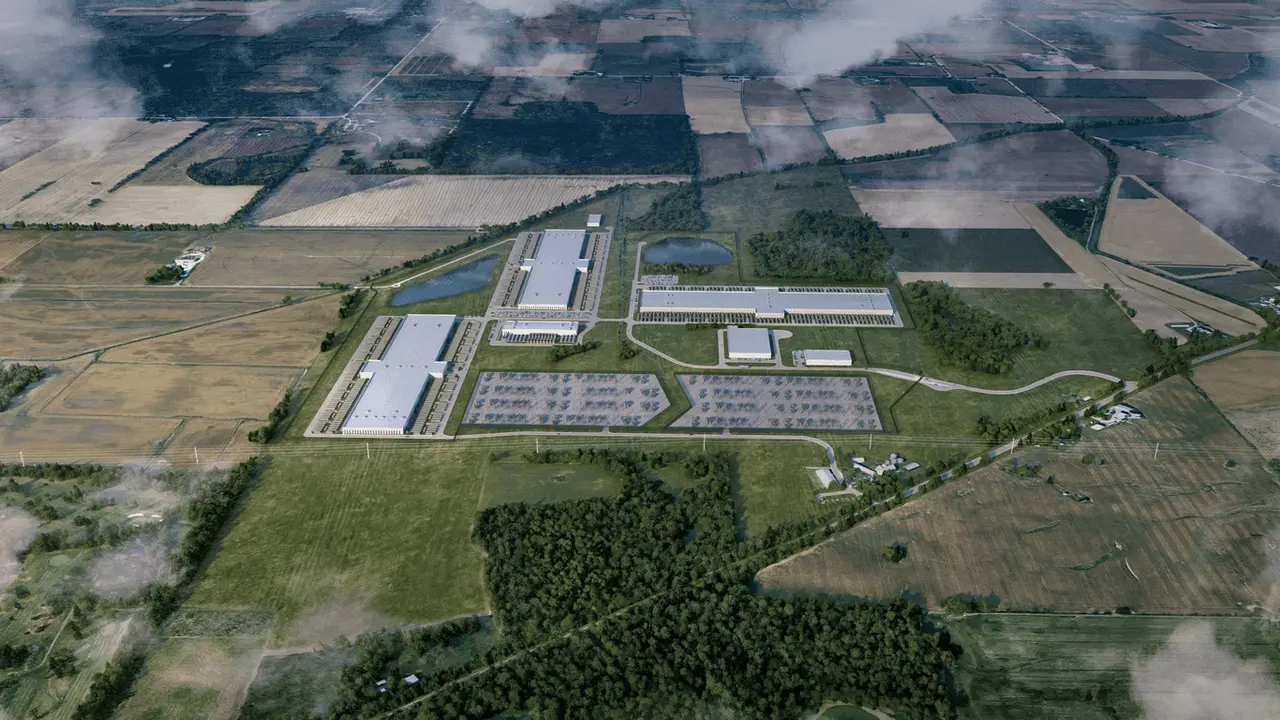
The Michigan Public Service Commission voted 3-0 to approve DTE Energy's request to supply 1.4 gigawatts of power to a planned hyperscale data center in Saline Township, about 40 miles southwest of Detroit
1
. The $7 billion facility is part of OpenAI and Oracle's broader Stargate project, which aims to deliver more than 5 gigawatts of computing capacity across the United States4
. This marks Michigan's first hyperscale data center, with OpenAI and Oracle stating their partnership now encompasses over 8 gigawatts of planned capacity and represents more than $450 billion in investment over the next three years5
.
Source: Axios
DTE Energy filed an ex parte motion with utility regulators, allowing the company to secure approval without a lengthy public hearing where opposing groups could present expert testimony and challenge the utility's claims
1
. The decision drew immediate shouts of disapproval from onlookers in the Lansing conference room, with residents expressing deep frustration about being excluded from the process4
.Local Opposition Mounts Against Fast-Tracked Approval
Residents of Saline Township feel railroaded by the entire process. The project was initially blocked by the Saline Township board, which denied a request to rezone farmland for the data center, but developers sued and obtained the land through a settlement
2
. Once developers forced their way into the town of 2,328 people, they announced plans to build three separate 550,000 square feet facilities on 575 acres of farmland2
.
Source: Gizmodo
Wendy Albers, a resident of nearby Augusta Township, told the Michigan Public Service Commission: "I, along with everyone here... probably don't feel like they've been publicly served today. When you make these decisions, you're eliminating the very necessity of what public service bodies are all about"
1
. Kathryn Haushalter, a Saline Township resident who filed a lawsuit against the township board for allegedly violating the Open Meetings Act, made a pointed observation at a recent rally: "If an idea's so great, AI is so great, so beneficial to our community, you don't have to sue your way in"2
.Power Agreement Includes Ratepayer Protections
Despite local opposition concerns about electricity prices, the power agreement between DTE Energy and Green Chile Ventures, an Oracle subsidiary, includes several mechanisms designed to protect ratepayers
1
. The contract requires that Green Chile Ventures pay 80% of the contracted capacity whether or not it actually uses it, with this ready-to-serve provision helping ensure DTE's expenditure on grid infrastructure won't be passed on to average consumers1
.The 19-year contract gives DTE ample time to recoup its expenses from the data center rather than from the community, and if the data center fails to pay its energy costs, DTE cannot pass them on to other consumers
1
. Commissioners agreed with DTE's conclusion that the deal would actually save ratepayers $300 million annually by tapping the tech firm to pay for battery storage and other costs to connect it to the grid4
. Utility regulators tacked on additional conditions, requiring DTE to absorb the financial hit if the projected savings fail to materialize4
.
Source: Tom's Hardware
Related Stories
Environmental Impact and Transparency Concerns Persist
Public speakers lined up to condemn the vote, raising concerns about lost farmland and habitat, rising power rates, climate pollution from fossil fuels used to generate computing power, and additional pollution from water used to cool servers
4
. Tim Bruneau, a Saline Township resident, warned: "We won't be happy, I suppose, until the Great Lakes run dry, until the farmlands all are gone, until all the air is polluted"4
.Attorney General Dana Nessel criticized the fast-track process, pointing to redacted contracts and a lack of transparency
3
. The Sierra Club urged the commission to deny the fast-track request, with Tim Minotas, legislative and political director for Sierra Club Michigan, stating: "It's not surprising that Wall Street is losing faith in a rushed plan to erect a massive data center in Saline Township. We've said all along that this speculative project requires serious scrutiny and public input"3
.Funding Snag Raises Questions About Project Viability
The project's financing fell into doubt after Blue Owl Capital walked away from talks over investing in the data center, according to the Financial Times
3
. Blue Owl was concerned over possible delays and didn't like the existing lease terms and debt terms3
. However, a spokesperson for Related Digital disputed this report, stating the project is moving forward as planned and calling the notion that Blue Owl walked away "unequivocally false"3
. Oracle told Bloomberg that its investment discussions were "on schedule" but did not involve Blue Owl3
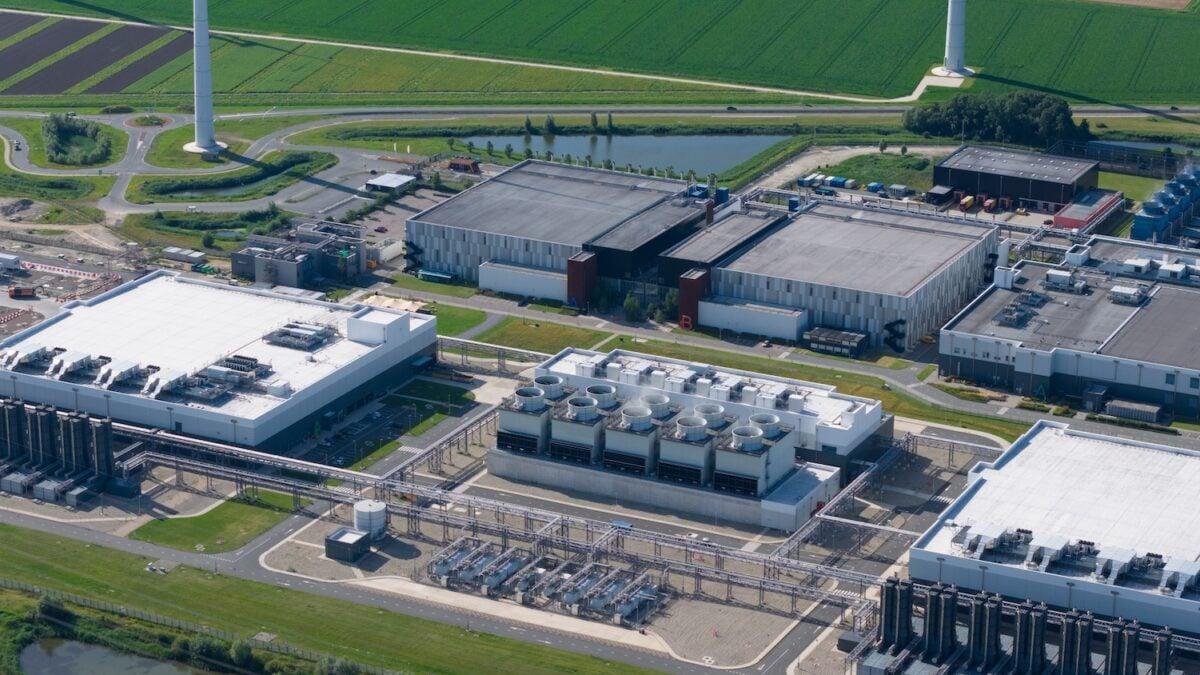
.The data center's projected power demand would increase DTE's electric load by 25%, with DTE planning to absorb that surge without building new power plants by buying energy on the open market and getting more use out of existing facilities
4
. DTE has told investors it aims to bring on as much as 8.4 gigawatts of total data center load in the coming years, a projection that would nearly double the utility's total power demand4
. According to Data Center Watch, at least 20 similar projects have been blocked by communities across the country in the last three months as citizens push back against their uninvited new neighbors2
. Senator Bernie Sanders recently called for a nationwide pause on data center construction, arguing that companies are intentionally trying to push these projects through before lawmakers and citizens can catch up2
. AI companies are racing to secure computing capacity before investor confidence wavers, with doubt starting to build even on Wall Street about whether AI can generate sufficient revenue to justify the massive investment2
.References
Summarized by

Navi
Related Stories
OpenAI, Oracle, and Related Digital Announce $7 Billion AI Data Center in Michigan
31 Oct 2025•Business and Economy

Environmental groups demand moratorium on data centers as electricity bills surge 13%
02 Dec 2025•Policy and Regulation

Over 230 groups demand moratorium on AI data center expansion as communities revolt nationwide
09 Dec 2025•Policy and Regulation

Recent Highlights

Recent Highlights
Today's Top Stories






Your Daily Dose of Curated AI News
Don’t drown in AI news. We cut through the noise - filtering, ranking and summarizing the most important AI news, breakthroughs and research daily. Spend less time searching for the latest in AI and get straight to action.

