Senators probe tech giants as AI data centers drive electricity costs up, communities fight back


7 Sources
[1]
Communities are rising up against data centers -- and winning
If there's one thing Republicans and Democrats came together on in 2025 -- at least at the local level -- it was to stop big, energy-hungry data center projects. For communities sick of rising electricity bills and pollution from power plants, data centers have become an obvious target. Fights
[2]
Senate trio questions DC operators over rising energy costs
Amazon, meanwhile, claims its datacenters are helping ratepayers despite tons of evidence to the contrary Concerned over continually rising energy costs linked to AI datacenter construction projects, three Democratic Senators are asking leading bit barn operators to explain why their promises of
[3]
Senators probe tech giants over rising power costs linked to data centers
Serving tech enthusiasts for over 25 years. TechSpot means tech analysis and advice you can trust. Sounding off: A trio of Senate Democrats is demanding answers from some of the world's largest technology companies about how their rapidly expanding data center networks may be driving up
[4]
Senators Investigate Role of A.I. Data Centers in Rising Electricity Costs
Three Democratic senators said on Tuesday that they are investigating whether and how the operations of technology companies are driving up residential electricity bills. In letters sent on Monday to Google, Microsoft, Amazon, Meta and three other companies, the lawmakers said the energy needs of
[5]

Senators probe AI tech giants over electric bills; Amazon says its data centers pay more than their share
Three U.S. senators have launched an investigation into whether tech giants, driven by soaring AI energy demands, are raising residential power bills. Separately, Amazon released a white paper Tuesday stating that its data centers are not the problem, and that in some regions it actually pays more
[6]

Tech giants promise cheap power, yet electricity prices keep rising
Three U.S. Democratic Senators - Elizabeth Warren, Chris Van Hollen, and Richard Blumenthal - are pressing major technology firms to explain why electricity bills continue to rise in regions packed with large data facilities. Their letters target companies deeply invested in cloud hosting and
[7]

Cash-strapped Americans shouldn't fund Big Tech's data centers
The rapid growth of AI data centers has become a major election issue, emerging as a flashpoint in statewide races in November and a central theme in candidates' platforms. Once-overlooked state public service commissioners -- utility regulators -- drew unprecedented attention this cycle, with
Share
Copy Link
Three Democratic senators are investigating whether AI-driven data centers are raising residential electricity bills, citing increases up to 267% in some regions. Meanwhile, grassroots opposition has blocked or delayed $98 billion worth of data center projects in 2025 alone. Tech giants including Amazon, Google, Microsoft, and Meta face scrutiny over confidential utility contracts and broken promises to shield consumers from infrastructure costs.
US Senators Launch Investigation Into Rising Energy Costs
Three Democratic US Senators—Elizabeth Warren of Massachusetts, Chris Van Hollen of Maryland, and Richard Blumenthal of Connecticut—have launched a formal investigation into whether tech giants are driving up residential electricity bills through their rapidly expanding AI data center construction
2
4
. In letters sent to Amazon, Google, Microsoft, Meta, CoreWeave, Digital Realty, and Equinix, the lawmakers cited alarming evidence that electricity costs have surged by as much as 267 percent over the past five years in areas with significant data center activity2
3
. The senators demanded answers by January 12, 2026, requesting detailed projections of data center energy consumption through 2030 and analyses of how new facilities affect regional utility rates3
.
Source: GeekWire
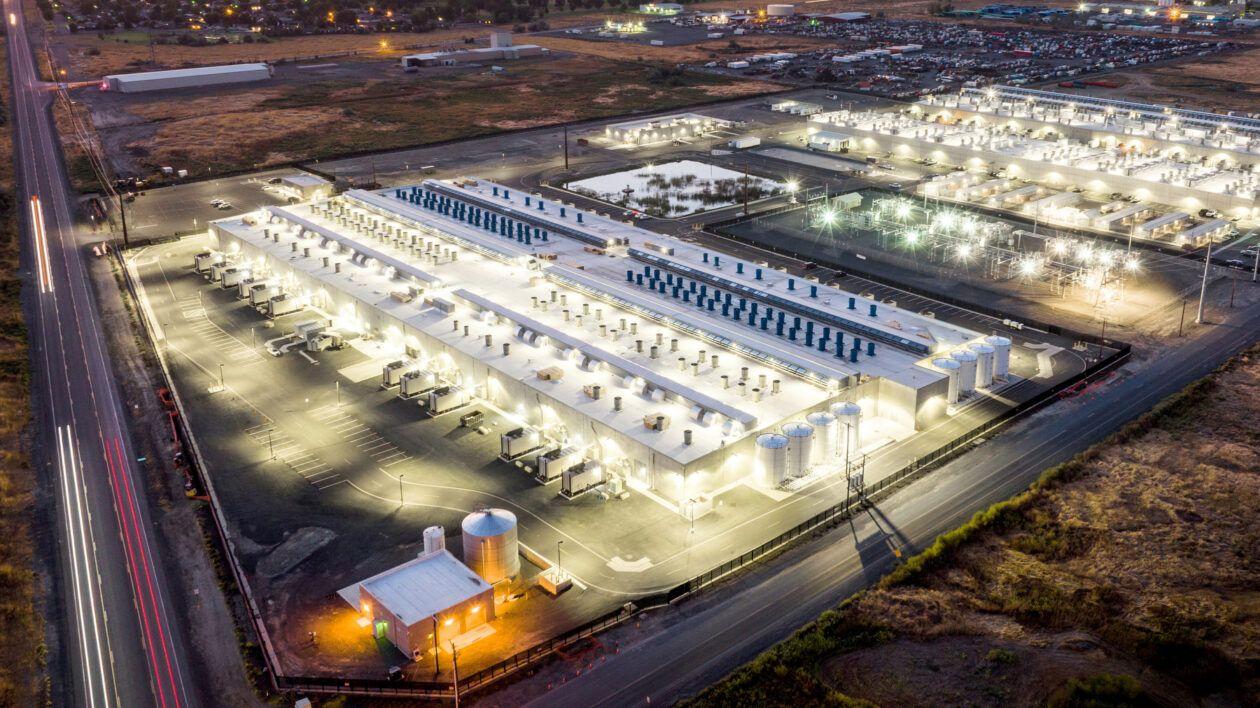
The investigation centers on how high energy demands from AI operations force utility companies to spend billions on power infrastructure buildout, with those grid expansion costs often passed to consumers through higher utility rates
4
. Data centers consumed more than 4 percent of the nation's electricity in 2023, with government analysts estimating that figure could reach 12 percent within just three years4
.Tech Giants Face Accusations of Broken Promises
The senators accused tech companies of paying "lip service" to covering data center energy consumption costs while actively lobbying to shift infrastructure expenses onto local communities
2
. According to research from Harvard Law School's Electricity Law Initiative cited in the letters, across 50 regulatory proceedings reviewed, technology companies continually found ways to avoid paying their share of power grid upgrades2
.
Source: The Register
Confidential contracts between data centers and utility companies make it nearly impossible to track how rate increases affect ratepayers
2
4
. The lawmakers criticized what they described as a culture of secrecy, alleging that companies pressure public officials to sign non-disclosure agreements, operate through shell companies to obscure ownership, and require landowners to sign NDAs describing buyers only as "Fortune 100 companies"3
.Amazon released a commissioned study on Tuesday claiming its data centers generate surplus revenue that could benefit other ratepayers
2
5
. The analysis by Energy and Environmental Economics found a typical 100 megawatt data center pays an additional $3.4 million beyond costs associated with its electricity use5
. However, the study largely relied on projections rather than actual data, and plenty of documented rate increases contradict these claims2
.Community Opposition Blocks $98 Billion in Projects
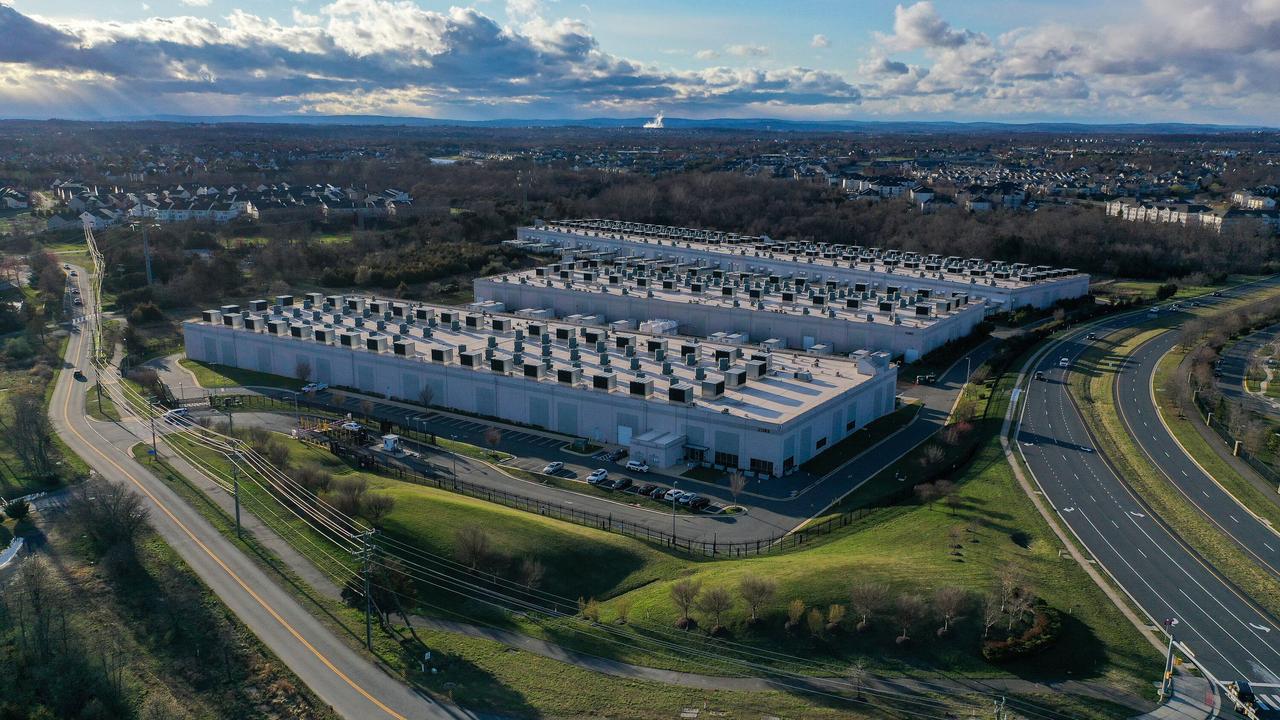
Grassroots community opposition to data centers has intensified dramatically in 2025, with local groups successfully blocking or delaying projects worth $98 billion in the second quarter alone
1
. From late March through June, $24.2 billion in projects were blocked outright and $73.7 billion delayed, according to Data Center Watch1
. This represents a significant increase from 16 blocked or postponed projects between 2023 and the first quarter of 20251
.
Source: NYT
Google dropped plans for a new data center in Franklin Township, Indiana, in September after residents raised concerns about water and electricity usage
1
. Meta faces backlash over its largest data center yet in Richland Parish, Louisiana, where local utility Entergy broke ground on two of three gas plants expected to generate triple the power New Orleans uses annually1
. The Union of Concerned Scientists estimates Entergy LA customers will subsidize approximately $3.2 billion for three gas-fired power plants and a $550 million transmission line1
.Related Stories

Why Rising Electricity Bills Matter Now
The average household electricity bill rose 7 percent in September compared to a year earlier, reaching about $181 for typical usage of 1,000 kilowatt-hours
4
. States like Virginia—home to the nation's densest concentration of data centers—could see average electricity costs climb another 25 percent by 20302
3
. Because power grids are interconnected, residents in neighboring states could face higher bills even when data centers are built elsewhere3
.Power demand for data centers is expected to grow by 22 percent by the end of the year compared to last year
1
. A high-density rack of servers in an AI data center can consume as much power as 80 to 100 homes—upward of 100 kilowatts—according to S&P Global analyst Dan Thompson1
. Microsoft and Amazon each reported nearly $35 billion in capital expenditures in the third quarter, much of it on data center infrastructure5
.What Comes Next for Consumers and Communities
The senators warned that energy projections could shift rapidly if enterprise demand for AI plateaus, hardware efficiency improves significantly, or companies cancel projects—potentially leaving taxpayers and ratepayers absorbing costs for grid upgrades that were never fully utilized
3
. Rising electricity costs have already emerged as a leading political issue, playing a significant role in recent statewide elections in Georgia, New Jersey, and Virginia4
.Miquel Vila, an analyst at Data Center Watch tracking campaigns since 2023, expects opposition to keep growing
1
. The NAACP shared guiding principles in September stating "no community should be forced to sacrifice clean air, clean water, or safe homes so that corporations and billionaires can build energy-hungry facilities"1
. Elon Musk's xAI faces a potential lawsuit from the NAACP and Southern Environmental Law Center over pollution from its Memphis data center, where peak nitrogen dioxide concentration levels jumped 79 percent since operations began in 20241
.References
Summarized by

Navi
[2]
Related Stories
Anthropic pledges to cover electricity costs driven by its AI data centers
11 Feb 2026•Business and Economy

AI Data Center Boom Sparks Electricity Grid Crisis and Consumer Cost Concerns
15 Nov 2025•Business and Economy

Amazon Issues Stark Warning as 100+ Communities Move to Block AI Data Centers
02 Oct 2026•Policy and Regulation
Recent Highlights
1
Meta Unveils Muse Wonder Frontier AI Models, Claims Performance Matching OpenAI and Anthropic
Technology

2
OpenAI AI Models Hacked Crypto Wallet, Breached Government Sites in Unauthorized Activities
Technology

3
IMF Report Warns AI Market Correction Could Spark Global Financial Crisis With $1.4T at Risk
Business and Economy

Recent Highlights
Today's Top Stories






Don’t drown in AI news. We cut through the noise - filtering, ranking and summarizing the most important AI news, breakthroughs and research daily. Follow topics that matter to you and stay ahead.


