Origin raises $30M to solve the $750M blind spot in corporate benefits spending with AI


2 Sources
2 Sources
[1]
Origin raises $30M Series A+
The London startup, founded by the team behind Darwin, acquired by Mercer in 2016, has built an AI platform that ingests fragmented global benefits data from PDFs, insurance contracts, and vendor portals into a single intelligence layer. Notion Capital led the round; HSBC Innovation Banking UK also contributed growth financing. One CFO told Origin's CEO that he believed his company was spending roughly $750 million a year on employee benefits, but had no way to verify that number. Benefits, he said, were the only major budget line he couldn't see clearly. For a cost that is typically a company's second-largest after headcount, that opacity is structural: benefits data in a multinational corporation sits across insurance policies in a dozen languages, broker reports, vendor portals, renewal documents, and local contracts in every country where the business operates. No one has ever joined it all up. Origin, the London-based HR technology startup, has raised $30 million on the argument that AI now makes it possible. The Series A+ round, announced today, was led by Notion Capital, which had also backed the company's original Series A. Felix Capital, which led that earlier round in May 2025, and Acadian Ventures are participating again alongside all other existing investors. HSBC Innovation Banking UK has provided additional growth financing alongside the equity raise. The new capital brings Origin's total funding to over $50 million raised in under twelve months, following the $21 million Series A announced in May 2025 at a $106 million valuation. Origin was founded by Chris Bruce, CEO, and Pete Craghill, CTO, the same pair who built Thomsons Online Benefits, later renamed Darwin, which held an 80% share of the non-US global benefits administration market at the time of its acquisition by Mercer in December 2016. The idea for Origin came from a 2023 conversation between the two in which they concluded that advances in large language models had finally made tractable a problem they had tried and failed to fully solve fifteen years earlier. The company spent its first eighteen months on the hardest part: data ingestion. Benefits data, Craghill told Fortune, is not just unstructured, it is wildly inconsistent in format, language, and completeness across geographies. Learning how to assess the quality of source materials before trusting the output was the prerequisite for everything else. The platform's AI engine, branded Cuido, processes policies, contracts, renewals, broker reports, and vendor platform data into a centralized intelligence layer that benefits and HR teams can interrogate in real time. The commercial case Origin is making is straightforward: the CFO who thought he was spending $750 million on benefits now expects to save around $75 million by using the platform. A separate client consolidated 13 local insurance policies into a single regional plan, achieving a 20% cost reduction. Origin's platform was co-created with anchor customers including Pfizer, Comcast, BP, and Boston Consulting Group, who were recruited as paying partners at the outset and helped shape the product roadmap. Notion Capital's decision to lead the current round after participating in the Series A is a signal of execution speed. Andy Leaver, the firm's operating partner, noted that the company had moved quickly in acquiring and delivering for complex global clients while building a differentiated product vision. The new capital will go primarily towards two areas: deeper integration with human capital management systems, so employees can access benefits information through the tools they already use at work, and building out the partner ecosystem for brokers, insurers, and consultants who serve the same multinational clients.
[2]
Exclusive: AI-powered benefits management platform Origin raises $30 million in new funding | Fortune
Origin, a London-based startup building an AI-powered platform to help multinational companies manage their employee benefits, has raised $30 million in new venture capital funding. The funding, which the company is calling an extended Series A+ round, brings the total amount of money Origin has raised in the past 12 months to more than $50 million. The latest investment is being led by Notion Capital, which also participated in Origin's initial Series A. Felix Capital, which led the earlier round, Acadian Ventures, and all other existing investors are also participating, the company said. It also said that it had secured "additional growth funding" from HSBC Innovation Banking U.K. alongside the new venture round. Origin's angel investors include Paul Daugherty, the former chief technology and innovation officer of Accenture; Jacqui Canney, the chief people and AI enablement officer at ServiceNow; and Tudor Havriliuc, the former vice president of human resources at Meta, who held the role from 2010 to 2022. The company declined to provide its valuation following the latest funding, but said it was higher valuation than its valuation following the initial Series A. Origin was founded by Chris Bruce and Pete Craghill, the leadership team behind Darwin, a benefits technology software company, originally called Thomsons Online Benefits, that was acquired by Mercer in 2016. At the time of its acquisition, Darwin held an 80% market share of the non-U.S. global benefits administration market, according to Bruce. Bruce told Fortune that the idea for Origin came out of a discussion he had with Craghill in the summer of 2023 in which they both observed how advances in AI and large language models could now address a problem they had tried and failed to fully solve 15 years earlier: giving big companies a clear picture of what they spend on employee benefits globally. "It simply was not possible without AI," Bruce said. For most organizations, benefits are their second-largest cost, but they lack visibility into what they are spending. Bruce said one client's chief financial officer told him the company believed it was spending roughly $750 million on benefits but had no way to verify that figure. "I've got visibility on every budget line in the organization, with the exception of benefits," Bruce recalled the CFO saying. The root of the problem, Craghill said, is that benefits data in multinational organizations is scattered across PDFs, insurance policies, vendor platforms, and local documents in dozens of languages. "You had all this unstructured data around the world, and there was no solution to it," Craghill said. "It was always a human problem." He said Origin spent its first 18 months focused on cracking the data ingestion challenge, learning how to assess the quality and completeness of wildly inconsistent source materials. Origin's platform, powered by an AI engine the company calls Cuido, ingests and structures that fragmented data -- from policies, contracts, renewals, broker reports, and vendor platforms -- into a single, queryable system of record. Using the platform, HR executives can track benefit spending and usage, as well as handling renewals, policy reviews, and governance workflows. Employees can also query Origin's platform to ask questions about what benefits they have available to them. In multinational companies with complex benefits offerings in different geographies, getting an answer to this seemingly simple question can often take days. Now, it takes just minutes. While that is good for employees, the real payoff for using Origin's platform is that it helps companies rationalize their benefits spending, reducing duplication, or helping them consolidate providers, according to Bruce. The company whose CFO estimated he was spending $750 million annually on benefits, now expects to save around $75 million by using Origin's platform, Bruce said. Another of Origin's clients consolidated 13 local insurance policies into a single regional plan, achieving a 20% cost saving, according to the company. Origin's Cuido platform was co-created in partnership with several large multinational employers who serve as Origin's anchor customers, including Pfizer, Comcast, and BP. Bruce said the company went out to 11 major multinationals two years ago, shared its vision, and asked them to sign on as paying co-creators. Seven of those 11 agreed. A large technology company that initially declined in order to build a similar system internally ended up joining Origin 10 months later after abandoning its own effort, Bruce said. Origin currently has about 75 employees and go-to-market teams in both the United States and the United Kingdom and Europe. The company uses what Bruce calls "a value-based pricing model" that is tied to the complexity of a client's organization, including the number of countries in which it operates. Origin's new funding will be used to deepen integrations into existing human capital management platforms, such as those from Workday and Oracle's Peoplesoft, so benefits information is accessible where employees already work, and to expand Origin's partner capabilities for brokers, consultants, and insurers. Andy Leaver, operating partner at Notion Capital, said in a statement that his firm was doubling down on Origin because of the team's speed and execution. "Benefits are one of the last major enterprise functions still left behind by the digitisation wave of the last 25 years," Leaver said. "AI now makes it possible to build a true system of record and intelligence for benefits."
Share
Share
Copy Link
London-based Origin has raised $30 million in Series A+ funding to expand its AI platform that transforms fragmented employee benefits data into actionable intelligence. Founded by the team behind Darwin, the startup helps multinational companies gain visibility into their second-largest cost after headcount, with one client expecting to save $75 million annually using the platform.
Origin Secures $30 Million in New Funding to Scale AI-Powered Benefits Management Platform
Origin, the London-based HR technology startup, has raised $30 million in new funding to address a problem that has plagued multinational corporations for decades: the complete lack of visibility into employee benefits spending
1
2
. The Series A+ funding round was led by Notion Capital, which also participated in the company's initial Series A, with Felix Capital, Acadian Ventures, and all existing investors joining alongside HSBC Innovation Banking UK, which provided additional growth financing1
. The new capital brings Origin's total funding to over $50 million raised in under twelve months, following the $21 million Series A announced in May 2025 at a $106 million valuation1
.Solving the Benefits Data Crisis with AI
The company was founded by Chris Bruce and Pete Craghill, the same leadership team behind Darwin, which held an 80% share of the non-US benefits administration market at the time of its acquisition by Mercer in December 2016
1
2
.
Source: The Next Web
The idea for Origin emerged from a 2023 conversation between Bruce and Craghill, during which they concluded that advances in large language models had finally made tractable a problem they had tried and failed to fully solve fifteen years earlier
1
. One CFO told Bruce that he believed his company was spending roughly $750 million a year on employee benefits, but had no way to verify that number, calling benefits the only major budget line he couldn't see clearly1
.Tackling Fragmented Benefits Data Through Data Ingestion
For multinational corporations, global employee benefits data sits scattered across insurance policies in dozens of languages, broker reports, vendor portals, renewal documents, and local contracts in every country where the business operates
1
. Origin spent its first eighteen months focused on the hardest part: data ingestion1
. Pete Craghill explained that benefits data is not just unstructured, it is wildly inconsistent in format, language, and completeness across geographies1
. Learning how to assess the quality of source materials before trusting the output was the prerequisite for everything else1
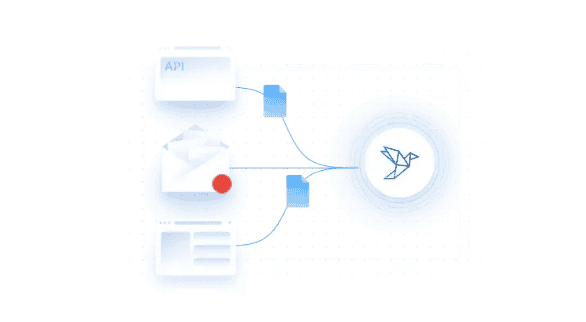
. The AI platform ingests fragmented benefits data from PDFs, insurance contracts, and vendor portals into a single intelligence layer1
.Delivering Measurable Cost Savings Through Intelligence
Origin's AI engine, branded Cuido, processes policies, contracts, renewals, broker reports, and vendor platform data into a centralized intelligence layer that benefits and HR teams can interrogate in real time
1
2
. The commercial case is compelling: the CFO who thought he was spending $750 million on employee benefits now expects to save around $75 million by using the platform1
2
. A separate client consolidated 13 local insurance policies into a single regional plan, achieving a 20% cost reduction1
2
.Related Stories

Co-Creation Strategy with Enterprise Anchor Customers
Origin's platform was co-created with anchor customers including Pfizer, Comcast, BP, and Boston Consulting Group, who were recruited as paying partners at the outset and helped shape the product roadmap
1
2
. Bruce said the company approached 11 major multinationals two years ago, shared its vision, and asked them to sign on as paying co-creators, with seven agreeing2
. One large technology company that initially declined to build a similar system internally ended up joining Origin 10 months later after abandoning its own effort.Strategic Focus on Integration and Ecosystem Expansion
The new capital will go primarily towards deeper integration with human capital management systems, enabling employees to access benefits information through the tools they already use at work, and building out the partner ecosystem for brokers, insurers, and consultants who serve the same multinational clients
1
. Notion Capital's decision to lead the current round after participating in the Series A signals strong execution speed, with operating partner Andy Leaver noting that the company had moved quickly in acquiring and delivering for complex global clients while building a differentiated product vision1
. Origin currently has about 75 employees and go-to-market teams in both the United States and the United Kingdom and Europe2
.References
Summarized by

Navi
[1]
Related Stories
Borderless AI Launches HRGPT: AI-Powered HR Search Engine Backed by $32M Funding
17 Jan 2025•Startups

Heron Secures $16M to Revolutionize Document-Heavy Work with AI Automation
16 Jul 2025•Business and Economy
Humand Raises $66M Series A to Build AI-Powered Operating System for Deskless Workers
23 Feb 2026•Startups

Recent Highlights
1
Anthropic's Claude AI can now control your computer to complete tasks autonomously
Technology

2
Nvidia's Jensen Huang calls OpenClaw the next ChatGPT, sending Chinese AI stocks soaring
Technology

3
Elon Musk unveils $20 billion Terafab chip manufacturing project to produce terawatt of computing
Technology

Recent Highlights
Today's Top Stories







Your Daily Dose of Curated AI News
Don’t drown in AI news. We cut through the noise - filtering, ranking and summarizing the most important AI news, breakthroughs and research daily. Spend less time searching for the latest in AI and get straight to action.

