New Xbox boss Asha Sharma vows 'no tolerance for bad AI' amid Microsoft gaming shakeup


22 Sources
22 Sources
[1]
New Microsoft gaming chief has "no tolerance for bad AI"
Last week's surprise departure of Phil Spencer from Microsoft led to the promotion of Asha Sharma, who comes to head Microsoft's gaming division after two years as president of the company's CoreAI Product group. Despite that recent history, Sharma says in a new interview that she has "no tolerance for bad AI" in game development. Speaking with Variety, Sharma noted that "AI has long been part of gaming and will continue to be," before adding that "great stories are created by humans." The interview comes after Sharma promised in an introductory memo that "we will not chase short-term efficiency or flood our ecosystem with soulless AI slop. Games are and always will be art, crafted by humans, and created with the most innovative technology provided by us." Those statements seem like a clear line in the sand from Sharma against the use of AI tools in Microsoft's first-party game development, at the very least. But what separates "bad AI" and "soulless AI slop" from "innovative technology" that humans can use to create artful games is a matter of some significant debate in the gaming world. Many have taken a zero-tolerance approach to the use of generative AI tools in video games. When Clair Obscur: Expedition 33 studio Sandfall Interactive admitted to using generative AI for some background assets, for instance, the Indie Game Awards rescinded the company's honors (the assets were later patched out of the game). And publisher Running with Scissors cancelled a planned new game in the Postal series after being "overwhelmed with negative responses" to a trailer containing elements they said were "very likely AI-generated and thus has caused extreme damage to our brand and our company reputation." At the same time, game development luminaries like John Carmack have defended AI development tools as "allow[ing] the best to reach even greater heights, while enabling smaller teams to accomplish more, and bring in some completely new creator demographics." And Epic Games founder and CEO Tim Sweeney says requiring developers to disclose their use of AI tools is as relevant as disclosing "what shampoo brand the developer use," since "AI will be involved in nearly all future production [of games]." A gaming education Unlike Spencer, who spent years at Microsoft Game Studios before heading Microsoft's gaming division, Sharma has no professional experience in the video game industry. And her personal experience with Xbox also seems somewhat limited; after sharing her Gamertag on social media over the weekend, curious gamers found that her Xbox play history dates back roughly one month. That's also in stark contrast to Spencer, who has amassed a score of over 121,000 across decades of play. In her interview with Variety, Sharma cited 2016's Firewatch as exemplary of the kind of games with "deep emotional resonance" and "a distinct point of view" that she's looking for from Microsoft. And on social media, Sharma shared her list of the three greatest games ever: "Halo, Valheim, Goldeneye," for what it's worth. Sharma also seems to be taking recommendations for games to catch up on; after saying on social media that she would try Borderlands 2, the game appeared in her recently played games over the weekend. Being a personal fan of video games isn't necessarily required to succeed in running a gaming company. Nintendo president Hiroshi Yamauchi famously didn't care for video games even as he launched the Famicom and Nintendo Entertainment System to worldwide success in the 1980s. Still, the lack of direct experience with the gaming world marks a sharp change after Spencer's long tenure, at a time when Microsoft is struggling to redefine the Xbox brand amid cratering hardware sales, a pivot away from software exclusives, and a move to extend the Xbox brand to many different devices. Xbox president and COO Sarah Bond, who by all accounts was being set up to succeed Spencer, also announced her departure from Microsoft on Friday, ending a nearly nine-year stint as a public face for the company's gaming efforts. The Verge reports that Bond's championing of the "Xbox Everywhere" strategy and "This is an Xbox" marketing campaign -- which focused on streaming Xbox games to hardware like mobile phones and tablets -- caused a lot of friction within the Xbox team, according to anonymous sources. Shortly before the launch of that campaign in 2024, Microsoft lost marketing executives Jerrett West and Kareem Choudry, leading to significant internal reorganization. Longtime Xbox Game Studios executive Matt Booty, whose history in the game industry dates back to working for Williams Electronics in the '90s, has been promoted to executive vice president and chief content officer for Xbox and "will continue working closely with [Sharma] to ensure a smooth transition," Microsoft said in its announcement Friday.
[2]
Microsoft's new gaming CEO vows not to flood the ecosystem with 'endless AI slop'
Microsoft announced a major gaming shakeup on Friday, with Microsoft Gaming CEO Phil Spencer departing the company, along with Xbox President Sarah Bond. Spencer will be replaced by former Instacart and Meta executive Asha Sharma. With Sharma's most recent role as the president of Microsoft's CoreAI product, these moves suggest that Microsoft might be doubling down on bringing AI into video games. The company had already been experimenting with ways to combine AI and gaming, for example developing an AI gaming companion and releasing a buggy, AI-generated level from "Quake II." Indeed, in an internal memo published by The Verge, Sharma wrote that Microsoft "will invent new business models and new ways to play" and said that "monetization and AI" will both "evolve and influence this future." At the same time, she said that the company "will not chase short-term efficiency or flood our ecosystem with soulless AI slop." "Games are and always will be art, crafted by humans, and created with the most innovative technology provided by us," Sharma added. That's just one of three "commitments" Sharma made in her memo. The others involve building "great games beloved by players" and prioritizing Xbox.
[3]
What's Up With Xbox? Unpacking the 'Sunset' Speculation, New CEO's Pledge
Is Xbox on its last legs? One of the platform's co-founders suspects Microsoft is looking to sunset the Xbox, but the division's new boss has promised a "renewed commitment to Xbox starting with [the] console." In an interview with GamesBeat, Seamus Blackley argues that "Xbox, like a lot of businesses that aren't the core AI business, is being sunsetted." He points to the recent departure of longtime Xbox chief Phil Spencer, who is being replaced by Asha Sharma, who most recently served as head of Microsoft's CoreAI division. "I expect that [Sharma's] job is going to be as a palliative care doctor who slides Xbox gently into the night," Blackley says. Blackley joined Microsoft in 1999 and pitched the Xbox concept. He left the company in 2002 and joined the Creative Artists Agency, where he represented video game developers. He's currently the CEO of Pacific Light & Hologram, a startup that's still in stealth mode, according to its website. "Microsoft is a company that is now about enabling its customers by enabling AI to drive things," Blackley tells GamesBeat. Microsoft's investment in AI dwarfs any other big bets, he suggests. "Everything is a gen AI problem. Whether or not you believe [it's possible to solve that] is the deciding factor in whether or not you believe Xbox will continue to exist and what you believe Microsoft will do with Xbox." Blackley argues that gaming is a proven business model, while generative AI is not. Gamers, he jokes, are not famously tolerant, especially of people outside gaming claiming they know what the industry needs. In an interview with Windows Central, Sharma said she's currently getting up to speed and will "need to learn...about the 'why' of [recent] decisions, what we were optimizing for, and what the data says about the Xbox strategy today." In a statement released last week, Sharma argues that Microsoft "will not chase short-term efficiency or flood our ecosystem with soulless AI slop. Games are and always will be art, crafted by humans, and created with the most innovative technology provided by us." The Xbox console "has shaped who we are. It connects us to the players and fans who invest in Xbox, and to the developers who build ambitious experiences for it," Sharma adds, though she notes that "gaming now lives across devices, not within the limits of any single piece of hardware." "I want to return to the renegade spirit that built Xbox in the first place. It will require us to relentlessly question everything, revisit processes, protect what works, and be brave enough to change what does not," Sharma says. This all comes a few weeks after AMD CEO Lisa Su appeared to reveal that the next Xbox will arrive sometime in 2027, "featuring an AMD semi-custom SoC [system-on-a-chip]."
[4]
New Xbox boss promises no 'bad AI' and a 'return to Xbox'
Sharma promises a "return to Xbox" approach and positions herself as a platform builder, signaling potential strategic shifts for Microsoft's struggling gaming division. Microsoft's gaming business is in a bit of a state right now. Yesterday, Xbox/Microsoft gaming CEO Phil Spencer, a Microsoft veteran of nearly 40 years and an original Xbox team member, resigned... as did his second-in-command, the architect of the "This is an Xbox" marketing push. The incoming executive is Asha Sharma, formerly the head of product development for CoreAI. Uh oh. Spencer was something of a darling for both gamers and the media, but there's no denying that Xbox has been struggling. The current generation Series X/S is being outsold by the PS5 two-to-one after similar performance over the last decade-plus, and Microsoft seems more interested in getting its huge, expensive collection of properties on other hardware. Things got so bad last year, after the unpopular consoles got an unprecedented mid-cycle price increase, that it was rumored major retailers were dropping Xbox completely. That turned out to be overblown... but suffice it to say, there's not a lot of reason to buy an Xbox if you have basically any other gaming device right now. So, as a more conventional business leader coming into the gaming space, Sharma will have an uphill battle to revive a floundering brand. It certainly doesn't help that gamers, already wary of "AI" infecting more and more of their hobby, will be extra critical of someone whose last job was all about LLM. But according to an interview with Variety, Sharma considers herself a "platform builder," which is certainly something Xbox and Microsoft gaming could use at the moment. In an apparent rebuke of the reportedly unpopular "This is an Xbox" campaign, she remarked that she would oversee a "return to Xbox." But what about the elephant in the room, the one that's suspiciously smooth with two trunks and five legs? On the topic of "AI" in gaming, she had this to say: "AI has long been part of gaming and will continue to be [...] great stories are created by humans." She added that she has "no tolerance for bad AI." Okay. That's a lot of executive speak, and the intentional obfuscation of game AI (such as NPC behavior, physics simulation, etc.) with the modern use of the term is a big red flag. The qualifier of "bad AI" isn't exactly comforting, either -- there's a huge amount of wiggle room there. A lot of Windows users would consider Copilot, Microsoft's flagship consumer and business LLM, to be "bad AI." Yet that didn't stop the company from proclaiming it the "best" Windows productivity app. I find it hard to believe that Microsoft won't lean on LLMs to cut costs, with quality as a far second concern. It's not as if they'd be the only ones to do that -- AI slop is practically filling up the Steam store, and Epic's perennially annoying CEO seems absolutely in love with the stuff, among many other triple-A bigwigs. Without some more defined terms, I find the statements given to Variety to be pretty meaningless. But Microsoft is desperate to get its gaming business in a better place as it fends off assaults from Sony and Nintendo on the console side and Valve on the PC side. Microsoft is still reportedly hoping to get a new AMD-powered Xbox out within the next few years... but if something doesn't change, it could go the way of the Dreamcast.
[5]

Goodbye Xbox? Xbox co-creator suggests Microsoft Gaming will be 'sunsetted' under new CEO as the company pivots to pushing AI -- 'The job of all these people is to just gently usher all of these business units into the new world of AI'
The new Xbox chief Asha Sharma has promised "the return of Xbox" * Original Xbox console designer Seamus Blackley thinks Microsoft Gaming will be "sunsetted" under new management * Blackley believes the job of the new Xbox Gaming CEO, Asha Sharma, is to "just gently usher all of these business units into the new world of AI" * Sharma replaced former Xbox chief Phil Spencer following the announcement of his retirement last week The original Xbox console designer and co-founder, Seamus Blackley, believes that Microsoft will eventually sunset its gaming business as the company shifts its focus to AI. Last week, Microsoft announced that Xbox Gaming CEO Phil Spencer has retired from the company and been replaced by Asha Sharma, an executive of Microsoft's CoreAI division. The shakeup also saw the exit of Xbox president Sarah Bond, Spencer's would-be successor. It's a huge moment for the company, and Sharma has since shared a message promising "the return of Xbox", while also remarking on AI and her commitment to content created by real people. "As monetization and AI evolve and influence this future, we will not chase short-term efficiency or flood our ecosystem with soulless AI slop," Sharma. "Games are and always will be art, crafted by humans, and created with the most innovative technology provided by us." Now, in a recent interview with GamesBeat, the original Xbox co-founder has said that he believes Microsoft's ongoing AI push will eventually see the end of Xbox gaming as we know it, despite Sharma's promises. "Xbox, like a lot of businesses that aren't the core AI business, is being sunsetted," said Seamus Blackley. "They don't say that, but that's what's happening. I expect that the new CEO, Asha Sharma, her job is going to be as a palliative care doctor who slides Xbox gently into the night." According to Blackley, Microsoft head Satya Nadella, who has invested a lot of money in the "transform model AI future", believes that AI will "subsume games like it will subsume everything", which could mean the end of the traditional gaming business. "The job of all these people is to just gently usher all of these business units into the new world of AI," Blackley said. "That's what you're seeing here. Whether or not you agree with it, whether you agree with AI having the potential to do that, whether AI will be successful, is a separate matter. But that's what we're seeing. That is in no way surprising." He continued: "It would have been shocking if they had somebody in there in a meaningful role who was passionate about games, passionate about the creator-driven business of games, because it would be in direct conflict with everything else Microsoft is doing. Microsoft is a company that is now about enabling its customers by enabling AI to drive things. That's at odds with the auteur model of any art, but specifically of games. Microsoft doesn't have the problem that Apple does, or that Netflix does, where they have an auteur-driven content model to manage. Games are the only place where they have a content business." Follow TechRadar on Google News and add us as a preferred source to get our expert news, reviews, and opinion in your feeds. Make sure to click the Follow button! And of course you can also follow TechRadar on TikTok for news, reviews, unboxings in video form, and get regular updates from us on WhatsApp too.
[6]

Microsoft's new gaming chief makes bold promises about AI in gaming
Microsoft's former AI products head, Asha Sharma, steps into Xbox leadership amid excitement and backlash. Microsoft has officially named Asha Sharma as Executive Vice President and CEO of Microsoft Gaming, marking one of the biggest leadership changes in Xbox history. The move comes as longtime gaming chief Phil Spencer retires after a decades-long career at the company, ending an era that helped shape modern Xbox. The leadership shakeup is happening during a challenging period for Microsoft's gaming division, as the gaming revenue dropped and the company faces intense competition and rising hardware costs. Interestingly, though, Sharma is not a traditional gaming executive. Before taking over Microsoft Gaming, she led product development for Microsoft's AI services and models, positioning her as one of the company's key voices in its broader artificial intelligence strategy. As a result, there's been a lot of debate over how her appointment signals how seriously Microsoft is taking the role of AI in the future of gaming. Recommended Videos To address this, in early messaging about her vision, Sharma emphasized that AI will play a growing role across the gaming ecosystem, from development tools to player experiences. At the same time, she tried to reassure fans that games would remain "crafted by humans," a phrase that has already become a talking point across the gaming community. Why AI in gaming is already sparking debate The reaction online has been swift and mixed. On social media platforms like X and Reddit, some gamers expressed concern that Microsoft might lean too heavily on AI-generated content or automation. Others questioned whether an AI-focused leader signals a shift away from traditional game development priorities. The backlash highlights a growing tension across the industry. Game studios are experimenting with AI tools for tasks such as testing, localization, asset creation, and live service updates. Supporters see these tools as a way to speed up development and reduce costs. Critics worry about creative quality, job security, and the risk of what some players call "AI slop." Taking a cautious approach, for now The good news is that Sharma appears aware of that skepticism. In her first public messages after taking the role, Sharma emphasized that Microsoft will "take risks," will not treat games as static IP to simply monetize, and will avoid flooding the ecosystem with what she called "soulless AI slop." She also stressed that games are and always will be art, reinforcing the idea that AI is meant to support creativity rather than replace it. In follow-up comments shared on social media, she laid out three commitments for Xbox: delivering great games, strengthening the Xbox brand, and shaping the future of play. She also addressed fan concerns about exclusivity and creative direction, saying she hears the community's feedback. Ultimately, Sharma's arrival signals a new chapter for Xbox, one where AI will likely play a bigger role but not without scrutiny from the players who care most about the platform. Her early promises suggest Microsoft is trying to balance innovation with creativity, even as the industry debates how far AI should go in game development. For now, the real test will be the games that follow. If Microsoft can prove that AI enhances rather than replaces the human touch, this leadership change could mark the start of a very different era for Xbox.
[7]

Microsoft's execs can't stop hooting and hollering about AI, but Xbox's new overlords promise 'We've got no pressure' from up top that would 'flood our ecosystem with slop'
We had one of those weeks where decades happen recently: not only did we get hit by Sony's closure of Bluepoint, but the next day clocked us with the retirement of Microsoft Gaming CEO Phil Spencer, who's dipping out of the company after almost 40 years. Xbox president Sarah Bond, who was expected to take the reins off of Spencer someday, also handed in her resignation. Stepping into Spencer's still-warm boots is Asha Sharma. Sharma joined Microsoft in 2024 and, before transitioning to gaming overlord, headed up its CoreAI division, the part of the megacorp whose job is to build its "end-to-end Copilot & AI stack." Gulp. But in a chat with Windows Central, Sharma and Xbox's now-CCO Matt Booty took pains to soothe our AI-nxieties. "I think that with any new technology, it brings possibilities as a tool, but even more important, especially now -- we need to draw lines on what we won't do," said Sharma. What won't they do? "I will not flood our ecosystem with slop. We won't have careless output, we won't have derivative work," said Sharma, echoing her own opening message when she was first announced as Microsoft Gaming's new boss. "I deeply believe in the words that I shared previously there." Booty, for his part, says that "We've got no pressure from Microsoft, there are no directives on AI coming down." Though he also says that, "Just as a group, game developers are always eager to adopt new technology. When Photoshop showed up, it took about one month for it to appear in every game studio on the planet because it was so useful," and that "our teams are free to use any technologies that might be beneficial -- whether it's helping write code or check for bugs." Which, hm. Let me be clear that this is just me speculating through a thick haze of cynicism, but I do wonder what would register to Booty and other MS execs as genuine "pressure" to use AI. Maybe there are no direct mandates, sure, but if the guys signing devs' paycheques keep talking about how magical and useful this new wundertech is, and pointedly reminding them how free they are to make use of it, would Booty call that pressure? Would Satya Nadella, the Microsoft suzerain who has become a sort of ecstatic prophet of our AI future? Perhaps, but perhaps not. Regardless, Booty's adamant that humans still rule the creative process at Xbox's studios. "At the end of the day as Asha said, we're committed to art made by people. Technology is only in support of that." Well, I hope that's correct.
[8]

"Her job is going to be as a palliative care doctor who slides Xbox gently into the night" - original Xbox co-creator thinks Microsoft's reshuffle is all about AI
"Why would you put somebody in charge of a record label who didn't like records?" Seamus Blackley, one of the co-creators of the original Xbox, has interpreted Microsoft's recent Xbox leadership shuffle as a sign the business is being "sunsetted". The appointment of Asha Sharma, he thinks, is "as a palliative care doctor who slides Xbox gently into the night". Blackley, speaking to GamesBeat, said what we're witnessing is Microsoft reorganising everything around Copilot - around gen-AI. "Satya Nadella [Microsoft CEO] has made an incredible number of bets and invested an incredible amount of money and credibility in the transform model AI future," Blackley said. "Xbox, like a lot of businesses that aren't the core AI business, is being sunsetted. They don't say that, but that's what's happening. I expect that the new CEO, Asha Sharma, her job is going to be as a palliative care doctor who slides Xbox gently into the night." Blackley left Microsoft in 2002, so he hasn't worked at the company for a long time, but he's sceptical about Microsoft appointing someone with no apparent love of gaming to lead the Gaming division, and questions the ulterior motives of promoting someone from the company's AI division. "Imagine asking somebody if it made sense to put a major motion picture studio into the hands of somebody who didn't like movies, or a major record label into the hands of somebody who'd never seen a live show," he said. "Why would you do that? "The job of all these people is to just gently usher all of these business units into the new world of AI," he added. "That's what you're seeing here. Whether or not you agree with it, whether you agree with AI having the potential to do that, whether AI will be successful, is a separate matter. But that's what we're seeing. That is in no way surprising. It would have been shocking if they had somebody in there in a meaningful role who was passionate about games, passionate about the creator-driven business of games, because it would be in direct conflict with everything else Microsoft is doing." "The job of all these people is to just gently usher all of these business units into the new world of AI" Blackley believes Microsoft boss Satya Nadella sees everything as a gen-AI problem now, which is why he's put a former gen-AI person in charge of Xbox. He says Sharma will be trained on gaming, a bit like a large language model, until she can "bring gen-AI into a position to revolutionise games". "I think younger me would be screaming about this and saying, 'What the hell? Why would you put somebody in charge of a record label who didn't like records?' Looking at it now from my perspective, I probably still feel that way. I do still feel that way, as I've been saying. "But at the same time, I understand exactly why it is," Blackley added. "I know that, again, Satya is holding a hammer and everything is a nail. There's a nail with an Xbox logo on it. He's applying the AI person to it. He has to show shareholders and the press and the world that he is all-in on this investment. He has to show them that he believes generative AI is going to fix games and make it profitable. He has to make this move. It doesn't matter what you think about it. I don't think he had any choice." Whether or not Sharma will convince game-playing people depends on whether she can muster a passion for games, Blackley believes, because one thing he's seen consistently is people coming from outside of gaming and underestimating how difficult making games will be. If she can't muster that genuine enthusiasm then his advice would be to "find a way to leave this job soon". "You shouldn't do it because it's harder than you think," he said. Asha Sharma was appointed CEO of Microsoft Gaming during a chaotic weekend, during which Phil Spencer retired from Microsoft after 38 years and Xbox president Sarah Bond suddenly also departed. Scrutiny remains around Sharma's appointment, but a contrary insider take is that Microsoft is actually pressing reset on Xbox with a genuine desire to turn the division's fortunes around, though it's an argument that will take some convincing to swallow.
[9]

Xbox's Matt Booty says there's 'no pressure from Microsoft' to force AI into games
TL;DR: Microsoft Gaming and Xbox underwent major leadership changes with Asha Sharma as CEO, sparking mixed reactions due to her AI background. New Chief Content Officer Matt Booty emphasized that AI will support, not replace, human creativity in game development, with no pressure to use generative AI in Xbox products. One of the biggest gaming stories of the year has been the unexpected and seismic shake-up over at Microsoft Gaming and Xbox, with Phil Spencer out as CEO, alongside Xbox President Sarah Bond. Although the announcement and communication were filled with all of the stuff you want to see, from recommitting to Xbox's core fans and confirming that Xbox consoles are still a key pillar of the brand, it hasn't stopped the flood of both negative and cautiously concerned reactions. One of the most negative arrived from the original Xbox console co-creator Seamus Blackley, who called new CEO Asha Sharma "a palliative care doctor who slides Xbox gently into the night." Much of the criticism and concern centers on the relatively unknown Asha Sharma, who has an AI background rather than one in the gaming or entertainment industries. As part of her first communication, she promised that when it comes to AI, Microsoft will not "chase short-term efficiency" or flood the Xbox ecosystem with "soulless AI slop." As part of a new interview with Windows Central, Microsoft Gaming and Xbox's new Chief Content Officer Matt Booty has added more context on how the team views AI and responded to the idea that Microsoft only cares about AI and will push generative AI technology into every corner of the Xbox business. "Just as a group, game developers are always eager to adopt new technology. When Photoshop showed up, it took about one month for it to appear in every game studio on the planet because it was so useful. What I hear throughout our studios: it is the people, our artists, our coders, the writers - they're doing the creative work. In my experience, any time there's a new technology, what happens is there's a need for more specialists, new specialists. It raises the bar on what the expectations are for the quality of the games." "We've got no pressure from Microsoft, there are no directives on AI coming down. Our teams are free to use any technologies that might be beneficial, whether it's helping write code or check for bugs - things more in the production pipeline. At the end of the day as Asha said, we're committed to art made by people. Technology is only in support of that." Matt Booty, speaking with Windows Central. As AI is quickly becoming part of game development tools, Xbox teams are free to use it, but Microsoft isn't pushing it.
[10]

Xbox's new boss Asha Sharma makes three big promises
Microsoft announced a major gaming leadership change on Friday. Phil Spencer, the Microsoft Gaming CEO, is departing the company. Sarah Bond, the Xbox President, is also leaving. Spencer will be replaced by Asha Sharma, a former executive at Instacart and Meta. Sharma's most recent position was president of Microsoft's CoreAI product. These changes signal a potential focus on integrating artificial intelligence into gaming. The company has already experimented with combining AI and gaming. Microsoft developed an AI gaming companion. It also released a buggy, AI-generated level from the game "Quake II." These initiatives indicate ongoing internal efforts to utilize AI technology within the gaming sector. The experiments provide context for the new leadership's direction. In an internal memo published by The Verge, Sharma outlined her vision. She wrote that Microsoft "will invent new business models and new ways to play." Sharma stated that "monetization and AI" will "evolve and influence this future." These comments directly link the company's future strategy to developments in artificial intelligence. Sharma also set specific boundaries for AI implementation. She said the company "will not chase short-term efficiency or flood our ecosystem with soulless AI slop." She emphasized that "games are and always will be art, crafted by humans." She added that games are created with "the most innovative technology provided by us." Sharma's memo included three specific commitments to guide the company's strategy. The first commitment is to avoid producing "AI slop." The second is to build "great games beloved by players." The third commitment is to prioritize the Xbox platform. These promises define the immediate goals for the gaming division under her leadership.
[11]
'Father of the Xbox' predicts the end following Phil Spencer's exit: The new CEO will be 'a palliative care doctor who slides Xbox gently into the night'
Seamus Blackley says Microsoft's focus is on AI, and all else will be subsumed into it. Phil Spencer's surprise retirement announcement last week, coupled with the equally unexpected resignation of Xbox president Sarah Bond and elevation of former Instacart exec Asha Sharma to Microsoft Gaming CEO, left a lot of unanswered questions. Was Phil forced out? Why didn't Bond, his presumed successor, get the job? Who's this new boss, who only joined Microsoft in 2024 and was previously all about AI? And of course, the big one: What does it all mean? Frankly, I don't know. I initially suspected shenanigans, due primarily to the very pronounced silence of Bond, the one person among everyone involved who didn't have something nice to say about everyone else. (An absence emphasized by the fact that no one but Phil -- not Microsoft CEO Satya Nadella, nor incoming Xbox boss Asha Sharma or newly promoted chief content officer Matt Booty -- even acknowledged Bond's existence, much less thanked her for her work.) A later report by The Verge claimed that the retirement announcement was supposed to go out today but the cork popped early because of leaks, which is why it all seemed so messy. Another person who doesn't know what it all means is Seamus Blackley, famed as a programmer on games including System Shock, Flight Unlimited, and Terra Nova, and more particularly for his work in leading the creation of the original Xbox console. Blackley does, however, have thoughts. "[Microsoft CEO] Satya Nadella has made an incredible number of bets and invested an incredible amount of money and credibility" into AI, Blackley said in an interview with GamesBeat. "Xbox, like a lot of businesses that aren't the core AI business, is being sunsetted. They don't say that, but that's what's happening. I expect that the new CEO, Asha Sharma, her job is going to be as a palliative care doctor who slides Xbox gently into the night." Full respect to Blackley for just laying it all out on the table -- I like bold pronouncements, the wilder, the better -- but I am obligated to say, again, that Blackley has no special insight into the matter. He left Microsoft in 2002 and while he's remained active in the field of game development, he hasn't gone back to Microsoft. He currently holds the role of CEO of tech startup Pacific Light and Hologram. That said, it's not an entirely unreasonable proposition. After asking rhetorically whether it would make sense to put someone who doesn't like movies in charge of a major movie studio, Blackley said the consequence of focusing on AI "is that AI abstracts every problem from the minds of the executives who believe in it," and that's what's happening here. "There's a core belief, and you can see it in what Satya said, that AI will subsume games like it will subsume everything," Blackley said. "The job of all these people is to just gently usher all of these business units into the new world of AI. That's what you're seeing here. Whether or not you agree with it, whether you agree with AI having the potential to do that, whether AI will be successful, is a separate matter. But that's what we're seeing." Blackley didn't specify which comments from Nadella he was referring to, but at a guess I'd say it was his remarks about Sharma's history at Instacart and Meta, where she "helped build and scale services that reach billions of people and support thriving consumer and developer ecosystems. She brings deep experience building and growing platforms, aligning business models to long-term value, and operating at global scale, which will be critical in leading our gaming business into its next era of growth." Loving games, or even knowing them, is clearly not a priority for the job anymore. In fact, Blackley said he'd have been more surprised if it was. "It would have been shocking if they had somebody in there in a meaningful role who was passionate about games, passionate about the creator-driven business of games, because it would be in direct conflict with everything else Microsoft is doing. Microsoft is a company that is now about enabling its customers by enabling AI to drive things. That's at odds with the auteur model of any art, but specifically of games." All of that stands in direct contrast to the words of Sharma herself, who said in the announcement of her new role as Microsoft Gaming CEO that one of her priorities is "a renewed commitment to Xbox starting with console which has shaped who we are." She also promised to "not chase short-term efficiency or flood our ecosystem with soulless AI slop." It's obviously too soon to tell how Sharma's takeover of Microsoft Gaming will shake out. Maybe there'll be a new Xbox console that puts PlayStation to shame -- but maybe, too, Microsoft ends up like Amazon, which expected an easy win against Steam and is now pushing AI-powered Snoop Dogg games. Blackley left open the possibility that Sharma might pull it off, but regarding her initial comments, he didn't sound too optimistic: "A, you want to believe that. B, that's what every single person who's been brought into games from other industries has said when they're hired, in every press release, probably going back longer than you and I have been in this business."
[12]
Xbox's new head of gaming has "no tolerance for bad AI", following concerns about the proliferation of AI slop, and Sharma's tech background
Microsoft's new gaming CEO Asha Sharma has responded to concerns surrounding her background in AI, as well as her lack of previous gaming-related roles. Sharma was announced to be taking over from Phil Spencer following Friday's shock news that the Xbox head would be retiring from Microsoft after nearly 40 years with the company. Sarah Bond, who many had presumed would eventually succeed Spencer, also announced she would be leaving Xbox at this same time. When word came out that Sharma would be taking over as Xbox's head of gaming, many raised concerns about her background in AI (Sharma was previously Microsoft's president of CoreAI). However, Sharma has now seeked to calm these concerns, stating to Variety she has "no tolerance" for what she classifies as "bad" AI. "AI has long been part of gaming and will continue to be," Sharma told the publication, stating that industry needs new "growth engines". That said, the new Xbox head added "great stories are created by humans", and not by machines. As for her lack of professional roles within the gaming sector specifically, on the announcement of her new position Sharma made "three commitments" to the Xbox community: "Great games", the "return of Xbox", and the "future of play". She has since affirmed that she wants Xbox to tell stories that make people "feel something" when they play, complete with "deep emotional resonance" and a "distinct point of view". Sharma cited Campo Santo's 2016 first-person mystery Firewatch as a game that had this kind of impact on her. Sharma admitted she had "a lot to learn" in her new role within the gaming industry, however she is committed to "being grounded in what the community is telling" Xbox. "I'm coming into gaming as a platform builder," she said, with her goal to "earn the right to be trusted by players and developers". She will do this by demonstrating "consistency" over time, Sharma added. We can expect to hear more about what Xbox has in store next month, during the annual GDC conference, Sharma said, before teasing some bigger announcements to come during an Xbox Games Showcase this spring. For more, over the weekend Sarah Bond shared her farewell to Xbox staff, where said she will "remain on as a Special Advisor to Asha to help ensure a smooth transition," but stressed, "this is the right time for me to take my next step, both personally and professionally".
[13]

Xbox's New Boss Promises Not To Flood It With 'Soulless AI Slop'
Xbox boss Phil Spencer is retiring after 12 years leading Microsoft's gaming division. His replacement is Asha Sharma, the president of Microsoft's CoreAI Product division. And in the new Xbox head's first memo, she promises to avoid AI slop, but makes it clear that AI will be a part of the brand's future. On February 20, Spencer confirmed in an interview with IGN that he is stepping down from his role as CEO of Microsoft Gaming after over a decade leading Xbox. While many assumed his replacement would be Sarah Bond, the president of Xbox, that wasn't the case. Bond is also leaving Xbox alongside Spencer. Instead, Sharma has been chosen to lead the Xbox division, and in her first memo to the company, obtained by The Verge, the former head of AI at Microsoft promised "the return of Xbox" and claimed she would avoid flooding Xbox with AI slop. "As monetization and AI evolve and influence this future, we will not chase short-term efficiency or flood our ecosystem with soulless AI slop," said Sharma. "Games are and always will be art, crafted by humans, and created with the most innovative technology provided by us." The new Xbox boss also promised that more great games were coming. "We must have great games beloved by players before we do anything," said Sharma. "Unforgettable characters, stories that make us feel, innovative gameplay, and creative excellence. We will empower our studios, invest in iconic franchises, and back bold new ideas. We will take risks. We will enter new categories and markets where we can add real value, grounded in what players care about most."
[14]

Former Xbox head hopes original co-founder's prediction the brand will be "sunsetted" is "a little misguided"
"I get that the operating margins aren't what productivity and cloud are for Microsoft, but it's an important part of their business" The recent shuffle of Xbox leadership, which saw longtime Microsoft gaming CEO Phil Spencer be replaced by CoreAI executive Asha Sharma, sparked some understandably dramatic reactions. Notably, original Xbox co-founder and console designer Seamus Blackley predicted the shake-up will herald the absolute end of Xbox as a whole, but former Xbox boss Peter Moore hopes things aren't quite so drastic. Moore, who oversaw the Xbox label for Microsoft from 2003 to 2007, sat down with GamesBeat to give his take on the restructuring, which included the sudden departure of president and presumed Spencer replacement Sarah Bond. Specifically, he confirmed that he'd seen Blackley's comments and said, "I hope he's a little misguided." Blackley's view is that Microsoft is turning 100% of its focus toward AI, and that Sharma's appointment as Xbox CEO is proof in the pudding. As for Spencer leaving, Blackley said it was only a matter of time before his valiant attempt at "managing the beast" finally "just wore him out." Moore, meanwhile, still sees the Xbox brand as invaluable to Microsoft's portfolio and doesn't see the company abandoning it completely any time soon. "This is a division that did $24 billion last year. It's 8% of gross revenues. It's not something that they could replace quickly," he said. "I get that the operating margins aren't what productivity and cloud are for Microsoft, but it's an important part of their business." Without Xbox, reckons Moore, Microsoft becomes just another faceless tech company removed from the daily lives of consumers. "It puts Microsoft in the living room. It puts Microsoft in the world of entertainment. It puts Microsoft closer to the consumer. It emboldens Microsoft as not just a productivity company," said Moore. "That was always what we wanted to do, and what Xbox in particular was meant to be." Compared to the general reaction to Sharma becoming the new CEO of Microsoft's gaming arm, Moore sounds more optimistic there, too. "I hope she can bring that back and get a bit of the fight going again that we used to have. Have a lot more fun in the industry like we used to," he said. Of course, no one knows how all of this is going to shake out just yet, but Spencer has been instrumental to Microsoft's gaming business, hardware development, studio acquisitions, and brand recognition for more than a decade. Even without such a controversial figure stepping in to replace him, his departure was always bound to signal the end of an era for Xbox. That's to say nothing of Bond's exit, which was made slightly less conspicuous by her delayed acknowledgment of the situation, in which she expressed support for Sharma as CEO and said "this is the right time for me to take my next step, both personally and professionally" following challenges resulting from Xbox's Activision Blizzard acquisition. For her part, Sharma has tried to assuage concerns over her ties to AI, saying in her initial message to Xbox employees, "we will not chase short-term efficiency or flood our ecosystem with soulless AI slop" and expressing her commitment to "great games" and studio empowerment. Whether you're convinced is, of course, up to you.
[15]
Xbox creator says this is the beginning of the end, calls new CEO 'a palliative care doctor'
TL;DR: Seamus Blackley, Xbox co-creator, warns that Microsoft's shift toward AI under new CEO Asha Sharma signals a gradual phasing out of Xbox as a core business. Despite official reassurances, he believes AI's dominance will overshadow gaming, marking a significant strategic pivot for Microsoft Gaming's future. Seamus Blackley hasn't been a Microsoft employee for decades, but he was a key part of the core team that brought the first Xbox console to market, spearheading the movement and design of the original 'DirectX Box' that would compete with the likes of Sony and Nintendo. And with that context out of the way, in a recent interview with GamesBeat, Seamus Blackley shared his thoughts on the recent seismic shake-up over at Microsoft Gaming and Xbox. With Microsoft Gaming CEO Phil Spencer and Xbox President Sarah Bond retiring, and newcomer Asha Sharma taking over with a history in AI, there has been a lot of speculation about what this could mean for Xbox's long-term future. However, communication from everyone has been on message, reassuring fans that Xbox isn't going anywhere and is committed to a future of games and new console hardware. And with that, from Seamus Blackley's perspective, it's essentially the beginning of the end for Xbox at Microsoft. "Satya Nadella has made an incredible number of bets and invested an incredible amount of money and credibility in the transform model AI future," Blackley said. "Xbox, like a lot of businesses that aren't the core AI business, is being sunsetted." "They don't say that, but that's what's happening," Blackley continues. "I expect that the new CEO, Asha Sharma, her job is going to be a palliative care doctor who slides Xbox gently into the night." It's pretty clear that Seamus Blackley believes that the future of Xbox is going to get swallowed whole by Microsoft's focus on AI. "The natural consequence of the focus on AI is that AI abstracts every problem from the minds of the executives who believe in it," Blackley explains. "We're abstracting the problem of games as well. There's a core belief, and you can see it in what Satya said, that AI will subsume games like it will subsume everything. The job of all these people is to just gently usher all of these business units into the new world of AI. That's what you're seeing here. Whether or not you agree with it, whether you agree with AI having the potential to do that, whether AI will be successful, is a separate matter. But that's what we're seeing."
[16]
Xbox boss Phil Spencer is retiring, and his replacement is an AI executive who joined Microsoft in 2024
Sarah Bond, who was widely expected to take the reins one day, has instead resigned from the company. We sometimes say "it's the end of an era" to mark a notable occasion of one sort or another, and sometimes it's warranted and sometimes, not so much. In this case, though, it really is the end of an era: A Variety report says that after nearly 40 years at the company, Microsoft Gaming CEO Phil Spencer is retiring. "When I walked through Microsoft's doors as an intern in June of 1988, I could never have imagined the products I'd help build, the players and customers we'd serve, or the extraordinary teams I'd be lucky enough to join," Spencer wrote in a memo sent to employees. "It's been an epic ride and truly the privilege of a lifetime." "Last fall, I shared with [Microsoft CEO Satya Nadella] that I was thinking about stepping back and starting the next chapter of my life. From that moment, we aligned on approaching this transition with intention, ensuring stability, and strengthening the foundation we've built. Xbox has always been more than a business. It's a vibrant community of players, creators, and teams who care deeply about what we build and how we build it. And it deserves a thoughtful, deliberate plan for the road ahead." Spencer subsequently confirmed his retirement in a message on X. Unexpectedly, Xbox president and heir apparent Sarah Bond, who joined the Xbox division in 2017, is not part of that plan: Bond has instead resigned from Microsoft outright. Matt Booty, currently the head of Microsoft Studios, is being promoted to chief content officer. Spencer's position as Microsoft Gaming CEO will instead be taken over by Asha Sharma, who joined Microsoft in 2024 as president of its CoreAI product. Prior to that, Sharma served as chief operating officer at Instacart, and vice president of product and engineering at Meta. In a separate farewell message, Spencer said he's been working with Sharma for the past "several months," and that he has "tremendous confidence" in her ability to lead Microsoft Gaming. He also said he'll "remain in an advisory role through the summer to support a smooth handoff." Despite her background in AI, Sharma said in her own message that Xbox "will not chase short-term efficiency or flood our ecosystem with soulless AI slop." "The next 25 years belong to the teams who dare to build something surprising, something no one else is willing to try, and have the patience to see it through," Sharma wrote. "We have done this before, and I am here to help us do it again. "I want to return to the renegade spirit that built Xbox in the first place. It will require us to relentlessly question everything, revisit processes, protect what works, and be brave enough to change what does not." Spencer didn't say what he had in mind for his post-Xbox plans, except that he intends to "keep doing what's always mattered so much to me: cheering on the teams pushing this industry forward and playing alongside this incredible community."
[17]
Xbox faces "no directive" from Microsoft to use AI, Matt Booty insists, despite new CEO's background: "We're committed to art made by people"
Microsoft Gaming CEO Asha Sharma says "we need to draw lines on what we won't do" New Xbox CEO Asha Sharma and COO Matt Booty have commented on AI usage on the platform, saying there's no mandate to include it in development. Given Microsoft CEO Satya Nadella's obsession with AI, the appointment of Sharma - previously the lead of Microsoft's CoreAI - raised a few eyebrows. Sharma quickly got out in front of things by releasing a statement to Microsoft employees saying, "We will not chase short-term efficiency" or "soulless AI slop." Following that, the duo of Sharma and Booty has spoken about Xbox's plans for AI use going forward. Speaking to WindowsCentral, Booty said, "We've got no pressure from Microsoft, there are no directives on AI coming down. Our teams are free to use any technologies that might be beneficial, whether it's helping write code or check for bugs -- things more in the production pipeline." He adds, we're committed to art made by people. Technology is only in support of that." Sharma explained, "I think that with any new technology, it brings possibilities as a tool, but even more important, especially now - we need to draw lines on what we won't do." She adds, "I will not flood our ecosystem with slop. We won't have careless output, we won't have derivative work. I deeply believe in the words that I shared previously there." Booty emphasized the goal is for AI to be used in a support capacity at Xbox, saying, "What I hear throughout our studios: it is the people, our artists, our coders, the writers - they're doing the creative work." As long as Xbox sticks to that, I'm sure its fans will be happy, but given Microsoft as a whole seems all-in on the AI hype, I'm still staying cautious.
[18]

Asha Sharma Appointed CEO of Xbox as Microsoft Accelerates Its AI Gaming Vision
Asha Sharma has stepped into the role of Chief Executive Officer of Xbox at Microsoft, marking a defining leadership transition for one of the world's most influential gaming platforms. Her appointment signals a renewed focus on creativity, technology leadership, and AI driven innovation as Microsoft Gaming enters its next phase of growth. Before assuming leadership at Xbox, Sharma served as President, CoreAI Product at Microsoft, where she oversaw a comprehensive global portfolio spanning AI models, applications, intelligent agents, developer platforms, and responsible AI frameworks. In that capacity, she played a central role in translating advanced AI research into scalable, enterprise-ready products, ensuring innovation was paired with governance and long-term sustainability.
[19]
Xbox co-founder says Microsoft CEO Satya Nadella has "a hammer called gen AI" and "there's a nail with an Xbox logo on it"
Nadella "believes that games are going to be driven by AI," which is why he just "put a gen AI person in charge" of Xbox For Seamus Blackley, who oversaw the creation of the Xbox console and brand in the late '90s and early '00s, the Xbox leadership shakeup has put the writing on the wall. Microsoft CEO Satya Nadella is all-in on generative AI, and in Blackley's estimation, that's why he's put an AI executive in charge of the gaming business. Microsoft has made "an unprecedented monetary and strategic bet," Blackley told GamesBeat. "This is a company that's trying to recontextualize the way we think about technology in its entirety. They've decided that the lever point that's going to do that is generative AI models. They're looking to fit everything into a generative AI model." There's an analogy Blackley kept coming back to over the course of the interview: "It's like the thing people say about having a hammer and everything is a nail. That's incredibly true of Microsoft right now. Everything is a gen AI problem. Games, of course, are a gen AI problem. This is why I say this makes perfect sense. If you're Satya, you have a hammer called gen AI and every single problem is a nail." That's why Nadella has chosen to Asha Sharma, who previously headed Microsoft's CoreAI product, in charge of Xbox instead of "a games person," Blackley said. "In the world of Satya, everything is a gen AI problem, so you put a gen AI person in charge of games with a training model, with boot camps for her to train her like you train an AI model, to bring gen AI into a position to revolutionize games." Sharma has no background in games, but she's not alone in that regard. Sega, Xbox, and EA veteran Peter Moore came into games from Reebok. EA boss Andrew Wilson came out of the web design and venture capital world of the dot-com boom. Even beloved former Nintendo of America president Reggie Fils-Aimé was a marketing executive for Procter & Gamble and Pizza Hut before he started kicking ass and taking names. "The problem that we're discussing here, really, and the thing that's important to address, is that they were coming into games because they wanted to be in games," Blackley said. "Asha is coming into games because her boss believes that games are going to be driven by AI. It's a very different approach." Blackley said that, at the time of the original Xbox's development, "We killed ourselves to maintain a very pure gaming message. 'This is purely for gamers. This is what it's about. We will not allow Microsoft to transform this into a Microsoft agenda device.' That was important because people didn't believe that Microsoft could make something cool. They didn't believe that Microsoft could make something fun. They just didn't believe it." Xbox is already struggling to present a cohesive identity for the brand in the modern era, and Blackley doesn't seem to believe that an executive with no gaming experience - and one who comes from a background in Microsoft's biggest agenda - will have much luck turning that image problem around. In fact, he thinks she might just be the one "who slides Xbox gently into the night." "But at the same time, I understand exactly why it is," Blackley concluded. "I know that, again, Satya is holding a hammer and everything is a nail. There's a nail with an Xbox logo on it. He's applying the AI person to it. He has to show shareholders and the press and the world that he is all in on this investment. "He has to show them that he believes generative AI is going to fix games and make it profitable. He has to make this move. It doesn't matter what you think about it. I don't think he had any choice."
[20]
Xbox will be "sunsetted" under new CEO, original co-founder expects: "Her job is going to be as a palliative care doctor who slides Xbox gently into the night"
Microsoft's pivot to AI has well and truly reached Xbox, OG console designer reasons Original Xbox co-founder and console designer Seamus Blackley reckons it's no coincidence that Microsoft installed a CoreAI executive like Asha Sharma as the new CEO of its gaming arm. Rather, he sees Sharma's promotion as a sign that non-AI businesses like Xbox will be "sunsetted" as Microsoft invests wholly in AI as its ultimate solution to absolutely everything. Speaking with GamesBeat, Blackley sized up the future of Xbox following seismic leadership changes that included the retirement of longtime gaming boss Phil Spencer, the departure of president (and presumed Spencer replacement) Sarah Bond, and the appointment of Sharma despite her inexperience with games and short Microsoft tenure. "Xbox, like a lot of businesses that aren't the core AI business, is being sunsetted," he said. "They don't say that, but that's what's happening. I expect that the new CEO, Asha Sharma, her job is going to be as a palliative care doctor who slides Xbox gently into the night." Blackley also expressed some confusion at Sharma's appointment, concluding that the logical explanation is that Microsoft, especially CEO Satya Nadella, wanted an AI person for what's viewed as an AI job. "I imagine asking somebody if it made sense to put a major motion picture studio into the hands of somebody who didn't like movies, or a major record label into the hands of somebody who'd never seen a live show," Blackley said. "Why would you do that? Well, you only do that if you're looking at the problem in a more abstract way. The natural consequence of the focus on AI is that AI abstracts every problem from the minds of the executives who believe in it. We're abstracting the problem of games as well. There's a core belief, and you can see it in what Satya said, that AI will subsume games like it will subsume everything." Blackley stressed that it doesn't matter "whether or not you agree" with this view of AI or games, only that you recognize Microsoft is indeed that committed to AI. If anything, he said, "It would have been shocking if they had somebody in there in a meaningful role who was passionate about games, passionate about the creator-driven business of games, because it would be in direct conflict with everything else Microsoft is doing." Here, he tipped his hat to Spencer, who Blackley described as "managing the beast so that he could continue to try to do the right thing for games" until "that finally just wore him out." "Microsoft is a company that is now about enabling its customers by enabling AI to drive things," Blackley reiterated. "That's at odds with the auteur model of any art, but specifically of games." One concern with AI taking over Xbox, Blackley noted, is that AI is still unproven as a technology and business, whereas games are established and profitable. One might find it strange, then, to see seemingly every executive even adjacent to tech suddenly stricken with the exact same AI brain worm. "We're somehow subjugating the proven huge business as part of a strategy to prop up a business that we're not sure will work or not," Blackley said. "That's weird. That's weird and I don't understand it. But obviously, these guys are very surefooted about it, sure enough that they're putting a huge amount of resources behind this."
[21]

New Xbox Leadership Confirms No Microsoft Pressure to Increase AI Use - IGN
"We're committed to art made by people," insists new Xbox CCO Matt Booty. In the midst of swirling skepticism concerning the appointment of new Xbox CEO Asha Sharma, who spent the last two years as president of Microsoft's CoreAI Product group, Sharma and new Xbox Chief Content Officer Matt Booty have discussed the role AI will play at Xbox. In an interview with Windows Central, the pair explained there will be no internal pressure on developers to use AI, and that the Xbox ecosystem will not be compromised by "slop." "I think that with any new technology, it brings possibilities as a tool, but even more important, especially now - we need to draw lines on what we won't do," said Sharma. "That's what I attempted to do when I shared my opening letter. I will not flood our ecosystem with slop." "We won't have careless output, we won't have derivative work. I deeply believe in the words that I shared previously there." Booty noted that, while game developers are typically quick to experiment with new technology, Xbox's goal for AI will be for it to function in a complementary role. "Just as a group, game developers are always eager to adopt new technology," said Booty. "When Photoshop showed up, it took about one month for it to appear in every game studio on the planet because it was so useful." "What I hear throughout our studios: it is the people, our artists, our coders, the writers - they're doing the creative work. In my experience, any time there's a new technology, what happens is there's a need for more specialists, new specialists. It raises the bar on what the expectations are for the quality of the games." According to Booty, Xbox developers will not be forced to use AI, and having people behind the art Xbox makes is still the priority. "We've got no pressure from Microsoft, there are no directives on AI coming down," said Booty. "Our teams are free to use any technologies that might be beneficial, whether it's helping write code or check for bugs - things more in the production pipeline. At the end of the day as Asha said, we're committed to art made by people. Technology is only in support of that." IGN has more on the seismic leadership shake-up at Xbox, including Sharma's response to concerns around her AI work for Microsoft and her lack of gaming industry job experience, and how Xbox fans shouldn't read too much into her apparent Xbox play history.
[22]
'Xbox Is Being Sunsetted' -- Seamus Blackley, One of the Creators of Xbox, Thinks Recent Shakeup Spells the End for Microsoft's Gaming Business - IGN
Amid the official statements and many tweets that followed one of the biggest shakeups ever at Xbox, one of its creators believes Microsoft's true plan is to bring its gaming business to an end. Seamus Blackley co-created Xbox at Microsoft, bringing to life Microsoft's console hardware in 2001 before leaving just a year later. He has watched his former company hit the headlines as Phil Spencer and would-be successor Sarah Bond announced their exit. And in a new interview, he revealed what he believes to be new Xbox CEO Asha Sharma's actual mission -- which sounds like nothing good for Xbox fans. Speaking to GamesBeat, Blackley said that Xbox is not a core part of Microsoft's all-encompassing AI push, and so "is being sunsetted." Drafting in Sharma, who Blackley points out came from Microsoft's AI team with no gaming background, is further evidence of the company's true strategy, he claimed. "They don't say that, but that's what's happening," he went on. "I expect that the new CEO, Asha Sharma, her job is going to be as a palliative care doctor who slides Xbox gently into the night." Part of the problem here, according to Blackley, is that Microsoft head honcho Satya Nadella believes that AI will "subsume" games "like it will subsume everything," and that spells the end for the traditional video games business, much of which Microsoft owns. "The job of all these people is to just gently usher all of these business units into the new world of AI," Blackley said. "That's what you're seeing here. Whether or not you agree with it, whether you agree with AI having the potential to do that, whether AI will be successful, is a separate matter. But that's what we're seeing. That is in no way surprising. It would have been shocking if they had somebody in there in a meaningful role who was passionate about games, passionate about the creator-driven business of games, because it would be in direct conflict with everything else Microsoft is doing. Microsoft is a company that is now about enabling its customers by enabling AI to drive things. That's at odds with the auteur model of any art, but specifically of games. Microsoft doesn't have the problem that Apple does, or that Netflix does, where they have an auteur-driven content model to manage. Games are the only place where they have a content business." It's worth pointing out that Blackley's comments go against the statements released by Microsoft in its announcement of the Xbox shakeup. Sharma has promised to deliver "the return of Xbox," and, as part of that, has vowed to reengage with core Xbox fans. There was even a promise to commit to console, which is certainly a crowd-pleasing comment at a time when so many Xbox fans feel disenfranchised with Microsoft's shifting strategy. As for Satya Nadella, he has said he was "long on gaming and its role at the center of our consumer ambition," which doesn't sound like Xbox is sunsetting any time soon. As it stands, Microsoft has a long list of video games due out this year and beyond, and the promise of a new Xbox console in the coming years. One of the big questions around recent events is whether Sharma will tear up those plans. Of course, the likes of Fable and Halo and Call of Duty will release this year, as announced. But will the next-gen Xbox fall by the wayside? Will any plans former Xbox boss Phil Spencer had for an Xbox handheld come to fruition? And while Sharma has said she has "no tolerance for bad AI," and promised to "not chase short-term efficiency or flood our ecosystem with soulless AI slop," it seems unlikely that gaming will escape Microsoft's big AI push entirely. IGN has much more on Sharma's arrival and the departure of Spencer, including the many farewells to him from veteran developers, Spencer's personal words to the Xbox community following his departure, and Sharma's own responses to initial concerns around her recent AI work and lack of gaming industry job experience. Photo by David McNew/Getty Images.
Share
Share
Copy Link
Asha Sharma takes over Microsoft's gaming division after Phil Spencer's departure, promising games will remain human-crafted art. Despite her CoreAI background, she's committed to avoiding 'soulless AI slop.' But Xbox co-founder Seamus Blackley believes Microsoft is quietly sunsetting gaming as the company pivots to AI, raising questions about the future of Xbox under new leadership.
Microsoft's Gaming Division Gets New Leadership from CoreAI
Microsoft announced a major shakeup last week as Phil Spencer, the longtime Xbox chief who spent nearly 40 years at Microsoft, departed the company
1
. Asha Sharma, who comes to head Microsoft's gaming division after two years as president of the company's CoreAI Product group, now faces the challenge of revitalizing the Xbox brand at a critical moment2
. The executive changes also saw Xbox president Sarah Bond announce her departure after nearly nine years as a public face for the company's gaming efforts1
.
Source: DT
Asha Sharma Promises No 'Soulless AI Slop' in Games
Despite her background in CoreAI, Asha Sharma has taken a firm stance on AI in gaming. Speaking with Variety, she stated she has "no tolerance for bad AI" in game development, noting that "great stories are created by humans"
1
. In an internal memo, Sharma wrote that Microsoft "will not chase short-term efficiency or flood our ecosystem with soulless AI slop," emphasizing that "games are and always will be art, crafted by humans, and created with the most innovative technology provided by us"2
. She acknowledged that while monetization in gaming and AI in gaming will "evolve and influence this future," the focus remains on human-crafted art3
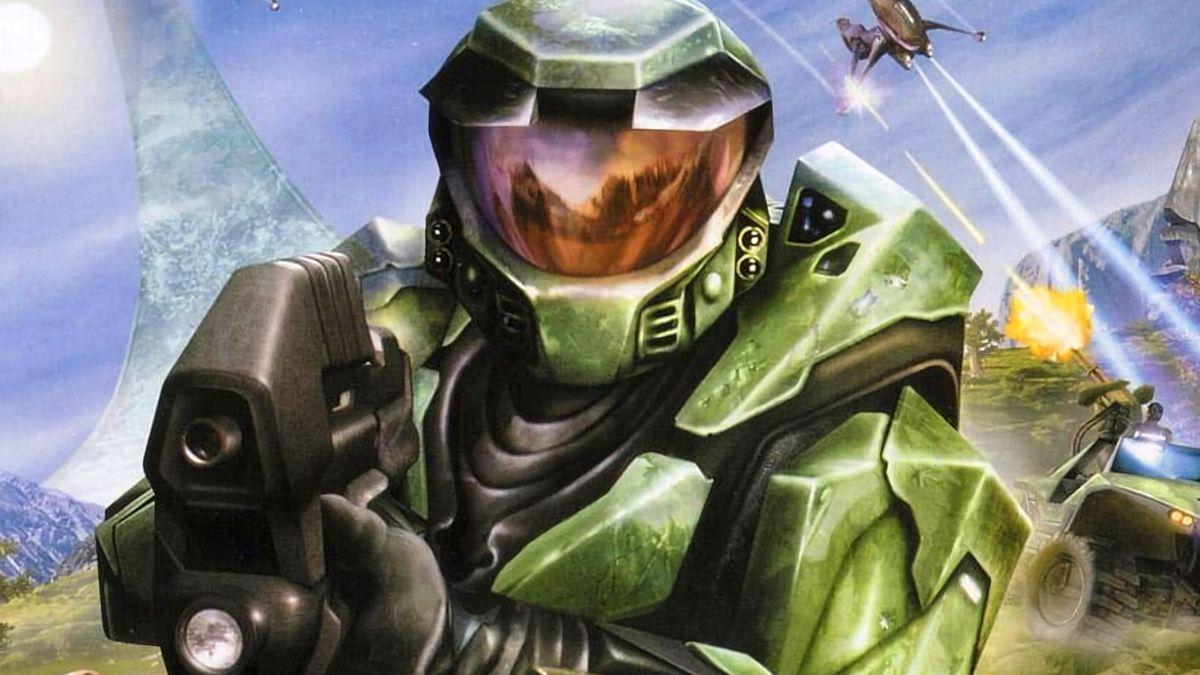
.
Source: GamesRadar
Debate Over Generative AI in Video Games Intensifies
The gaming industry remains deeply divided on the use of generative AI in video games. When Clair Obscur: Expedition 33 studio Sandfall Interactive admitted to using generative AI for some background assets, the Indie Game Awards rescinded the company's honors
1
. Publisher Running with Scissors cancelled a planned new game in the Postal series after being "overwhelmed with negative responses" to a trailer containing elements they said were "very likely AI-generated"1
. However, game development luminaries like John Carmack have defended AI development tools as allowing "the best to reach even greater heights," while Epic Games CEO Tim Sweeney predicts "AI will be involved in nearly all future production" of games1
.Xbox Co-Founder Predicts 'Sunsetting the Console' Under New Leadership
Seamus Blackley, who joined Microsoft in 1999 and pitched the Xbox concept, believes Microsoft is looking to sunset gaming operations. "Xbox, like a lot of businesses that aren't the core AI business, is being sunsetted," Blackley told GamesBeat
3
. He argues that Sharma's "job is going to be as a palliative care doctor who slides Xbox gently into the night"5
. According to Blackley, Microsoft's strategic pivot towards AI under CEO Satya Nadella means "the job of all these people is to just gently usher all of these business units into the new world of AI"5
.Related Stories
The Future of Xbox Remains Uncertain Amid Hardware Struggles
The new Xbox boss faces significant challenges as hardware sales continue to struggle. The current generation Series X/S is being outsold by the PS5 two-to-one, and Microsoft seems more interested in getting its properties on other hardware
4
. Sarah Bond's championing of the "Xbox Everywhere" strategy and "This is an Xbox" marketing campaign reportedly caused friction within the Xbox team1
. In response, Sharma has promised a "return to Xbox" approach and a "renewed commitment to Xbox starting with console," though she acknowledges that "gaming now lives across devices"3
. AMD CEO Lisa Su recently appeared to reveal that the next Xbox will arrive sometime in 2027, featuring an AMD semi-custom SoC3
.
Source: PCWorld
Sharma's Gaming Background Raises Questions About Xbox Leadership
Unlike Phil Spencer, who spent years at Microsoft Game Studios and amassed a score of over 121,000 across decades of play, Asha Sharma has no professional experience in the video game industry
1
. After sharing her Gamertag on social media over the weekend, curious gamers found that her Xbox play history dates back roughly one month1
. She cited 2016's Firewatch as exemplary of games with "deep emotional resonance" and shared her list of three greatest games ever: "Halo, Valheim, Goldeneye"1
. Longtime Xbox Game Studios executive Matt Booty, whose history in game development dates back to working for Williams Electronics in the '90s, has been promoted to executive vice president and chief content officer for Xbox to help ensure a smooth transition1
. Sharma has positioned herself as a "platform builder" and stated she's currently getting up to speed, saying she will "need to learn about the 'why' of decisions, what we were optimizing for, and what the data says about the Xbox strategy today"3
. She has promised to "return to the renegade spirit that built Xbox in the first place," which will require the team to "relentlessly question everything, revisit processes, protect what works, and be brave enough to change what does not"3
. Whether this creator-driven model can succeed amid Microsoft's broader AI push, or if cost-cutting measures involving large language models will ultimately compromise quality, remains to be seen.References
Summarized by

Navi
[1]
Related Stories
Microsoft's AI Push Shadows Xbox Layoffs and Game Cancellations
03 Jul 2025•Business and Economy
Xbox Takes Measured Approach to AI: Spencer Emphasizes Developer Choice Over Corporate Mandates
24 Oct 2025•Technology
Microsoft's Next-Gen Xbox: AMD Partnership, Multi-Store Support, and Ecosystem Expansion
18 Jun 2025•Technology

Recent Highlights
1
Google Maps unveils Ask Maps with Gemini AI and 3D Immersive Navigation in biggest update
Technology
2
AI chatbots help plan violent attacks as safety guardrails fail, new investigation reveals
Technology

3
OpenAI secures $110 billion funding round as questions swirl around AI bubble and profitability
Business and Economy

Recent Highlights
Today's Top Stories






Your Daily Dose of Curated AI News
Don’t drown in AI news. We cut through the noise - filtering, ranking and summarizing the most important AI news, breakthroughs and research daily. Spend less time searching for the latest in AI and get straight to action.

