Rana Daggubati says AI in cinema lets filmmakers watch movies before shooting even begins


2 Sources
2 Sources
[1]
AI quietly rewriting grammar of cinema
The next big divide in the industry, actor Rana Daggubati suggested, will not be between those who adopt AI and those who resist it - but between those who build intellectual property on top of these tools and those who merely use them. However, he reiterated that certain core human skills cannot be substituted with AI. Artificial intelligence is quietly rewriting the grammar of cinema - and for filmmakers chasing scale and spectacle, the future is already playing out before the first camera rolls. AI now allows creators of big-impact films to almost watch their movies before a single frame is shot, actor Rana Daggubati said on Monday, underscoring how the technology is reshaping storytelling from the ground up. What once lived only in imagination or rough storyboards can now be visualised in striking detail - scenes blocked, worlds built, action choreographed - long before production begins. For large-scale cinema, that shift is transformative. It compresses uncertainty, sharpens creative decisions and gives filmmakers a near-finished window into their own vision. But, as AI tools become more accessible, Daggubati drew a clear line between users and builders. The next big divide in the industry, he suggested, will not be between those who adopt AI and those who resist it - but between those who build intellectual property on top of these tools and those who merely use them. Addressing a session on 'AI x Creativity: Skilling for Innovation in the Intelligent Economy' on the first day of the five-day AI Impact Summit, Daggubati reiterated the impact AI is having on films, but suggested that certain core human skills cannot be substituted. "In the visual effects world, earlier, getting a shot done used to take 3-5 days. But now that has come down to just 2-3 hours...Besides, a filmmaker can now watch his movie even before shooting really begins," he said. However, he highlighted certain qualities and skills that will not be replaced. "Storytelling, understanding of cultural context, and social literacy are such skills," he said, adding that "the construct of repeatability is gone now, and a key differentiating factor would be between those creating IP (on AI tools) and those just using it". The actor, known for movies like 'Baahubali', 'Kalki 2898 AD', 'The Ghazi Attack', among others, further said, "Ownership will change dramatically. Earlier, big studios were the only ones to develop big IP, universe. Today it is in the hands of independent directors". "We might be in the phase of extreme change... but will everything go AI from here? Not really. But there are pieces of the puzzle being taken away," Daggubati added. Ashish Kulkarni, founder of Punnaryug Artvision, said foundational skills with reference to creative content will still have to be taught to students. "AI is giving us great perspective pre-production, pre-visualisation. We will have to make sure, while teaching foundational skills about how we can enhance storytelling aspect, emotional & behavioural intelligence," he said. An MoU was exchanged between Adobe and Nasscomm for the Future Skills Prime initiative during the session, which was moderated by Mala Sharma, Global VP undefined Saransh Agrawal, VP-Learning undefined and Raj Rishi Singh, CBO & CMO, MakeMyTrip. The AI Impact Expo 2026, being held in the national capital from February 16-20, is expected to witness the participation of over 2.5 lakh visitors, including international delegates. The event aims to foster new partnerships and create business opportunities within the global AI ecosystem.
[2]
India AI Impact Summit 2026: Actor Rana Daggubati says AI will replace all of us quite quickly
Popular actor Rana Daggubati has sparked debate at the India AI Impact Summit 2026 in New Delhi after a blunt remark about the future of cinema in the age of AI. While interacting with the media on the sidelines of the event (in a brief walking exchange captured on video by ANI), Daggubati said AI will replace all of us quite quickly when asked about the growing influence on movies. The comment was made informally as the actor was moving between sessions at Bharat Mandapam, where the summit is being held from February 16 to 20. Even in that short interaction, his statement reflected his long-held view that technological disruption in entertainment is inevitable. This is not the first time he had been vocal about the technology and its influence on Indian cinema. Also read: PM Modi inaugurates India AI Impact Summit 2026, meets Jio's Akash Ambani and other startup founders Daggubati has previously compared the current AI wave to the early days of visual effects in Indian cinema. Two decades ago, he has noted, VFX faced heavy resistance from traditionalists who feared it would undermine filmmaking. Instead, it went on to become an integral part of mainstream storytelling. He believes AI is at a similar inflection point - disruptive, unsettling, but ultimately transformative. The India AI Impact Summit 2026 kicked off on February 16 at Bharat Mandapam in New Delhi, and the turnout on day one shown that AI is no longer just a technical conversation, but a global one. The event, which runs until February 20, has brought together some of the biggest names in technology, as well as policymakers, researchers, and startups from around the world. Also read: Ahead of India AI Impact Summit 2026, Anthropic launches Bengaluru office, expands India push Companies such as Google, OpenAI, Nvidia, and Qualcomm are showing what they've been working on, ranging from advanced AI models and enterprise tools to cutting-edge chip technology. On Monday, Prime Minister Narendra Modi officially opened the summit, pointing out India's ambition to play a leading role in the global artificial intelligence ecosystem. The event's overall theme revolves around three core ideas: People, Planet, and Progress, with a strong emphasis on keeping AI development human-centric.
Share
Share
Copy Link
Actor Rana Daggubati spoke at the AI Impact Summit about how AI is rewriting the grammar of cinema, compressing VFX production time from days to hours. He predicted AI will replace humans quickly but emphasized that storytelling and cultural understanding remain irreplaceable human skills. The summit, inaugurated by PM Modi, runs until February 20 in New Delhi.
AI in Cinema Transforms How Films Are Made
Artificial intelligence is fundamentally changing how movies come to life, and Rana Daggubati made this clear during his address at the AI Impact Summit in New Delhi. Speaking at a session on AI and creativity on February 16, the actor behind blockbusters like 'Baahubali' and 'Kalki 2898 AD' explained that AI in cinema now allows creators to visualize their entire film before shooting a single frame
1
. What once existed only in imagination or rough storyboards can now be rendered in striking detail—scenes blocked, worlds built, action choreographed—long before production begins. This shift compresses uncertainty and sharpens creative decisions for large-scale filmmaking.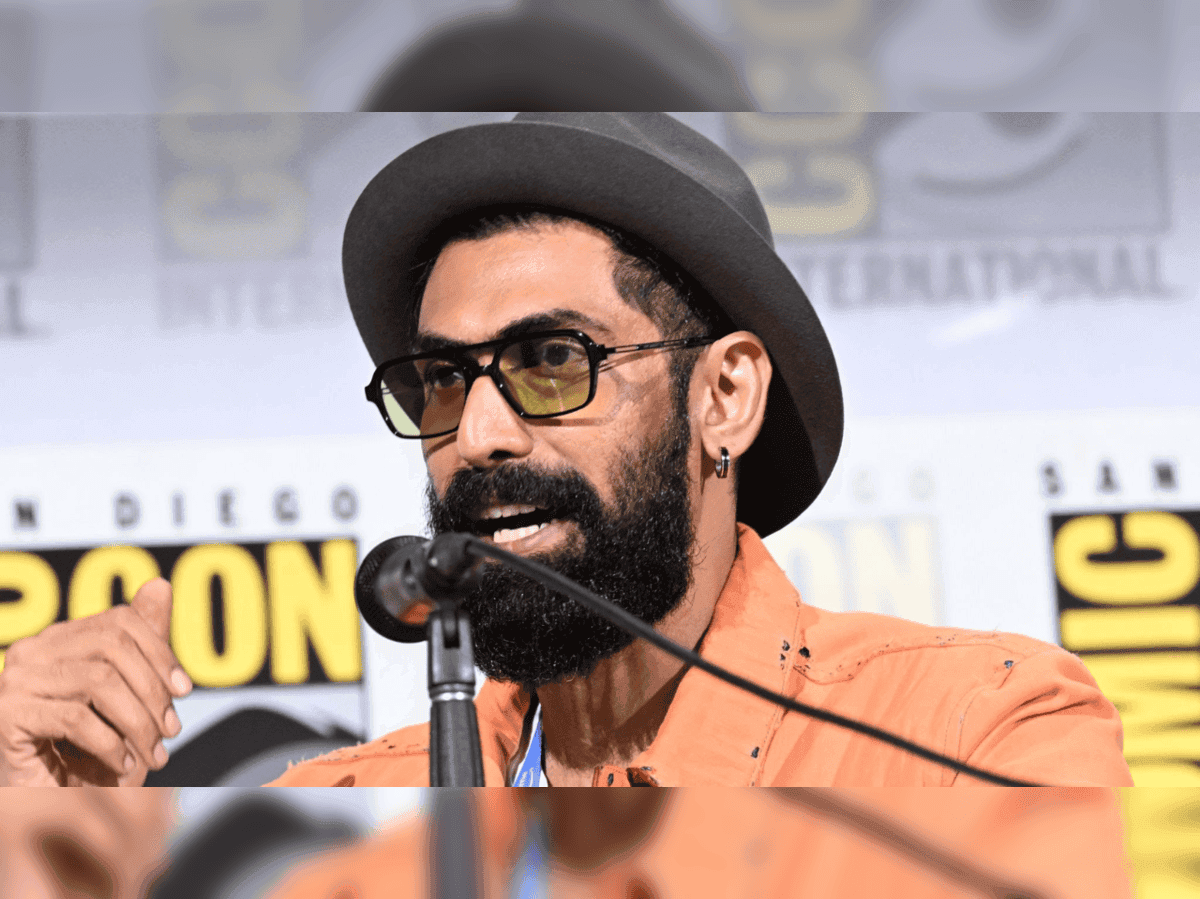
Source: ET
VFX Production Time Drops From Days to Hours
The numbers tell a compelling story about AI's impact on cinema. Rana Daggubati revealed that in the visual effects world, tasks that previously took 3-5 days to complete now require just 2-3 hours
1
. This dramatic reduction in VFX production time is reshaping the cinema industry by making high-quality effects accessible faster and more affordably. The technology excels particularly in pre-production and pre-visualisation, giving filmmakers a near-finished window into their own vision before cameras roll. Ashish Kulkarni, founder of Punnaryug Artvision, emphasized that AI tools are providing great perspective in these early stages of filmmaking1
.AI Will Replace Humans, But Not All Skills
In a blunt informal interaction with media at Bharat Mandapam, Daggubati stated that AI will replace all of us quite quickly when asked about the growing influence on movies
2
. However, during his formal session, he drew important distinctions about which human skills remain irreplaceable. Storytelling, understanding of cultural context, and social literacy are capabilities that AI cannot substitute, he emphasized1
. The actor compared the current AI wave to the initial resistance to VFX two decades ago, when traditionalists feared it would undermine filmmaking. Instead, VFX became integral to mainstream storytelling2
.
Source: Digit
Related Stories

Intellectual Property Creation Gets Democratized
Rana Daggubati identified a crucial divide emerging in the industry—not between those who adopt AI and those who resist it, but between those who build intellectual property on top of AI tools and those who merely use them
1
. This shift democratizes intellectual property creation in profound ways. "Ownership will change dramatically. Earlier, big studios were the only ones to develop big IP, universe. Today it is in the hands of independent directors," he explained1
. The construct of repeatability is gone, making IP creation a key differentiating factor for filmmakers navigating this transformation.AI Impact Summit Brings Global Leaders Together
The AI Impact Summit, running from February 16-20 at Bharat Mandapam in New Delhi, has attracted major technology players including Google, OpenAI, Nvidia, and Qualcomm
2
. Prime Minister Narendra Modi inaugurated the event, highlighting India's ambition to lead in the global AI ecosystem with a focus on human-centric AI development centered on People, Planet, and Progress2
. The summit expects over 2.5 lakh visitors, including international delegates, and aims to foster partnerships within the global AI ecosystem1
. During the session moderated by executives from MakeMyTrip and others, an MoU was exchanged between Adobe and Nasscomm for the Future Skills Prime initiative1
. As AI continues rewriting the grammar of cinema, the industry faces a phase of extreme change where certain pieces of the puzzle are being taken away, but the core of filmmaking—the human touch—remains essential.References
Summarized by

Navi
Related Stories
AI Reshapes Bollywood: A Clash Between Innovation and Tradition
01 Sept 2025•Technology
AI-Generated Video Revolutionizes Creative Industry, Sparking Excitement and Concern
08 Jul 2025•Technology
Hollywood reframes AI as infrastructure while studios navigate creative boundaries and job concerns
17 Mar 2026•Technology

Recent Highlights
1
AI chatbots validate you too much, making you less kind to others, Stanford study reveals
Science and Research

2
Anthropic's Claude Code Source Leak Reveals Hidden AI Agent Plans and Extensive System Access
Technology

3
Judge blocks Pentagon from branding Anthropic a security risk over AI safety guardrails dispute
Policy and Regulation

Recent Highlights
Today's Top Stories









Your Daily Dose of Curated AI News
Don’t drown in AI news. We cut through the noise - filtering, ranking and summarizing the most important AI news, breakthroughs and research daily. Spend less time searching for the latest in AI and get straight to action.

