Razer unveils fully agentic AI companion AVA at GDC 2026, promising task automation beyond chat


2 Sources
2 Sources
[1]
Razer unveils a fully agentic version of its AI companion AVA
The assistant can run locally on a PC or tap into cloud models for heavier tasks. Razer is taking its AI ambitions a step further. According to a new report from Variety, the company has unveiled a "fully agentic" version of its AI companion AVA, capable of running both locally on a PC and in the cloud. The reveal came from Quyen Quach, Razer's VP of Software, who outlined how the assistant is evolving from a gaming-focused helper into a more autonomous digital companion. Unlike traditional chatbots that simply respond to prompts, the new version of AVA is designed to act more independently, completing tasks and assisting users proactively. Quach described the technology as "fully agentic," meaning the AI can perform actions, analyze situations, and interact with systems in ways that go beyond simple conversational responses. Running locally and in the cloud One of the biggest changes is how the AI runs. The upgraded AVA is built to operate both locally on a gaming PC and through cloud infrastructure, allowing it to balance performance and privacy depending on the task. Simpler or latency-sensitive functions can run directly on the user's machine, while more complex AI workloads can be processed through cloud models. The move is part of Razer's broader push into AI-driven gaming tools and digital companions. AVA originally debuted as Project AVA, a concept AI assistant designed to act as a real-time esports coach and gaming helper. Over time, the company has expanded the idea into a broader assistant capable of helping with tasks beyond gaming. Recommended Videos For Razer, the shift toward an agentic system reflects a larger trend across the tech industry: moving from simple AI chat interfaces toward AI agents that can actually perform tasks on behalf of users. We've seen similar stuff from Microsoft, with its experimentation with Xbox's Gaming Copilot, though, the experience has been a mixed bag, to say the least. Nonetheless, it's safe to say that we might be seeing more implementations of AI in the world of gaming.
[2]
Razer Showcases QA-Companion AI and "Agentic Desk Companion" Razer AVA AI at GDC 2026
Today is officially the start of Game Developers Conference 2026 (GDC 2026), a week where a huge portion of the video game industry joins together in San Francisco to discuss the latest happenings within the video game industry, and in the case of companies like Razer, showcase the B2B-focused initiatives it has coming down the pipeline. After first unveiling its AI QA companion tool and its Project AVA AI companion in 2025, Razer showcased both products at GDC 2026, with Project AVA now simply called Razer AVA, which it describes as "a more capable agentic assistant with the ability to understand goals, plan tasks, and take action across a user's apps, services, and devices." "At GDC 2026, AVA debuts an expanded agentic system that turns user intent into structured, multi-step workflows, shifting the experience from simple chat responses to true task completion. This elevates AVA from a reactive companion to a practical everyday AI assistant for all users, from professionals to gamers," the company said in a press release. It's all part of Razer's proclaimed "AI-Powered Future of Play," which Quyen Quach, vice president of software at Razer, reiterates is about amplifying human potential, not replacing it. "AI should amplify human creativity, not replace it," Quach said. "That belief shapes everything we're building across hardware, software, and services. We're creating practical AI tools that put developers firmly in control and help teams move from idea implementation faster while preserving the craft that makes games memorable. From agentic companions to frictionless QA and adaptive multi-sensory immersion, our goal is simple: help studios build faster, expand coverage, and deliver richer, more engaging experiences." As far as when Razer AVA will actually be rolled out as a product, that won't happen until Q2 2026. It'll be interesting to see how it actually works out when people can test its task-completing capabilities, and if there is anyone who wouldn't mind having an AI-powered companion on their desk helping them do their work or get through a game. The QA companion is obviously more focused on game developers, as it attempts to offer an AI-powered QA solution to help teams get through their QA work faster. It's "Zero-integration deployment" and the ability to produce "functional, negative, and boundary test cases" based on prompts from the user, on top of autonomous AI gameplay agents are all said to be a part of how it'll help fit directly into a QA workflow and get developers through the process faster, but again, it'll be interesting to see how developers react to it when they get their hands on it. Game developers are constantly reminded that players will always think of doing something that they themselves never thought of while they were making the game. That's why QA work is so important, because it catches the bugs and the issues that developers wouldn't have ever caught themselves no matter how many times they playtest their own games. If this companion could actually find the issues a developer may already have in mind and create bug reports that solve those problems faster, then more time could be spent on QA testing with real people to find all those other issues that come up from things the developers would've never thought to do. It sounds like it could be useful, but whether that's actually the case will depend on what developers who try it have to say. Earlier this year, Razer's chief executive officer was adamant that what people are against when it comes to AI and GenAI tools is "AI slop," and that everyone is for "AI tools that can help game devs." The QA companion at least sounds like a product that falls in line with that vision. Razer AVA, on the other hand, could turn out to be closer to slop. We'll see where it lands when it arrives in Q2 2026.
Share
Share
Copy Link
Razer showcased an upgraded version of its AI companion AVA at GDC 2026, transforming it from a gaming-focused helper into a fully agentic system capable of understanding goals, planning tasks, and executing actions across apps and devices. The assistant runs both locally and in the cloud, with a Q2 2026 launch planned.
Razer AVA Evolves Into Fully Agentic AI Companion
Razer has unveiled a significantly upgraded version of its AI companion AVA at GDC 2026, shifting from a simple gaming-focused helper to a fully agentic AI companion capable of autonomous task completion. According to Quyen Quach, Razer's VP of Software, the new system can understand user goals, plan tasks and execute actions across multiple apps, services, and devices—marking a departure from traditional chatbots that merely respond to prompts
1
2
.
Source: Wccftech
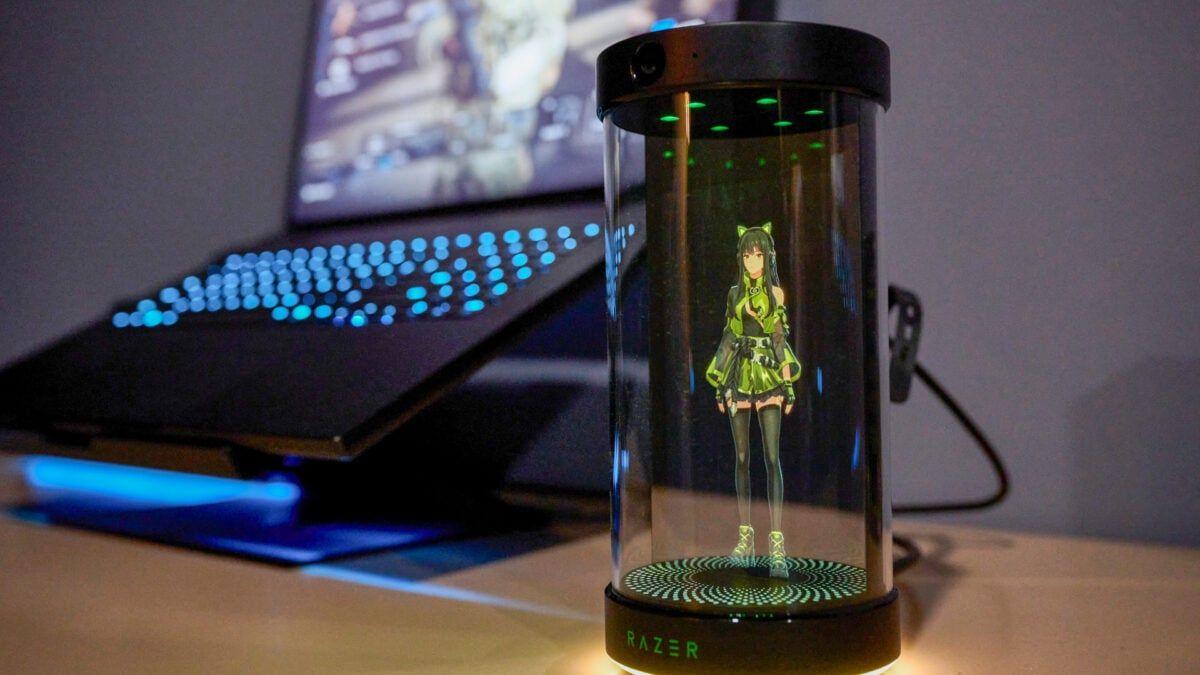
The company describes Razer AVA as an agentic desk companion that turns user intent into structured, multi-step workflows, elevating the experience from simple chat responses to genuine task completion. This transformation positions AVA as a practical everyday assistant for professionals and gamers alike, designed to operate autonomously rather than waiting for constant user direction
2
.Hybrid Architecture Balances Performance and Privacy
One of the most significant technical advancements is how Razer AVA operates. The upgraded assistant runs both locally on a gaming PC and through cloud infrastructure, allowing it to balance performance and privacy depending on the complexity of each task. Simpler or latency-sensitive functions execute directly on the user's machine, while more demanding AI workloads are processed through cloud models
1
.This dual-operation approach addresses growing concerns about privacy while maintaining the computational power needed for complex agentic AI tasks. By keeping certain operations local, users retain more control over their data, while cloud connectivity enables the assistant to handle sophisticated requests that would overwhelm typical gaming hardware.
From Project AVA to Production-Ready Assistant
Razer AVA began as Project AVA in 2025, originally conceived as a real-time esports coach and gaming companion. The company has since expanded its vision considerably, transforming the concept into a broader assistant capable of helping with tasks well beyond game development and gaming scenarios
1
2
.The assistant is scheduled to launch in Q2 2026, giving Razer several months to refine the technology before public release. This timeline will be critical for demonstrating whether the system can truly deliver on its promise of autonomous task completion or if it will fall short of expectations.
Related Stories


AI-Powered Testing Solutions for Game Developers
Alongside Razer AVA, the company showcased its QA-Companion AI at GDC 2026, targeting game developers with AI-powered testing solutions designed to accelerate game development workflows. The tool features zero-integration deployment and can generate functional, negative, and boundary test cases based on user prompts, while autonomous AI gameplay agents help identify bugs faster
2
.For quality assurance (QA) teams, this could mean spending less time on predictable test scenarios and more time on exploratory testing that catches unexpected player behaviors. The technology aims to help developers identify issues they already have in mind more quickly, freeing up human testers to focus on creative problem-solving that GenAI tools might miss.
Industry Shift Toward Agentic Systems
Razer's move reflects a broader industry trend away from simple conversational interfaces toward AI agents that actively perform tasks on behalf of users. Microsoft has experimented with similar concepts through its Gaming Copilot, though results have been mixed
1
.Quach emphasized that Razer's approach centers on amplifying human potential rather than replacement. "AI should amplify human creativity, not replace it," he stated, explaining that this philosophy shapes the company's development across hardware, software, and services. The goal is to help studios build faster, expand coverage, and deliver richer experiences while preserving the craft that makes games memorable
2
.Whether Razer AVA proves genuinely useful or becomes what the industry dismissively calls "AI slop" will depend heavily on real-world testing when it arrives later this year. The company's CEO has previously argued that opposition to AI stems from low-quality implementations, not the technology itself—a claim that Razer AVA and its QA companion will soon put to the test.
References
Summarized by

Navi
[1]
Related Stories
Recent Highlights
1
AI Models Lie and Deceive to Protect Other AI Models From Deletion, Study Reveals
Science and Research

2
AI chatbots validate you too much, making you less kind to others, Stanford study reveals
Science and Research

3
Judge blocks Pentagon from blacklisting Anthropic over AI safety guardrails dispute
Policy and Regulation

Recent Highlights
Today's Top Stories




Your Daily Dose of Curated AI News
Don’t drown in AI news. We cut through the noise - filtering, ranking and summarizing the most important AI news, breakthroughs and research daily. Spend less time searching for the latest in AI and get straight to action.

