Ron DeSantis says Florida has right to AI regulation despite Trump's executive order


2 Sources
2 Sources
[1]
DeSantis: Florida has 'right' to regulate AI rules despite Trump's order
Florida Gov. Ron DeSantis (R) said on Monday that the state has the right to regulate artificial intelligence (AI) despite President Trump's executive order last week that seeks to institute a national AI standard by pushing back on state laws. DeSantis, who has rolled out a "Citizen Bill of Rights for Artificial Intelligence," noted that the executive order does not block Florida or other states from instituting their own AI regulations. "The president issued an executive order. Some people were saying well no, this blocks the states, " the governor said, speaking at Florida Atlantic University, adding "it doesn't." "You should read it and see. First of all, an executive order can't block states. You can preempt states under Article One powers through congressional legislation on certain issues but you can't do it through executive order," he continued. "But if you read it, they actually say a lot of the stuff we're talking about are things that they're encouraging states to do," he said. "So even reading it very broadly, I think the stuff we're doing is going to be very consistent. But irrespective, clearly we have a right to do this." Last week, DeSantis rolled out what he dubbed a proposal for a "Citizen Bill of Rights for Artificial Intelligence" aimed at protecting consumers from the potential risks and harms that come with AI. The proposal calls for a number of guardrails for citizens, including blocking AI from using an individual's name, image or likeness (NIL) without their permission, protection from deepfakes, as well a number of child protections. The governor noted on Monday that supporters of the executive order say they are worried about actions blue states like California and Colorado could take on AI and that the attorney general could bring challenges to state laws under the Dormant Commerce Clause, which blocks states from passing laws that discriminate against interstate commerce. "I don't know how successful that would be, but the reality is I don't anticipate that even happening against the stuff we're doing in Florida, but if it does, I think we would be well positioned to prevail on that," DeSantis said. Trump's latest executive order on AI has drawn attention to divides among conservatives and Republicans over how to regulate the growing industry. Republican lawmakers have attempted to pass measures blocking state AI laws twice in the past six months -- via Trump's tax and spending bill this summer and via the National Defense Authorization Act (NDAA) late last month -- but both efforts ultimately fell short because of GOP infighting. Major AI firms have argued that it would be difficult for them to follow a patchwork of state laws. Various AI companies have pushed back on laws in California, as the Golden State has taken on an outsized role in advancing regulatory efforts.
[2]
DeSantis Says Florida Will Proceed With AI Regulations Despite Trump's Order
DeSantis Says Florida Will Proceed With AI Regulations Despite Trump's Order Florida Gov. Ron DeSantis (R) plans to proceed with guardrails around artificial intelligence use despite Trump's executive order cracking down on state-level AI restrictions, saying Monday he doesn't think his proposals will run afoul of the president's rules. "I don't think we're gonna be doing anything that would even give rise to a ... lawsuit from the U.S. DOJ but, to the extent we did, I'm confident that we'd be able to win that, because clearly, we'd be legislating within the confines of our 10th Amendment rights as states," DeSantis said at an event at Florida Atlantic University. DeSantis' proposed AI guardrails, which he's calling the "Artificial Intelligence Bill of Rights," would require a notice to consumers when they're interacting with AI and ban AI tools from using people's names or likenesses without their consent, among other restrictions.
Share
Share
Copy Link
Florida Gov. Ron DeSantis is pushing forward with state-level AI regulations despite President Trump's executive order seeking national AI standards. DeSantis argues his proposed Citizen Bill of Rights for Artificial Intelligence doesn't conflict with federal directives and falls within state authority under the 10th Amendment. The move highlights growing tensions over who controls AI regulation in America.
Ron DeSantis Challenges Federal Authority on AI Regulation
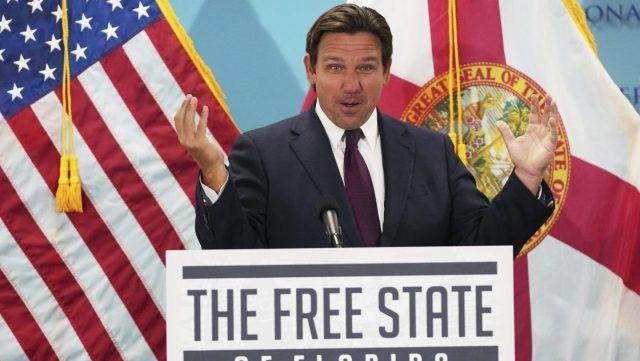
Florida Gov. Ron DeSantis declared Monday that his state retains the right to regulate artificial intelligence despite President Trump's recent executive order aimed at establishing national AI standards
1
. Speaking at Florida Atlantic University, DeSantis pushed back against interpretations suggesting Trump's executive order blocks state-level AI regulations, emphasizing that executive orders cannot preempt state laws without congressional legislation under Article One powers1
.
Source: The Hill
"The president issued an executive order. Some people were saying well no, this blocks the states," DeSantis said. "It doesn't"
1
. The governor added that even a broad reading of Trump's directive shows it encourages states to pursue the kind of consumer protection measures Florida is proposing1
.Florida's Citizen Bill of Rights for Artificial Intelligence
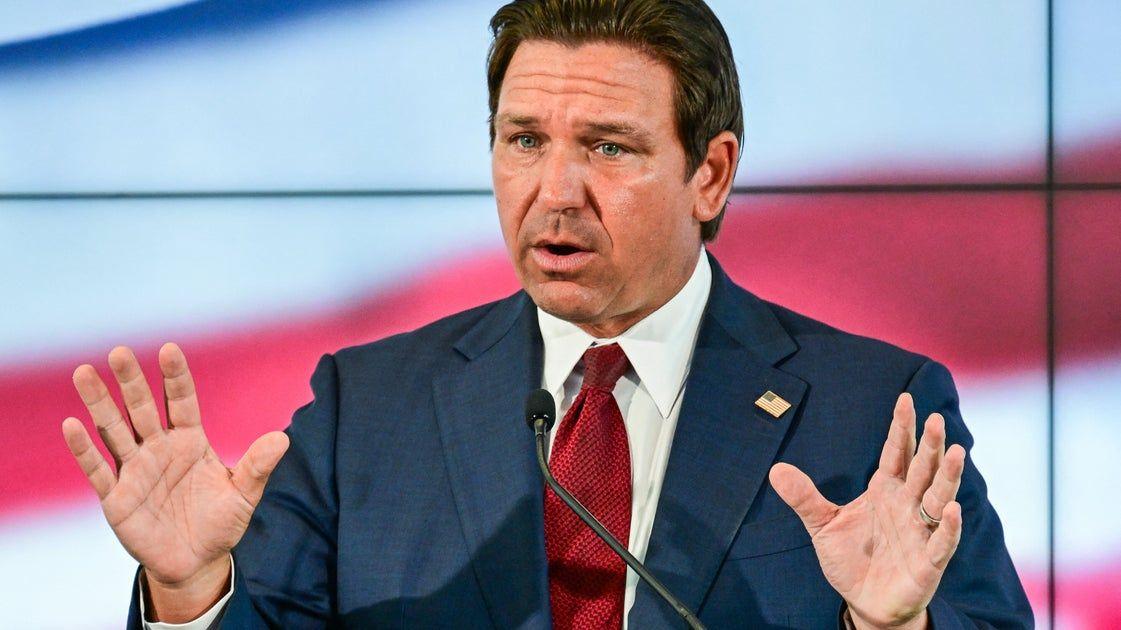
DeSantis recently unveiled his proposal for a Citizen Bill of Rights for Artificial Intelligence, designed to shield consumers from AI-related risks
1
. The proposed guardrails include blocking AI from using an individual's name, image or likeness without their permission, protection from deepfakes, and child protections1
. The legislation would also require notice to consumers when they're interacting with AI systems2
.
Source: HuffPost
The governor's proposal directly addresses concerns about unauthorized use of personal likeness, a growing issue as AI tools become more sophisticated at generating realistic images and videos. By requiring consent before AI can deploy someone's identity, Florida aims to establish clear boundaries around digital rights in an era where deepfakes and synthetic media proliferate.
Constitutional Grounds and Legal Positioning
DeSantis expressed confidence that Florida's approach aligns with 10th Amendment rights, which reserve powers not delegated to the federal government for states
2
. "I don't think we're gonna be doing anything that would even give rise to a lawsuit from the U.S. DOJ but, to the extent we did, I'm confident that we'd be able to win that, because clearly, we'd be legislating within the confines of our 10th Amendment rights as states," he stated2
.The governor acknowledged that supporters of Trump's executive order worry about actions blue states like California and Colorado might take, and that the attorney general could potentially challenge state AI laws under the Dormant Commerce Clause, which prevents states from passing legislation that discriminates against interstate commerce
1
. However, DeSantis said he doesn't anticipate such challenges against Florida's measures and believes the state would prevail if tested1
.Related Stories

Federal vs. State Control Reveals GOP Divisions
Trump's latest executive order has exposed divisions among conservatives and Republicans over how to regulate the growing AI industry
1
. Republican lawmakers attempted to pass measures blocking state AI laws twice in the past six months through Trump's tax and spending bill and via the National Defense Authorization Act, but both efforts failed due to GOP infighting1
.Major AI firms have argued that navigating patchwork regulations across different states creates operational challenges, with various AI companies pushing back particularly on California's regulatory efforts
1
. California has taken an outsized role in advancing state-level AI legislation, making it a focal point in debates over whether federal or state authority should govern AI development and deployment.The standoff between Florida and federal directives signals ongoing uncertainty about AI governance in America. As states continue developing their own frameworks for consumer protection while AI firms lobby for uniform national standards, the question of who ultimately controls AI regulation remains unresolved. DeSantis's defiant stance suggests that regardless of federal preferences, states will continue asserting their authority to protect citizens from emerging technological threats through targeted legislation and guardrails.
References
Summarized by

Navi
Related Stories
Trump's Executive Order Targets State AI Laws, Sparking Bipartisan Pushback and Legal Uncertainty
08 Dec 2025•Policy and Regulation
Trump Administration Puts AI Regulation Executive Order on Hold Amid Republican Backlash
19 Nov 2025•Policy and Regulation

Republicans Drop Trump's Push to Block State AI Laws from Defense Bill After Party Split
03 Dec 2025•Policy and Regulation
Recent Highlights
1
Google releases Gemma 4 with Apache 2.0 license, enabling unrestricted local AI on devices
Technology

2
AI Models Lie and Deceive to Protect Other AI Models From Deletion, Study Reveals
Science and Research

3
OpenAI closes $122 billion funding round amid fierce AI competition and profitability questions
Startups

Recent Highlights
Today's Top Stories






Your Daily Dose of Curated AI News
Don’t drown in AI news. We cut through the noise - filtering, ranking and summarizing the most important AI news, breakthroughs and research daily. Spend less time searching for the latest in AI and get straight to action.

