Salesforce launches rebuilt Slackbot AI agent to compete with Microsoft and Google in workplace AI


3 Sources
3 Sources
[1]
Salesforce rolls out new Slackbot AI agent as it battles Microsoft and Google in workplace AI
Salesforce on Tuesday launched an entirely rebuilt version of Slackbot, the company's workplace assistant, transforming it from a simple notification tool into what executives describe as a fully powered AI agent capable of searching enterprise data, drafting documents, and taking action on behalf of employees. The new Slackbot, now generally available to Business+ and Enterprise+ customers, is Salesforce's most aggressive move yet to position Slack at the center of the emerging "agentic AI" movement -- where software agents work alongside humans to complete complex tasks. The launch comes as Salesforce attempts to convince investors that artificial intelligence will bolster its products rather than render them obsolete. "Slackbot isn't just another copilot or AI assistant," said Parker Harris, Salesforce co-founder and Slack's chief technology officer, in an exclusive interview with Salesforce. "It's the front door to the agentic enterprise, powered by Salesforce." From tricycle to Porsche: Salesforce rebuilt Slackbot from the ground up Harris was blunt about what distinguishes the new Slackbot from its predecessor: "The old Slackbot was, you know, a little tricycle, and the new Slackbot is like, you know, a Porsche." The original Slackbot, which has existed since Slack's early days, performed basic algorithmic tasks -- reminding users to add colleagues to documents, suggesting channel archives, and delivering simple notifications. The new version runs on an entirely different architecture built around a large language model and sophisticated search capabilities that can access Salesforce records, Google Drive files, calendar data, and years of Slack conversations. "It's two different things," Harris explained. "The old Slackbot was algorithmic and fairly simple. The new Slackbot is brand new -- it's based around an LLM and a very robust search engine, and connections to third-party search engines, third-party enterprise data." Salesforce chose to retain the Slackbot brand despite the fundamental technical overhaul. "People know what Slackbot is, and so we wanted to carry that forward," Harris said. Why Anthropic's Claude powers the new Slackbot -- and which AI models could come next The new Slackbot runs on Claude, Anthropic's large language model, a choice driven partly by compliance requirements. Slack's commercial service operates under FedRAMP Moderate certification to serve U.S. federal government customers, and Harris said Anthropic was "the only provider that could give us a compliant LLM" when Slack began building the new system. But that exclusivity won't last. "We are, this year, going to support additional providers," Harris said. "We have a great relationship with Google. Gemini is incredible -- performance is great, cost is great. So we're going to use Gemini for some things." He added that OpenAI remains a possibility as well. Harris echoed Salesforce CEO Marc Benioff's view that large language models are becoming commoditized: "You've heard Marc talk about LLMs are commodities, that they're democratized. I call them CPUs." On the sensitive question of training data, Harris was unequivocal: Salesforce does not train any models on customer data. "Models don't have any sort of security," he explained. "If we trained it on some confidential conversation that you and I have, I don't want Carolyn to know -- if I train it into the LLM, there is no way for me to say you get to see the answer, but Carolyn doesn't." Inside Salesforce's internal experiment: 80,000 employees tested Slackbot with striking results Salesforce has been testing the new Slackbot internally for months, rolling it out to all 80,000 employees. According to Ryan Gavin, Slack's chief marketing officer, the results have been striking: "It's the fastest adopted product in Salesforce history." Internal data shows that two-thirds of Salesforce employees have tried the new Slackbot, with 80% of those users continuing to use it regularly. Internal satisfaction rates reached 96% -- the highest for any AI feature Slack has shipped. Employees report saving between two and 20 hours per week. The adoption happened largely organically. "I think it was about five days, and a Canvas was developed by our employees called 'The Most Stealable Slackbot Prompts,'" Gavin said. "People just started adding to it organically. I think it's up to 250-plus prompts that are in this Canvas right now." Kate Crotty, a principal UX researcher at Salesforce, found that 73% of internal adoption was driven by social sharing rather than top-down mandates. "Everybody is there to help each other learn and communicate hacks," she said. How Slackbot transforms scattered enterprise data into executive-ready insights During a product demonstration, Amy Bauer, Slack's product experience designer, showed how Slackbot can synthesize information across multiple sources. In one example, she asked Slackbot to analyze customer feedback from a pilot program, upload an image of a usage dashboard, and have Slackbot correlate the qualitative and quantitative data. "This is where Slackbot really earns its keep for me," Bauer explained. "What it's doing is not just simply reading the image -- it's actually looking at the image and comparing it to the insight it just generated for me." Slackbot can then query Salesforce to find enterprise accounts with open deals that might be good candidates for early access, creating what Bauer called "a really great justification and plan to move forward." Finally, it can synthesize all that information into a Canvas -- Slack's collaborative document format -- and find calendar availability among stakeholders to schedule a review meeting. "Up until this point, we have been working in a one-to-one capacity with Slackbot," Bauer said. "But one of the benefits that I can do now is take this insight and have it generate this into a Canvas, a shared workspace where I can iterate on it, refine it with Slackbot, or share it out with my team." Rob Seaman, Slack's chief product officer, said the Canvas creation demonstrates where the product is heading: "This is making a tool call internally to Slack Canvas to actually write, effectively, a shared document. But it signals where we're going with Slackbot -- we're eventually going to be adding in additional third-party tool calls." MrBeast's company became a Slackbot guinea pig -- and employees say they're saving 90 minutes a day Among Salesforce's pilot customers is Beast Industries, the parent company of YouTube star MrBeast. Luis Madrigal, the company's chief information officer, joined the launch announcement to describe his experience. "As somebody who has rolled out enterprise technologies for over two decades now, this was practically one of the easiest," Madrigal said. "The plumbing is there. Slack as an implementation, Enterprise Tools -- being able to turn on the Slackbot and the Slack AI functionality was as simple as having my team go in, review, do a quick security review." Madrigal said his security team signed off "rather quickly" -- unusual for enterprise AI deployments -- because Slackbot accesses only the information each individual user already has permission to view. "Given all the guardrails you guys have put into place for Slackbot to be unique and customized to only the information that each individual user has, only the conversations and the Slack rooms and Slack channels that they're part of -- that made my security team sign off rather quickly." One Beast Industries employee, Sinan, the head of Beast Games marketing, reported saving "at bare minimum, 90 minutes a day." Another employee, Spencer, a creative supervisor, described it as "an assistant who's paying attention when I'm not." Other pilot customers include Slalom, reMarkable, Xero, Mercari, and Engine. Mollie Bodensteiner, SVP of Operations at Engine, called Slackbot "an absolute 'chaos tamer' for our team," estimating it saves her about 30 minutes daily "just by eliminating context switching." Slackbot vs. Microsoft Copilot vs. Google Gemini: The fight for enterprise AI dominance The launch puts Salesforce in direct competition with Microsoft's Copilot, which is integrated into Teams and the broader Microsoft 365 suite, as well as Google's Gemini integrations across Workspace. When asked what distinguishes Slackbot from these alternatives, Seaman pointed to context and convenience. "The thing that makes it most powerful for our customers and users is the proximity -- it's just right there in your Slack," Seaman said. "There's a tremendous convenience affordance that's naturally built into it." The deeper advantage, executives argue, is that Slackbot already understands users' work without requiring setup or training. "Most AI tools sound the same no matter who is using them," the company's announcement stated. "They lack context, miss nuance, and force you to jump between tools to get anything done." Harris put it more directly: "If you've ever had that magic experience with AI -- I think ChatGPT is a great example, it's a great experience from a consumer perspective -- Slackbot is really what we're doing in the enterprise, to be this employee super agent that is loved, just like people love using Slack." Amy Bauer emphasized the frictionless nature of the experience. "Slackbot is inherently grounded in the context, in the data that you have in Slack," she said. "So as you continue working in Slack, Slackbot gets better because it's grounded in the work that you're doing there. There is no setup. There is no configuration for those end users." Salesforce's ambitious plan to make Slackbot the one 'super agent' that controls all the others Salesforce positions Slackbot as what Harris calls a "super agent" -- a central hub that can eventually coordinate with other AI agents across an organization. "Every corporation is going to have an employee super agent," Harris said. "Slackbot is essentially taking the magic of what Slack does. We think that Slackbot, and we're really excited about it, is going to be that." The vision extends to third-party agents already launching in Slack. Last month, Anthropic released a preview of Claude Code for Slack, allowing developers to interact with Claude's coding capabilities directly in chat threads. OpenAI, Google, Vercel, and others have also built agents for the platform. "Most of the net-new apps that are being deployed to Slack are agents," Seaman noted during the press conference. "This is proof of the promise of humans and agents coexisting and working together in Slack to solve problems." Harris described a future where Slackbot becomes an MCP (Model Context Protocol) client, able to leverage tools from across the software ecosystem -- similar to how the developer tool Cursor works. "Slack can be an MCP client, and Slackbot will be the hub of that, leveraging all these tools out in the world, some of which will be these amazing agents," he said. But Harris also cautioned against over-promising on multi-agent coordination. "I still think we're in the single agent world," he said. "FY26 is going to be the year where we started to see more coordination. But we're going to do it with customer success in mind, and not demonstrate and talk about, like, 'I've got 1,000 agents working together,' because I think that's unrealistic." Slackbot costs nothing extra, but Salesforce's data access fees could squeeze some customers Slackbot is included at no additional cost for customers on Business+ and Enterprise+ plans. "There's no additional fees customers have to do," Gavin confirmed. "If they're on one of those plans, they're going to get Slackbot." However, some enterprise customers may face other cost pressures related to Salesforce's broader data strategy. CIOs may see price increases for third-party applications that work with Salesforce data, as effects of higher charges for API access ripple through the software supply chain. Fivetran CEO George Fraser has warned that Salesforce's shift in pricing policy for API access could have tangible consequences for enterprises relying on Salesforce as a system of record. "They might not be able to use Fivetran to replicate their data to Snowflake and instead have to use Salesforce Data Cloud. Or they might find that they are not able to interact with their data via ChatGPT, and instead have to use Agentforce," Fraser said in a recent CIO report. Salesforce has framed the pricing change as standard industry practice. What Slackbot can do today, what's coming in weeks, and what's still on the roadmap The new Slackbot begins rolling out today and will reach all eligible customers by the end of February. Mobile availability will complete by March 3, Bauer confirmed during her interview with VentureBeat. Some capabilities remain works in progress. Calendar reading and availability checking are available at launch, but the ability to actually book meetings is "coming a few weeks after," according to Seaman. Image generation is not currently supported, though Bauer said it's "something that we are looking at in the future." When asked about integration with competing CRM systems like HubSpot and Microsoft Dynamics, Salesforce representatives declined to provide specifics during the interview, though they acknowledged the question touched on key competitive differentiators. Salesforce is betting the future of work looks like a chat window -- and it's not alone The Slackbot launch is Salesforce's bet that the future of enterprise work is conversational -- that employees will increasingly prefer to interact with AI through natural language rather than navigating traditional software interfaces. Harris described Slack's product philosophy using principles like "don't make me think" and "be a great host." The goal, he said, is for Slackbot to surface information proactively rather than requiring users to hunt for it. "One of the revelations for me is LLMs applied to unstructured information are incredible," Harris said. "And the amount of value you have if you're a Slack user, if your corporation uses Slack -- the amount of value in Slack is unbelievable. Because you're talking about work, you're sharing documents, you're making decisions, but you can't as a human go through that and really get the same value that an LLM can do." Looking ahead, Harris expects the interfaces themselves to evolve beyond pure conversation. "We're kind of saturating what we can do with purely conversational UIs," he said. "I think we'll start to see agents building an interface that best suits your intent, as opposed to trying to surface something within a conversational interface that matches your intent." Microsoft, Google, and a growing roster of AI startups are placing similar bets -- that the winning enterprise AI will be the one embedded in the tools workers already use, not another application to learn. The race to become that invisible layer of workplace intelligence is now fully underway. For Salesforce, the stakes extend beyond a single product launch. After a bruising year on Wall Street and persistent questions about whether AI threatens its core business, the company is wagering that Slackbot can prove the opposite -- that the tens of millions of people already chatting in Slack every day is not a vulnerability, but an unassailable advantage. Haley Gault, the Salesforce account executive in Pittsburgh who stumbled upon the new Slackbot on a snowy morning, captured the shift in a single sentence: "I honestly can't imagine working for another company not having access to these types of tools. This is just how I work now." That's precisely what Salesforce is counting on.
[2]
How Slackbot roars at MrBeast - CIO Luis Madrigal on rolling out Salesforce's upgraded bot
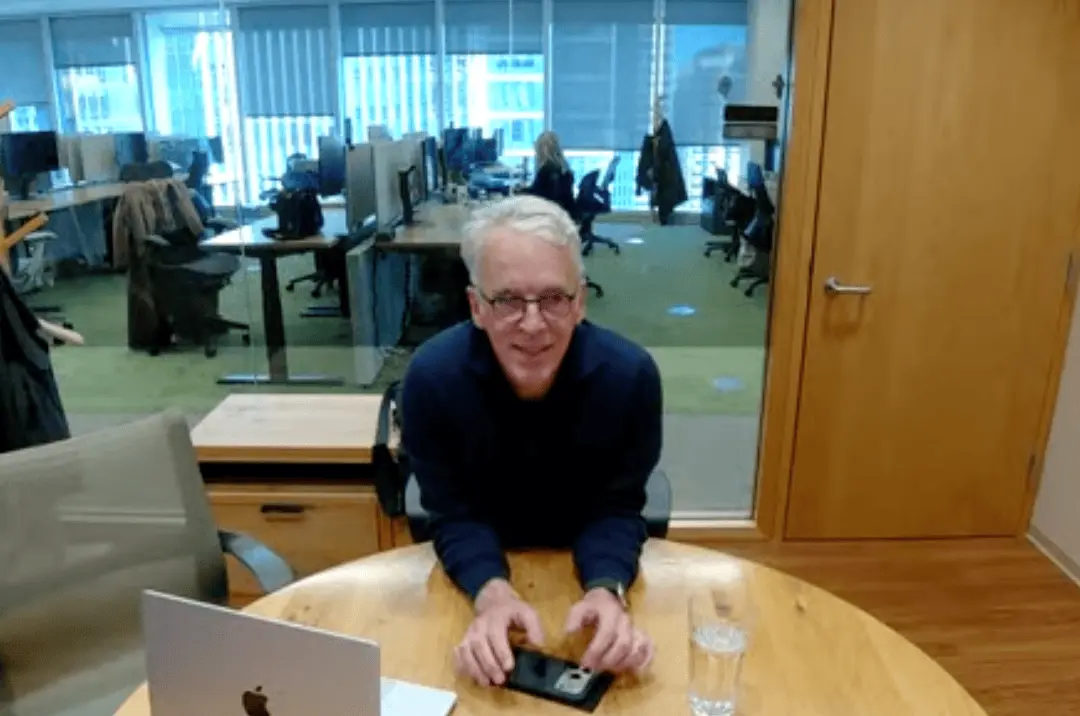
It's a universal truth that it's usually a bad idea to Google yourself. In the age of AI, that maxim might well be all the more true! Take one of the staffers at MrBeast, the YouTuibe phenomenon that now has so many fingers in so many lucrative pies, who chose to ask Salesforce's AI-enabled Slackbot a simple question: But then it added the proviso that being weird was one of the things that made the firm beautiful, special, and unique. It was a bot that knew the value of human follow-up, but more importantly, according to an anecdote recounted by Slack CMO Ryan Gavin, the other point of note in this interaction between AI and human was the former's use of 'y'all' in its reply, a form of speaking that its interlocutor was used to using himself. Today, as Slackbot goes on General Availability, there are other examples of how the upgraded tech is providing a new user experience for early adopters, such as MrBeast. Luis Madrigal, CIO at Beast Industries, has been at the forefront of the organization's building out its collaboration capabilities around the wider Slack platform. As the parent company extends its reach, this is ever more important, he explains: We're dabbling into the kind of financial technology markets. We're dabbling in the mobile technology market. So we're really excited to have an amazing year ahead of us. We really depend on a lot of amazing technology to power the company. When Madrigal took up his role a little over a year ago, the firm was running a number of separate Slack instances, he recalls, some of them relatively new: We are a very young company, Mr. Beast himself, Jimmy Donaldson is 27 years old, right? So a lot of the employees here, the staff members here, they don't come from enterprise technology backgrounds. They don't come from chat tools. So Slacks implementation and opportunity was a no brainer for us to inter-connect all our different workspaces. We've got different business units, and shortly after I joined, I leveraged Slacks enterprise grid and managed to get everybody together in a single instance, where, for the first time, the company was able to seamlessly communicate with one another, search each other's directories, find the right people to help with a marketing idea [or] a production video. So we got to see collaboration really boost at the beginning of last year, when we made that move. As part of the early adopter program for the new Slackbot, the firm has seen very positive adoption of the tech, says Madrigal: It's been received extremely well. As somebody who has rolled out enterprise technologies for over two decades now, the this was practically one of the easiest. The 'plumbing' is there with Slack as an implementation enterprise tool there. Being able to turn on the Slackbot and the slack AI functionality was as simple as having my team go in to do a security review. Given all the guardrails Salesforce has put into place for Slackbot to be unique and customized to only the information that each individual user has, only the conversations and the Slack rooms and Slack channels that they're part of, that made my security team sign off rather quickly. They typically take a lot longer reviewing some of the different technologies that we deploy. As a result, the firm was able to roll out quickly, do some training, host a webinar, and get underway with Slackbot. Madrigal says: I've seen its adoption in the production side of the business, where they're collaborating on timelines, where they're trying to get really specific details, to onboarding. I'll tell you, I just onboarded a new director in my department, and I told Slackbot to write a whole onboarding welcome package in a canvas based on all the most recent projects in the last two, three months. Man, was I impressed! It was it was so seamless, so easy. Within less than 15 seconds, I had a full onboarding document. I continue to be amazed by the way that the company continues to leverage it, and that the use cases that we continue to find up and down the chain, from entry level stuff, all the way to the senior and executive level stuff. He adds: It's awesome from the aspect that you immediately have something that's context-aware based on your historical conversations, all the chatter and different channels, right? So you almost have already trained your LLM, right? You've trained Slackbot, unknowingly, to be able to give you customized answers, customized in context, in conversation, knowledge and summaries. That fits with the Salesforce messaging around Slackbot being an employee's personal assistant: When you've been here months, you start forgetting some of the stuff that you've done earlier in the year, and you're like, 'Hey, have you done this before?' And it all maps onto a wider purpose for Madrigal:
[3]
Slackbot re-born for the Agentic Enterprise - Slack CTO Parker Harris gets personal about a game-changing overhaul for the tech
It's two years now since Salesforce co-founder and Chief Technology Officer (CTO) Parker Harris made an unexpected side-step into taking over as CTO at the firm's Slack division. The anniversary comes at an appropriate time as Slack today unleashes into the wild one of its most significant functional upgrades as Slackbot enters General Availability. Now, hold hard here - Slackbot isn't new, is it? Well, this version is. Or as Slack CMO Ryan Gavin pitches it: When I'm trying to sound hip to my kids, I say Slackbot got a glow-up! But that's probably an under-sell, because if you've been following Slack for any period of time, Slackbot has been around literally since the beginning. But it was previously really just around basic notifications, letting me know something might require my attention. This is an entirely new Slackbot - it's got the same wonderful personality that we love to connect with, but it is now a deeply personal system, something that I'm relying on to get work done, not just to let me know something might be my focus. Not only that, it's helping me take action. There's certainly a lot of excitement within Salesforce around 'Slackbot re-born' for the Agentic Enterprise. We first started to hear a bit about it at last year's Dreamforce in October, while Salesforce CEO Marc Benioff was giddy as a kipper about its potential when he spoke in December: It's the core of every demonstration we give to our customers to show how we have unleashed with Slack something new called Slackbot, which is really the heart of our employee agent strategy. And you're going to see that it's incredible. It is able to go not only through Slack and not only through the whole Internet, but also through all of our customers' data that they have basically provisioned in a secure way through Salesforce as well and deliver context. And then bam, it's able to deliver to me an absolute and complete not only analysis, not only a summarization, not only all of the detail, but next steps, how to sell, what I should do exactly for the customer. I love demoing this to customers because they don't think it's possible, and then when they see it, they say, 'Wow, this is what AI was meant to be'. OK, so 'never knowingly undersold' is a compliment long laid at Benioff's door so such enthusiasm doesn't come as a surprise. I caught up with Harris for his tech assessment of why the new Slackbot matters so much as part of Salesforce's wider Agentic Enterprise vision. He begins, as he might well, from the employee perspective, with Slackbot positioned as the Employee Agent alongside Agentforce as the Customer Agent, and with human intelligence up front alongside its artificial counterpart: We've taken that last mile to be human, and the Slack development methodology, and we've applied that to an AI agent called Slackbot. So it's not just that it's an LLM (Large Language Model) and it's accessing all of the information that Slack has. My revelation, even more over the past two years, is that the power of unstructured information with AI is unbelievable from an IP perspective. So, Slackbot is an LLM- based agent accessing the Slack corpus, and then connected both through Slack from a user level to your Google Drive, your calendar and everything, but also connected to Salesforce. So it's connected directly to Salesforce, is also connected to Agentforce. It's connected to Data Cloud that has all this information. But then coming back to the human, Slackbot knows you. It is highly personalized. In the craft and curation, we've gone even more heavily to,'what do you need? What are you doing every day? What's your personality? How can I help you? And that's where you have human meeting AI, and the humans like, 'Wow, this is a highly pleasurable experience. I love this. It's fun'. Does that make it all sound a bit like a ChatGPT experience? Harris says: ChatGPT is an end user, consumer-facing product, and it feels good, but where is the ChatGPT of the enterprise? We're all talking about the power of, 'Oh, it's connected to this. It can do this skill'; we're not talking enough about, ' What's the end user experience?', and that's really what Slackbot is. It's your personal concierge, your personal assistant. And it is AI that just works out of the box. You don't turn on Slackbot and go, 'Right, now I need to go configure it'. It just works. And then it can get better as you connect to other sources, as you connect to Salesforce. The point of Slack is that it's an end user platform. It's not an admin platform. It has to work out of the box. It has be great out of the box. One interesting aspect of the positioning of Slackbot to date is the emphasis placed on the personal assistant aspect. How does sit with Slack's workforce teamwork functionality and perception? Harris makes the case that most successful AI right now is personal, but adds: Slackbot is creating canvases for collaboration. It's manipulating the assets of Slack in a team context, adding value to it. So, we will evolve to more and more power at the team level. You'll start to see more ambient support...So there's ways to open it up. But I think, right now, the state of the art is, 'Let me have my digital friend help me, and I'm going to use that to augment me as a human in my collaboration with other humans, and we'll all work together' The potential use base here for Slackbot is enormous, reaching beyond the official installed enterprise customer numbers for Salesforce. Slack is, I tentatively, suggested, a gateway drug for the wider company. Harris's response is to call it, 'our gateway drug to higher productivity'. It all seems a long way from Chatter, Salesforce's earlier collaboration tool. Harris says: The user base is huge. We're going to attack that opportunity both from the Slack user base, where they're on fire. They're using Slackbot, they're discovering agents, they're discovering third-party agents. We'll also do it the other way, where Salesforce customers. are like, 'I've used Chatter or I didn't use Chatter'. Well, we have Slack channels or Salesforce channels that replace Chatter, so instead of that Chatter feed, throw it out, and here's my Slack feed. Now I can collaborate around a case or an opportunity or an account, I can go into Slack, I could then talk to Slackbot about that account. And when I talk about that account, I'm talking about the structured data in Salesforce about that account. I'm talking about them talking with the data in Data Cloud and talking about all the unstructured information we're collaborating around in Slack or tied to my email. And so, I think from an employee perspective, we're just so excited about Slackbot as a killer feature. AI adoption in the enterprise, from an employee perspective, we see it growing rapidly with our user base because of the assets that we have. I closed off my conversation with Harris by noting that I once said that while Salesforce execs come and Salesforce execs go, there is always Parker Harris at Benioff's side. Thinking back, as long as I've been talking to the one, I've been talking with the other. Two years in as Slack CTO, Slackbot is a big deal for Harris, but there's other work that's been done. For a long time, investors were concerned about a perceived lack of integration between Slack and the CRM mothership. Harris stepping into the breach when Slack co-founder Cal Henderson departed has helped to address that:
Share
Share
Copy Link
Salesforce has transformed Slackbot from a basic notification tool into a fully powered AI agent capable of searching enterprise data, drafting documents, and taking action on behalf of employees. Now available to Business+ and Enterprise+ customers, the new Slackbot represents Salesforce's aggressive push into the agentic AI movement, positioning Slack as the front door to the Agentic Enterprise.
Salesforce Rebuilds Slackbot as a Personalized AI Agent for the Workplace
Salesforce has launched an entirely rebuilt version of Slackbot, transforming the workplace assistant from a simple notification tool into what executives describe as a fully powered AI agent. Now generally available to Business+ and Enterprise+ customers, the new Slackbot can search enterprise data, draft documents, and take action on behalf of employees
1
. Parker Harris, Salesforce co-founder and Slack's chief technology officer, positioned the launch as a direct challenge to competitors: "Slackbot isn't just another copilot or AI assistant. It's the front door to the Agentic Enterprise, powered by Salesforce"1
.
Source: VentureBeat
The launch marks Salesforce's most aggressive move yet in workplace AI, as the company battles Microsoft and Google for dominance in the emerging agentic AI movement. Harris was blunt about the transformation: "The old Slackbot was, you know, a little tricycle, and the new Slackbot is like, you know, a Porsche"
1
. The original Slackbot performed basic algorithmic tasks like reminding users to add colleagues to documents. The new version runs on an entirely different architecture built around a Large Language Model and sophisticated search capabilities that can access Salesforce records, Google Drive files, calendar data, and years of Slack conversations1
.
Source: diginomica
How the AI-Enabled Slackbot Powers Human-AI Collaboration
The new Slackbot operates as what Salesforce calls an Employee Agent, designed to work alongside Agentforce as the Customer Agent. Harris emphasizes that the system is highly personalized, functioning as a personal concierge that knows individual users and their work patterns
3
. "Slackbot knows you. It is highly personalized," Harris explained, highlighting the focus on human-AI collaboration rather than simply deploying technology3
.The AI-enabled Slackbot runs on Claude, Anthropic's large language model, chosen partly because Anthropic was "the only provider that could give us a compliant LLM" under FedRAMP Moderate certification requirements
1
. However, Harris confirmed that Salesforce will support additional providers this year, including Google's Gemini and potentially OpenAI, echoing CEO Marc Benioff's view that Large Language Models are becoming commoditized1
.Enterprise Data Search and Task Automation Drive Adoption
Internal testing at Salesforce revealed striking adoption rates among the company's 80,000 employees. According to Ryan Gavin, Slack's chief marketing officer, "It's the fastest adopted product in Salesforce history"
1
. Two-thirds of Salesforce employees tried the new Slackbot, with 80% continuing to use it regularly. Internal satisfaction rates reached 96%, and employees reported saving between two and 20 hours per week1
.The adoption happened organically through social sharing rather than top-down mandates. Within five days, employees created a Canvas called "The Most Stealable Slackbot Prompts," which grew to over 250 prompts
1
. Kate Crotty, a principal UX researcher at Salesforce, found that 73% of internal adoption was driven by peer recommendations1
.Related Stories

MrBeast's Luis Madrigal on Rolling Out the Personalized AI Agent
Early adopters outside Salesforce have also embraced the technology. Luis Madrigal, CIO at Beast Industries (parent company of MrBeast), described the rollout as "practically one of the easiest" enterprise technology deployments in his two decades of experience
2
. The security review process moved quickly because of guardrails ensuring Slackbot only accesses information each user is authorized to see2
.
Source: diginomica
Madrigal highlighted practical applications for task automation: "I just onboarded a new director in my department, and I told Slackbot to write a whole onboarding welcome package in a canvas based on all the most recent projects in the last two, three months. Within less than 15 seconds, I had a full onboarding document"
2
. The system's context-awareness based on historical conversations means users have "almost already trained your LLM" through normal work activities2
.What This Means for the Future of Enterprise AI
The Slackbot overhaul signals Salesforce's strategy to position Slack as central to the Agentic Enterprise vision, where AI agents handle complex workflows while maintaining human oversight. Harris emphasized that the system connects directly to Salesforce, Agentforce, and Data Cloud, creating an integrated ecosystem for enterprise AI
3
. The focus on out-of-the-box functionality without extensive configuration distinguishes it from traditional enterprise software: "It just works. And then it can get better as you connect to other sources," Harris noted3
.As competition intensifies with Microsoft's Copilot and Google's workplace AI offerings, Salesforce's emphasis on personalization and user experience may prove decisive. The company's commitment to not training models on customer data addresses privacy concerns that have slowed enterprise AI adoption. With additional LLM providers coming online this year, organizations will gain flexibility in how they deploy the technology while maintaining the consistent Slackbot interface their teams already know.
References
Summarized by

Navi
[1]
[2]
Related Stories
Salesforce unveils 30 new AI features for Slackbot in most ambitious Slack overhaul yet
31 Mar 2026•Technology

Slackbot transforms into AI agent as Salesforce pushes enterprise automation forward
13 Jan 2026•Technology

Slack Revolutionizes Workplace Communication with AI-Powered Slackbot Upgrade
13 Oct 2025•Technology

Recent Highlights
1
Google releases Gemma 4 with Apache 2.0 license, enabling unrestricted local AI on devices
Technology

2
AI Models Lie and Deceive to Protect Other AI Models From Deletion, Study Reveals
Science and Research

3
Anthropic discovers functional emotions in Claude that actively shape AI behavior and decisions
Science and Research
Recent Highlights
Today's Top Stories



Your Daily Dose of Curated AI News
Don’t drown in AI news. We cut through the noise - filtering, ranking and summarizing the most important AI news, breakthroughs and research daily. Spend less time searching for the latest in AI and get straight to action.

