AI Boom Triggers Memory Shortage, Pushing PC and Smartphone Prices Up 23% by Fall 2026


6 Sources
6 Sources
[1]
Memory and CPU shortages to push up PC prices
Component supply is being diverted toward datacenters, squeezing the consumer market PC buyers can expect price hikes as chipmakers continue to prioritize AI production over all else, restricting the supply of key components across the tech industry. Analyst Context says existing inventory initially buffered markets across Europe, however, prices are inflating as older stock depletes - and it forecasts further inflation as the year progresses. The average UK distributor consumer desktop price, for example, rose almost eight percent year-on-year in the five weeks of 2026 to £565 ($767), while laptops edged up 1.1 percent to £454 ($619) "reflecting continued sell-through of stock purchased before component costs escalated." Counterpoint Research said today that memory prices have soared 80 to 90 percent this year versus Q4, with DRAM, NAND, and HBM all hitting new highs. Constraints on specific configurations, alongside emerging CPU availability issues, are expected to limit choice and increase pricing pressure from Q2 onward, according to Context. "Manufacturers are prioritizing production for AI datacenter infrastructure, redirecting capacity away from consumer-grade memory and storage towards high-bandwidth memory (HBM) and advanced storage required for large-scale AI workloads," said senior retail analyst James Bates. New fabrication plants are being built to supply more of the memory that PC makers need, but these typically take several years to come online. US chipmaker Micron recently started work on a mega chip fab in New York state, which isn't scheduled to begin producing DRAM chips before 2030. Micron did, however, seal the deal on an existing facility in Taiwan that could be delivering chips sometime next year. The situation is so dire that major PC brands including HP, Dell, Acer, and Asus are considering sourcing memory chips from Chinese manufacturers for the first time, according to Nikkei Asia. HP and Dell have already started qualifying chips from ChangXin Memory Technologies (CXMT), it says, with HP planning to follow suit if the outlook does not improve around the middle of the year. And it isn't just PCs - servers are also affected. Analyst Omdia said this week that server CPU prices could go up by 11 to 15 percent due to supply problems, while Samsung Electronics and SK hynix were reportedly raising server memory prices by as much as 70 percent this quarter. The blast radius from the memory shortages is impacting other areas of the industry such as smartphones. Prices could bounce 6 to 8 percent, disproportionately affecting the low end of the market. Smartphone chipmaker Qualcomm saw its share price take a hit after it warned of slower sales ahead, as did chip designer Arm, which estimated lower growth in royalty revenue for the next quarter, all due to a shortage of enough memory to go in the devices people want to buy. With all these side effects from the AI infrastructure boom, it seems we are all going to pay the price for AI, whether we use it or not. ®
[2]
Qualcomm, Arm Hit by Concern That Memory Shortage Is Spreading
The memory shortages are likely to persist, with Intel Corp. CEO Lip-Bu Tan saying that suppliers have told him that things won't improve until 2028. Shares of Qualcomm Inc. and Arm Holdings Plc fell steeply after the semiconductor companies delivered quarterly reports, hurt by concern that a shortage of memory chips will crimp growth in the electronics industry. Both stocks declined more than 8% in extended trading late Wednesday after management signaled that memory constraints will limit phone production. Qualcomm is the largest maker of processors that run smartphones, and Arm gets much of its revenue from royalties on technology used by that industry. The historic build-out of artificial intelligence infrastructure is driving the shortage of memory chips, which help computers manage data. Manufacturers of the components have concentrated on supplying AI data centers, leaving less production for phone components. That means fewer products ultimately reach consumers, who will have to pay higher prices. "Industrywide, memory shortages and price increases are likely to define the overall scale of the handset industry," Qualcomm Chief Executive Officer Cristiano Amon told analysts on a conference call. Amon said Chinese customers in particular have said they'll build fewer phones than planned because they can't get enough memory chips. On the other hand, both Qualcomm and Arm are poised to benefit from the AI boom. The companies are positioning themselves to get more revenue from data center operators -- a shift that should help them in the long run. But they're still vulnerable to swings in the smartphone market. One silver lining is that phone manufacturers are prioritizing the most expensive phones. That's helping bolster Qualcomm's sales of higher-end chips and propping up Arm's royalty revenue. Other companies have raised alarm bells about the memory crunch. MediaTek Inc., a chipmaker based in Taiwan, cited the issue during a conference call this week, calling it an "evolving" situation. Intel Corp. CEO Lip-Bu Tan, meanwhile, said the shortages are likely to persist for years. "There's no relief as far as I know," he said during an event Tuesday. Suppliers have told him that things won't improve until 2028, Tan said. Samsung Electronics Co., SK Hynix Inc. and Micron Technology Inc. are the three biggest makers of memory chips. Their technology is used to hold information in everything from cars to smartphones, but a key focus right now is keeping up with AI demand. Data centers rely on an advanced chip called high-bandwidth memory, or HBM, to run AI software and services. Memory companies have invested heavily in expanding production of those components -- at the expense of other supplies. The industry is now attempting to increase its total capacity. But that will take time: Building and equipping factories can take more than a year.
[3]
Samsung, SK Hynix warn of squeezed chip supplies for PCs, phones due to AI boom
SEOUL, Jan 29 (Reuters) - Two of the world's top chipmakers warned on Thursday that computer and smartphone companies were set to bear the brunt of a worsening shortage of DRAM chips used in their products, as the makers prioritise demand for more lucrative chips required to build AI infrastructure. The warnings by Samsung Electronics (005930.KS), opens new tab and SK Hynix (000660.KS), opens new tab, which control two thirds of the DRAM chip market and count the likes of Apple (AAPL.O), opens new tab as customers, underscore growing margin pressure on consumer electronics makers and potential supply chain disruptions. "PC and mobile customers are having difficulties securing memory supplies, as they are being directly and indirectly affected by supply constraints and strong demand for server-related products," Park Joon Deok, head of DRAM marketing at SK Hynix, told analysts on a post-earnings call. The race to build AI infrastructure has prompted chipmakers to divert manufacturing capacity toward high-bandwidth memory (HBM) for AI servers, squeezing the supply of conventional DRAM chips. Chipmakers, bruised by aggressive capacity expansion after the 2017 supercycle, have been more conservative about adding more production lines in recent years, a move that has contributed to the current supply shortage. Samsung said such expansion would remain limited in 2026 and 2027. As the crunch is set to persist, some manufacturers have already started adjusting their products to cope with the shortage and surging prices, they said. "Due to a recent surge in memory chip prices, PC and mobile customers are adjusting purchase volumes," SK Hynix said in its earnings conference call. "Some customers are taking a more conservative approach to shipment plans or considering adjusting (memory chip) specification in their price-sensitive product ranges." Research firms IDC and Counterpoint both now expect global smartphone sales to shrink at least 2% this year, reversing earlier forecasts for growth. The PC market is expected to shrink at least 4.9% in 2026, IDC estimated, after an 8.1% growth last year. Samsung, the world's second-largest smartphone maker, is also bracing for the impact of the chip shortage, with its mobile business profit slumping 10% in the fourth quarter. Cho Seong, a Samsung mobile business executive, warned of a "challenging year" in 2026, expecting flat global smartphone shipments this year and risks of downward adjustment due to memory chip prices. Investors will look for comments from its bigger smartphone rival Apple on how it aims to navigate a global memory chip crunch, as it reports quarterly results later on Thursday. PRIORITISING AI DEMAND Samsung prioritised supplying server customers in the fourth quarter and plans to continue increasing the portion of AI related products, a move that could lead to further constraints in the output of conventional memory chips. Samsung's aggressive push into AI memory chips comes as the tech giant seeks to narrow its market share gap with SK Hynix in the lucrative segment. SK Hynix, a leading chip supplier for Nvidia (NVDA.O), opens new tab, led the HBM chip market last year with a 61% share, followed by Samsung at 19% and Micron (MU.O), opens new tab at 20%, according to Macquarie Equity Research. HBM chips are used to build AI chipsets. SK Hynix vowed on Thursday to maintain its "overwhelming" market share in the next-generation HBM4 chips, highlighting intensifying competition with Samsung, as they vie for market share in the AI chip race. Reporting by Heekyong Yang and Hyunjoo Jin; Editing by Miyoung Kim and Raju Gopalakrishnan Our Standards: The Thomson Reuters Trust Principles., opens new tab
[4]
How the AI boom could push up the price of your next PC
The global race for artificial intelligence is causing a surge in demand and prices for memory chips. This is affecting the cost of high-end computers and may soon impact everyday electronics like smartphones. Chip manufacturers are prioritizing AI data centers, leading to slower production and higher costs for consumer-grade components. Kelt Reeves has sold high-end personal computers for 34 years, catering to gamers and others who are willing to pay $4,000 and more for extreme performance. His company, Falcon Northwest, builds these systems to order using powerful computer chips, particularly a variety known as random-access memory, or RAM, which hold data temporarily while other chips crunch numbers and display graphics. But as OpenAI, Meta, Google and other tech giants battle to win the artificial intelligence race, they have also demanded more memory chips for the data centers they are building to power the technology. Since late summer, Reeves has been grappling with a tripling of the cost of memory chips, pushing Falcon Northwest to raise the price of some of its popular high-end computers to more than $7,000 from about $5,800. "This isn't a consumer-driven bubble," Reeves, 55, said. "Nobody is expecting this to be a quick blip that's going to be over with." The crunch in memory chips is the latest domino effect from the AI frenzy, which has upended Silicon Valley and lifted the fortunes of AI chipmakers like Nvidia. The boom has now gone beyond AI chips to reach other components used to build gadgets, which could ultimately affect the prices of mass-market personal computers and smartphones, too. Memory chip manufacturers can make more money selling expensive chip varieties to AI data centers than to the PC and smartphone companies that had long driven their revenue. As the chipmakers focus on producing more for AI customers, their shipments of consumer-grade chips have slowed, and their prices have surged -- costs that could eventually be passed on to consumers. TechInsights, a market research firm, predicts that higher costs for memory chips would raise the price of a typical PC by $119, or 23%, by this fall from the same period last year. Besides RAM, those figures include price increases for the chips called NAND flash memory, which provide long-term storage in computers and phones. "The memory market is bananas," Mike Howard, an analyst at TechInsights, said at a recent tech conference. "It's very difficult to find any sort of fast relief." On Wednesday, Amy Hood, Microsoft's chief financial officer, said the company expects revenue from personal computers to decline "in part due to the potential impact on the PC market from increased memory pricing." Memory chips have long been considered a strategic commodity, an essential element in electronics that has prompted past trade wars between the United States and both Japan and South Korea. Since memory chips are largely interchangeable, vendors for decades mainly competed on price. They often built too many factories and churned out too many chips, leading to plummeting prices and heavy losses. Multiple makers dropped out, leaving South Korea's Samsung Electronics and SK Hynix competing with Micron Technology, the sole U.S. supplier. (Some Chinese RAM makers have recently entered the market.) After many boom-bust cycles, Samsung, SK Hynix and Micron are now enjoying sustained sales growth, and their share prices have soared to record highs in the past year. The demand is "almost exclusively from AI," said Jim Handy, whose research firm, Objective Analysis, tracks the memory market. The memory chip boom is also boosting the overall chip industry. The International Data Corp., a research firm, projected that total chip industry revenues would jump 28%, to more than $1 trillion, this year, a milestone that many experts had not expected until 2030. Micron, based in Boise, Idaho, is a microcosm for the changes. For 29 years, the company has sold different types of memory products to consumers and small businesses like Falcon Northwest. But last month, Micron said it would discontinue that direct-to-consumer business, called Crucial, "to improve supply and support for our larger, strategic customers in faster-growing segments" such as AI chips. Micron is also investing heavily in the factories that turn silicon wafers into chips. That includes building two new factories in Boise; buying an existing factory in Taiwan; and spending $100 billion on a project near Syracuse, New York, that is considered the state's largest private investment. The first of the new factories will not come online until mid-2027. In the meantime, Micron said, customers are receiving half to two-thirds of the memory they want to buy. "Nobody is getting everything they want, and we regret that," said Manish Bhatia, Micron's executive vice president of global operations. "We've had to make some difficult calls." Furious demand from AI is not just for holding data in more computers. Memory is also playing a more strategic role, with new kinds of chips determining how fast applications like chatbots deliver answers. "The memory appetite for AI is so much larger," said Michael Stewart, a chip industry veteran who is a managing partner at the Microsoft venture capital fund M12. "It's utterly different than all the computing we did before." The best example is what the industry calls high-bandwidth memory, or HBM, which is assembled by stacking RAM chips on top of one another rather than placing them side by side. Data moves vertically through layers of the stack instead of links along the edge of chips, a faster path. Nvidia, which has been setting many hardware trends, buys huge volumes of HBM. The company bundles 12-high stacks of those chips inside the same package as its better-known AI processors, which allows faster data transfers than RAM placed elsewhere in a system. This month, Nvidia described how a forthcoming microprocessor and an AI chip would use more and faster memory to achieve blazing speeds and lower costs per calculation. "Because our demand is so high, every factory, every HBM supplier is gearing up," Jensen Huang, Nvidia's CEO, said at the CES trade show in Las Vegas, adding that the world would need more chip factories. This all means tough choices for consumers, particularly the hobbyists who assemble or upgrade their own PCs. A typical PC kit containing plug-in modules of RAM chips that sold for around $105 in early September was $250 at the end of December, according to the website PCPartPicker. Apple, Dell and other big companies often strike long-term agreements with memory suppliers that tend to moderate big price swings. Even so, the average retail price of a standard-configuration laptop PC jumped 7% in the two weeks ending Jan. 3, according to Circana, a market research firm. Among the PCs that experienced price increases were some Dell laptops. "Like others in the industry, Dell takes targeted pricing action, when necessary," a company spokesperson said, while declining to discuss specifics. Apple and HP, the other big U.S. PC maker, declined to comment. As for Reeves of Falcon Northwest, business is surprisingly good, even with the memory chip crunch. His well-heeled customers, who are frequently devoted gamers, continue ordering PCs with lots of memory, he said, though the prices his company quotes them for the components change by the day. Falcon Northwest, which is in Medford, Oregon, experienced a 30% revenue jump last year, he said. Reeves said he feared less-established players in the PC supply chain would lose customers or find it hard to get the chips they needed. And people shopping for a low-priced PC may get an unpleasant surprise. "I definitely feel for the budget buyer," he said. This article originally appeared in The New York Times.
[5]
Apple warns memory costs are starting to bite as Samsung, SK Hynix prioritise AI chips - The Economic Times
Apple said rising memory chip prices had started to pressure profitability in the current quarter, echoing warnings from South Korean chipmakers that are diverting production toward higher-margin memory chips that support AI workloads. "We do continue to see market pricing for memory increasing significantly," Apple CEO Tim Cook said on Thursday when asked on an earnings call about how the crunch was showing up in the company's production plans for the year. While he said the impact of the memory shortage had "minimal impact" in the holiday quarter ended December 31, which is typically its strongest for sales, he expected it would have more of an impact in the current quarter. Apple will likely need more and more memory chips as demand for its latest iPhone 17 has surged, especially in China and India. Cook called demand for the device in the December quarter "staggering," but declined to answer a question from an analyst on whether Apple might raise product pricing because of the paucity of memory chips. The comments come after warnings from Samsung Electronics and SK Hynix, which combined control two-thirds of the DRAM chip market and count the likes of Apple as customers, that computer and smartphone companies were set to bear the brunt of a worsening shortage of DRAM chips used in their products. The consequences include growing margin pressure and potential supply chain disruptions. The race to build AI infrastructure has prompted chipmakers to divert manufacturing capacity toward high-bandwidth memory (HBM) for AI servers, squeezing the supply of conventional DRAM chips. Adding to the shortage is the fact that chipmakers, bruised by aggressive capacity expansion after 2017, have become more conservative about adding more production lines. This has contributed to the current supply shortage. Samsung said such expansion would remain limited in 2026 and 2027. As the crunch is set to persist, some manufacturers have already started adjusting their products to cope with the shortage and surging prices. "Due to a recent surge in memory chip prices, PC and mobile customers are adjusting purchase volumes," SK Hynix said on its earnings conference call on Thursday. "Some customers are taking a more conservative approach to shipment plans or considering adjusting (memory chip) specification in their price-sensitive product ranges." Research firms IDC and Counterpoint both now expect global smartphone sales to shrink at least 2% this year, reversing earlier forecasts for growth. The PC market is expected to shrink at least 4.9% in 2026, IDC estimated, after an 8.1% growth last year. Prioritising AI demand Samsung, the world's second-largest smartphone maker, is also bracing for the impact of the chip shortage, with its mobile business profit slumping 10% in the fourth quarter. Cho Seong, a Samsung mobile business executive, warned on Thursday of a "challenging year" in 2026, expecting flat global smartphone shipments and risks of downward adjustment due to memory chip prices. "PC and mobile customers are having difficulties securing memory supplies, as they are being directly and indirectly affected by supply constraints and strong demand for server-related products," Park Joon Deok, head of DRAM marketing at SK Hynix, told analysts on its earnings call. Samsung prioritised supplying server customers in the fourth quarter and plans to continue increasing the portion of AI-related products, a move that could lead to further constraints in the output of conventional memory chips. Samsung's aggressive push into AI memory chips comes as the tech giant seeks to narrow its market share gap with SK Hynix in the lucrative segment. SK Hynix, a leading chip supplier for Nvidia, led the HBM chip market last year with a 61% share, followed by Samsung at 19% and Micron at 20%, according to Macquarie Equity Research. HBM chips are used to build AI chipsets.
[6]

Samsung, SK Hynix warn of squeezed chip supplies for PCs, phones due to AI boom
SEOUL, Jan 29 (Reuters) - Two of the world's top chipmakers warned on Thursday that computer and smartphone companies were set to bear the brunt of a worsening shortage of DRAM chips used in their products, as the makers prioritise demand for more lucrative chips required to build AI infrastructure. The warnings by Samsung Electronics and SK Hynix, which control two thirds of the DRAM chip market and count the likes of Apple as customers, underscore growing margin pressure on consumer electronics makers and potential supply chain disruptions. "PC and mobile customers are having difficulties securing memory supplies, as they are being directly and indirectly affected by supply constraints and strong demand for server-related products," Park Joon Deok, head of DRAM marketing at SK Hynix, told analysts on a post-earnings call. The race to build AI infrastructure has prompted chipmakers to divert manufacturing capacity toward high-bandwidth memory (HBM) for AI servers, squeezing the supply of conventional DRAM chips. Chipmakers, bruised by aggressive capacity expansion after the 2017 supercycle, have been more conservative about adding more production lines in recent years, a move that has contributed to the current supply shortage. Samsung said such expansion would remain limited in 2026 and 2027. As the crunch is set to persist, some manufacturers have already started adjusting their products to cope with the shortage and surging prices, they said. "Due to a recent surge in memory chip prices, PC and mobile customers are adjusting purchase volumes," SK Hynix said in its earnings conference call. "Some customers are taking a more conservative approach to shipment plans or considering adjusting (memory chip) specification in their price-sensitive product ranges." Research firms IDC and Counterpoint both now expect global smartphone sales to shrink at least 2% this year, reversing earlier forecasts for growth. The PC market is expected to shrink at least 4.9% in 2026, IDC estimated, after an 8.1% growth last year. Samsung, the world's second-largest smartphone maker, is also bracing for the impact of the chip shortage, with its mobile business profit slumping 10% in the fourth quarter. Cho Seong, a Samsung mobile business executive, warned of a "challenging year" in 2026, expecting flat global smartphone shipments this year and risks of downward adjustment due to memory chip prices. Investors will look for comments from its bigger smartphone rival Apple on how it aims to navigate a global memory chip crunch, as it reports quarterly results later on Thursday. PRIORITISING AI DEMAND Samsung prioritised supplying server customers in the fourth quarter and plans to continue increasing the portion of AI related products, a move that could lead to further constraints in the output of conventional memory chips. Samsung's aggressive push into AI memory chips comes as the tech giant seeks to narrow its market share gap with SK Hynix in the lucrative segment. SK Hynix, a leading chip supplier for Nvidia, led the HBM chip market last year with a 61% share, followed by Samsung at 19% and Micron at 20%, according to Macquarie Equity Research. HBM chips are used to build AI chipsets. SK Hynix vowed on Thursday to maintain its "overwhelming" market share in the next-generation HBM4 chips, highlighting intensifying competition with Samsung, as they vie for market share in the AI chip race. (Reporting by Heekyong Yang and Hyunjoo Jin; Editing by Miyoung Kim and Raju Gopalakrishnan) By Heekyong Yang and Hyunjoo Jin
Share
Share
Copy Link
The AI infrastructure race is creating a severe memory chip shortage as Samsung, SK Hynix, and Micron prioritize lucrative datacenter orders over consumer products. PC prices have already jumped 8% in the UK, while memory costs have soared 80-90%. Major tech companies including Apple and Qualcomm warn the crunch will persist until 2028, forcing smartphone and PC makers to cut production or raise prices.
AI Boom Drives Unprecedented Memory Chip Shortage
The global race to build artificial intelligence infrastructure has triggered a severe memory chip shortage that's rapidly reshaping the consumer electronics landscape.
Samsung Electronics
andSK Hynix
, which control two-thirds of the DRAM market, have warned that computer and smartphone companies will bear the brunt of worsening supply constraints. The shortage of conventional DRAM chips stems from chipmakers' strategic pivot toward High-Bandwidth Memory (HBM) production for AI servers, where profit margins prove far more attractive than consumer-grade components.
Source: ET
Memory prices have soared 80 to 90 percent in early 2026 versus Q4 2025, with
DRAM, NAND, and HBM
all hitting new highs, according to Counterpoint Research. This dramatic surge reflects the booming demand for artificial intelligence that has prompted manufacturers to divert manufacturing capacity away from traditional products. The race to supply tech giants like OpenAI, Meta, and Google with components for their AI datacenters has fundamentally altered production priorities across the semiconductor industry.
Source: Bloomberg
Price Hikes for PCs and Smartphones Hit Consumers
Consumer electronics prices are climbing rapidly as the memory chip shortage intensifies. The average UK distributor consumer desktop price rose almost
eight percent year-on-year to £565 ($767)
in the first five weeks of 2026, while laptops edged up 1.1 percent to £454 ($619). These figures reflect continued sell-through of stock purchased before component costs escalated, suggesting more severe price increases lie ahead.TechInsights predicts that higher costs for memory chips would raise the price of a typical PC by
$119, or 23%
, by fall 2026 compared to the same period last year. The impact extends beyond PCs—smartphone prices could bounce 6 to 8 percent, disproportionately affecting the low end of the market.Apple
CEO Tim Cook acknowledged that rising memory chip prices had started to pressure profitability, expecting greater impact in the current quarter despite minimal effects during the holiday period.Kelt Reeves, who has sold high-end personal computers through Falcon Northwest for 34 years, has watched memory chip costs triple since late summer. His company raised prices on popular high-end computers to more than $7,000 from about $5,800. "This isn't a consumer-driven bubble," Reeves noted. "Nobody is expecting this to be a quick blip that's going to be over with."
Supply Chain Disruptions Force Industry Adjustments
The artificial intelligence infrastructure buildout has created cascading supply chain disruptions across the technology sector.
Qualcomm
and Arm Holdings saw their shares decline more than 8% after signaling that memory constraints will limit phone production. Qualcomm CEO Cristiano Amon told analysts that Chinese customers in particular have said they'll build fewer phones than planned because they can't secure enough memory chips.Server CPU prices could increase by 11 to 15 percent due to supply problems, while Samsung Electronics and SK Hynix were reportedly raising server memory prices by as much as 70 percent this quarter.
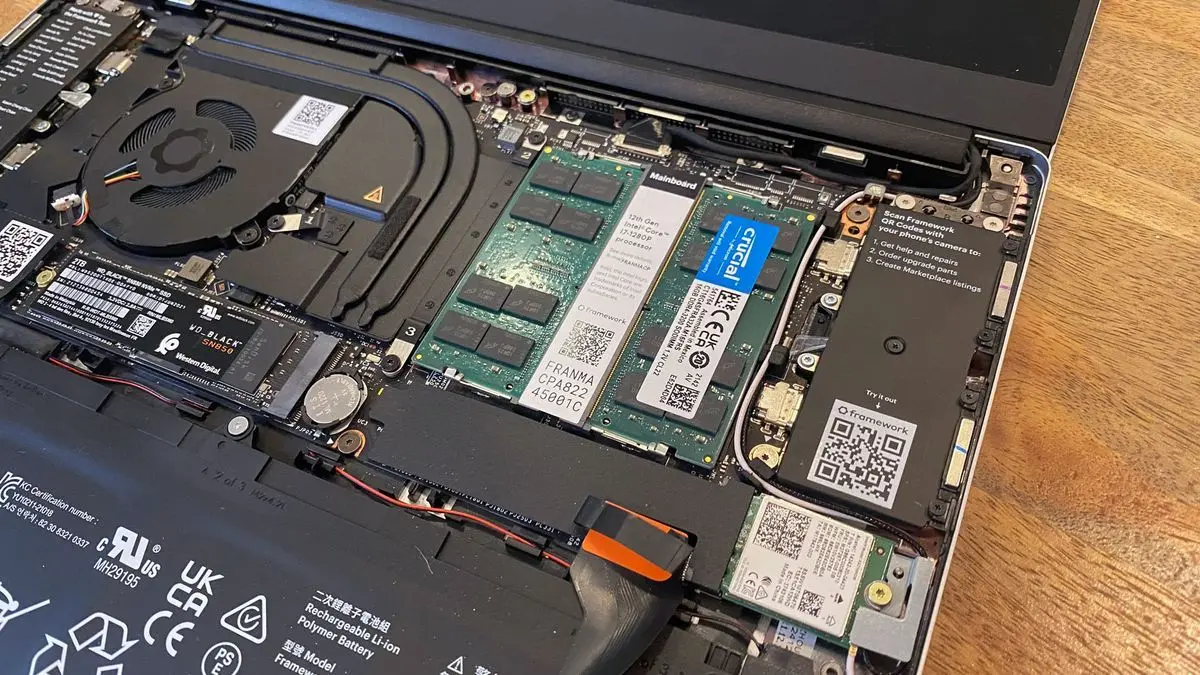
Micron Technology
discontinued its 29-year-old direct-to-consumer Crucial business to "improve supply and support for our larger, strategic customers in faster-growing segments" such as AI chips. Customers are currently receiving only half to two-thirds of the memory they want to buy.The situation has become so dire that major PC brands including HP, Dell, Acer, and Asus are considering sourcing memory chips from Chinese manufacturers for the first time. HP and Dell have already started qualifying chips from ChangXin Memory Technologies (CXMT), with plans to proceed if conditions don't improve by mid-year.
Related Stories
Long-Term Outlook Remains Challenging Until 2028
Intel CEO Lip-Bu Tan delivered sobering news about the timeline for relief, stating that suppliers have told him things won't improve until 2028. "There's no relief as far as I know," he said during a recent event. This extended timeline reflects the fundamental challenge facing the industry: new fabrication plants typically take several years to come online, and chipmakers have been conservative about capacity expansion after being bruised by aggressive buildouts following the 2017 supercycle.
Micron
recently started work on a mega chip fab in New York state that isn't scheduled to begin producing DRAM chips before 2030, though an acquired facility in Taiwan could deliver chips sometime next year. Samsung indicated that capacity expansion would remain limited in 2026 and 2027 as the company prioritizes AI-related products.Research firms IDC and Counterpoint now expect global smartphone sales to shrink at least 2% in 2026, reversing earlier forecasts for growth. The PC market is expected to contract at least 4.9% in 2026 after 8.1% growth last year. Park Joon Deok, head of DRAM marketing at SK Hynix, explained that "PC and mobile customers are having difficulties securing memory supplies, as they are being directly and indirectly affected by supply constraints and strong demand for server-related products."
SK Hynix leads the HBM chip market with 61% share, followed by Micron at 20% and Samsung at 19%, according to Macquarie Equity Research. The intense competition for AI datacenter business shows no signs of slowing, with SK Hynix vowing to maintain its "overwhelming" market share in next-generation HBM4 chips. This suggests the diversion of manufacturing capacity toward high-margin AI components will continue, keeping pressure on consumer electronics prices well into the future. Microsoft's CFO Amy Hood indicated the company expects revenue from personal computers to decline "in part due to the potential impact on the PC market from increased memory pricing," signaling that even major tech players anticipate sustained challenges ahead.
Source: Reuters
References
Summarized by

Navi
[1]
Related Stories
Lenovo Stockpiles Memory Components as AI Boom Creates 'Unprecedented' Supply Crunch
24 Nov 2025•Business and Economy

AI Demand Triggers Component Shortage as Dell and Lenovo Plan 15% Price Increases for Servers
03 Dec 2025•Business and Economy

Memory shortage to persist beyond 2026 as AI demand reshapes chip industry and drives prices up
16 Jan 2026•Business and Economy

Recent Highlights
1
Meta unveils Muse Spark AI model as Superintelligence Labs makes its debut
Technology

2
Anthropic restricts Mythos AI model release, citing unprecedented cybersecurity capabilities
Technology

3
Anthropic sends Claude AI to psychiatrist, discovers functional emotions that shape behavior
Science and Research

Recent Highlights
Today's Top Stories






Your Daily Dose of Curated AI News
Don’t drown in AI news. We cut through the noise - filtering, ranking and summarizing the most important AI news, breakthroughs and research daily. Spend less time searching for the latest in AI and get straight to action.

