Samsung Galaxy S26 integrates Perplexity as system-level AI agent, raising privacy questions


2 Sources
2 Sources
[1]
Samsung and Perplexity Push New Agentic Tools Into Phones and the Cloud | PYMNTS.com
By completing this form, you agree to receive marketing communications from PYMNTS and to the sharing of your information with our sponsor, if applicable, in accordance with our Privacy Policy and Terms and Conditions. To back that up Samsung says its Galaxy Unpacked 2026 event was designed around a simple idea: Agentic AI should feel less like a separate feature and more like a dependable part of everyday phone use. The company introduced the Galaxy S26 and Buds4 lines and positioned agentic AI as the next step in mobile AI, where the device can understand context, suggest actions and help users complete tasks without app switching. Samsung highlighted features such as call screening summaries, "Now Nudge" suggestions based on conversational context, and an updated Bixby that can search the web while keeping results inside the conversation. Samsung also stressed that agentic AI requires a strong foundation in privacy and on-device protection. It described an on-device "Personal Data Engine" that learns user preferences locally, paired with multiple layers of security, including Knox Enhanced Encrypted Protection, Knox Vault and new privacy controls like "Privacy Display" to reduce shoulder-surfing for sensitive apps. Samsung also pointed to its work with Google, including expanded Circle to Search and an early preview of a more "agentic" Android platform powered by Google's Gemini 3. To close, Samsung's Co-CEO TM Roh framed the goal as making AI dependable and broadly usable: "Infrastructure is responsibility. It must work for everyone, everywhere." It was also announced last week that Perplexity is launching a new cloud-based agent product called Perplexity Computer, available to subscribers on its top-tier $200/month Perplexity Max plan. The company describes it as a "computer user agent" that can carry out complex workflows on its own, including creating subagents for parts of a task. TechCrunch says Perplexity claims the system can route work across 19 different AI models, and the company's examples show it handling jobs that involve collecting statistical, financial or legal information and turning the results into finished outputs such as websites or visualizations. The article also frames the launch as part of Perplexity's broader strategy shift. TechCrunch says Perplexity made its name by packaging top AI models into a search-like experience, then expanded into products like a web browser, and is now positioning itself for a more selective audience and higher-value use cases. In a background briefing, executives said they are not trying to maximize user counts and instead want products for people making high-stakes decisions. A key theme is Perplexity's belief that users will need access to multiple specialized models, and that software should automatically choose the best model for a given task. As one executive put it: "Multimodel is the future." Now, who is that's using these agents? Cybersecurity Insiders argues that AI agents are already operating inside enterprises, but most companies are not treating them like real "users" from a security standpoint. In the report, Paul Walker, field CTO at Omada, says agent frameworks are making it easier for software to take actions across many systems, which blurs the line between human and nonhuman actors. Walker's point is that adoption is moving quickly, while governance is still being built, leaving gaps in oversight and accountability. The report's central claim is that identity management practices built for employees do not translate cleanly to agents. Walker says agents can create "authorization without oversight," because an agent may decide what it needs and then request or assume access. That can lead to agents gradually accumulating permissions across tools and platforms that exceed the original intent. The recommended fix is to treat agents as first-class identities with formal provisioning, clearly defined entitlements, least-privilege access, life cycle controls, and monitoring for unusual activity across systems. Walker also stresses that agent identity is not just about "who can log in." It is about being able to prove what the agent did, what data it touched, and which systems it instructed. The report calls for clearer audit trails and tighter controls on what services agents can invoke, so security teams can trace actions end to end and stop risky behavior early. It frames this as a baseline requirement for scaling agentic AI safely: "AI agents are already inside your enterprise. The question is: Who's governing them?"
[2]
Samsung Pre-Installs Perplexity AI Agent On Galaxy S26
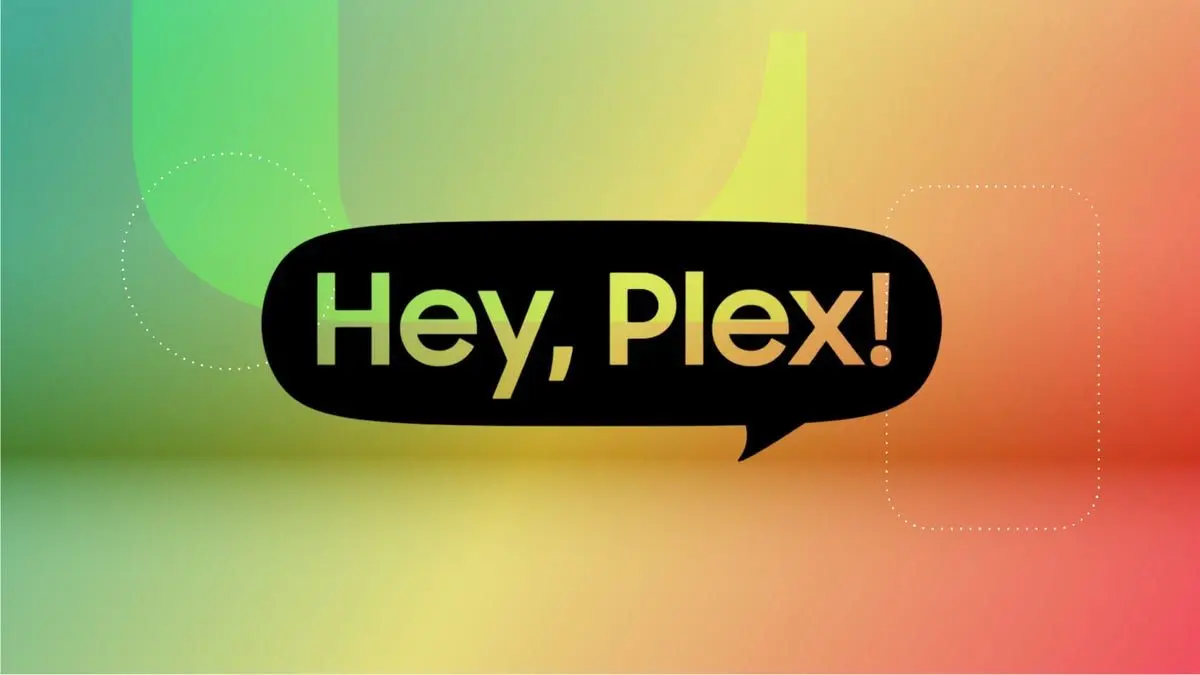
Samsung Electronics announced on February 21 that Perplexity will come pre-installed on the Galaxy S26 series as a system-level AI agent. Unlike a standard app download, Perplexity's Sonar API connects directly to native Samsung applications including Notes, Clock, Gallery, Reminder, and Calendar. Users can invoke it via the wake phrase "Hey Plex" or by pressing and holding the side button, the same gesture that activates Bixby. Dmitry Shevelenko, Perplexity's Chief Business Officer, notes that this partnership signals the end of the "single walled-garden assistant", explaining that Samsung built the Galaxy S26 from the ground up to support an open ecosystem where different AI models work together at the system level. In practice, a Perplexity query can automatically save results to Notes, create a reminder mid-conversation, or add an event to Calendar, all without the user switching applications. That gives Perplexity access to a phone's schedules, to-do lists, photos, and personal notes. So essentially this is not a chatbot sitting inside a single app. It is access to the operating system, and that distinction sits at the centre of what Samsung attempts with this move. Samsung's announcement does not pitch Galaxy AI as a smarter assistant or a better chatbot. Rather, Won-Joon Choi, President and COO of Samsung's Mobile eXperience business, said: "Galaxy AI acts as an orchestrator, bringing together different forms of AI into a single, natural, cohesive experience." Essentially, Samsung is not in the business of building the underlying model. Instead, it builds the device that holds all the models together. Samsung's own research shows nearly eight in 10 users now rely on more than two types of AI agents. Moreover, Co-CEO T.M. Roh told Reuters in January that the company targets 800 million Galaxy AI-enabled devices by end of 2026, double the 400 million it reached in 2025. For an AI company looking to reach users at scale, there are few faster routes than a pre-install deal with Samsung. Perplexity, which launched only in 2022, now lands on one of the world's most widely shipped Android devices out of the box. A Galaxy S26 user who wants AI help now has three options on the same device: say "Hey Bixby," say "Hey Google," or say "Hey Plex". Samsung has not explained what each agent handles, when one takes over from another, or what happens when their capabilities overlap. The announcement merely describes the experience as "seamless," yet the details that would make it so have not arrived yet. Samsung's multi-agent bet looks more deliberate when placed against what Apple does differently. As MediaNama reported in January, Apple and Google confirmed a partnership in which Gemini models will power Apple's next-generation Apple Foundation Models and an enhanced version of Siri. According to a joint statement, "Apple determined that Google's AI technology provides the most capable foundation for Apple Foundation Models." Apple kept that integration tightly controlled: all Apple Intelligence features continue to run within its Private Cloud Compute infrastructure, Gemini enters at specific defined points, and Siri retains the primary interface layer. Where Apple bets on a single curated AI experience it controls end to end, Samsung bets on plurality. The two companies also structure their AI partnerships differently. Google pays Apple billions of dollars annually to retain default search placement on iPhones, a financial arrangement that predates any AI integration. However, Samsung's deal with Perplexity works the other way: it grants a AI company infrastructure-level access in exchange for capability. Both are strategic. The difference lies in how much control each is willing to give up. The question of control becomes particularly significant in India. Samsung ranked second in India's smartphone market in 2025, according to Counterpoint Research. The market shipped over 150 million devices during the year and has more than 700 million active smartphone users. At that scale, pre-installing Perplexity with system-level access hands a US-based AI company access to the personal data of tens of millions of Indian users. That makes the question of what Perplexity does with that data directly consequential. Perplexity faces copyright infringement lawsuits from the New York Times, News Corp, and several other major publishers. The NYT complaint alone alleges Perplexity made over 175,000 attempts to access its site in a single month, bypassing explicit blocks. Additionally, on data practices, Perplexity's consumer privacy policy enables AI data retention by default for Free, Pro, and Max users, and users must actively opt out through account settings. For a pre-installed system agent, most users may never do that, which means Samsung effectively makes that choice for them. India's Digital Personal Data Protection (DPDP) Rules took effect last year, but full compliance obligations do not kick in for another year. The Act covers any foreign entity that processes data in connection with offering goods or services to Indians, which places Perplexity within its scope. The Data Protection Board has also not yet designated any Significant Data Fiduciaries, a classification that would trigger stricter processing and consent obligations. Until that framework fully activates, a pre-installed agent with system-level access to Indian users' data operates in a regulatory gap. Samsung's announcement, meanwhile, promises only that "additional details about supported devices and experiences will be announced soon". The Galaxy S26, nonetheless, goes on sale in India on March 11.
Share
Share
Copy Link
Samsung unveiled the Galaxy S26 with Perplexity pre-installed as a system-level AI agent, granting it access to native apps like Notes, Calendar, and Gallery. Users can now choose between three AI assistants—Bixby, Google, and Perplexity—on the same device. While Samsung targets 800 million Galaxy AI-enabled devices by end of 2026, the move raises data privacy concerns as Perplexity faces copyright infringement lawsuits and retains AI data by default.
Samsung Galaxy S26 Brings Agentic AI to System Level
Samsung Electronics announced on February 21 that the Samsung Galaxy S26 series will ship with Perplexity pre-installed as a system-level AI agent, marking a significant shift in how mobile devices handle AI integration
2
. Unlike standard app downloads, Perplexity's Sonar API connects directly to native Samsung applications including Notes, Clock, Gallery, Reminder, and Calendar2
. Users can invoke it via the wake phrase "Hey Plex" or by pressing and holding the side button, the same gesture that activates Bixby2
.At Galaxy Unpacked 2026, Samsung positioned agentic AI as the next step in mobile AI, where the device can understand context, suggest actions and help users complete tasks without app switching
1
. The company introduced the Galaxy S26 and Buds4 lines with agentic AI features such as call screening summaries, "Now Nudge" suggestions based on conversational context, and an updated Bixby that can search the web while keeping results inside the conversation1
.
Source: PYMNTS
Multiple AI Agents Create Open AI Ecosystem
Dmitry Shevelenko, Perplexity's Chief Business Officer, notes that this partnership signals the end of the "single walled-garden assistant," explaining that Samsung built the Galaxy S26 from the ground up to support an open AI ecosystem where different AI models work together at the system level
2
. A Galaxy S26 user now has three options on the same device: say "Hey Bixby," say "Hey Google," or say "Hey Plex"2
.Won-Joon Choi, President and COO of Samsung's Mobile eXperience business, said Galaxy AI acts as an orchestrator, bringing together different forms of AI into a single, natural, cohesive experience
2
. Samsung's own research shows nearly eight in 10 users now rely on more than two types of AI agents2
. Co-CEO T.M. Roh told Reuters in January that the company targets 800 million Galaxy AI-enabled devices by end of 2026, double the 400 million it reached in 20252
.Samsung also pointed to its work with Google, including expanded Circle to Search and an early preview of a more "agentic" Android platform powered by Google Gemini 3
1
. This multi-agent bet looks more deliberate when placed against what Apple Intelligence does differently, as Apple keeps AI integration tightly controlled within its Private Cloud Compute infrastructure with a single curated experience2
.Perplexity Computer Expands Cloud-Based Agent Capabilities
Perplexity is launching a new cloud-based agent product called Perplexity Computer, available to subscribers on its top-tier $200-per-month Perplexity Max plan
1
. The company describes it as a "computer user agent" that can carry out complex workflows on its own, including creating subagents for parts of a task1
.Perplexity claims the system can route work across 19 different AI models, and the company's examples show it handling jobs that involve collecting statistical, financial or legal information and turning the results into finished outputs such as websites or visualizations
1
. In a background briefing, executives said they are not trying to maximize user counts and instead want products for people making high-stakes decisions, with one executive stating that "multimodel is the future"1
.Related Stories

On-Device Protection and Data Privacy Concerns
Samsung stressed that agentic AI requires a strong foundation in privacy and on-device protection
1
. It described an on-device "Personal Data Engine" that learns user preferences locally, paired with multiple layers of security, including Knox Enhanced Encrypted Protection, Knox Vault and new privacy controls like "Privacy Display" to reduce shoulder-surfing for sensitive apps1
.However, the pre-install Perplexity AI arrangement raises significant data privacy concerns. Perplexity faces copyright infringement lawsuits from the New York Times, News Corp, and several other major publishers, with the NYT complaint alone alleging Perplexity made over 175,000 attempts to access its site in a single month, bypassing explicit blocks
2
. On data retention policies, Perplexity's consumer privacy policy enables AI data retention by default for Free, Pro, and Max users, and users must actively opt out through account settings2
.Cybersecurity and Identity Management Challenges
Cybersecurity experts argue that AI agents are already operating inside enterprises, but most companies are not treating them like real "users" from a security standpoint
1
. Paul Walker, field CTO at Omada, says agent frameworks are making it easier for software to take actions across many systems, which blurs the line between human and nonhuman actors1
.Walker says agents can create "authorization without oversight," because a system-level agent may decide what it needs and then request or assume access, leading to agents gradually accumulating permissions across tools and platforms that exceed the original intent
1
. The recommended fix is to treat agents as first-class identities with formal provisioning, clearly defined entitlements, least-privilege access, life cycle controls, and monitoring for unusual activity across systems1
. Walker frames this as a baseline requirement for scaling agentic AI safely: "AI agents are already inside your enterprise. The question is: Who's governing them?"1
References
Summarized by

Navi
Related Stories
Samsung Galaxy S26 adds Perplexity AI agent with 'Hey Plex' wake word in multi-agent push
22 Feb 2026•Technology
Samsung Poised to Partner with Perplexity AI for Galaxy S26, Potentially Replacing Google Gemini
02 Jun 2025•Technology

Samsung Plans Perplexity-Powered Bixby Upgrade for Galaxy S26, Shifting Away from Google Partnership
24 Nov 2025•Technology
Recent Highlights
1
Tennessee Teens Sue Elon Musk's xAI Over Grok AI-Generated Child Abuse Images
Policy and Regulation

2
Pentagon designates Palantir Maven AI as core US military system in major defense shift
Technology

3
Supermicro Co-Founder Indicted in $2.5 Billion Nvidia AI Chip Smuggling Scheme to China
Policy and Regulation

Recent Highlights
Today's Top Stories









Your Daily Dose of Curated AI News
Don’t drown in AI news. We cut through the noise - filtering, ranking and summarizing the most important AI news, breakthroughs and research daily. Spend less time searching for the latest in AI and get straight to action.

