11 Sources
11 Sources
[1]
Why WWDC 2026 Will Be Apple's Most Important Developer Conference in Years
Apple's annual Worldwide Developers Conference, a.k.a. WWDC 2026, has official dates: June 8 to June 12. It will be Apple's most important one in years. All eyes will be on Apple to see whether the company can fix the mess that is Liquid Glass. Introduced at WWDC 2025, Liquid Glass was touted as the new design material to unify all of Apple's platforms. It has been anything but unifying; it's been very divisive. The glass-like transparent aesthetic looks cool in videos, but using it is a completely different experience. On iOS 26, users are still complaining about legibility issues. I personally still hate the optical illusion that makes app icons look slanted on my iPhone's home screen. On macOS 26 Tahoe, Liquid Glass undid over two decades of what is considered excellence in human-computer interaction design. Users continue to bemoan broken and inconsistent app window corners, broken Finder column views, further-hidden menus, and more. With Alan Dye, Apple's former vice president of human interface design, now swimming in Meta's pools of cash, it's reportedly on his replacement, Stephen Lemay, to bring some polish and stability back to software. He reportedly won't ditch Liquid Glass since he helped create it, but he may provide users with controls, like a slider, to adjust how it appears. We can only hope that he'll restore some sensibility to macOS 26's usability. WWDC is the place where Apple announces new versions of all of its software. Rumors suggest that this year will focus on tweaking the "26" versions instead of introducing too many new features. That's not surprising. It's widely believed that Liquid Glass was introduced to distract from the embarrassing delay of the new, AI-charged Siri that was announced at WWDC 2024 as part of Apple Intelligence. Apple won't get another chance to show it's not behind on AI. The pressure will be on to show the new Siri actually doing the context-based things that Apple promised two years ago. Can a Gemini brain, borrowed from its frenemies at Google, deliver? Fumbling Siri again could cause generational damage. We should also get updates for Apple's other platforms: watchOS, tvOS, visionOS, and iPadOS. Last year, iPadOS 26 brought much-needed desktop-like multitasking features, including resizable app windows, to iPads. What else can Apple add to prove the iPad is not a second-class device to the Mac, which now has the very affordable and terrific MacBook Neo? Gizmodo plans to be at Apple Park to see what Tim Cook and company have in store. In the meantime, what do you guys want to see Apple "fix" at WWDC?
[2]
The MacRumors Show: Apple Announces WWDC 2026
Like last year, WWDC 2026 will be a primarily online event open to all developers at no cost, with an in-person component at Apple Park in Cupertino reserved for developers and students selected through a random lottery. Apple will notify accepted in-person attendees on April 2. The keynote and all sessions will be available on the Apple Developer app, Apple's website, and YouTube, with over 100 video sessions and interactive labs with Apple engineers and designers planned across the week. Apple first unveiled Apple Intelligence at WWDC 2024, promising a smarter Siri with personal context, on-screen awareness, and deeper app integration, features that were delayed in March 2025, delayed again at WWDC 2025, and then missed a further internal target of iOS 26.4. Apple confirmed in its announcement that the conference will "spotlight incredible updates for Apple platforms, including AI advancements and exciting new software and developer tools," which points clearly to what is shaping up to be the most consequential Siri update ever. The revamped Siri is said to be a sweeping redesign that turns Apple's long-struggling assistant into a full AI chatbot, with Bloomberg's Mark Gurman reporting that Apple is testing a standalone Siri app displaying prior conversations in a list or grid, with pinned and searchable chats and iMessage-style chat bubbles. Siri is also said to be gaining Dynamic Island integration, with a glowing icon and "searching" label while processing requests, an "Ask Siri" button in third-party app menus, and a "Write with Siri" keyboard option, while Spotlight is expected to be replaced by Siri as the primary search interface on iPhone. The technology underpinning virtually all of this comes from Apple's multi-year partnership with Google, under which next-generation Apple Foundation Models are based on Gemini, with processing continuing to run on-device and in Private Cloud Compute. Separately, Apple plans to open Siri to third-party AI chatbots in iOS 27 via an "Extensions" system in Settings, ending OpenAI's exclusive arrangement and allowing users to direct queries to Claude, Gemini, Grok, and others. Beyond Siri, iOS 27 is expected to be a relatively lean update, described as a "Snow Leopard" year, focused on performance improvements, bug fixes, and code cleanup rather than major new feature additions. Notable exceptions include optimizations for Apple's first foldable iPhone, which is expected to launch in the fall, and new satellite connectivity features. macOS 27 will apparently share the same Siri upgrades and "Snow Leopard" stability focus. It will drop support for Intel-based Macs entirely. Apple will also unveil iPadOS 27, watchOS 27, tvOS 27, and visionOS 27 at the keynote. The MacRumors Show has its own YouTube channel, so make sure you're subscribed to keep up with new episodes and clips. The MacRumors Show is on X @MacRumorsShow, so be sure to give us a follow to keep up with the podcast. You can also email us at [email protected] or head over to The MacRumors Show forum thread. Remember to rate and review the podcast, and let us know what subjects and guests you would like to see in the future.
[3]
Apple WWDC 2026: Everything we know so far
Apple's annual developer conference is less than three months away, and the rumor mill is turning at full speed. Between several sources, most notably Bloomberg's Mark Gurman, we've got a pretty clear picture of what to expect when Tim Cook takes the stage in June. Of course, Apple is still capable of some surprises. (Last week's AirPods Max 2 launch came out of nowhere, for instance.) With that in mind, here's what we know about the annual iOS-focused event. Apple hasn't officially announced WWDC 2026 yet, but history is a reliable guide here. From past years, Apple typically announces the event in late March, and the conference itself lands in the first or second week of June -- almost without fail. Based on that pattern, some sites like 9to5Mac expect WWDC 2026 to run from June 8-12, with the keynote kicking things off on Monday, June 8. In November 2025, Bloomberg's Mark Gurman broke the news that iOS 27 is being positioned internally as Apple's "Snow Leopard" moment -- a callback to the 2009 Mac OS X release that famously ran a "no new features" marketing campaign that laid the groundwork for every update since. As Gurman described it, Apple's engineering teams are "combing through Apple's operating systems, hunting for bloat to cut, bugs to eliminate, and any opportunity to meaningfully boost performance and overall quality." The motivation isn't hard to understand. Since the release of iOS 26, users have reported a lengthy list of grievances, including device overheating and unexplained battery drain, as well as UI glitches, keyboard failures, and sluggish animations. According to Gurman, iOS 27 is also meant to prepare Apple's software stack for its foldable iPhone. Other than that, expect to see new refreshes for watchOS, tvOS, macOS, visionOS, and iPadOS. The long-promised overhaul to Siri -- the one Apple has been teasing and delaying since the early Apple Intelligence announcements -- is expected to be front and center at WWDC 2026. AppleInsider reported that the update, codenamed "Campo" internally, will give Siri an interface closer to what you'd expect from ChatGPT or Claude. It's a more conversational, chatbot-style experience that Apple has been quietly building toward. According to AppleInsider, a deal struck earlier this year will see Apple incorporate Google's Gemini models into its Apple Foundation Models framework. It was a deal worth $1 billion per year, and its comparatively small change given Apple's existing $20 billion annual arrangement with Google for default search placement. Beyond the Siri overhaul, Gurman reported that Apple is weaving AI into additional apps throughout iOS 27. The most intriguing addition: a health-focused AI agent tied to a Health+ subscription, expected to arrive next fall. There's also reportedly an expansion of Apple's AI-powered web search, which Apple is positioning as a direct competitor to both ChatGPT and Perplexity. Gurman also revealed that Apple has been internally testing a full chatbot app called Veritas, which is described as a text-based proving ground for the re-architected Siri. Apple reportedly has no plans to release Veritas as a standalone product. No WWDC preview would be complete without a word on Apple's leadership. A Financial Times report from November 2025 claimed Cook was poised to step down between late January and June 2026. That window has now passed without incident, and Gurman -- who has been tracking Apple's succession planning closely -- called the FT's specific timeline "simply false." Gurman's broader read from his newsletter is that Cook "still loves the job," succession planning is ongoing with John Ternus (SVP of Hardware Engineering) as the leading internal candidate, but an imminent departure is not in the cards. When Cook does eventually step down, he's expected to remain as board chairman. So don't expect any dramatic announcements from the WWDC stage this June.
[4]
AppleInsider.com
Apple has just announced that WWDC 2026 will take place on June 8 through June 12, and we can expect to see several exciting software updates. Here's what's rumored to debut. Apple's Worldwide Developers Conference is held in June each year, at Apple Park in California. The iPhone maker uses its annual event to preview new versions of its major operating systems, such as iOS, iPadOS, and macOS. Occasionally, new hardware is introduced at WWDC as well, such as in June 2023, when the Apple Vision Pro was revealed to the public. At WWDC 2026, which will take place from June 8 through June 12, we can expect to see the next generation of software updates -- iOS 27, macOS 27, and so on. Leakers and analysts have already made specific claims about the upcoming releases. iOS 27 to be a performance-focused release, like macOS Snow Leopard Given that the preceding iOS 26 and macOS Tahoe updates introduced Apple's Liquid Glass design language, iOS 27 and macOS 27 should offer features and performance improvements rather than significant visual alterations. That's exactly what the rumor mill suggests is on the way. A November 2025 report likened the upcoming iOS 27 to macOS Snow Leopard, an older macOS release that primarily focused on stability enhancements and bug fixes. Apple's software engineers are allegedly working to eradicate bugs and replace old code. They're also seeking to improve existing features where applicable, per the report. Apple is said to be rewriting parts of the operating system, and the effort could lead to improved battery life even on older iPhone models, according to the same source. Additionally, iOS 27 is expected to include side-by-side app multitasking, albeit only on the iPhone Fold, which is set to debut in late 2026. This means we likely won't see this new feature during WWDC 2026. Siri chatbot could debut at WWDC 2026 Though iOS 27 is not expected to be a feature-packed upgrade, the software could mark the introduction of a revamped Siri. To be more specific, a January 2026 rumor suggested that Apple wants to turn Siri into a full-blown chatbot, with an app-type interface that will compete with OpenAI's ChatGPT. Allegedly, Apple is testing the new-and-improved Siri in the form of an internal-use application, known under the codename "Campos." End-users, meanwhile, will trigger Siri the same way they currently do on iPhone, iPad, and Mac. Apple has already reached an arrangement that sees Google Gemini serving as "the foundation" for the next generation of Apple Foundation models. The company is clearly working to improve existing Apple Intelligence features, though it remains to be seen if a Siri chatbot will debut with iOS 27. Supposedly, the updated Siri is said to be the main feature of the iOS 27, iPadOS 27, and macOS 27 updates, meaning that users can expect little else in terms of actual features. Apple also reportedly plans to replace its CoreML framework with a new one, dubbed CoreAI. According to February 2026 rumor, Apple, at one point, wanted to introduce an Apple Intelligence feature called "Apple Health Plus." Under the guidance of Eddy Cue, however, the iPhone maker has allegedly scaled back development, with plans to split the feature set into multiple smaller releases. Some of these Health-related features may debut with iOS 27, though no clear timeframe has been rumored so far. macOS 27 -- No support for Intel Macs, or Time Capsule While the specifics of the macOS 27 update have yet to be revealed, Apple has already disclosed a few tidbits about the software. To be more specific, the iPhone maker has outlined the features that will lose support with macOS 27. For instance, macOS Tahoe is set to be the last major macOS release compatible with Intel-based Macs. This means that macOS 27 will only support Apple Silicon Macs, meaning computers with an M1 or newer chip. All Intel Macs are over five years old at the time of writing, so the discontinuation of Intel support wasn't much of a surprise. Rosetta 2 support, meanwhile, will be maintained with macOS 27, allowing apps made for Intel Macs to run on Apple Silicon hardware. Another piece of hardware set to lose support with macOS 27 is Apple's Time Capsule. In June 2025, a macOS system message was spotted, advising that the next major version of macOS "will no longer support AirPort Disk, or other Time Capsule disks, for Time Machine backups." In short, macOS 27 will not support Intel Macs or Time Capsule hardware, but it will be the last version of macOS to retain Rosetta 2 support. Hardware we might see at WWDC 2026 While WWDC is generally a software-focused event, Apple might debut new Mac hardware at its conference. In October 2025, we outlined that Apple was working on new Mac mini and Mac Studio configurations, powered by variants of the M5 chip. Both models are expected to be spec bump upgrades, offering only performance upgrades, relative to their M4 counterparts. In that regard, the updated Mac mini configurations will likely be similar to the M5 MacBook Air and the MacBook Pro models with Apple's M5 Pro and M5 Max chips. Apple has already explained that the M5 chip features Neural Accelerators in each GPU core, with 3.5 times faster AI performance, 30% faster graphics (45% for gaming), and 30% higher memory bandwidth. The M5 Pro and M5 Max chips, meanwhile, utilize the Apple-designed Fusion Architecture, where two dies are combined into a single system-on-chip. This approach, coupled with the replacement of efficiency cores for so-called super cores, allows for better performance over prior Apple Silicon chips, with the M5 Max even surpassing the M3 Ultra in real-world benchmarks. Apple says the CPU of the M5 Pro and M5 Max chips delivering up to 30 percent faster performance, relative to their respective M4-based counterparts. Additionally, the iPhone maker claims its M5 Pro and M5 Max offer a 50 percent increase in graphics performance compared to the preceding M4 Pro and M4 Max. Memory bandwidth sits at at 307GB/s for the M5 Pro, while it goes up to 460GB/s or 614GB/s in the M5 Max, depending on the number of GPU cores. This is up from 274GB/s on the M4 Pro, and 410 GB/s or 546 GB/s on the M4 Max chips. The M5 Pro and M5 Max chips debuted in the 14-inch MacBook Pro and 16-inch MacBook Pro. The Mac mini and Mac Studio are likely next in line for the chip upgrade. Along with the improved processing hardware, Apple will also likely increase the SSD speeds of its new desktop Macs to 14.5GB/s. The iPhone maker might also elect to include the N1 wireless networking chip, bringing Wi-Fi 7 and Bluetooth 6 to the Mac Studio and Mac mini. The two desktop Macs might ship with macOS 26.4, so if they don't debut in the spring of 2026, they might be unveiled at WWDC 2026. The iPhone maker has unveiled Macs at WWDC, as it did with the 13-inch M2 MacBook Air in June 2022 and the 15-inch model in June 2023. The first-generation HomePod was similarly unveiled at WWDC 2017. Though highly unlikely, it's possible that the HomePod 3 and HomePod mini 2 will be announced at WWDC 2026. Another hardware line that's effectively been neglected since 2022 is the Apple TV 4K streaming device. It's also among the things we could see at WWDC 2026, albeit no rumors have suggested this. Overall, WWDC 2026 is expected to be a subdued event, with the Siri chatbot being the main attraction. In terms of hardware, we might see upgdrades to the Mac mini and Mac Studio, but most likely not much else.
[5]
Apple Just Announced WWDC 2026
WWDC 2026 is rapidly approaching. While Apple has a number of events throughout any given year, WWDC is one of two Apple keynotes that the tech community actively anticipates (the other being the iPhone fall event). This is Apple's chance to show off all of the software updates its been working on since the last WWDC -- and all the features that come with them. This year, that likely means iOS 27, iPadOS 27, macOS 27, and watchOS 27. Apple announced on Monday that WWDC 2026 will kick off on Monday, June 8 and run through Friday, June 12. If you're used to watching a single keynote from past WWDCs, seeing that this year's event runs multiple days might come as a surprise. But WWDC isn't just the one announcement; instead, this is Apple's "Worldwide Developer Conference," which typically runs through the week. While the big keynote kickstarts the conference, the rest of the week is full of presentations about topics that concern Apple developers. But if you're not an Apple developer, the only day you really care about is June 8. That's when Apple will reveal all its software news. That keynote starts at 10 a.m. PT (1 p.m. ET). While details are currently sparse, expect the presentation to run from 60 to 90 minutes. Apple says the keynote will be available to stream on the Apple Developer app, Apple's website, as well as the company's official YouTube channel. Viewers in China can tune in on the Apple Developer bilibili channel. As mentioned above, WWDC will be all about Apple's latest batch of major updates. Last year was the first year the company ran with the "26" naming scheme, and this year will likely be no different -- save for the number going up to 27. When it comes to iOS 27, there are two big changes to note. First is Apple's long-waited AI upgrade for Siri. The company first announced these changes back in 2024 for iOS 18, advertising a contextually-aware Siri that was much smarter than the assistant we currently know. Imagine asking Siri when your friend's flight gets in, and having the bot know to dig through your emails to find their flight itinerary, or asking it to edit and send an image to a family member, all without you having to do a thing yourself. That was Apple's vision for Siri two years ago; that vision has yet to materialize. The rumors suggest we'll have it once we update to iOS 27, however, so we'll just have to wait and see what Apple announces in June. iOS 27's other big feature, however, might not be a feature at all. Apple may take this update cycle to work on bug fixes and stability updates, rather than flashy new features. I'm all for that: While iOS 26 has been a relatively smooth experience for me, I've seen quite a number of complaints from users online, especially regarding the keyboard. Apple actually issued a fix for that with iOS 26.4, but I think it's always smart to use the same resources you would building new features on smoothing out rough edges. macOS Tahoe also received its fair share of criticism: In fact, I wouldn't install it on my M1 iMac until macOS 26.3, which seemed to be a bit more stable than previous versions.
[6]
Apple to host WWDC 2026 focusing on AI advancements from June 8-12
Apple's Worldwide Developers Conference (WWDC) will take place from June 8 to June 12, 2026, both online and at its headquarters in Cupertino, California. The company revealed that this conference will emphasize "AI advancements" alongside updates for its operating systems, including iOS, macOS, tvOS, and watchOS, as well as new software and developer tools. WWDC 2026 will be accessible via the Apple Developer app, Apple's website, and the Apple Developer YouTube channel. Additionally, a specific stream for the China region will be available on the Apple Developer Bilibili channel. The focus on AI marks a shift from last year's WWDC, which centered around the "Liquid Glass" interface design and did not prominently feature AI discussions. Anticipation surrounding WWDC 2026 includes the potential launch of a new version of Siri, equipped with enhanced AI capabilities. Earlier this year, Apple signed a deal with Google to use Gemini for AI functionalities across its platforms. Analysts expect the conference may showcase a revamped Siri that incorporates improved personal context and on-screen awareness. During WWDC 2025, Apple introduced its Foundation Model framework, which features AI models capable of functioning offline. Further developments in this area may be unveiled at the upcoming conference. Last year, the company also integrated coding assistance models similar to ChatGPT into Xcode. Recently, Apple added agentic coding tools, including Anthropic's Claude Agent and OpenAI's Codex, to enhance the coding experience within Xcode. WWDC serves as a critical venue for Apple to announce significant software advancements and updates. Expectations for 2026 are particularly high as the company pivots towards integrating artificial intelligence into more aspects of its ecosystem.
[7]
Mark your calendar: WWDC 2026 has an official date - Phandroid
Apple holds its annual developer conference every June, and for the past year or so, we've been waiting to see what iOS 27 and a revamped Siri will actually look like. Now we finally have a date to circle. Apple has officially confirmed that WWDC 2026 will run from June 8 to June 12, with the opening keynote kicking off at 10 a.m. PT on June 8. Like recent years, the conference is free and mostly online. Developers anywhere can stream the keynote and all technical sessions through the Apple Developer app, Apple's website, or YouTube. Apple is also holding a limited in-person component at Apple Park in Cupertino, open to a select group of developers and students chosen by lottery. Applications close March 30, with winners notified on April 2. The keynote will cover the next round of Apple operating systems: iOS 27, iPadOS 27, macOS 27, watchOS 27, tvOS 27, and visionOS 27. In its announcement, Apple teased that WWDC 2026 will "spotlight incredible updates for Apple platforms, including AI advancements and exciting new software and developer tools." AI is the obvious headline. Apple struck a deal with Google to use Gemini as the foundation for a next-generation Siri, and June 8 is when we'll see what that actually means in practice. According to Bloomberg's Mark Gurman, iOS 27 is shaping up to be a quieter update overall, with the focus on stability and performance rather than a big visual shake-up like last year's Liquid Glass redesign. Don't expect any new iPhone hardware at the event, though. Apple already pushed out its spring hardware wave earlier this month, including the iPhone 17e, the MacBook Air M5, and the MacBook Neo. The fall lineup, expected to include the iPhone 18 Pro and the first foldable iPhone, is still months out. That's not a bad thing. After iOS 26 launched with battery drain issues and readability complaints, a steady, polish-focused release is probably what most iPhone users actually want.
[8]
Apple's AI Gamble: 6 New Devices Leaked for WWDC 26 to Power the 'Chatbot Siri' Revolution
Apple's Worldwide Developers Conference (WWDC) 2026, scheduled for June 8, is set to be a defining moment in the company's evolution. With six major product announcements expected, Apple is signaling a strategic focus on artificial intelligence (AI) and new hardware advancements. From AI-optimized processors to innovative smart home solutions, the event promises to reshape Apple's ecosystem and influence the broader trajectory of technology. This year's WWDC underscores Apple's commitment to integrating innovative AI capabilities into its products while maintaining its hallmark focus on user experience and design. The video below from Max Tech gives us more details on what Apple Has planned for WWDC 2026. The M5 Ultra Max Studio is positioned to transform AI-driven computing. At the heart of this device is the M5 Ultra chip, boasting an impressive 80 GPU cores, 36 CPU cores and integrated AI accelerators. These specifications make it a direct competitor to Nvidia's high-performance chips, particularly for AI-intensive tasks such as machine learning, data analysis, and creative workflows. Despite its advanced internals, the M5 Ultra Max Studio retains the sleek and compact design of its predecessor, making sure it fits seamlessly into professional and creative environments. This balance of power and design continuity highlights Apple's ability to innovate without compromising usability. The M5 Mac Mini is designed to deliver high performance in a compact form factor. Powered by the base M5 chip, it offers a compelling mix of efficiency and affordability, making it an attractive option for both casual users and professionals. For those requiring more robust capabilities, the M5 Pro variant introduces an 18-core CPU and enhanced AI features, catering to demanding workloads. While the exterior design and port configuration remain consistent with previous models, potential upgrades such as Wi-Fi 7 and Bluetooth 6 ensure the Mac Mini remains competitive in connectivity and performance. This device exemplifies Apple's ability to pack advanced technology into a small, accessible package. The iMac, a cornerstone of Apple's desktop lineup, is receiving a significant upgrade with the integration of the M5 chip. This update promises faster processing speeds, improved energy efficiency, and enhanced AI capabilities, all while preserving the iMac's iconic design. Launching alongside the Mac Mini and Mac Studio, the M5 iMac reinforces Apple's dedication to delivering high-performance computing across its desktop range. By combining elegance and power, the new iMac ensures that users can tackle demanding tasks without sacrificing aesthetic appeal. The Apple Home Hub represents a bold step forward in smart home technology. Featuring a 7-inch display, Face ID and the A18 chip, this device is designed to centralize and simplify home automation. The introduction of a new Home OS enhances its functionality, offering users a more personalized and intuitive experience. With an upgraded Siri that uses advanced AI, the Home Hub provides seamless integration with other Apple devices and third-party smart home products. This focus on connectivity and ease of use positions the Home Hub as a fantastic option in the smart home market, redefining how users interact with their connected environments. The latest Apple TV 4K is tailored to meet the needs of gaming enthusiasts and connectivity-focused users. Powered by the A7 Pro chip, it delivers improved gaming performance, smoother graphics, and faster load times. The inclusion of the N1 chip enables support for Wi-Fi 7 and Bluetooth 6, making sure faster and more stable connections for streaming, gamin,g and other online activities. This update transforms the Apple TV 4K into a versatile entertainment hub, capable of handling everything from casual gaming to high-definition streaming with ease. Apple's updated HomePod Mini combines improved functionality with aesthetic appeal. Equipped with the S11 chip, it offers better reliability, faster response times and enhanced integration with Apple's ecosystem. Upgraded speaker drivers deliver superior audio quality, making it an ideal choice for music enthusiasts and smart home users alike. Additionally, expanded color options allow for greater customization, allowing users to match the device to their personal style or home decor. This update underscores Apple's commitment to refining its audio products, making sure they deliver both performance and style. WWDC 2026 is shaping up to be a pivotal event in Apple's ongoing journey, showcasing its dedication to AI and hardware innovation. From the powerful M5 Ultra Max Studio to the versatile Apple Home Hub, each product reflects Apple's ambition to push technological boundaries while maintaining its focus on user-centric design. By integrating advanced AI capabilities, next-generation connectivity, and seamless ecosystem integration, Apple is not only enhancing its current lineup but also paving the way for a smarter, more connected future. This year's announcements reaffirm Apple's role as a leader in shaping the future of technology, offering tools and solutions that empower users to achieve more in an increasingly digital world. Advance your skills in WWDC 2026 by reading more of our detailed content. Disclosure: Some of our articles include affiliate links. If you buy something through one of these links, Geeky Gadgets may earn an affiliate commission. Learn about our Disclosure Policy.
[9]
WWDC 2026 Official: Apple Sets Date for iOS 27 Reveal and Next-Gen Siri Overhaul
Apple has officially confirmed the dates for its highly anticipated Worldwide Developers Conference (WWDC) 2026, set to take place from June 8 to June 12. This annual event, a cornerstone of Apple's technological roadmap, is expected to unveil significant updates across its software ecosystem, including the latest iterations of iOS 27, macOS 27 and iPadOS 27. However, the spotlight this year will be on Apple's intensified focus on Artificial Intelligence (AI), with fantastic upgrades to Siri and the introduction of new tools designed to enhance both user experiences and developer capabilities. The video below from 9 to 5 Mac gives us more details on what Apple has planned for WWDC 2026. WWDC 2026 will adopt a hybrid format, combining virtual sessions with in-person events at the iconic Apple Park in Cupertino, California. This dual approach ensures global accessibility while fostering collaboration and networking opportunities for developers attending on-site. The keynote address, scheduled for June 8, will serve as the centerpiece of the event, unveiling Apple's latest advancements in software, AI, and potentially hardware. Key highlights expected at WWDC 2026 include: This year's conference is poised to set the stage for Apple's future, with announcements that could redefine its ecosystem and influence the broader tech landscape. Central to WWDC 2026 is Apple's ambitious overhaul of its AI capabilities, spearheaded by the introduction of Siri 2.0. Historically criticized for lagging behind competitors, Siri is set to undergo a significant transformation. Siri 2.0 will feature advanced conversational AI, allowing it to better understand context, interpret user intent and execute complex tasks. For example, it could assist with planning a weekend getaway by integrating calendar availability, location preferences and travel options into a cohesive recommendation. A defining feature of Apple's AI strategy is its unwavering commitment to user privacy. Unlike many competitors that rely on cloud-based processing, Apple's approach emphasizes on-device AI. This ensures faster performance, reduces latency and minimizes the risk of data breaches. By processing data locally, Apple aims to deliver personalized and efficient user experiences without compromising sensitive information. This privacy-first approach not only aligns with Apple's core values but also addresses growing consumer concerns about data security. WWDC 2026 will also introduce a suite of new tools aimed at empowering developers within Apple's ecosystem. Enhancements to the Swift programming language are expected to simplify the integration of AI capabilities into applications. These updates will lower technical barriers, allowing developers to create more sophisticated, AI-driven apps that align with Apple's vision of user-centric design. Key developer-focused announcements may include: By providing robust resources and tools, Apple aims to foster innovation and attract developers who can contribute to its ecosystem. This strategy underscores Apple's broader goal of creating a thriving developer community that prioritizes privacy, functionality and user experience. Apple's renewed focus on AI comes at a time of intense competition in the tech industry. Rivals such as OpenAI's ChatGPT, Google's Gemini and Anthropic's Claude have set high benchmarks for conversational AI, raising user expectations. Siri 2.0 represents Apple's effort to close the gap and establish itself as a leader in this rapidly evolving field. What sets Apple apart is its privacy-centric approach. While competitors often rely on cloud-based systems that process vast amounts of user data, Apple's on-device processing model appeals to users who prioritize data security. This distinction could provide Apple with a competitive edge in a market increasingly concerned with privacy and trust. By combining innovative AI capabilities with a strong emphasis on security, Apple is positioning itself as a unique player in the AI space. While WWDC is traditionally a software-focused event, speculation about potential hardware announcements is growing. The rumored iPhone Fold, featuring innovative foldable display technology, could make its debut, signaling Apple's entry into a competitive and rapidly expanding market segment. If unveiled, the iPhone Fold would likely emphasize durability, seamless integration with iOS 27, and unique features that differentiate it from existing foldable devices. In addition to the iPhone Fold, refinements to existing hardware are anticipated. Updates to the Apple Watch, MacBook lineup and other devices introduced in previous WWDCs may also be announced, showcasing Apple's commitment to iterative improvement and ecosystem cohesion. WWDC 2026 represents a pivotal moment for Apple as it seeks to redefine its role in the AI landscape. With updates to its operating systems, the introduction of Siri 2.0 and a renewed focus on privacy and developer tools, Apple is addressing past shortcomings and laying the groundwork for meaningful advancements. By emphasizing user-centric design and data security, Apple aims to differentiate itself from competitors and reaffirm its commitment to innovation. As the tech industry continues to evolve, Apple's announcements at WWDC 2026 will undoubtedly shape the future of its ecosystem and influence its position in the broader technology landscape. Whether these efforts will be enough to regain ground in the AI space remains to be seen, but the event promises to be a defining moment in Apple's journey toward innovation and excellence. Disclosure: Some of our articles include affiliate links. If you buy something through one of these links, Geeky Gadgets may earn an affiliate commission. Learn about our Disclosure Policy.
[10]
Apple schedules WWDC 2026 for June 8 to 12
Apple has scheduled its annual Worldwide Developers Conference (WWDC) for June 8 through June 12. The event will operate primarily under an online format, accompanied by a limited-capacity, in-person gathering on the opening day at Apple Park in Cupertino, California. WWDC26 will center on updates across Apple's platforms, with a noted focus on advancements in artificial intelligence, new software, and updated developer tools. The conference is designed to provide the global developer community with insight into new frameworks and direct access to Apple engineers and designers. Based on recent reports, iOS 27 will retain Liquid Glass design language across the system despite recent leadership changes within its design organization. iOS 27 is also expected to bring software adjustments designed to support a foldable iPhone, but according to Mark Gurman, Apple has postponed the release of its planned smart home hub while development of the upgraded Siri platform continues. The week-long conference is divided into digital and physical experiences: As part of its ongoing programming for emerging developers, Apple will integrate the Swift Student Challenge into WWDC26. Apple will broadcast the conference and share preliminary information across multiple official channels:
[11]
Apple Announces WWDC 2026: iOS 27 and Major AI Advancements Confirmed for June 8
Apple has officially confirmed that its Worldwide Developers Conference (WWDC) 2026 will take place from June 8 to June 12. This year's event signals a strategic shift, with a strong emphasis on stability, performance, and reliability. While previous years often highlighted flashy new features, Apple appears to be taking a more measured approach with iOS 27 and updates for macOS, iPadOS, watchOS, tvOS, and visionOS. This focus aims to address long-standing user frustrations and enhance the overall software experience, reflecting Apple's commitment to quality and dependability. The keynote event on June 8 will unveil Apple's vision for its next-generation software. iOS 27 is expected to be the centerpiece of the announcements, alongside updates to macOS 27, watchOS 27, and other platforms. Apple has hinted at a "stability-first" philosophy, drawing comparisons to the well-regarded iOS 12 and macOS Snow Leopard releases, which prioritized performance improvements over introducing new features. This approach suggests a deliberate effort to refine the user experience and address persistent software issues. In addition to software updates, WWDC 2026 will likely include sessions for developers to explore new tools, APIs and best practices. These sessions are critical for making sure that third-party apps align with Apple's renewed focus on stability and performance. For users frustrated by the shortcomings of iOS 26, iOS 27 promises to deliver meaningful improvements. Apple is targeting several persistent issues that have impacted the user experience, including: By addressing these pain points, Apple aims to provide a smoother and more reliable experience across all supported devices. This renewed focus on stability reflects Apple's acknowledgment of user concerns and its commitment to delivering software that meets high standards of quality. The improvements in iOS 27 could also set a precedent for future updates, emphasizing refinement over rapid feature expansion. While stability is the cornerstone of iOS 27, Apple is also introducing notable advancements in artificial intelligence. Siri, the company's virtual assistant, is undergoing a significant redesign to adopt a chatbot-style interface. This new interface will enable more personalized and context-aware interactions, making Siri more intuitive and useful in everyday scenarios. Apple's AI strategy focuses on practical, user-friendly enhancements rather than overwhelming complexity. The redesigned Siri aims to provide seamless integration with apps and services, offering users a more natural and efficient way to interact with their devices. These AI-driven improvements complement the broader stability-focused updates, making sure that innovation does not come at the expense of reliability. The release of iOS 26 was met with criticism due to its inconsistent performance and unresolved bugs. Users reported issues such as erratic notification delivery, poor autocorrect functionality and unpredictable background app behavior. These problems not only caused frustration but also led to lower adoption rates, as many users hesitated to upgrade. With iOS 27, Apple is taking a proactive approach to rebuild user trust. By directly addressing these concerns, the company aims to restore confidence in its software ecosystem. This stability-first approach is not just about fixing bugs, it's about making sure that users can rely on their devices to perform consistently and efficiently in their daily lives. Apple's commitment to inclusivity is evident in its decision to support all devices currently running iOS 26 with the iOS 27 update. This includes older models like the iPhone 11, making sure that a broad range of users can benefit from the improvements. Backward compatibility remains a key aspect of Apple's software strategy, allowing users to enjoy the latest updates without needing to upgrade their hardware. Developer beta testing for iOS 27 will begin shortly after WWDC, with a public beta release planned for later in the summer. These beta phases are essential for identifying and resolving any lingering issues before the official release. By involving both developers and the public in the testing process, Apple is reinforcing its commitment to delivering a polished and reliable update. Apple's decision to prioritize performance and reliability over headline-grabbing features reflects a broader strategy to rebuild trust with its user base. Recent updates have faced criticism for introducing new features at the expense of stability, leading to dissatisfaction among users. With iOS 27, Apple is signaling a shift toward a more balanced approach that prioritizes core functionality and user experience. This strategy has the potential to redefine how Apple develops and delivers software in the future. By focusing on stability and addressing user concerns, the company is setting a new standard for software quality. If successful, this approach could strengthen Apple's reputation as a provider of dependable, high-quality technology. WWDC 2026 represents a pivotal moment for Apple as it seeks to restore faith in its software ecosystem. The emphasis on stability, combined with thoughtful innovation, underscores the company's commitment to delivering software that not only meets but exceeds user expectations. Whether this approach will fully satisfy users remains to be seen, but it marks a clear and promising step in the right direction. Gain further expertise in WWDC 2026 by checking out these recommendations. Disclosure: Some of our articles include affiliate links. If you buy something through one of these links, Geeky Gadgets may earn an affiliate commission. Learn about our Disclosure Policy.
Share
Share
Copy Link
Apple announced WWDC 2026 will run June 8-12 at Apple Park, with all eyes on the long-delayed Siri chatbot overhaul powered by Google Gemini. The developer conference will spotlight iOS 27 and macOS 27, taking a Snow Leopard approach focused on stability after Liquid Glass criticism. Apple faces mounting pressure to prove it's not behind on AI after two years of delays.
Apple has officially announced that WWDC 2026 will take place from June 8 to June 12, marking what industry observers are calling the company's most consequential developer conference in years
1
. The event will follow the same hybrid format as last year, with a primarily online conference open to all developers at no cost, while an in-person component at Apple Park in Cupertino will be reserved for developers and students selected through a random lottery2
. Tim Cook will kick off the keynote on Monday, June 8 at 10 a.m. PT, with the presentation streaming on the Apple Developer app, Apple's website, and YouTube5
.
Source: Geeky Gadgets
Apple confirmed in its announcement that the conference will "spotlight incredible updates for Apple platforms, including AI advancements and exciting new software and developer tools," signaling that artificial intelligence will dominate the agenda
2
. The company faces mounting pressure to deliver on promises made two years ago, with analysts suggesting that fumbling again could cause generational damage to Apple's reputation in the AI space1
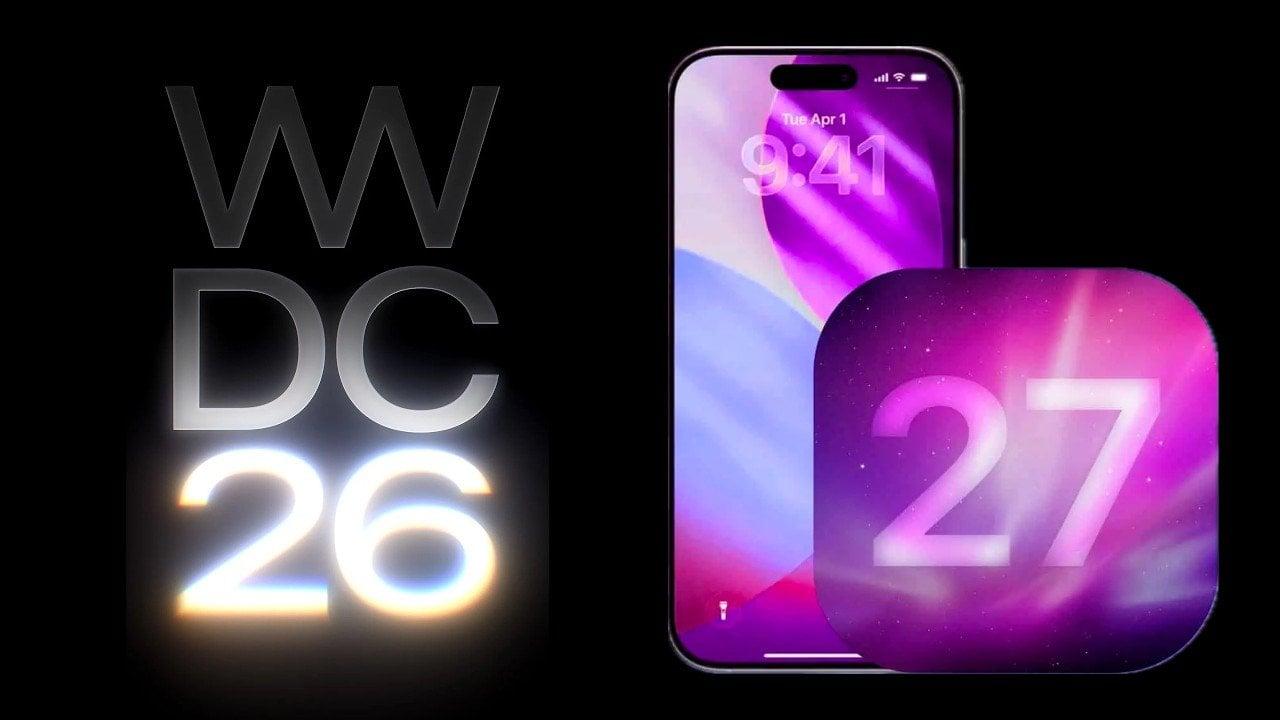
.The centerpiece of WWDC 2026 will be the long-awaited transformation of Siri into a full AI chatbot, a feature first announced at WWDC 2024 as part of Apple Intelligence but delayed multiple times since
4
. The revamped assistant represents a sweeping redesign that turns Apple's long-struggling voice assistant into something that can compete directly with ChatGPT and Claude3
.
Source: Geeky Gadgets
According to Bloomberg's Mark Gurman, Apple is testing a standalone Siri app internally under the codename "Campo" that displays prior conversations in a list or grid format, with pinned and searchable chats and iMessage-style chat bubbles
2
. The new Siri is expected to gain Dynamic Island integration, with a glowing icon and "searching" label while processing requests, an "Ask Siri" button in third-party app menus, and a "Write with Siri" keyboard option2
. Spotlight is expected to be replaced by Siri as the primary search interface on iPhone, fundamentally changing how users interact with their devices2
.The technology underpinning these capabilities comes from Apple's multi-year partnership with Google, under which next-generation Apple Foundation Models are based on Gemini
2
. The deal is reportedly worth $1 billion per year, though that's comparatively small change given Apple's existing $20 billion annual arrangement with Google for default search placement3
. Processing will continue to run on-device and in Private Cloud Compute, maintaining Apple's privacy-focused approach2
.Looking ahead, Apple plans to open Siri to third-party AI chatbots in iOS 27 via an "Extensions" system in Settings, ending OpenAI's exclusive arrangement and allowing users to direct queries to Claude, Google Gemini, Grok, and others
2
. Apple is also reportedly weaving AI into additional apps throughout iOS 27, with the most intriguing addition being a health-focused AI agent tied to a Health+ subscription expected to arrive next fall3
.Beyond the Siri overhaul, iOS 27 is expected to be a relatively lean update, described internally as Apple's "Snow Leopard" moment—a callback to the 2009 Mac OS X release that famously ran a "no new features" marketing campaign
3
. Apple's engineering teams are reportedly "combing through Apple's operating systems, hunting for bloat to cut, bugs to eliminate, and any opportunity to meaningfully boost performance and overall quality"3
.This focus on performance improvements and stability comes in response to widespread criticism of Liquid Glass, the design language introduced at WWDC 2025
1
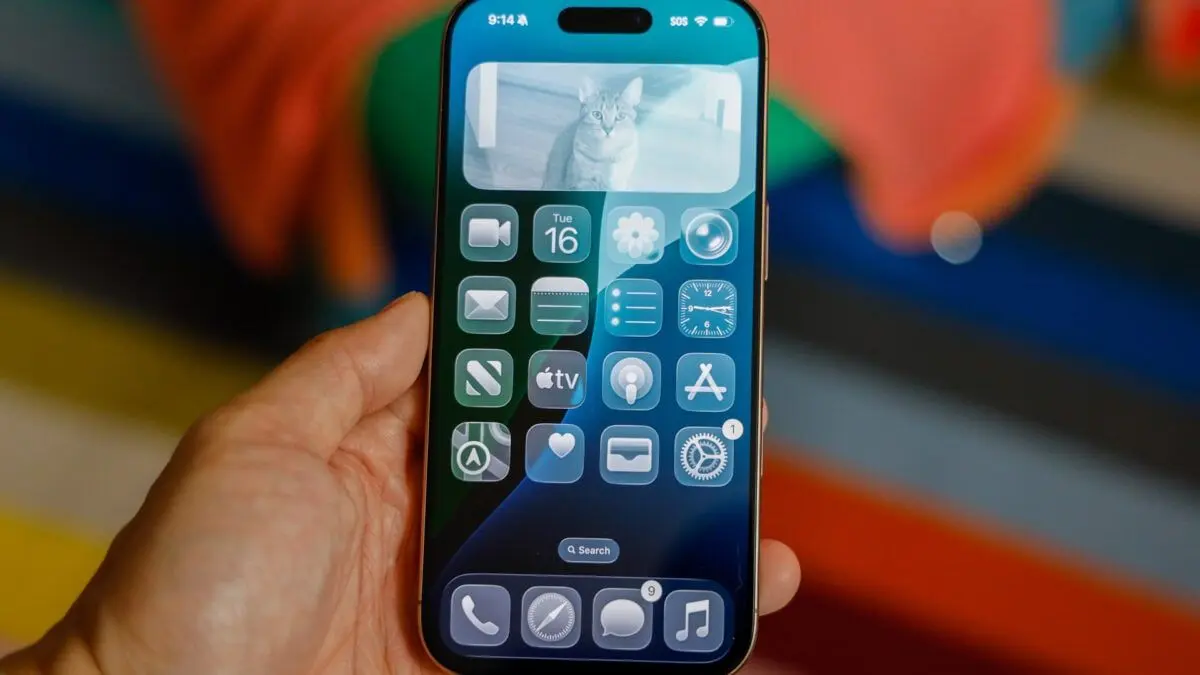
. Users have reported legibility issues on iOS 26, with complaints about optical illusions that make app icons look slanted on iPhone home screens1
. On macOS 26 Tahoe, Liquid Glass has been blamed for undoing over two decades of human-computer interaction design excellence, with users bemoaning broken and inconsistent app window corners, broken Finder column views, and further-hidden menus1
. Additional grievances include device overheating, unexplained battery drain, UI glitches, keyboard failures, and sluggish animations3
.
Source: Gizmodo
With Alan Dye, Apple's former vice president of human interface design, now at Meta, it reportedly falls on his replacement, Stephen Lemay, to restore polish and stability to the software updates
1
. While Lemay won't ditch Liquid Glass since he helped create it, he may provide users with controls, like a slider, to adjust how it appears1
.Apple is said to be rewriting parts of the operating system, and the effort could lead to improved battery life even on older iPhone models
4
. The company also reportedly plans to replace its CoreML framework with a new one dubbed CoreAI4
.Related Stories
macOS 27 will share the same Siri upgrades and Snow Leopard stability focus as iOS 27, but with one significant change: it will drop support for Intel Macs entirely
2
. This means macOS Tahoe is set to be the last major macOS release compatible with Intel-based Macs, and macOS 27 will only support Apple Silicon computers with an M1 or newer chip4
. All Intel Macs are over five years old at the time of writing, so the discontinuation wasn't much of a surprise4
.Rosetta 2 support will be maintained with macOS 27, allowing apps made for Intel Macs to continue running on Apple Silicon hardware
4
. Another piece of hardware set to lose support is Apple's Time Capsule, with a macOS system message spotted in June 2025 advising that the next major version would no longer support AirPort Disk or other Time Capsule disks for Time Machine backups4
.Apple will also unveil updates for its other platforms at the keynote, including iPadOS 27, watchOS 27, tvOS 27, and visionOS 27
2
. Last year, iPadOS 26 brought much-needed desktop-like multitasking features, including resizable app windows, to iPads1
. iOS 27 is expected to include side-by-side app multitasking, albeit only on the iPhone Fold, which is set to debut in late 2026, meaning this feature likely won't be demonstrated during WWDC 20264
.While WWDC is generally a software-focused event, Apple might debut new Mac hardware at the conference, including new Mac mini and Mac Studio configurations powered by variants of the M5 chip
4
. Both models are expected to be spec bump upgrades offering only performance improvements relative to their M4 counterparts4
.Summarized by
Navi
[2]
[3]
[4]
[5]