Samsung unveils world's first 130-inch Micro RGB TV with AI-powered color technology at CES 2026


4 Sources
4 Sources
[1]
Samsung unveils world's first 130-inch Micro RGB TV with AI color tech
The unveiling highlights the brand's commitment to pushing display technology to new extremes. Beyond its impressive size, the R95H features the most advanced Micro RGB system to date. The 130-inch panel is powered by the Micro RGB AI Engine Pro, paired with Micro RGB Color Booster Pro and Micro RGB HDR Pro. These AI-driven systems work together to enhance subtle tones, sharpen contrast, and preserve detail across bright highlights and deep shadows. The focus is on realism, avoiding overexaggeration while delivering a lifelike viewing experience. Color performance is a standout feature of the R95H. The TV delivers 100 percent coverage of the BT.2020 color gamut, marketed as Micro RGB Precision Color 100, and has received VDE certification for its accurate color reproduction. The system also included glare-free technology, designed to reduce reflections and maintain consistent contrast in different lighting conditions. This feature is particularly important for a screen of this size, ensuring that images remain vivid even in bright rooms.
[2]
Samsung Unveils Massive 130-Inch Micro RGB TV, New Gaming QLEDs, OLEDs Including 48" S95H With 165Hz Refresh Rate
Samsung has unveiled its 2026 lineup of Micro RGB, QLEDs, & OLED TVs, including a monstrous 130-Inch design. Samsung's 2026 Micro RGB, QLED & OLED Lineup Is Impressive, Featuring Up To A 130-Inch TV Model At CES 2026, Samsung unveiled a range of new Micro RGB, Neo QLED, and OLED TVs with next-gen colors and AI Engine technology. The standout was the 130-inch Micro RGB TV (R95H), which is the largest Micro RGB display to date, and comes with a Timeless Frame, and several internal-hardware innovations such as Micro RGB AI Engine Pro, Micro RGB Color Booster Pro, and Micro RGB HDR Pro. According to Samsung, the AI features enhance dull tones and refine contrast, delivering vivid colors and more realistic details for an immersive watching experience. The 130-inch Micro RGB model features Samsung's most advanced Micro RGB innovations to date. Powered by Micro RGB AI Engine Pro, Micro RGB Color Booster Pro and Micro RGB HDR Pro, it leverages AI to enhance dull tones and refine contrast, delivering vivid color and subtle detail across bright and dark scenes alike for realism and picture fidelity. The display elevates picture performance with Micro RGB Precision Color 100, delivering 100% of the BT.2020 wide color gamut. Certified by the Verband der Elektrotechnik (VDE) for precise Micro RGB color reproduction, it produces finely controlled hues that appear true to life on screen. The 130-inch model also includes Samsung's proprietary Glare Free technology, which minimizes reflections, further preserving clear color and contrast across a variety of lighting conditions for the best viewing experience. The product supports HDR10+ ADVANCED and Eclipsa Audio to provide an enhanced picture and sound quality, as well as Samsung's enhanced Vision AI Companion, enabling conversational search, proactive recommendations and access to AI features and apps such as AI Football Mode Pro, AI Sound Controller Pro, Live Translate, Generative Wallpaper, Microsoft Copilot and Perplexity. via Samsung Samsung's R95H also comes with HDR10+ Advanced certification, and Eclipsa Audio, along with a Vision AI companion. Samsung is also introducing the UltraThin OLED S95H model, which comes with a zero-gap mount, offering a seamless view free of bezels. Samsung's latest TV lineup is also powered by the TizenOS, offering 7 years of upgrades across all models that support it. Additionally, Samsung also unveiled its most advanced 48" OLED TV, the S95H. This model features the brightest OLED display on a 48" screen and is designed for rich-gaming experiences, offering a class-leading 165Hz VRR Refresh rate, and built-in Dolby Atmos & Object Tracking sound. The company also unveiled a 77" TV with a peak brightness of 4500 nits. Besides the TVs, Samsung has already announced its next-gen Odyssey monitor lineup, which comes with many new designs for gamers, packing QD-OLED and up to 500Hz OLED models. More on those here. Follow Wccftech on Google to get more of our news coverage in your feeds.
[3]
Samsung, LG showcase next-gen premium TVs - The Korea Times
LAS VEGAS -- Samsung Electronics and LG Electronics unveiled their latest flagship TVs at CES 2026 on Sunday, showcasing bold designs, advanced AI features and cutting-edge display technologies as the two Korean tech giants compete to lead the global premium TV market. Samsung unveiled the world's first 130-inch Micro RGB TV, the R95H model, marking its largest Micro RGB display to date and a major step forward in ultra-premium TV design. Micro RGB TVs use tiny red, green and blue LEDs to backlight conventional LCD panels, replacing standard white or blue backlights to improve color accuracy and brightness. "Micro RGB represents the peak of our picture quality innovation, and the new 130-inch model takes that vision even further," said Lee Hun, executive vice president of Samsung's Visual Display Business. "We're reviving the spirit of our original design philosophy introduced more than a decade ago to deliver an unmistakably premium display, engineered with technology for a new generation." The Micro RGB TV combines monumental scale, advanced color technology and refined design, featuring a towering frame and enhanced audio meant to resemble a vast, immersive window rather than a traditional television. Its gallery-inspired Timeless Frame -- an evolution of Samsung's 2013 Timeless Gallery design -- makes the screen appear to float, turning it into a striking centerpiece for any room. Audio integrated into the frame matches the screen's scale, creating a natural harmony between picture and sound. The 130-inch model features Samsung's latest Micro RGB innovations, including Micro RGB AI Engine Pro, Micro RGB Color Booster Pro and Micro RGB HDR Pro, which use AI to refine contrast and enrich colors. It also supports Micro RGB Precision Color 100, covering 100 percent of the BT.2020 wide color gamut, and is certified by Germany's Verband der Elektrotechnik for precise color reproduction. Proprietary Glare Free technology minimizes reflections, preserving clarity under varied lighting. The TV supports HDR10+ Advanced and Eclipsa Audio and integrates Samsung's Vision AI Companion for voice interaction, proactive recommendations and access to AI-powered features, including AI Soccer Mode Pro, AI Sound Controller Pro, Live Translate, Generative Wallpaper, Microsoft Copilot and Perplexity. Meanwhile, LG Electronics showcased its next-generation wireless wallpaper TV, the LG OLED evo W6, alongside its full 2026 OLED evo lineup, including the W6, G6 and C6 models. Measuring just nine millimeters thick, the W6 exemplifies LG's continued innovation in ultra-slim, premium TV design, first introduced with the LG Signature OLED TV W in 2017. The W6 integrates all components -- panel, power board, main board and speakers -- into an ultra-thin form factor, allowing the TV to sit flush against the wall. A new wireless transmission system streams 4K video at 165-hertz with high-fidelity audio without cables or latency, while the updated Zero Connect Box connecting peripherals is 35 percent smaller than previous models. The 2026 OLED evo lineup features Hyper Radiant Color technology, powered by LG's third-generation α11 AI Processor 4K Gen3. The dual-AI engine processor provides advanced image upscaling, faster graphics performance and peak brightness nearly four times higher than conventional OLED TVs. The lineup also supports NVIDIA G-Sync and AMD FreeSync Premium for gamers, along with Auto Low Latency Mode and a 0.1-millisecond response time. LG's webOS26 platform adds multi-AI capabilities, integrating Microsoft Copilot and Google Gemini for personalized AI search and recommendations. Users can access AI Search, AI Concierge, AI Chatbot, AI Picture and Sound Wizard and Voice ID, all protected by LG Shield, the company's cybersecurity system. "Through the evolved LG OLED evo lineup, including the wallpaper TV W6 that combines 13 years of OLED expertise with true wireless transmission and form-factor innovation, we will deliver the most innovative viewing experiences to customers around the world," said Park Hyoung-sei, president of LG Electronics' Media Entertainment Solution Company.
[4]
Samsung to announce brighter QD-OLED, 130-inch Micro RGB TV, and more at CES 2026
Samsung 2026 TVs including the 130-inch Micro RGB TV will be the first with HDR10+ Advanced support. At CES 2026 in Las Vegas, Samsung is unveiling its next wave of display technology, led by a brighter QD-OLED TV panel and a 5,000-PPI Micro OLED built for XR headsets. Alongside this, the company will also showcase the world's first 130-inch Micro RGB TV. So, you can look forward to seeing ultra-premium screens that will be used by Samsung and other brands for their TVs and other devices. Samsung Display says the 2026 QD-OLED TV panel uses newly optimised organic materials and can reach peak brightness of 4,500 nits, which the company calls one of the highest levels yet for a self-emissive display. This coincides with LG also announcing its Tandem WOLED TV panel with 4,500 nits. Although 4,500 nits is achieved in lab conditions within a small window, Samsung highlights that the latest QD-OLED achieves this brightness by pushing each RGB component to its maximum, aided by AI-based picture optimisation. Full-screen brightness could be way low, and for reference, last year's flagship Samsung S95F achieved around 400 nits only. The panel sizes and other details are unconfirmed at this point. Also Read: First RGB-stripe QD-OLED and OLED monitors announced: Asus and MSI lead the rollout Samsung Electronics has unveiled the world's first 130-inch Micro RGB TV (R95H) and will demo this at CES 2026. It is the company's largest Micro RGB display yet, and this technology is its top offering. Its Frame design and upgraded colour and contrast control are expected to appear like a 'vast immersive window'. Under the hood, the TV is powered by Micro RGB AI Engine Pro, along with software features like Colour Booster Pro and HDR Pro to refine tones and contrast, and Micro RGB Precision Colour 100 to enable coverage of 100 percent BT.2020. There is VDE certification for precise colour handling, a Glare-Free layer for a matte anti-reflective finish, and support for HDR10+ Advanced, Eclipsa Audio and Samsung's Vision AI Companion (bundled with Microsoft Copilot and Perplexity, depending on region and model). The speakers are integrated into the frame and tuned to the screen's scale. Samsung Display will also showcase a next-generation RGB micro-OLED (OLED-on-Silicon) for XR headsets. It measures 1.4 inches and reaches 5,000 ppi, significantly higher than today's high-end headset panels. Earlier details mention potential support for up to 15,000 nits, 99 percent DCI-P3 and 120 Hz refresh rate. If these numbers hold, expect sharper text, reduced screen-door effect and richer colour than micro-WOLED solutions found in current premium headsets. Samsung Display will demo OLED for new categories, including cars, robots, lamps and portable devices. Its UT (ultra-thin) OLEDs, around 30 percent lighter and thinner, are expected to enter production in 2026. We will track CES developments and update as TV makers reveal their own line-ups using these new panels, including pricing, availability and regional rollouts. Keep reading Digit.in for more such announcements.
Share
Share
Copy Link
Samsung has introduced the R95H, the world's first 130-inch Micro RGB TV at CES 2026, marking its largest display yet. The ultra-premium television combines advanced AI-driven color processing with glare-free technology and 100 percent BT.2020 color gamut coverage, setting a new benchmark for home entertainment displays.
Samsung Pushes Display Boundaries With Massive 130-Inch Micro RGB TV
Samsung has unveiled the R95H, the world's first 130-inch Micro RGB TV, at CES 2026 in Las Vegas, establishing a new milestone in ultra-premium home entertainment
1
. The announcement positions Samsung at the forefront of advanced display technology, as the company competes with LG Electronics for dominance in the global premium TVs market3
. This massive screen represents the largest Micro RGB display to date, combining monumental scale with refined engineering that transforms the television into what Samsung describes as a "vast, immersive window" rather than a conventional display2
.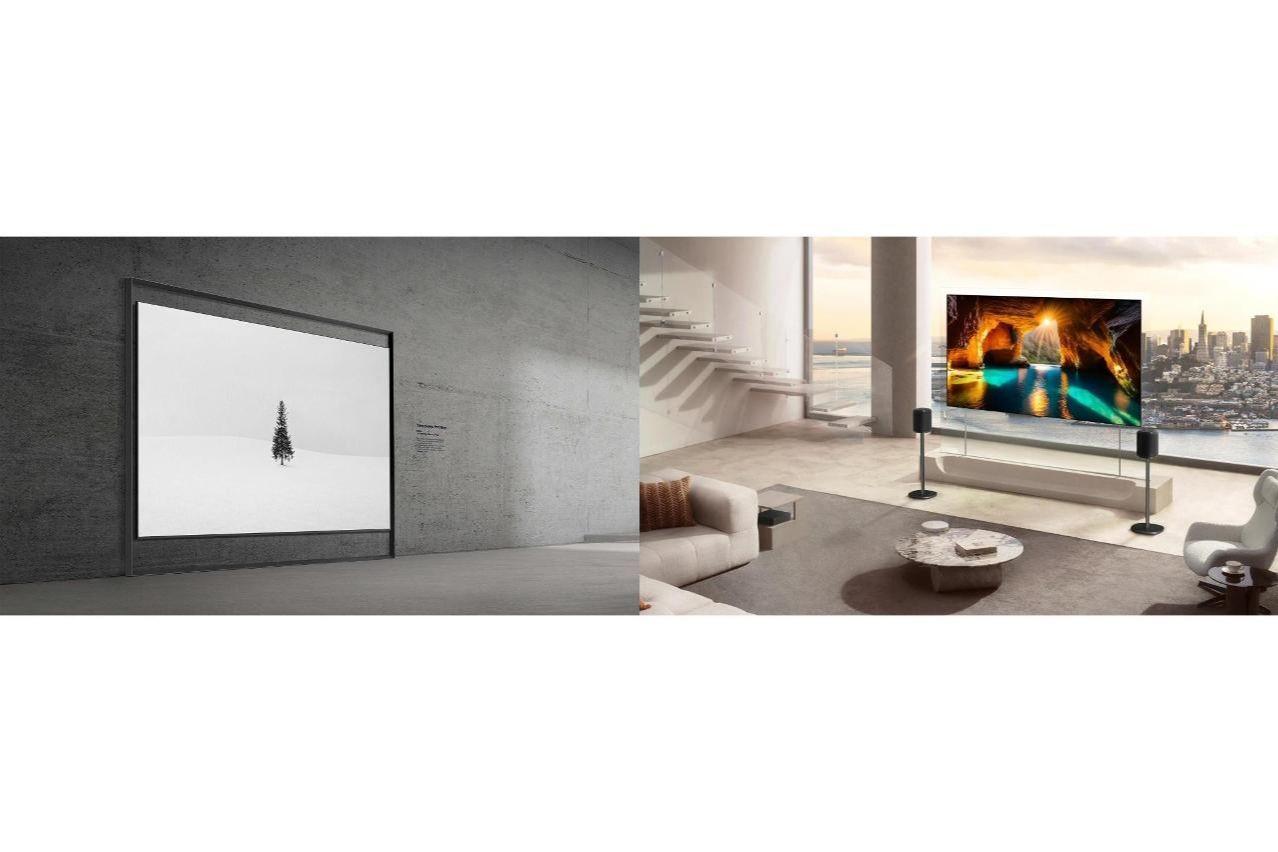
Source: Korea Times
Micro RGB TV technology uses tiny red, green and blue LEDs to backlight conventional LCD panels, replacing standard white or blue backlights to improve color accuracy and brightness
3
. Lee Hun, executive vice president of Samsung's Visual Display Business, stated that "Micro RGB represents the peak of our picture quality innovation, and the new 130-inch model takes that vision even further"3
.AI-Driven Color Processing Delivers Precision and Realism
The R95H is powered by the Micro RGB AI Engine Pro, working in tandem with Micro RGB Color Booster Pro and Micro RGB HDR Pro
1
. These AI systems collaborate to enhance subtle tones, sharpen contrast, and preserve detail across bright highlights and deep shadows, focusing on realism rather than overexaggeration1
. According to Samsung, the AI features enhance dull tones and refine contrast, delivering vivid colors and more realistic details for an immersive viewing experience2
.Color performance stands as a defining feature of the 130-inch Micro RGB TV. The display delivers 100 percent coverage of the BT.2020 wide color gamut, marketed as Micro RGB Precision Color 100
1
. The television has received VDE certification from Germany's Verband der Elektrotechnik for its precise color reproduction, producing finely controlled hues that appear true to life on screen3
.Glare-Free Technology and Premium Design Elements
The R95H incorporates Samsung's proprietary glare-free technology, designed to reduce reflections and maintain consistent contrast in different lighting conditions
1
. This feature proves particularly important for a screen of this size, ensuring that images remain vivid even in bright rooms1
. The matte anti-reflective finish preserves clarity under varied lighting, addressing a common challenge for large-format displays4
.The television features a gallery-inspired Timeless Frame design, an evolution of Samsung's 2013 Timeless Gallery concept, making the screen appear to float and turning it into a striking centerpiece
3
. Audio integrated into the frame matches the screen's scale, creating natural harmony between picture and sound3
.
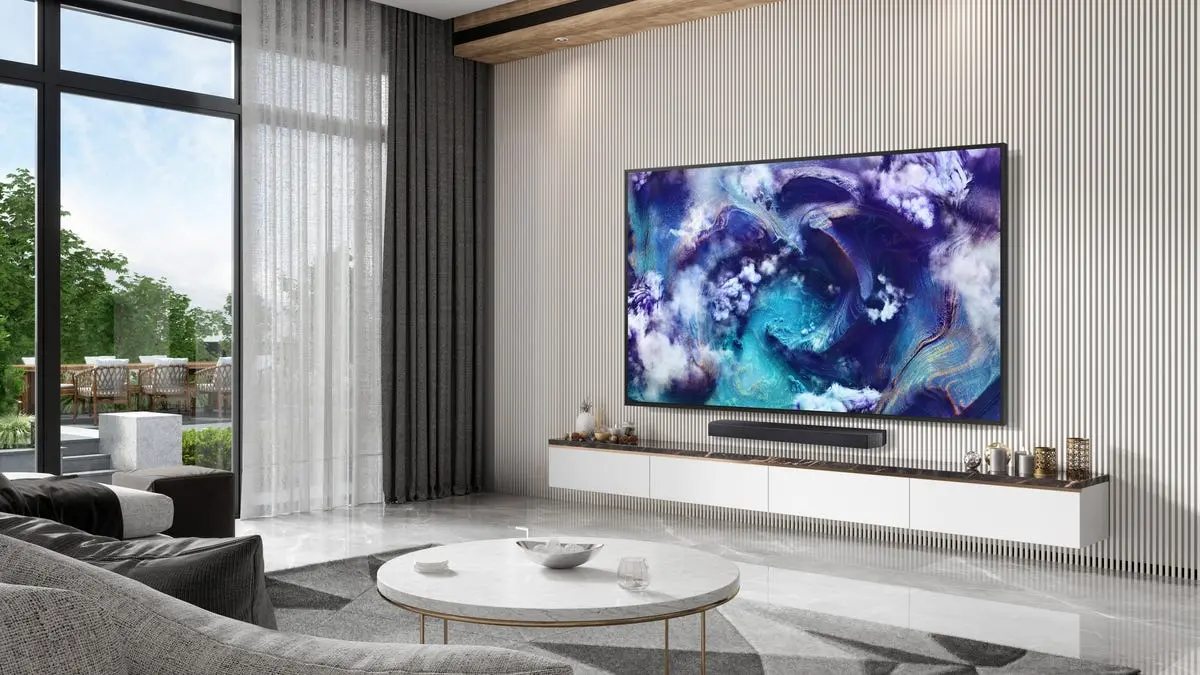
Source: Wccftech
HDR10+ Advanced and Enhanced Audio Capabilities
The 2026 Samsung TVs, including the 130-inch Micro RGB TV, will be the first with HDR10+ Advanced support
4
. The R95H also supports Eclipsa Audio to provide enhanced picture and sound quality2
. These audio enhancements work alongside the integrated speakers tuned to the screen's scale, delivering an immersive sonic environment that complements the visual experience4
.Related Stories
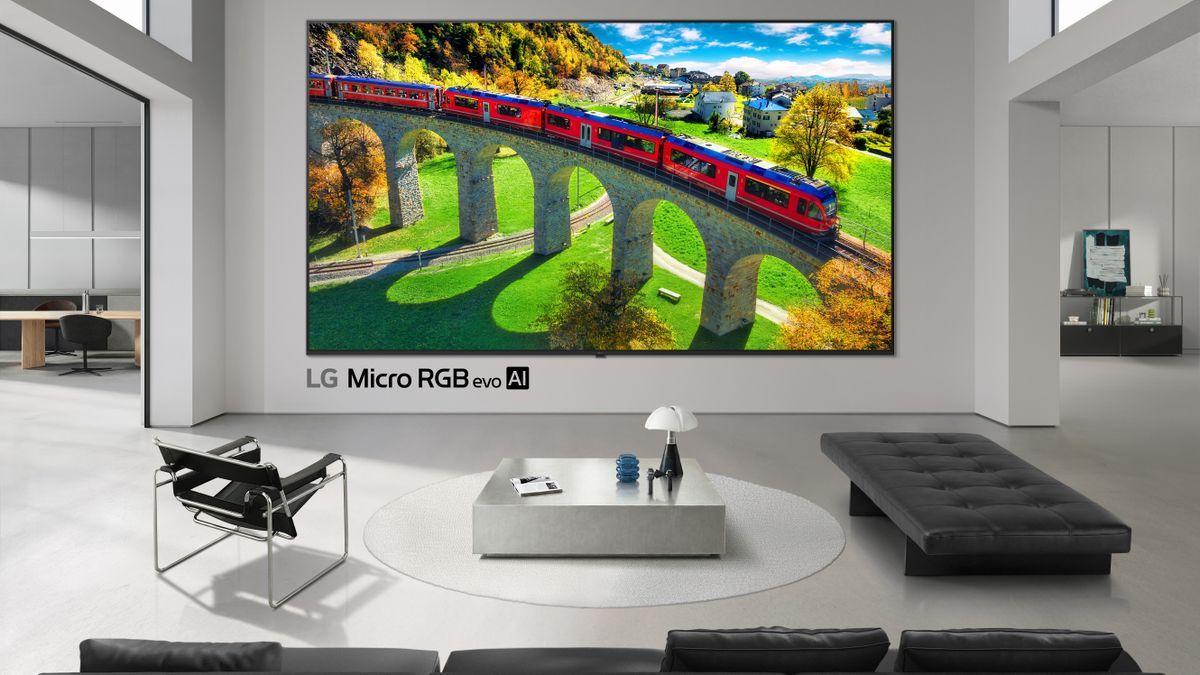


Vision AI Companion and Smart Features
Samsung's enhanced Vision AI Companion integrates into the R95H, enabling conversational search, proactive recommendations and access to AI features and apps
2
. The system includes AI Football Mode Pro, AI Sound Controller Pro, Live Translate, Generative Wallpaper, Microsoft Copilot and Perplexity, depending on region and model4
. Samsung's latest TV lineup is powered by TizenOS, offering 7 years of upgrades across all models that support it2
.Broader 2026 Display Innovations From Samsung
Beyond the flagship R95H, Samsung introduced additional premium models at CES 2026. The company unveiled the UltraThin OLED S95H model with a zero-gap mount, offering a seamless view free of bezels
2
. Samsung also showcased its most advanced 48-inch OLED TV, the S95H, featuring the brightest OLED display on a 48-inch screen with a class-leading 165Hz VRR refresh rate, built-in Dolby Atmos and Object Tracking sound2
. The company also unveiled a 77-inch TV with a peak brightness of 4,500 nits2
.Samsung Display also showcased a next-generation RGB micro-OLED panel for XR headsets, measuring 1.4 inches and reaching 5,000 ppi, significantly higher than today's high-end headset panels
4
. The 2026 QD-OLED TV panel uses newly optimized organic materials and can reach peak brightness of 4,500 nits, which Samsung calls one of the highest levels yet for a self-emissive display4
.References
Summarized by

Navi
[1]
[3]
Related Stories
Recent Highlights
1
AI Models Lie and Deceive to Protect Other AI Models From Deletion, Study Reveals
Science and Research

2
AI chatbots validate you too much, making you less kind to others, Stanford study reveals
Science and Research

3
Judge blocks Pentagon from blacklisting Anthropic over AI safety guardrails dispute
Policy and Regulation

Recent Highlights
Today's Top Stories




Your Daily Dose of Curated AI News
Don’t drown in AI news. We cut through the noise - filtering, ranking and summarizing the most important AI news, breakthroughs and research daily. Spend less time searching for the latest in AI and get straight to action.

