Scientists achieve 36x bio-jet fuel yields using AI, lab automation, and microbial biosensors


2 Sources
2 Sources
[1]
Scientists unlock 36x bio-jet fuel yields with AI, microbial 'bad habit'
The research teams utilized two distinct paths to improve bio-manufacturing efficiency. "One combines artificial intelligence and lab automation to rapidly test and refine the genetic designs of biofuel-producing microbes," said the scientists in a press release. "The other turns a microbe's 'bad habit' into a powerful sensing tool, uncovering hidden pathways that boost production." These methods allow for both the deep optimization of known genetic targets and the broad discovery of new ones that were previously hidden. A team led by Taek Soon Lee and Héctor García Martín developed an automated pipeline to reduce reliance on human intuition in metabolic engineering. "The Berkeley Lab researchers built an automated pipeline that uses robotics to create and test hundreds of genetic designs in parallel," explained the press release. "The team introduced a custom microfluidic electroporation device that can insert genetic material into 384 Pseudomonas putida strains in under a minute -- a task that typically takes hours by hand."
[2]
AI, Automation, and Biosensors Speed the Path to Synthetic Jet Fuel | Newswise
A lighthouse with a DNA double helix as its base represents how biological innovation can accelerate synthetic aviation fuel production. Newswise -- When it comes to powering aircraft, jet engines need dense, energy-packed fuels. Right now, nearly all of that fuel comes from petroleum, as batteries don't yet deliver enough punch for most flights. Scientists have long dreamed of a synthetic alternative: teaching microbes to ferment plant material into high-performance jet fuels. But designing these microbial "mini-factories" has traditionally been slow and expensive because of the unpredictability of biological systems. In a pair of recent studies, two teams at the Joint BioEnergy Institute (JBEI), which is managed by Lawrence Berkeley National Laboratory (Berkeley Lab), have demonstrated complementary ways to dramatically speed up this process. One combines artificial intelligence and lab automation to rapidly test and refine the genetic designs of biofuel-producing microbes. The other turns a microbe's "bad habit" into a powerful sensing tool, uncovering hidden pathways that boost production. Their shared target is isoprenol -- a clear, volatile alcohol that can be converted into DMCO, a next-generation jet fuel with higher energy density than today's conventional aviation fuels. Producing isoprenol efficiently has been a long-standing challenge in synthetic biology. The two studies -- one published in Nature Communications, the other in Science Advances -- tackle different sides of this challenge. The first uses automation and machine learning to engineer Pseudomonas putida strains that produce five times more isoprenol than before. The second approach turns the bacterium's natural fuel-sensing ability into an advantage. By rewiring that system into a biosensor, the team could rapidly screen millions of variants and identify strains that make up to 36 times more isoprenol. "These are two powerful complementary strategies," said senior author of the biosensor study Thomas Eng, JBEI deputy director of Host Engineering and a research scientist in Berkeley Lab's Biological Systems and Engineering (BSE) Division. "One is data-driven optimization; the other is discovery. Together, they give us a way to move much faster than traditional trial-and-error." A new engine for strain design The AI and automation study was led by Taek Soon Lee, director of Pathway and Metabolic Engineering at JBEI, and Héctor García Martín, director of Data Science and Modeling at JBEI, both staff scientists in Berkeley Lab's BSE Division. They set out to accelerate one of synthetic biology's most time-consuming steps: improving microbial production through a series of genetic tweaks to different combinations of genes. Traditionally, scientists alter a few genes at a time and test the results -- a painstaking, intuition-driven process that can take months or even years to yield meaningful gains. By contrast, the Berkeley Lab researchers built an automated pipeline that uses robotics to create and test hundreds of genetic designs in parallel. After each round, machine learning algorithms analyze the results to systematically suggest the next set of strain genetic designs. The result is a system that moves 10 to 100 times faster than conventional methods. "Standard metabolic engineering is slow because you're relying on human intuition and biological knowledge," said García Martín. "Our goal was to make strain improvement systematic and fast." Lead author David Carruthers, a scientific engineering associate with JBEI and BSE, developed a robotic workflow that connects key lab steps into one automated system. Working with collaborators at Lawrence Livermore National Laboratory, the team introduced a custom microfluidic electroporation device that can insert genetic material into 384 Pseudomonas putida strains in under a minute -- a task that typically takes hours by hand. At the core of the system is CRISPR interference (CRISPRi), a tool that lets researchers "turn down" gene activity rather than switching genes off completely. This fine-tuning makes it possible to test subtle gene combinations that shape the cell's metabolism and track the effects through detailed protein measurements. After each round, the machine learning model analyzes the results and recommends the next set of genes that are most likely to boost performance when dialed down. "Traditionally, optimizing production is a kind of guess-and-check process," Carruthers said. "You make one change, test it, and hope you're climbing toward a higher peak. By combining automation and machine learning, we were able to climb that landscape systematically -- in weeks, not years." Lee, who led the metabolic engineering work, emphasized why this level of automation is so transformative for biology. "We have been engineering Pseudomonas by hand for years, but biological experiments always come with small variations that are hard to control," he said. "Automation gives us the ability to generate the same high-quality data every time, which is essential for machine learning to work well." Patrick Kinnunen, a former Berkeley Lab JBEI postdoctoral researcher who co-developed the data strategy, highlighted how crucial that reproducibility was for the algorithms. "Automation didn't just make the experiments faster -- it made the data cleaner," he said. "That clarity is what lets it uncover non-intuitive genetic combinations that we probably would have missed by hand." Using their automated learning loop, the team completed six engineering cycles, each lasting just a few weeks instead of the months typical of manual workflows. They boosted isoprenol titers (the concentration of product in the culture) five-fold compared to their starting strain. Turning a bug into a feature Meanwhile, a second team led by Eng tackled a different but equally stubborn hurdle: how to select target genes that, when dialed down, improve isoprenol production significantly. The team's microbe, Pseudomonas putida, posed a peculiar problem. It didn't just make isoprenol, it also consumed the fuel molecule almost as soon as it produced it, undermining production efforts. Initially, this looked like a flaw. But during the COVID-19 pandemic, Eng and colleagues realized it might be a clue: if the microbe could sense and eat isoprenol, it likely had a built-in molecular sensor. "There was a real 'Aha!' moment," Eng said. "We had spent more than a year trying to figure out why the cells were consuming the product. One day we thought, 'Wait, if they can sense it, there has to be a protein that detects it. Maybe we can turn that from a problem into a tool.'" The team discovered the molecular system the microbe uses to sense isoprenol: two proteins that work together to detect the fuel and send signals inside the cell. They then rewired this system into a biosensor -- a kind of biological "engine light" that turns on in proportion to how much fuel the cell produces. Then came the clever twist: They linked the sensor to genes essential for survival, creating a system where only the microbes that make the most fuel can grow. Instead of measuring thousands of samples by hand, they let natural selection do the screening. This approach rapidly surfaced "champion" strains, including variants that produced up to 36 times more isoprenol than the original. "What started as a frustrating bug became our biggest asset," Eng said. "We turned the microbe's fuel-eating behavior into a sensor that reports and selects for the best producers automatically." The approach also revealed surprising biology; high-producing strains switched to feed on their own amino acids once glucose ran out, sustaining production by rewiring their metabolism in unexpected ways. Just as importantly, the workflow can be applied to other molecules, offering a flexible new tool for rapidly engineering microbes -- not just for isoprenol, but for a wide range of bio-based products. Scaling up to industry-ready Although developed independently, the two approaches fit together well. The AI-driven pipeline excels at rapidly optimizing combinations of a known set of gene targets, while the biosensor method is best for discovering novel gene targets, revealing genetic levers that would be difficult to predict. "One is depth-first; the other is breadth-first," Eng said. "Machine learning systematically optimizes combinations of annotated targets, while the biosensor approach starts fresh and lets the cells tell us which gene targets matter." Both teams are now working to scale their methods from lab experiments to industrially relevant fermentation systems -- a critical step for producing synthetic aviation fuel at commercial levels. They're also adapting their approaches to other microbes and target molecules, aiming to make them broadly applicable in biomanufacturing. "If widely adopted, these approaches could reshape the industry," García Martín said. "Instead of taking a decade and hundreds of people to develop one new bioproduct, small teams could do it in a year or less." Aindrila Mukhopadhyay, BSE deputy director for science, director of Host Engineering at JBEI, and a coauthor on the biosensor study, said these kinds of tools are changing how biological research gets done. "Engineering biology is challenging due to the inherent unpredictability of metabolism and that makes the engineering slow," Mukhopadhyay said. "By streamlining key steps -- as we did through selections -- and leveraging automation and AI, we're making it a faster, more systematic process that is easier to adopt." JBEI is a Bioenergy Research Center funded by the Department of Energy Office of Science. ### Lawrence Berkeley National Laboratory (Berkeley Lab) is committed to groundbreaking research focused on discovery science and solutions for abundant and reliable energy supplies. The lab's expertise spans materials, chemistry, physics, biology, earth and environmental science, mathematics, and computing. Researchers from around the world rely on the lab's world-class scientific facilities for their own pioneering research. Founded in 1931 on the belief that the biggest problems are best addressed by teams, Berkeley Lab and its scientists have been recognized with 17 Nobel Prizes. Berkeley Lab is a multiprogram national laboratory managed by the University of California for the U.S. Department of Energy's Office of Science. DOE's Office of Science is the single largest supporter of basic research in the physical sciences in the United States, and is working to address some of the most pressing challenges of our time. For more information, please visit energy.gov/science.
Share
Share
Copy Link
Researchers at Berkeley Lab's Joint BioEnergy Institute combined artificial intelligence with lab automation to accelerate synthetic jet fuel production, achieving up to 36 times more isoprenol—a key precursor to next-generation aviation fuel. The breakthrough uses robotics, machine learning, and biosensors to engineer biofuel-producing microbes in weeks rather than years.
AI and Lab Automation Transform Bio-jet Fuel Production
Researchers at the Joint BioEnergy Institute (JBEI), managed by Lawrence Berkeley National Laboratory (Berkeley Lab), have achieved a significant leap in synthetic jet fuel production by combining artificial intelligence with lab automation. Two complementary studies published in Nature Communications and Science Advances demonstrate how these technologies can produce up to 36 times more isoprenol—a volatile alcohol that converts into DMCO, a next-generation aviation fuel with higher energy density than conventional options
1
2
.
Source: Newswise
The breakthrough addresses a critical challenge in powering aircraft. Jet engines require dense, energy-packed fuels that batteries cannot yet deliver for most flights. While scientists have long pursued teaching microbes to ferment plant material into high-performance jet fuels, designing these microbial "mini-factories" has traditionally been slow and expensive due to biological unpredictability
2
.Automated Pipeline Accelerates Metabolic Engineering
Taek Soon Lee, director of Pathway and Metabolic Engineering at JBEI, and Héctor García Martín, director of Data Science and Modeling at JBEI, led the development of an automated pipeline that eliminates reliance on human intuition in metabolic engineering. The system uses robotics to create and test hundreds of genetic designs in parallel, moving 10 to 100 times faster than conventional methods
2
.The Berkeley Lab researchers introduced a custom microfluidic electroporation device that can insert genetic material into 384 Pseudomonas putida strains in under a minute—a task that typically takes hours by hand
1
. Lead author David Carruthers, a scientific engineering associate with JBEI, developed the robotic workflow that connects key lab steps into one automated system. After each round, machine learning algorithms analyze results and systematically suggest the next set of strain genetic designs2
.CRISPR Interference Enables Precise Gene Tuning
At the core of the system lies CRISPR interference (CRISPRi), a tool that allows researchers to "turn down" gene activity rather than switching genes off completely. This fine-tuning makes it possible to test subtle gene combinations that shape cellular metabolism and track effects through detailed protein measurements. The first study using this approach engineered Pseudomonas putida strains that produce five times more isoprenol than before
2
."Standard metabolic engineering is slow because you're relying on human intuition and biological knowledge," said García Martín. "Our goal was to make strain improvement systematic and fast"
2
.Related Stories

Biosensor Turns Microbial 'Bad Habit' Into Discovery Tool
The second approach transforms a bacterium's natural fuel-sensing ability into a powerful biosensor. By rewiring this system, the team could rapidly screen millions of variants and identify strains that make up to 36 times more isoprenol
2
. This biosensor study was led by Thomas Eng, JBEI deputy director of Host Engineering and a research scientist in Berkeley Lab's Biological Systems and Engineering Division."These are two powerful complementary strategies," said Eng. "One is data-driven optimization; the other is discovery. Together, they give us a way to move much faster than traditional trial-and-error"
2
. The combined methods allow for both deep optimization of known genetic targets and broad discovery of new ones that were previously hidden1
.Implications for Aviation Fuel and Biomanufacturing
The dual-strategy approach represents a shift from intuition-driven experimentation to systematic, data-driven strain design. Carruthers explained: "Traditionally, optimizing production is a kind of guess-and-check process. You make one change, test it, and hope you're climbing toward a higher peak. By combining automation and machine learning, we were able to climb that landscape systematically—in weeks, not years"
2
.Lee emphasized the transformative nature of this level of automation for biology: "We have been engineering Pseudomonas by hand for years, but biological experiments always come with small variations that are hard to control. Automation gives us" consistent, reproducible results
2
.The breakthrough in isoprenol production could accelerate the path toward commercially viable bio-jet fuel alternatives. As aviation seeks to reduce its carbon footprint, these advances in biofuel-producing microbes offer a practical route to sustainable aviation fuel that works with existing jet engines. The integration of robotics, sensing tools, and genetic designs of microbes creates a blueprint for future biomanufacturing efforts across multiple industries.
References
Summarized by

Navi
[1]
Related Stories
AI Breakthrough: Designing Life-Like Enzymes from Scratch
14 Feb 2025•Science and Research

AI in Chemistry breakthrough: Two systems accelerate molecule design and drug discovery by 10x
29 Jan 2026•Science and Research
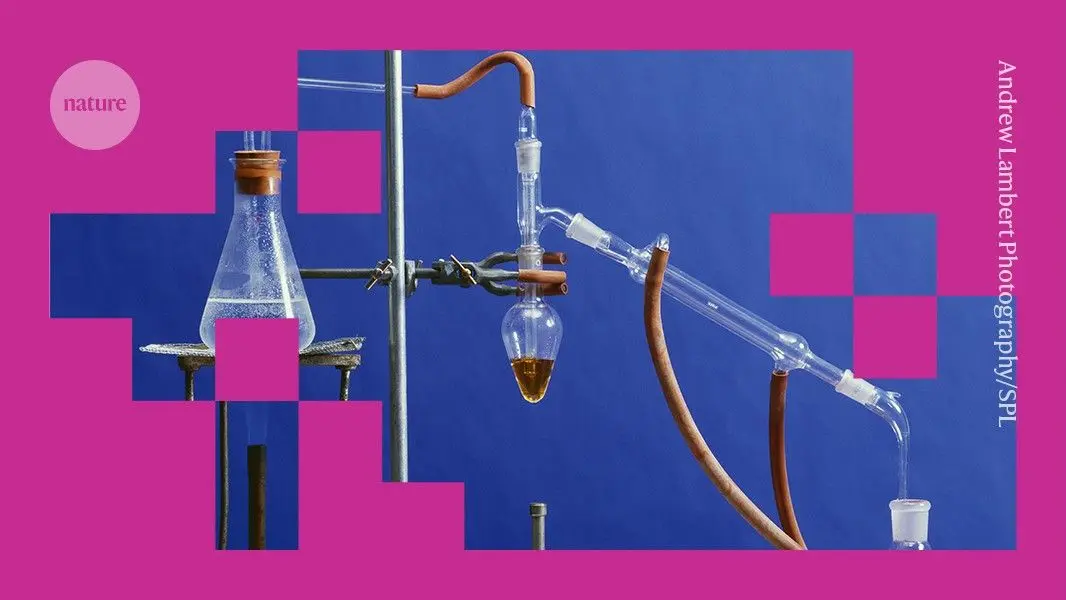
AI-Driven 'Polybot' Revolutionizes Electronic Polymer Discovery at Argonne National Laboratory
19 Feb 2025•Science and Research

Recent Highlights
1
OpenAI shuts down Sora video app after six months, ending Disney's $1 billion investment deal
Technology

2
AI-Generated Val Kilmer to Posthumously Appear in As Deep as the Grave After His Death
Entertainment and Society

3
Supermicro Co-Founder Indicted in $2.5 Billion Nvidia AI Chip Smuggling Scheme to China
Policy and Regulation
Recent Highlights
Today's Top Stories




Your Daily Dose of Curated AI News
Don’t drown in AI news. We cut through the noise - filtering, ranking and summarizing the most important AI news, breakthroughs and research daily. Spend less time searching for the latest in AI and get straight to action.

