Singapore charges third person in AI chip fraud case linked to Nvidia export violations


5 Sources
5 Sources
[1]
Singapore charges one more individual with AI chip fraud
SINGAPORE, April 2 (Reuters) - Singapore prosecutors charged one more person with fraud on Thursday for making false representations to U.S. server supplier Dell Technologies (DELL.N), opens new tab, linking her to two other individuals charged with similar offences in February last year. Jenny Lim was charged with conspiring with Alan Wei Zhaolun and Aaron Woon Guo Jie in 2024 to commit fraud by misleading Dell that Aperia International would be the end-user of the servers bought from Dell, police said in the charge sheets. Singapore Home Affairs Minister K Shanmugam said in March last year that authorities ascertained that servers involved in the case may contain Nvidia chips. The servers were supplied by Dell and artificial intelligence server maker Super Micro Computer (SMCI.O), opens new tab to Singapore-based companies, and were then sent on to Malaysia, although it was not clear if Malaysia was their final destination, he said. The United States banned the export of high-end chips from Nvidia to China in 2022 amid concerns that they could be used for military purposes. The United States later approved the sale of Nvidia's second-most powerful H200 chips in January this year, with some conditions. In 2024, Singapore was Nvidia's second-biggest market after the United States, accounting for 18% of its total revenue in its latest fiscal year, a February 2025 filing by the chipmaker shows. But Singapore said last year that only 1% of Nvidia's chips "physically came" to Singapore to be deployed in its data centres. Nvidia classified revenue by the geographical location of their customers' headquarters in its filing for the 2026 financial year. Sales in the United States, Taiwan and China accounted for 98% of its revenue. Separately, three people associated with Super Micro, including its co-founder, were charged in the United States in March with helping to smuggle at least $2.5 billion of U.S. AI technology to China, violating export laws. Reporting by Jun Yuan Yong; Editing by David Stanway Our Standards: The Thomson Reuters Trust Principles., opens new tab
[2]
Singapore charges one more individual with AI chip fraud
Singapore prosecutors charged one more person with fraud on Thursday for making false representations to U.S. server supplier Dell Technologies, linking her to two other individuals charged with similar offences in February last year. Jenny Lim was charged with conspiring with Alan Wei Zhaolun and Aaron Woon Guo Jie in 2024 to commit fraud by misleading Dell that Aperia International would be the end-user of the servers bought from Dell, police said in the charge sheets. Singapore Home Affairs Minister K Shanmugam said in March last year that authorities ascertained that servers involved in the case may contain Nvidia chips. The servers were supplied by Dell and artificial intelligence server maker Super Micro Computer to Singapore-based companies, and were then sent on to Malaysia, although it was not clear if Malaysia was their final destination, he said. The United States banned the export of high-end chips from Nvidia to China in 2022 amid concerns that they could be used for military purposes. The United States later approved the sale of Nvidia's second-most powerful H200 chips in January this year, with some conditions. In 2024, Singapore was Nvidia's second-biggest market after the United States, accounting for 18% of its total revenue in its latest fiscal year, a February 2025 filing by the chipmaker shows. But Singapore said last year that only 1% of Nvidia's chips "physically came" to Singapore to be deployed in its data centers. Nvidia classified revenue by the geographical location of their customers' headquarters in its filing for the 2026 financial year. Sales in the United States, Taiwan and China accounted for 98% of its revenue. Separately, three people associated with Super Micro, including its co-founder, were charged in the United States in March with helping to smuggle at least $2.5 billion of U.S. AI technology to China, violating export laws.
[3]
Singapore charges one more individual with AI chip fraud
Jenny Lim was charged with conspiring with Alan Wei Zhaolun and Aaron Woon Guo Jie in 2024 to commit fraud by misleading Dell that Aperia International would be the end-user of the servers bought from Dell, police said in the charge sheets. Singapore prosecutors charged one more person with fraud on Thursday for making false representations to U.S. server supplier Dell Technologies, linking her to two other individuals charged with similar offences in February last year. Jenny Lim was charged with conspiring with Alan Wei Zhaolun and Aaron Woon Guo Jie in 2024 to commit fraud by misleading Dell that Aperia International would be the end-user of the servers bought from Dell, police said in the charge sheets. Singapore Home Affairs Minister K Shanmugam said in March last year that authorities ascertained that servers involved in the case may contain Nvidia chips. The servers were supplied by Dell and artificial intelligence server maker Super Micro Computer to Singapore-based companies, and were then sent on to Malaysia, although it was not clear if Malaysia was their final destination, he said. The United States banned the export of high-end chips from Nvidia to China in 2022 amid concerns that they could be used for military purposes. The United States later approved the sale of Nvidia's second-most powerful H200 chips in January this year, with some conditions. In 2024, Singapore was Nvidia's second-biggest market after the United States, accounting for 18% of its total revenue in its latest fiscal year, a February 2025 filing by the chipmaker shows. But Singapore said last year that only 1% of Nvidia's chips "physically came" to Singapore to be deployed in its data centres. Nvidia classified revenue by the geographical location of their customers' headquarters in its filing for the 2026 financial year. Sales in the United States, Taiwan and China accounted for 98% of its revenue. Separately, three people associated with Super Micro, including its co-founder, were charged in the United States in March with helping to smuggle at least $2.5 billion of U.S. AI technology to China, violating export laws.
[4]
Singapore tech executive charged with fraud conspiracy in case linked to Nvidia chips export probe - VnExpress International
Jenny Lim, chief financial officer of Aperia International, has been charged with fraud conspiracy in a Singapore probe linked to export-controlled Nvidia chips. Lim, 51, was charged on Thursday with one count of being part of a criminal conspiracy to commit fraud by false representation in 2024. She is accused of conspiring with former chief executive Alan Wei Zhaolun, 50, and head of sales Aaron Woon Guo Jie, 41, to mislead Dell about the end user of servers purchased by the company, according to Channel News Asia. The trio allegedly claimed the servers would be supplied to Aperia International, when it was not the actual end user, and the equipment was later exported to Malaysia. The servers involved may have contained Nvidia chips, which are critical for artificial intelligence and high-performance computing, The Straits Times reported. Wei and Woon were first charged in February 2025 and were among nine people arrested during joint raids by the Singapore Police Force and Singapore Customs. The cases are part of a broader investigation into the illegal movement of advanced Nvidia chips through intermediaries in Singapore to China, bypassing U.S. export controls. The crackdown followed a U.S. probe into possible circumvention of export controls on advanced Nvidia chips after Chinese AI firm DeepSeek launched a free AI tool in January 2025 that wiped around US$1 trillion off the value of U.S. tech stocks. Lim and her co-accused are scheduled for pre-trial conferences on May 22. She is currently out on bail of S$350,000 (US$272,300).
[5]

Singapore charges one more individual with AI chip fraud
SINGAPORE, April 2 (Reuters) - Singapore prosecutors charged one more person with fraud on Thursday for making false representations to U.S. server supplier Dell Technologies, linking her to two other individuals charged with similar offences in February last year. Jenny Lim was charged with conspiring with Alan Wei Zhaolun and Aaron Woon Guo Jie in 2024 to commit fraud by misleading Dell that Aperia International would be the end-user of the servers bought from Dell, police said in the charge sheets. Singapore Home Affairs Minister K Shanmugam said in March last year that authorities ascertained that servers involved in the case may contain Nvidia chips. The servers were supplied by Dell and artificial intelligence server maker Super Micro Computer to Singapore-based companies, and were then sent on to Malaysia, although it was not clear if Malaysia was their final destination, he said. The United States banned the export of high-end chips from Nvidia to China in 2022 amid concerns that they could be used for military purposes. The United States later approved the sale of Nvidia's second-most powerful H200 chips in January this year, with some conditions. In 2024, Singapore was Nvidia's second-biggest market after the United States, accounting for 18% of its total revenue in its latest fiscal year, a February 2025 filing by the chipmaker shows. But Singapore said last year that only 1% of Nvidia's chips "physically came" to Singapore to be deployed in its data centres. Nvidia classified revenue by the geographical location of their customers' headquarters in its filing for the 2026 financial year. Sales in the United States, Taiwan and China accounted for 98% of its revenue. Separately, three people associated with Super Micro, including its co-founder, were charged in the United States in March with helping to smuggle at least $2.5 billion of U.S. AI technology to China, violating export laws. (Reporting by Jun Yuan Yong; Editing by David Stanway)
Share
Share
Copy Link
Singapore prosecutors charged Jenny Lim with fraud for allegedly misleading Dell Technologies about server purchases containing Nvidia chips. The case expands an ongoing investigation into the circumvention of U.S. export bans, with servers routed through Singapore to Malaysia and potentially China. Lim joins two co-conspirators previously charged in February 2025.
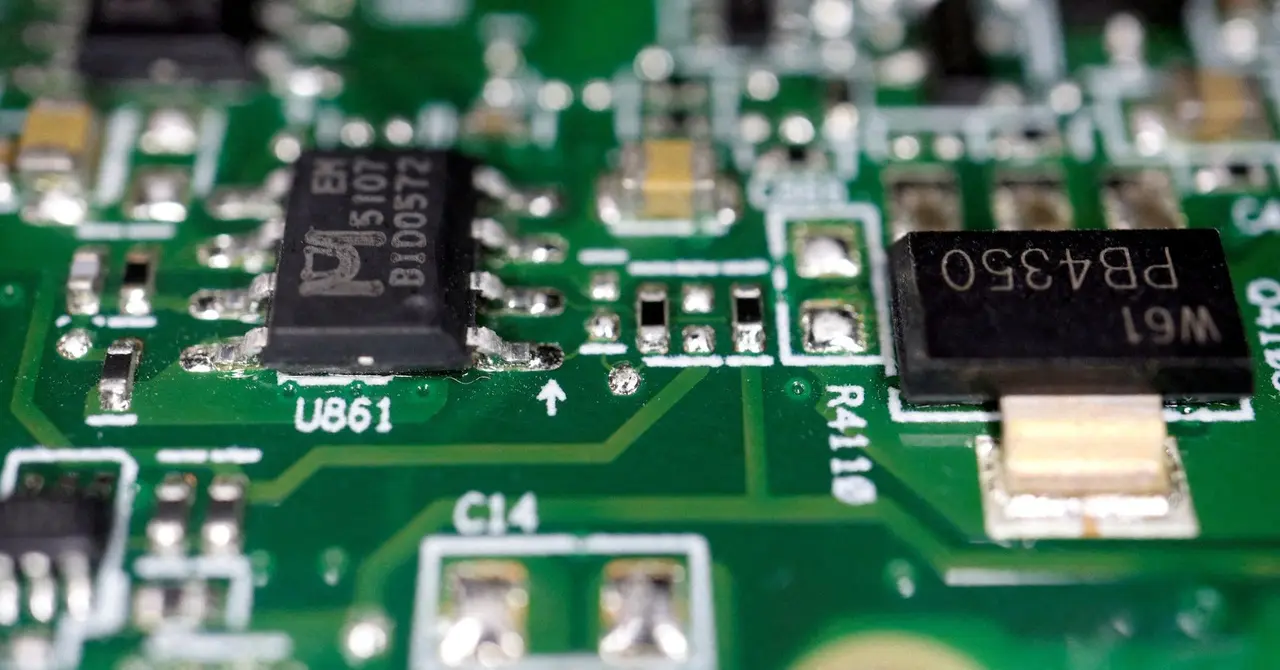
Singapore Expands AI Chip Fraud Investigation with New Charges
Singapore prosecutors charged Jenny Lim, the 51-year-old chief financial officer of Aperia International, with fraud conspiracy on Thursday, marking the third individual linked to an alleged scheme involving AI chip fraud and the circumvention of U.S. export bans
1
. Lim faces accusations of conspiring with Alan Wei Zhaolun, former chief executive, and Aaron Woon Guo Jie, head of sales, to mislead Dell Technologies about the true end-user of servers purchased from the U.S. supplier in 20244
. The trio allegedly falsely represented that Aperia International would be the end-user when it was not, with the equipment subsequently exported to Malaysia, though authorities remain uncertain whether Malaysia was the final destination2
.Nvidia Chips at the Center of Export Control Violations
Singapore Home Affairs Minister K Shanmugam confirmed in March last year that authorities determined the servers involved in the case may contain Nvidia chips, which are critical for artificial intelligence and high-performance computing
3
. The servers were supplied by Dell Technologies and Super Micro Computer to Singapore-based companies before being rerouted1
. This investigation forms part of a broader crackdown on the illegal movement of advanced Nvidia chips through intermediaries in Singapore to China, bypassing U.S. export restrictions implemented in 2022 amid national security concerns that the technology could be used for military purposes4
.Singapore's Role in Nvidia's Global Revenue Raises Questions
The case highlights a significant discrepancy in Singapore's position within Nvidia's global operations. In 2024, Singapore was Nvidia's second-biggest market after the United States, accounting for 18% of its total revenue in its latest fiscal year, according to a February 2025 filing by the chipmaker
1
. However, Singapore authorities revealed that only 1% of Nvidia chips physically came to Singapore to be deployed in its data centers5
. Nvidia classified revenue by the geographical location of their customers' headquarters in its filing for the 2026 financial year, with sales in the United States, Taiwan, and China accounting for 98% of its revenue2
. This gap between reported revenue and physical chip deployment suggests Singapore may have served as a transit point for smuggling AI technology to China.Related Stories

Broader Implications and Connected Cases
The charges against Jenny Lim, who is currently out on bail of S$350,000 (US$272,300), come after Wei and Woon were first charged in February 2025 following joint raids by the Singapore Police Force and Singapore Customs that resulted in nine arrests
4
. The crackdown intensified following a U.S. probe into possible export control violations after Chinese AI firm DeepSeek launched a free AI tool in January 2025 that wiped around US$1 trillion off the value of U.S. tech stocks4
. Separately, three people associated with Super Micro Computer, including its co-founder, were charged in the United States in March with helping to smuggle at least $2.5 billion of U.S. AI technology to China, violating export laws1
. The United States later approved the sale of Nvidia's second-most powerful H200 chips in January this year, with some conditions, signaling evolving export controls3
. Lim and her co-accused are scheduled for pre-trial conferences on May 22, as authorities continue investigating the full scope of the fraud conspiracy4
.References
Summarized by

Navi
[5]
Related Stories
Singapore Expands Charges in AI Chip Smuggling Case, Malaysia Launches Investigation
05 Mar 2025•Policy and Regulation

Singapore Court Adjourns AI Chip Smuggling Case: Implications for US-China Tech Tensions
27 Jun 2025•Technology

Singapore Investigates Potential Fraud in Nvidia AI Chip Shipments: Implications for Global Tech Industry
28 Feb 2025•Business and Economy

Recent Highlights
1
Google releases Gemma 4 with Apache 2.0 license, enabling unrestricted local AI on devices
Technology

2
AI Models Lie and Deceive to Protect Other AI Models From Deletion, Study Reveals
Science and Research

3
OpenAI closes $122 billion funding round amid fierce AI competition and profitability questions
Startups

Recent Highlights
Today's Top Stories







Your Daily Dose of Curated AI News
Don’t drown in AI news. We cut through the noise - filtering, ranking and summarizing the most important AI news, breakthroughs and research daily. Spend less time searching for the latest in AI and get straight to action.

