SK hynix 256 GB DDR5 module slashes Intel Xeon power consumption by 18%, saving data centers millions


2 Sources
2 Sources
[1]
Intel-certified 256 GB DDR5 stick could cut Xeon memory power by 18%, saving millions of dollars -- a 32W-per-socket reduction could save millions per hyperscale data center
SK hynix on Thursday said that its range-topping 256 GB DDR5 RDIMM based on 32 Gb memory devices has passed the Intel Data Center Certified process, the industry's first memory module at this capacity to do so. Normally, certification of a memory module by Intel would be mundane, but this module is special; it combines capacity, low power consumption, and performance, thus potentially saving data center operators millions of dollars. AI servers not only consume plenty of premium high-bandwidth memory (HBM) used on AI accelerators like Nvidia B300, but also tons of commodity server DDR5 SDRAM that connect to x86 processors. A single high-capacity DDR5 memory module can consume up to 15W or even 25W (depending on performance, capabilities, and workloads), so a fully equipped 12-channel Xeon 6 memory subsystem can draw between 180W and 300W, comparable to the CPU's power consumption. A 32 Gb memory chip made on SK hynix's 1b process technology (5 Generation 10nm-class DRAM process) consumes significantly less power than two 16 Gb memory ICs made on the company's 1a production node (4 Generation 10nm-class DRAM node), so using a 256 GB DDR5 RDIMM based on the latest DRAMs leads to significant energy savings. SK hynix claims that these new 256 GB DDR5 RDIMMs "achieve up to approximately 18% lower power consumption than previous 256 GB products." Offering 32.4W lower power consumption per single-CPU Xeon 6 machine translates into significant savings for modern AI or hyperscale cloud deployments that typically use tens of thousands of machines. As a result, a relatively simple Intel certification to earn the Intel Data Center Certified badge could drive success for SK hynix in the data center market, particularly in the Xeon 6-based AI server space. "We are now able to respond more swiftly to customer needs, solidifying our leadership in the server DDR5 DRAM market," said Sangkwon Lee, head of DRAM Product Planning & Enablement at SK hynix. "As a full-stack AI memory creator, we will actively address the growing demand for high-performance, low-power, and high-capacity memory solutions to further enhance customer satisfaction."
[2]
SK hynix's new 256GB RDIMM server memory module passes Intel's tests, ready for Xeon 6 platform
TL;DR: SK hynix's new 256GB DDR5 RDIMM server memory modules, based on 32Gb DRAM, are officially verified for Intel's Xeon 6 platform, delivering up to 16% better inference performance and 18% improved power efficiency. This advancement supports growing AI workload demands and strengthens SK hynix's leadership in high-capacity, energy-efficient server memory. SK hynix has announced that its new 256GB DDR5 RDIMM server memory modules have been approved by Intel for its new Xeon 6 platform. In a new press release, SK hynix said its new high-capacity 256GB DDR5 server memory modules based on 1b 32Gb have been verified for compatibility with Intel's next-gen Xeon 6 platform. The new registered memory (RDIMM) is a buffered module type of RAM used in servers and workstations, with testing and validation completed at Intel's Advanced Data Center Development Laboratory in the US. SK hynix says that servers using its new 32Gb based 256GB RDIMM memory module will enjoy 16% more inference performance versus its 128GB modules on 32Gb DRAM, as well as up to 18% more power efficiency versus existing 256GB RDIMMs based on its 1a 16Gb DRAM modules, using a design built around a single 32Gb DRAM chip. SK hynix said in its press release: "We have proven that our high-capacity DDR5 module technology is the world's best by being the first in the industry to be verified for compatibility with Intel's latest server platform, which leads the server CPU market". The company continued: "We will use this as a stepping stone to expand cooperation with major global data center operators and continue our leadership in the next-generation memory market by responding in a timely manner to the rapidly growing demand from server customers". SK hynix Vice President Lee Sang-kwon (in charge of DRAM product planning) said: "We have solidified our leadership in the server DDR5 DRAM market and can now respond quickly to customer needs. As a full-stack AI memory creator, we will actively respond to the growing demand for high-performance, low-power, and high-capacity memory to drive customer satisfaction". Dimitrios Ziakas, vice president of Platform Architecture at Intel, added: "The close collaboration between our two companies has resulted in excellent results and contributed to the advancement of memory technology. The high-capacity module will meet the rapidly growing demands of AI workloads and significantly improve the performance and efficiency that data center customers want".
Share
Share
Copy Link
SK hynix announced its 256 GB DDR5 RDIMM based on 32Gb DRAM has passed Intel's certification for Xeon 6 platform, marking an industry first. The new server memory modules deliver 18% lower power consumption and 16% better inference performance, potentially saving hyperscale data centers millions of dollars through reduced energy costs.
SK hynix achieves industry-first Intel certification for 256 GB DDR5 memory
SK hynix announced that its 256 GB DDR5 RDIMM based on 32Gb DRAM has become the first memory module at this capacity to pass the Intel Data Center Certified process for the Intel Xeon 6 platform
1
. Testing and validation were completed at Intel's Advanced Data Center Development Laboratory in the United States, marking a significant milestone for server memory modules designed to handle demanding AI workloads2
. This certification positions SK hynix to capture a larger share of the rapidly expanding server DDR5 DRAM market as data center operators seek high-capacity memory solutions that balance performance with energy efficiency.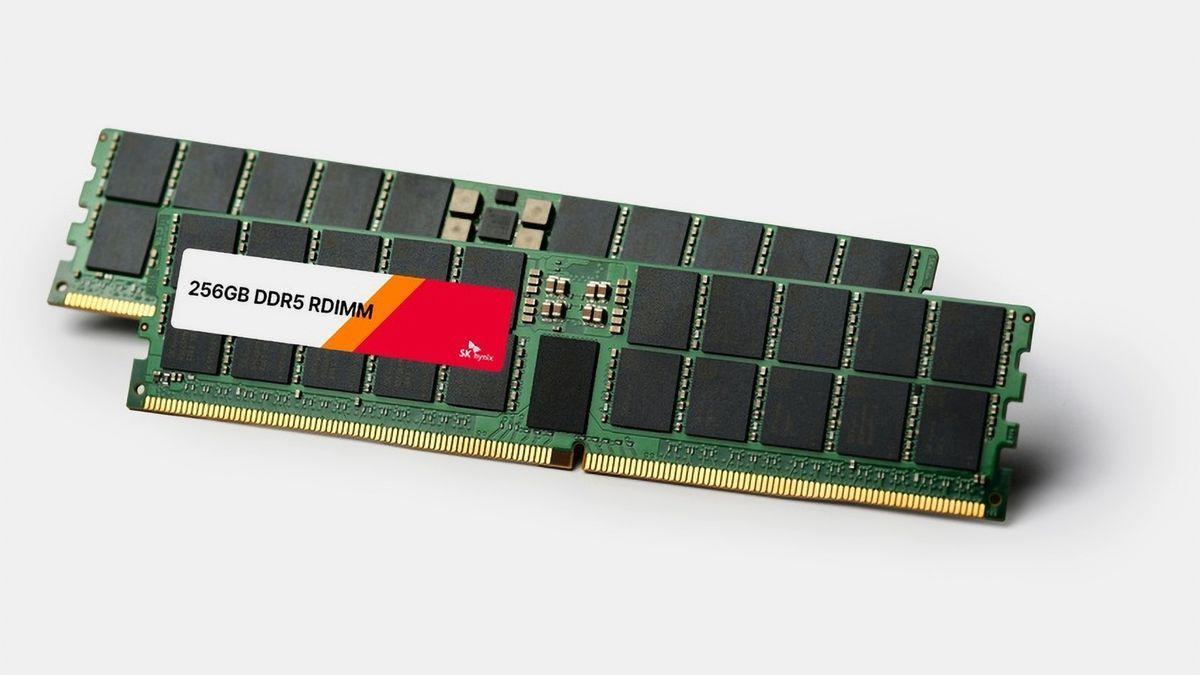
Source: Tom's Hardware
Dramatic power efficiency gains through advanced 1b process technology
The new 256 GB DDR5 RDIMM achieves up to 18% lower power consumption compared to previous 256 GB products, thanks to SK hynix's 1b process technology
1
. A single 32Gb DRAM chip manufactured on the 5th Generation 10nm-class DRAM process consumes significantly less power than two 16Gb memory ICs made on the company's 1a production node. This translates to a 32W-per-socket reduction in a fully equipped 12-channel Intel Xeon memory subsystem, which typically draws between 180W and 300W depending on workloads1
. For hyperscale data center operators running tens of thousands of machines, this power efficiency improvement represents substantial energy savings that could amount to millions of dollars annually.Enhanced inference performance addresses growing AI server demands
Beyond power efficiency, servers equipped with the new 32Gb-based 256GB RDIMM deliver 16% better inference performance compared to 128GB modules using 32Gb DRAM
2
. This performance boost matters significantly as AI workloads continue to expand across cloud deployments. While AI servers consume premium high-bandwidth memory like HBM used on accelerators such as Nvidia B300, they also rely heavily on commodity server DDR5 SDRAM connected to x86 processors1
. The combination of higher capacity, improved power efficiency, and stronger inference performance positions these modules as essential components for next-generation AI infrastructure.Related Stories
Strategic implications for data center operators and memory market
Sangkwon Lee, head of DRAM Product Planning & Enablement at SK hynix, stated: "We are now able to respond more swiftly to customer needs, solidifying our leadership in the server DDR5 DRAM market. As a full-stack AI memory creator, we will actively address the growing demand for high-performance, low-power, and high-capacity memory solutions to further enhance customer satisfaction"
1
. Dimitrios Ziakas, vice president of Platform Architecture at Intel, added that the collaboration "has resulted in excellent results and contributed to the advancement of memory technology"2
. The validation strengthens SK hynix's position to expand cooperation with major global data center operators as they upgrade infrastructure to support increasingly memory-intensive AI applications. Data center operators should monitor how these energy savings scale across their deployments, particularly as memory power consumption rivals CPU power draw in modern server configurations.References
Summarized by

Navi
Related Stories
Micron ships 256GB SOCAMM2 modules to customers, bringing 2TB AI memory capacity per CPU
03 Mar 2026•Technology
SK Hynix Develops Industry-First 16GB DDR5 Memory Using 1c Node on 10nm Process
29 Aug 2024

Micron Unveils Ultra-Fast DDR5 Memory Modules for AI PCs, Doubling Speed of DDR4
16 Oct 2024•Technology

Recent Highlights
1
Tennessee Teens Sue Elon Musk's xAI Over Grok AI-Generated Child Abuse Images
Policy and Regulation

2
Pentagon designates Palantir Maven AI as core US military system in major defense shift
Technology

3
Supermicro Co-Founder Indicted in $2.5 Billion Nvidia AI Chip Smuggling Scheme to China
Policy and Regulation
Recent Highlights
Today's Top Stories










Your Daily Dose of Curated AI News
Don’t drown in AI news. We cut through the noise - filtering, ranking and summarizing the most important AI news, breakthroughs and research daily. Spend less time searching for the latest in AI and get straight to action.

