SoftBank Credit Outlook Downgraded After Doubling Down on OpenAI with $30 Billion Investment


2 Sources
2 Sources
[1]
SoftBank credit outlook hit after betting $30bn more on OpenAI
S&P research finds OpenAI to be one of SoftBank's investments with the 'weakest' credit quality. OpenAI is making SoftBank's investment portfolio look bad, said financial analyst S&P Global, which lowered the Japanese investment firm's long-term issuer credit rating from 'BB+ stable' to 'negative'. SoftBank is making massive bets on OpenAI, after already investing $30bn into the world's largest private company last year. It is now is gearing to pour another $30bn into OpenAI over the course of the year, as the AI giant reportedly prepares to go public. With the additional investment, S&P figures that OpenAI will represent 30pc of SoftBank's investment assets - the same as its investments in Arm. And after the additional investment, SoftBank's investment portfolio will likely exceed $320bn, making it one of the largest in the world. However, S&P research found OpenAI to be one of SoftBank's investments with the "weakest" credit quality. The Japanese investment firm's investments in AI majorly involve start-ups and private companies, including SambaNova, Wayve and ABB Robotics, which S&P said exposes SoftBank to "significant AI innovation risk". These kinds of investments are weakening SoftBank's negotiating strength, it added. While, the additional investment in OpenAI could also knock down the company's loan-to-value (LTV) ratio. Last November, SoftBank sold off all of its shares in Nvidia, which came to around $5.2bn. At the time, company chief financial officer Yoshimitsu Goto reiterated their belief in OpenAI and Arm, commenting, "OpenAI is one of our key growth driver. "Together, Arm and OpenAI are powering SoftBank Group toward our goal of becoming the number one platform provider for the artificial superintelligence era," he said. An OpenAI initial public offering would be a well-needed boost for SoftBank's investment portfolio. While according to S&P, SoftBank will also need to sell assets and holdings to improve its LTV. "The negative outlook reflects our view that SoftBank Group's large follow-on investment in OpenAI means it will take longer than we had assumed for the company to restore the liquidity and quality of its investment assets," S&P said. "The company may take measures to ease its financial burden, such as selling assets, but we believe the timing and scale of those measures remain uncertain." Don't miss out on the knowledge you need to succeed. Sign up for the Daily Brief, Silicon Republic's digest of need-to-know sci-tech news.
[2]
SoftBank's $30 billion OpenAI bet spurs S&P credit outlook cut
The revised outlook follows SoftBank's decision last month to deepen its investment in the ChatGPT maker after already injecting more than $30 billion into OpenAI and funding other artificial intelligence ventures. S&P Global Inc. lowered its outlook for SoftBank Group Corp. to negative from stable, saying plans for an additional $30 billion investment in OpenAI may hurt the Japanese company's liquidity and the credit quality of its assets. The revised outlook follows SoftBank's decision last month to deepen its investment in the ChatGPT maker after already injecting more than $30 billion into OpenAI and funding other artificial intelligence ventures. S&P affirmed a "BB+" long-term issuer credit rating on the company, saying SoftBank could limit negative financial impact by selling assets. "The company's investments in AI, including OpenAI, mostly involve fledgling startups and private companies that we believe are exposed to significant AI innovation risk and fierce competition," the ratings agency said in a statement Tuesday. "We see OpenAI as one of its investments with the weakest credit quality." A representative of SoftBank praised the fact that S&P kept its long-term rating. "S&P gives due consideration to our proven record of managing our financial foundation under stress," the spokesperson said in an e-mail. Last year, SoftBank sold off assets including stakes in T-Mobile US Inc. and Nvidia Corp. to help finance founder Masayoshi Son's bets on AI. The additional investment in OpenAI will be deployed through three separate $10 billion tranches over the course of the year, lifting SoftBank's stake in the US startup to 13% from around 11% in December. OpenAI's share of SoftBank's portfolio will likely rise to a level comparable to that of UK-based chip designer Arm Holdings Plc, S&P said, noting the proportion of unlisted shares would soar above 50% from an estimated 42% in December. "The liquidity of SoftBank Group's investment portfolio will worsen because OpenAI now accounts for a bigger share of it," S&P said. The company has listed assets to sell to ease its financial burden, but the timing of such sales is uncertain, it said. "Pressure on the ratings will increase if SoftBank Group fails to take swift easing measures, such as selling holdings." What Bloomberg Intelligence Says SoftBank Group's negative outlook from S&P, rather than a CreditWatch placement, allows for time to defend its BB+ rating by selling assets to bring adjusted loan-to-value below 35%. An IPO of OpenAI would also be needed to boost portfolio liquidity. Still, execution could prove challenging as heightened geopolitical risk and a potential AI bubble are likely to pressure technology valuations, keeping LTV weak and potentially delaying OpenAI's already uncertain listing timeline. The additional bet on OpenAI may also hurt the Japanese company's loan-to-value ratio, S&P said. SoftBank has for years used the LTV ratio to demonstrate its ability to pay off debt. S&P said it will consider revising up the outlook if liquidity of SoftBank's portfolio improves through the initial public offerings of assets including OpenAI, at the same time that the company maintains investment portfolio quality and improves its LTV ratio through asset sales.
Share
Share
Copy Link
S&P Global has lowered SoftBank's credit outlook from stable to negative following the Japanese investment firm's decision to pour an additional $30 billion into OpenAI. The ratings agency identifies OpenAI as one of SoftBank's investments with the weakest credit quality, raising concerns about portfolio liquidity and the company's loan-to-value ratio as AI bets intensify.
S&P Global Downgrades SoftBank Credit Outlook Amid Massive OpenAI Bet
S&P Global has revised SoftBank's credit outlook from stable to negative, citing concerns over the Japanese investment firm's aggressive expansion into OpenAI. After already injecting more than $30 billion into the ChatGPT maker last year, SoftBank announced plans last month to deploy an additional $30 billion OpenAI bet throughout the current year
1
2
. The ratings agency maintained SoftBank's BB+ long-term issuer credit rating but warned that the deepening SoftBank investment in the AI startup could significantly impact the company's financial stability.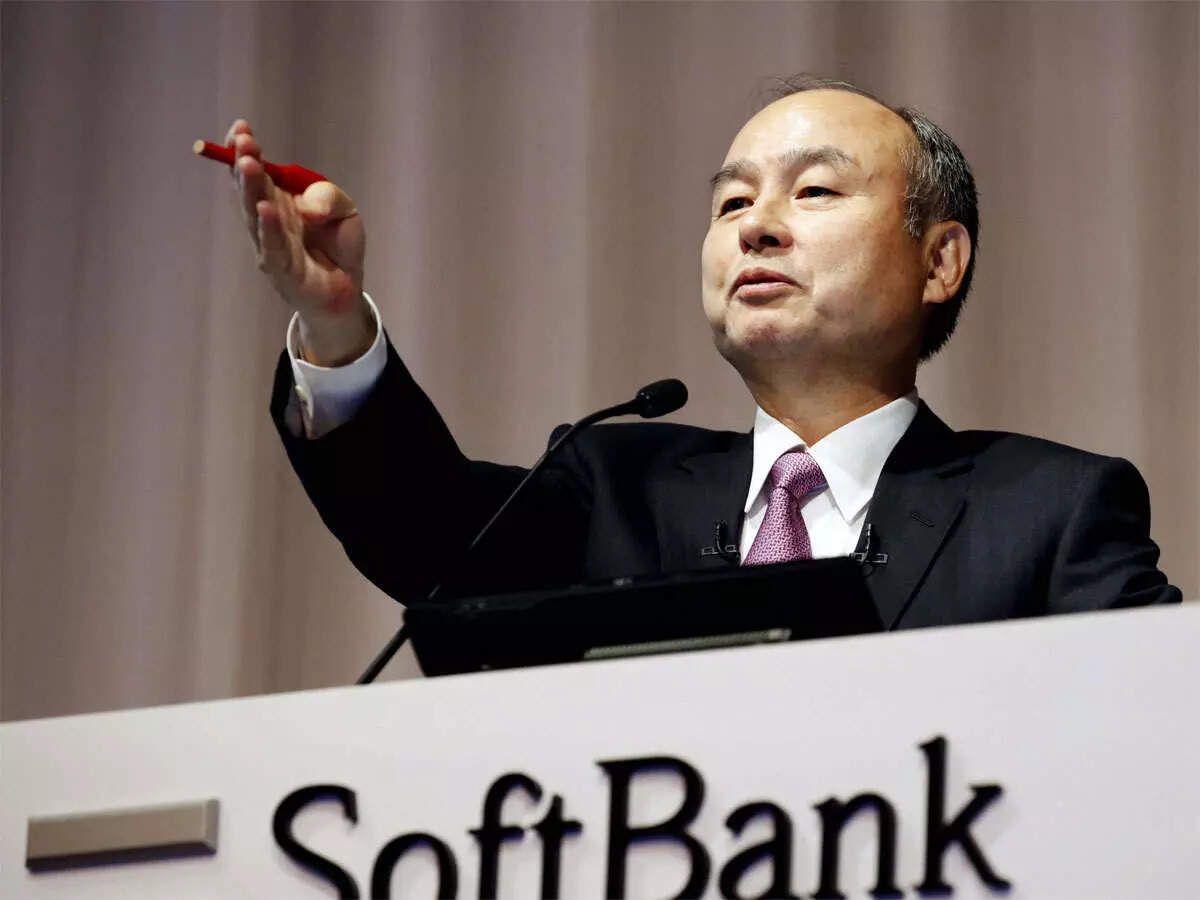
Source: ET
The additional investment will be deployed through three separate $10 billion tranches over the course of the year, lifting SoftBank's stake in OpenAI to 13% from around 11% in December
2
. Following this commitment, OpenAI will represent 30% of SoftBank's investment assets—matching its holdings in Arm, the UK-based chip designer1
. The expanded investment portfolio will likely exceed $320 billion, positioning it among the world's largest1
.Concerns Over Credit Quality and AI Innovation Risk
S&P Global identified OpenAI as one of SoftBank's investments with the "weakest" credit quality, a designation that has amplified concerns about the firm's strategic direction
1
2
. The ratings agency noted that SoftBank's AI investments predominantly involve fledgling startups and private companies, including SambaNova, Wayve, and ABB Robotics, exposing the firm to significant AI innovation risk and fierce competition1
2
.The S&P credit outlook revision reflects growing unease about portfolio liquidity. The proportion of unlisted shares in SoftBank's portfolio is expected to soar above 50% from an estimated 42% in December, further reducing liquidity
2
. "The negative outlook reflects our view that SoftBank Group's large follow-on investment in OpenAI means it will take longer than we had assumed for the company to restore the liquidity and quality of its investment assets," S&P stated1
.
Source: Silicon Republic
Impact on Loan-to-Value Ratio and Financial Pressure
The additional OpenAI commitment threatens to worsen SoftBank's loan-to-value ratio, a metric the company has used for years to demonstrate its debt repayment capacity
2
. Bloomberg Intelligence suggests that SoftBank will need to bring its adjusted LTV below 35% to defend its BB+ rating, potentially requiring substantial asset sales2
.SoftBank has already demonstrated willingness to liquidate holdings to fund founder Masayoshi Son's AI ambitions. Last November, the firm sold all of its shares in Nvidia, valued at around $5.2 billion, and previously divested stakes in T-Mobile US Inc.
1
2
. At the time, chief financial officer Yoshimitsu Goto emphasized the company's conviction in OpenAI and Arm, stating, "Together, Arm and OpenAI are powering SoftBank Group toward our goal of becoming the number one platform provider for the artificial superintelligence era"1
.Related Stories

What Lies Ahead: OpenAI IPO and Asset Sales
An OpenAI IPO would provide critical relief for SoftBank's strained investment portfolio and improve portfolio liquidity
1
2
. S&P indicated it would consider revising the outlook upward if liquidity improves through initial public offerings of assets including OpenAI, while SoftBank simultaneously maintains investment portfolio quality and enhances its loan-to-value ratio through asset sales2
.However, execution faces hurdles. Bloomberg Intelligence warns that heightened geopolitical risk and a potential AI bubble could pressure technology valuations, keeping LTV weak and potentially delaying OpenAI's already uncertain listing timeline
2
. S&P noted that while SoftBank may take measures to ease its financial burden through asset sales, "the timing and scale of those measures remain uncertain"1
. The ratings agency added that "pressure on the ratings will increase if SoftBank Group fails to take swift easing measures, such as selling holdings"2
.References
Summarized by

Navi
[1]
Related Stories
SoftBank seeks record $40 billion loan to fund OpenAI investment as AI bet intensifies
06 Mar 2026•Business and Economy

SoftBank's AI investments deliver $1.62 billion profit as OpenAI stake drives turnaround
12 Feb 2026•Business and Economy
SoftBank scrambles to deliver $22.5 billion to OpenAI as year-end deadline looms
20 Dec 2025•Business and Economy
Recent Highlights
1
Tennessee Teens Sue Elon Musk's xAI Over Grok AI-Generated Child Abuse Images
Policy and Regulation

2
Supermicro Co-Founder Indicted in $2.5 Billion Nvidia AI Chip Smuggling Scheme to China
Policy and Regulation

3
Val Kilmer to appear posthumously in As Deep as the Grave through AI-generated performance
Entertainment and Society

Recent Highlights
Today's Top Stories









Your Daily Dose of Curated AI News
Don’t drown in AI news. We cut through the noise - filtering, ranking and summarizing the most important AI news, breakthroughs and research daily. Spend less time searching for the latest in AI and get straight to action.

