SaaSpocalypse fears grip markets as AI agents challenge traditional SaaS business model


6 Sources
6 Sources
[1]
SaaS in, SaaS out: Here's what's driving the SaaSpocalypse | TechCrunch
One day not long ago, a founder texted his investor with an update: he was replacing his entire customer service team with Claude Code, an AI tool that can write and deploy software on its own. To Lex Zhao, an investor at One Way Ventures, the message indicated something bigger -- the moment when companies like Salesforce stopped being the automatic default. "The barriers to entry for creating software are so low now thanks to coding agents, that the build versus buy decision is shifting toward build in so many cases," Zhao told TechCrunch. The build versus buy shift is only part of the problem. The whole idea of using AI agents instead of people to perform work throws into question the SaaS business model itself. SaaS companies currently price their software per seat -- meaning by how many employees log in to use it. "SaaS has long been regarded as one of the most attractive business models due to its highly predictable recurring revenue, immense scalability, and 70-90% gross margins," Abdul Abdirahman, an investor at the venture firm F-Prime, told TechCrunch. When one, or a handful, of AI agents can do that work -- when employees simply ask their AI of choice to pull the data from the system -- that per-seat model starts to break down. The rapid pace of AI development also means that new tools, like Claude Code or OpenAI's Codex, can replicate not just the core functions of SaaS products but also the add-on tools a SaaS vendor would sell to grow revenue from existing customers. On top of that, customers now have the ultimate contract negotiation tool in their pockets: If they don't like a SaaS vendor's prices, they can, more easily than ever before, build their own alternative. "Even if they do not take the build route, this creates downward pressure on contracts that SaaS vendors can secure during renewals," Abdirahman continued. We saw this as early as late 2024, when Klarna announced that it had ditched Salesforce's flagship CRM product in favor of its own homegrown AI system. The realization that a growing number of other companies can do the same is spooking public markets, where the stock prices of SaaS giants like Salesforce and Workday have been sliding. In early February, an investor sell-off wiped nearly $1 trillion in market value from software and services stocks, followed by another billion later in the month. Experts are calling it the SaaSpocalypse, with one analyst dubbing it FOBO investing -- or fear of becoming obsolete. Yet the venture investors TechCrunch spoke with believe such fears are only temporary. "This isn't the death of SaaS," Aaron Holiday, a managing partner at 645 Ventures, told TechCrunch. Rather, it's the beginning of an old snake shedding its skin, he said. The public market pattern is best illustrated through Anthropic's recent product launches. The company released Claude Code for cybersecurity, and related stocks dropped. It released legal tools in Claude Cowork AI, and the stock price of the iShares Expanded Tech-Software Sector ETF -- a basket of publicly traded software companies that includes firms like LegalZoom and RELX -- also dropped. In some ways, this was expected, as SaaS companies had long been overvalued, investors said. It also doesn't help that these companies did the bulk of their growing during the zero-interest-rate era, which has since ended. The cost of doing business rises when the cost of borrowing money increases. Public market investors typically price SaaS companies by estimating future revenue. But there is no telling whether in one year or five years anyone will be using SaaS products to the extent they once did. That's why every time a new advanced AI tool launches, SaaS stocks feel a tremor. "This may be the first time in history that the terminal value of software is being fundamentally questioned, materially reshaping how SaaS companies are underwritten going forward," Abdirahman said. That's because slapping AI features on top of existing SaaS products may not be enough. A horde of AI-native startups is rising at a record pace, having completely redefined what it means to be a software company. Software is now easier and cheaper to build, meaning it's easier to replicate, Yoni Rechtman, a partner at Slow Ventures, told TechCrunch. That's good news for the next generation of startups, but bad news for the incumbents that spent years building their tech stacks. On the other hand, the market also lacks enough time and evidence to show that whatever new business model emerges the SaaS's wake will be worthwhile. AI companies are sometimes pricing their models based on consumption, meaning customers pay based on how much AI they use, measured in tokens (which each model provider defines slightly differently). Others are working on "outcome-based pricing," where fees are charged based on how well the AI actually works. This, ironically, is the current approach of former Salesforce CEO Bret Taylor's AI startup, Sierra, a quasi-Salesforce competitor that offers customer service agents. The approach appears, so far, appears to be working. In November, Sierra hit $100 million in annual recurring revenue in less than two years. There was once also the idea that cloud-based software like SaaS sells would never depreciate and that it could last for decades. This is still true in some ways compared to what came before -- on-premises software, which companies had to install and maintain on their own servers. But being in the cloud doesn't protect SaaS vendors from an entirely new technology rising to compete: AI. Investors are rightfully nervous as AI-native companies pop up, adapt, adopt, and build technology much faster than a traditional SaaS company can move. SaaS companies are, after all, themselves the incumbents, having replaced old-school on-premises vendors in the last era of disruption. This SaaSpocalypse calls to mind that Taylor Swift lyric about what happens when "someone else lights up the room" because "people love an ingénue." "The most important thing to understand about the SaaS pullback is that it is simultaneously a real structural shift and potentially a market overreaction," Abdirahman said, adding that investors typically "sell first and ask questions later." Public-market SaaS companies aren't the only ones feeling a chill from investors. A Crunchbase report released Wednesday showed that, though the IPO market seems to be thawing for some sectors, there haven't been -- and aren't expected to be -- any venture-backed SaaS filings on the horizon. Holiday said this may be because there is a lot of pressure on large, private, late-stage SaaS companies like Canva and Rippling given the persnickety IPO window, high expectations driven by AI advancements, and the unsteady stock price of already public SaaS companies. Some of these companies, including mid-size SaaS companies, have even struggled to raise extension rounds in the private market, Holiday said, over the same fears public investors have. "Nobody wants to be subjected to the volatility of public markets when sentiment can send companies into downward tailspins," Rechtman said, adding he expects to see companies like these to stay private for much longer. Meanwhile, the public market waits to get a good look at the finances of the first AI-native companies hoping to IPO. The scuttlebutt says that both OpenAI and Anthropic are contemplating IPOs, maybe even later this year. The most likely outcome is something that weaves the old and the new together, as tech disruptions always have. Holiday said most of the new features companies are toying with these days "won't stick" and that enterprises will always need software that meets compliance regulations, supports audits, manages workflow, and offers durability. "Durable shareholder value isn't built on hype," he continued. "It's built on fundamentals, retention, margins, real budgets, and defensibility."
[2]
SaaS-pocalypse isn't coming any time soon
Lost among the investor froth, someone has to do all the boring stuff. And they'll probably be around for the next spin of the hype cycle Opinion Say goodbye to the SaaS-pocalypse theory, which posits that advances in AI will bring the software-as-a-service market to its knees. Say hello to "a feedback loop with no natural brake." Or doomster porn, as others would have it. At the beginning of this week, we woke up to a world where a single tech-related post could shake the US stock market and wipe billions of dollars off the value of favorites such as DoorDash and Uber. According to the UK's Guardian newspaper, Citrini Research is a little-known US firm that provides insights on "transformative megatrends." Nonetheless, the firm's blog post showed that it could have a big impact by jumping on the SaaS-pocalypse bandwagon and setting off some firecrackers. Loosely, it imagines that the impact of LLM-based AI on the market for SaaS is such that by June 2028, US unemployment will hit 10 percent. Former Salesforce staffers will have to work as Uber drivers. Incumbent application providers will be forced to slash prices. "SaaS wasn't 'dead,'" points out a fictional commentator from 2028 in the post. "There was still a cost-benefit analysis to running and supporting in-house builds. But in-house was an option, and that factored into pricing negotiations. Perhaps more importantly, the competitive landscape had changed. AI had made it easier to develop and ship new features, so differentiation collapsed. Incumbents were in a race to the bottom on pricing - a knife-fight with both each other and with the new crop of upstart challengers that popped up," More sage commentators were on hand to pour cold water on the wild speculation. Former FT journalist and Evercore ISI analyst Krishna Guha wrote: "Even if the tech and microeconomics were to evolve in line with this scenario, it is highly unlikely that the macro would, as this would require a set of extreme and improbable conditions to hold." The CEO of cloud-based data warehouse and platform company Snowflake was also on hand to add a bit of sobriety to the SaaS-pocalypse party. Sridhar Ramaswamy said: "It's useful to step back and look at the impact that AI as a whole is having on software. We spend a lot of time looking at this. We live this - and our take is that overall, the winners are going to be the companies that provide that single source of enterprise truth. No AI model is going to help you if there are four sources of the truth. Similarly, having built-in security, auditability, trust or even governance over access, who can access what data set is critical." Speaking to investors, Ramaswamy's take was bound to be a bit self-serving. Snowflake wants its platform to be that single source of truth. But he has a point. It is not just the cost of building software that prevents newcomers from taking chunks out of the enterprise software market; it is inertia. Oracle, Salesforce, and SAP have such an advantage because user data is already in these systems and users are habituated to their processes. Oracle and SAP still have a heavy on-prem footprint, but they are slowly but surely converting customers to SaaS, whether customers want to go there or not. Sure, automation will cut costs, but all the SaaS vendors are already building that automation into their stacks. Gartner says that, at least in the short to medium term, users will be happy to deploy AI agents from the application environment they already have. It's true that SaaS-only companies may be overvalued. The growth trajectory they have enjoyed in the last decade or so will be unsustainable simply through the law of large numbers. More vendors are entering the market and on-prem vendors are converting customers to SaaS. But businesses and public sector organizations are notoriously slow-moving and risk-averse when it comes to their transactional applications. They need to have the people to make sure it works and that the data is coherent, well-governed, and mostly accurate. It might be boring, but it's true. And for now, boring might be the best way to be. ®
[3]
The Tech Download: Software was going to eat the world. Now it's facing an 'existential' crisis
He added that while investor fears were "overblown" and share prices could pare losses in the coming six months, it was unlikely they'd fully recover in that time. The most exposed to the AI risk are "horizontal point-solution SaaS vendors", said Forrester's principal analyst Kate Leggett. But those that offer differentiated solutions that address complex industries in areas like healthcare or manufacturing, or that control unique, proprietary data will survive, she added. The idea that complex software developed over decades could be replicated in-house using AI tools isn't "viable," Field said. Consumer AI platform developers like Google parent Alphabet, OpenAI and Anthropic have limited experience creating "enterprise class" software, HSBC analysts said in a note on Tuesday. The bank has a buy rating on a slew of software stocks, many of which have dipped in recent months, including ServiceNow, Salesforce and Crowdstrike. Software has big-name defenders. On Wednesday, chip giant Nvidia CEO Jensen Huang told CNBC the markets "got it wrong" on the threat AI poses to software companies. But the software selloff is different to earlier tech shocks because it's not driven by "over-exuberance or excessive valuation," said Markham. Instead there are "existential question marks" around a business model that had previously been given a valuation premium by investors. "Combined with the astonishing levels of capex being lavished on AI by the hyperscalers and others, it is hard to argue that this does not spell trouble and markets have voted with their feet," he added.
[4]
Software gets relief as AI trade recalibrates
The big picture: The AI trade is splitting in two. Infrastructure must clear impossibly high bars. Software is getting some room to prove it can turn AI into durable revenue. The feared "SaaSpocalypse" hasn't materialized -- but neither has unquestioned growth. Catch up quick: Nvidia, which makes the chips powering AI, reported blockbuster earnings Wednesday. Even that wasn't enough: the stock fell over 5% Thursday. * Salesforce -- battered by AI anxiety for much of the past year -- eased fears that AI will decimate traditional software. Shares rose 4%. "This is not our first SaaSpocalypse," Salesforce CEO Marc Benioff said on Wednesday's earnings call, recalling similar fears in 2020. "We made it through that... and we're going to make it through this one as well." Zoom in: Salesforce didn't blow the doors off with Q4 results, but did give investors a better-than-expected forecast for long-term revenue. Its Agentforce AI product generated $800 million in recurring revenue in the quarter, up from $500 million previously. * "Agentic AI is a tailwind for our business," Benioff said in a statement. On the flip side is Nvidia. It's stock drop wasn't about a miss. It was about an increasingly high bar to impress investors. Infrastructure is already priced for acceleration. Between the lines: Thursday's moves reflect a broader short-term investor rotation out of semiconductors and into software. * The spread seen Thursday between the two hasn't been this tilted toward software since the DeepSeek-driven AI unwind 13 months ago, Jefferies analyst Jeffrey Favuzza wrote in a note today. Yes, but: It's a sharp one-day move -- but far from a trend change, Jefferies analyst Jeffrey Favuzza noted today. Long-only investors aren't ready to declare an "all clear" for software just yet, he wrote. Reality check: Over the past 12 months, Nvidia shares are up over 40%, while Salesforce is down 35%. * And the potentially dramatic impact of AI on a tech workforce was seen in Jack Dorsey's announcement Thursday that he will cut 40% of Block's workforce, citing emerging tools that make it easier to do the company's work. What we're watching: More software earnings ahead.
[5]

Why Sequoia's Alfred Lin isn't worried about the SaaS-pocalypse | Fortune
In an era of vibe-coding, words still have some meaning. Or at least, they do when they're harbingers of doom, foretelling a world of mass unemployment and economic ruin. Just over a week ago, a Substack essay by the investment research firm Citrini Research went viral on social media, sparking a market plunge based on its prediction of near-term, AI-spurred financial collapse. Citrini was far from the only voice prophesying such a pessimistic future. As Allie recently wrote about, public markets have been spooked for weeks by the so-called SaaS-pocalypse, where valuable software companies like Salesforce, Adobe, and Workday see their moats eroded by AI agents. And even beyond the individual companies themselves, there are well-founded concerns that private equity funds have become over-indexed in flimsy software stakes that could trigger a wider collapse. Other established analysts have pushed back against Citrini's fear-mongering, which one Fortune editor described as "a highly speculative piece of financial fiction." That includes Citadel, whose Frank Flight pointed out that demand for software engineers is rising rapidly and that white-collar jobs are unlikely to be replaced by agents anytime soon due to the cost and availability of compute. Still, I was curious how top venture capitalists -- the only type of professional investors likely more exposed to software than private equity firms -- were feeling about their portfolios. Last week, I had the chance to catch up with Sequoia partner, and new co-steward, Alfred Lin. He recently co-led the Series A for a financial AI platform called Rowspace, which allows investment operations like private equity firms to sift through years of their own complex data. Rowspace's pitch is not unlike what Claude Cowork purports to do, but Lin said that he wasn't worried about the inevitable challenge from the Anthropics of the world. "The notion that SaaS is dead, I think, is overblown," he told me. "This whole notion that foundation models are going to take over and everything will only work on the foundation model -- it's not quite how things work." Lin brought up a historical analog. When personal computers first came out, users had to use command-line interfaces to execute applications. Then, of course, came along graphical user interfaces, which allowed users to more easily interact with programs. "People want simple," he said. "They want to do things a particular way or certain way, and the foundation model is not going to be able to cater to every single way that someone wants to do [something] in all these different industries." Aside from all of the other obvious moats, from network effects to data security, Lin said the biggest advantage for founders today is being willing to be AI native and to move faster than competitors. "The proliferation of vertical SaaS has been a profitable way to invest," he put simply. "I think there will be a proliferation of vertical AI companies too." Leo Schwartz X: @leomschwartz Email: [email protected] Submit a deal for the Term Sheet newsletter here. Joey Abrams curated the deals section of today's newsletter. Subscribe here. - RMG ML Sports Holdings, an Incline Village, Nevada-based blank check company led by Riverside Management Group's James Carpenter, filed to raise up to $261 million in an initial public offering of 26.1 million units priced at $10. - Edison Oncology Holding, a Menlo Park, Calif.-based Phase 2 biotech company, withdrew its plans for an initial public offering. It had filed to raise $25 million in an offering of 2.8 million shares priced between $8 and $10.
[6]

SaaS: Is There Opportunity in the Destruction? | Investing.com UK
A specter is haunting Wall Street -- the specter of the "SaaSpocalypse." Since the iShares Expanded Tech-Software Sector ETF (NYSE:IGV) peaked on September 19, 2025, it has fallen roughly 30%. For context, the broad technology indexes like XLK and QQQ are essentially flat over the same period, and the semiconductor ETF (SMH) is up 30%. Between mid-January and mid-February 2026 alone, approximately one trillion dollars was wiped from the collective value of software stocks, with the S&P North American Software Index posting its worst monthly decline since the 2008 financial crisis. The catalyst was a series of AI product launches, most notably Anthropic's Claude Cowork tool and OpenAI's enterprise agent, Frontier, demonstrating that AI agents can now handle complex knowledge work autonomously. The market's interpretation was simple. If AI agents can replicate what enterprise software does, then enterprise software is finished. That is the narrative that has taken hold in recent weeks. The consequence has been brutal. Workday (NASDAQ:WDAY) is down 35% year-to-date. Adobe (NASDAQ:ADBE) has shed 26%. Salesforce (NYSE:CRM), 25%. Atlassian (NASDAQ:TEAM) plunged 35% in a single week. Even Microsoft, the ultimate blue chip, fell by more than 10%. The thesis is straightforward enough. Generative AI can now write code, automate workflows, and rapidly and cheaply create customized applications. Therefore, if enterprises can build their own "disposable software," micro-apps tailored to specific workflows, instead of paying bloated subscription fees, then the traditional per-seat SaaS pricing model is dead. Potentially worse is that AI lowers barriers to entry, enabling more competitors to quickly replicate existing software. Such would compress margins and weaken the moats that once protected large software firms. It is a compelling narrative. The question investors must answer is whether it is true. Like most market narratives, the SaaSpocalypse contains some truth, a great deal of speculation, and several outright falsehoods. The most important rebuttal is that the value of enterprise software has never resided solely in its code. Enterprise software encodes institutional architecture. That architecture is the deep domain knowledge, compliance frameworks, workflow logic, and years of organizational customization that companies depend on to function. Think about it this way. If you are a medium to large enterprise dependent on data to service customers, maintain workflows, and fulfill orders, are you going to trust something that AI created that is potentially unreliable or error-ridden? Or, are you more likely to rely on software with deep local context, reliable outputs, and that has been rigorously tested and debugged over years of application use? "Add deep workflow embedding to the mix and the picture becomes clearer still. When a SaaS platform is the system of record inside core banking, hospital EHRs, or government case management, replacement isn't a technical decision, it's an organisational trauma. Staff retraining, data migration, permission re-architecture, and regulatory re-certification make a rip-and-replace approach impractical, even when a cheaper AI-built alternative exists on paper." - LiveWire Furthermore, the underlying data does not support the skepticism either. Gartner's February 2026 forecast projects worldwide software spending will grow 14.7% in 2026 to more than $1.4 trillion, accelerating from 11.5% growth in 2025. That represents roughly $180 billion in net new software spending in a single year. Global SaaS spending specifically is projected to rise from $318 billion in 2025 to $576 billion by 2029, according to Forrester. The reality is that enterprises are not abandoning software; they are spending more on it. As Mark Gardner recently noted: "However, this sell-off is analytically lazy. And it's being driven, at least in part, by the very technology it fears hallucinating on its own research. We believe the difference this time is that investors have the opportunity to look through the noise and identify the SaaS businesses where the structural moats are not just intact, they're actually widening. It was also fascinating to listen to Salesforce CEO Marc Benioff in CRM's latest quarterly earnings report. He specifically addressed the panic, invoking the term "SaaSpocalypse" at least 6 times. His point was blunt: this is not Salesforce's first existential scare, and AI is making their products more valuable, not less. The company introduced a new metric, agentic work units, designed to capture the output-driven value of its AI-enabled platform. More importantly, Gartner's own analysts note that GenAI features are now ubiquitous across enterprise software and are increasingly costly. In other words, the cost of software is going up precisely because of AI, not in spite of it. There is a meaningful difference between a technology that changes how software works and one that makes software unnecessary. If the SaaSpocalypse narrative proves to be more panic than prophecy, the critical task becomes identifying which companies will emerge stronger. Forrester's research provides a useful framework: horizontal point-solution vendors with low switching costs and weak enterprise integration face genuine existential risk. But vertical- or domain-specific SaaS vendors, those addressing complex industries like healthcare, manufacturing, or financial services, or those controlling unique proprietary data, have a substantially greater chance of survival and even growth. Furthermore, even before the "SaaSpocalypse" began, the revaluation of these companies was already well underway, and current prices are nowhere near the 2021 froth levels. Therefore, as investors, we need to think about "separating the wheat from the chaff." While valuations and fundamentals are important, the key will be finding the companies best positioned in the market. Those companies share several characteristics. The table below highlights eight companies across four categories whose reported metrics most closely align with the characteristics that separate durable SaaS businesses from vulnerable ones. So, where do you start your process? For investors, the current dislocation presents both a challenge and an opportunity. The biggest challenge is overcoming the "fear of loss." Loss-avoidance is an emotional behavior that impedes our ability to "buy low," as we fear prices will keep falling indefinitely. However, logic and fundamentals quickly refute that concern. However, it is a "barrier to entry" that keeps investors sidelined when prices decline, even as opportunities increase. The statistical evidence of overshoot is significant. As Michael Lebowitz noted last week, the price ratio between IGV and XLK has diverged by nearly four standard deviations from historical norms over the past 100 days. Based on the five-year relationship, either XLK is 10% overpriced, or IGV is 10% underpriced. When statistical relationships stretch this far, mean reversion eventually follows -- though we caution that in environments where narratives are this powerful, divergences can persist longer than models suggest. With this in mind, we suggest that doing your homework rather than listening to narratives is where the opportunity lies. Therefore, the right approach is to be surgical, rather than thematic. Rather than buying the entire beaten-down sector via IGV, which is okay if you only seek "average" returns, we think focusing on individual company fundamentals will yield better results. Therefore, here are a few metrics you can use to separate genuine AI beneficiaries from vulnerable incumbents. These metrics include: A sustained SaaS recovery, as EBC Financial Group's analysis notes, will likely require at least two of three conditions: We think the latter two are the most likely. For now, investors should remain cautiously positioned. Make small bets, manage your risk exposure, and give yourself plenty of time. The recognition of value often takes longer than logic would suggest, particularly when negative momentum is strong. The SaaSpocalypse makes for dramatic headlines, but the idea that AI agents will simply devour enterprise software whole ignores both the data and the institutional complexity of the businesses being disrupted. The real risk for investors is not that they are too slow to sell their SaaS holdings. It is that they eventually get stampeded by market panic into undervaluing companies whose competitive positions are, in many cases, strengthening. Discipline, not panic, is the appropriate response.
Share
Share
Copy Link
The SaaS industry faces mounting pressure as AI agents enable companies to build software in-house, threatening per-seat pricing models. Investor fears wiped nearly $1 trillion from software stocks in February, with Salesforce and Workday sliding. Yet venture investors argue this isn't the death of SaaS—it's an evolution demanding AI-native approaches and vertical specialization.
AI Agents Disrupt the SaaS Business Model
The SaaS industry confronts an existential crisis as AI agents reshape how companies approach software. When a founder recently texted his investor about replacing an entire customer service team with Claude Code, an AI tool that writes and deploys software independently, it signaled a fundamental shift. Lex Zhao, an investor at One Way Ventures, sees this as the moment when companies like Salesforce stopped being the automatic default
1
.
Source: TechCrunch
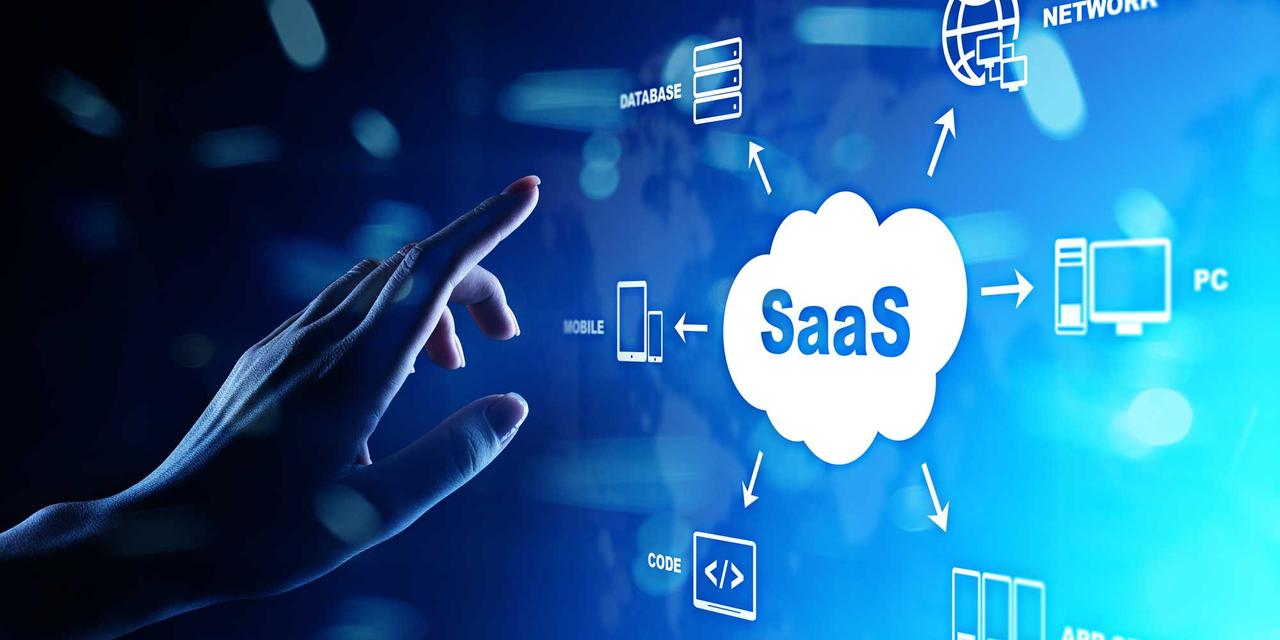
The barriers to entry for creating software have dropped dramatically thanks to coding agents, pushing the build versus buy decision toward in-house software development. This shift strikes at the heart of how SaaS companies generate revenue. Traditional per-seat pricing—where companies pay based on how many employees log in—breaks down when one or a handful of AI agents can perform work previously requiring entire teams
1
.
Source: The Register
Software Stocks Face Trillion-Dollar Selloff
Public markets have responded with alarm. In early February, an investor sell-off wiped nearly $1 trillion in market value from software and services stocks, followed by another billion later in the month
1
. Analysts call it the SaaSpocalypse, with one dubbing it FOBO investing—fear of becoming obsolete.The pattern became clear through Anthropic's product launches. When the company released Claude Code for cybersecurity, related stocks dropped. When it unveiled legal tools in Claude Cowork AI, the iShares Expanded Tech-Software Sector ETF—including firms like LegalZoom and RELX—also declined
1
. This software selloff differs from earlier tech shocks because it's not driven by over-exuberance or excessive valuation, but by existential question marks around a business model that previously commanded premium valuations3
.Salesforce Shows Signs of Resilience Amid AI Trade Recalibration
Yet the feared collapse hasn't materialized. Salesforce CEO Marc Benioff told investors on Wednesday's earnings call: "This is not our first SaaSpocalypse. We made it through that... and we're going to make it through this one as well"
4
. The company's Agentforce AI product generated $800 million in recurring revenue in the quarter, up from $500 million previously. Salesforce shares rose 4%, while Nvidia—despite blockbuster earnings—fell over 5%4
.This reflects a broader short-term investor rotation out of semiconductors and into software. The spread between the two hasn't tilted this heavily toward software since the DeepSeek-driven AI unwind 13 months ago, according to Jefferies analyst Jeffrey Favuzza
4
.Enterprise Software Incumbents Hold Key Advantages
Snowflake CEO Sridhar Ramaswamy argues that winners will be companies providing a single source of enterprise truth. "No AI model is going to help you if there are four sources of the truth," he told investors. Built-in data security, auditability, and governance over access remain critical
2
.Oracle, Salesforce, and SAP maintain advantages because user data already resides in these systems and users are habituated to their processes. The idea that complex software developed over decades could be replicated in-house using AI tools isn't viable, according to analysts
3
. Consumer AI platform developers like OpenAI and Anthropic have limited experience creating enterprise-class software, HSBC analysts noted3
.Related Stories
Sequoia's Alfred Lin Sees Opportunity in Vertical AI Companies
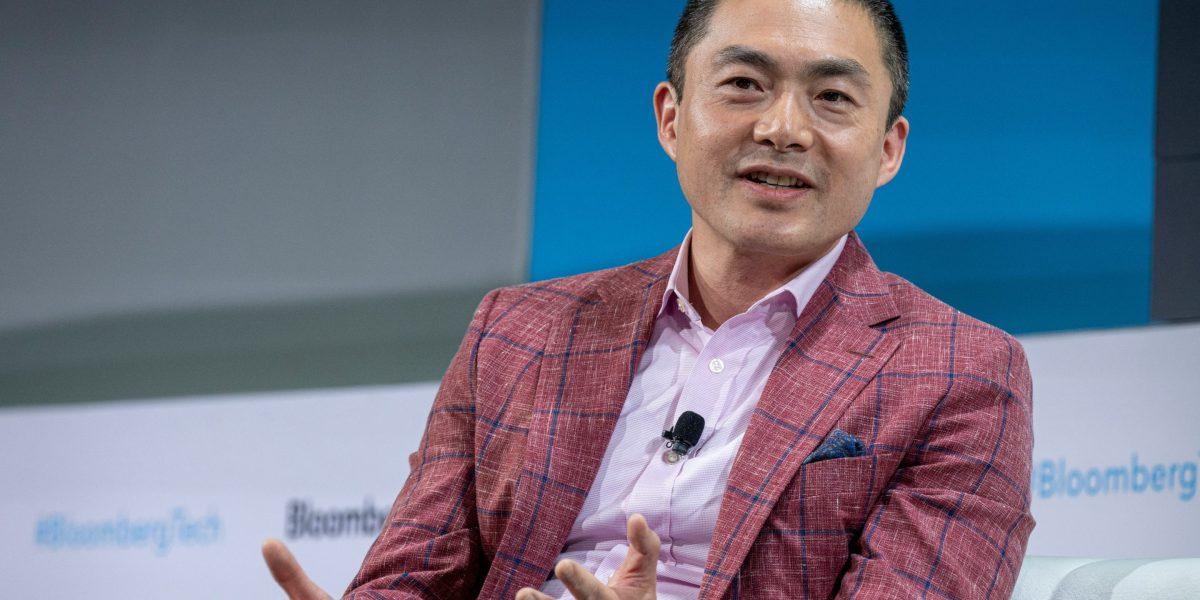
Sequoia partner Alfred Lin dismisses the doom narrative. "The notion that SaaS is dead, I think, is overblown," he said. "This whole notion that foundation models are going to take over and everything will only work on the foundation model—it's not quite how things work"
5
.
Source: Fortune
Lin draws a historical parallel to personal computers. When they first emerged, users navigated command-line interfaces. Then came graphical user interfaces that simplified interaction. "People want simple," he explained. "They want to do things a particular way or certain way, and the foundation model is not going to be able to cater to every single way that someone wants to do [something] in all these different industries"
5
.The biggest advantage for founders today is being willing to adopt AI-native approaches and move faster than competitors. "The proliferation of vertical SaaS has been a profitable way to invest," Lin stated. "I think there will be a proliferation of vertical AI companies too"
5
.New Pricing Models Emerge as Industry Adapts
The market lacks sufficient time and evidence to determine what business model will replace traditional SaaS. Some AI companies price based on consumption-based pricing, where customers pay based on usage measured in tokens. Others experiment with outcome-based pricing, where fees depend on how well the AI performs
1
.Abdul Abdirahman, an investor at F-Prime, notes that "this may be the first time in history that the terminal value of software is being fundamentally questioned, materially reshaping how SaaS companies are underwritten going forward"
1
. Forrester principal analyst Kate Leggett identifies horizontal point-solution SaaS vendors as most exposed to AI risk, while those offering differentiated solutions in complex industries like healthcare or manufacturing, or controlling unique proprietary data, will survive3
.While investor fears have shaken markets, the reality appears more nuanced. Businesses remain notoriously slow-moving and risk-averse with transactional applications. They need people to ensure systems work and data maintains coherence and governance
2
. Aaron Holiday, managing partner at 645 Ventures, frames it simply: "This isn't the death of SaaS. Rather, it's the beginning of an old snake shedding its skin"1
.References
Summarized by

Navi
[2]
[3]
Related Stories
AI agents trigger $1 trillion software selloff as enterprise giants face existential threat
12 Feb 2026•Business and Economy

Software Stocks Tumble as AI Disruption Fears Trigger M&A Activity and Private Equity Interest
22 Jan 2026•Business and Economy

AI disruption risk reshapes stock market as software stocks tumble while hardware firms surge
06 Feb 2026•Business and Economy
Recent Highlights



Recent Highlights
Today's Top Stories










Your Daily Dose of Curated AI News
Don’t drown in AI news. We cut through the noise - filtering, ranking and summarizing the most important AI news, breakthroughs and research daily. Spend less time searching for the latest in AI and get straight to action.

