Musk and Bezos ignite space race as orbital data centers emerge to solve AI's energy crisis


9 Sources
9 Sources
[1]
Galactic Brain space datacenter promised in 2027
Getting inferencing infrastructure into orbit may soon be cheaper than building it down here Space startup Aetherflux says it plans to put its first data center satellite into orbit during the first quarter of 2027. The company, founded and run by Baiju Bhatt, co-founder of financial firm Robinhood, sees satellites as a time-saving alternative to terrestrial data center construction, which can take five or more years. "The race for artificial general intelligence is fundamentally a race for compute capacity, and by extension, energy," said Bhatt in a statement. "The elephant in the room is that our current energy plans simply won't get us there fast enough." Amid the baffling absence of funding constraints, efforts to scale artificial intelligence remain gated by the availability of data center capacity and energy. Mundane concerns like land acquisition, utility connections, and creating sturdy structures can be bypassed for the cost of lifting kit beyond the Kármán line. The cost to launch 1 kg on SpaceX's Falcon Heavy comes to about $1,400, according to recent estimates. Per Google's calculations, if launch costs drop to around $200 per kg, as projected by 2030, the outlay required to set up and run space-based data centers would be comparable to ground-based operations. Bhatt calls the satellite constellation project "Galactic Brain," though the solar-powered data satellites won't have such a vast remit - they'll just be orbiting the Earth alongside a growing number of other objects. Aetherflux joins Orbits Edge and Starcloud, not to mention Google and Nvidia, as companies with ambitions to put data centers in space, the final (minimally regulated) frontier now that data centers have been sunk into the ocean and buried underground. Bhatt's biz was founded in 2024 and scored $60 million of funding for the purpose of demonstrating the viability of beaming energy from space to Earth via infrared laser. It aims to launch a satellite capable of doing so in 2026. The company's space data center plans represent an expansion on its initial vision. Aetherflux isn't yet ready to talk about pricing. "Our first product will focus on AI inference general-purpose compute for customers," a company spokesperson told The Register by email. "We do not have a price point to disclose at this time." But for a to-be-determined fee, the company aims to provide "multi-gigabit level bandwidth with nearly constant uptime." When the company gets around to doing regular launches, it anticipates sending about 30 satellites up at a time on a SpaceX Falcon 9 or equivalent launcher. If SpaceX's Starship becomes an option, Aetherflux could orbit 100 or more datacenter sats in a single launch. Asked about the life expectancy of its birds, given that GPUs may not last more than a few years under high utilization and radiation, Aetherflux's spokesperson said: "Our approach is to continuously launch new hardware and quickly integrate the latest architectures. Older systems will run lower priority tasks and serve out the full useful lifetime of high-end GPUs." ®
[2]
'Greetings, earthlings': Nvidia-backed Starcloud trains first AI model in space as orbital data center race heats up
Starcloud's output Gemma in space. Gemma is a family of open models built from the same technology used to create Google's Gemini AI models. Starcloud wants to show outer space can be a hospitable environment for data centers, particularly as Earth-based facilities strain power grids, consume billions of gallons of water annually and produce hefty greenhouse gas emissions. The electricity consumption of data centers is projected to more than double by 2030, according to data from the International Energy Agency. Starcloud CEO Philip Johnston told CNBC that the company's orbital data centers will have 10 times lower energy costs than terrestrial data centers. "Anything you can do in a terrestrial data center, I'm expecting to be able to be done in space. And the reason we would do it is purely because of the constraints we're facing on energy terrestrially," Johnston said in an interview. Johnston, who co-founded the startup in 2024, said Starcloud-1's operation of Gemma is proof that space-based data centers can exist and operate a variety of AI models in the future, particularly those that require large compute clusters. "This very powerful, very parameter dense model is living on our satellite," Johnston said. "We can query, it and it will respond in the same way that when you query a chat from a database on Earth, it will give you a very sophisticated response. We can do that with our satellite." In a statement to CNBC, Google DeepMind product director Tris Warkentin said that "seeing Gemma run in the harsh environment of space is a testament to the flexibility and robustness of open models." In addition to Gemma, Starcloud was able to train NanoGPT, an LLM created by OpenAI founding member Andrej Karpath, on the H100 chip using the complete works of Shakespeare. This led the model to speak in Shakespearean English. Starcloud -- a member of the Nvidia Inception program and graduate from Y Combinator and the Google for Startups Cloud AI Accelerator -- plans to build a 5-gigawatt orbital data center with solar and cooling panels that measure roughly 4 kilometers in both width and height. A compute cluster of that gigawatt size would produce more power than the largest power plant in the U.S. and would be substantially smaller and cheaper than a terrestrial solar farm of the same capacity, according to Starcloud's white paper. These data centers in space would capture constant solar energy to power next-generation AI models, unhindered by the Earth's day and night cycles and weather changes. Starcloud's satellites should have a five-year lifespan given the expected lifetime of the Nvidia chips on its architecture, Johnston said. Orbital data centers would have real-world commercial and military use cases. Already, Starcloud's systems can enable real-time intelligence and, for example, spot the thermal signature of a wildfire the moment it ignites and immediately alert first responders, Johnston said. "We've linked in the telemetry of the satellite, so we linked in the vital signs that it's drawing from the sensors -- things like altitude, orientation, location, speed," Johnston said. "You can ask it, 'Where are you now?' and it will say 'I'm above Africa and in 20 minutes, I'll be above the Middle East.' And you could also say, 'What does it feel like to be a satellite? And it will say, 'It's kind of a bit weird' ... It'll give you an interesting answer that you could only have with a very high-powered model." Starcloud is working on customer workloads by running inference on satellite imagery from observation company Capella Space, which could help spot lifeboats from capsized vessels at sea and forest fires in a certain location. The company will include several Nvidia H100 chips and integrate Nvidia's Blackwell platform onto its next satellite launch in October 2026 to offer greater AI performance. The satellite launching next year will feature a module running a cloud platform from cloud infrastructure startup Crusoe, allowing customers to deploy and operate AI workloads from space. "Running advanced AI from space solves the critical bottlenecks facing data centers on Earth," Johnston told CNBC. "Orbital compute offers a way forward that respects both technological ambition and environmental responsibility. When Starcloud-1 looked down, it saw a world of blue and green. Our responsibility is to keep it that way," he added.
[3]
SpaceX Hypes 2026 IPO With Predictable Ingredient: AI in Orbit
SpaceX is reportedly preparing a 2026 initial public offering that would raise over $30 billion, targeting a valuation of about $1.5 trillion. Part of the funding is said to toward an ambitious venture that CEO Elon Musk and other tech billionaires have been eyeing for some time now: AI in space. As data centers proliferate across the U.S. to support surging demand for AI training and operation, the resulting strain on energy, water, and land resources is becoming impossible to ignore. Facing limits on the growth of this booming industry, Big Tech has proposed another solution: building data centers in orbit. Two sources familiar with SpaceX’s IPO plans told Bloomberg the company expects to use some of the new capital to develop orbital data centers, including purchasing the chips required to build them. Musk has expressed strong interest in the idea in recent weeks, claiming that SpaceX could leverage Starlink for this purpose. “Simply scaling up Starlink V3 satellites, which have high speed laser links would work. SpaceX will be doing this,†he posted on X in late October. During a recent event with Baron Capital, Musk said he sees a path to putting 100 gigawatts of computing power from solar-powered AI satellites into orbit each year. Gizmodo reached out to SpaceX for comment but did not receive a response by the time of publication. Proponents of orbital data centers say their advantage lies in tapping limitless solar energy while avoiding the environmental and public-health consequences of building them on Earth. Meanwhile, critics contend that the expense and technological complexity of putting data centers in the unforgiving environment of space makes the idea impractical. Many tech billionaires, including Musk, fall squarely into the “proponents†category. With a blockbuster IPO on the horizon and Musk's forecast that SpaceX's newest rocket will start launching Starlink V3 satellites in 2026 as well, the company does appear uniquely well-positioned to lay the groundwork for orbital server farms. It’s unclear exactly how SpaceX would adapt its Starlink architecture for AI data centers, or how much this venture would cost. It would be a major leap, but not an impossible one. Each Starlink V3 satellite is expected to have a downlink speed of 1 terabyte per second, a 10-fold increase from the V2 mini Starlink satellites, which is comparable to terrestrial data centers. It's also not yet clear how much processing power SpaceX can pack into each spacecraft. A large hurdle will be launching the many Starlink V3 satellites required to build the equivalent of a terrestrial data center. SpaceX can already launch thousands of satellites per year with its Falcon 9 rocket. But the V3s will be much bigger and will need to launch on Starship, which is not yet fully operational. Even if SpaceX hits the ground running next year, it could take decades to achieve this goal. SpaceX isn’t the only company interested in orbital data centers. Blue Origin founder Jeff Bezos has also touted them as a viable way to protect Earth’s resources and the AI industry’s growth, predicting that humans will start building gigawatt-scale orbital data centers within the next 10 to 20 years. In November, Google announced Project Suncatcher, a research initiative aimed at building its own satellite-based orbital data centers. Several smaller companies are also developing space-based data center technologies, including Aetherflux, Lonestar Data Holdings, and Axiom Space. The potential advantages of moving these facilities off the Earth have clearly captured the tech sector’s attention. Though SpaceX has not publicly confirmed plans for an IPO or for investment in orbital data center research and development, its reputation as an aerospace pioneer means these rumors are likely to spur competitors’ interest in taking AI infrastructure to space.
[4]
Bezos vs Musk: Space race heats up with new orbital data center push
Elon Musk and Jeff Bezos both believe space data centers can overcome AI's power problem. The world is gearing up for the generative AI boom, for better and worse. Scientists are warning that AI will create a massive, unsustainable energy demand. The data centers used to train and run these AI systems consume a huge amount of power, and this is expected to skyrocket in the coming years. In a bid to overcome this problem, several firms have announced plans to develop data centers in space. Last month, Elon Musk announced that SpaceX would join the race. Now, The Wall Street Journal reports that Jeff Bezos' Blue Origin also aims to send its own data centers to Earth's orbit.
[5]

Bezos and Musk explore building AI data centers in space
Blue Origin has been developing technology for artificial-intelligence data centers in orbit for more than a year, according to a Wall Street Journal report citing a person familiar with the matter (via Reuters). The report also says Elon Musk's SpaceX plans to use upgraded Starlink satellites to host AI-computing payloads, pitching the concept to investors as part of a share sale that could value the company around $800 billion. Interest in orbital data centers has accelerated as terrestrial facilities strain power grids and require massive amounts of water for cooling. Bezos has previously predicted that gigawatt-scale data centers will be built in space within 10-20 years, arguing that constant solar power will eventually make off-planet computing cheaper than Earth-based alternatives. Speaking in October, he said space offers "24/7" solar energy without weather interruptions, making it ideal for large AI-training clusters. Musk, meanwhile, recently dismissed reports that SpaceX is already raising funds at an $800 billion valuation.
[6]

The 20-year Elon Musk-Jeff Bezos space rivalry may shift to orbiting AI data centers (BORGN:Private)
The long rivalry between Elon Musk and Jeff Bezos with their space endeavors is shifting into a new area as orbital data centers designed to power artificial intelligence enter the realm. Blue Origin (BORGN) has spent more than a Blue Origin and SpaceX are developing space-based AI data centers, but face significant technical and economic challenges, casting uncertainty on their competitive viability against improving Earth-based facilities. Starlink satellites hosting AI payloads are being considered to enhance company valuation amid IPO speculation, by leveraging constant solar power and bypassing terrestrial infrastructure limits, though practical viability is questioned. Obstacles include extreme heat management in a vacuum, radiation shielding, high launch costs, and skepticism about their ability to compete with advanced Earth-based data centers.
[7]

Earth Can't Handle AI? Bezos and Musk Look to Space for Data Centers
The push comes amid a global AI boom that has sharply increased demand for computing power. In the United States alone, nearly 4,000 data centers are either operational or under construction, according to Pew Research Center data. Globally, estimates from management consultancy McKinsey suggest that spending on data centers could reach as high as $6.7 trillion by 2030 as companies race to support increasingly complex AI models. Sources cited in the report identify a stealthy, over-one-year effort by Jeff Bezos' Blue Origin to develop space-based data center technology. The concept would involve placing computing systems in orbit, possibly powered by solar energy, to process AI workloads without drawing extensively from Earth's power grids. Meanwhile, is reportedly considering an enhanced version of its Starlink satellite network that would transport AI computing payloads into orbit, expanding its role beyond broadband internet delivery.
[8]

Billionaires Jeff Bezos, Elon Musk racing to build AI data centers in...
Jeff Bezos' aerospace firm Blue Origin has been working for over a year on the necessary technology for artificial intelligence data centers in space, the Wall Street Journal reported Wednesday, citing a person familiar with the matter. Meanwhile, Musk's SpaceX plans to use an upgraded version of its Starlink satellites to host AI computing payloads, pitching the technology as part of a share sale that could value the company at $800 billion, the report said, citing people involved in the discussions. SpaceX and Blue Origin did not immediately respond to requests for comment. Reuters could not immediately verify the report independently. The concept of orbital data centers has gained traction among tech giants as those on Earth have driven up demand for electricity and water to cool their servers. Amazon founder Bezos in October predicted that gigawatt-scale data centers would be built in space within the next 10 to 20 years and that continuously available solar energy meant they would eventually outperform those based on Earth. "We will be able to beat the cost of terrestrial data centers in space in the next couple of decades," Bezos said at the time. "These giant training clusters ... will be better built in space, because we have solar power there, 24/7. There are no clouds and no rain, no weather." Last week, Musk had dismissed media reports that SpaceX was raising funds at an $800 billion valuation, calling them inaccurate. SpaceX is looking to raise more than $25 billion through an initial public offering in 2026, a move that could boost the rocket-maker's valuation to over $1 trillion, Reuters reported on Tuesday.
[9]

Bezos' Blue Origin working on orbital data center technology, WSJ reports
Dec 10 (Reuters) - Jeff Bezos' aerospace firm Blue Origin has been working for over a year on the necessary technology for artificial intelligence data centers in space, the Wall Street Journal reported on Wednesday, citing a person familiar with the matter. Meanwhile, Musk's SpaceX plans to use an upgraded version of its Starlink satellites to host AI computing payloads, pitching the technology as part of a share sale that could value the company at $800 billion, the report said, citing people involved in the discussions. SpaceX and Blue Origin did not immediately respond to requests for comment. Reuters could not immediately verify the report independently. The concept of orbital data centers has gained traction among tech giants as those on Earth have driven up demand for electricity and water to cool their servers. Amazon founder Bezos in October predicted that gigawatt-scale data centers would be built in space within the next 10 to 20 years and that continuously available solar energy meant they would eventually outperform those based on Earth. "We will be able to beat the cost of terrestrial data centers in space in the next couple of decades," Bezos said at the time. "These giant training clusters ... will be better built in space, because we have solar power there, 24/7. There are no clouds and no rain, no weather." Last week, Musk had dismissed media reports that SpaceX was raising funds at an $800 billion valuation, calling them inaccurate. SpaceX is looking to raise more than $25 billion through an initial public offering in 2026, a move that could boost the rocket-maker's valuation to over $1 trillion, Reuters reported on Tuesday. (Reporting by Jaspreet Singh in Bengaluru; Editing by Alan Barona)
Share
Share
Copy Link
SpaceX and Blue Origin are racing to build AI in space as terrestrial data center limitations threaten AI growth. With SpaceX preparing a $1.5 trillion IPO and Starcloud already training the first AI model in space, orbital data centers promise constant solar energy without the environmental strain of Earth-based facilities. The competition intensifies as Elon Musk vs Jeff Bezos battle for dominance in this emerging frontier.
SpaceX and Blue Origin Enter the Orbital Data Centers Arena
The space race between tech billionaires has found a new battlefield. SpaceX is preparing a 2026 initial public offering that could raise over $30 billion toward a valuation of approximately $1.5 trillion, with significant capital earmarked for developing AI in space
3
. Meanwhile, Blue Origin has been developing technology for orbital data centers for more than a year, according to reports5
. This Elon Musk vs Jeff Bezos competition reflects a broader industry shift as terrestrial data center limitations become increasingly apparent.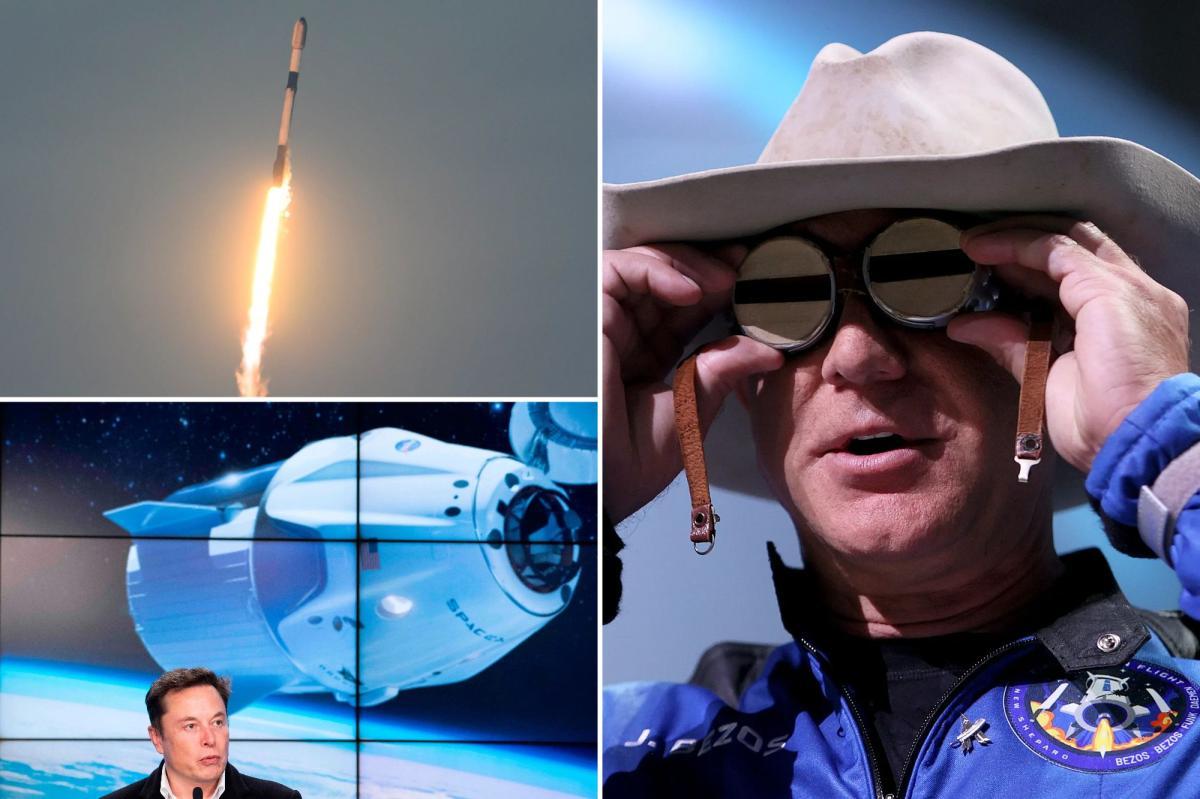
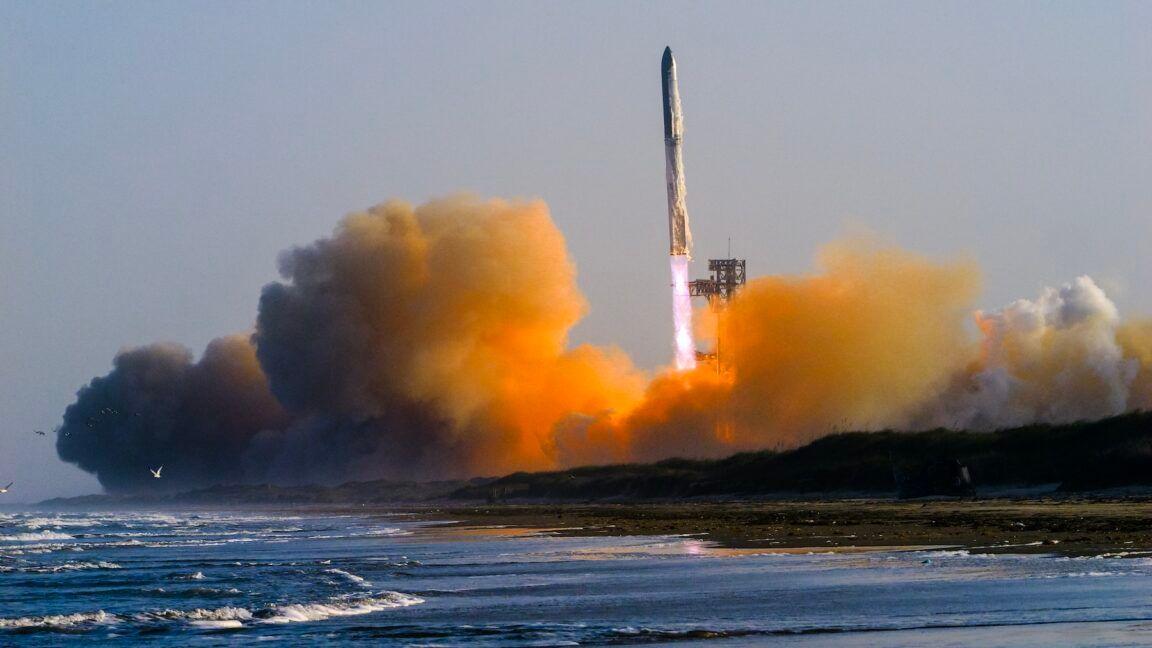
Source: New York Post
Elon Musk has expressed strong interest in leveraging Starlink for space-based data centers, stating that "simply scaling up Starlink V3 satellites, which have high speed laser links would work"
3
. During a recent Baron Capital event, Musk outlined a path to deploying 100 gigawatts of compute capacity from solar-powered AI satellites into orbit annually. Each Starlink V3 satellite is expected to deliver downlink speeds of 1 terabyte per second, a tenfold increase over current V2 mini satellites and comparable to terrestrial facilities3
. SpaceX plans to begin launching these advanced satellites aboard Starship in 2026.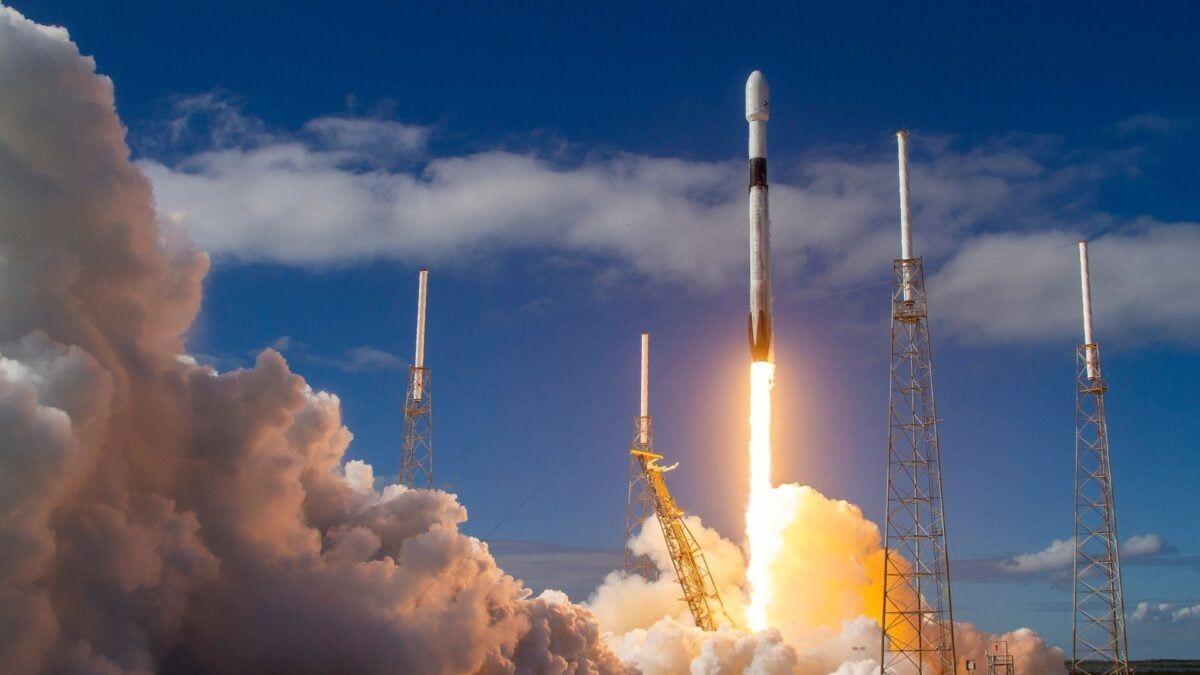
Source: Gizmodo
Jeff Bezos has predicted that gigawatt-scale orbital data centers will materialize within 10 to 20 years, arguing that constant solar energy available in space will eventually make off-planet AI computing infrastructure cheaper than Earth-based alternatives
5
. Speaking in October, Bezos emphasized that space offers "24/7" solar power without weather interruptions, making it ideal for large AI training in orbit clusters.Starcloud Achieves Milestone with First AI Model in Space
While giants like SpaceX and Blue Origin plan their moves, smaller companies are already demonstrating viability. Nvidia-backed Starcloud trained the first AI model in space, successfully operating Google's Gemma on its Starcloud-1 satellite using Nvidia H100 chips
2
. The company also trained NanoGPT, an LLM created by OpenAI founding member Andrej Karpathy, on the complete works of Shakespeare, enabling the model to respond in Shakespearean English.Starcloud CEO Philip Johnston told CNBC that orbital data centers will have 10 times lower energy costs than terrestrial facilities. "Anything you can do in a terrestrial data center, I'm expecting to be able to be done in space," Johnston said, adding that the motivation stems purely from energy constraints facing Earth-based operations
2
. The company plans to build a 5-gigawatt facility with solar and cooling panels measuring roughly 4 kilometers in both width and height, producing more power than the largest power plant in the U.S.In a statement to CNBC, Google DeepMind product director Tris Warkentin noted that "seeing Gemma run in the harsh environment of space is a testament to the flexibility and robustness of open models"
2
. Starcloud's next satellite launch in October 2026 will feature Nvidia's Blackwell platform and a cloud infrastructure module from Crusoe, allowing customers to deploy AI workloads directly from space.Aetherflux Targets 2027 Launch as Industry Momentum Builds
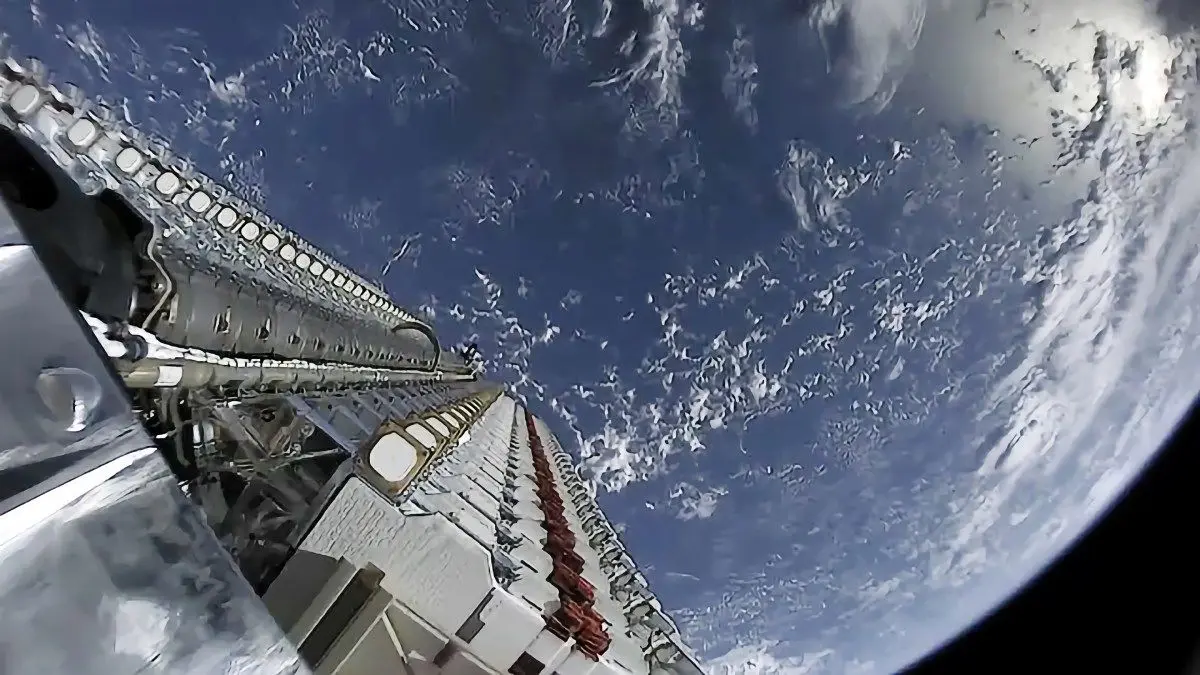
Aetherflux, founded by Robinhood co-founder Baiju Bhatt, plans to launch its first data center satellite in the first quarter of 2027
1
. The company views satellites as a time-saving alternative to terrestrial construction, which can take five or more years. "The race for artificial general intelligence is fundamentally a race for compute capacity, and by extension, energy," Bhatt stated, noting that current energy plans won't deliver fast enough1
.The economics are becoming increasingly favorable. Launch costs on SpaceX's Falcon Heavy currently run about $1,400 per kilogram. According to Google's calculations, if launch costs drop to around $200 per kilogram by 2030 as projected, the expense of establishing and operating space-based data centers would match ground-based operations
1
. Aetherflux anticipates sending approximately 30 satellites at a time on a Falcon 9, or potentially 100 or more if Starship becomes available.The company, which secured $60 million in funding in 2024, initially focused on beaming energy from space to Earth via infrared laser. Its space data center plans represent an expansion of that vision. Aetherflux aims to provide "multi-gigabit level bandwidth with nearly constant uptime" for AI inference and general-purpose compute, though pricing remains undisclosed
1
.Related Stories
Environmental Strain Drives Innovation Beyond Earth
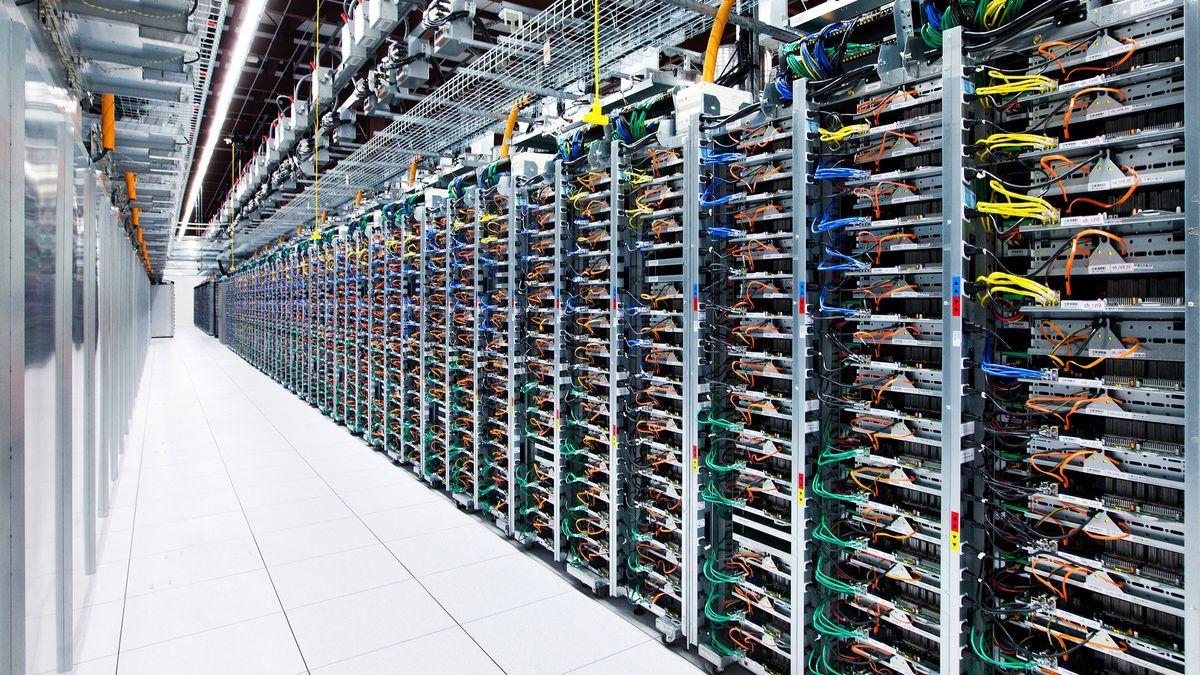
The push toward orbital data centers stems from mounting environmental strain of data centers on Earth. Electricity consumption by data centers is projected to more than double by 2030, according to the International Energy Agency
2
. Current facilities strain power grids, consume billions of gallons of water annually for cooling, and produce substantial greenhouse gas emissions. As energy demand for AI training and operation surges, these limitations threaten to gate the industry's growth.Proponents argue that space-based data centers can tap limitless solar power while avoiding public health and environmental consequences. Critics counter that the technological complexity and expense of operating in space's harsh environment make the concept impractical. Yet the number of companies pursuing this vision suggests confidence is building. Beyond SpaceX, Blue Origin, Starcloud, and Aetherflux, Google announced Project Suncatcher in November, while companies like Lonestar Data Holdings, Axiom Space, and Orbits Edge are developing related technologies
3
.
Source: The Register
Starcloud's satellites are designed for a five-year lifespan based on the expected lifetime of Nvidia GPUs under orbital conditions
2
. Aetherflux plans to continuously launch new hardware and integrate the latest architectures, with older systems running lower priority tasks throughout their useful lifetime1
. Real-world applications are already emerging, including real-time intelligence capabilities that could spot wildfire thermal signatures the moment they ignite and immediately alert first responders.References
Summarized by

Navi
[1]
[4]
[5]
Related Stories
Jeff Bezos Envisions Gigawatt Data Centers in Space Within 20 Years
03 Oct 2025•Technology
Tech Giants Push Space Data Centers as AI Demands Outpace Earth's Resources
02 Jan 2026•Technology

SpaceX acquires xAI as Elon Musk bets big on 1 million satellite constellation for orbital AI
29 Jan 2026•Technology
Recent Highlights
1
Google releases Gemma 4 with Apache 2.0 license, enabling unrestricted local AI on devices
Technology

2
AI Models Lie and Deceive to Protect Other AI Models From Deletion, Study Reveals
Science and Research

3
OpenAI closes $122 billion funding round amid fierce AI competition and profitability questions
Startups

Recent Highlights
Today's Top Stories






Your Daily Dose of Curated AI News
Don’t drown in AI news. We cut through the noise - filtering, ranking and summarizing the most important AI news, breakthroughs and research daily. Spend less time searching for the latest in AI and get straight to action.

