SpaceX pushes AI data centers into orbit as Musk predicts space will beat Earth in 36 months


6 Sources
[1]
Why the economics of orbital AI are so brutal | TechCrunch
In a sense, this whole thing was inevitable. Elon Musk and his coterie have been talking about AI in space for years -- mainly in the context of Iain Banks' science fiction series about a far-future universe where sentient spaceships roam and control the galaxy. Now, Musk sees an opportunity to
[2]
Can Elon Musk really launch data centres into space?
Elon Musk is betting that AI's future lies not on Earth, but in orbit -- a claim he has put at the centre of his $1.25tn plan to merge SpaceX with his lossmaking start-up xAI. The tech billionaire, who aims to launch an initial public offering for the newly combined company this year, argues that
[3]
What's the deal with space-based data centers for AI?
Starcloud has already begun running and training a large language model in space, so it can speak Shakespearean English Terrestrial data centers are so 2025. We're taking our large-scale compute infrastructure into orbit, baby! Or at least, that's what Big Tech is yelling from the rooftops at the
[4]
Musk predicts more AI capacity will be in orbit than on earth in 5 years, with SpaceX becoming a 'hyper-hyper' scaler | Fortune
By the beginning of the next decade, AI will primarily become a space-based venture as the cost becomes much more advantageous to operate in orbit, according to SpaceX CEO Elon Musk. In a lengthy, wide-ranging interview with podcaster Dwarkesh Patel and Stripe cofounder and president John Collison
[5]

Elon Musk says space will be the cheapest place for AI data centres in three years
Talking on the Dwarkesh Podcast, co-hosted by Dwarkesh Patel and Stripe CEO John Collison, Musk said Earth has some insurmountable power bottlenecks in scaling AI. "The availability of energy is the issue," Musk said, noting global electricity output outside China remains "pretty close flat" while
[6]

Elon Musk Backs ARK Invest's Brett Winton, Who Said Orbital Data Centers Could Solve AI Scaling Challenges - Alphabet (NASDAQ:GOOGL)
On Tuesday, tech billionaire Elon Musk endorsed ARK Invest's chief futurist Brett Winton's prediction that putting data centers in orbit could become cheaper and more efficient as AI demand skyrockets. AI's Growing Demands Push Innovation Beyond Earth As artificial intelligence workloads surge,
Share
Copy Link
Elon Musk claims space will become the cheapest location for AI data centers within three years, citing superior solar efficiency and unlimited scalability. SpaceX has filed for permission to launch up to 1 million satellites as orbital data centers, while Google, Starcloud, and other tech giants race to prove the concept. But experts warn the economics depend on dramatic reductions in launch costs and unproven technology.
SpaceX Files for Million-Satellite Constellation as Orbital AI Race Accelerates
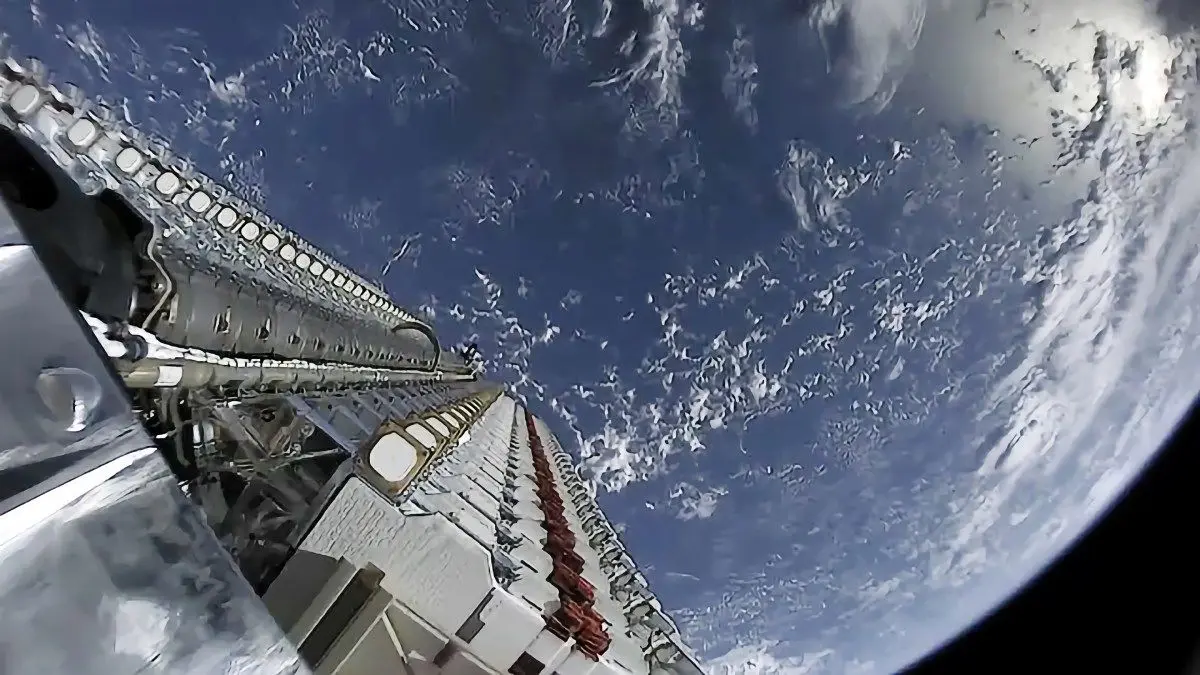
Elon Musk's prediction that space will become the most economical location for AI data centers within 36 months has shifted from science fiction to active development. SpaceX requested FCC permission in January to launch up to 1 million solar-powered satellites designed as orbital AI infrastructure, capable of shifting as much as 100 GW of compute power off the planet
1
. The billionaire told Stripe co-founder John Collison that "by far the cheapest place to put AI will be space in 36 months or less," arguing that solar panels in orbit deliver five times more power than terrestrial installations without atmospheric losses or day-night cycles5
. This ambitious vision follows SpaceX's merger with xAI to create a $1.25 trillion entity focused on vertical integration of rockets, satellites, and AI computing capacity4
.Economic Viability Hinges on Starship and Reduced Launch Costs
The economics of space-based data centers for AI remain brutally challenging despite the hype. Andrew McCalip, a space engineer, calculated that a 1 GW orbital data center might cost $42.4 billion—nearly three times its ground-bound equivalent due to satellite manufacturing and launch expenses
1
. Project Suncatcher's white paper from Google estimates that launch prices must fall to less than $200 per kilogram from today's costs of at least $1,000 per kilogram—a threshold not expected until the mid-2030s2
. SpaceX's reusable Falcon 9 currently delivers roughly $3,600 per kilogram, meaning the company needs an 18-fold improvement to make orbital AI economically competitive1
. This entire business case depends on Starship achieving operational status and delivering dramatically reduced launch costs, yet the next-generation rocket has yet to reach orbit1
.Tech Giants and Startups Race to Prove Orbital AI Concept
Google announced Project Suncatcher, planning to launch prototype satellites containing tensor processing unit AI chips into low Earth orbit by early 2027 in partnership with Planet
2
. Starcloud, backed by Google and Andreessen Horowitz with $34 million in funding, filed plans for an 80,000 satellite constellation and has already trained a large language model in space using a GPU payload launched in November1
3
. Aetherflux, founded by Robinhood co-founder Baiju Bhatt, aims to make a data center node available for commercial use early next year, arguing that launching chips into space brings them online "at industrial manufacturing pace rather than real estate pace"2
. Even Jeff Bezos predicted the construction of "giant gigawatt data centers in space" in coming years2
. xAI's head of compute reportedly bet his Anthropic counterpart that 1% of global compute will be in orbit by 20281
.Related Stories
Power Bottlenecks on Earth Drive Space Infrastructure Push
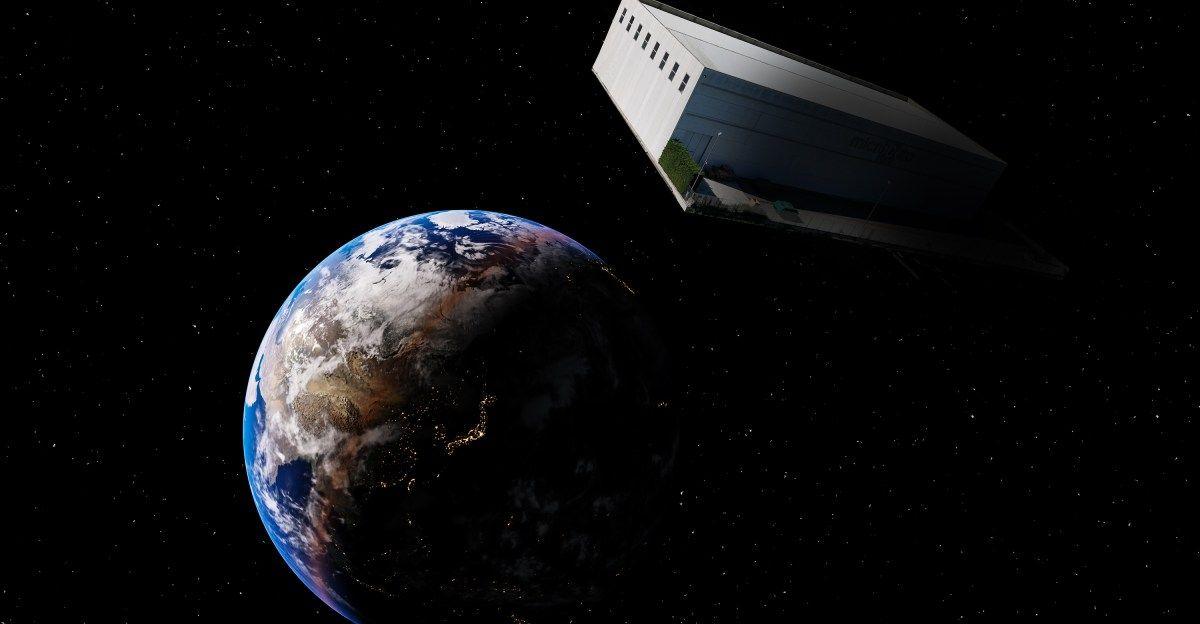
Elon Musk's prediction stems from what he describes as insurmountable power bottlenecks for scaling AI on Earth. Global electricity output outside China remains "pretty close flat" while chip production surges, creating fundamental constraints
5
. The utility industry cannot build power plants rapidly enough to meet AI demand, and limits on manufacturing gas turbines and wind turbines represent additional bottlenecks4
. Musk claims that within five years, SpaceX will launch and operate more AI computing capacity annually than the cumulative total on Earth, requiring approximately 10,000 launches per year—a dramatic increase from SpaceX's record 165 orbital launches in 20254
. Solar panels designed for space cost less than terrestrial versions because they don't require hardening against weather, and cooling systems benefit from the vacuum environment and radiative cooling hundreds of miles above ground4
3
.Radiation, Debris, and Scalability Challenges Remain Unresolved
Despite optimistic timelines, numerous technical hurdles threaten the viability of orbital AI infrastructure. GPUs and other hardware must be shielded from radiation in space, a challenge that remains partially unproven at scale
2
. The 6,600 tons of space debris and 14,000-plus active satellites in orbit create collision risks requiring fuel for maneuvering3
. Satellite manufacturing costs currently run about $1,000 per kilogram, and achieving the necessary cost reductions depends on scaling production to unprecedented levels1
. Amazon Web Services CEO Matt Gorman noted that "there are not enough rockets to launch a million satellites yet, so we're pretty far from that," adding that current payload costs make space infrastructure "just not economical"1
. Economists at consultancy Rational Futures argue that even if Starship succeeds, SpaceX may not charge customers much less than competitors like Blue Origin's New Glenn rocket, potentially leaving launch prices above the thresholds assumed by space data center builders1
. Steve Collar, former CEO of satellite operator SES, acknowledged that "Elon is always years ahead of the technology and the reality, but that doesn't mean that he's wrong"2
. The concept assumes AI will continue demanding ever-greater computing power, a trend that could shift with architectural breakthroughs or efficiency gains. For now, the race to orbit represents a high-stakes bet on solving interconnected challenges across launch cadence, satellite production, radiation hardening, and thermal management while terrestrial alternatives continue improving.References
Summarized by

Navi
Related Stories
Nvidia unveils Vera Rubin Space Module for orbital AI data centers as space computing race heats up
17 Mar 2026•Technology

Startups race to deploy orbital data centers for AI computing despite massive technical hurdles
01 Jul 2026•Technology

NVIDIA and Elon Musk race to put AI data centers in space as Earth-based limits bite
12 May 2026•Technology
Recent Highlights



Recent Highlights
Today's Top Stories







Don’t drown in AI news. We cut through the noise - filtering, ranking and summarizing the most important AI news, breakthroughs and research daily. Follow topics that matter to you and stay ahead.


