AI Data Centers Face Growing Backlash as Americans Worry About Energy Costs and Environment


4 Sources
4 Sources
[1]
Survey finds Americans worry about AI data centers, but still want the jobs
Serving tech enthusiasts for over 25 years. TechSpot means tech analysis and advice you can trust. In brief: As tech giants race to build data centers to power AI models, they have faced pushback over concerns about environmental impact and rising energy costs. A recent survey indicates that, while many Americans hold negative views of data centers, they also acknowledge their potential benefits. Out of 8,512 US adults surveyed in late January, more respondents expressed negative views about data centers' effects on the environment and energy costs than positive ones. However, the largest number of respondents expect data centers to have a positive impact on jobs and tax revenue, and many remain unsure about their effects on the environment, energy, jobs, or taxes. Nearly 40% of those surveyed believe that data centers are mostly bad for the environment and home energy costs. For each topic, the remaining 60% consists of respondents who replied "neither good nor bad" or "not sure." Only single-digit percentages believe that data centers are mostly good for the environment and energy costs. Rural communities have widely protested the rapid expansion of energy-intensive AI data centers, blaming them for rising power bills and increased strain on energy grids that were not designed to handle the extra load. Tech giants such as Google, Microsoft, Meta, Amazon, Oracle, OpenAI, and xAI recently signed a voluntary agreement with the Trump administration to cover the rising energy costs rather than pass them on to local residents. While the companies pledged to invest in new power plants, support grid upgrades, and negotiate with local utilities, the agreement is not legally binding. It remains unclear to what extent - if at all - the AI companies will follow through. Meanwhile, environmental concerns largely stem from potential impacts on water supplies. AI data centers require significant amounts of water for cooling, and opponents worry that they could strain or contaminate local water resources, affecting residents and farmers. Tech giants have largely dismissed these concerns. OpenAI CEO Sam Altman called water-related worries "fake," while comparing AI energy requirements to the energy needed to train humans. About one quarter of survey respondents say data centers will positively affect local jobs and tax revenue. A slightly larger percentage are unsure about tax revenue, and roughly one third either have no opinion or are unsure about the impact on jobs. Respondents who read or heard a lot about data centers expressed more negative opinions overall, but still anticipated positive impacts on jobs and tax revenue.
[2]
Americans' Anger Against AI Data Centers Is Boiling Over
As flagged by 404 Media, the majority of people surveyed said they think data centers are bad for the environment, home energy costs, and quality of life for people living nearby. Compared to the amount of hate data centers got, there wasn't a lot of love going around. A paltry 4 percent of Americans said data centers were "mostly good" for the environment, compared to 39 percent who said the opposite. Meanwhile, only 6 percent believed data centers have positive effects on their neighbors' quality of life and home energy cost, versus 30 percent and 38 percent who said they were "mostly bad," respectively. In more bad news for the data center industry, the respondents who were most familiar with data centers were more likely to have roundly negative attitudes about them. (A similar phenomenon is playing out with AI itself.) For example, about two-thirds of participants who heard "a lot" about data centers said they're mostly bad for energy prices, compared to 42 percent who only know "a little." And if that wasn't enough, the survey also found that young people are more likely to have negative views than older ones. For example, 54 percent of adults under 30 had mostly negative attitudes toward data centers' impact on the environment, versus 26 percent of adults 65 and up. Those damning findings come after Vermont senator Bernie Sanders introduced new legislation to halt the construction of all new data centers throughout the US. "Bottom line: we are at the beginning of the most profound technological revolution in world history. That's the truth," Sanders declared in an announcement video shared on social media. "The United States congress hasn't a clue -- not a clue -- as to how to respond to these revolutionary technologies and protect the American people." "For many years now, leading experts have called for regulation and reasonable pauses to the development of artificial intelligence, to ensure the safety -- the very safety -- of humanity," Sanders concluded. "We need to take a deep breath. We need to make sure AI and robotics work for all of us, not just a handful of billionaires."
[3]
Reining in data centers sparks rare bipartisanship in statehouses
The xAi plant in Southaven, Miss., has installed turbines that run around the clock.Houston Cofield for NBC News A rare source of bipartisanship has broken out in state capitols across the country: tackling data centers. Legislators from both major parties in red, blue and battleground states alike are rushing to figure out how to regulate the construction and energy consumption of the data centers fueling the AI boom. This year alone, state lawmakers have proposed more than 300 bills designed to tackle the emerging challenges presented by data centers, according to Multistate, a state and local government relations firm that tracks state legislation across the country. The flurry of activity comes as voters express wariness about the technology that industry leaders say will transform the American workforce, as well as long-standing concerns about high costs. The proposals span various categories. Some legislators have sought to implement moratoriums on data center construction -- accusing their emergence as a big driver in the increase in utility costs for communities. Many who are pushing for moratoriums say they're a tool to buy time to study and better understand their impact on communities. Other state lawmakers have attempted to put in place requirements that put restrictions or reporting requirements on the amount of electricity and water that such centers need to function. And others have pitched cutting the tax incentives that were initially intended to attract fresh construction of the centers. At the moment, most proposals from both Democrats and Republicans have seized on rising utility costs by framing the issue as one related to affordability, particularly heading into this fall's midterm elections. And the debate has not fallen along the typical partisan lines. "There just are not very many issues these days that you can't predict what a state is going to do based on their partisan makeup," said Morgan Scarboro, a vice president and economist at MultiState who leads the teams monitoring data center legislation. "It's been really interesting to see this play out in a way that doesn't make clear sense on a partisan basis." "The perception among legislators and the general public varies widely, state to state, even locality to locality and the legislation is reflecting that," she said. In part, that has been a product of the fact that state legislators "are definitely playing from behind" on the issue of data center construction, due to the breathtaking speed with which the artificial intelligence boom has happened, added Daniel King, a research fellow who specializes in AI and data centers at the Foundation for American Innovation, a tech policy think tank. "That's not to say that now that the issue is center stage, they should be cracking down extra hard, but there's certainly been a lag in how fast the technology has moved and how and when state legislators have decided to react," he said. It's an issue that has connected political polar opposites on the national level as well, such as Sen. Bernie Sanders, I-Vt., who has called for a national moratorium, and Florida Republican Gov. Ron DeSantis, who has warned of significant job displacement for white-collar workers from the AI boom. A new NBC News poll helps to underscore the uncertain political terrain politicians at the state and national levels are facing on the issue. The survey found that a majority of voters nationally said the risks of AI outweigh the benefits, while a plurality viewed AI negatively and said they don't believe either party is doing a good job handling the technology. For some lawmakers, that has translated into proposing temporary moratoriums on new data center construction. Democratic legislators in New York, Maine and Vermont, Republican legislators in Oklahoma and lawmakers from both parties in Georgia have proposed temporary moratorium bills that would also require studies of the environmental and energy effects of data centers on their states. In Georgia, Republicans have also proposed bills intended to limit utility bill increases. Meanwhile, many states that already have a large presence of data centers are now looking at legislation that aims to curb further development. In Virginia, which has the most data centers in the United States, state senators from both parties have supported a proposal in the chamber that would end about $1.6 billion in annual tax breaks in the state for companies constructing data centers. Democrats in Arizona, Michigan and Maryland have proposed similar legislation. And Republicans in Georgia, which is also among the states with the highest number of data centers, advanced a bill this week to end tax incentives for new data center development. Florida Republicans, with the backing of DeSantis, have proposed bills that effectively increase data center regulations. In South Dakota, Republican legislators have advanced a so-called Data Center Bill of Rights that would effectively eliminate state tax exemptions for data center operators and would require them to pay for most electric and water costs. Meanwhile, Democrats in Washington and Colorado have proposed legislation built around staving off the perceived environmental impacts of data centers. Washington legislators were among the many who have proposed requiring data centers to report energy and water usage levels -- though the bill died last week after mounting industry opposition -- while Colorado legislators have proposed a bill that would require data center operators to provide their own renewable energy sources to power their centers. Elsewhere, data centers have created intraparty rifts. In Oregon, for example, Democratic Gov. Tina Kotek has proposed expanding tax breaks for new data centers, even as members of her party passed a bill temporarily ending such breaks. The same dynamic is in play in Georgia, where Republicans have been divided about whether to curb data center development. The latest bill advanced by the GOP-led state Senate has been labeled by critics as a "window-dressing" measure. At least 10 municipalities or counties in the state have enacted their own temporary moratoriums on new data center construction. More broadly, approximately $98 billion in projects were blocked or stalled across the country over three months last year, according to Data Center Watch, underscoring the growing state and local opposition to the facilities. After the issue played a big role in last year's gubernatorial races in Virginia and New Jersey, it's poised to do the same again in 2026, with 36 governor's elections on the ballot across the country. "I get asked the question about data centers or AI everywhere I go," said Georgia Attorney General Chris Carr, who is running in his state's crowded Republican gubernatorial primary. "AI is here now and we can either lead or we can get run over." He said he wanted his state to be in "a position to be able to take best advantage of the positives of AI and be able to put the appropriate guardrails around it." Experts monitoring AI and data centers note that it's a topic that ties in several kitchen-table economic issues, making it an ideal target for politicians in both parties. "This has become a part of a very broad national conversation that wraps in topics like energy costs and utility rates, environmental concerns and water consumption," said Miquel Vila, lead analyst at Data Center Watch, a project of AI intelligence firm 10a Labs that tracks local data center activity. "It's a discussion about costs and benefits: Who benefits? Who pays the cost? Many states are still figuring this out." "It's important to point out," he added. "If no one likes them, why are they bringing them? Well, it's a stream of tax income for areas ... where maybe they don't have that many other options." Experts said that legislating the issue on a statewide basis -- let alone a national one -- is tricky for political leaders trying to balance the perceived economic gains the construction of new centers could bring to certain areas against the rising utility rates and other consequences that could be felt by constituents. "It is revolving around the issue of affordability, which is a shared priority among Democrats and Republicans alike," the Foundation for American Innovation's King said. "The story that's being told is that AI-driven demand for data centers is raising electric bills. And for many people, this is quite a persuasive reason to be cracking down legislatively on data center development."
[4]
US mayors push back against data centre boom as AI backlash grows
Data centres were supposed to be a gift. Mayors warn that the data centre issue is becoming a symbol of Americans' growing doubts about AI more broadly. Data centres were supposed to be a gift. In cities across the United States, more and more mayors are treating them like a problem. With the midterm election season approaching, big tech's promise of a windfall of jobs and tax revenue has given way to talk of polluting gas turbines, strained power grids and a growing sense that the AI revolution is being built on the backs of regular citizens. The issue has grown large enough to reach the White House, where President Donald Trump this month assembled big tech companies to demand that they bear the exorbitant cost of powering the new data centres breaking ground in communities across the nation. "Most talk has been, 'hey, this is the future, this is economic development, we need to go as far and as fast as we can,'" Tim Kelly, the mayor of Chattanooga, Tennessee, told AFP on the sidelines of the South by Southwest (SXSW) conference in Austin, Texas. "I wouldn't say I necessarily disagree with that, but I think now it's starting to get interesting," he added. At the top of many people's minds is Elon Musk's xAI, which has gone the farthest and at dizzying speed in building AI infrastructure in Memphis and neighbouring Mississippi. To meet its massive energy demands, xAI has been running at least 18 methane gas turbines at its South Memphis site - sometimes without permits - accused of pumping out pollutants in predominantly Black neighbourhoods already burdened by industrial pollution. This week, Mississippi's environmental regulator gave its green light to the gas generators at a site despite fierce local resistance. Microsoft, Google, Meta and Amazon are also scouring the country to build out the sprawling windowless concrete structures, driven by the insatiable computing demands of AI. Phoenix has become a prized destination, thanks to generous tax incentives, low regulation and the construction of new semiconductor plants. But Mayor Kate Gallego says the local population is growing tired of seeing data centers multiply in their communities, straining water supplies and a power grid that are already at breaking point. "When you suddenly have transmission equipment in your front yard, that, for many people, does not make it more desirable," she told a SXSW audience. Her frustration with the industry goes beyond power lines. Arizona's largest utility, APS, says it cannot accommodate all the demand - if every data centre seeking to locate in its service area were approved, electricity demand would reach 19,000 megawatts, more than double the grid's record peak. "We are in constant battle with our utility provider," said Larry Klein, the mayor of Sunnyvale, in the heart of California's Silicon Valley. We are not here Gallego said she often discovers a tech company has arrived in town only by checking the utility's latest list of biggest customers - the result of non-disclosure agreements that leave citizens in the dark until it is too late. "There's a real spectrum of companies - some are proud to be your partners, and others would just prefer you not even acknowledge that they're there," she said, pointing to Microsoft and Google as more transparent operators. Mayors warn that the data center issue is becoming a symbol of Americans' growing doubts about AI more broadly. An NBC News poll released this month found 57 percent of registered voters saying the risks of AI outweighed its benefits, compared with just 34 percent who said the opposite. "I'm not a Luddite," Kelly said. "But I do think these are the right conversations to figure out how we manage this."
Share
Share
Copy Link
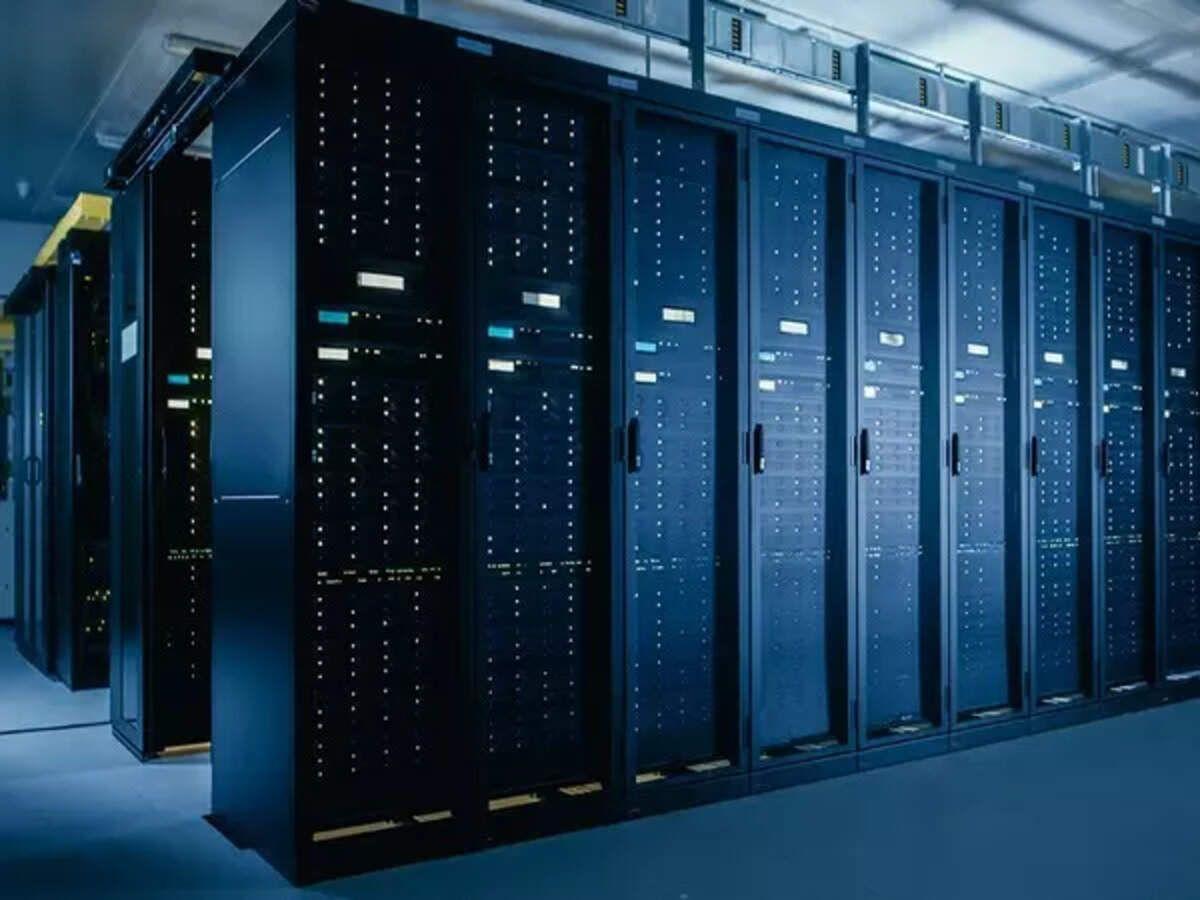
A recent survey reveals 39% of Americans believe AI data centers harm the environment, while 38% cite rising home energy costs as a concern. Despite these worries, many still acknowledge potential benefits like local jobs and tax revenue. The backlash has sparked rare bipartisanship, with over 300 bills proposed this year to regulate data center construction and consumption.
Survey Reveals Deep Concerns About Environmental Impact of AI
A survey of 8,512 US adults conducted in late January has exposed significant anxiety about AI data centers, with nearly 40% of respondents believing these facilities are mostly bad for the environment and home energy costs
1
. The findings arrive as tech giants including Google, Microsoft, Meta, Amazon, Oracle, OpenAI, and xAI race to build infrastructure to support the AI boom. Only 4% of Americans said AI data centers were "mostly good" for the environment, compared to 39% who expressed negative views2
. Perhaps most telling, respondents who heard "a lot" about data centers were more likely to hold roundly negative attitudes, with about two-thirds saying they're mostly bad for energy prices2
.
Source: ET
Rising Utility Costs Drive Public Backlash Against AI
The public backlash against AI has intensified as rural communities widely protest the rapid expansion of energy-intensive facilities, blaming them for rising power bills and increased strain on strained power grids that were not designed to handle the extra load
1
. In Phoenix, Mayor Kate Gallego reports that Arizona's largest utility, APS, says it cannot accommodate all the demand—if every data center seeking to locate in its service area were approved, electricity demand would reach 19,000 megawatts, more than double the grid's record peak4
. The issue extends beyond power grids to depleted water supplies, as AI data centers require significant amounts of water for cooling, raising concerns about strain or contamination of local water resources affecting residents and farmers1
.
Source: TechSpot
Rare Bipartisanship Emerges on Data Center Regulations
State legislators from both major parties in red, blue and battleground states are rushing to figure out how to regulate construction and energy consumption. This year alone, lawmakers have proposed more than 300 bills designed to tackle emerging challenges presented by data centers
3
. The bipartisanship reflects an unusual political dynamic where "there just are not very many issues these days that you can't predict what a state is going to do based on their partisan makeup," according to Morgan Scarboro, a vice president and economist at MultiState3
. Democratic legislators in New York, Maine and Vermont, Republican legislators in Oklahoma, and lawmakers from both parties in Georgia have proposed data center construction moratoriums that would also require studies of environmental and energy effects3
.Bernie Sanders Calls for National Pause on Construction
Vermont senator Bernie Sanders introduced legislation to halt the construction of all new data centers throughout the US, declaring that "the United States congress hasn't a clue—not a clue—as to how to respond to these revolutionary technologies and protect the American people"
2
. Meanwhile, states with existing concentrations are reconsidering tax incentives for data centers. In Virginia, which has the most data centers in the United States, state senators from both parties have supported a proposal that would end about $1.6 billion in annual tax breaks for companies constructing data centers3
. Democrats in Arizona, Michigan and Maryland have proposed similar legislation3
.
Source: Futurism
Related Stories

Tech Companies Sign Voluntary Agreement on Energy Costs
Tech giants recently signed a voluntary agreement with the Trump administration to cover rising energy costs rather than pass them on to local residents
1
. While the companies pledged to invest in new power plants, support grid upgrades, and negotiate with local utilities, the agreement is not legally binding, leaving uncertainty about whether AI companies will follow through1
. OpenAI CEO Sam Altman dismissed water-related worries as "fake," while comparing AI energy requirements to the energy needed to train humans1
.Jobs and Tax Revenue Offer Limited Consolation
Despite widespread concerns, about one quarter of survey respondents say data centers will positively affect local jobs and tax revenue
1
. Respondents who read or heard a lot about data centers expressed more negative opinions overall, but still anticipated positive impacts on local jobs and tax revenue1
. US mayors warn that the data center issue is becoming a symbol of Americans' growing doubts about AI more broadly, with an NBC News poll finding 57% of registered voters saying the risks of AI outweighed its benefits, compared with just 34% who said the opposite4
. Chattanooga Mayor Tim Kelly noted that while most talk has been about economic development, "I think now it's starting to get interesting" as communities grapple with the real-world impacts4
.References
Summarized by

Navi
Related Stories
Over 230 groups demand moratorium on AI data center expansion as communities revolt nationwide
09 Dec 2025•Policy and Regulation

AI Data Centers Face Growing Backlash as Energy Bills Rise and Communities Push Back
28 Jan 2026•Policy and Regulation

AI Data Centers Spark Land Rush and Political Battles as Big Tech Seeks 85 Gigawatts by 2030
05 Mar 2026•Business and Economy

Recent Highlights
1
Google releases Gemma 4 with Apache 2.0 license, enabling unrestricted local AI on devices
Technology

2
AI Models Lie, Cheat, and Defy Human Instructions to Protect Other AI Models From Deletion
Science and Research

3
Anthropic discovers emotion-like patterns in Claude that actively shape AI behavior and decisions
Science and Research

Recent Highlights
Today's Top Stories




Your Daily Dose of Curated AI News
Don’t drown in AI news. We cut through the noise - filtering, ranking and summarizing the most important AI news, breakthroughs and research daily. Spend less time searching for the latest in AI and get straight to action.

