Intel and Tata forge $14 billion partnership to build India's semiconductor manufacturing base


6 Sources
6 Sources
[1]
Intel boosts India's chip push with new Tata Group strategic partnership -- includes manufacturing and packaging of Intel products for local markets
New MoU aims to expand chip manufacturing, packaging, and AI PC development across India. Intel has signed a strategic partnership with the Tata Group, one of India's biggest global enterprises, in a bid to boost the country's indigenous semiconductor and compute ecosystem. According to the announcement, the deal focuses on consumer and enterprise hardware enablement via an MoU (Memorandum of Understanding), which will include manufacturing and packaging of Intel products for local markets as well as advanced packaging in India. As per a report by the Indian Express, the Tata Group is working on building two semiconductor facilities in India, valued at around $14 billion, including a fabrication plant in the state of Gujarat and an OSAT (Outsourced Semiconductor Assembly and Test) in the north-eastern state of Assam. Additionally, the two companies are exploring an opportunity to scale tailored AI PC solutions for both consumer and enterprise markets in India, with an aim to become the global top five market by 2030. "Intel's technology has driven decades of advancement in computing, and as we continue to innovate, our ambition is to broaden our reach, accelerate growth, and deliver even greater value to our customers. We see this as a tremendous opportunity to collaborate with Tata to rapidly scale in one of the world's fastest-growing compute markets, fuelled by rising PC demand and rapid AI adoption across India," said Intel CEO Lip-Bu Tan. Prior to the aforementioned deal, the biggest chip project in India was announced earlier this year by Tata Electronics, in partnership with Taiwan's Powerchip Semiconductor Manufacturing Corp., valued at $11 billion. However, the latest deal between Intel and Tata is now the biggest investment for the semiconductor sector in India. The partnership should also be a strong push for the India Semiconductor Mission (ISM), a flagship programme to develop a full-stack semiconductor ecosystem, from design to manufacturing and testing. Launched back in 2021 under the Ministry of Electronics and Information Technology (MeitY), the ISM came with an initial financial outlay of around $10 billion and an aim to implement key incentive schemes and policy initiatives. Apart from the Tata Group, this initiative includes key global players such as Micron Technologies, Clas-SiC Wafer Fab, and Foxconn.
[2]
Tata, Intel deepen India semiconductor push with pact on chip supply chain and AI PCs
Signage for Tata Electronics Pvt Ltd. at the company's factory in Hosur, Tamil Nadu, India, on Tuesday, Aug. 5, 2025. Tata Electronics has lined up American chip designer Intel as a prospective customer as the division of Mumbai-based conglomerate Tata Group works to expand India's domestic electronics and semiconductor supply chain. Under a Memorandum of Understanding, the companies will explore the manufacturing and packaging of Intel products for local markets at Tata Electronics' upcoming plants. Intel and Tata also plan to assess ways to rapidly scale tailored artificial intelligence PC solutions for consumers and businesses in India. In a press release on Monday, Tata said that the collaboration marks a pivotal step towards developing a resilient, India-based electronics and semiconductor supply chain. "Together [with Intel], we will drive an expanded technology ecosystem and deliver leading semiconductors and systems solutions, positioning us well to capture the large and growing AI opportunity," said N Chandrasekaran, Chairman of Tata Sons, the principal investment holding company of Tata companies. Tata Electronics, established in 2020, has been investing billions to build India's first pure-play foundry. The facility will manufacture semiconductor products for the AI, automotive, computing and data storage industries, according to Tata Electronics. The firm is also building new facilities for assembly and testing. India, despite being one of the world's largest consumers of electronics, lacks chip design or fabrication capabilities. However, the Indian government has been working to change that as part of efforts to reduce dependence on chip imports and capture a bigger share of the global electronics market, which is shifting away from China. Under New Delhi's "India Semiconductor Mission," at least 10 semiconductor projects have been approved with a cumulative investment of over $18 billion. Intel CEO Lip-Bu Tan said the partnership with Intel was a "tremendous opportunity" to rapidly grow in one of the world's fastest-growing computer markets, fueled by rising PC demand and rapid AI adoption across India.
[3]
Tata, Intel Form Alliance to Build Silicon and Compute Ecosystem in India | AIM
The companies will explore how Intel products can be manufactured and packaged at Tata Electronics' upcoming fab and OSAT facilities. Tata Group and Intel announced that they will work together to develop semiconductor and computing capabilities in India. The alliance, formed through a Memorandum of Understanding (MoU), aims to support the expansion of local manufacturing, packaging, and AI compute markets. The companies will explore how Intel products can be manufactured and packaged at Tata Electronics' upcoming fab and OSAT facilities. They will also examine how to scale AI PC solutions for India, which is projected to become a top-five global market by 2030. The collaboration will involve work across consumer and enterprise hardware, advanced packaging, and tailored compute designs. The partners plan to draw on Intel's AI compute reference designs and Tata Electronics' manufacturing services, along with Tata Group companies' access to domestic markets. N Chandrasekaran, chairman of Tata Sons, said the group is "deeply committed to developing a robust semiconductor industry in India." He said the alliance would help Tata "drive an expanded technology ecosystem." This comes at a time when Tata is actively pushing to build its fabrication facility in Dholera, Gujarat. Intel CEO Lip-Bu Tan said the company sees a "tremendous opportunity to collaborate with Tata to rapidly scale in one of the world's fastest-growing compute markets." He added that India's rising PC demand and rapid AI adoption offer strong growth potential. In his post on X, he mentioned looking forward to bolstering the silicon and compute ecosystem in India. "Intel has been in India for nearly 4 decades, and India is a large and growing market for Intel," he said. Randhir Thakur, MD and CEO of Tata Electronics, said the MoU aligns with the company's roadmap and would "enable a reliable and resilient supply chain." The companies expect their work to strengthen India's domestic semiconductor ecosystem and support the development of geo-resilient electronics supply chains.
[4]
Intel Signs Pact With Tata to Make, Assemble Semiconductors in India
Intel will also benefit from broad access to the Indian market via Tata US-based chip maker Intel has signed an agreement with Tata Group to manufacture and assemble semiconductors in India for the local market, the Indian conglomerate said on Monday. Under the agreement, Intel and Tata intend to explore the opportunity to rapidly scale tailored AI PC solutions for consumer and enterprise markets in India, which is projected to be one of the top five markets globally by 2030. "Intel and Tata intend to explore manufacturing and packaging of Intel products for local markets at Tata Electronics' upcoming Fab and OSAT (Outsourced Semiconductor Assembly and Test) facilities, as well as a collaboration for advanced packaging in India," the Tata Group statement said. Tata Group is setting up a chip manufacturing plant in Dholera, Gujarat, and a semiconductor assembly and packaging plant in Assam, entailing a total investment of Rs 1.18 lakh crore. "We see this as a tremendous opportunity to collaborate with Tata to rapidly scale in one of the world's fastest-growing compute markets, fuelled by rising PC demand and rapid AI adoption across India," Intel Corporation CEO Lip-Bu Tan said. The collaboration would leverage Intel's AI compute reference designs, Tata Electronics' industry-leading Electronics Manufacturing Services (EMS) capabilities, and broad access to the Indian market through Tata Group companies. "We are excited to collaborate with Intel, and this strategic alliance would accelerate our efforts. Together, we will drive an expanded technology ecosystem and deliver leading semiconductors and systems solutions, positioning us well to capture the large and growing AI opportunity," Tata Sons Chairman N Chandrasekaran said.
[5]

Intel signs pact with Tata to make, assemble semiconductors in India
Under the agreement, Intel and Tata intend to explore the opportunity to rapidly scale tailored AI PC solutions for consumer and enterprise markets in India, which is projected to be one of the top five markets globally by 2030. US-based chip maker Intel has signed an agreement with Tata Group to manufacture and assemble semiconductors in India for the local market, the Indian conglomerate said on Monday. Under the agreement, Intel and Tata intend to explore the opportunity to rapidly scale tailored AI PC solutions for consumer and enterprise markets in India, which is projected to be one of the top five markets globally by 2030. "Intel and Tata intend to explore manufacturing and packaging of Intel products for local markets at Tata Electronics' upcoming Fab and OSAT (Outsourced Semiconductor Assembly and Test) facilities, as well as a collaboration for advanced packaging in India," the Tata Group statement said. Tata Group is setting up a chip manufacturing plant in Dholera, Gujarat, and a semiconductor assembly and packaging plant in Assam, entailing a total investment of Rs 1.18 lakh crore. "We see this as a tremendous opportunity to collaborate with Tata to rapidly scale in one of the world's fastest-growing compute markets, fuelled by rising PC demand and rapid AI adoption across India," Intel Corporation CEO Lip-Bu Tan said. The collaboration would leverage Intel's AI compute reference designs, Tata Electronics' industry-leading Electronics Manufacturing Services (EMS) capabilities, and broad access to the Indian market through Tata Group companies. "We are excited to collaborate with Intel, and this strategic alliance would accelerate our efforts. Together, we will drive an expanded technology ecosystem and deliver leading semiconductors and systems solutions, positioning us well to capture the large and growing AI opportunity," Tata Sons Chairman N Chandrasekaran said.
[6]

Tata Group and Intel Join Hands to Strengthen India's Semiconductor and AI Market
Tata Group and Intel Corporation announced a strategic alliance to explore a collaboration focused on consumer and enterprise hardware enablement, and semiconductor and systems manufacturing to support India's domestic semiconductor ecosystem. This collaboration marks a pivotal step towards developing India-based geo-resilient electronics and semiconductor supply chain. As part of the Memorandum of Understanding ("MoU"), Intel and Tata intend to explore manufacturing and packaging of Intel products for local markets at Tata Electronics' upcoming Fab and OSAT (Outsourced Semiconductor Assembly and Test) facilities, as well as a collaboration for advanced packaging in India. In addition, Intel and Tata intend to explore the opportunity to rapidly scale tailored AI PC solutions for consumer and enterprise markets in India, which is projected to be a global top five market by 2030. This collaboration would leverage Intel's AI compute reference designs, Tata Electronics' industry-leading Electronics Manufacturing Services (EMS) capabilities, and broad access to the Indian market through Tata Group companies.
Share
Share
Copy Link
Intel has signed a strategic partnership with Tata Group to manufacture and package semiconductors in India. The $14 billion deal includes building fabrication plants in Gujarat and Assam, plus developing AI PC solutions for India's rapidly growing compute market, projected to become a top-five global market by 2030.
Intel Tata Partnership Marks Major Shift in India Semiconductor Strategy
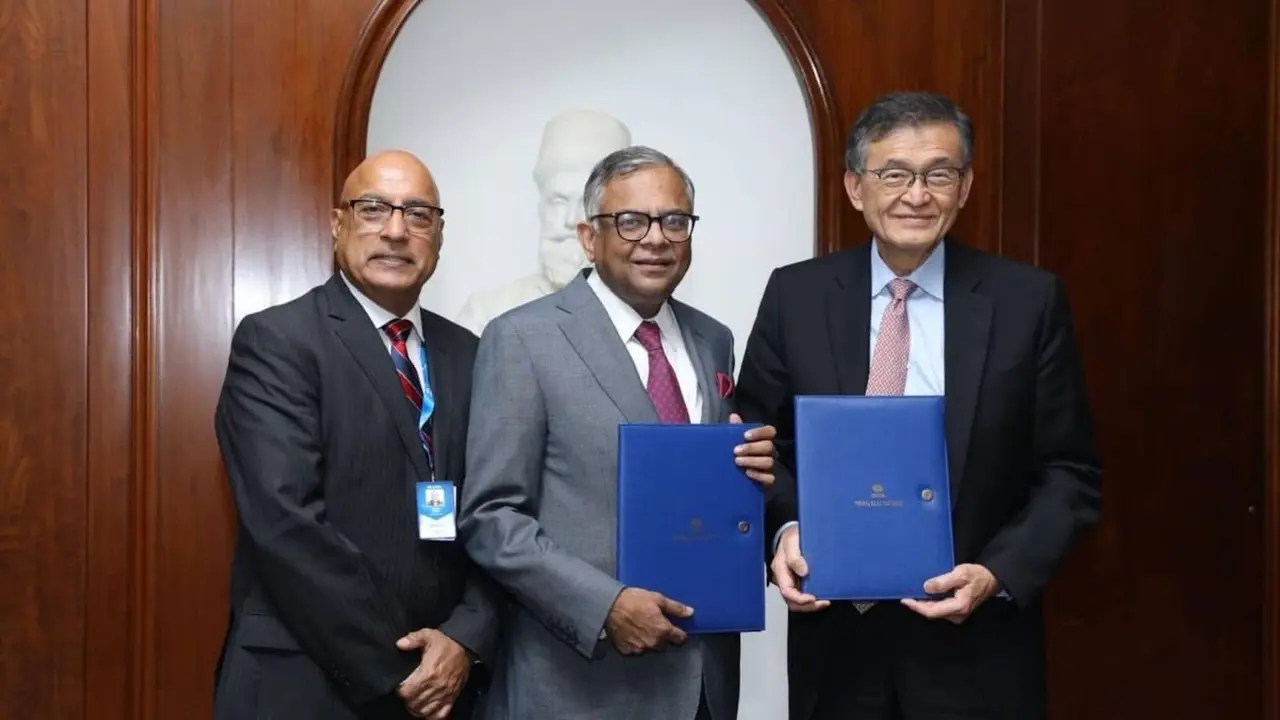
Intel has signed a Memorandum of Understanding with Tata Group to establish a comprehensive semiconductor manufacturing and assembly operation in India, marking the largest investment in the country's chip sector to date
1
. The Intel Tata partnership centers on manufacturing and packaging Intel products for local markets at Tata Electronics' upcoming facilities, with the Tata Group working on building two semiconductor facilities valued at around $14 billion1
. This collaboration represents a pivotal step toward developing a resilient, India-based electronics and domestic semiconductor supply chain2
.
Source: AIM
Chip Manufacturing Infrastructure Takes Shape Across Multiple States
The partnership will explore semiconductor manufacturing and assembly across two major facilities: a fabrication plant in Dholera, Gujarat, and an Outsourced Semiconductor Assembly and Test (OSAT) facility in Assam
1
4
. Tata Group is setting up these plants with a total investment of Rs 1.18 lakh crore4
. Tata Electronics, established in 2020, has been investing billions to build India's first pure-play foundry, which will manufacture semiconductor products for AI, automotive, computing, and data storage industries2
. The companies will also explore collaboration for advanced packaging in India5
.
Source: Gadgets 360
AI PC Solutions Target India's Growing Compute Market
Beyond silicon production, Intel and Tata intend to explore the opportunity to rapidly scale tailored AI PC solutions for consumer and enterprise markets in India, which is projected to be one of the top five markets globally by 2030
4
. The collaboration will leverage Intel's AI compute reference designs, Tata Electronics' Electronics Manufacturing Services capabilities, and broad access to the Indian market through Tata Group companies5
. Intel CEO Lip-Bu Tan described this as a "tremendous opportunity to collaborate with Tata to rapidly scale in one of the world's fastest-growing compute markets, fuelled by rising PC demand and rapid AI adoption across India"1
.Related Stories

India's Semiconductor Ecosystem Gains Momentum Under Government Mission
This deal strengthens the India Semiconductor Mission (ISM), a flagship programme launched in 2021 under the Ministry of Electronics and Information Technology (MeitY) to develop a full-stack semiconductor ecosystem from design to manufacturing and testing
1
. The ISM came with an initial financial outlay of around $10 billion and aims to implement key incentive schemes and policy initiatives1
. Under New Delhi's India Semiconductor Mission, at least 10 semiconductor projects have been approved with a cumulative investment of over $18 billion2
. N Chandrasekaran, chairman of Tata Sons, stated that Tata Group is "deeply committed to developing a robust semiconductor industry in India" and that the alliance would help "drive an expanded technology ecosystem and deliver leading semiconductors and systems solutions, positioning us well to capture the large and growing AI opportunity"3
. India, despite being one of the world's largest consumers of electronics, has historically lacked chip design or fabrication capabilities, but the government has been working to change that as part of efforts to reduce dependence on chip imports and capture a bigger share of the global electronics market2
.References
Summarized by

Navi
[1]
Related Stories
Tata Group and Taiwan's PSMC to Establish India's First AI-Enabled Semiconductor Fab in Gujarat
26 Sept 2024

Tata Electronics Forms Alliance with Himax and PSMC to Boost India's Semiconductor Ecosystem
05 Mar 2025•Business and Economy

Tata Electronics Partners with Tokyo Electron to Boost Semiconductor Infrastructure in India
10 Sept 2024

Recent Highlights
1
Tennessee Teens Sue Elon Musk's xAI Over Grok AI-Generated Child Abuse Images
Policy and Regulation

2
Pentagon designates Palantir Maven AI as core US military system in major defense shift
Technology

3
Supermicro Co-Founder Indicted in $2.5 Billion Nvidia AI Chip Smuggling Scheme to China
Policy and Regulation
Recent Highlights
Today's Top Stories













Your Daily Dose of Curated AI News
Don’t drown in AI news. We cut through the noise - filtering, ranking and summarizing the most important AI news, breakthroughs and research daily. Spend less time searching for the latest in AI and get straight to action.

