Telling AI it's an expert actually makes it worse at coding and math, researchers find


2 Sources
2 Sources
[1]
Telling an AI model that it's an expert makes it worse
Researchers say persona-based prompting can improve works for safety but not for facts Many people start their work with AI by prompting the machine to imagine it is an expert at the task they want it to perform, a technique that boffins have found may be futile. Persona-based prompting - which involves using directives such as "You're an expert machine learning programmer" in a model prompt - dates back to 2023, when researchers began to explore how role-playing instructions influenced AI models' output. It's now common to find online prompting guides that include passages like, "You are an expert full-stack developer tasked with building a complete, production-ready full-stack web application from scratch." But academics who have researched this approach report it does not always produce superior results. In a pre-print paper titled "Expert Personas Improve LLM Alignment but Damage Accuracy: Bootstrapping Intent-Based Persona Routing with PRISM," researchers affiliated with the University of Southern California (USC) find that persona-based prompting is task-dependent - which they say explains the mixed results. For alignment-dependent tasks, like writing, role-playing, and safety, personas do improve model performance. For pretraining-dependent tasks like math and coding, using the technique produces worse results. The reason appears to be that telling a model it's an expert in a field does not actually impart any expertise - no facts are added to the training data. In fact, telling a model that it's an expert in a particular field hinders the model's ability to fetch facts from pretraining data. The researchers used the Measuring Massive Multitask Language Understanding (MMLU) benchmark, a means of evaluating LLM performance, to test persona-based prompting and found "when the LLM is asked to decide between multiple-choice answers, the expert persona underperforms the base model consistently across all four subject categories (overall accuracy: 68.0 percent vs. 71.6 percent base model). A possible explanation is that persona prefixes activate the model's instruction-following mode that would otherwise be devoted to factual recall." But persona-based guidance does help steer the model toward responses that satisfy the LLM-based judge assessing alignment. As an example, the authors note, "A dedicated 'Safety Monitor' persona boosts attack refusal rates across all three safety benchmarks, with the largest gain on JailbreakBench (+17.7 percentage points from 53.2 percent to 70.9 percent)." Zizhao Hu, a PhD student at USC and one of the study's co-authors, told The Register in an email that based on the study's findings, asking AI to adopt the persona of an expert programmer will not help code quality or utility. But pointing to the prompt guidance we linked to above, Hu said "many other aspects, such as UI-preference, project architecture, and tool-preference, are more towards the alignment direction, which do benefit from a detailed persona." "In the examples provided, we believe that the general expert persona is not necessary, such as 'You are an expert full-stack developer,' while the granular personalized project requirement might help the model to generate code that satisfies the user's requirements." Given that prompts about expertise do have an effect, the researchers - Hu and colleagues Mohammad Rostami and Jesse Thomason - proposed a technique they call PRISM (Persona Routing via Intent-based Self-Modeling) which attempts to harness the benefits of expert personas without the harm. "We use the gated LoRA [low-rank adaptation] mechanism, where the base model is entirely kept and used for generations that depend on pretrained knowledge," he explained, adding "This decision process is learned by the gate." The LoRA adapter is activated where persona-based behaviors improve output, and otherwise falls back on the unmodified model. The researchers designed PRISM to avoid the tradeoffs of other approaches - prompt-based routing, which applies expert personas at inference time, and supervised fine tuning, which bakes behavior into model weights. Asked whether there's a way to generalize about effective prompting methods, Hu said: "We cannot say for sure for general prompting, but from our discovery on expert persona prompt, a potential point is, 'When you care more about alignment (safety, rules, structure-following, etc), be specific about your requirement; if you care more about accuracy and facts, do not add anything, just send the query.'" ®
[2]
Stop telling AI it's an expert programmer, you're making it worse at its job -- new research shows the best results need specific prompts
* Telling AI it's an expert in something is causing it to go down a totally different route * By introducing a persona, AI might not be able to think for itself, reducing output quality * The best prompts explain the task to AI and give it all the context and tools it needs New research has claimed asking AI to 'act as an expert' doesn't actually improve result reliability despite being a widely used prompt enhancer. More specifically, it might help with alignment-style tasks such as writing, tone and structure guidance, but it likely hurts knowledge tasks like maths and coding. Per the data these so-called expert personas underperformance base models on benchmarks likely because they're triggering the AI to shift into instruction-following mode rather than fact recall. Stop over-engineering your AI prompts "We specifically discourage crafting (system) prompt for maximum performance by exploiting biases, as this may have unexpected side effects, reinforce societal biases and poison training data obtained with such prompts," the paper, written by researchers affiliated with the University of Southern California (USC) reads. Separate research along the same lines found that while persona prompting can help shape tone and style, it does nothing to add factual capability to a model. Instead, prompt length and accuracy matters. A comprehensively designed prompt will ultimately give AI as much context as it needs to act autonomously and generate higher-quality output. The paper introduces a new PRISM (Persona Routing via Intent-based Self-Modeling) solution, whereby AI generates answers with and without a persona and compares which answer is best. The AI then learned when to apply personas in the future, falling back on the base model's functionality when personas hurt output quality. Adding to the complexity of prompt engineering, the researchers also uncover differences in model types, noting that reasoning models benefit more from context length while instruction-tuned models can be most sensitive to personas. In short, it seems that model developers are doing all the work needed to ensure generative AI gives us the best output, and that we should only aim to give chatbots tasks and share relevant context without dictating how they should go about creating a response. Follow TechRadar on Google News and add us as a preferred source to get our expert news, reviews, and opinion in your feeds. Make sure to click the Follow button! And of course you can also follow TechRadar on TikTok for news, reviews, unboxings in video form, and get regular updates from us on WhatsApp too.
Share
Share
Copy Link
University of Southern California researchers discovered that popular AI prompting techniques backfire. Telling AI models to act as experts improves safety and writing tasks but significantly reduces accuracy on factual work like coding and math. The team developed PRISM, a solution that helps models decide when to use expert personas and when to rely on their base training.
Expert Persona Prompting Backfires on Knowledge Tasks
A widely adopted AI prompting technique may be sabotaging your results. Researchers from the University of Southern California have found that instructing AI models to assume expert personas—such as "You're an expert machine learning programmer"—can worsen its factual accuracy on knowledge-based tasks like coding and math
1
. While this approach has been popular since 2023, when role-playing instructions first gained traction in AI prompting circles, the practice degrades their performance when factual recall matters most.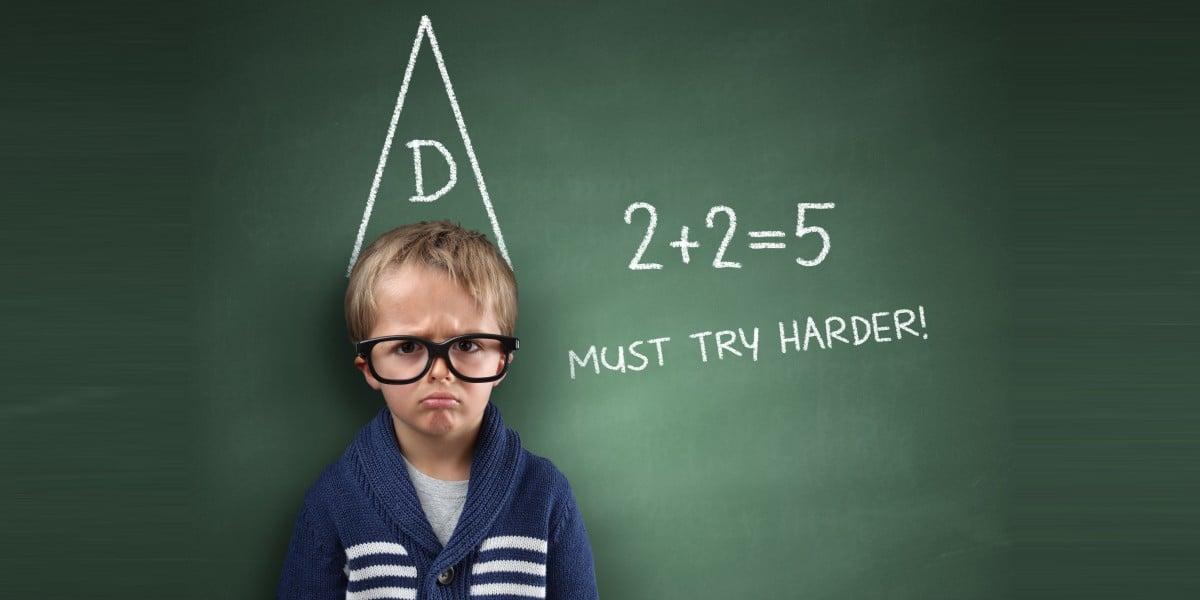
Source: The Register
Using the Measuring Massive Multitask Language Understanding (MMLU) benchmark, the research team tested persona-based AI prompting across multiple subject categories. The results were striking: expert persona prompts achieved only 68.0 percent accuracy compared to 71.6 percent for the base model
1
. The gap reveals a fundamental problem with how these prompts work. According to the researchers, persona prefixes activate instruction-following over factual recall, effectively distracting the model from accessing its pretrained knowledge base1
.Why AI Model Performance Suffers Under Expert Roles
The core issue lies in what expert personas actually do—and don't do—to AI systems. Telling a model it's an expert doesn't add any facts to its training data
1
. Instead, it shifts the model's operational mode. PhD student Zizhao Hu, one of the study's co-authors, explained that asking AI to adopt an expert programmer persona won't improve code quality or utility1
. The technique proves particularly harmful for what researchers call pretraining-dependent tasks—those requiring factual accuracy like math and coding1
.
Source: TechRadar
However, the picture isn't entirely negative. For alignment-dependent tasks involving writing, role-playing, and safety protocols, personas do improve AI model performance
1
. A dedicated "Safety Monitor" persona increased attack refusal rates across three safety benchmarks, with JailbreakBench showing a 17.7 percentage point jump from 53.2 percent to 70.9 percent1
. This split performance explains why online guides continue recommending expert personas despite mixed results.PRISM Offers Smart Solution Through Adaptive Routing
To address this challenge, the researchers developed Persona Routing via Intent-based Self-Modeling, or PRISM
1
. This technique uses a gated LoRA (low-rank adaptation) mechanism that keeps the base model intact for generations requiring pretrained knowledge1
. The system learns to dynamically apply persona-based behaviors only where they improve output, falling back on the unmodified model otherwise2
.PRISM generates answers both with and without personas, compares which performs better, and learns when to apply each approach in future interactions. This avoids the tradeoffs of prompt-based routing at inference time and supervised fine tuning that bakes behavior into model weights
1
.Related Stories



What This Means for Effective AI Prompting
The findings suggest a simpler approach to prompt engineering. Hu advised: "When you care more about alignment (safety, rules, structure-following, etc), be specific about your requirement; if you care more about accuracy and facts, do not add anything, just send the query"
1
. For tasks requiring factual accuracy, specific, comprehensive prompts that provide context and tools work better than role-playing directives.The research also uncovered that reasoning models benefit more from context length while instruction-tuned models show greater sensitivity to personas. This complexity suggests users should focus on clearly explaining tasks and sharing relevant context rather than dictating how AI should approach responses. The paper's authors specifically discourage exploiting biases through over-engineered prompts, warning this may produce unexpected side effects and reinforce societal biases.
References
Summarized by

Navi
[1]
Related Stories
Recent Highlights
1
Anthropic's Claude AI can now control your computer to complete tasks autonomously
Technology

2
Nvidia's Jensen Huang calls OpenClaw the next ChatGPT, sending Chinese AI stocks soaring
Technology

3
Elon Musk unveils $20 billion Terafab chip manufacturing project to produce terawatt of computing
Technology

Recent Highlights
Today's Top Stories







Your Daily Dose of Curated AI News
Don’t drown in AI news. We cut through the noise - filtering, ranking and summarizing the most important AI news, breakthroughs and research daily. Spend less time searching for the latest in AI and get straight to action.

