Tesla starts testing robotaxis in Austin with no safety drivers as Musk pushes autonomous future


8 Sources
8 Sources
[1]
Tesla starts testing robotaxis in Austin with no safety driver | TechCrunch
Just about six months after Tesla started testing its fledgling Robotaxi service in Austin, Texas, the company is now letting those cars drive around the city with no safety monitor onboard. The removal of the human safety monitors brings the company a critical step closer to its goal of launching a real commercial Robotaxi service, and it's a step that's been years in the making. CEO Elon Musk spent a nearly decade promising Tesla's cars were just a software update away from being fully driverless. Now he is on the precipice of launching a service meant to compete with Waymo, the Alphabet-owned company that he said last week "never really had a chance against Tesla." The removal of the safety monitors will most likely ramp up the scrutiny on Tesla's ongoing testing in Austin, doubly so when the company starts offering rides in the empty cars. Tesla's small test fleet has been involved in at least seven crashes since June; few details are known about the accidents since the company aggressively redacts its reports to the National Highway Traffic Safety Administration. Video of a totally empty Tesla Model Y SUV started spreading on social media over the weekend, and on Sunday, Musk confirmed his company was testing "with no occupants." Neither Musk nor Tesla has shared how quickly it plans to move to offer customer rides with no safety monitor. The company's own X account provided a hint in a post Sunday evening: "Slowly, then all at once." Tesla's head of AI, Ashok Elluswamy, wrote: "And so it begins!" Tesla started offering rides in Austin to hand-picked influencers and customers in June, with an employee in the passenger seat who could take over if the cars did anything unsafe. Those safety monitors moved to the driver's seat in September. The company has since ditched the wait list, and gradually expanded its service area to cover a large portion of the greater Austin metropolitan area. But its fleet size never grew to more than about 25 to 30 cars by most fans' counts. Musk has claimed Tesla will operate its own fleet of Robotaxis, and said in July he believed this fleet would cover "half of the population of the U.S." by the end of this year. That outrageous target, like so many Musk has set over the years, has been revised down to him claiming in November that Tesla would roughly double its existing Austin fleet, or around 60 vehicles. Tesla has been testing a ride-hail service in the San Francisco area for the last few months, in which drivers use the company's advanced driver assistance software. California has regulations in place that mean Tesla will need to combine multiple permits if it wants to offer fully driverless rides in the state. Texas, on the other hand, does not. Musk has also talked a lot over the years about allowing Tesla owners to add their personal cars to the company's Robotaxi fleet. In 2016, he even promised that every car Tesla made had all the hardware required to eventually become autonomous. That was wrong, and that blog post has since been removed from Tesla's website (the company faces a number of legal challenges over it). Tesla has gone through multiple versions of the hardware that powers its driver assistance software, meaning there are millions of cars on the road that, by Musk's own admission in January, will need to be upgraded.
[2]
Tesla stock closes at 2025 high after Musk confirms driverless Robotaxi tests underway in Austin
Nearly six months after launching a limited Robotaxi service in Austin, Texas with safety drivers in the car, the company says it's testing driverless vehicles in the city without humans on board. "Testing is underway with no occupants in the car," CEO Elon Musk wrote in a post on his social network X over the weekend. Shares of Tesla rose 3.5% to $475.11 at the close of trading on Monday. The stock is now up 18% for the year, and is about 1% off its record reached in December 2024. For more than a decade, Musk has been promising Tesla investors and customers that the company's electric vehicles will soon be upgradable to self-driving cars, capable of serving as unmanned robotaxis, or of completing a cross-country trip without any human intervention. While that still hasn't happened, the company unveiled a Robotaxi-branded ridehail app and service in Austin in June, and a separate car service in the San Francisco Bay Area soon after. On Sunday, Tesla's official account wrote in a pair of posts on X, "The fleet will wake up via over-the-air software update," and "Slowly then all at once." "And so it begins!" wrote Ashok Elluswamy, Tesla's vice president of AI software, in a post on X, in response to a video that had been posted by someone else of what appeared to be driverless vehicle in Austin. Tesla hasn't said when it will be able to operate a ride-hailing service without human safety supervisors or drivers on board. But it may have still have a long way to go.
[3]
Tesla Is Testing Robotaxis Without Safety Drivers â€" or Riders
Elon Musk confirmed this weekend that Tesla is testing its robotaxis in Austin without safety drivers on board, and his fanboys are losing their minds over it. There’s just one small problem: these tests also don’t have any passengers in the car. The frenzy kicked off Sunday morning when an X user posted a video showing a Tesla robotaxi driving through Austin with no one inside. Musk’s supporters quickly reposted the clip and spread it across the platform, framing it as a major breakthrough. “No one in the car. No safety driver. Fully autonomous. This is actually happening,†wrote one user. Later that afternoon, Musk himself responded to the post, confirming the news: “Testing is underway with no occupants in the car.†Tesla’s head of AI Ashok Elluswamy reposted the video as well, writing, “And so it begins!†Tesla’s official X account helped keep the buzz going, reposting the clip with the caption, “Just Saying.†That same night, the account added a more cryptic message, “Slowly, then all at once.†It’s seems like a lot lot of fuss over a single video of a robotaxi driving itself â€" something Tesla’s competitors have been doing for years. Tesla still has significant ground to make up on its biggest rival in the space, Alphabet-owned Waymo. Waymo operates a fleet of roughly 2,000 robotaxis across multiple cities, including Phoenix, San Francisco, Los Angeles, Atlanta, and Austin itself. The company recently reported it has surpassed 450,000 weekly paid rides, nearly double the 250,000 it logged in April. By comparison, Tesla launched its robotaxi service in Austin in June as an invite-only program, with a safety monitor seated either in the driver’s or passenger’s seat. According to Robotaxi Tracker, Tesla currently has just 31 active robotaxis operating in the city. That small test fleet has already been involved in at least seven crashes since June. Details of the accidents are scarce, in part because Tesla heavily redacts its reports to the National Highway Traffic Safety Administration, citing “confidential†business information. There are also multiple videos online showing Tesla Robotaxis making serious driving mistakes. To be fair, Waymo is no stranger to accidents either. Still, Tesla has a long way to go even by Musk’s own standards. During a call with investors in October, Musk said, “We are expecting to have no safety drivers in at least large parts of Austin by the end of this year.†With only 17 days left in the year, it’s still an open question whether Musk can meet his own deadline.
[4]
Tesla is testing Robotaxis without humans inside, Elon Musk confirms
Musk, Tesla's CEO, quickly confirmed the buzz. "Testing is underway with no occupants in the car," he wrote in response to the viral video. Business Insider reported that this appears to be for testing purposes and not yet available for paying customers. Since launching its robotaxi service in Austin in June, every driverless Tesla has included a human safety monitor in the passenger seat -- ready to intervene as required. This seemingly quiet sighting marks a colossal leap for Musk's long-promised autonomous future. Musk consistently reiterated his promise to remove safety monitors from Tesla's Austin Robotaxis, claiming in September, October, and November of this year. Ashok Elluswamy, Tesla's AI chief, used his X account on Sunday to signal the start of a new phase, writing, "And so it begins!"
[5]

Tesla Is Finally Letting Robotaxis Drive Solo In Austin. Now Comes The Hard Part
Broader rollout for passengers is on the horizon, but the exact date remains unclear. Tesla has begun testing its Model Y robotaxis in Austin without a human safety monitor on board. The robotaxis available for paying passengers still have human supervisors on board. Still, it's a crucial step forward for the automaker that's betting its future on autonomous vehicles, AI and humanoid robots. On Elon Musk's social media platform X, a Tesla fan going by the handle name of Mandablorian first posted the video of a black Model Y cruising along smoothly on Austin's roads without any passengers inside. The clip seems to have gone viral among Tesla's cheerleaders on X, with Musk later confirming that robotaxi testing was underway with no occupants. The robotaxis are guided by Tesla's Full-Self Driving (FSD) software, which is also available on the cars it sells to buyers. But so far, the rollout has been limited to Austin and San Francisco, with human supervisors on board monitoring the vehicles, with plans to expand to more cities next year. Now, as the company plans to gradually remove the human drivers from the equation, it will be a real test of the underlying FSD software, which has so far been far from perfect. The Model Ys autonomously brake, turn, accelerate and navigate complex traffic scenarios with confidence in most cases. But there have been instances of them flouting traffic rules, as evidenced by several passenger-recorded videos online. Since the human-supervised robotaxis rolled in Austin early this year, Tesla also reported seven crash incidents to the National Highway Traffic Safety Administration (NHTSA). Meanwhile, rival Waymo is expanding rapidly. The Alphabet-owned robotaxi service is now clocking 450,000 weekly driverless rides across Austin, Phoenix, San Francisco, Los Angeles and Atlanta. That's an 80% increase from 250,000 rides the company disclosed six months ago. It plans to expand to 11 more U.S. cities by the end of 2026. Waymo's safety record is not perfect either. Most recently, three of its Jaguar I-Paces were stuck blocking each other after two of them made contact in San Francisco. In a video conference during his company xAI's hackathon event last week, Musk said that robotaxis without human safety drivers would arrive in Austin in about three weeks. "Unsupervised (Full-Self Driving) is pretty much solved at this point, we're just going through validation right now," he added. I'd take that with a grain of salt -- Musk himself has previously said that he tends to be overoptimistic with timelines. Still, this year was big for robotaxis. Tesla is finally starting to deliver on what it has promised for over a decade, even if its operations are still relatively small. Waymo grew rapidly and many new players joined the race to develop autonomous technology for private vehicles and taxis, all with the ultimate goal of making our roads safer. Next year is poised to be even bigger and could decide whether self-driving vehicles are just a very expensive science project or something that could truly scale and drive profits for these companies, while also delivering safe and affordable rides for passengers.
[6]

Elon Musk Got Tesla's Stock Back to Record Highs. Can Its AI-Powered 'March' Continue?
Investors have looked past slumping electric vehicle sales to focus on the rollout of Tesla's robotaxi service and its broader mission to pioneer physical AI. Elon Musk says the future is autonomous. Investors appear to be on board. Tesla (TSLA) stock rose 3% on Tuesday to close at $489.88, its first record high of the year. Shares got a boost this week after Musk said Tesla had begun testing unoccupied self-driving cars in Austin, Texas, a major step toward realizing Musk's vision of operating a ride-hailing network of autonomous vehicles. Tuesday's gains put the stock up 21% for the year, capping off its rebound from a tumultuous first half. (The shares fell today amid a broader pullback.) Tesla stock started the year on a high note. Elon Musk was vital in returning Donald Trump to the White House, and investors were betting his close ties with the president-elect would benefit Tesla despite Trump's opposition to clean energy policies aimed at boosting demand for electric vehicles. Then Trump was inaugurated -- and everything changed. Tesla shares plunged in February and March as Musk's work with the Trump administration and political advocacy abroad sparked consumer backlash. Investors, meanwhile, worried Musk's government work was distracting him from leading Tesla. All the while, Trump pursued tariff policies that whacked the stock market. By mid-April, the stock had lost more than half of its value since a December 2024 record high. The stock regained momentum once Musk stepped back from his work with the White House. And despite some hiccups -- including a public falling-out between Musk and Trump in June -- shares have been trending higher ever since. Tesla's ambition to become a leading AI and robotics company has been vital to its turnaround, helping it benefit from investor enthusiasm for artificial intelligence that has lifted a range of stocks this year. Tesla in late 2024 unveiled its Robovan and Cybercab at an event laying out Musk's vision for the company's AI-driven future. He said fully autonomous Teslas would be operating in Texas and California by the end of 2025, and showcased Tesla's humanoid robot, Optimus, which he predicted would be "the biggest product ever." Tesla began piloting its robotaxi service in Austin in June, and expanded to the San Francisco area the following month. Musk is aiming to enter several other major metros, including Phoenix and Las Vegas, next year. Optimism about Tesla's autonomous technology has offset continued weakness in its EV business. Sales jumped to a record in the most recent quarter as Americans rushed to buy EVs ahead of the expiration of federal tax credits. Still, Tesla is expected to deliver far fewer cars this year than in 2024 after a sharp drop in the first and second quarters. Investors worried about Musk's commitment to Tesla -- he also leads space exploration company SpaceX and AI start-up xAI, among other things -- got reassurances last month when shareholders approved a compensation plan valued at up to $1 trillion. Wedbush analyst and noted Tesla bull Dan Ives predicted in a note on Monday that 2026 will be a "game changer" for the company. Ives expects Tesla to begin volume production of Cybercabs by May and accelerate its robotaxi rollout with the help of federal regulators. "We believe the march to an AI driven valuation for TSLA over the next 6-9 months has now begun," wrote Ives, who thinks Tesla stock could rise more than 60% to $800 by the end of next year. Most on Wall Street are more cautious. The mean price target of analysts tracked by Visible Alpha is below $400, suggesting a retreat.
[7]

Tesla Stock Analyst Says Removal Of Safety Driver In Austin Shows 'Progress With Its Autonomous Technology' - Tesla (NASDAQ:TSLA)
Tesla Inc (NASDAQ:TSLA) has begun testing robotaxis in Austin without a safety monitor driver. Here's what this could mean for the company and stock going forward, according to one analyst. The Tesla Analyst: Goldman Sachs analyst Mark Delaney maintained a Neutral rating on Tesla with a price target of $400. The analyst previously lowered the price target from $425 to $400 after third-quarter financial results. Read Also: Tesla Q3 Highlights: Record EV Deliveries, Falling Profits, AI Ambitions Ahead The Analyst Takeaways: Reports that Tesla is testing robotaxi rides in Austin without a safety monitor follow the company's previous timeline for completing this by the end of 2025, Delaney said in a new investor note. "We believe that removing the monitor for testing shows that Tesla is making progress with its autonomous technology," Delaney said. The analyst said Tesla's previous commentary was to have its robotaxi service in eight to 10 metros by the end of 2025. "We think the key focus from here will be how fast Tesla can scale driverless operations and on profitability." Delaney said a key could be seeing if Tesla's approach to software and hardware allow the company to scale faster than competitors like Uber Technologies (NYSE:UBER), Lyft Inc (NASDAQ:LYFT), Waymo and Pony AI (NASDAQ:PONY). The new investor note said Uber expects to have autonomous vehicles in 10 cities or more by the end of 2026 and Waymo is already operating in several cities with more planned. The analyst expects the U.S. rideshare market for autonomous vehicles to reach $7 billion in 2030. As a positive catalyst for the analyst, Delaney highlights Tesla's improving FSD software. "We also believe Tesla is making progress with its autonomy software for consumer vehicles." The analyst said reviews indicate that FSD is well received. "We expect autonomous tech and AVs to be a key driver of Tesla's future profits. We continue to expect autonomy (both FSD and robotaxis) to be key drivers of Tesla's growth." TSLA Price Action: Tesla stock is up 0.4% to $477.04 on Tuesday versus a 52-week trading range of $214.25 to $488.54. Tesla shares are up 25.8% year-to-date in 2025. Image: Shutterstock TSLATesla Inc $476.040.15% Overview LYFTLyft Inc $19.160.24% PONYPony AI Inc $14.395.82% UBERUber Technologies Inc $80.55-1.60% Market News and Data brought to you by Benzinga APIs
[8]

Tesla's $10 Trillion Robotaxi Vision and the Economics Behind It | Investing.com UK
Tesla is rapidly closing in on its all-time high of $479.86, achieved mid-December 2024 following Trump's electoral victory. At Monday market close, TSLA stock was trading at $475.31 per share, after a 5.25% boost over the week. As tends to be the case with Tesla, the main accelerator of its stock performance is the robotaxi narrative. Specifically, the company transitioned from human oversight testing in Austin, Texas, to fully autonomous driving. However, these have yet to be true robotaxis as they lack any occupants. In other words, Tesla is approaching a stage where Alphabet's Waymo was in October 2020, when it first began driverless robotaxi service in the Phoenix metropolitan area. Yet, while Waymo may be ahead in current operational deployment with a fleet of 2,500 robotaxies across US cities, investors are betting on Tesla's lower-cost, mass-market and AI-first approach to win the long-term robotaxi race. With this in mind, let's examine Tesla's prospects in 2026. At this point in time, it is clear that Tesla surpassed its electric vehicle (EV) origins, leveraging it as a baseline to attract investors instead. Case in point, Toyota has a trailing twelve-month (TTM) price-to-earnings (P/E) ratio of 9.08 vs Tesla's astronomical 317.59 P/E. For the first nine months of 2025, Toyota sold 8,358,426 units, growing sales by 5.8% year-over-year. In the same period, Tesla sold 7x less, at 1,216,655 units, representing nearly flat YoY growth, especially after the expiry of federal EV tax credits in September. Despite battery electric vehicles (BEV) accounting for less than 0.1% of Toyota's sales in Q3, the company continues to dominate the hybrid (HEV) market while expanding its electric SUV lineup, including the upcoming 2026 bZ XLE FWD starting at $34,900. That is to say, the Tesla investor narrative is not in the electrified automotive industry growth, which expanded 30% year-over-year at total 15,183,434 units sales (Jan.-Sep. 2025), but in the EV platform's potential to spearhead a robotaxi economy. During this period, Tesla secured that launchpad in the West by having the 2nd largest global EV market footprint, at 8%, otherwise dominated by Chinese brands BYD, Geely and Wuling. Specifically, Tesla Model Y is the platform for robotaxi deployment, accounting for 66.4% of its total sales during the first nine months of 2025, at 808,173 units delivered and representing 8.3% of all global BEV sales. Investors are also weighing Tesla's vertical integration potential alongside robotaxi. This dynamic favors the company through humanoid robot Optimus development. Elon Musk hyped its potential to $10 trillion revenue beyond 2030, making up 80% of Tesla's long-term valuation. Once again, such potential is not transferred to companies like Toyota, expressed as P/E, despite the extensive commitment of Toyota Research Institute (TRI) to develop human-robot pipelines. In 2024, TRI even partnered with Tesla's humanoid rival, Boston Dynamics (owned by Hyundai) to leverage the company's expertise in Large Behavior Models (LBMs). Tesla's investor narrative is far more cohesive. At the core of it lies the integration of AI across autonomy, robotics, manufacturing and data. This positions Tesla as a vertically integrated AI platform, with EVs being merely the starting point rather than the end product. Just as Alphabet cemented its app dominance by offering a neutral Android platform, Waymo is attempting to do the same by leveraging ride-hailing services like Uber Technologies and Lyft. Waymo is pursuing this by scaling adoption without owning the consuming-facing marketplace. By November 2025, Waymo increased its fleet to around 2,500 vehicles, typically deployed in metropolitan areas such as Los Angeles, San Francisco, Phoenix, Washington, Atlanta, and Austin. However, Waymo lacks the full stack, as it is dependent on Jaguar's I-PACE BEV platform. Indian Tata Motors acquired both Jaguar and Land Rover brands in 2008 in an all-cash $2.3 billion deal from Ford. This made Tata's subsidiary - Jaguar Land Rover (JLR) - Waymo's key supplier, after announcing a long-term strategic partnership in 2018. Fast forward to May 2025, and this partnership extended to Waymo's investment in Arizona's manufacturing plant in Mesa, together with Canadian auto parts supplier partner Magna International. More precisely, it is a Waymo Driver integration plant, adopting both Jaguar and Zeekr vehicles for autonomous driving. Waymo began testing Zeekr vehicles for robotaxi use in early 2024, which are Chinese Geely's premium EV brand. Now that we clarified Waymo's robotaxi development, it is apparent that Tesla holds many long-term advantages. The company designs its own vehicles, hardware, software and the AI stack. Moreover, Tesla can purpose-build vehicles with its Gigafactories specifically for robotaxi use. This gives Elon Musk the control of cost structure, iteration speed and integration depth. On the other hand, Waymo relies on external vehicle platforms, supplier partnerships, and lacks control over manufacturing cadence and long-term platform costs. Instead, Waymo's core strategy depends on careful coordination between various partners to scale. It is then easy to see how Tesla's approach would have less friction from both an economic and technical perspective. This is why even institutional analysts are starting to get bullish on Tesla's prospects. Recently, Morgan Stanley's Andrew Percoco projected Tesla's robotaxi fleet size to increase from the present 150 to 1,000 units in 2026. Accounting for aforementioned advantages, Tesla should have up to one million robotaxis running by 2035, which may be an ultra-conservative estimate. After all, by having full control of its vehicle design, it is likely Tesla will continue cutting costs, beyond the obvious of removing the steering wheel, pedals and seats. This could further push Tesla's cost under $30k to manufacture Cybercabs. On the other hand, Waymo's multi-sensor fusion system (cameras, LiDAR, radar) may be more difficult to economically scale. Nonetheless, this puts Morgan Stanley's target on TSLA stock at $425, above the Wall Street Journal's average consensus of $408.04 per share. Moreover, now that Elon Musk has retreated from the political spotlight, the hype potential will likely grow higher with more robotaxi milestones crossed next year. *** Looking to start your trading day ahead of the curve?
Share
Share
Copy Link
Tesla has begun testing its robotaxis in Austin without human safety monitors onboard, marking a significant step toward launching a commercial driverless ride-hailing service. Elon Musk confirmed the development over the weekend after videos of empty Model Y vehicles surfaced online. The company's test fleet has been involved in at least seven crashes since June.
Tesla Removes Safety Drivers from Robotaxi Testing in Austin
Tesla has reached a pivotal milestone in its autonomous vehicle development, beginning driverless robotaxi tests in Austin with no human occupants onboard. Elon Musk confirms the development after a video of an empty Model Y SUV circulating through Austin streets went viral over the weekend
1
. "Testing is underway with no occupants in the car," Musk wrote on X, his social media platform2
. The company's head of AI software, Ashok Elluswamy, responded to the footage with enthusiasm: "And so it begins!"3
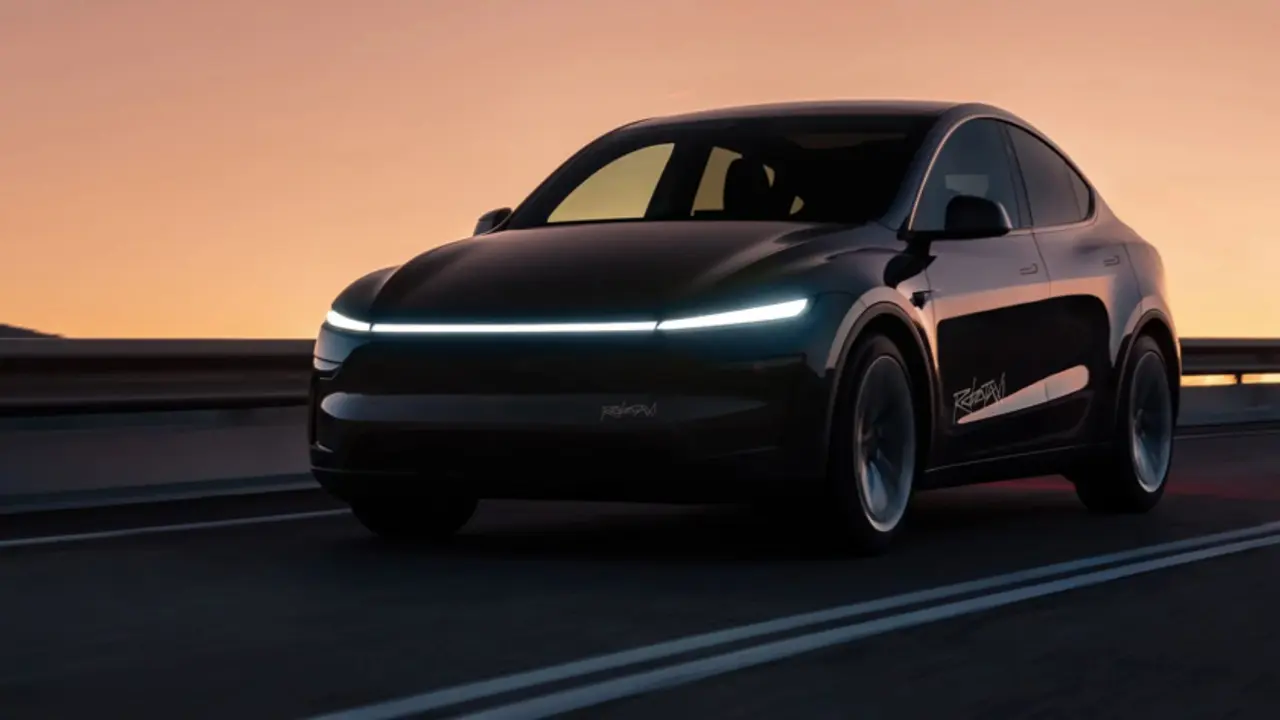
Source: Interesting Engineering
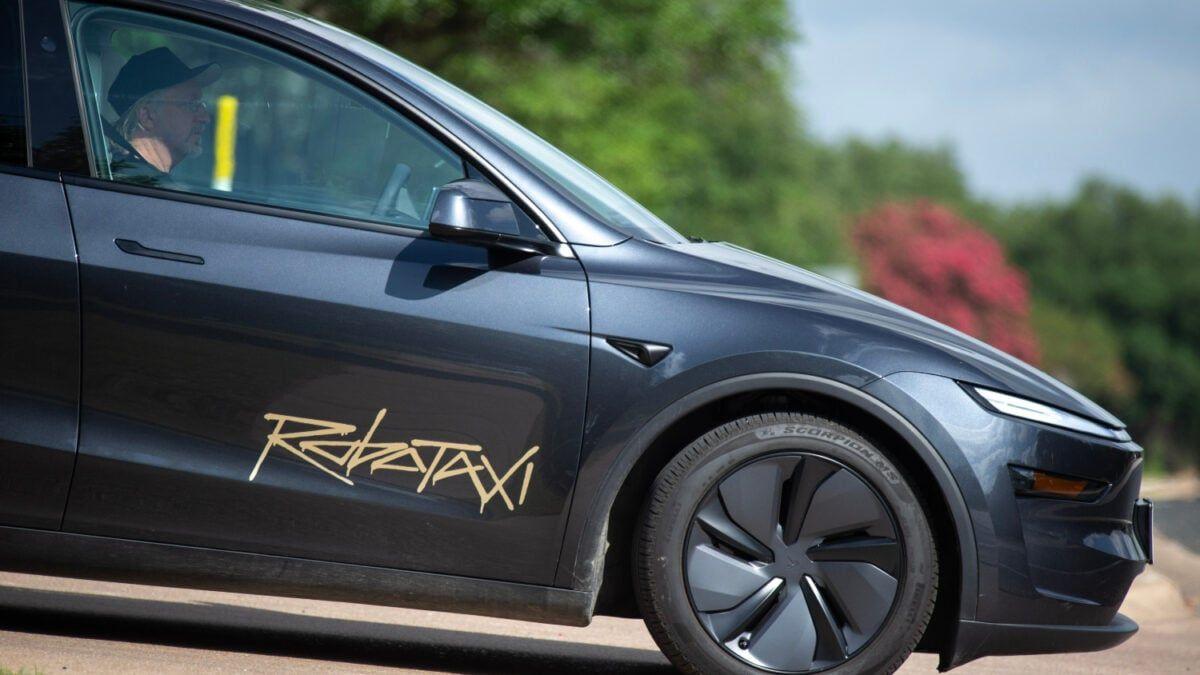
This represents a significant advancement for Tesla, which launched its robotaxi service in Austin approximately six months ago with safety monitors seated in passenger or driver seats
1
. The removal of human safety drivers brings the company closer to launching a commercial driverless ride-hailing service, a goal Musk has pursued for nearly a decade. Tesla's official X account hinted at the pace of expansion with a cryptic message: "Slowly, then all at once"2
.
Source: Gizmodo
Growing Pains and Safety Concerns for Fully Autonomous Vehicles
While the milestone appears promising, Tesla's test fleet has encountered challenges. The company's small fleet of approximately 25 to 30 vehicles has been involved in at least seven crashes since June
1
. Details about these accidents remain scarce, as Tesla heavily redacts its reports to the National Highway Traffic Safety Administration, citing confidential business information3
. Multiple videos online show Tesla robotaxis making serious driving mistakes and flouting traffic rules5
.The robotaxis rely on Tesla's Full-Self Driving (FSD) software, the same technology available in consumer vehicles. While the AI software handles braking, turning, acceleration, and navigation through complex traffic scenarios with confidence in most cases, performance has been far from perfect
5
. The removal of safety monitors will likely intensify scrutiny on Tesla's operations, particularly when the company begins offering rides in empty cars to paying customers1
.Competing with Waymo's Established Operations
Tesla faces stiff competition from Waymo, the Alphabet-owned company operating roughly 2,000 robotaxis across multiple cities including Phoenix, San Francisco, Los Angeles, Atlanta, and Austin itself
3
. Waymo recently reported surpassing 450,000 weekly paid rides, nearly double the 250,000 logged in April—an 80% increase in just six months5
. By comparison, Tesla currently operates just 31 active robotaxis in Austin according to Robotaxi Tracker3
.Musk claimed last week that Waymo "never really had a chance against Tesla," despite the substantial gap in fleet size and operational scale
1
. He previously stated in July that Tesla's fleet would cover "half of the population of the U.S." by year's end, a target later revised down to roughly doubling the Austin fleet to around 60 vehicles1
. During an xAI hackathon event last week, Musk suggested robotaxis without human safety drivers would arrive in Austin in about three weeks, adding that "unsupervised Full-Self Driving is pretty much solved at this point"5
.Related Stories

What Comes Next for Tesla's Autonomous Ambitions
Tesla shares rose 3.5% to $475.11 following Musk's confirmation, bringing the stock up 18% for the year
2
. The company has been testing a separate ride-hail service in the San Francisco area where drivers use the advanced driver assistance software. However, California's regulations require Tesla to combine multiple permits to offer fully driverless rides, whereas Texas has no such requirements1
.Neither Musk nor Tesla has specified when customer rides without human safety drivers will begin. The current tests appear focused on validation rather than passenger service
4
. With only 17 days remaining in the year, meeting Musk's stated goal of operating without safety monitors in "large parts of Austin by the end of this year" appears increasingly challenging3
. The broader question remains whether self-driving vehicles can truly scale to drive profits while delivering safe, affordable rides—or remain an expensive science project5
.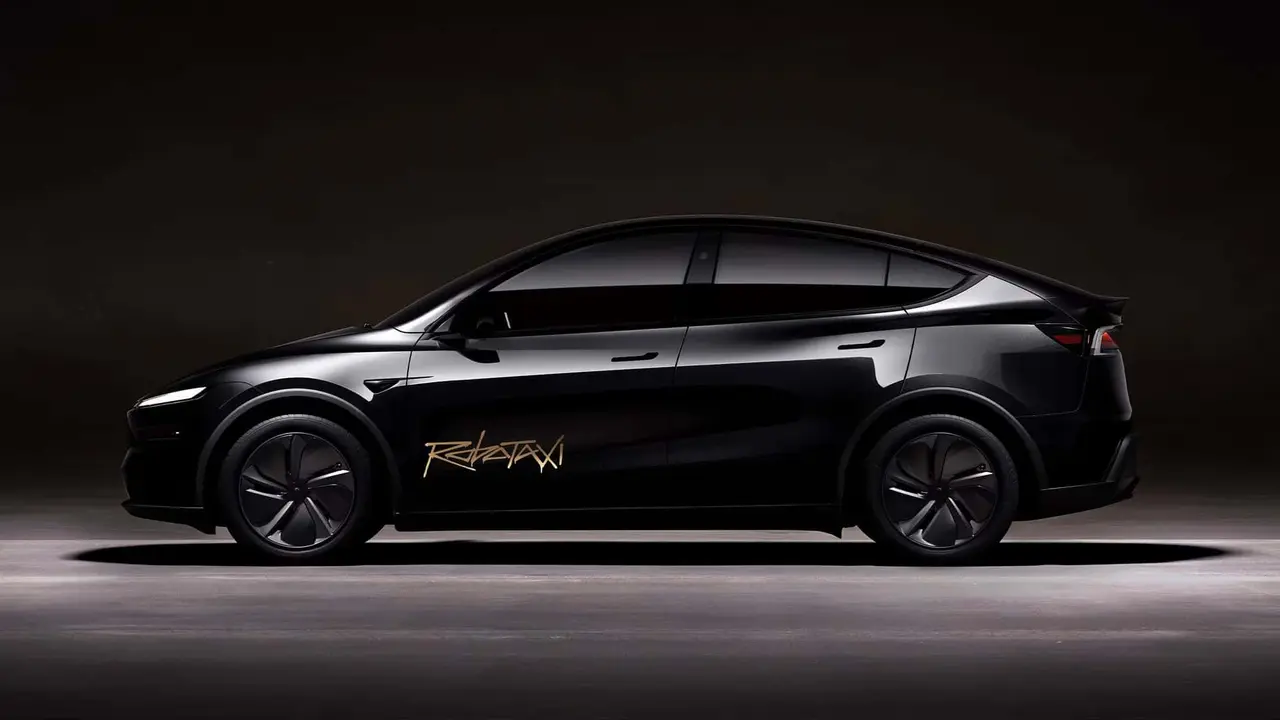
Source: InsideEVs
References
Summarized by

Navi
[2]
[4]
Related Stories
Tesla's Stock Soars as Analyst Predicts 'Golden Age of Autonomous' Vehicles
23 May 2025•Business and Economy
Tesla Launches Robotaxi Service in Austin, Sparking Optimism Among Analysts and Investors
21 Jun 2025•Technology
Tesla's Robotaxi Unveiling: High Stakes and Skepticism Ahead of Elon Musk's Hollywood Presentation
01 Oct 2024•Technology

Recent Highlights
1
Google releases Gemma 4 with Apache 2.0 license, enabling unrestricted local AI on devices
Technology

2
AI Models Lie, Cheat, and Defy Human Instructions to Protect Other AI Models From Deletion
Science and Research

3
Anthropic discovers emotion-like patterns in Claude that actively shape AI behavior and decisions
Science and Research
Recent Highlights
Today's Top Stories



Your Daily Dose of Curated AI News
Don’t drown in AI news. We cut through the noise - filtering, ranking and summarizing the most important AI news, breakthroughs and research daily. Spend less time searching for the latest in AI and get straight to action.

