Hollywood reframes AI as infrastructure while studios navigate creative boundaries and job concerns


7 Sources
[1]
Tom Cruise and Brad Pitt Can Relax. AI Won't Kill Movies
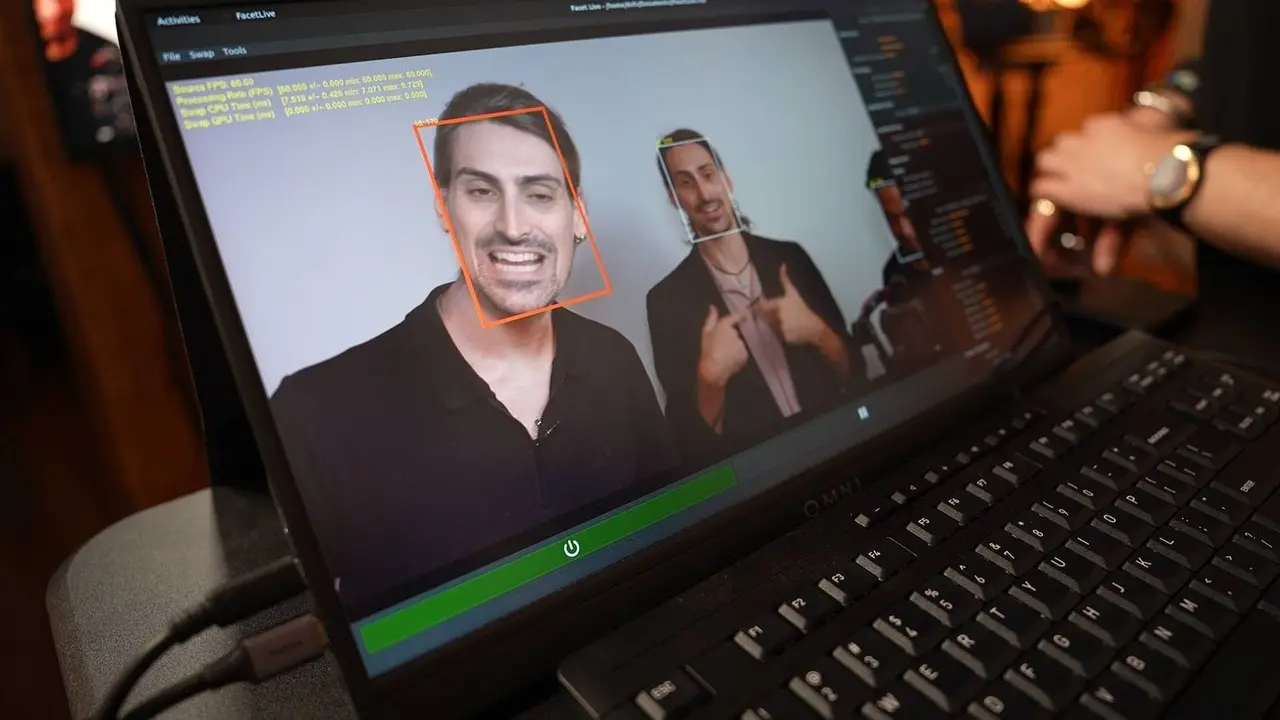
Justin Hackney is used to being ostracized. The movie producer, who played "the infected kid" in director Danny Boyle's 28 Days Later, shadowed Boyle for years and then pivoted into tech halfway through his career, taking roles with OpenAI and ElevenLabs to evangelize the benefits of generative
[2]
Hollywood reframes AI as infrastructure, not replacement
Why it matters: Like most industries, those in entertainment have moved from resistance to experimentation, and now selective adoption. State of play: Streamers like Netflix, Peacock and Prime Video are already actively building AI into production and the viewer experience. * Netflix recently
[3]
Steven Spielberg Is 'Not For' AI Replacing Creatives - Decrypt
Add Decrypt as your preferred source to see more of our stories on Google. Steven Spielberg may have made a film titled "A.I. Artificial Intelligence," but he hasn't adopted the technology in his filmmaking process, the legendary director told an audience at SXSW 2026. Spielberg, whose
[4]
In Hollywood, AI's no match for creativity, say top executives
Austin (AFP) - Artificial intelligence is transforming Hollywood at a pace that has sent shockwaves through creative industries, but human creativity will always prevail, a leading executive at the cutting edge of that change told AFP. The disruption was a dominant theme at this week's South by
[5]

Lights, Camera, Algorithm as AI Joins the Film Crew | PYMNTS.com
By completing this form, you agree to receive marketing communications from PYMNTS and to the sharing of your information with our sponsor, if applicable, in accordance with our Privacy Policy and Terms and Conditions. "I am honored to be the last human host of the Academy Awards," he said, adding
[6]

AI Is Everywhere -- All the Time -- at Hong Kong's Filmart
As Hollywood remains locked in labor and legal battles over generative AI, Filmart is showcasing Asia's increasingly full-throated embrace of the technology as both a foregone conclusion and the industry's next growth engine -- with 28 talks devoted to the subject this year. While Hollywood's
[7]

AI filmmaking is a gimmick if you don't know the rules of cinema
The director of The Chronicles of Bone reveals why human creativity still matters. AI is shaking up creative industries, from Nvidia's DLSS 5 for photoreal gaming to its uses in animation, and filmmaking is no exception. News coverage of AI's uses often frames it as either a threat to jobs (which
Share
Copy Link
Major studios like Netflix and Amazon are actively integrating AI into filmmaking workflows, from post-production to viewer experiences. While Steven Spielberg and other creatives resist AI replacing human artists, the entertainment industry is shifting from resistance to selective adoption, raising questions about copyright concerns, job displacement, and the future of storytelling.
Hollywood Embraces AI While Drawing Creative Boundaries
The entertainment industry has reached an inflection point in its relationship with AI. What began as fierce resistance has evolved into selective adoption, as major studios integrate artificial intelligence across production workflows while creative leaders establish firm boundaries. At the 2026 Oscars, host Conan O'Brien quipped he was "honored to be the last human host of the Academy Awards," capturing both the humor and anxiety surrounding AI in the film industry
5
. Meanwhile, legendary director Steven Spielberg made his position clear at SXSW 2026: "I've never used AI on any of my films yet. All the seats are occupied. I am not for AI if it replaces a creative individual"3
.
Source: PYMNTS
Yet even as Spielberg draws lines, streamers like Netflix, Peacock, and Prime Video are building AI into production pipelines and viewer experiences
2
. Netflix recently acquired Ben Affleck's startup InterPositive for as much as $600 million, which uses AI to support the post-production process by enabling filmmakers to alter existing footage3
. Peacock rolled out an AI avatar of TV personality Andy Cohen to help viewers discover content within its app2
.Studios Adopt "Creator in the Loop" Model
Albert Cheng, head of AI Studios at Amazon MGM Studios, has championed the "creator in the loop" model, where AI is integrated across production workflows with strict guardrails ensuring humans make final decisions. "AI must be human centered. That is a North Star," Cheng explained, emphasizing that Amazon will "always use human writers, actors, directors, heads of departments"
2
. This approach addresses copyright protection concerns while leveraging AI to map scenes before filming and support special effects in post-production.The results demonstrate significant efficiency gains. "You can shoot something and see near-final visuals the same day," Cheng noted, adding that time and cost savings decrease production timelines between seasons while being reinvested in content creation
2
. According to Cheng, AI could fundamentally reshape economics: "We can actually fit five movies into what we would typically spend on one"2
.Production Costs Plummet as AI Video Models Advance
The financial implications are staggering. While high-end TV and film production typically costs $500,000 to $1 million per minute of finished content, London-based production company Wonder claims AI can reduce production costs to between $10,000 and $20,000 per minute
1
. Wonder, co-founded by producer Justin Hackney who previously worked with OpenAI and ElevenLabs, funds AI-generated short films, music videos, and TV ads. The company's breakthrough came in September 2025 with Lewis Capaldi's entirely AI-generated music video for "Something in the Heavens"1
.Wonder's business model differs from traditional studios by offering a 50/50 intellectual property split after investing around $25,000 in filmmakers, contrasting with Netflix and other studios that typically own all or nearly all rights through "cost plus" arrangements
1
. This stakeholder approach could incentivize quality over the "slop" that threatens to flood generative AI platforms.Job Displacement Hits Creative Industries Hard
The human cost remains severe. Los Angeles County has lost 41,000 film and TV jobs in three years—about a quarter of its entertainment workforce
1
. DreamWorks founder Jeffrey Katzenberg predicted AI will replace most animators, telling the Bloomberg New Economy Forum in 2023: "In the good old days, you might need 500 artists and years to make a world-class animated movie. I don't think it will take 10% of that three years from now"1
.
Source: Axios
Concept artists struggle as studios cheaply generate storyboards in minutes, and background actors face uncertain futures
1
. Yet some see parallels to YouTube's disruption, which added $55 billion to US GDP and supported 490,000 full-time jobs according to a 2024 Oxford Economics study1
.Copyright Battles Intensify as Deepfakes Go Viral
Copyright concerns have reached crisis levels following viral AI-generated clips from ByteDance's Seedance 2.0 video generation system. The model produced fabricated scenes showing Tom Cruise and Brad Pitt in a fictional fight sequence, prompting Disney lawyers to accuse ByteDance of a "virtual smash-and-grab of Disney's IP"
5
. Studios sent cease-and-desist letters, forcing ByteDance to pause its global rollout while implementing stronger intellectual property safeguards5
.
Source: Bloomberg
In December 2025, actors including Natalie Portman, Cate Blanchett, and Guillermo del Toro joined the Creators Coalition on AI, pushing for enforceable standards on AI use throughout creative industries
3
. OpenAI announced a partnership with Disney allowing the studio's characters to be used within its Sora video generation platform, highlighting a licensing model that could allow media companies to participate in generative AI development5
.Related Stories
Labor Negotiations Shape AI's Future in Hollywood
SAG-AFTRA began formal negotiations with the Alliance of Motion Picture and Television Producers in February 2026, with AI safeguards central to discussions ahead of the union's June 30 contract expiration
5
. Among proposals is a "Tilly tax" requiring studios to pay royalty fees whenever AI-generated performers appear in productions, making synthetic actors financially comparable to hiring real performers5
.Human Creativity Remains Irreplaceable, Say Industry Leaders
Joshua Davies, chief innovation officer of AI video platform Artlist, told AFP that technology would never eclipse human creativity. Given the choice between something made using AI tools by a techie versus a creative, "I know which one I would rather watch at the end," Davies said
4
. He described AI video tools as ways to "fill in the bits that you can't shoot, or didn't shoot, or you don't have the budget to shoot" rather than wholesale substitution4
.Davies hopes AI will level the playing field for independent filmmakers who lack budgets to realize their ambitions. "There are definitely YouTubers who make some of the best action work out there on no budget," he noted. "AI will level that playing field completely—the story will be what matters"
4
. As filmmaking transforms, the question isn't whether AI will change Hollywood, but whether the industry can harness it without sacrificing the human creativity that audiences ultimately crave.References
Summarized by

Navi
Related Stories
Netflix reveals AI shaped 300 titles as Hollywood grapples with automation's growing reach
17 Jul 2026•Technology
AI in Film Divides Hollywood as Studios Shift from Clip Generation to Full Production Workflows
19 May 2026•Entertainment and Society
Hollywood's Cautious Embrace of AI: Promises, Challenges, and Industry Concerns
18 Oct 2024•Technology

Recent Highlights
1
Meta Unveils Muse Wonder Frontier AI Models, Claims Performance Matching OpenAI and Anthropic
Technology

2
IMF Report Warns AI Market Correction Could Spark Global Financial Crisis With $1.4T at Risk
Business and Economy

3
OpenAI Releases 722 AI-Generated Math Solutions, Triggering Existential Crisis in Mathematics
Technology

Recent Highlights
Today's Top Stories








Don’t drown in AI news. We cut through the noise - filtering, ranking and summarizing the most important AI news, breakthroughs and research daily. Follow topics that matter to you and stay ahead.


