Tesla reveals 1.1 million FSD subscribers as subscription prices set to climb with capabilities


6 Sources
6 Sources
[1]
$99 Tesla Full Self Driving subscription will rise
One-time FSD purchase no longer available as Elon Musk talks up future where drivers can be asleep at the wheel Having confirmed Tesla will start charging $99 a month for supervised Full Self-Driving (FSD), CEO Elon Musk has told the faithful that the cost will rise "as FSD's capabilities improve." Musk revealed the plan on his social media mouthpiece, X (formerly Twitter), on January 23, a week after stating that the hands-free driving technology would shift from an $8,000 one-off payment to a subscription-only model in February. Tesla announced the change to a monthly subscription on January 14. It will shift to a subscription model for FSD on February 14, and Musk's post indicates the $99 per month fee will rise before long, though he did not give a date or amount, just saying it would happen as the technology gets better. The electric vehicle maker is not averse to fiddling with price lists; the FSD feature reached a high of $15,000 in September 2022 before being reduced to $8,000 in 2024. The $99-per-month option offers better value, though the idea of a subscription can be controversial. A price increase, however, reduces the value proposition. "The massive value jump," wrote Musk, "is when you can be on your phone or sleeping for the entire ride (unsupervised FSD)." Musk has promised great things of FSD for years, and Tesla has become the target of several sueballs over the technology. Investigations have also opened regarding the safety of the system, which relies on cameras and AI to keep its vehicles on track rather than features including radar and lidar. Musk did not clarify exactly what increase in FSD capability justifies a subscription payment hike. If Tesla waits until FSD reaches the point where it can be trusted to pilot a vehicle with the driver asleep at the wheel, then it seems unlikely the corporation's value will increase in time to trigger Musk's bonus payout. In addition, modern hands-free systems mean that operating a cellphone is perfectly possible from a moving vehicle. Tesla is not the only automaker to move its customers to a subscription model and remove a one-off payment option, notwithstanding BMW's ill-fated heated seat adventure. Musk is, however, notable for saying the quiet part out loud: price rises could arrive faster than an out-of-control car, careening down the highway. ®
[2]
Tesla's Full Self-Driving Subscriptions Surged Past 1 Million In 2025 -- Even As Scrutiny Grew
* In its fourth-quarter 2025 earnings report, Tesla announced that it has 1.1 million active subscriptions of Full Self-Driving (Supervised). * Driving FSD subscriptions is a key component of CEO Elon Musk's trillion-dollar compensation package. * But the camera-and-AI-based automated driving system is the subject of multiple investigations, complaints and even lawsuits. In order to secure his unprecedented $1 trillion pay package, Tesla CEO Elon Musk has to hit some aggressive milestones. One of those is selling 10 million subscriptions to Full Self-Driving (Supervised), Tesla's hands-free automated driving assistance system. If the numbers in Tesla's fourth-quarter earnings update are accurate, then Musk is more than one-tenth of the way there. The electric automaker -- which is attempting to pivot to a robotics, energy and artificial intelligence company -- boasted that it had 1.1 million active FSD subscriptions by the end of 2025. That number represents a 38% increase from about 800,000 subscriptions in the fourth quarter of 2024. It is the first time Tesla has officially disclosed the total number of FSD subscriptions. It's not immediately clear how that tracks with the total number of FSD-capable Teslas sold to date; according to the International Council on Clean Transportation, over 7 million EVs were sold in the U.S. between 2015 and Sept. 2025, and most of those have been Teslas, although the company's EV market share has dwindled in recent years. The result also means that Tesla has nearly twice as many FSD subscribers as General Motors does for Super Cruise, its hands-free automated driving system. (Unlike FSD, Super Cruise only operates on mapped highways, while FSD can drive in urban areas as well.) And in the view of Musk and his executives, selling FSD subscriptions is even more important than selling EVs, because "the future is autonomous," as the CEO said. A version of the FSD software is used in Tesla's Robotaxi service, which recently started operating without human safety minders in Austin. Musk said the service is expected to expand to several other cities in 2026, including Dallas, Phoenix and Miami. (It's not immediately clear whether Tesla's FSD subscription figure extends to cars in its own fleet.) "This new autonomous market, you have to start thinking about us as providing transportation as a service, more than the total... market for vehicles alone," said Tesla engineering VP Lars Moravy on the earnings call. Musk added that he sees "the vast majority of miles traveled will be autonomous in the future." Like GM, Tesla sees FSD subscriptions -- the service costs $99 per month and was recently discontinued as a one-time purchase -- as a key driver of future revenue. Even so, Tesla's bullish approach to autonomy has drawn considerable controversy for a number of safety mishaps. In October, U.S. National Highway Traffic Safety Administration opened an investigation into nearly 3 million Tesla vehicles equipped with FSD over more than 50 reports of crashes and traffic law violations. In California, Tesla's largest market, a judge ruled in December that Tesla engaged in deceptive marketing by overstating the capabilities of both FSD and Autopilot for years. It recently dropped the latter name from its suite of standard driver-assistance features. The automaker faces a number of lawsuits over FSD as well. Nonetheless, Tesla officials seem undaunted about the future being driven by autonomous driving, not making new cars. "We're starting not the next chapter, but a new book on the progression of this company," said Vaibhav Taneja, Tesla's CFO. "2026 will be when all of this began. While at times it feels daunting, it will be the most exciting change in Tesla's history."
[3]
Tesla Reveals Active FSD Subscriptions Globally For First Time Amid Elon Musk's 10 Million Goal - Tesla (NASDAQ:TSLA)
Tesla Inc. (NASDAQ:TSLA) has revealed the total number of active FSD subscriptions for the first time at its fourth-quarter earnings call. 1.1 Million Active FSD Subscriptions The company shared the figure during its fourth-quarter earnings call on Wednesday, with CFO Vaibhav Taneja sharing that there were 1.1 million active FSD subscribers worldwide. He shared that there were "nearly 1,100,000 paid customers globally," adding that over "70% were upfront purchases." Taneja shared that as the company announced the transition to FSD's subscription-only model starting next month, "will impact automotive margins." Tesla offers a $99/month subscription for the FSD, as well as an option to pay $8,000 upfront, which would now only be available until 14th February this year. The move could help Tesla reach the 10 million active subscriptions, which is one of the milestones laid out in Tesla CEO Elon Musk's trillion-dollar pay package. FSD Transfers, Subscription Price To Go Up? Tesla Model S, X Rollback, xAI Investment The company also announced a $2 billion investment into Musk's artificial intelligence company xAI, with the deal expected to be finalized in the first quarter of 2026, provided it clears regulatory hurdles. According to Benzinga Edge Rankings, Tesla scores well on the Momentum metric and offers a favorable price trend in the Long term. Price Action: TSLA jumped 2.01% to $440.13 during Overnight trading on Wednesday. Check out more of Benzinga's Future Of Mobility coverage by following this link. Photo courtesy: Shutterstock Market News and Data brought to you by Benzinga APIs
[4]
Tesla discontinues Autopilot in US and Canada By Investing.com
Investing.com -- Tesla on Thursday discontinued its basic driver-assistance system, Autopilot, in the United States and Canada. The electric vehicle maker is pushing customers toward its more advanced technology branded as Full Self-Driving (Supervised). This change comes after Tesla's announcement last week that it would stop offering Full Self-Driving as a one-time $8,000 purchase starting February 14. Following that date, customers will only be able to access the software through a monthly subscription priced at $99. This article was generated with the support of AI and reviewed by an editor. For more information see our T&C.
[5]
Tesla FSD prices to increase as capabilities improve, Musk says By Investing.com
Investing.com-- Subscription prices for Tesla's "full self driving" (FSD) software will increase as the service's capabilities improve, CEO Elon Musk said on Thursday evening. Musk's comments come as Tesla Inc (NASDAQ:TSLA) prepares to stop offering its FSD service as a one-time purchase and move entirely into a subscription-based model, currently priced at $99 a month. Tesla buyers can still purchase FSD as a one-time option, for $8,000, until February 14. Get more breaking news on Tesla by upgrading to InvestingPro "The $99/month for supervised FSD will rise as FSD's capabilities improve. The massive value jump is when you can be on your phone or sleeping for the entire ride (unsupervised FSD)," Musk said in a social media post. Tesla has not provided a clear timeline for when it plans to begin offering unsupervised FSD, despite Musk having touted such an offering for years. The service still contains the "supervised" disclaimer on Tesla's website, after the company was hit with a wave of lawsuits and regulatory scrutiny over its claims on FSD's capabilities. Musk has constantly touted robotics, artificial intelligence and autonomous vehicles as the next big growth drivers for Tesla, as the electric vehicle maker grapples with years of cooling sales in its core auto division. Tesla is currently testing its driverless robotaxis in Austin, Texas, having recently started testing the service without a human safety monitor. Musk said in a separate post that production of Tesla's Cybercab, a two-seater fully autonomous vehicle, begins in April. But he had earlier warned that initial production of the vehicle and Tesla's Optimus humanoid robot will be "agonizingly slow."
[6]

Tesla to charge subscription fee for some highway driver-assist features in US, Canada
Jan 23 (Reuters) - Tesla on Thursday stopped including some driver-assistance features with new vehicles sold in the U.S. and Canada, requiring customers who want self-steering and similar technology to pay for a broader $99 monthly subscription. Tesla CEO Elon Musk has been focusing on boosting revenue from artificial intelligence-driven autonomous vehicle technology in the company's personal vehicles and robotaxis as sales of its aging electric vehicles soften. Though EV sales account for most of Tesla's income, investors are eager to see if the company can make money off AI, and much of Tesla's $1.4 trillion valuation hangs on that bet. New Tesla buyers will get Traffic Aware Cruise Control, a feature that maintains a set speed and follows traffic at a safe distance, included in their purchases, Tesla's online vehicle configuration pages showed on Friday. Autosteer, a feature that keeps vehicles centered in a lane on highways, will no longer come standard. Tesla stopped offering Autopilot, which included Autosteer, and also stopped selling Enhanced Autopilot, which can change lanes. Customers wanting that level of assistance now have to buy Tesla's broader $99-a-month Full Self-Driving (Supervised) subscription that also steers the vehicle through city streets and requires driver monitoring. Having 10 million FSD subscriptions is a goal in Musk's mega pay package over the next decade. Chief Financial Officer Vaibhav Taneja said in October that 12% of Tesla customers had paid for the FSD software. Tesla last week said it would stop offering FSD as a one-time $8,000 purchase from February 14. Musk said on Thursday the subscription price for FSD would rise over time as the software's capabilities improve. 'HONESTLY, IT'S DISAPPOINTING' Following Tesla's move, many customers voiced their displeasure on social media. "A lot of people (including myself) subscribe to FSD just for road trips and rely on basic Autopilot for everyday commuting," X user @Marks_Tech posted. "Honestly, it's disappointing." California's Department of Motor Vehicles had placed Tesla on a high-stakes 60-day deadline to overhaul its marketing or face a mandatory 30-day suspension of its retail sales license. The state buys more EVs than any other state. One condition was that Tesla stop using the Autopilot name, which regulators argued misled consumers into believing the system was capable of autonomous driving. The department declined to comment and Tesla did not immediately respond to a request for comment on the reason for the change. (Reporting by Akash Sriram in Bengaluru and Abhirup Roy in San Francisco; Editing by Tasim Zahid, Arun Koyyur, Rod Nickel) By Abhirup Roy and Akash Sriram
Share
Share
Copy Link
Tesla disclosed for the first time that it has 1.1 million active Full Self-Driving subscriptions globally, marking a 38% increase from 2024. The company is eliminating the $8,000 one-time purchase option on February 14, shifting entirely to a $99-per-month subscription model. CEO Elon Musk confirmed subscription prices will rise as FSD capabilities improve, though he provided no timeline for when drivers might use phones or sleep during rides.
Tesla Shifts FSD to Subscription-Only Model
Tesla announced during its fourth-quarter earnings call that it has reached 1.1 million active FSD subscriptions worldwide, the first time the electric vehicle maker has publicly disclosed this figure
2
3
. CFO Vaibhav Taneja revealed that over 70% of these were upfront purchases, though this revenue model is about to change dramatically3
. The company will eliminate the one-time purchase option for Full Self-Driving (Supervised) on February 14, forcing all future customers into a subscription-only model priced at $99 per month1
5
. Until that date, customers can still pay $8,000 for lifetime access to the driver-assistance system.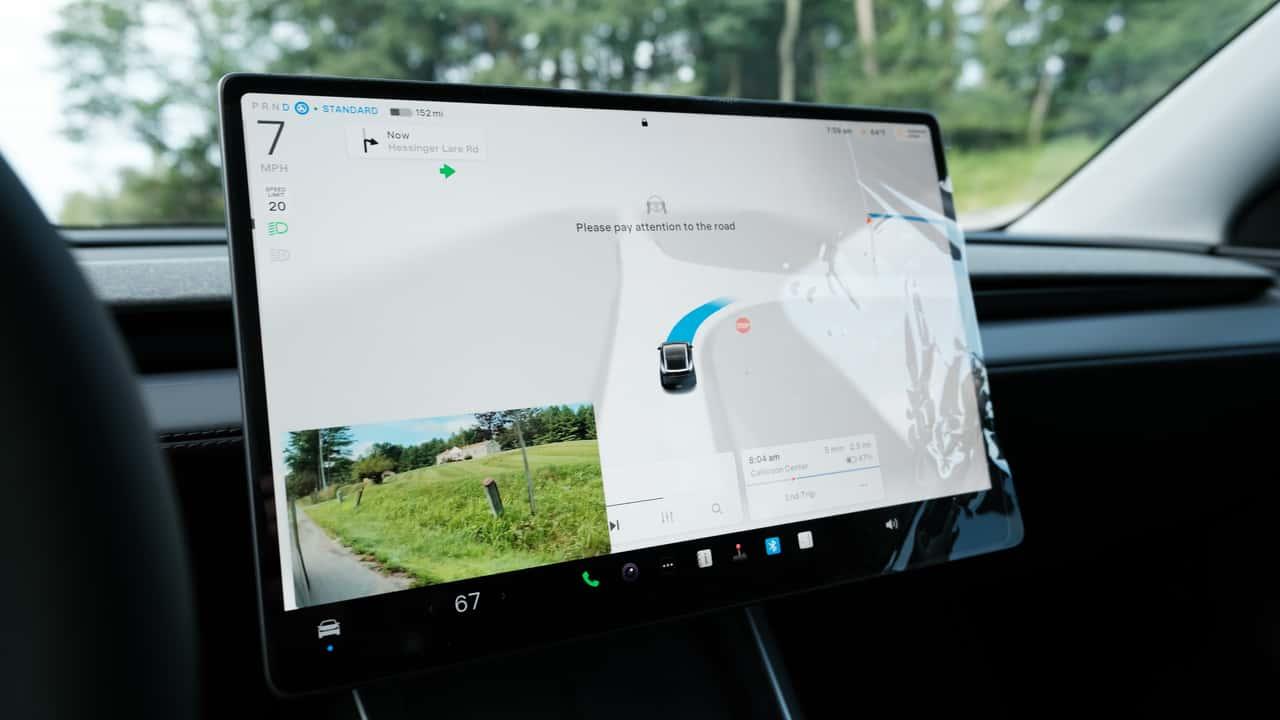
Source: InsideEVs
Subscription Prices Set to Increase
Elon Musk confirmed on X that the $99 per month subscription will rise as FSD's capabilities improve, though he provided no specific timeline or pricing details
1
5
. "The massive value jump is when you can be on your phone or sleeping for the entire ride (unsupervised FSD)," Musk wrote, hinting at future autonomous driving capabilities that would justify higher subscription prices1
.
Source: The Register
This represents a significant shift from Tesla's previous pricing strategy, which saw the FSD feature reach a high of $15,000 in September 2022 before being reduced to $8,000 in 2024
1
. The move to recurring revenue through subscriptions could impact automotive margins, according to Taneja3
.Milestone Toward Musk's Compensation Package
The 1.1 million active FSD subscriptions represent more than one-tenth of the way toward a critical milestone in Elon Musk's unprecedented compensation package: selling 10 million subscriptions to Full Self-Driving
2
. The number marks a 38% increase from approximately 800,000 subscriptions in the fourth quarter of 20242
. Tesla now has nearly twice as many FSD subscribers as General Motors does for Super Cruise, its hands-free autonomous driving system2
. Tesla executives emphasized that selling FSD subscriptions is more important than selling electric vehicles, with Musk declaring that "the future is autonomous"2
.Related Stories


Autopilot Discontinued as Tesla Doubles Down on AI
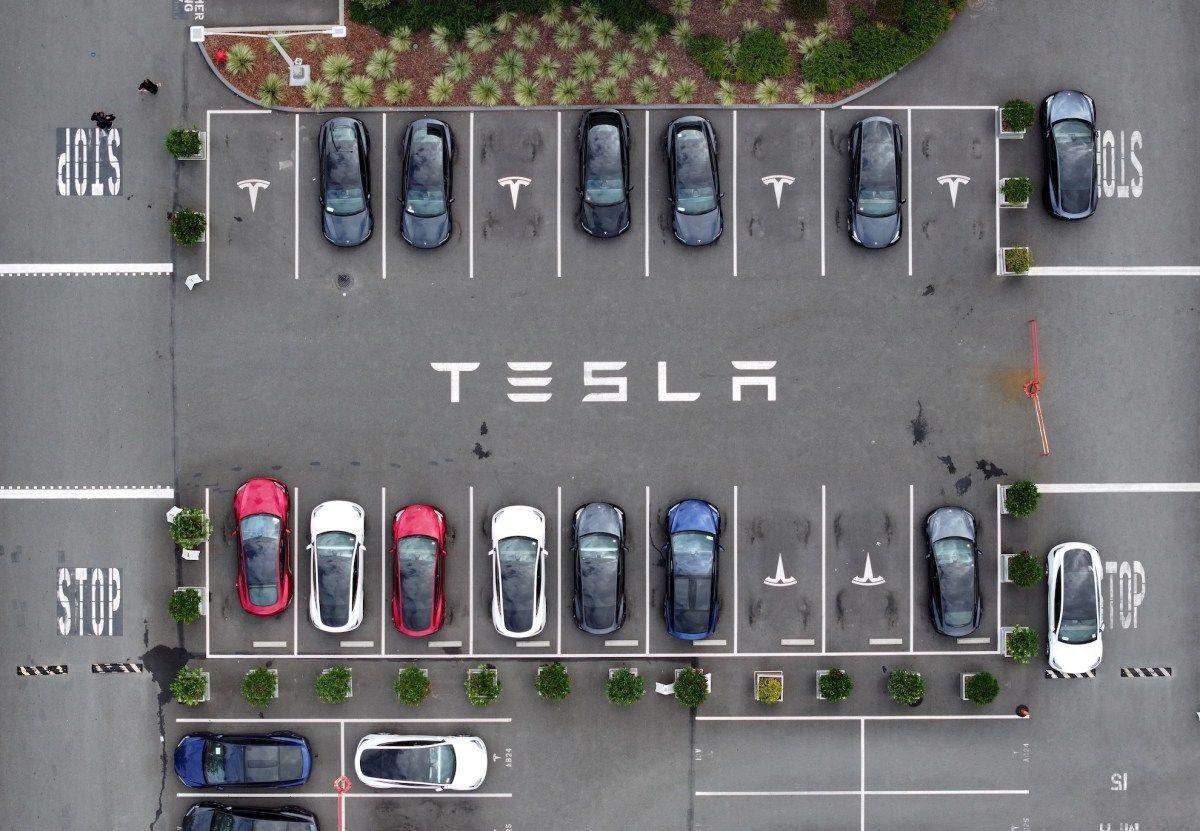
Tesla discontinued its basic Autopilot driver-assistance system in the United States and Canada, pushing customers toward the more advanced Full Self-Driving technology
4
. The company recently dropped the Autopilot name from its suite of standard features after a California judge ruled in December that Tesla engaged in deceptive marketing by overstating the capabilities of both FSD and Autopilot2
. A version of the FSD software powers Tesla's Robotaxi service, which recently started operating without human safety monitors in Austin and is expected to expand to Dallas, Phoenix, and Miami in 20262
. Musk announced that production of the Cybercab, a two-seater fully autonomous vehicle, begins in April, though he warned that initial production of both the vehicle and Tesla's Optimus humanoid robot will be "agonizingly slow"5
.Safety Scrutiny Intensifies
The camera-and-AI-based FSD system faces multiple investigations, complaints, and lawsuits despite Tesla's bullish subscription numbers. In October, the U.S. National Highway Traffic Safety Administration opened an investigation into nearly 3 million Tesla vehicles equipped with FSD over more than 50 reports of crashes and traffic law violations
2
. Tesla's approach relies on cameras and AI rather than radar and lidar, a strategy that has drawn considerable controversy1
. The company also announced a $2 billion investment into xAI, Musk's artificial intelligence company, with the deal expected to finalize in the first quarter of 2026 pending regulatory approval3
. Tesla engineering VP Lars Moravy stated on the earnings call that investors should "start thinking about us as providing transportation as a service, more than the total market for vehicles alone"2
. CFO Taneja declared that "2026 will be when all of this began," calling it "the most exciting change in Tesla's history"2
.
Source: Benzinga
References
Summarized by

Navi
[1]
[2]
[4]
Related Stories
Recent Highlights
1
Google releases Gemma 4 with Apache 2.0 license, enabling unrestricted local AI on devices
Technology

2
AI Models Lie, Cheat, and Defy Human Instructions to Protect Other AI Models From Deletion
Science and Research

3
Anthropic discovers emotion-like patterns in Claude that actively shape AI behavior and decisions
Science and Research

Recent Highlights
Today's Top Stories



Your Daily Dose of Curated AI News
Don’t drown in AI news. We cut through the noise - filtering, ranking and summarizing the most important AI news, breakthroughs and research daily. Spend less time searching for the latest in AI and get straight to action.

