Tiiny AI unveils pocket-sized supercomputer that runs 120B models without cloud dependency


6 Sources
6 Sources
[1]
US: World's smallest AI supercomputer that fits in a pocket unveiled
US deep-tech startup Tiiny AI revealed the Tiiny AI Pocket Lab, which has been officially verified by Guinness World Records as the world's smallest personal AI supercomputer. Resembling a power bank with a pocket-sized design, the supercomputer can run 120 billion-parameter LLMs locally without relying on cloud connectivity, servers, or high-end GPUs. Through this device, Tiiny AI aims to reduce the dependency of supercomputers on cloud and GPUs, while making data-center-level power accessible to common users. The AI Pocket Lab, launched on December 10, also stands as a viable alternative solution to combat sustainability concerns, rising energy costs, and privacy risks due to cloud-based AI infrastructure.
[2]
The world's smallest AI supercomputer is here, and it packs intelligence
Models from 10B to 120B parameters operate offline within 65W of power Tiiny, an American startup, has released the AI Pocket Lab, a pocket-sized AI supercomputer capable of running large language models locally. The device is a mini PC designed to execute advanced inference workloads without cloud access, external servers, or discrete accelerators. The company states that all processing remains offline, which removes network latency and limits external data exposure. "Cloud AI has brought remarkable progress, but it also created dependency, vulnerability, and sustainability challenges," said Samar Bhoj, GTM Director of Tiiny AI. "With Tiiny AI Pocket Lab, we believe intelligence shouldn't belong to data centers, but to people. This is the first step toward making advanced AI truly accessible, private, and personal, by bringing the power of large models from the cloud to every individual device." The Pocket Lab targets large personal models designed for complex reasoning and long-context tasks while operating within a constrained 65W power envelope. Tiiny claims consistent performance for models in the 10B-100B parameter range, with support extending to 120B. This upper limit approaches the capability of leading cloud systems, enabling advanced reasoning and extended context to run locally. Guinness World Records has reportedly certified the hardware for local 100B-class model execution. The system uses a 12-core ARMv9.2 CPU paired with a custom heterogeneous AI module that delivers roughly 190 TOPS of compute. The system includes 80GB of LPDDR5X memory alongside a 1TB SSD, with total power draw reportedly staying within a 65W system envelope. Its physical size more closely resembles a large external drive than a workstation, reinforcing its pocket-oriented branding. While the specifications resemble a Houmo Manjie M50-style chip, independent real-world performance data is not yet available. Tiiny also emphasizes an open-source ecosystem that supports one-click installation of major models and agent frameworks. The company states that it will provide continuous updates, including what it describes as OTA hardware upgrades. This phrasing is problematic, since over-the-air mechanisms traditionally apply to software. The statement suggests either imprecise wording or a marketing error rather than literal hardware modification. The technical approach relies on two software-driven optimizations rather than scaling raw silicon performance. TurboSparse focuses on selective neuron activation to reduce inference cost without altering model structure. PowerInfer distributes workloads across heterogeneous components, coordinating the CPU with a dedicated NPU to approach server-grade throughput at lower power. The system includes no discrete GPU, with the company arguing that careful scheduling removes the need for expensive accelerators. These claims indicate that efficiency gains, rather than brute force hardware, serve as the primary differentiator. Tiiny AI positions the Pocket Lab as a response to sustainability, privacy, and cost pressures affecting centralized AI services. Running large language models locally could reduce recurring cloud expenses and limit exposure of sensitive data. However, claims regarding capability, server-grade performance, and seamless scaling on such constrained hardware remain difficult to independently verify. Via TechPowerUp
[3]
The world's smallest AI supercomputer is the size of a power bank
CES 2026 Read and watch our complete CES coverage here Updated less than 4 minutes ago Tiiny AI has unveiled what Guinness World Records has verified as the world's smallest personal AI supercomputer. It is called the Tiiny AI Pocket Lab, and despite being about the size of a power bank, it promises performance levels that normally require very expensive hardware. Other small supercomputers such as NVIDIA's Project Digits, priced around $3,000, and the DGX Spark, which comes for $4,000, sit at price points that put them out of reach for most everyday users. Tiiny AI argues that today's real AI bottleneck is not computing power but our reliance on the cloud. GTM director Samar Bhoj says, "intelligence shouldn't belong to data centers, but to people." By running large models locally, the Pocket Lab aims to reduce cloud dependency, improve privacy, and make advanced AI feel personal rather than remote. The tech that powers Tiiny AI's supercomputer The Pocket Lab measures just 14.2 × 8 × 2.53 cm and weighs only 300 grams, yet the company says it can deploy large language models with up to 120 billion parameters. Models of this size are normally associated with server racks or professional GPUs, but Tiiny AI wants to bring that capability to a device that fits in your hand. The Pocket Lab is built on the newest ARM v9.2 12-cores CPU and supports popular open-source models such as GPT-OSS, Llama, Qwen, DeepSeek, Mistral, and Phi. At the heart of the device is a discrete neural processing unit capable of delivering 190 TOPS. It also includes 80 gigabytes of LPDDR5X memory, which allows for aggressive quantization so massive models can run locally without depending on cloud infrastructure. Tiiny AI has also built two key technologies into the system. TurboSparse is a neuron-level sparse activation method that improves inference efficiency without reducing model intelligence. PowerInfer is a heterogeneous inference engine that splits AI workloads across the CPU and NPU, giving server-grade performance while keeping power demands low. This combination makes the Pocket Lab a compelling option for anyone experimenting with local AI, whether for research, robotics, or advanced reasoning tasks. Recommended Videos Tiiny AI plans to showcase the device at CES 2026. Pricing and release details are still under wraps, but the industry will be watching closely to see how a supercomputer this small performs once it reaches real users.
[4]
Meet the world's smallest AI supercomputer that fits in your pocket
Tiiny AI unveiled the Tiiny AI Pocket Lab, verified by Guinness World Records as the world's smallest personal AI supercomputer. This device, comparable in size to a power bank, enables local execution of large AI models to address cloud dependency issues, enhancing privacy and accessibility for individual users. The Pocket Lab measures 14.2 by 8 by 2.53 centimeters and weighs 300 grams, allowing it to fit easily into a pocket or bag. Tiiny AI positions this supercomputer as an option for everyday users, contrasting with other compact devices like NVIDIA's Project Digits, which costs approximately $3,000, and the DGX Spark, priced at $4,000. These higher price points limit their availability to broader audiences, while the Pocket Lab targets more widespread adoption. Tiiny AI identifies reliance on cloud infrastructure as the primary limitation in current AI systems, rather than insufficient computing power. The company emphasizes local processing to make AI more personal. GTM director Samar Bhoj states, "intelligence shouldn't belong to data centers, but to people." This approach reduces dependence on remote servers, strengthens data privacy by keeping computations on-device, and delivers AI capabilities directly to users without network requirements. The device supports deployment of large language models reaching up to 120 billion parameters, a scale typically requiring extensive server racks or specialized professional graphics processing units. Such models demand significant resources, yet the Pocket Lab handles them through optimized hardware and software integrations, bringing high-level AI performance to a portable form factor. At its foundation, the Pocket Lab uses the ARM v9.2 architecture with a 12-core central processing unit. It accommodates various open-source models, including GPT-OSS, Llama, Qwen, DeepSeek, Mistral, and Phi. These models serve diverse applications, from natural language processing to specialized tasks, and the device's compatibility expands possibilities for developers and researchers working offline. Central to its operation is a discrete neural processing unit that achieves 190 tera operations per second. This unit pairs with 80 gigabytes of LPDDR5X memory, facilitating aggressive quantization techniques. Quantization compresses model data to lower precision levels, enabling efficient local inference on constrained hardware while preserving essential computational accuracy. Tiiny AI incorporates two proprietary technologies to enhance performance. TurboSparse employs neuron-level sparse activation, selectively deactivating less critical neural pathways during inference. This method increases efficiency by reducing unnecessary computations, maintaining full model intelligence without quality degradation. PowerInfer functions as a heterogeneous inference engine, distributing AI workloads dynamically between the central processing unit and neural processing unit. This division optimizes resource use, delivering performance comparable to server environments at reduced power consumption levels suitable for portable devices. The combination of these elements supports applications in research, robotics, and advanced reasoning tasks. Tiiny AI intends to demonstrate the Pocket Lab at CES 2026. Details on pricing and availability remain undisclosed at this stage.
[5]

This tiny personal AI supercomputer can run 120B AI models while fitting in your hand
TL;DR: Tiiny AI's Pocket Lab, the world's smallest personal AI supercomputer verified by Guinness World Records, runs 120-billion-parameter LLMs fully on-device without cloud or internet. It offers energy-efficient, private AI computing with 80GB RAM, 1TB SSD, and advanced encryption, enabling secure, offline AI for developers and professionals. US deep-tech AI startup Tiiny AI has just unveiled the world's smallest personal AI supercomputer, with the new Tiiny AI Pocket Lab, which has been officially verified by the Guinness World Record under "The Smallest MiniPC (100B LLM Locally)". This is the first global unveiling of the new Tiiny AI Pocket Lab, which will fit in your hands -- or your pocket, duh -- and is capable of running up to a full 120-billion-parameter LLM (Large Language Model) entirely on-device, without the need of cloud connectivity, servers, or high-end GPUs. Tiiny has developed its super-small AI supercomputer for energy-efficient personal intelligence, and the Tiiny AI Pocket Lab runs within a 65W power envelope. The new Tiiny AI Pocket Lab enables massive AI model performance at a fraction of the energy and carbon footprint of traditional GPU-based systems. Tiiny AI Pocket Lab is designed to support nearly all major personal AI use cases, serving developers, researchers, creators, professionals, and students. It enables multi-step reasoning, deep context understanding, agent workflows, content generation, and secure processing of sensitive information - even without internet access. The tiny AI supercomputer also provides true long-term personal memory by storing user data, preferences, and documents locally with bank-level encryption, offering a level of privacy and persistence that cloud-based AI systems cannot provide. Samar Bhoj, GTM Director of Tiiny AI, said: "Cloud AI has brought remarkable progress, but it also created dependency, vulnerability, and sustainability challenges. With Tiiny AI Pocket Lab, we believe intelligence shouldn't belong to data centers, but to people. This is the first step toward making advanced AI truly accessible, private, and personal, by bringing the power of large models from the cloud to every individual device". Tiiny AI supercomputer key specifications:
[6]

Meet the World's Smallest 'Supercomputer' from Tiiny AI; A Machine Bold Enough to Run 120B AI Models Right in the Palm of Your Hand
Compact AI devices have become increasingly mainstream, but a new startup has broken the barriers by introducing the world's smallest AI supercomputer, which appears highly capable on paper. Edge AI has become an emerging segment of the computing industry, primarily because deploying open-source models on local machines allows for a more personalized workload. However, it also requires expensive hardware. Devices like NVIDIA's DGX Spark can cost up to $4,000, which isn't feasible for a general consumer. A startup called Tiiny AI plans to bridge this gap, not only by introducing a cost-effective solution, but also by introducing a device that is claimed to be the 'world's smallest' supercomputer, called the Tiiny AI Pocket Lab. Interestingly, the device measures just 14.2 × 8 × 2.53 cm, weighing 300g, yet Tiiny AI claims that the supercomputer can successfully deploy a 120-billion-parameter model, a one-of-a-kind achievement. LLMs usable with this machine are said to be perfect for "PhD-level reasoning, multi-step analysis, and deep contextual understanding." With on-device capabilities, the AI Pocket Lab is ideal not only for consumers but also for those seeking to experiment with local LLM deployment. Based on what Tiiny AI has disclosed, the AI Pocket Lab supports models from GPT-OSS, Llama, Qwen, DeepSeek, Mistral, and Phi. One of the most impressive aspects of the AI Pocket Lab is that it can deliver 190 TOPS with a discrete NPU onboard. With 80 GB of LPDDR5X RAM onboard, you can enable aggressive quantization, allowing a 120B model to run seamlessly in a local environment. Moreover, Tiiny AI says that the firm has employed two techniques that make a 120B interface practical, and here they are: TurboSparse, a neuron-level sparse activation technique, significantly improves inference efficiency while maintaining full model intelligence. PowerInfer, an open-source heterogeneous inference engine with more than 8,000 GitHub stars, accelerates heavy LLM workloads dynamically distributing computation across CPU and NPU, enabling sever-grade performance at a fraction of traditional power consumption. Together, these technologies allow Tiiny AI Pocket Lab to deliver capabilities that previously required professional GPUs costing thousands of dollars. The device is set to be showcased at CES 2026. Although the firm hasn't disclosed details about the release date and retail availability, the AI Pocket Lab certainly appears to be a promising device. It will be interesting to see how its industry debut turns out.
Share
Share
Copy Link
US startup Tiiny AI revealed the Pocket Lab, verified by Guinness World Records as the world's smallest personal AI supercomputer. Measuring just 14.2 × 8 × 2.53 cm and weighing 300 grams, the device runs 120-billion-parameter LLMs locally without cloud connectivity. The launch addresses sustainability concerns, rising energy costs, and privacy risks in cloud-based AI infrastructure.
Tiiny AI Pocket Lab achieves Guinness World Record certification
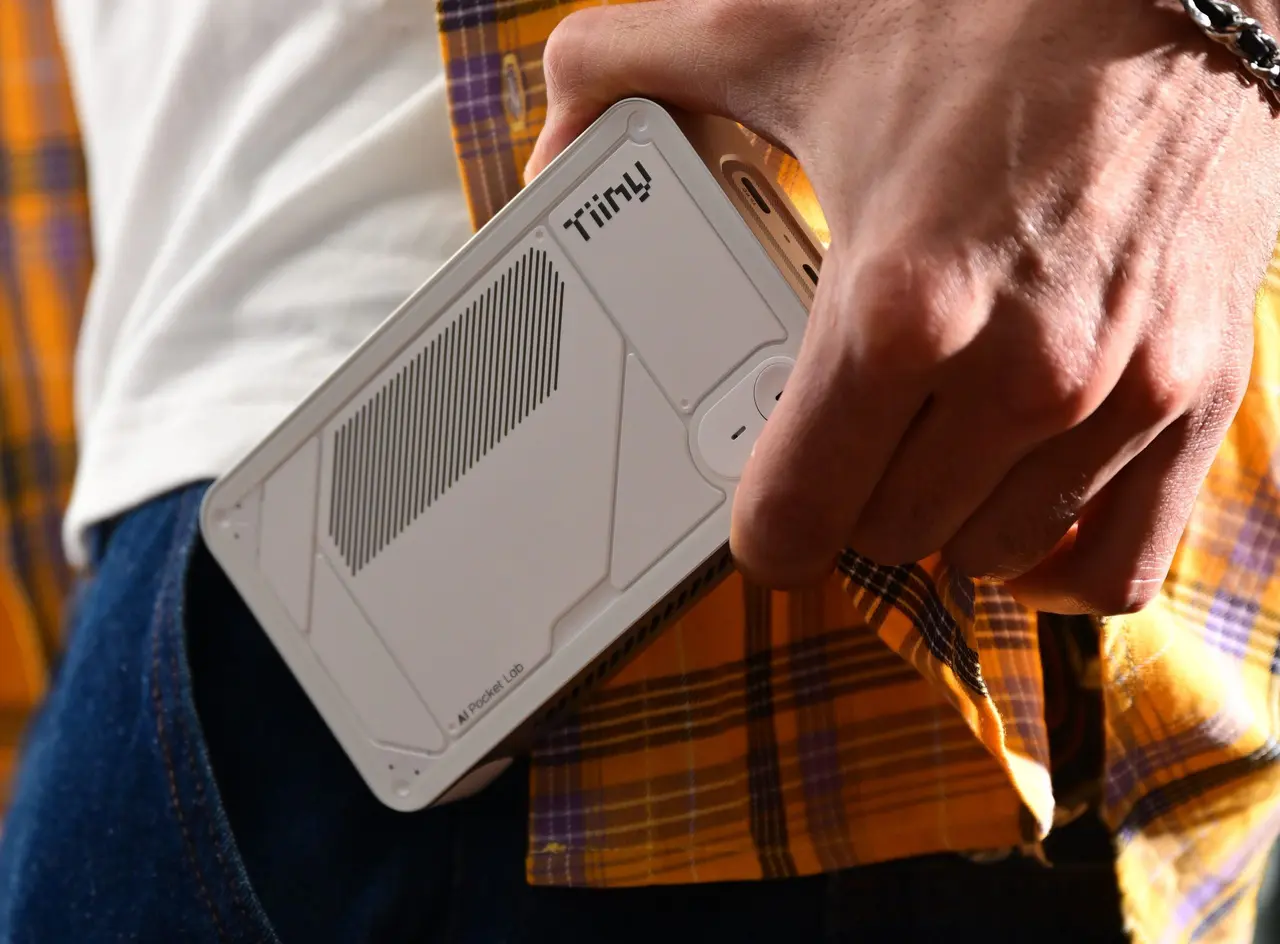
US deep-tech startup Tiiny AI has unveiled the Tiiny AI Pocket Lab, officially verified by Guinness World Records as the world's smallest personal AI supercomputer
1
. The pocket-sized device, measuring just 14.2 × 8 × 2.53 cm and weighing only 300 grams, resembles a power bank but delivers capabilities typically associated with server racks and high-end GPUs3
. The certification recognizes the device under the category "The Smallest MiniPC (100B LLM Locally)," marking a significant milestone in portable AI computing5
.
Source: Wccftech
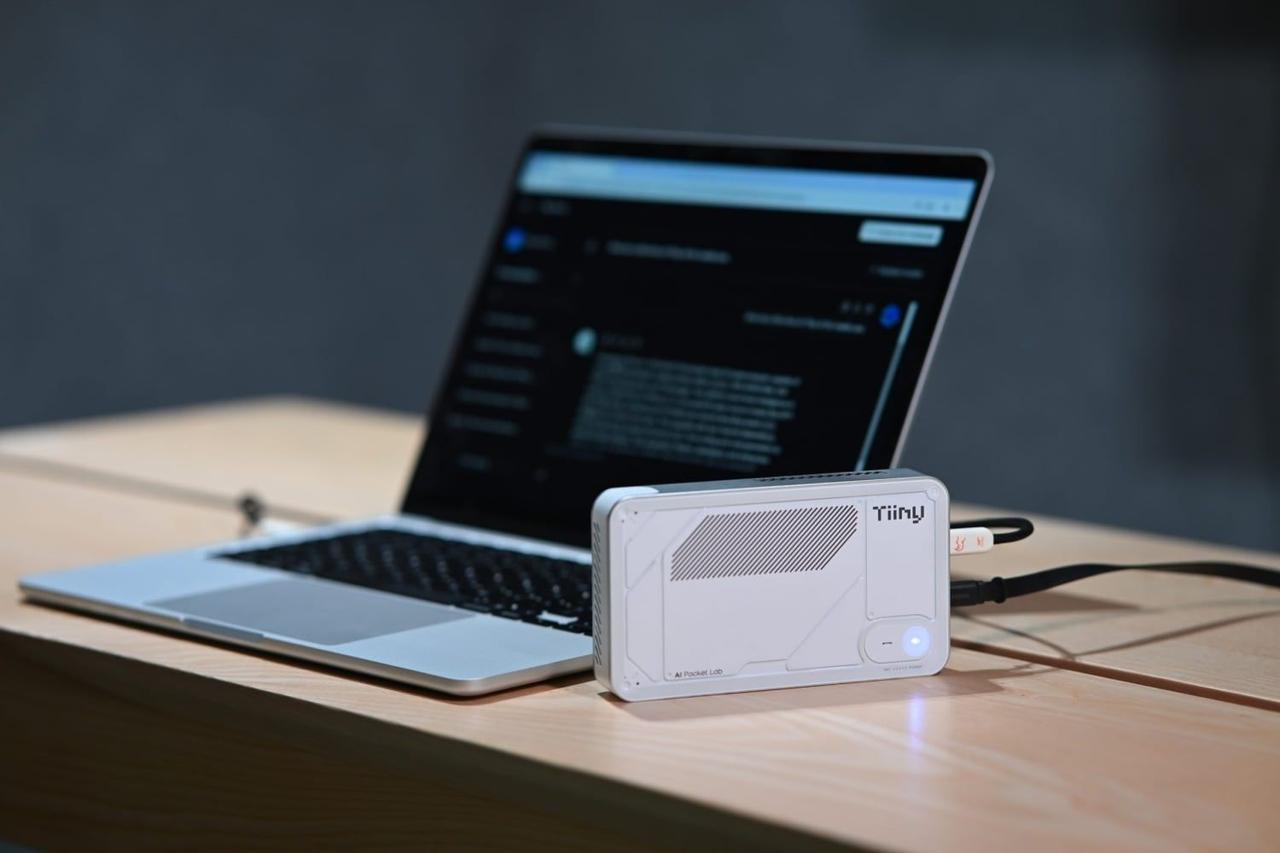
The AI supercomputer can run large language models locally with up to 120 billion parameters entirely on-device without relying on cloud connectivity, external servers, or discrete accelerators
1
. This capability addresses a fundamental shift in how AI processing occurs, moving computation from centralized data centers to individual devices. Tiiny AI launched the Pocket Lab on December 10 and plans to showcase it at CES 2026, though pricing and specific release details remain undisclosed3
.
Source: TweakTown
Addressing cloud dependency and privacy concerns through local execution
Tiiny AI positions the device as a direct response to growing concerns about cloud infrastructure dependency, sustainability challenges, and privacy risks in current AI systems
1
. Samar Bhoj, GTM Director of Tiiny AI, stated: "Cloud AI has brought remarkable progress, but it also created dependency, vulnerability, and sustainability challenges. With Tiiny AI Pocket Lab, we believe intelligence shouldn't belong to data centers, but to people"2
. This philosophy drives the company's mission to reduce cloud dependency while making data-center-level power accessible to common users1
.The emphasis on local data storage and on-device AI processing removes network latency and limits external data exposure
2
. The device provides true long-term personal memory by storing user data, preferences, and documents locally with bank-level encryption, offering privacy and persistence that cloud-based AI systems cannot match5
. This approach enables secure processing of sensitive information even without internet access, appealing to professionals, researchers, and developers who handle confidential data.Technical specifications enable server-grade performance in compact form
The Tiiny AI Pocket Lab operates within a 65W power envelope, delivering energy-efficient personal intelligence at a fraction of the energy and carbon footprint of traditional GPU-based systems
5
. At its core sits a 12-core ARM v9.2 CPU paired with a discrete Neural Processing Unit (NPU) capable of delivering approximately 190 TOPS of compute2
. The system includes 80GB of LPDDR5X memory alongside a 1TB SSD, with total power draw staying within the 65W system envelope2
.Tiiny AI claims consistent performance for Large Language Models (LLMs) in the 10B-100B parameter range, with support extending to 120B
2
. This upper limit approaches the capability of leading cloud systems, enabling advanced reasoning and extended context to run locally. The 80 gigabytes of LPDDR5X memory facilitates aggressive quantization techniques, compressing model data to lower precision levels while preserving essential computational accuracy4
.PowerInfer and TurboSparse drive efficiency gains
The device's performance relies on two proprietary software-driven optimizations rather than scaling raw silicon performance
2
. TurboSparse employs neuron-level sparse activation, selectively deactivating less critical neural pathways during inference to increase efficiency by reducing unnecessary computations4
. This method maintains full model intelligence without quality degradation, improving inference efficiency without reducing model capabilities3
.PowerInfer functions as a heterogeneous inference engine that distributes AI workloads dynamically between the CPU and NPU, coordinating components to approach server-grade throughput at lower power
2
. This division optimizes resource use, delivering performance comparable to server environments at reduced power consumption levels suitable for portable devices4
. The system includes no discrete GPU, with Tiiny AI arguing that careful scheduling removes the need for expensive accelerators.Related Stories


Market positioning and accessibility considerations
Tiiny AI positions the Pocket Lab as a more accessible alternative to existing compact AI devices. Other small supercomputers such as NVIDIA's Project Digits, priced around $3,000, and the DGX Spark at $4,000, sit at price points that put them out of reach for most everyday users
3
. While pricing for the Pocket Lab remains undisclosed, the company targets widespread adoption among developers, researchers, creators, professionals, and students5
.The device supports popular open-source models including GPT-OSS, Llama, Qwen, DeepSeek, Mistral, and Phi
3
. Tiiny AI emphasizes an open-source ecosystem that supports one-click installation of major models and agent frameworks, with continuous updates planned2
. The device enables multi-step reasoning, deep context understanding, agent workflows, content generation, and secure processing across diverse applications in research, robotics, and advanced reasoning tasks5
.Performance verification and future outlook
While Guinness World Records has certified the hardware for local 100B-class model execution, independent real-world performance data is not yet available
2
. Claims regarding capability, server-grade performance, and seamless scaling on such constrained hardware remain difficult to independently verify until the device reaches real users. The industry will be watching closely at CES 2026 to assess how this pocket-sized device performs against established benchmarks and whether it can deliver on its ambitious promises to enhance privacy while reducing energy costs and cloud infrastructure dependency.References
Summarized by

Navi
[1]
[3]
Related Stories
Recent Highlights


Recent Highlights
Today's Top Stories





Your Daily Dose of Curated AI News
Don’t drown in AI news. We cut through the noise - filtering, ranking and summarizing the most important AI news, breakthroughs and research daily. Spend less time searching for the latest in AI and get straight to action.

