AI in Video Games Triggers Player Backlash as Developers Navigate Quality vs Cost Savings


4 Sources
4 Sources
[1]
AI Mistakes Are Infuriating Gamers as Developers Seek Savings
A backlash against the spreading use of AI in video games has grown "sensational," the developer behind the surprise smash hit Arc Raiders has warned after being caught in the middle of the fallout. The $200 billion video game industry is riven by disagreement over how to integrate AI into its creative processes. The new tech has been celebrated as the next big revolution by some, but also lambasted as a threat driving out human creativity and degrading quality. The very people who might have been expected to be its most avid fans, PC gamers, are obstinately hostile. Arc Raiders sold 12 million copies in three months after its release last year and is the most-played paid game on PC platform Steam today. But, for a brief time, it was vilified online by players for including robotic-sounding auto-generated voices. Patrick Soderlund, who set up Stockholm-based Embark Studios AB after steering major franchises as a senior executive at Electronic Arts Inc., said the Arc Raiders team leaned on AI for the parts that weren't essential for immersive play. They used a mix of professional actors and automated voices. "We started with a thesis and the foundation that the industry is troubled," Soderlund, 52, said of the company's origins. "We saw escalating development costs that made it very difficult to make games affordable." Burdened by the sins of recent past -- overhiring during the pandemic boom and letting production costs spiral out of control -- game developers have been shedding jobs and canceling projects. Sony Group Corp. last week shut down Austin-based Bluepoint Games, which it acquired five years earlier. Paris-based Ubisoft Entertainment SA in January announced a complete reorganization that sank its share price by 40% in a day, though it expressed hope that generative AI could be a salve. AI can be used, Soderlund said in an interview, to "remove a lot of areas of game development that are kind of idiotic and soul-drenching" for designers. His seven-year-old studio from the outset sought to cultivate new practices and ways for smaller teams to build things more efficiently. Soderlund rejects accusations of using AI to cut corners and devalue creative labor. "We're hiring animators, we're hiring people that work with audio, we're continuing to expand our voice actor involvement," the chief executive officer said. "So the way that I look at it, we're adding to the game industry rather than taking from it." That message has struggled to reach gamers, who've built up a cynicism about big game publishers after years of flops, mismanagement and layoffs at fan-favorite studios. Part of the problem stems from the immaturity of AI tools, whose product is only ever apparent to players when it's worse than human work -- including the voices in Arc Raiders. The fans' worry about AI squeezing the art out of their favorite pastime is increasingly shared by industry insiders. Some 47% of developers polled by research house Omdia last year said they expect generative AI use to reduce game quality, with views souring from a year earlier. The fear that generated content will exacerbate job losses is widespread, according to Liam Deane, who compiled Omdia's report. Some studios told him that they anticipate AI productivity boosts of 30% to 50% with basic tasks like image generation, but truly disruptive change such as new game styles or humanlike characters are still several years away because of the complex, multidisciplinary nature of game development, he added. Jobs are being discarded much sooner, by the likes of Ubisoft and South Korea's Krafton Inc., which last year froze hiring to focus on an AI-first strategy. There are now more than 190 AI-enabled vendors of game design tools, spanning everything from audio and animation to analytics and coding, according to Omdia. One of them, Alphabet Inc.'s Google, caused a selloff in gaming stocks at the end of January with an impressive demo of creating 3D worlds based on text prompts. Its Genie 3 tool is one of several that have prompted AI-wary investors to sell first and ask questions later, with all corners of the software sector now in peril. Some of it stems from a lack of clarity -- leading to overextrapolation, according to Soderlund and others -- around how the technology is supposed to scale up from tech demonstrations to something that changes game design processes and budgets. "Current generative AI outputs are around 60 or 70 out of 100, whereas professional content creators compete at the 95 or 96 level," said Youichiro Miyake, a professor at the University of Tokyo who's written award-winning research on AI implementation in games. "So even if a lot of '70-point' assets are generated, it raises the question of what to do with them -- does it really shorten the production process?" There's an unsolved problem of what Miyake calls controllability. AI lacks the fine-grained control needed to perfect output. Such tools can give a creator a vaguely Middle Eastern scene, for example, but they can't deliver a 12th century Persia the way that a human artist and scholar would, he said. And gamers, who are discerning enough to spot traditional Chinese dragon designs in a Japanese samurai story, would tear such imperfections apart. That sentiment is echoed by Joris de Man, a composer with three decades of creating music for high-profile games like Killzone. "You have middle managers and executives that get a whiff of this technology and they think this will change everything," de Man said. "It's far less useful than people make it out to be." The prevailing need for a human hand to act as quality control is apparent in all the AI-related scandals that have erupted online, according to de Man. A Bloomberg analysis of Reddit's r/gaming, the largest fan community with some 47 million members, found the peaks of engagement with the subject of AI came around criticism of its use. EA's Battlefield 6 and Microsoft Corp.-owned Activision's Call of Duty: Black Ops 7 both drew the ire of gamers this winter with thematically mismatched or poorly generated graphics. Valve Corp.'s Steam even added a label to note when games are made with AI. One commenter summed up the indignation at a double-barreled rifle in BF6 concisely, saying "Not one person cared enough to correct it." The offending image has since been rectified in a patch. "Some of the images that are AI-generated, I know would have been commissioned in the past; that would usually be created by a graphic designer like me," said Magdy 'Leo' Darwish, a freelance creator and a respected Reddit member. "I am already in a field that's being eaten up by AI." Leo was forced to lower his freelance design prices considerably after the release of new image-generation products such as Nano Banana Pro from Google last year, he said. Where generative AI wasn't previously good enough to be useful to most users, "once you could generate text with it, that changed everything," he said. He now sees his peers lowering prices and rushing projects, forced to compete with the speed of the new technology. In the gamer's eyes, AI has so far only shown up in a negative light: from mistakes like a six-fingered zombie Santa in Call of Duty to more precarious employment for creators to the inflation of the cost of a gaming PC. The use of graphics chips to fill AI data centers has over the past year tripled the price of memory and pushed the top Nvidia Corp. graphics cards to around $4,000 on resale markets. That's led to a reflexive antipathy to AI. "Because the conversation is so hostile, it's not being had," Leo, 32, said. Over in Japan, a global hub for creativity, the game sector has struggled for years with rising costs and player expectations, and is now experimenting with how AI can ease some of that burden. However, developers inside major companies say that none of that's happening in public for fear of player backlash. They asked not to be named as they weren't authorized to speak. Get the Tech Newsletter bundle. Get the Tech Newsletter bundle. Get the Tech Newsletter bundle. Bloomberg's subscriber-only tech newsletters, and full access to all the articles they feature. Bloomberg's subscriber-only tech newsletters, and full access to all the articles they feature. Bloomberg's subscriber-only tech newsletters, and full access to all the articles they feature. Bloomberg may send me offers and promotions. Plus Signed UpPlus Sign UpPlus Sign Up By submitting my information, I agree to the Privacy Policy and Terms of Service. Resident Evil creator Capcom Co. has decided on a "fundamental principle that generative AI will not be used in creative areas," drawing a red line around what might be called artificial creativity. Top executive Yoshikazu Shimauchi said that new games and character design will be devised through human sensibility and taste. Activision, similarly, has said that its creative process continues to be led by "talented individuals." Microsoft's new gaming and Xbox CEO, Asha Sharma, opened her message to players last week with a pledge to not "flood our ecosystem with soulless AI slop," adding that "games are and always will be art, crafted by humans." In time, Leo sees AI getting to a point where it will stop being noticeable. He's aware of more realistic voice models than those used in Arc Raiders, and he said he could obscure the use of AI in Call of Duty by adding some human polish. Like Epic Games Inc. CEO Tim Sweeney, he sees the ubiquitous use of AI as inevitable. "It's getting to the point that if you don't use it professionally, you risk becoming irrelevant," Leo said.
[2]
This Steam game is changing its art as fans keep calling it AI (it's not)
The internet savvy among us would like to think we're discerning enough to know when something isn't real. We'll point out the telltale signs of generative artificial intelligence, like visual irregularities and impossible perfection. Realistically, though, generative AI has turned internet scrolling into a perpetual, awful game of spot the differences. And as one upcoming Steam game proves, we're not nearly as good enough at this game as we believe. Transfort Fever 3 is a tycoon sim game where players build critical infrastructure for cities. Players are tasked with creating transportation routes for both people and industry, but optimization is not the only consideration. As your transport empire grows, so does the complexity of your services. "The whole world, including buildings, people, and cars, follow designs and trends through time," the game description reads. "Rewrite transportation history and run steam trains and jets side by side as you progress through the 20th century and beyond." Much of the game is from a top-down perspective that makes vehicles and roads easy to parse, but Transport Fever 3 also has actual characters in it. These fully-voiced characters give players tasks and add a much-needed touch of humanity to a game that is otherwise obsessively concerned with things. You can also watch humans go about their day inside the cities, where they make ample use of all the vehicles that you make possible. Right now, Transport Fever 3 is still in beta and doesn't have a specific release date beyond 2026. Developer Urban Games recently held an event where press and influencers got a first-hand look at the game's campaign, and the reaction to what people saw was extremely off-putting. One PC Gamer reporter says that he looked at the glossy, uncanny characters in the game with "revulsion." Urban Games maintains that their game only features handcrafted art, but the studio has still taken player feedback to heart. "In the last beta test, where we have shown the campaign for the very first time, we have been made aware by some players that the character models we are currently using for the conversations in the campaign itself, that they look a bit AI," Urban Games publishing manager Nico Heini told PC Gamer. And so, Urban Games is promising that it will rework the art in the game to avoid any potential negative association, even though the studio says it doesn't use the controversial tech. "This is something that is very important to us that this gets addressed, because we don't want any results of AI in our game at all," Heini said. AI has become a hot-button topic in the world of video games, especially as publishers express an interest in leveraging the technology for their products. But as "AI slop" takes over the internet -- and new video game releases -- player sentiment around titles which feature the technology has curdled. For some, it's a matter of quality and maintaining the spirit of creativity. For others, AI usage and its impact on the environment is more of a moral conundrum. And seemingly no one is happy about the fact widespread AI usage is driving up the prices of nearly everything. POLY Report: Subscribe and never miss what matters Enter your email to get the best of Polygon sent straight to your inbox, packed with news, reviews, and insights from the gaming world. Subscribe By subscribing, you agree to receive newsletter and marketing emails, and accept our Terms of Use and Privacy Policy. You can unsubscribe anytime. Some game studios have already explored generative AI tech only to find it lacking. In other cases, the backlash to AI-generated content has been so overt, some gaming studios have scrapped or rethought projects that revolved around the technology. In at least one instance, a game developer dropped AI art only after his girlfriend convinced him it was a bad idea. In the case of Transport Fever 3, which is still currently in development, changes to the final product were probably going to happen no matter what. Early footage shows that the management sim has some stiff animations or appears to lack polish characteristic of shipped games. But it's wild to know that the stigma and concern around AI has become so pronounced, we are now at the point where games have to change the way they look... just in case.
[3]
Understandable AI paranoia has inspired a developer to change the handcrafted character art in its upcoming sim: 'They look a bit AI'
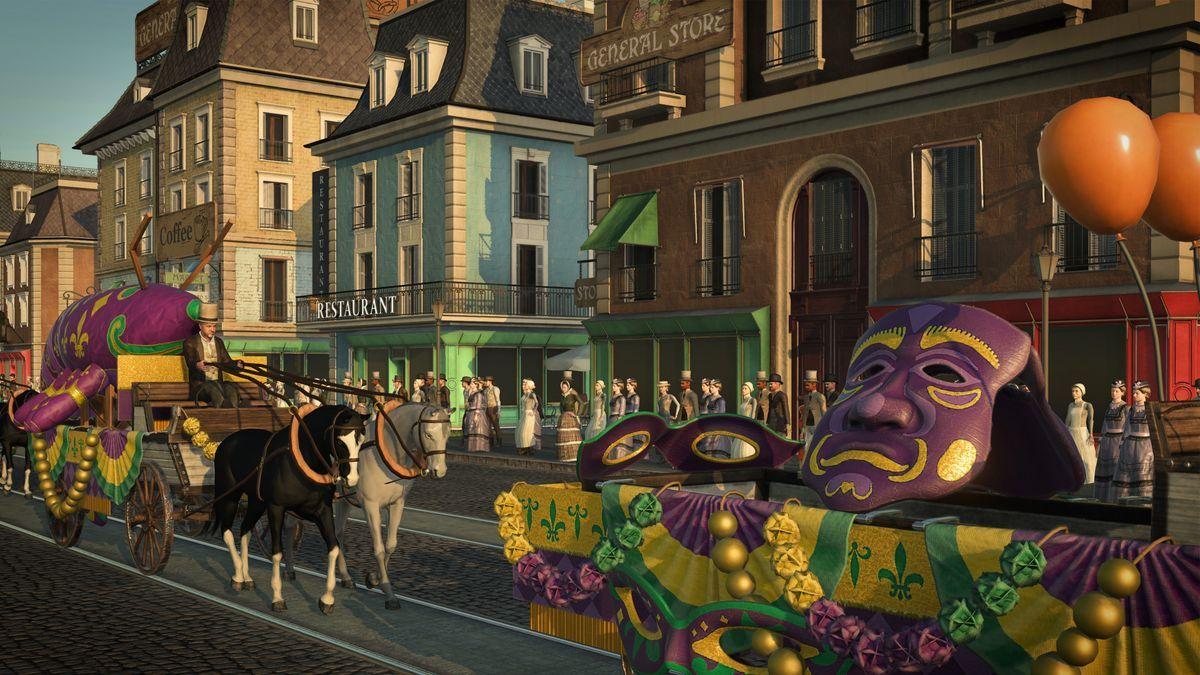
Transport Fever 3's characters look pretty uncanny, and that's a bigger problem than it used to be. Generative AI sucks for so many reasons, from its impact on the environment to the skyrocketing cost of RAM, but in my day-to-day life the most frustrating side effect is that whenever I look at an image online, a piece of art, or even a video, I have to wonder if someone's trying to pull the wool over my eyes. We've had to become extra vigilant, paranoid even, to keep out AI slop. There's even a subreddit dedicated to people asking, "Is this AI?" And this is why Transport Fever 3 developer Urban Games is making some changes to its sim's character art. Transport Fever 3's eight-mission campaign is full of chatty characters who dole out tasks, appearing as static pieces of character art with full voice acting. The instant I saw the mayor of New Orleans in the game's first mission, I experienced that feeling of revulsion that I often feel whenever I see some AI-generated art. He was shiny, uncanny and weirdly smooth. There were none of the imperfections usually associated with AI art -- no inconsistencies, no blurry patterns on his clothes, no freakishly malformed hands or teeth. But he, and all the other characters, still had an aesthetic that so many pieces of AI-generated character art end up with -- and it was offputting. Urban Games' publishing manager Nico Heini is adamant that generative AI was not used for any part of Transport Fever 3. "We are a 100% handmade studio," he told me. "So we do not have any AI in any part of the game. Something that is very, very important to us is that everything is handcrafted by our artists." But I was not the only person to be put off by the character art. "In the last beta test, where we have shown the campaign for the very first time, we have been made aware by some players that the character models we are currently using for the conversations in the campaign itself, that they look a bit AI." Urban Games is now making changes to rectify this, he said. "This is something that is very important to us that this gets addressed, because we don't want any results of AI in our game at all." The character portraits are "currently being reworked", and Urban Games will be replacing them with "something better that does not leave any doubt in terms of if they are AI or not". While some studios and publishers have gone all-in on AI, like Krafton, which boasts that it is now an "AI-first company", it's reassuring to see other developers go the extra mile, not just taking a stand against AI, but making sure that there are no doubts that its games are handmade.
[4]
AI Will Change Games, but Not in the Way CEOs Think
The push for automated creation will pave the way to more human, experimental game design. Back in 2024, not long after laying off five percent of the company's workforce, EA CEO Andrew Wilson got on a stage to wax poetic about all the ways generative AI would help take the gaming industry to the next level. Machine learning tools, he said, sticking to a script that may as well have been spat out by an LLM, would give developers an "exponentially bigger canvas upon which to create, and richer colors so they might paint more brilliant worlds." He's hardly the only executive who's promised his customers the world in recent years, though how exactly AI is going to impact game development remains as ambiguous now as it was the day we were first introduced to ChatGPT. While some, from EA and Ubisoft to Remedy and Larian, prepare to ride the wave, others are putting up walls and turrets. Hooded Horse's Tim Bender has called the technology "cancerous" and added a No AI Assets clause to the company's publishing contracts. Meanwhile, a survey by Game Developer found that 36% of industry professionals are using GenAI in their day-to-day work, but that half of them think it's making games worse, not better. Right now, it's possible we're headed for a future in which many triple-A titles will be incredibly large but feel lacking in substance, akin to the early days of No Man's Sky's procedurally generated, endless universe. Wilson himself suggested as much when he mentioned that College Football 25 - with its 150 stadiums and 11,000 athlete avatars - could not have been made without help from GenAI. Our ever-inflating expectations for larger maps and more realistic-looking graphics have pushed development cycles for franchises like Grand Theft Auto and The Elder Scrolls into the double digits, and AI seems like an obvious and cost-effective way to bring those numbers back down again while delivering gargantuan amounts of content. But while AI could probably program testicle physics for horses, it can't create a character as deeply human as Arthur Morgan. Consequently, the more you try to automate workflow, the less human (and therefore engaging) your games become. For this reason, I believe we should expect another, equally influential shift to sweep across the industry, one that will push some developers into the opposite direction. Instead of giant, hollow worlds with glossy AI finishes, I suspect we'll see more games that are smaller in scope, tighter in design, and a little rougher around the edges. In short, we'll see games that go where AI cannot follow. To form an impression of how AI will impact games tomorrow, we can start by looking at how the technology is being used today. According to that Game Developer survey, AI use among industry professionals varies by level of seniority, with upper management using AI tools more frequently than those below them. Across the board, people are more reliant on AI for researching and brainstorming than actual asset generation. In other words, the more complex and creative a task, the less AI is used. Another Game Developer survey, conducted in 2025, found that nearly half of industry professionals fear extensive use of AI would decrease the quality of their games. Brandon Sheffield, founder of Necrosoft Games and director of Demonschool, argued that overreliance on AI tools will cause games to become more generic in style and design, as these tools tend to slavishly replicate their training data without putting an original spin on them. Hidden Door CEO Hilary Mason, also interviewed for the survey, called AI "aspirationally mid," adding that a technology which lacks both vision and ambition cannot produce anything other than mediocre slop. People from various creative industries agree that AI tools remain just that: tools, used to take care of mindless busy work so that employees are free to focus on the tasks that they alone can do. This includes writing emails or cleaning up code, but also generating reference material and altering the color, lighting, or perspective of concept art and other types of assets. Take one look at social media, though, and you'll see that AI's role in that "busy work" is just as contested. We can also learn a thing or two about AI's impact on game design by looking at the impact of previous technological revolutions, like the invention of the camera. The camera did not, as many painters in the early 19th century feared, destroy the art of painting, but merely forced it to evolve. Now that there existed a device which could, in an instant, capture the likeness of anyone and anything, and do so with greater precision than even the most talented artists, there was no good reason to keep on painting realistically. Rather than compete with technology, art went in a direction where technology could not follow: towards abstraction and subjectivity, towards Impressionism, Expressionism, Fauvism, Cubism, Surrealism, and other movements that represented not the world as it is, but how we as individuals experience it. Tomorrow's best and brightest game designers, like yesterday's most celebrated painters, will search for the limits of what AI can achieve and boldly set up shop outside that boundary. Right now, AI is predictable, regurgitating information in consistent, clearly recognizable patterns, so games made by humans will become more unpredictable and surprising. Genre titles - easily mimicable on account of their fixed rules and tropes - will give way to games that evade straightforward categorization. Just as we no longer use labels and describe almost all visual art as "postmodern," so too might gaming arrive at a point where we can no longer distinguish shooters from Soulslikes or platformers from puzzlers. In many cases, the lines dividing these terms are already much blurrier than they were in previous decades. AI cannot have personal experiences, so games will likely become more and more grounded in personal experience. Unlike, say, Pixar's recent move away from autobiographical storytelling in favor of "mass appeal" - a decision which, judging by the box office performance of the studio's latest film, Elio, isn't exactly paying off - developers pushing for authenticity will want to draw from ideas they cannot get from LLMs. Think Ryan and Amy Green's That Dragon, Cancer, about their child's battle with terminal illness, Adam Robinson-Yu's A Short Hike, inspired by memories of past hiking trips, or even Cory Barlog basing Kratos' relationship with Atreus on his own struggles entering fatherhood. Chances are, developers will also become increasingly keen on exploring the darker, messier, more confusing aspects of human nature and existence. The side that AI - being non-human - cannot comprehend. ChatGPT has the emotional complexity of your most obnoxious LinkedIn connection, and could never - as journalist Ioan Marc Jones points out in The Bookseller's article about AI's expected impact on writing - start a story like Albert Camus begins The Stranger: "Maman died today. Or yesterday maybe, I don't know." Think, here, of Papers, Please, which lets players explore the psychological conundrums of working as a border patrol officer in a semi-dystopian society, or Hellblade: Senua's Sacrifice's nuanced portrayal of psychosis. Finally, AI-generated content often looks polished and perfect to the point of actually being kind of ugly and uncanny, so tomorrow's games might embrace flaws, imperfections, and other signs of hands-on tinkering that let the humanity behind them shine through. Indeed, if AI won't speed up triple-A development through automation, it may well do so by convincing AI resisting perfectionists to let go of some of their more compulsive, time-consuming tendencies. Red Dead Redemption 2 didn't need horse testicle physics to reach the heights that Rockstar wanted to reach. Hell, it didn't even need Guarma, yet the studio's insistence on meeting such seemingly arbitrary and ultimately pointless benchmarks for size and detail contributed to a crunch culture so infamously brutal we're still talking about it today, nearly a decade later. As with painting, what games lose in visual and technical polish they'll make up for in conceptual depth. Before the camera, painting was all about what was being painted, not how it was painted. Painting today, on the other hand, typically isn't about the painting itself so much as how we, the viewer, interact with it: how artists manipulate shape and color to draw attention to the ways culture and brain chemistry quietly shape our perception. Just as the Mona Lisa makes you forget you're looking at a painting as opposed to a real person, many triple-A games today want you to forget you're playing a game and make you feel like you're inside some kind of Hollywood blockbuster instead. Tomorrow's games - rejecting the immersive potential of AI - will want to make it clear that you are, in fact, playing a game: something invented, constructed, and meta. While many creatives fear that AI will put them out of work, there are convincing reasons to believe this will not happen - at least, not to the apocalyptic levels they anticipate. Paul Downs, a CG animator and animation teacher in Florida who I spoke to for a different, upcoming IGN article about animation, told me he believes that "AI slop will cancel itself out." The more low-quality AI-generated content gets released into the world, he reasons, the more people will hunger for genuinely human art. This would be true of any artform, games included. Two other seasoned artists I spoke to - Dariush Derakhshani and Sam Nielson - both agreed. Derakhshani recalled a time when his supervisors used GenAI to storyboard a film, only to give the job to a human when the results proved completely unusable. Comments by EA's Andrew Wilson or DreamWorks co-founder Jeffrey Katzenberg - who once predicted that AI would slash labor costs by up to 90% - are, as far as Derakhshani is concerned, nothing but "empty posturing to inflate stock prices." Nielson, who teaches at BYU and worked as a designer on the Game Boy Advance game LEGO Bionicle: Quest for the Toa, echoes the results of the various Game Developer surveys, arguing that "the inherent complexity of both design and storytelling" and the "specific psychological criteria" for how audiences respond to those things make it difficult for AI to fully automate creative processes. "A retired colleague who taught 3D animation used to say that students who were hoping to find the button that makes animation easy were making a mistake," he told me, offering an anecdote that - to my ears - rings true for gaming also. "Because once that button is invented, everyone will push it." Then again, perhaps not everyone. In a future where many companies, big and small, will turn to AI to automate significant and in some cases just about all parts of their production processes, we can be sure that a number of creative and ambitious developers will keep on making games that reflect and relish in the unmistakably human craft behind them. Tim Brinkhof is a freelance writer specializing in art and history. After studying journalism at NYU, he has gone on to write for Vox, Vulture, Slate, Polygon, GQ, Esquire and more.
Share
Share
Copy Link
The gaming industry faces mounting tension as AI integration divides developers and players. Arc Raiders sold 12 million copies but faced criticism for AI voices, while Transport Fever 3 is reworking handcrafted character art after players mistook it for AI-generated content. With 47% of developers expecting quality decline and studios like Krafton freezing hiring for AI-first strategies, the backlash reveals deeper concerns about human creativity and the future of game development.
Arc Raiders Success Meets AI Controversy in Game Development
The $200 billion gaming industry confronts a crisis as AI in video games triggers unprecedented player backlash, forcing developers to reconsider their creative strategies. Arc Raiders, which sold 12 million copies in three months and became Steam's most-played paid game, faced intense criticism for including robotic-sounding auto-generated voices
1
. Patrick Soderlund, CEO of Stockholm-based Embark Studios, defended the decision by explaining his team used AI for non-essential parts while mixing professional actors with automated voices to manage escalating development costs1
. The backlash has grown "sensational," according to Soderlund, who insists his studio is "adding to the game industry rather than taking from it" by continuing to hire animators and voice actors1
.
Source: Bloomberg
Transport Fever 3 Reworks Art Amid AI Paranoia
Public wariness towards AI has reached such intensity that Urban Games is reworking handcrafted character art in Transport Fever 3 after players mistook it for AI-generated content
2
3
. The management sim's glossy, uncanny character models triggered immediate suspicion during beta testing, despite the studio's insistence that everything was handmade. "We are a 100% handmade studio," publishing manager Nico Heini told PC Gamer, emphasizing that "we do not have any AI in any part of the game"3
.
Source: PC Gamer
The stigma surrounding AI has become so pronounced that the studio is replacing character portraits with designs "that do not leave any doubt in terms of if they are AI or not"
3
. This incident demonstrates how AI paranoia now forces studios to prove their commitment to human creativity, even when they haven't used the technology at all2
.Industry Divided on AI Tools and Quality Control
Research reveals deep divisions within game development as 47% of developers polled by Omdia expect generative AI use to reduce game quality, with sentiment souring from previous years
1
. While some studios anticipate AI productivity boosts of 30% to 50% with basic tasks like image generation, truly disruptive innovations remain years away due to the complex, multidisciplinary nature of game development1
. The loss of human touch concerns players and developers alike, as AI slop increasingly floods the internet and new releases2
. University of Tokyo professor Youichiro Miyake argues that current generative AI outputs score around 60 or 70 out of 100, whereas professional content creators compete at the 95 or 96 level1
. This quality gap raises questions about whether automation truly shortens production processes or simply creates more work for teams trying to polish subpar assets.Related Stories

Cost Savings Drive AI Adoption Despite Job Losses
Developers pursue cost savings in game development through AI integration as the industry struggles with pandemic-era overhiring and spiraling production costs. Sony shut down Austin-based Bluepoint Games, while Ubisoft announced a complete reorganization that sank its share price 40% in a single day
1
. South Korea's Krafton froze hiring to focus on an AI-first strategy, joining more than 190 AI-enabled vendors now offering game design tools spanning audio, animation, analytics, and coding1
. Job losses accelerate even as the technology's full potential remains unclear, with Alphabet's Google causing gaming stock selloffs after demonstrating Genie 3, a tool that creates 3D worlds from text prompts1
. The ethics of widespread AI usage concerns players not just for quality reasons but also for environmental impact and how the technology drives up prices across industries2
.Future of Game Development Balances Automation and Human Creativity
The industry faces a critical juncture as AI tools in gaming promise efficiency but threaten to diminish what makes games engaging. Industry analysts suggest that while AI stifles human creativity when overused, it can remove "soul-drenching" busy work that allows designers to focus on meaningful creative tasks
1
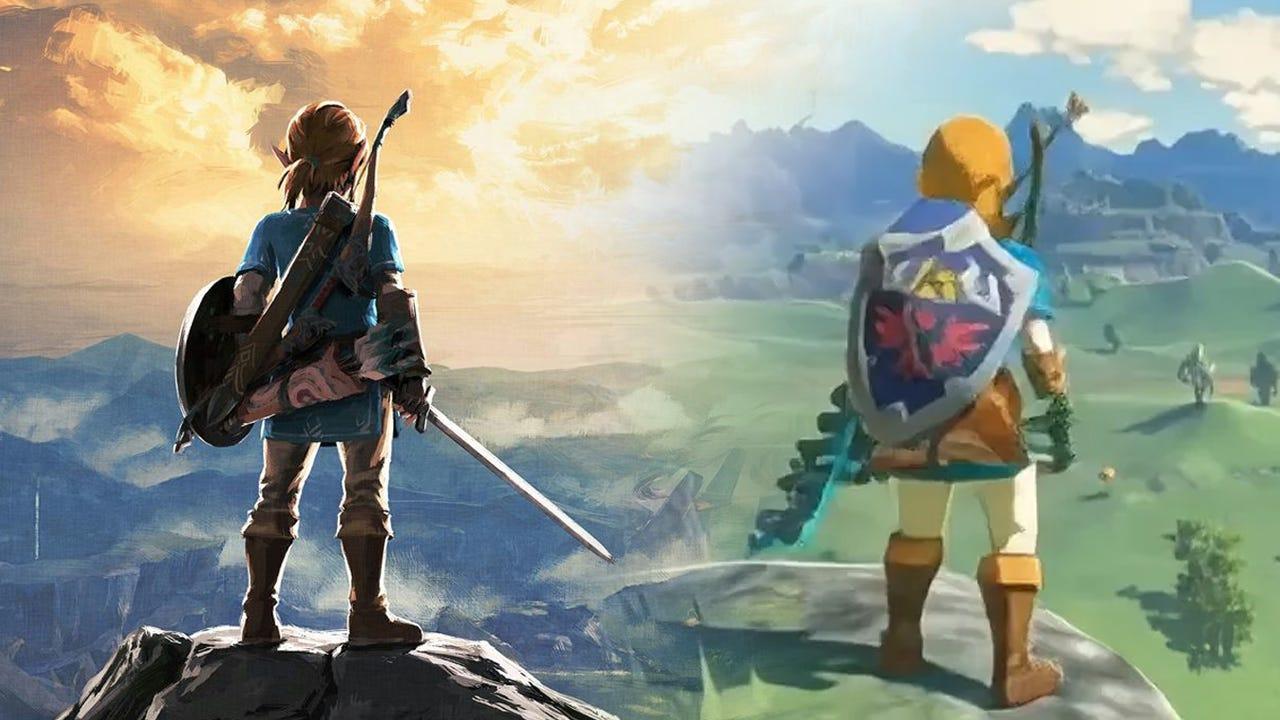
. A Game Developer survey found that 36% of industry professionals use generative AI in daily work, though half believe it makes games worse4
.
Source: IGN
The decline in game quality may push some developers toward smaller, tighter experiences that emphasize what AI cannot replicate: deeply human characters and experimental design
4
. Voice acting and character models remain particularly vulnerable to quality control issues, as evidenced by both Arc Raiders' robotic voices and Transport Fever 3's uncanny character portraits. Hooded Horse publisher Tim Bender has called the technology "cancerous" and added No AI Assets clauses to publishing contracts, signaling that some studios will actively resist automation4
. The question now is whether the industry can find equilibrium between technological efficiency and the irreplaceable value of human artistry.References
Summarized by

Navi
Related Stories
Game Developers Reject Generative AI Despite Tech Industry Push at GDC 2026
22 Mar 2026•Technology

Generative AI Usage in Steam Games Surges by 700% in 2025, Raising Concerns and Opportunities
17 Jul 2025•Technology
Gaming Industry Grapples with AI Revolution as Developers Fear Job Displacement
03 Nov 2025•Technology
Recent Highlights


Recent Highlights
Today's Top Stories









Your Daily Dose of Curated AI News
Don’t drown in AI news. We cut through the noise - filtering, ranking and summarizing the most important AI news, breakthroughs and research daily. Spend less time searching for the latest in AI and get straight to action.

