Trump and Big Tech forge alliance: AI chip exports freed, state restrictions killed


2 Sources
2 Sources
[1]
From A.I. to Chips, Big Tech Is Getting What It Wants From Trump
Before President Trump returned to the White House in January, the titans of the tech industry went all out to win him over with inauguration donations and pilgrimages to Mar-a-Lago. Yet upon taking office, Mr. Trump vowed to continue a fight to break up Meta, imposed tariffs that would raise the costs of Apple's supply chains and restricted the exports of artificial intelligence chips from Nvidia and other chip makers. It seemed that the tech industry's efforts to woo the president would not pay off. Now, however, the biggest tech companies have gotten almost everything they wanted from Mr. Trump. Since the summer, he has eliminated many limits on A.I. chip exports, fast-tracked the building of data centers that power A.I. development and pushed legislation that gave government approval to a type of cryptocurrency. This month, Mr. Trump signed an executive order to kill A.I. restrictions set by states and greenlighted sales of a more powerful Nvidia chip to America's top rival, China. "The conservative party stands for the free market and not picking winners and losers," said Isabel Sunderland, who works on technology policy at Issue One, a nonpartisan political advocacy group, "yet what we've seen so far in the Trump administration is an administration that has picked the tech industry to win in ways that is contrary to his own base." Assiduously courted by tech companies and their leaders, Mr. Trump has effectively cemented his relationship with the wealthiest and most powerful U.S. industry into a mutually beneficial alliance. How long this entente might last is unclear, as Mr. Trump can be unpredictable. Yet the evolution could have implications for fast-growing technologies like A.I. and has already raised new issues that are likely to play into next year's midterm elections. Mr. Trump has used support from the tech companies to bolster his goal of U.S. leadership in A.I. and crypto, while securing victories for his America First economic agenda. This year, Amazon, Apple, Google, Meta, Nvidia, OpenAI and Oracle announced a combined $1.4 trillion in spending on domestic data centers and manufacturing projects, according to a tally by The New York Times. For Silicon Valley, the alliance with Mr. Trump has meant a bonanza. Freed from potential regulation and aided by industry-friendly policies, Alphabet, Amazon, Apple, Meta, Microsoft, Nvidia and Tesla have seen their shares soar. Bitcoin, the most popular cryptocurrency, hit record highs. And tech companies can continue developing A.I. largely unfettered. But the relationship has also driven a wedge through the right, dividing Republican lawmakers and drawing criticism from conservative think tanks and populist figures like Steve Bannon, a former Trump adviser. Mr. Trump has let tech billionaires run rampant through his administration, they said, enabling policies that further enrich the industry while leaving other Americans behind with no tech safeguards. "Big Tech is not a natural ally to our coalition," said Wes Hodges, the head of tech policy at the right-leaning Heritage Foundation. "Our work is to keep the memory of Big Tech and their unique concentration of power that is a threat against conservatives." Liz Huston, a White House spokeswoman, said Mr. Trump's relationship with the tech industry would help America prosper. "President Trump is leveraging his close relationships with private-sector titans to cement American technological dominance for the rest of the 21st century," she said. The tech industry's spoils this year have followed a dogged lobbying campaign by the companies. When Elon Musk, the head of Tesla and SpaceX, left his advisory position in the Trump administration in May, other tech companies saw an opening. David Sacks, a venture capitalist who is the White House's A.I. and crypto czar, and other Silicon Valley insiders helped open the door for executives like Nvidia's Jensen Huang to directly lobby the president. Other tech companies unabashedly threw themselves behind Mr. Trump's projects, with Amazon, Meta, Google, Palantir and Coinbase donating to the effort to replace the White House's East Wing with a ballroom. "We're seeing an industry that knows how to work the president," said Jessica González, a co-chief executive of Free Press, a consumer and media advocacy group. The flourishing relationship was evident in September at a White House dinner for tech leaders. Seated with Meta's Mark Zuckerberg and the Microsoft co-founder Bill Gates, Mr. Trump declared that the executives were "leading a revolution in business" and called them "the most brilliant people." In response, Sam Altman, OpenAI's chief executive, praised Mr. Trump for being a "pro-business" president. Sundar Pichai, Google's chief executive, commended Mr. Trump for his "leadership" on A.I., and Tim Cook, Apple's chief executive, thanked the president for "setting the tone" for domestic manufacturing. (The New York Times has sued OpenAI and Microsoft, claiming copyright infringement of news content related to A.I. systems. The companies have denied those claims.) As Mr. Trump grew closer with the tech industry, some Republicans became concerned about what the relationship would mean for issues such as A.I. safety for children, A.I.'s effect on jobs and the proliferation of energy-gobbling data centers powering A.I. In July, Republicans overwhelmingly voted against a provision in a congressional spending package that would have blocked states from imposing regulations on A.I. The provision had been proposed by Senator Ted Cruz, Republican of Texas, and backed by Mr. Sacks, who helped revive the idea through the executive order that Mr. Trump signed this month. Gov. Ron DeSantis of Florida, a Republican, blasted the efforts to curb states from having their own A.I. laws. "We have a right to do this," he said after the executive order was signed. Lawmakers including Representative Marjorie Taylor Greene, a Republican of Georgia, also ramped up their criticism. "States must retain the right to regulate and make laws on AI and anything else for the benefit of their state," she posted on social media last month. "Federalism must be preserved." In a November poll of American voters by the Institute for Family Studies, a right-leaning think tank, 57 percent -- including 43 percent of those who identified as Trump voters -- said they opposed federal efforts to block state laws on A.I. In many places around the country, Mr. Trump's policies encouraging construction of data centers have also become contentious. Meta, Amazon, Microsoft and others have been on a building spree of the large computing facilities, which consume energy and water and have been blamed for driving up people's utility bills. Two Democrats won seats last month on the Georgia Public Service Commission, which regulates the state's electric utility, with a message of affordability amid the boom in data centers. In Port Washington, Wis., three residents were arrested this month when they participated in a demonstration against a $15 billion data center project by OpenAI and Oracle. Locals fear the project will lead to large tax breaks for the tech companies and hog supplies of fresh water, residents said. "There are lots of long-term costs for residents," said Michael Beaster, a Port Washington resident who is part of a group trying to oust the mayor over the construction of the data center. Others are concerned that Mr. Trump's alliance with the tech industry could overshadow concerns about A.I.'s effects on child safety and speech. OpenAI and other A.I. companies have been sued by parents whose children died by suicide after, they said, forming unhealthy relationships with A.I. chatbots. "It should not be at odds to say we are pro-American A.I. and also need to protect kids," said Evan Swarztrauber, a senior fellow at the Foundation for American Innovation, a think tank, and a former adviser to Brendan Carr, the chair of the Federal Communications Commission. Lori Schott, a lifetime Republican from Colorado, was part of a group of parents who recently lobbied on Capitol Hill for social media and A.I. child safety laws. Her daughter, Annalee, took her own life at age 18 and left journals showing her struggle with exposure to toxic social media content. Ms. Schott said "grass roots" Republicans like herself were struggling to reconcile the Trump administration's overt friendliness with tech executives. "Our votes will reflect a party that puts kids' safety first," she said.
[2]
trump: From AI to chips, Big Tech is getting what it wants from Trump - The Economic Times
President Trump's administration has taken a tech-friendly approach, countering earlier commitments to regulate the industry. The relaxation of export limits on AI chips has paved the way for major tech companies to thrive, driving up their stock prices and raising cryptocurrency valuations.Before President Donald Trump returned to the White House in January, the titans of the tech industry went all out to win him over with inauguration donations and pilgrimages to Mar-a-Lago in Palm Beach, Florida. Yet upon taking office, Trump vowed to continue a fight to break up Meta, imposed tariffs that would raise the costs of Apple's supply chains and restricted the exports of artificial intelligence chips from Nvidia and other chipmakers. It seemed that the tech industry's efforts to woo the president would not pay off. Now, however, the biggest tech companies have gotten almost everything they wanted from Trump. Since the summer, he has eliminated many limits on AI chip exports, fast-tracked the building of data centers that power AI development and pushed legislation that gave government approval to a type of cryptocurrency. This month, Trump signed an executive order to kill AI restrictions set by states and green-lighted sales of a more powerful Nvidia chip to America's top rival, China. "The conservative party stands for the free market and not picking winners and losers," said Isabel Sunderland, who works on technology policy at Issue One, a nonpartisan political advocacy group, "yet what we've seen so far in the Trump administration is an administration that has picked the tech industry to win in ways that is contrary to his own base." Assiduously courted by tech companies and their leaders, Trump has effectively cemented his relationship with the wealthiest and most powerful U.S. industry into a mutually beneficial alliance. How long this entente might last is unclear, as Trump can be unpredictable. Yet the evolution could have implications for fast-growing technologies like AI and has already raised new issues that are likely to play into next year's midterm elections. Trump has used support from the tech companies to bolster his goal of U.S. leadership in AI and crypto, while securing victories for his "America First" economic agenda. This year, Amazon, Apple, Google, Meta, Nvidia, OpenAI and Oracle announced a combined $1.4 trillion in spending on domestic data centers and manufacturing projects, according to a tally by The New York Times. For Silicon Valley, the alliance with Trump has meant a bonanza. Freed from potential regulation and aided by industry-friendly policies, Alphabet, Amazon, Apple, Meta, Microsoft, Nvidia and Tesla have seen their shares soar. Bitcoin, the most popular cryptocurrency, hit record highs. And tech companies can continue developing AI largely unfettered. But the relationship has also driven a wedge through the right, dividing Republican lawmakers and drawing criticism from conservative think tanks and populist figures like Steve Bannon, a former Trump adviser. Trump has let tech billionaires run rampant through his administration, they said, enabling policies that further enrich the industry while leaving other Americans behind with no tech safeguards. "Big Tech is not a natural ally to our coalition," said Wes Hodges, the head of tech policy at the right-leaning Heritage Foundation. "Our work is to keep the memory of Big Tech and their unique concentration of power that is a threat against conservatives." Liz Huston, a White House spokesperson, said Trump's relationship with the tech industry would help America prosper. "President Trump is leveraging his close relationships with private-sector titans to cement American technological dominance for the rest of the 21st century," she said. The tech industry's spoils this year have followed a dogged lobbying campaign by the companies. When Elon Musk, the head of Tesla and SpaceX, left his advisory position in the Trump administration in May, other tech companies saw an opening. David Sacks, a venture capitalist who is the White House's AI and crypto czar, and other Silicon Valley insiders helped open the door for executives like Nvidia's Jensen Huang to directly lobby the president. Other tech companies unabashedly threw themselves behind Trump's projects, with Amazon, Meta, Google, Palantir and Coinbase donating to the effort to replace the White House's East Wing with a ballroom. "We're seeing an industry that knows how to work the president," said Jessica González, a co-CEO of Free Press, a consumer and media advocacy group. The flourishing relationship was evident in September at a White House dinner for tech leaders. Seated with Meta's Mark Zuckerberg and Microsoft co-founder Bill Gates, Trump declared that the executives were "leading a revolution in business" and called them "the most brilliant people." In response, Sam Altman, OpenAI's CEO, praised Trump for being a "pro-business" president. Sundar Pichai, Google's CEO, commended Trump for his "leadership" on AI, and Tim Cook, Apple's CEO, thanked the president for "setting the tone" for domestic manufacturing. (The New York Times has sued OpenAI and Microsoft, claiming copyright infringement of news content related to AI systems. The companies have denied those claims.) As Trump grew closer with the tech industry, some Republicans became concerned about what the relationship would mean for issues such as AI safety for children, AI's effect on jobs and the proliferation of energy-gobbling data centers powering AI. In July, Republicans overwhelmingly voted against a provision in a congressional spending package that would have blocked states from imposing regulations on AI. The provision had been proposed by Sen. Ted Cruz, R-Texas, and backed by Sacks, who helped revive the idea through the executive order that Trump signed this month. (BEGIN OPTIONAL TRIM.) Florida Gov. Ron DeSantis, a Republican, blasted the efforts to curb states from having their own AI laws. "We have a right to do this," he said after the executive order was signed. Lawmakers including Rep. Marjorie Taylor Greene, R-Ga., also ramped up their criticism. "States must retain the right to regulate and make laws on AI and anything else for the benefit of their state," she posted on social media last month. "Federalism must be preserved." (END OPTIONAL TRIM.) In a November poll of American voters by the Institute for Family Studies, a right-leaning think tank, 57% -- including 43% of those who identified as Trump voters -- said they opposed federal efforts to block state laws on AI. In many places around the country, Trump's policies encouraging construction of data centers have also become contentious. Meta, Amazon, Microsoft and others have been on a building spree of the large computing facilities, which consume energy and water and have been blamed for driving up people's utility bills. Two Democrats won seats last month on the Georgia Public Service Commission, which regulates the state's electric utility, with a message of affordability amid the boom in data centers. (BEGIN OPTIONAL TRIM.) In Port Washington, Wisconsin, three residents were arrested this month when they participated in a demonstration against a $15 billion data center project by OpenAI and Oracle. Locals fear the project will lead to large tax breaks for the tech companies and hog supplies of fresh water, residents said. "There are lots of long-term costs for residents," said Michael Beaster, a Port Washington resident who is part of a group trying to oust the mayor over the construction of the data center. (END OPTIONAL TRIM.) Others are concerned that Trump's alliance with the tech industry could overshadow concerns about AI's effects on child safety and speech. OpenAI and other AI companies have been sued by parents whose children died by suicide after, they said, forming unhealthy relationships with AI chatbots. "It should not be at odds to say we are pro-American AI and also need to protect kids," said Evan Swarztrauber, a senior fellow at the Foundation for American Innovation, a think tank, and a former adviser to Brendan Carr, the chair of the Federal Communications Commission. (STORY CAN END HERE. OPTIONAL MATERIAL FOLLOWS.) Lori Schott, a lifetime Republican from Colorado, was part of a group of parents who recently lobbied on Capitol Hill for social media and AI child safety laws. Her daughter, Annalee, took her own life at age 18 and left journals showing her struggle with exposure to toxic social media content. Schott said "grassroots" Republicans like herself were struggling to reconcile the Trump administration's overt friendliness with tech executives. "Our votes will reflect a party that puts kids' safety first," she said. This article originally appeared in The New York Times.
Share
Share
Copy Link
President Trump has reversed course on Big Tech, eliminating limits on AI chip exports and fast-tracking data center construction. Major tech companies pledged $1.4 trillion in domestic investments while stocks soar. But the mutually beneficial alliance is dividing Republicans and raising questions about regulation.
Trump and Big Tech Cement Mutually Beneficial Alliance
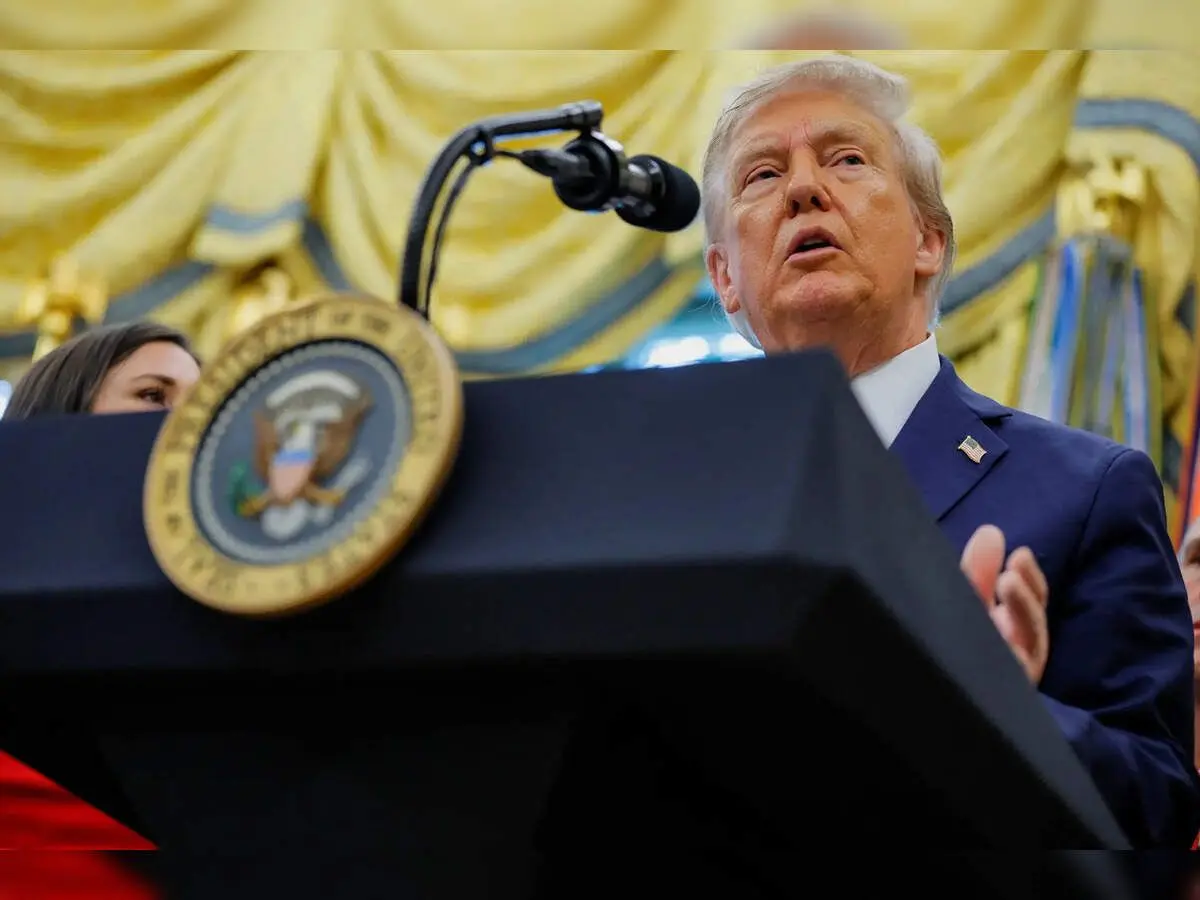
After tech titans courted President Trump with inauguration donations and Mar-a-Lago visits, the relationship appeared rocky. Trump vowed to break up Meta, imposed tariffs affecting Apple's supply chains, and restricted artificial intelligence chip exports from Nvidia and other manufacturers
1
. Yet since summer, the administration's tech-friendly stance has delivered nearly everything Silicon Valley wanted. Trump eliminated many limits on AI chip exports, fast-tracked the building of data centers that power AI development, and pushed cryptocurrency legislation2
. This month, an executive order killed state-level AI restrictions and greenlighted sales of more powerful Nvidia chips to China, America's top rival1
.
Source: ET
Policy Concessions for Tech Giants Drive $1.4 Trillion Investment Pledge
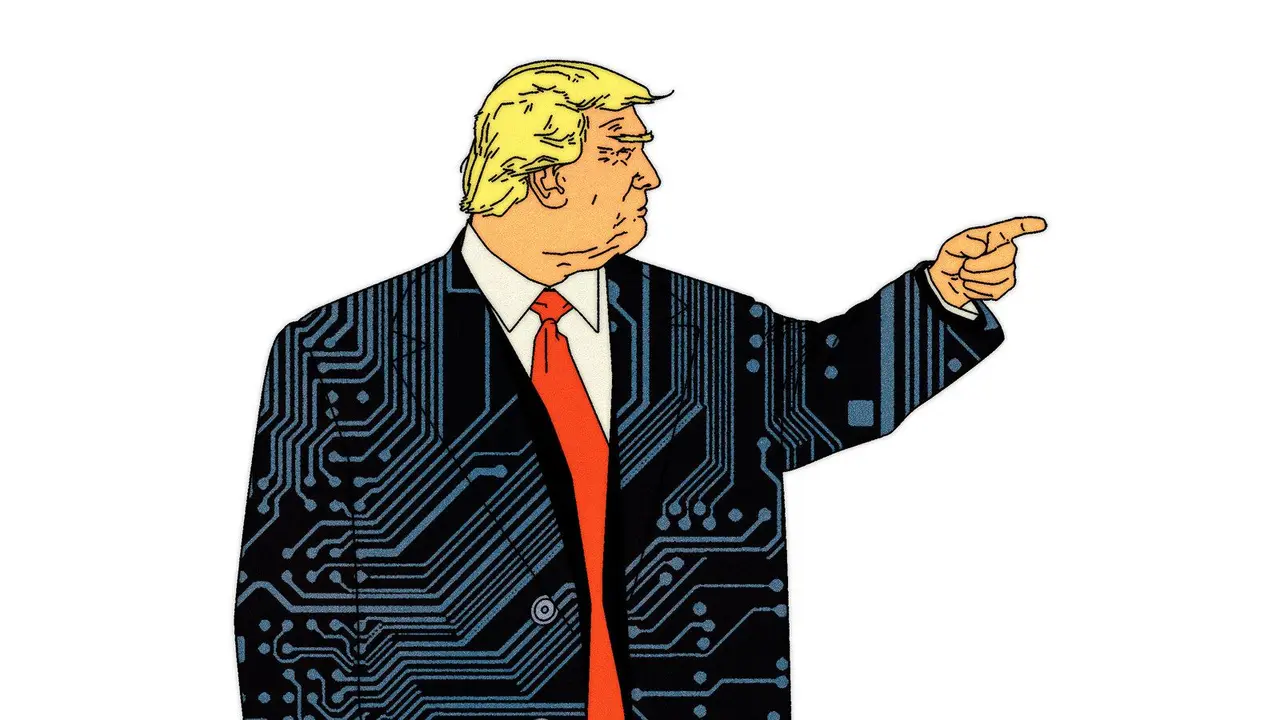
The relationship between Trump and Big Tech has evolved into what observers call a mutually beneficial alliance. Amazon, Apple, Google, Meta, Nvidia, OpenAI, and Oracle announced a combined $1.4 trillion in spending on domestic data centers and manufacturing projects this year, according to a New York Times tally
1
. Trump leveraged this support to advance his America First agenda while positioning the U.S. as a leader in artificial intelligence and cryptocurrency. For Silicon Valley, the alliance has meant a bonanza. Freed from potential regulation and aided by industry-friendly policies, Alphabet, Amazon, Apple, Meta, Microsoft, Nvidia, and Tesla have seen their shares soar, while Bitcoin hit record highs2
.
Source: NYT
Lobbying Campaign Opens White House Doors to Tech Executives
The tech industry's gains followed an aggressive lobbying campaign. When Elon Musk left his advisory position in the Trump administration in May, other tech companies saw an opening
1
. David Sacks, the White House's AI and crypto czar, helped executives like Nvidia's Jensen Huang directly lobby the president. Amazon, Meta, Google, Palantir, and Coinbase donated to replace the White House's East Wing with a ballroom2
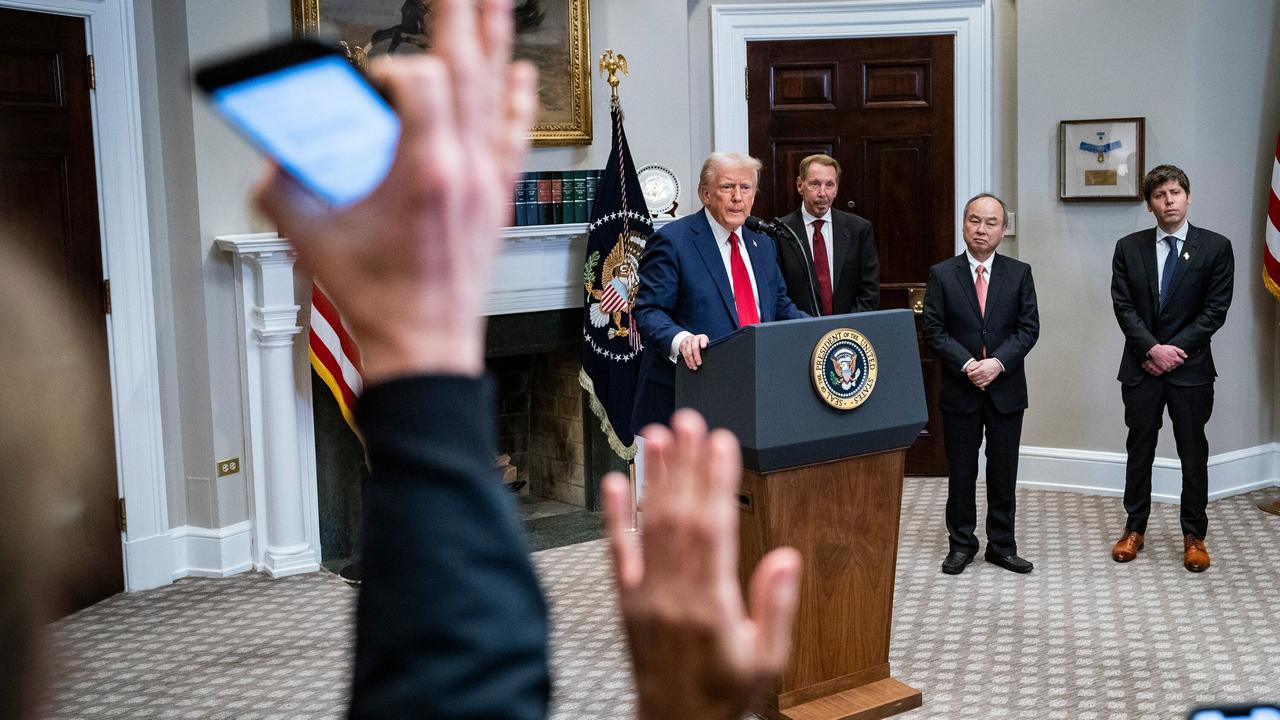
. At a September White House dinner, Trump called tech leaders "the most brilliant people" leading "a revolution in business." Sam Altman of OpenAI praised Trump as "pro-business," while Google's Sundar Pichai commended his "leadership" on AI1
.Related Stories
Conservative Backlash Challenges Tech-Friendly Approach
The alliance has driven a wedge through the right, dividing Republican lawmakers and drawing criticism from conservative think tanks and populist figures like Steve Bannon. "The conservative party stands for the free market and not picking winners and losers," said Isabel Sunderland of Issue One, "yet what we've seen so far in the Trump administration is an administration that has picked the tech industry to win in ways that is contrary to his own base"
2
. Wes Hodges of the Heritage Foundation warned that "Big Tech is not a natural ally to our coalition" and emphasized concerns about their "unique concentration of power"1
. Critics argue Trump has let tech billionaires run rampant, enabling policies that further enrich the industry while leaving other Americans behind with no tech safeguards. These tensions are likely to surface in next year's midterm elections, as questions mount about eliminating limits on AI chip exports to rivals like China and the broader implications for fast-growing technologies.References
Summarized by

Navi
Related Stories
Trump's AI Embrace Sparks MAGA Backlash: A Rift in Conservative Ranks
10 Sept 2025•Policy and Regulation

Big Tech's Overtures to Trump: Seeking Favorable AI Policies and Regulatory Relief
18 Dec 2024•Business and Economy

Trump Administration Shifts AI Policy, Tech Giants Push for Deregulation
22 Mar 2025•Policy and Regulation
Recent Highlights
1
Apple Plans Major Siri AI Overhaul in iOS 27 With Third-Party Chatbot Integration
Technology

2
OpenAI shuts down Sora after six months, ending Disney's $1 billion licensing partnership
Technology

3
AI chatbots validate you too much, making you less kind to others, Stanford study reveals
Science and Research

Recent Highlights
Today's Top Stories








Your Daily Dose of Curated AI News
Don’t drown in AI news. We cut through the noise - filtering, ranking and summarizing the most important AI news, breakthroughs and research daily. Spend less time searching for the latest in AI and get straight to action.

