Uber and Lyft partner with Baidu to bring robotaxis to London in 2026 trials


8 Sources
8 Sources
[1]
Uber and Lyft plan to bring robotaxis to London in partnerships with China's Baidu
LONDON (AP) -- Ride-hailing companies Uber and Lyft plan to bring robotaxi services to London next year in separate partnerships with Chinese tech giant Baidu, the companies said Monday. Uber said it's teaming up with Baidu's Apollo Go autonomous vehicle service to take part in a pilot program for self-driving taxi services that the British government is planning for next year. Testing is expected to start in the first half of 2026, the two companies said in social media posts. Lyft is also partnering with Baidu for the robotaxi trials using Apollo Go RT6 vehicles that are "purpose-built for rideshare," CEO David Risher said in a post on X. "We expect to start testing our initial fleet with dozens of vehicles next year - pending regulatory approval," Risher said. The company "plans to scale to hundreds from there," he added. Britain is emerging as a frontline for the global rollout of self-driving taxi services after the government decided over the summer to speed up its pilot program by moving the start date up by a year. Baidu is racing against rivals including Waymo, owned by Google parent Alphabet, which said in October it plans to take part in the U.K. trials as part of its global expansion. Wayve, a U.K. homegrown startup that's developing its own artificial intelligence technology for self-driving cars, has also teamed up with Uber to bring robotaxi service to the British capital.
[2]
New Uber backed driverless taxis to hit UK streets in 2026
Uber and Lyft are both planning to launch driverless taxi trials in London in 2026, in separate partnerships with Chinese tech giant Baidu. The move reinforces the UK's role as Europe's leading testbed for commercialising robotaxis, fuelled by the Automated Vehicles Act 2024 which provides a legal framework for driverless car liability. It also sets the scene for the competing trials between US and Chinese autonomous giants for the first time in a European capital, following Alphabet-owned Waymo's recent start of supervised tests in London. David Risher, Lyft's boss, revealed the company's trials would use Apollo Go RT6 vehicles that are "purpose-built for rideshare". "We expect to start testing our initial fleet with dozens of vehicles next year - pending regulatory approval," Risher said. The company "plans to scale to hundreds from there," he added. Baidu is racing against rivals like Waymo, owned by Google parent Alphabet, whose cars have already been seen on London's streets. Fully autonomous UK trials are contingent on the government finalising driverless car regulations and giving companies the go-ahead to operate. London-based start-up Wayve is also preparing to launch driverless trials in 2026, using investment of about $1bn (£750m) led by SoftBank Group and Uber, as it tests its "mapless" AI technology on London's complex streets. London's new driverless car boom mirrors a broader global surge as Baidu and WeRide expand operations in the US, Middle East and Switzerland. For Lyft, the UK trial serves as a cornerstone of its international expansion following its $200m (£148m) acquisition of the European taxi app FreeNow this year. Driverless cars on the streets of London London, often associated with the famous black cab, should see simultaneous tests of self-driving cars next year. The UK's 2024 automated vehicles act shifted legal responsibility for incidents from the person in the car to the "authorised self-driving entity." Self-driving taxis have become a regular feature on San Francisco's roads and recently launched in Tokyo. Steve McNamara, general secretary of the Licensed Taxi Driver's Association told Sky News in October that he wasn't currently concerned about competition with driverless taxis. "It's a novelty, it is a gimmick. It is the solution that we don't need. Who needs a driverless cab?" he said. He did not think Londoners would trust the taxis, let alone "put their kids in one to go to school". Read more from Sky News: Trump's new Greenland envoy intends to make territory 'a part of the US' Major incident declared as sinkhole drains canal and swallows narrowboats In response, Waymo told Sky News it "provides hundreds of thousands of rides every week in the US and shared in May of this year that we've provided over 10,000,000 fully autonomous rides to the public". But releasing self-driving taxis hasn't come without bumps in the road. In December 2024, a "dizzy" robotaxi passenger nearly missed his flight after his cab started driving around in circles. A 2024 study also found that while self-driving cars are safer than those driven by humans most of the time, this wasn't the case when it is dawn, dusk, or the vehicle is turning. During low-light conditions at dawn or dusk, they were more than five times more likely to have an accident than a car driven by a human.
[3]
Uber and Lyft plan to bring robotaxis to London in partnerships with China's Baidu
LONDON -- Ride-hailing companies Uber and Lyft plan to bring robotaxi services to London next year in separate partnerships with Chinese tech giant Baidu, the companies said Monday. Uber said it's teaming up with Baidu's Apollo Go autonomous vehicle service to take part in a pilot program for self-driving taxi services that the British government is planning for next year. Testing is expected to start in the first half of 2026, the two companies said in social media posts. Lyft is also partnering with Baidu for the robotaxi trials using Apollo Go RT6 vehicles that are "purpose-built for rideshare," CEO David Risher said in a post on X. "We expect to start testing our initial fleet with dozens of vehicles next year - pending regulatory approval," Risher said. The company "plans to scale to hundreds from there," he added. Britain is emerging as a frontline for the global rollout of self-driving taxi services after the government decided over the summer to speed up its pilot program by moving the start date up by a year. Baidu is racing against rivals including Waymo, owned by Google parent Alphabet, which said in October it plans to take part in the U.K. trials as part of its global expansion. Wayve, a U.K. homegrown startup that's developing its own artificial intelligence technology for self-driving cars, has also teamed up with Uber to bring robotaxi service to the British capital.
[4]
Uber and Lyft plan to bring robotaxis to London in partnerships with China's Baidu
LONDON (AP) -- Ride-hailing companies Uber and Lyft plan to bring robotaxi services to London next year in separate partnerships with Chinese tech giant Baidu, the companies said Monday. Uber said it's teaming up with Baidu's Apollo Go autonomous vehicle service to take part in a pilot program for self-driving taxi services that the British government is planning for next year. Testing is expected to start in the first half of 2026, the two companies said in social media posts. Lyft is also partnering with Baidu for the robotaxi trials using Apollo Go RT6 vehicles that are "purpose-built for rideshare," CEO David Risher said in a post on X. "We expect to start testing our initial fleet with dozens of vehicles next year - pending regulatory approval," Risher said. The company "plans to scale to hundreds from there," he added. Britain is emerging as a frontline for the global rollout of self-driving taxi services after the government decided over the summer to speed up its pilot program by moving the start date up by a year. Baidu is racing against rivals including Waymo, owned by Google parent Alphabet, which said in October it plans to take part in the U.K. trials as part of its global expansion. Wayve, a U.K. homegrown startup that's developing its own artificial intelligence technology for self-driving cars, has also teamed up with Uber to bring robotaxi service to the British capital.
[5]

Uber, Lyft Team Up With Tesla Robotaxi Rival Baidu's Apollo Go In The UK - Baidu (NASDAQ:BIDU), Alphabet (NASDAQ:GOOG)
Ride-hailing giants Uber Technologies Inc. (NYSE:UBER) and Lyft Inc. (NASDAQ:LYFT) have partnered with Chinese tech giant Baidu Inc.-backed (NASDAQ:BIDU) Robotaxi company Apollo Go to bring self-driving taxis to the UK. Testing In The First Half Of 2026 Sharing the announcement on the social media platform X on Monday, the official Uber handle shared that the company was partnering with Apollo Go to bring Robotaxis to London next year. "Testing is expected to start in the first half of 2026," Uber shared. Lyft CEO David Risher also shared the announcement on X. "We expect to start testing our initial fleet with dozens of vehicles next year," Risher said, adding that the fleet would be deployed through the "Lyft and Freenow" platforms, "pending regulatory approval." Waymo Announces UK Expansion The news comes as Alphabet Inc.'s (NASDAQ:GOOGL) (NASDAQ:GOOG) self-driving cab service Waymo had announced back in October that it would be expanding its services to the UK, partnering with fleet operator Moove to prepare for the rollout and continue discussions with local and national authorities in a bid to secure the regulatory permits necessary to run Robotaxis in the UK. Waymo has so far logged more than 14 million driverless robotaxi rides, while also reaching the 450,000 rides-per-week milestone recently. The company currently has over 2,500 Robotaxis in its fleet across multiple cities in the U.S. Apollo Go Reaches 250,000 Rides, Tesla Tests Driverless Robotaxis Apollo Go also announced that it had reached the 250,000 paid Robotaxi rides per week mark, as well as sharing that its fleet had logged over 140 million driverless miles with over 17 million Robotaxi ride orders. The company also shared that it had recorded one incident with an airbag deployment for every 6.2 million miles driven. Pony AI Inc. (NASDAQ:PONY), on the other hand, also announced it had signed a deal with Stellantis NV (NYSE:STLA) back in October to bring Robotaxis to Europe via the automaker's AV-Ready Platform next year. Tesla Inc. (NASDAQ:TSLA), on the other hand, has begun testing its driverless Robotaxis in Austin, confirmed by CEO Elon Musk. The testing is a major boost to the automaker's Robotaxi goals, which would now align with Musk's end-of-the-year timeline for Unsupervised Robotaxis in the city. Tesla is also targeting the expansion of its Full Self-Driving (FSD) technology into Europe next year, as confirmed by Dutch regulator RDW. Check out more of Benzinga's Future Of Mobility coverage by following this link. Read Next: Elon Musk's Tesla May 'Never Make A GAAP Profit Ever Again,' Says Ross Gerber -- Dan Ives Stays Bullish Image via Shutterstock BIDUBaidu Inc$124.030.17%OverviewGOOGAlphabet Inc$310.440.59%GOOGLAlphabet Inc$308.920.57%LYFTLyft Inc$19.550.67%PONYPony AI Inc$16.151.32%STLAStellantis NV$11.38-1.39%TSLATesla Inc$488.171.45%UBERUber Technologies Inc$80.231.16%Market News and Data brought to you by Benzinga APIs
[6]

Uber and Lyft partner with Baidu for UK driverless taxi trials By Investing.com
Investing.com -- Uber Technologies and Lyft are forming a partnership with Chinese tech company Baidu to test driverless taxis in the United Kingdom next year. The collaboration represents a significant development in the global push to commercialize robotaxi services. Lyft plans to deploy Baidu's autonomous vehicles on its platform in both Germany and the UK, subject to regulatory approval. Both Uber and Lyft have moved away from developing autonomous vehicle technology in-house, instead opting for strategic alliances to speed up adoption of driverless technology. This partnership is part of a broader trend of expanding robotaxi operations worldwide. Alphabet's Waymo announced in October that it would begin testing in London in December 2025, while Baidu and WeRide have already launched autonomous taxi operations in the Middle East and Switzerland. This article was generated with the support of AI and reviewed by an editor. For more information see our T&C.
[7]

Uber and Lyft plan to bring robotaxis to London in partnerships with China's Baidu
LONDON (AP) -- Ride-hailing companies Uber and Lyft plan to bring robotaxi services to London next year in separate partnerships with Chinese tech giant Baidu, the companies said Monday. Uber said it's teaming up with Baidu's Apollo Go autonomous vehicle service to take part in a pilot program for self-driving taxi services that the British government is planning for next year. Testing is expected to start in the first half of 2026, the two companies said in social media posts. Lyft is also partnering with Baidu for the robotaxi trials using Apollo Go RT6 vehicles that are "purpose-built for rideshare," CEO David Risher said in a post on X. "We expect to start testing our initial fleet with dozens of vehicles next year - pending regulatory approval," Risher said. The company "plans to scale to hundreds from there," he added. Britain is emerging as a frontline for the global rollout of self-driving taxi services after the government decided over the summer to speed up its pilot program by moving the start date up by a year. Baidu is racing against rivals including Waymo, owned by Google parent Alphabet, which said in October it plans to take part in the U.K. trials as part of its global expansion. Wayve, a U.K. homegrown startup that's developing its own artificial intelligence technology for self-driving cars, has also teamed up with Uber to bring robotaxi service to the British capital.
[8]
Uber, Lyft partner with Baidu for UK robotaxi trials next year
Dec 22 (Reuters) - Uber and Lyft said on Monday they were teaming up with Chinese tech giant Baidu to launch driverless taxi trials in the UK next year, reinforcing the country's role as Europe's leading testbed for commercializing robotaxis. As part of the partnerships, Baidu's Apollo Go RT6 vehicles will join the London networks of the ride-hailing platforms in 2026, marking the first direct competition between U.S. and Chinese autonomous giants in a European capital, following Alphabet-owned Waymo's recent start of supervised tests in the city. The UK's emergence as a global sandbox is fueled by the Automated Vehicles Act 2024, which provides a legal framework for liability that currently eludes the more fragmented European Union. The act shifts legal responsibility for incidents from the person in the car to the "authorized self-driving entity." London-based startup Wayve is also preparing to launch driverless trials in 2026, leveraging a roughly $1 billion investment led by SoftBank Group and Uber, as it tests its "mapless" AI technology on London's complex urban streets alongside its global rivals. This momentum mirrors a broader global surge as Baidu and WeRide expand operations into the Middle East and Switzerland, while cities such as Austin, San Francisco in the U.S., UAE's Abu Dhabi, and Wuhan, China have become major hubs for robotaxi operations. Robotaxis promise safer, greener and more cost-efficient rides, but profitability remains uncertain. Public companies such as Pony.ai and WeRide are still loss-making, and analysts warn that the high cost of autonomous fleets could pressure margins for platforms such as Uber and Lyft. Analysts have said hybrid networks, mixing robotaxis with human drivers, may be the most viable model to manage demand peaks and pricing. For Lyft, the UK trial serves as a cornerstone of its international expansion following its $200 million acquisition of the European taxi app FreeNow this year. (Reporting by Akash Sriram in Bengaluru; Editing by Shilpi Majumdar)
Share
Share
Copy Link
Uber and Lyft announced separate partnerships with Chinese tech giant Baidu to launch robotaxi services in London next year. Testing begins in the first half of 2026 as part of a British government pilot program, positioning the UK as a frontline for self-driving taxi services. The move sets up direct competition with Waymo and other autonomous vehicle companies.
Uber and Baidu Team Up for London's Robotaxi Rollout
Uber announced Monday it's partnering with Baidu's Apollo Go autonomous vehicle service to bring robotaxi services to London, marking a significant step in the global expansion of self-driving taxi services
1
. Testing is expected to start in the first half of 2026 as part of a British government pilot program that was accelerated over the summer, moving the start date up by a year3
. The partnerships position the UK as a critical testing ground where US and Chinese autonomous vehicle giants will compete directly for the first time in a European capital.
Source: Market Screener
Lyft Joins the Race with Apollo Go RT6 Vehicles
Lyft is also partnering with Baidu for the robotaxi trials, using Apollo Go RT6 vehicles that are "purpose-built for rideshare," CEO David Risher said in a post on X
1
. "We expect to start testing our initial fleet with dozens of vehicles next year - pending regulatory approval," Risher stated, adding that the company "plans to scale to hundreds from there"2
. For Lyft, the UK trial serves as a cornerstone of its international expansion following its $200m acquisition of the European taxi app FreeNow this year2
. The deployment will occur through both the Lyft and FreeNow platforms, pending regulatory approval5
.
Source: AP
Britain Emerges as Frontline for Driverless Taxis
Britain is emerging as a frontline for the global rollout of self-driving taxi services, fueled by the Automated Vehicles Act 2024 which provides a legal framework for driverless car liability
2
. The UK's 2024 automated vehicles act shifted legal responsibility for incidents from the person in the car to the "authorised self-driving entity," creating regulatory clarity that has attracted multiple companies2
. This regulatory framework positions London as Europe's leading testbed for commercializing robotaxis, with simultaneous tests from multiple providers expected next year.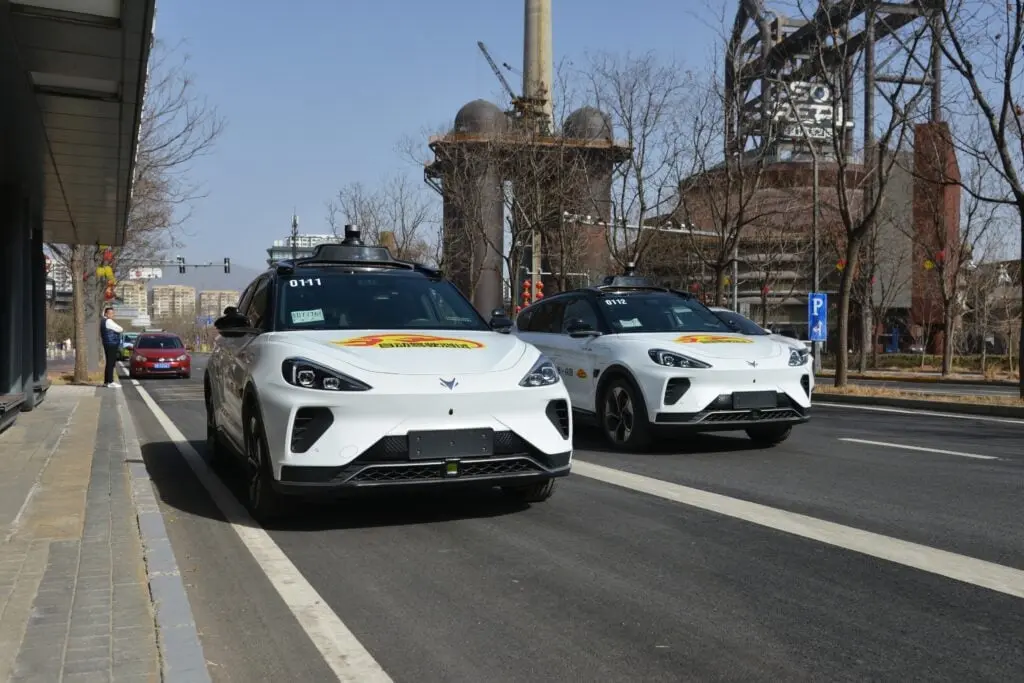
Source: Benzinga
Competition Heats Up with Waymo and Wayve
Baidu is racing against rivals including Waymo, owned by Google parent Alphabet, which said in October it plans to take part in the UK trials as part of its global expansion
1
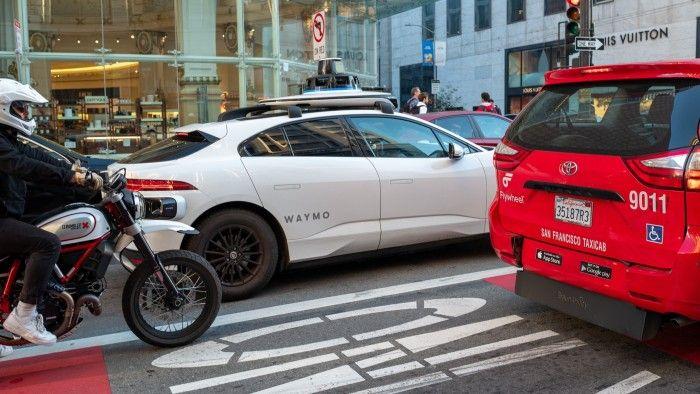
. Waymo has already begun supervised tests in London, with its cars spotted on the city's streets2
. The company has logged more than 14 million driverless robotaxi rides and recently reached the 450,000 rides-per-week milestone, with over 2,500 robotaxis in its fleet across multiple US cities5
. Wayve, a UK homegrown startup developing its own artificial intelligence technology for self-driving cars, has also teamed up with Uber to bring robotaxi service to the British capital, backed by about $1bn in investment led by SoftBank Group and Uber2
.Related Stories



Apollo Go's Track Record and Safety Metrics
Apollo Go announced it had reached the 250,000 paid robotaxi rides per week mark, with its fleet logging over 140 million driverless miles and more than 17 million robotaxi ride orders
5
. The company shared that it had recorded one incident with an airbag deployment for every 6.2 million miles driven5
. These safety metrics will be closely watched as the company enters the London market, where public skepticism remains. Steve McNamara, general secretary of the Licensed Taxi Driver's Association, told Sky News in October that he wasn't currently concerned about competition with driverless taxis, calling them "a novelty" and "a gimmick"2
.What This Means for the Autonomous Vehicle Industry
The London trials represent a critical test for autonomous vehicles in a complex urban environment known for challenging driving conditions. A 2024 study found that while self-driving cars are safer than those driven by humans most of the time, this wasn't the case during dawn, dusk, or when the vehicle is turning, with autonomous vehicles more than five times more likely to have an accident during low-light conditions
2
. London's new driverless car boom mirrors a broader global surge as Baidu and WeRide expand operations in the US, Middle East and Switzerland2
. Meanwhile, Tesla has begun testing its driverless robotaxis in Austin, confirmed by CEO Elon Musk, aligning with the company's end-of-the-year timeline for unsupervised robotaxis in the city5
. Tesla is also targeting the expansion of its Full Self-Driving technology into Europe next year5
. Fully autonomous UK trials are contingent on the government finalizing driverless car regulations and giving companies the go-ahead to operate2
.References
Summarized by

Navi
Related Stories
Recent Highlights
1
Google releases Gemma 4 with Apache 2.0 license, enabling unrestricted local AI on devices
Technology

2
AI Models Lie and Deceive to Protect Other AI Models From Deletion, Study Reveals
Science and Research

3
Anthropic discovers functional emotions in Claude that actively shape AI behavior and decisions
Science and Research

Recent Highlights
Today's Top Stories






Your Daily Dose of Curated AI News
Don’t drown in AI news. We cut through the noise - filtering, ranking and summarizing the most important AI news, breakthroughs and research daily. Spend less time searching for the latest in AI and get straight to action.

