Uber bets $1.25 billion on Rivian robotaxis to deploy 50,000 autonomous vehicles by 2031


5 Sources
5 Sources
[1]
Uber to invest up to $1.25 billion in Rivian as part of robotaxi deal
SAN FRANCISCO, March 19 (Reuters) - Uber (UBER.N), opens new tab will invest up to $1.25 billion in electric vehicle maker Rivian (RIVN.O), opens new tab as part of a deal in which the ride-hailing firm will start deploying 10,000 fully autonomous R2 SUVs as robotaxis from 2028, the companies said on Thursday. Rivian's shares rose about 9% in premarket trading. San Francisco-based Uber will make an initial investment of $300 million, and will fund the remaining amount through 2031, subject to Rivian meeting certain autonomous milestones, the companies said. Interest in driverless taxis has surged in recent months after years of missed promises, with artificial intelligence and tech partnerships offering hopes of solving complex traffic scenarios faster and mitigating high costs. While Rivian, known for its high-end R1S SUVs and R1T pickup trucks, has not launched a robotaxi yet, it unveiled its first custom computer chip for self-driving in December. The company is also gearing up to roll out its smaller, more affordable R2 SUVs this quarter. Meanwhile, Alphabet's (GOOGL.O), opens new tab Waymo, which runs about 2,500 robotaxis in several U.S. cities, has accelerated its rollouts, while Tesla (TSLA.O), opens new tab has launched a small robotaxi service in Austin, Texas, with CEO Elon Musk promising rapid expansion this year. R2 robotaxis will be available exclusively on Uber's platform, starting with San Francisco and Miami, the companies said, adding that Uber has the option to buy up to 40,000 more beginning in 2030. "Should all milestones be achieved, the companies will have deployed thousands of unsupervised Rivian R2 robotaxis across 25 cities in the U.S., Canada, and Europe by the end of 2031," they said. Uber is positioning itself as a marketplace for multiple robotaxi operators, and has partnered across much of the autonomous vehicle industry, including with Waymo, Baidu (9888.HK), opens new tab and Lucid (LCID.O), opens new tab. It is also working with Nvidia (NVDA.O), opens new tab on autonomous driving, leveraging the chip designer's AI and simulation platforms to support the development and scaling of robotaxi systems. Reporting by Abhirup Roy in San Francisco and Akash Sriram in Bengaluru; Editing by Leroy Leo Our Standards: The Thomson Reuters Trust Principles., opens new tab * Suggested Topics: * Artificial Intelligence * ADAS, AV & Safety * Software-Defined Vehicle * EV Battery * Sustainable & EV Supply Chain Abhirup Roy Thomson Reuters Abhirup Roy is a U.S. autos correspondent based in San Francisco, covering Tesla and the wider electric and autonomous vehicle industry. He previously reported from India on global corporations, capital markets regulation, white-collar crime, and corporate litigation. Contact him at (415) 941-8665 or connect securely via Signal on abhiruproy.10 Akash Sriram Thomson Reuters Akash reports on technology companies in the United States, electric vehicle companies, and the space industry. His reporting usually appears in the Autos & Transportation and Technology sections. He has a postgraduate degree in Conflict, Development, and Security from the University of Leeds. Akash's interests include music, football (soccer), and Formula 1.
[2]
Rivian is partnering with Uber to put thousands of robotaxis on the road
Uber's $1.25 billion bet on Rivian's R2 robotaxi could reshape how millions of people hail a ride across 25 cities by 2031. Uber and Rivian have announced a strategic deal that could deploy up to 50,000 robotaxis (fully autonomous vehicles) on the road by 2031. As part of the partnership, Uber will invest $300 million in Rivian (equivalent to about 19.55 million Rivian shares), with the investment committed immediately upon signing. What will passengers experience on the ground? In the first phase, Uber or its fleet partners could purchase the first 10,000 fully autonomous Rivian R2 EVs. From 2028, passengers in San Francisco and Miami could be hailing fully driverless Rivian R2s directly through the Uber app. Recommended Videos Thereafter, Uber will have the option to purchase an additional 40,000 units from the automaker through 2031, to be deployed across 25 cities in the United States, Canada, and Europe. However, the bulk of the investment is tied to Rivian meeting the agreed-upon performance milestones. Uber has also agreed to pay licensing fees for Rivian's autonomous driving software. For those catching up, the automaker's third-generation autonomy platform combines 11 cameras, five radars, and one LiDAR, all powered by two in-house RAP1 chips (capable of delivering up to 1,600 TOPS of AI compute). The deal improves Rivian's position as an autonomous technology provider It's worth mentioning that Rivian is beginning consumer R2 sales this spring. Once that happens, the real-world driving data should help further improve the autonomous systems. It is Rivian's stronghold over its hardware (the car) and the platform (the software) that convinced Uber to enter the deal. Following the announcement, Rivian's stock jumped roughly 10%, signalling strong investor confidence in the partnership. The deal adds to Rivian's existing $5.8 billion software partnership with Volkswagen, solidifying its position as an autonomous technology provider. For Uber, it is the most substantial robotaxi commitment the company has made, following earlier tie-ups with Lucid, Amazon's Zoox, Stellantis, and Nvidia.
[3]
Uber invests $1.25B in Rivian for 50,000 robotaxis
Uber $UBER Technologies and Rivian $RIVN Automotive announced a partnership to deploy up to 50,000 fully autonomous robotaxis, with Uber committing up to $1.25 billion in Rivian through 2031, subject to the achievement of certain milestones by specific dates, the companies said. Under the agreement, Uber or its fleet partners will purchase 10,000 autonomous versions of Rivian's R2 electric vehicle in the first deployment phase, with the option to buy up to 40,000 more beginning in 2030. An initial $300 million investment is committed following the deal's signing, pending regulatory approval. The R2 robotaxis will be available exclusively on the Uber platform. Initial commercial deployments are planned for San Francisco and Miami in 2028, with expansion to 25 cities across the U.S., Canada, and Europe by the end of 2031. "We're big believers in Rivian's approach," Uber CEO Dara Khosrowshahi said in a statement, citing Rivian's integrated control over vehicle design, compute platform, software, and U.S.-based manufacturing as grounds for confidence in the deal's targets. Rivian CEO RJ Scaringe said in a statement the partnership would accelerate the company's path to level 4 autonomy, pointing to its data flywheel and in-house RAP1 inference platform as drivers of near-term progress. Rivian announced its third-generation autonomy platform in December 2025. The system includes 11 cameras, 5 radars, and 1 LiDAR, powered by two RAP1 chips capable of 1,600 TOPS of AI compute, and is expected to launch in the R2 later in 2026. Rivian's stock jumped about 10% ahead of the open after the announcement, while Uber's traded near flat. For Rivian, the deal adds to a financing streak that included a $5.8 billion software arrangement with Volkswagen finalized in late 2024, , according to CNBC. For Uber, the deal extends a string of autonomous vehicle agreements that also includes partnerships with Amazon $AMZN's Zoox, Lucid $LCID, Stellantis $STLA, and Nvidia $NVDA.
[4]
Uber Makes Billion-Dollar Bet on Rivian Robotaxis | PYMNTS.com
By completing this form, you agree to receive marketing communications from PYMNTS and to the sharing of your information with our sponsor, if applicable, in accordance with our Privacy Policy and Terms and Conditions. The two companies expect to deploy 10,000 fully autonomous R2 robotaxis in the first phase of that effort, Rivian said in its announcement Thursday (March 19). The initial deployments are set to begin in Miami and San Francisco in 2028 and expand to 25 cities by 2031. As part of the arrangement, Uber will invest up to $1.25 billion in Rivian through 2031, assuming certain autonomous milestones are reached by specific dates. An initial $300 million investment in the electric vehicle (EV) company has been committed, pending regulatory approval. "We're big believers in Rivian's approach -- designing the vehicle, compute platform, and software stack together, while maintaining end-to-end control of scaled manufacturing and supply in the U.S.," said Dara Khosrowshahi, Uber's CEO. "That vertical integration, combined with data from their growing consumer vehicle base and experience managing the complexities of commercial fleets, gives us conviction to set these ambitious but achievable targets." Assuming all milestones are achieved, the companies say they'll have deployed thousands of "unsupervised" Rivian R2 robotaxis across 25 cities in the U.S., Canada, and Europe by the end of 2031. The two firms also have the option to negotiate the purchase of up to 40,000 more autonomous Rivian R2 vehicles starting in 2030. "We couldn't be more excited about this partnership with Uber -- it will help accelerate our path to level 4 autonomy to create one of the safest and most convenient autonomous platforms in the world," said RJ Scaringe, founder and CEO of Rivian. "The scale of Rivian's growing data flywheel coupled with RAP1, our state of the art in-house inference platform, and our multimodal perception platform make us incredibly excited for the rapid advancement of Rivian autonomy over the next couple of years." Rivian recently unveiled a custom artificial intelligence chip and a comprehensive autonomy platform that was designed and built in-house. As covered here at the time, this marks a departure from depending on third-party computing solutions like Nvidia's processors. "Rivian's announcement highlights a broader shift in the EV industry toward vertical integration of hardware and software," PYMNTS wrote. "The company described the custom chip as engineered specifically to meet the demands of autonomous driving systems, where coordination between sensors, neural networks and compute is critical."
[5]

Uber to invest up to $1.25 billion in Rivian as part of robotaxi deal
STORY: Shares of Rivian rose as much as 10% Thursday morning after the electric vehicle maker struck a deal with Uber to provide robotaxis to the ride-hailing service. Both companies said Uber will invest up to $1.25 billion in Rivian, which in turn will provide 10,000 fully autonomous robotaxis to Uber beginning in 2028. The companies added that Uber has the option to buy up to 40,000 more robotaxis beginning in 2030. Rivian, which is best known for its high-end R1S SUVs and R1T pickup trucks, has not launched a robotaxi yet, but it unveiled its first custom computer chip for self-driving in December. The company will roll out its smaller, more affordable R2 SUVs this year, with autonomous versions of the R2 serving as Uber's robotaxis. The deal comes as interest in driverless taxis has surged in recent months, with tech partnerships and AI looking to solve complex traffic scenarios faster and mitigate high costs that have plagued the industry. Alphabet's Waymo, which has launched robotaxis in several U.S. cities, has accelerated its rollouts, while Tesla has launched a small robotaxi service in Austin, Texas, with CEO Elon Musk promising rapid expansion this year. Uber, for its part, is positioning itself as a marketplace for multiple robotaxi operators, and has partnered across much of the autonomous vehicle industry, including with Waymo, Baidu and Lucid. Uber is also working with Nvidia on autonomous driving, leveraging the chip designer's AI and simulation platforms to support the development and scaling of robotaxi systems.
Share
Share
Copy Link
Uber is investing up to $1.25 billion in Rivian to deploy 50,000 fully autonomous R2 robotaxis across 25 cities by 2031. The deal begins with a $300 million initial investment and 10,000 vehicles launching in San Francisco and Miami in 2028. This marks Uber's largest robotaxi commitment as it positions itself as a marketplace for autonomous vehicle operators.
Uber and Rivian Partnership Marks Major Autonomous Vehicle Commitment
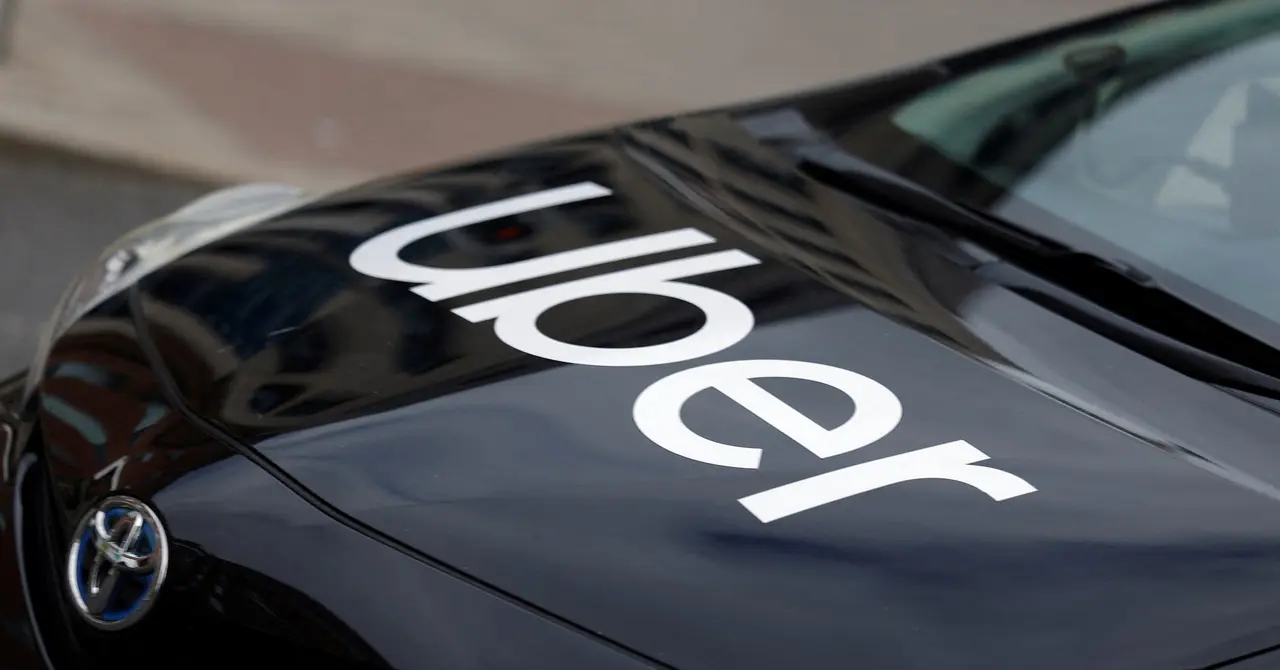
Uber is committing up to $1.25 billion to Rivian in a strategic partnership that could reshape the autonomous vehicle market with up to 50,000 fully autonomous robotaxis deployed by 2031
1
. The ride-hailing giant will make an initial $300 million investment, with the remaining funds distributed through 2031, contingent on Rivian meeting specific autonomous driving milestones3
. Rivian's stock surged approximately 10% following the announcement, signaling strong investor confidence in the deal's potential2
.
Source: Reuters
The partnership represents Uber's most substantial robotaxi commitment to date, building on earlier tech partnerships with Waymo, Baidu, Lucid, and Nvidia
1
. For Rivian, this deal adds to a financing streak that included a $5.8 billion software arrangement with Volkswagen finalized in late 20243
, solidifying its position as an autonomous technology provider beyond just an electric vehicle (EV) manufacturer.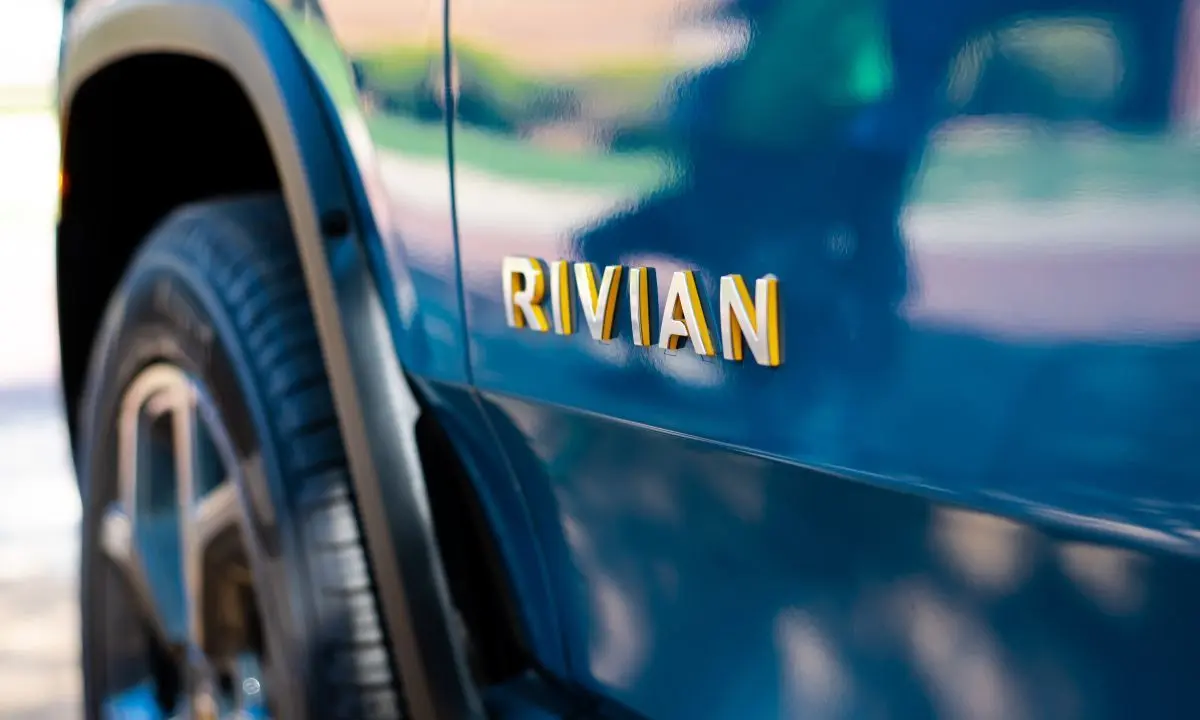
Source: PYMNTS
Rivian R2 Robotaxis Set for 2028 Launch in San Francisco and Miami
In the first deployment phase, Uber or its fleet partners will purchase 10,000 autonomous versions of the Rivian R2, with commercial operations beginning in San Francisco and Miami in 2028
3
. The R2 robotaxis will be available exclusively on Uber's platform, giving the ride-hailing company a competitive edge in the driverless taxi technology race1
.
Source: Quartz
Uber has secured the option to purchase an additional 40,000 units beginning in 2030, with plans to expand operations across 25 cities in the United States, Canada, and Europe by the end of 2031
4
. "Should all milestones be achieved, the companies will have deployed thousands of unsupervised Rivian R2 robotaxis across 25 cities," the companies stated1
.Advanced Autonomy Platform Powers Level 4 Autonomy Ambitions
Rivian's third-generation autonomy platform combines 11 cameras, five radars, and one LiDAR, all powered by two in-house RAP1 chips capable of delivering up to 1,600 TOPS of Artificial Intelligence (AI) compute. This custom self-driving chip, unveiled in December, marks Rivian's departure from depending on third-party computing solutions like Nvidia's processors
4
.RJ Scaringe, Rivian's founder and CEO, emphasized the partnership's potential: "We couldn't be more excited about this partnership with Uber -- it will help accelerate our path to Level 4 autonomy to create one of the safest and most convenient autonomous platforms in the world"
4
. The scale of Rivian's growing data flywheel, coupled with its state-of-the-art in-house inference platform and multimodal perception capabilities, positions the company for rapid advancement in autonomous driving software over the coming years.Related Stories

Vertical Integration Convinces Uber Leadership
Dara Khosrowshahi, Uber's CEO, cited Rivian's vertical integration as a key factor in the $1.25 billion investment decision. "We're big believers in Rivian's approach -- designing the vehicle, compute platform, and software stack together, while maintaining end-to-end control of scaled manufacturing and supply in the U.S.," Khosrowshahi said
4
. This integrated control over hardware and software, combined with data from Rivian's growing consumer vehicle base, gives Uber conviction to set ambitious but achievable targets.Rivian is beginning consumer R2 sales this spring, and the real-world driving data should help further improve the autonomous systems
2
. Uber will also pay licensing fees for Rivian's autonomous driving software, creating an additional revenue stream for the EV maker2
.Uber Positions as Autonomous Vehicle Marketplace Amid Industry Acceleration
Interest in driverless taxis has surged in recent months after years of missed promises, with Artificial Intelligence and tech partnerships offering hopes of solving complex traffic scenarios faster and mitigating high costs
1
. Waymo, Alphabet's autonomous vehicle unit, currently operates about 2,500 robotaxis in several U.S. cities and has accelerated its rollouts1
. Tesla has launched a small robotaxi service in Austin, Texas, with CEO Elon Musk promising rapid expansion this year.Uber is positioning itself as a marketplace for multiple robotaxi operators rather than developing its own autonomous technology
5
. The company is also working with Nvidia on autonomous driving, leveraging the chip designer's AI and simulation platforms to support the development and scaling of robotaxi systems1
. This multi-partner strategy allows Uber to hedge its bets across the autonomous vehicle market while maintaining its platform dominance in ride-hailing services.References
Summarized by

Navi
[2]
[5]
Related Stories
Uber accelerates robotaxi expansion with Zoox and Nvidia partnerships across 28 cities
11 Mar 2026•Technology
Uber's Ambitious Robotaxi Plan: 20,000 Lucid EVs with Nuro's AI Technology
18 Jul 2025•Technology
Rivian unveils custom AI chip and autonomous driving tech with lidar, hinting at robotaxi future
10 Dec 2025•Technology
Recent Highlights


Recent Highlights
Today's Top Stories





Your Daily Dose of Curated AI News
Don’t drown in AI news. We cut through the noise - filtering, ranking and summarizing the most important AI news, breakthroughs and research daily. Spend less time searching for the latest in AI and get straight to action.

