UN Report Warns AI Could Deepen Global Inequality Without Strong Policy Action


8 Sources
8 Sources
[1]
AI's impact could worsen gaps between world's rich and poor, a UN report says
Behind the hoopla over the promise of artificial intelligence lay difficult realities, including how such technology might affect people already disadvantaged in a data-driven world. A new report by the United Nations Development Program notes most of the gains from AI are likely to be reaped by wealthy nations unless steps are taken to use its power to help close gaps in access to basic needs, as well as such advanced know-how. The report released Tuesday likens the situation to the "Great Divergence" of the industrial revolution, when many Western countries saw rapid modernization while others fell behind. Questions over how companies and other institutions will use AI are a near universal concern given its potential to change or replace some jobs done by people with computers and robots. But while much of the attention devoted to AI focuses on productivity, competitiveness and growth, the more important question is what it will mean for human lives, the authors note. "We tend to overemphasize the role of technology," said Michael Muthukrishna of the London School of Economics, the report's main author, told reporters. "We need to ensure it's not technology first, but it's people first," he said, speaking by video at the report's launch in Bangkok. The risk of exclusion is an issue for communities where most people are still struggling to access skills, electric power and internet connectivity, for older people, for people displaced by war, civil conflict and climate disasters. At the same time, such people may be "invisible" in data that will not take them into account, the report said. "As a general-purpose technology, AI can lift productivity, spark new industries, and help latecomers catch up," the report says. Better advice on farming, analysis of X-rays within seconds and faster medical diagnoses, more effective weather forecasts and damage assessments hold promise for rural communities and areas prone to natural disasters. "AI systems that analyze poverty, health, and disaster risks enable faster, fairer, and more transparent decisions, turning data into continuous learning and public value," it says. Still, even in wealthy nations like the United States, the potential for data centers to devour too large a share of electricity and water has raised concerns. Ramping up power generation to meet higher demand may hinder progress in limiting the emissions of carbon from burning fossil fuels that contribute to global warming, while also causing health hazards. The technology raises ethical, privacy and cybersecurity concerns: researchers have found hackers using AI to automate portions of cyberattacks. There also is the problem of deepfakes that can misinform or facilitate criminal activity. Asian nations including China, Japan, South Korea and Singapore are well placed to take advantage of AI tools, the report notes, while places like Afghanistan, the Maldives and Myanmar lack skills, reliable power and other resources needed to tap into the computing potential of AI. Inequalities between regions within countries mean some places even in advanced economies are prone to be left behind. About a quarter of the Asia-Pacific region lacks online access, the report says. If such gaps are not closed, many millions may be excluded from the kinds of devices, digital payment systems, digital IDs and education and skills that are required to participate fully in the global economy, falling further behind, said Philip Schellekens, the UNDP's chief economist for the Asia Pacific. Other risks include misinformation and disinformation, surveillance that violates rights to privacy and systems that can act as "black boxes," reinforcing biases against minorities or other groups. So transparency and effective regulations are crucial guardrails for ensuring AI is used in fair and accountable ways, he said. "We believe we need more balance, less hysteria and hype," Schellekens said. AI is becoming essential for modern life, like electricity, roads, and now the internet, so governments need to invest more in digital infrastructure, education and training, fair competition and social protections, the report says. "The goal," it says, "is to democratize access to AI so that every country and community can benefit while protecting those most at risk from disruption."
[2]
AI's impact could worsen gaps between world's rich and poor, a UN report says
BANGKOK (AP) -- Behind the hoopla over the promise of artificial intelligence lay difficult realities, including how such technology might affect people already disadvantaged in a data-driven world. A new report by the United Nations Development Program notes most of the gains from AI are likely to be reaped by wealthy nations unless steps are taken to use its power to help close gaps in access to basic needs, as well as such advanced know-how. The report released Tuesday likens the situation to the "Great Divergence" of the industrial revolution, when many Western countries saw rapid modernization while others fell behind. Questions over how companies and other institutions will use AI are a near universal concern given its potential to change or replace some jobs done by people with computers and robots. But while much of the attention devoted to AI focuses on productivity, competitiveness and growth, the more important question is what it will mean for human lives, the authors note. It's an issue for communities where most people are still struggling to access skills, electric power and internet connectivity, for older people, for people displaced by war, civil conflict and climate disasters. At the same time, such people may be "invisible" in data that will not take them into account, the report said. "As a general-purpose technology, AI can lift productivity, spark new industries, and help latecomers catch up," the report says. Better advice on farming, analysis of X-rays within seconds and faster medical diagnoses, more effective weather forecasts and damage assessments hold promise for rural communities and areas prone to natural disasters. "AI systems that analyze poverty, health, and disaster risks enable faster, fairer, and more transparent decisions, turning data into continuous learning and public value," it says. Still, even in wealthy nations like the United States, the potential for data centers to devour too large a share of electricity and water has raised concerns. Ramping up power generation to meet higher demand may hinder progress in limiting the emissions of carbon from burning fossil fuels that contribute to global warming, while also causing health hazards. The technology raises ethical, privacy and cybersecurity concerns: researchers have found hackers using AI to automate portions of cyberattacks. There also is the problem of deepfakes that can misinform or facilitate criminal activity. Asian nations including China, Japan, South Korea and Singapore are well placed to take advantage of AI tools, the report notes, while places like Afghanistan, the Maldives and Myanmar lack skills, reliable power and other resources needed to tap into the computing potential of AI. Inequalities between regions within countries mean some places even in advanced economies are prone to be left behind. About a quarter of the Asia-Pacific region lacks online access, the report says. If such gaps are not closed, many millions may be excluded from the kinds of devices, digital payment systems, digital IDs and education and skills that are required to participate fully in the global economy. They may be "stranded on the wrong side of an AI-driven global economy," it says. Other risks include misinformation and disinformation, surveillance that violates rights to privacy and systems that can act as "black boxes," reinforcing biases against minorities or other groups. So transparency and effective regulations are crucial guardrails for ensuring AI is used in fair and accountable ways, it says. "AI is becoming the region's next essential infrastructure, like power, roads, and schools, with faster upsides and sharper risks," the report says, urging governments to invest more in providing digital infrastructure, education and training, fair competition and social protections. "The goal," it says, "is to democratize access to AI so that every country and community can benefit while protecting those most at risk from disruption."
[3]
UN warns about AI becoming another 'Great Divergence' between rich and poor countries like the Industrial Revolution | Fortune
Behind the hoopla over the promise of artificial intelligence lay difficult realities, including how such technology might affect people already disadvantaged in a data-driven world. A new report by the United Nations Development Program notes most of the gains from AI are likely to be reaped by wealthy nations unless steps are taken to use its power to help close gaps in access to basic needs, as well as such advanced know-how. The report released Tuesday likens the situation to the "Great Divergence" of the industrial revolution, when many Western countries saw rapid modernization while others fell behind. Questions over how companies and other institutions will use AI are a near universal concern given its potential to change or replace some jobs done by people with computers and robots. But while much of the attention devoted to AI focuses on productivity, competitiveness and growth, the more important question is what it will mean for human lives, the authors note. "We tend to overemphasize the role of technology," said Michael Muthukrishna of the London School of Economics, the report's main author, told reporters. "We need to ensure it's not technology first, but it's people first," he said, speaking by video at the report's launch in Bangkok. The risk of exclusion is an issue for communities where most people are still struggling to access skills, electric power and internet connectivity, for older people, for people displaced by war, civil conflict and climate disasters. At the same time, such people may be "invisible" in data that will not take them into account, the report said. "As a general-purpose technology, AI can lift productivity, spark new industries, and help latecomers catch up," the report says. Better advice on farming, analysis of X-rays within seconds and faster medical diagnoses, more effective weather forecasts and damage assessments hold promise for rural communities and areas prone to natural disasters. "AI systems that analyze poverty, health, and disaster risks enable faster, fairer, and more transparent decisions, turning data into continuous learning and public value," it says. Still, even in wealthy nations like the United States, the potential for data centers to devour too large a share of electricity and water has raised concerns. Ramping up power generation to meet higher demand may hinder progress in limiting the emissions of carbon from burning fossil fuels that contribute to global warming, while also causing health hazards. The technology raises ethical, privacy and cybersecurity concerns: researchers have found hackers using AI to automate portions of cyberattacks. There also is the problem of deepfakes that can misinform or facilitate criminal activity. Asian nations including China, Japan, South Korea and Singapore are well placed to take advantage of AI tools, the report notes, while places like Afghanistan, the Maldives and Myanmar lack skills, reliable power and other resources needed to tap into the computing potential of AI. Inequalities between regions within countries mean some places even in advanced economies are prone to be left behind. About a quarter of the Asia-Pacific region lacks online access, the report says. If such gaps are not closed, many millions may be excluded from the kinds of devices, digital payment systems, digital IDs and education and skills that are required to participate fully in the global economy, falling further behind, said Philip Schellekens, the UNDP's chief economist for the Asia Pacific. Other risks include misinformation and disinformation, surveillance that violates rights to privacy and systems that can act as "black boxes," reinforcing biases against minorities or other groups. So transparency and effective regulations are crucial guardrails for ensuring AI is used in fair and accountable ways, he said. "We believe we need more balance, less hysteria and hype," Schellekens said. AI is becoming essential for modern life, like electricity, roads, and now the internet, so governments need to invest more in digital infrastructure, education and training, fair competition and social protections, the report says. "The goal," it says, "is to democratize access to AI so that every country and community can benefit while protecting those most at risk from disruption."
[4]
AI could undo decades of development gains, UN report warns
Women and the youth are the most at risk of AI taking their jobs, and of the technology being biased against them. Despite the pace of artificial intelligence (AI) taking off globally and governments trying to lead in the technology, inequality between countries could deepen without strong policy action, creating what researchers call "The Next Great Divergence," according to a United Nations report. The report, published by the UN's Development Programme (UNDP) on Tuesday, warned that unmanaged AI could reverse the trend of narrowing development inequalities that has marked much of the last half-century. In an urgent call, it said that AI adoption is happening in months rather than decades and that many countries lack the infrastructure, skills, and governance systems needed to capture AI's benefits while also facing economic and social disruptions from the technology. "The central fault line in the AI era is capability," said Philip Schellekens, UNDP's chief economist for Asia and the Pacific region. "Countries that invest in skills, computing power and sound governance systems will benefit, others risk being left far behind." The report focused on the Asia-Pacific region, saying that because it is home to over 55 per cent of the world's population and has diverse national incomes and the widest life expectancy gaps, it serves as "ground zero" for these dynamics. Despite hosting more than half of global AI users, only 14 per cent of people in the region actually use AI tools, leaving 3.7 billion on the sidelines. Meanwhile, a quarter of the population remains offline, with women in South Asia up to 40 per cent less likely than men to own a smartphone. However, the report said the region is rapidly expanding in AI and innovation, pointing to China, which has almost 70 per cent of AI patents. More than 3,100 newly funded AI companies have emerged across six economies. Countries such as Singapore, South Korea, and China are making substantial investments in AI infrastructure and skills, while others are still working to strengthen foundational digital access and literacy, the report said. AI could raise annual gross domestic product (GDP) growth in the region by around 2 percentage points and raise productivity by up to 5 per cent in sectors such as health and finance. ASEAN economies alone could see nearly $1 trillion (around €87 billion) in additional GDP over the next decade. Despite this, some 1.3 billion workers remain in informal employment, nearly 770 million women are out of the labour force, and about 200 million people live in extreme poverty, the report read. The report said that women and young people are most vulnerable to AI's disruptions. This is mostly because jobs held by women are nearly twice as exposed to automation as those held by men. Youth employment is already declining in high-AI-exposure roles, especially for those aged 22 to 25, threatening early-career pathways, the report warned. There is also a high risk of AI systems and algorithms projecting bias to rural and indigenous communities, as they are often not visible in the data systems that train AI systems. The report found that AI-driven credit models are trained mainly on urban male borrowers and have misclassified women entrepreneurs and rural farmers as high-risk, excluding them from financial opportunities. One in four companies also expects job losses linked to AI-driven automation. Only one in four urban residents -- and fewer than one in five rural residents -- can complete basic spreadsheet tasks, the report said. The report said that while AI could be an opportunity for humanity, for example, by detecting diseases faster, supporting literacy, and strengthening food systems, some things remain out of reach. More than 1.6 billion people in the Asia-Pacific region cannot afford a healthy diet and 27 million youth remain illiterate. Meanwhile, many countries depend on imported AI models and languages that don't reflect their cultural or linguistic realities. For economies, digital skill shortages remain severe, informality is widespread, and gains from AI remain uncertain and uneven across different countries and sectors, the report warned. While the report noted that AI can help governments and public services, such as helping with flood forecasting or AI credit scoring, only a limited number of countries have comprehensive AI regulations. By 2027, more than 40 per cent of global AI-related data breaches may stem from misuse of generative AI, underscoring the need for robust governance frameworks, the report warned. While the report focused on Asia-Pacific, there was research from Europe and North America too, which showed wide disparities across the bloc. European data showed that there were certain countries, such as Denmark, Germany, and Switzerland, which were among the world's top performers when it comes to AI preparedness. But Eastern European countries such as Albania and Bosnia and Herzegovina lag significantly behind their Western counterparts. The report said that the widening AI inequalities are not predetermined. "AI is racing ahead, and many countries are still at the starting line," said Kanni Wignaraja, UN Assistant Secretary-General and UNDP's regional director for Asia and the Pacific. "The Asia and Pacific experience highlights how quickly gaps can emerge between those shaping AI and those being shaped by it."
[5]

AI's impact could worsen gaps between world's rich and poor, a UN report says
BANGKOK -- Behind the hoopla over the promise of artificial intelligence lay difficult realities, including how such technology might affect people already disadvantaged in a data-driven world. A new report by the United Nations Development Program notes most of the gains from AI are likely to be reaped by wealthy nations unless steps are taken to use its power to help close gaps in access to basic needs, as well as such advanced know-how. The report released Tuesday likens the situation to the "Great Divergence" of the industrial revolution, when many Western countries saw rapid modernization while others fell behind. Questions over how companies and other institutions will use AI are a near universal concern given its potential to change or replace some jobs done by people with computers and robots. But while much of the attention devoted to AI focuses on productivity, competitiveness and growth, the more important question is what it will mean for human lives, the authors note. It's an issue for communities where most people are still struggling to access skills, electric power and internet connectivity, for older people, for people displaced by war, civil conflict and climate disasters. At the same time, such people may be "invisible" in data that will not take them into account, the report said. "As a general-purpose technology, AI can lift productivity, spark new industries, and help latecomers catch up," the report says. Better advice on farming, analysis of X-rays within seconds and faster medical diagnoses, more effective weather forecasts and damage assessments hold promise for rural communities and areas prone to natural disasters. "AI systems that analyze poverty, health, and disaster risks enable faster, fairer, and more transparent decisions, turning data into continuous learning and public value," it says. Still, even in wealthy nations like the United States, the potential for data centers to devour too large a share of electricity and water has raised concerns. Ramping up power generation to meet higher demand may hinder progress in limiting the emissions of carbon from burning fossil fuels that contribute to global warming, while also causing health hazards. The technology raises ethical, privacy and cybersecurity concerns: researchers have found hackers using AI to automate portions of cyberattacks. There also is the problem of deepfakes that can misinform or facilitate criminal activity. Asian nations including China, Japan, South Korea and Singapore are well placed to take advantage of AI tools, the report notes, while places like Afghanistan, the Maldives and Myanmar lack skills, reliable power and other resources needed to tap into the computing potential of AI. Inequalities between regions within countries mean some places even in advanced economies are prone to be left behind. About a quarter of the Asia-Pacific region lacks online access, the report says. If such gaps are not closed, many millions may be excluded from the kinds of devices, digital payment systems, digital IDs and education and skills that are required to participate fully in the global economy. They may be "stranded on the wrong side of an AI-driven global economy," it says. Other risks include misinformation and disinformation, surveillance that violates rights to privacy and systems that can act as "black boxes," reinforcing biases against minorities or other groups. So transparency and effective regulations are crucial guardrails for ensuring AI is used in fair and accountable ways, it says. "AI is becoming the region's next essential infrastructure, like power, roads, and schools, with faster upsides and sharper risks," the report says, urging governments to invest more in providing digital infrastructure, education and training, fair competition and social protections. "The goal," it says, "is to democratize access to AI so that every country and community can benefit while protecting those most at risk from disruption."
[6]

AI's impact could worsen gaps between world's rich and poor, a UN report says
BANGKOK (AP) -- Behind the hoopla over the promise of artificial intelligence lay difficult realities, including how such technology might affect people already disadvantaged in a data-driven world. A new report by the United Nations Development Program notes most of the gains from AI are likely to be reaped by wealthy nations unless steps are taken to use its power to help close gaps in access to basic needs, as well as such advanced know-how. The report released Tuesday likens the situation to the "Great Divergence" of the industrial revolution, when many Western countries saw rapid modernization while others fell behind. Questions over how companies and other institutions will use AI are a near universal concern given its potential to change or replace some jobs done by people with computers and robots. But while much of the attention devoted to AI focuses on productivity, competitiveness and growth, the more important question is what it will mean for human lives, the authors note. It's an issue for communities where most people are still struggling to access skills, electric power and internet connectivity, for older people, for people displaced by war, civil conflict and climate disasters. At the same time, such people may be "invisible" in data that will not take them into account, the report said. "As a general-purpose technology, AI can lift productivity, spark new industries, and help latecomers catch up," the report says. Better advice on farming, analysis of X-rays within seconds and faster medical diagnoses, more effective weather forecasts and damage assessments hold promise for rural communities and areas prone to natural disasters. "AI systems that analyze poverty, health, and disaster risks enable faster, fairer, and more transparent decisions, turning data into continuous learning and public value," it says. Still, even in wealthy nations like the United States, the potential for data centers to devour too large a share of electricity and water has raised concerns. Ramping up power generation to meet higher demand may hinder progress in limiting the emissions of carbon from burning fossil fuels that contribute to global warming, while also causing health hazards. The technology raises ethical, privacy and cybersecurity concerns: researchers have found hackers using AI to automate portions of cyberattacks. There also is the problem of deepfakes that can misinform or facilitate criminal activity. Asian nations including China, Japan, South Korea and Singapore are well placed to take advantage of AI tools, the report notes, while places like Afghanistan, the Maldives and Myanmar lack skills, reliable power and other resources needed to tap into the computing potential of AI. Inequalities between regions within countries mean some places even in advanced economies are prone to be left behind. About a quarter of the Asia-Pacific region lacks online access, the report says. If such gaps are not closed, many millions may be excluded from the kinds of devices, digital payment systems, digital IDs and education and skills that are required to participate fully in the global economy. They may be "stranded on the wrong side of an AI-driven global economy," it says. Other risks include misinformation and disinformation, surveillance that violates rights to privacy and systems that can act as "black boxes," reinforcing biases against minorities or other groups. So transparency and effective regulations are crucial guardrails for ensuring AI is used in fair and accountable ways, it says. "AI is becoming the region's next essential infrastructure, like power, roads, and schools, with faster upsides and sharper risks," the report says, urging governments to invest more in providing digital infrastructure, education and training, fair competition and social protections. "The goal," it says, "is to democratize access to AI so that every country and community can benefit while protecting those most at risk from disruption."
[7]

AI's Impact Could Worsen Gaps Between World's Rich and Poor, a UN Report Says
BANGKOK (AP) -- Behind the hoopla over the promise of artificial intelligence lay difficult realities, including how such technology might affect people already disadvantaged in a data-driven world. A new report by the United Nations Development Program notes most of the gains from AI are likely to be reaped by wealthy nations unless steps are taken to use its power to help close gaps in access to basic needs, as well as such advanced know-how. The report released Tuesday likens the situation to the "Great Divergence" of the industrial revolution, when many Western countries saw rapid modernization while others fell behind. Questions over how companies and other institutions will use AI are a near universal concern given its potential to change or replace some jobs done by people with computers and robots. But while much of the attention devoted to AI focuses on productivity, competitiveness and growth, the more important question is what it will mean for human lives, the authors note. It's an issue for communities where most people are still struggling to access skills, electric power and internet connectivity, for older people, for people displaced by war, civil conflict and climate disasters. At the same time, such people may be "invisible" in data that will not take them into account, the report said. "As a general-purpose technology, AI can lift productivity, spark new industries, and help latecomers catch up," the report says. Better advice on farming, analysis of X-rays within seconds and faster medical diagnoses, more effective weather forecasts and damage assessments hold promise for rural communities and areas prone to natural disasters. "AI systems that analyze poverty, health, and disaster risks enable faster, fairer, and more transparent decisions, turning data into continuous learning and public value," it says. Still, even in wealthy nations like the United States, the potential for data centers to devour too large a share of electricity and water has raised concerns. Ramping up power generation to meet higher demand may hinder progress in limiting the emissions of carbon from burning fossil fuels that contribute to global warming, while also causing health hazards. The technology raises ethical, privacy and cybersecurity concerns: researchers have found hackers using AI to automate portions of cyberattacks. There also is the problem of deepfakes that can misinform or facilitate criminal activity. Asian nations including China, Japan, South Korea and Singapore are well placed to take advantage of AI tools, the report notes, while places like Afghanistan, the Maldives and Myanmar lack skills, reliable power and other resources needed to tap into the computing potential of AI. Inequalities between regions within countries mean some places even in advanced economies are prone to be left behind. About a quarter of the Asia-Pacific region lacks online access, the report says. If such gaps are not closed, many millions may be excluded from the kinds of devices, digital payment systems, digital IDs and education and skills that are required to participate fully in the global economy. They may be "stranded on the wrong side of an AI-driven global economy," it says. Other risks include misinformation and disinformation, surveillance that violates rights to privacy and systems that can act as "black boxes," reinforcing biases against minorities or other groups. So transparency and effective regulations are crucial guardrails for ensuring AI is used in fair and accountable ways, it says. "AI is becoming the region's next essential infrastructure, like power, roads, and schools, with faster upsides and sharper risks," the report says, urging governments to invest more in providing digital infrastructure, education and training, fair competition and social protections. "The goal," it says, "is to democratize access to AI so that every country and community can benefit while protecting those most at risk from disruption."
[8]

AI Risks Sparking A New Era Of Divergence
New York, 2 Dec 2025 - Artificial intelligence (AI) unmanaged could increase inequality between countries by widening divides in economic performance, people's capabilities, and governance systems, as the starting point is so vastly different, according to a new report from the United Nations Development Programme (UNDP). The report, titled The Next Great Divergence: Why AI May Widen Inequality Between Countries, highlights that while AI opens important new avenues for development, countries begin this transition from highly uneven positions to capture benefits and manage risks. Without strong policy action, these gaps can grow, reversing the long trend of narrowing development inequalities. Asia and the Pacific region, home to over 55% of the world's population, is at the center of the AI transition. The region now hosts more than half of global AI users and is rapidly expanding its innovation footprint, from China's rise to nearly 70% of global AI patents to over 3,100 newly funded AI companies across six economies. AI could lift annual GDP growth in the region by around 2 percentage points and raise productivity by up to 5% in sectors such as health and finance. ASEAN economies alone could see nearly $1 trillion in additional GDP over the next decade. At the same time, millions of jobs, especially those held by women and young people, face significant exposure to automation, if core principles of ethical and inclusive governance of AI are not considered. "AI is racing ahead, and many countries are still at the starting line," said Kanni Wignaraja, UN Assistant Secretary -General and UNDP Regional Director for Asia and the Pacific." The Asia and Pacific experience highlights how quickly gaps can emerge between those shaping AI and those being shaped by it." For much of the last half-century, many lower-income countries have gradually closed the gap with higher income countries through advances in technology, trade, and development. This "era of convergence" brought significant improvements in health, education, and income. The report warns that without deliberate and inclusive policy choices, AI may now cause the erosion of these convergence gains. Digital readiness varies significantly across the region. Countries such as Singapore, South Korea, and China are making substantial investments in AI infrastructure and skills, while others are still working to strengthen foundational digital access and literacy. Building these digital capabilities will be critical to ensuring that all countries can benefit from the opportunities AI presents. Limited infrastructure, skills, computing power, and governance capacity constrain the potential benefits of AI while amplifying risks, including job displacement, data exclusion, and indirect impacts such as rising global energy and water demands from AI-intensive systems. Women and young people face particular vulnerabilities. Jobs held by women are nearly twice as exposed to automation, and youth employment is already declining in high-AI-exposure roles, especially for those aged 22-25, threatening early -career pathways. In South Asia, women are up to 40% less likely than men to own a smartphone. Rural and indigenous communities often remain invisible in the datasets that train AI systems, increasing the risk of algorithmic bias and exclusion from essential services. Looking at the opportunities AI is transforming governance and public services across the region. Bangkok's Traffy Fondue platform has processed nearly 600,000 citizen reports, enabling city agencies to respond more efficiently to everyday problems. Singapore's Moments of Life service has reduced paperwork for new parents from about 120 minutes to 15 minutes. In Beijing, digital twins, a virtual representation that serves as the real -time digital counterpart of a physical object or system, are supporting urban planning and flood management. These examples show the potential of AI to enhance public administration and service delivery. Yet only a limited number of countries have comprehensive AI regulations, and by 2027, more than 40% of global AI-related data breaches may stem from misuse of generative AI, underscoring the need for robust governance frameworks. This is a key are a of "catch-up" for many countries in the region and elsewhere. "The central fault line in the AI era is capability," said Philip Schellekens, UNDP Chief Economist for Asia and the Pacific. "Countries that invest in skills, computing power and sound governance systems will benefit, others risk being left far behind. " This report is about how to turn that risk into a path for shared progress.
Share
Share
Copy Link
A United Nations Development Program report warns that AI could worsen gaps between wealthy and poor nations, echoing the Industrial Revolution's Great Divergence. The report highlights that about a quarter of the Asia-Pacific region lacks online access, and without investment in digital infrastructure and education, millions risk being stranded in an AI-driven economy.
AI Could Create a New Great Divergence Between Nations
The United Nations Development Program has issued a stark warning about AI's potential to widen the gap between rich and poor countries unless immediate action is taken. Released Tuesday, the UN report draws a parallel to the Industrial Revolution's "Great Divergence," when Western nations rapidly modernized while others fell behind
1
. This time, the central fault line is capability, according to Philip Schellekens, UNDP's chief economist for Asia and the Pacific, who emphasized that "countries that invest in skills, computing power and sound governance systems will benefit, others risk being left far behind"4
.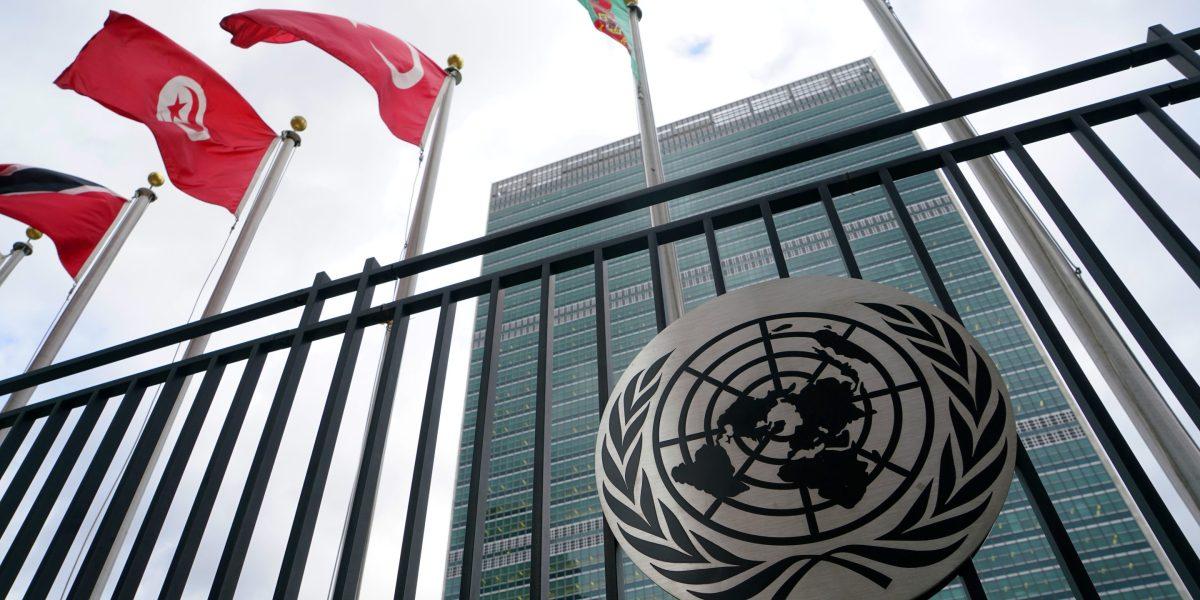
Source: Fortune
The report's main author, Michael Muthukrishna of the London School of Economics, stressed the need to prioritize people over technology. "We tend to overemphasize the role of technology," he told reporters at the report's launch in Bangkok. "We need to ensure it's not technology first, but it's people first"
3
. This people-first approach becomes critical as AI adoption happens in months rather than decades, leaving many countries without the infrastructure, skills, and governance frameworks needed to capture benefits while managing disruptions4
.Digital Divide Threatens Billions in Asia-Pacific Region
The Asia-Pacific region serves as ground zero for these dynamics, hosting over 55 percent of the world's population with diverse national incomes and the widest life expectancy gaps
4
. About a quarter of the Asia-Pacific region lacks online access, meaning many millions may be excluded from devices, digital payment systems, digital IDs, and education required to participate fully in the global economy2
. Despite hosting more than half of global AI users, only 14 percent of people in the region actually use AI tools, leaving 3.7 billion on the sidelines4
.Asian nations including China, Japan, South Korea, and Singapore are well positioned to take advantage of AI tools, while places like Afghanistan, the Maldives, and Myanmar lack skills, reliable power, and other resources needed to tap into AI's computing potential
1
. China alone holds nearly 70 percent of AI patents, and more than 3,100 newly funded AI companies have emerged across six economies in the region4
. ASEAN economies alone could see nearly $1 trillion in additional GDP over the next decade, with AI potentially raising annual GDP growth in the region by around 2 percentage points4
.
Source: Euronews
Job Displacement and AI Bias Threaten Vulnerable Groups
The report highlights severe risks of job displacement and AI bias, particularly for women and young people. Jobs held by women are nearly twice as exposed to automation as those held by men
4
. Youth employment is already declining in high-AI-exposure roles, especially for those aged 22 to 25, threatening early-career pathways4
. One in four companies expects job losses linked to AI-driven automation4
.Algorithmic bias poses another significant threat to rural and indigenous communities who remain "invisible" in data that will not take them into account
1
. AI-driven credit models trained mainly on urban male borrowers have misclassified women entrepreneurs and rural farmers as high-risk, excluding them from financial opportunities4
. Systems that act as "black boxes" can reinforce biases against minorities or other groups, making transparency and effective regulations crucial guardrails3
.Related Stories



Cybersecurity and Privacy Risks Compound Challenges
Beyond economic concerns, the technology raises ethical, privacy, and cybersecurity issues. Researchers have found hackers using AI to automate portions of cyberattacks, while deepfakes can misinform or facilitate criminal activity
1
. By 2027, more than 40 percent of global AI-related data breaches may stem from misuse of generative AI, underscoring the need for robust governance frameworks4
. Privacy risks from surveillance that violates rights and misinformation campaigns add layers of complexity to AI's impact on developing countries2
.Even in wealthy nations like the United States, data centers' potential to consume excessive electricity and water has raised concerns. Ramping up power generation to meet higher demand may hinder progress in limiting carbon emissions from burning fossil fuels that contribute to global warming
1
.Path Forward Requires Investment in Digital Infrastructure and Education
Despite these challenges, "as a general-purpose technology, AI can lift productivity, spark new industries, and help latecomers catch up," the report notes
1
. Better advice on farming, analysis of X-rays within seconds, faster medical diagnoses, more effective weather forecasts, and damage assessments hold promise for rural communities and areas prone to natural disasters2
. AI systems that analyze poverty, health, and disaster risks enable faster, fairer, and more transparent decisions .
Source: Phys.org
Schellekens emphasized the need for "more balance, less hysteria and hype"
3
. AI is becoming essential infrastructure like electricity, roads, and the internet, so governments must invest more in digital infrastructure and education, fair competition, and social protections to mitigate AI disruptions1
. The goal is to democratize access to AI so every country and community can benefit while protecting those most at risk from disruption5
. Only one in four urban residents—and fewer than one in five rural residents—can complete basic spreadsheet tasks, highlighting the urgent need for equitable access and skills development4
. Regulatory frameworks remain limited, with only a small number of countries having comprehensive AI regulations despite the technology becoming essential for modern life4
.References
Summarized by

Navi
Related Stories
Recent Highlights
1
Google Maps unveils Ask Maps with Gemini AI and 3D Immersive Navigation in biggest update
Technology

2
Three Tennessee teens sue xAI over Grok AI creating child sexual abuse material from real photos
Policy and Regulation
3
Meta plans to cut 20% of workforce as AI spending reaches $600 billion, mirroring broader tech trend
Business and Economy

Recent Highlights
Today's Top Stories




Your Daily Dose of Curated AI News
Don’t drown in AI news. We cut through the noise - filtering, ranking and summarizing the most important AI news, breakthroughs and research daily. Spend less time searching for the latest in AI and get straight to action.

