Nvidia tests location tracking software as $160M chip smuggling network gets busted


29 Sources
29 Sources
[1]
Nvidia is reportedly testing tracking software as chip smuggling rumors swirl | TechCrunch
Nvidia is allegedly testing software that can track the location of its AI chips as reports of its chips being smuggled into China are on the rise. Nvidia has built location verification technology that would allow it to track which country a chip is located in, Reuters originally reported, citing anonymous sources. This software tracks computing performance but the delay in communication between servers also offers a sense of a chip's location. This software will be optional for customers to use and will be made available for Blackwell chips first, Reuters said. Multiple reports have surfaced in the last few days that allege China's DeepSeek AI models have been trained on smuggled Nvidia Blackwell chips. Nvidia responded to these reports by saying it hasn't seen evidence of this type of smuggling. "We haven't seen any substantiation or received tips of 'phantom datacenters' constructed to deceive us and our OEM partners, then deconstructed, smuggled, and reconstructed somewhere else. While such smuggling seems farfetched, we pursue any tip we receive," an Nvidia spokesperson told TechCrunch. This news comes just days after Nvidia just got the greenlight from the U.S. Government to start selling its H200 AI chips to approved customers in China on Monday. That announcement only pertains to older H200 chips, and does not the company's Blackwell chips.
[2]
Nvidia details new software that enables location tracking for AI GPUs -- opt-in remote data center GPU fleet management includes power usage and thermal monitoring
Following reports that Nvidia has developed a data fleet management software that can track physical locations of its GPUs, Nvidia on Thursday detailed its GPU fleet monitoring software. The software indeed enables data center operators to monitor various aspects of an AI GPU fleet. Among other things, it allows for detecting the physical location of these processors, a possible deterrent against smuggling chips. However, there is a catch: the software is opt-in rather than mandatory, which may limit its effectiveness as a tool to thwart smugglers, whether nation-state or otherwise. The software collects extensive telemetry, which is then aggregated into a central dashboard hosted on Nvidia's NGC platform. This interface lets customers visualize GPU status across their entire fleet, either globally or by compute zones representing specific physical or cloud locations, which means the software can detect the physical location of Nvidia hardware. Operators can view fleet-wide summaries, drill into individual clusters, and generate structured reports containing inventory data and system-wide health information. Nvidia stresses that the software is strictly observational: it provides insight into GPU behavior but cannot act as a backdoor or a kill switch. As a result, even if Nvidia discovers via the NGC platform that some of its GPUs have been smuggled to China, it cannot switch them off. However, the company could probably use the data to figure out how the GPUs arrived at that location. Nvidia says the software is a customer-installed, open-source client agent that is transparent and auditable. Nvidia's new fleet-management software gives data center operators a detailed, real-time view of how their GPU infrastructure behaves under load. It continuously collects telemetry on power behavior -- including short-duration spikes -- enabling operators to stay within power limits. In addition to power data, the system monitors utilization, memory bandwidth usage, and interconnection health across fleets, to enable operators to maximize utilization and performance per watt. These indicators help expose load imbalance, bandwidth saturation, and link-level issues that can quietly degrade performance across large AI clusters. Another focus of the software is thermals and airflow conditions to avoid thermal throttling and premature component aging. By catching hotspots and insufficient airflow early, operators can avoid performance drops that typically accompany high-density compute environments and, in many cases, prevent premature aging of AI accelerators. The system also verifies whether nodes share consistent software stacks and operational parameters, which is crucial for reproducible datasets and predictable training behavior. Any configuration divergence, such as mismatched drivers or settings, becomes visible in the platform. It is important to note that Nvidia's new fleet-management service is not the company's only tool for remotely diagnosing and controlling GPU behavior, though it is the most advanced. For example, DCGM is a local diagnostic and monitoring toolkit that exposes raw GPU health data, but requires operators to build their own dashboards and aggregation pipelines, which greatly shrinks its usability, but enables operators to build the tools they need themselves. There is also Base Command, a workflow and orchestration environment designed for AI development, job scheduling, dataset management, and collaboration, not for in-depth hardware monitoring. Meanwhile, all three tools represent a formidable set of knobs for data center operators. DCGM provides node-level probes, Base Command handles workloads, and the new service integrates them into a fleet-wide visibility platform that scales to geographically distributed GPU deployments.
[3]
Nvidia Develops Location Tracking Tech for Its GPUs to Thwart Smuggling
Nvidia has developed location tracking for its GPUs in an effort to prevent smugglers from reselling its devices in territories where they're restricted. Citing sources familiar with the matter, Reuters reports that the tracking would be optional for customers and taps into technology that otherwise monitors a chip's performance. It would roll out first to Nvidia's Blackwell chips. "We're in the process of implementing a new software service that empowers data center operators to monitor the health and inventory of their entire AI GPU fleet," Nvidia tells Reuters. "This customer-installed software agent leverages GPU telemetry to monitor fleet health, integrity, and inventory." This comes amid concerns that Nvidia would add remote kill switches to its GPUs. In August, however, Nvidia published a blog post titled "No Backdoors. No Kill Switches. No Spyware," which said "hardwiring a kill switch into a chip is...an open invitation for disaster." However, while the company will not brick GPUs at will, it turns out that it can use GPU telemetry to estimate the location of a graphics card. Nvidia describes the system as using the communication latency between the GPU and Nvidia's own servers. If they appear far from their intended destination, there's a real chance they've been smuggled. Reportedly, the feature is "Read only," meaning Nvidia can't use this as a two-way communication channel to send any commands, like a kill switch. It aims to make this software open source, allowing security researchers and customers to verify that nothing untoward is happening. In the US, lawmakers have introduced legislation that would require chip tracking; however, the bill hasn't garnered much traction. More recently, the Trump administration reopened H200 sales to China this week, this time demanding a 25% cut of the proceeds. Blackwell and Rubin chips are not part of the deal.
[4]
Feds bust plot to ship Nvidia H200s to China and hurt US
As Trump gives green light to ship Nvidia H200s to China and boost US Three US-based businessmen face potential prison sentences after authorities dismantled a smuggling network accused of funneling hundreds of millions of dollars worth of Nvidia GPUs to China. The US Department of Justice said the network directly threated US security by seeking to put cutting edge AI technology in adversarial hands. Nicholas J. Ganjei, U.S. Attorney for the Southern District of Texas, said: "These chips are the building blocks of AI superiority and are integral to modern military applications. The country that controls these chips will control AI technology; the country that controls AI technology will control the future." Ganjei's stark warning to anyone plotting to send Nvidia's top end chips to China came as US President Donald Trump gave the green light to Nvidia to ship its H200 parts to China, with Washington taking a 25 percent cut. Trump announced on Truth Social that neither Nvidia's latest Blackwell nor forthcoming Rubin components were "part of this deal". He said Chinese leader President Xi had responded positively to the move. Xi's positive response may be some comfort to the businessmen just fingered by the DoJ for trying to get Nvidia silicon to China ahead of Trump's decision. According to the DoJ, Alan Hao Hsu, also known as Haochun Hsu, 43, of Missouri City, Texas, and his company, Hao Global LLC, "pleaded guilty to smuggling and unlawful export activities" of at least $160 million worth of export-controlled Nvidia H100 and H200 Tensor Core GPUs. Hsu will be sentenced in February, and faces up to ten years in the slammer. Two US-based PRC natives were also charged in relation to the scheme. The DoJ said Benlin Yuan, 58, the chief executive officer of a Sterling, Virginia, IT services company that's a US subsidiary of a Beijing-based IT biz, was arrested in November and charged with conspiring to violate the Export Control Reform Act (ECRA). Yuan faces up to 20 years in jail if convicted and remains in custody pending further criminal proceedings. Brooklyn-based Fanyue Gong, also known as Tom Gong, 43, was arrested in New York on December 3. Gong was charged with conspiring to smuggle goods out of the US. He faces up to ten years if convicted and remains in custody. ®
[5]

US Detains Two Men Accused of Smuggling Nvidia AI Gear to China
The US Department of Justice has detained two men for allegedly violating export control laws by attempting to smuggle at least $160 million worth of Nvidia Corp. AI chips to China. A third, the owner of a Houston company, has already pleaded guilty. The department alleges the men operated a smuggling network that spanned the Houston business, run by Alan Hao Hsu, and several warehouses across the US, which replaced Nvidia labels from H100 and H200 AI chips with the fictional "Sandkyan" brand before shipping them. Fanyue Gong, a Chinese citizen residing in Brooklyn, New York, and Benlin Yuan, a Canadian from Ontario, are alleged to have conspired with employees of a Hong Kong-based logistics company and a China-based AI technology company to circumvent US export controls.
[6]
Nvidia decries 'far-fetched' reports of smuggling in face of DeepSeek training reports -- unnamed sources claim Chinese company is involved in Blackwell smuggling ring
DeepSeek's next priorities for training future LLM generations conveniently line up with Blackwell's biggest strengths. A new report claims that DeepSeek has illegally obtained and operated "several thousand" Nvidia Blackwell GPUs in the process of training and developing its newest large language model. According to coverage by The Information, six unnamed sources all claim DeepSeek's involvement in a convoluted smuggling ring based around the use of fake data centers as fronts to move high-powered servers into mainland China, illegally circumventing U.S. sanctions on newer AI GPUs. Sources close to the matter allege that DeepSeek is involved in a high-complexity smuggling ring focused on getting Blackwell chips into China illegally through the use of fake data centers. Shell companies purchase data centers worth of Nvidia servers somewhere in Southeast Asia, setting up the data center and its hardware entirely to spec. Nvidia's OEM partners send contractors to inspect the installation, confirming successful installs and export compliance. After this inspection is finished, smugglers reportedly disassemble the entire data center rack by rack, shipping the GPU servers in suitcases across the border into mainland China, where the purchase and use of certain Nvidia chips are restricted by the United States government. According to the report, sources with knowledge of these smuggling operations claim that smugglers and clients prefer 8-GPU rack servers like the HGX B200 over the powerful GB200 NVL72 for this smaller size and ease of covert transportation. When asked for comment, an Nvidia spokesperson gave the following statement to Tom's Hardware: We haven't seen any substantiation or received tips of 'phantom datacenters' constructed to deceive us and our OEM partners, then deconstructed, smuggled, and reconstructed somewhere else. While such smuggling seems far-fetched, we pursue any tip we receive. DeepSeek, the most recognizable Chinese AI firm in the United States, thanks to its R1 LLM making worldwide headlines one year ago, has long been connected with Nvidia GPUs. Its sensational R1 model was trained on only 2,048 Nvidia H800s in two months, a number of GPUs far smaller and more efficient than any Western competitor. Since this time, DeepSeek has consistently been linked to the stockpiling and purchase of as many Nvidia GPUs as it can obtain, with reports constantly swirling about DeepSeek somehow bypassing export restrictions and securing huge numbers of the newest Nvidia chips. Interestingly, DeepSeek's latest internal reports seem to indicate plans to use Nvidia chips for its newest AI models. In a whitepaper released on December 2nd on DeepSeek V3.2, DeepSeek suggests their bottleneck on performance matches that of frontier models like Gemini-3.0-Pro is pre-training compute; "We plan to address this knowledge gap in future iterations by scaling up the pre-training compute." Pre-training compute is a workflow that Nvidia GPUs and CUDA software perform better than most other competitors, suggesting that DeepSeek engineers count on something changing for its access to high-caliber pre-training compute power. DeepSeek's track record proves that Nvidia's pre-training abilities fill a niche unmatched by domestic Chinese products. Reports in August claimed that Huawei's Ascend GPU servers were unable to run necessary training workloads, prompting a return to Nvidia hardware in the R2 training process. This was despite government intervention and doctrines calling for DeepSeek to turn to domestic Chinese products for its AI workload. While the Huawei Ascend servers were used for inference for the models, the company could not turn anywhere but to Nvidia, much to the chagrin of China. The Trump administration recently announced plans to unrestrict the Nvidia H200 GPU in China, opening up Nvidia's sales in the country. Speculators claim that this policy U-turn from the White House, which has spent much of 2025 toeing a line of complete export isolationism to China, comes as fears of Huawei's CloudMatrix 384 and Ascend 910C systems grow. Reputable claims hold that these servers match the H200 and GB200 NVL72 in certain performance metrics, causing the U.S. government to release the H200 into China. This new policy is based on a compromise between flooding China with easy-to-access American Nvidia tech and banning it altogether. The hope is to satiate Chinese tech needs and take away motivation for firms like Huawei to develop their own Nvidia competitors. The adoption of this doctrine, oft-touted by Nvidia's lobbying efforts to the White House, marks a major shift in the "Chip War" trade offensive between Beijing and Washington D.C., which has moved from preventing China from any access to next-gen tech to hoping to slow China's tech power that is beginning to threaten Western tech dominance. While Trump's Commerce Department continues to insist that China will never see Nvidia Blackwell hardware, keeping the export exceptions limited to Hopper-generation hardware like the H200, time will tell if further Nvidia lobbying and fears of the Chinese tech sector will open the doors further. And of course, if DeepSeek truly is involved in conspiracies of phantom data centers, they won't even need the U.S. to allow them access to Blackwell.
[7]

Nvidia's new software could help trace where its AI chips end up
However, Nvidia has said that the software does not contain a "kill switch." Nvidia is developing software that could provide location data for its AI graphics processing units (GPUs), a move that comes as Washington ramps up efforts to prevent restricted chips from being used in countries like China. The opt-in service uses a client software agent that Nvidia chip customers can install to monitor the health of their AI GPUs, the company said in a blog post on Wednesday. Nvidia also said that customers "will be able to visualize their GPU fleet utilization in a dashboard, globally or by compute zones -- groups of nodes enrolled in the same physical or cloud locations." However, Nvidia told CNBC in a statement that the latest software does not give the company or outside actors the ability to disable its chips. "There is no kill switch," it added. "For GPU health, there are no features that allow NVIDIA to remotely control or take action on registered systems. It is read-only telemetry sent to NVIDIA." Telemetry is the automated process of collecting and transmitting data from remote or inaccessible sources to a central location for monitoring, analysis and optimization. The ability to locate a device depends on the type of sensor data collected and transmitted, such as IP-based network information, timestamps, or other system-level signals that can be mapped to physical or cloud locations. A screenshot of the software posted on Nvidia's blog showed details such as the machine's IP address and location.
[8]

Texas authorities have made multiple arrests in an NVIDIA GPU smuggling operation
The Southern District of Texas the seizure of more than $50 million in NVIDIA GPUs bound for China in violation of US export laws. Authorities arrested two businessmen, one of them the owner of a Houston company, accused of smuggling the chips used to train and run AI models. "Operation Gatekeeper has exposed a sophisticated smuggling network that threatens our Nation's security by funneling cutting-edge AI technology to those who would use it against American interests," said US Attorney Nicholas J. Ganjei. The investigation had been ongoing since at least last year and centers on the illicit export or attempted export of at least $160 million worth of NVIDIA H100 and H200 GPUs. The H200 chips are the very same that the Trump administration announced a for today, allowing NVIDIA to sell them to "approved customers" in China. The smuggling operation used a combination of falsified paperwork, purposefully misclassified goods, straw purchasers and even removing the NVIDIA labels on GPUs to ship them to both mainland China and Hong Kong. The conspirators face between 10 and 20 years in prison if convicted. The H200 chips in question are more powerful than the H20 chip specifically designed to comply with US export restrictions. Production of the H20, however, was shortly after the Trump administration struck a with NVIDIA, after which China began local companies from buying them. Illicit sales to China are and occur against the backdrop of an AI technology race and tight export controls. NVIDIA is still prevented from selling its highest-end Blackwell chips to China, with the US hoping to keep an edge over foreign competition.
[9]

Nvidia's new monitoring software shows where AI GPUs are running worldwide
Serving tech enthusiasts for over 25 years. TechSpot means tech analysis and advice you can trust. First look: Nvidia has rolled out a new GPU fleet management platform aimed at giving data center operators real-time visibility into sprawling AI infrastructure. The system pulls telemetry from globally distributed deployments into Nvidia's NGC cloud platform, surfacing everything from hardware health and energy efficiency to the physical location of GPUs currently in operation. The software relies on a customer-managed agent installed within each environment. That agent collects detailed system data and sends it to a centralized dashboard hosted on NGC. From there, operators can examine performance at multiple layers: a global view of all deployed hardware, compute zones corresponding to individual on-premises or cloud sites, and granular, node-by-node breakdowns. The resulting data not only provides inventory and usage summaries but can pinpoint where each GPU is physically operating - functionality that may discourage smuggling or unauthorized exports of restricted AI processors. Nvidia emphasizes that the software is strictly a monitoring layer. It has no ability to disable GPUs or remotely alter their behavior, a design choice meant to head off concerns about backdoors or manufacturer-controlled kill switches. In practical terms, Nvidia can see if its chips appear in regions where they are not permitted, but it lacks any technical mechanism to deactivate them. The company says the platform is open source, installed and managed by customers, and fully auditable. Telemetry within the system also supports performance analysis. The platform tracks power behavior, including short-lived load spikes, allowing operators to stay within power budgets while fine-tuning energy efficiency. It also captures GPU utilization, memory bandwidth usage, and interconnect performance across multi-node clusters. Taken together, these signals can expose subtle inefficiencies, such as bandwidth saturation or degraded links that can quietly undermine performance during large-scale training or inference workloads. Thermal management is another focal point. The monitoring agent detects heat concentration and airflow irregularities that can signal insufficient cooling in dense server configurations. Early detection of these thermal imbalances enables corrective action before throttling or component aging occurs, issues that can shorten hardware lifespan and reduce throughput in GPU-heavy racks. The platform also checks for consistency across distributed systems. It verifies that servers are running identical software stacks, driver versions, and configuration settings. While the new system extends Nvidia's data center management portfolio, it does not replace existing tools. Data Center GPU Manager (DCGM) remains available for local, low-level diagnostics, though it lacks centralized visualization and typically requires custom integration. Nvidia's Base Command platform, meanwhile, operates at a different layer entirely, handling AI job scheduling, dataset organization, and workflow orchestration. Together, the three services form a complete system that spans every layer of GPU management: DCGM provides node-level telemetry, Base Command governs workloads, and the new fleet-monitoring software bridges them with fleet-scale visibility across on-premises and cloud deployments. The opt-in nature of the platform means it is unlikely to function as a meaningful anti-smuggling control, since operators can simply decline to participate. Its real impact is operational, not regulatory, marking a move toward unified GPU observability as AI deployments scale globally.
[10]

Nvidia: Reports of an Elaborate Chinese GPU Smuggling Operation Are â€~Far-fetched’
If some of Nvidia’s top-shelf GPUsâ€"the physical artifacts currently at the center of the AI crazeâ€"hypothetically fell into the wrong hands, Nvidia’s next moves would have to placate a lot of parties, from shareholders to regulators to customers to China hawks in the Senate like Tom Cotton. And a new report does say smuggled GPUs are now being used illegally by the Chinese company Deepseek, which, for someone like Cotton, would be like the One Ring being smuggled directly to Sauron. But for what it's worth, Nvidia calls the details of the report "far-fetched." According to one of the tech news site The Information’s anonymously-sourced scoops, the Chinese AI company Deepseek is somehow training its latest models on Nvidia’s latest GPUsâ€"ones built on the Blackwell architecture, pretty much the most in-demand pieces of technology in the universe. If that were true, one problem for Nvidia would be that giving companies in China access to the most advanced GPUs would be a violation of stringently enforced export rulesâ€"even after Trump moved to loosen restrictions earlier this week. But don’t worry, China hawks. According to a company statement viewed by Yahoo Finance, the folks at Nvidia “haven’t seen any substantiation or received tips of â€~phantom data centers’ constructed to deceive us and our OEM partners, then deconstructed, smuggled and reconstructed somewhere else.†Phew. That’s a very specific denial that really zeroes in on the details of the story, but it’s good to know that (deep breath) fake data centers created for the purpose of deceiving Nvidia or its unwitting suppliers or customers, which are dismantled, smuggled, and rebuilt somewhere in China, is something Nvidia hasn’t seen substantiated reports of, or received tips about. “While such smuggling seems far-fetched, we pursue any tip we receive,†the Nvidia representative added, per CNBC. And it’s true. It totally does sound farfetched if it’s not really happening. If it’s happening, the word for it is “ingenious.†In fact, it's downright Now-You-See-Me-esque. According to reports in May from this year, the lower-end prices of a single Blackwell GPU ranged from $6,500 to $8,000. That being the case, can you imaging the black market price? Such prices are a big part of why Nvidia is one of the rare AI companies that seem to consistently haul in money instead of just burning it, and are also why Nvidia bulls say the company is about to be worth $6 trillion. And nothing hammers home the reasoning for an absolutely insane price tag on a piece of silicon quite like a cinematic (alleged) smuggling operation. Â
[11]
Nvidia refutes report that China's DeepSeek is using its banned Blackwell AI chips
The U.S. has banned the export of Nvidia's Blackwell chips, which are considered the company's most advanced offerings, to China in an effort to stay ahead in the AI race. DeepSeek is reportedly using chips that were snuck into the country without authorization, according to The Information. "We haven't seen any substantiation or received tips of 'phantom datacenters' constructed to deceive us and our OEM partners, then deconstructed, smuggled, and reconstructed somewhere else," a Nvidia spokesperson said in a statement. "While such smuggling seems farfetched, we pursue any tip we receive."
[12]
Nvidia develops software-based tracking for AI GPUs to quash smuggling concerns -- solution devised to prevent shipments to nations with export controls in place
Officially, the capability is positioned for large CSPs as a way to manage their AI fleets. Despite the best efforts of the U.S. government to prevent Chinese entities from obtaining the latest AI and HPC processors developed in America, Chinese companies still manage to get them by either smuggling them to the People's Republic or by installing them in a nearby country to use them remotely. To put an end to this, U.S. legislators proposed to install tracking devices on AI processors, such as Nvidia's Blackwell, to disable them remotely if they are used illegally by an adversary nation. While Nvidia opposed the measure to install a hardware tracking device, it has developed a software solution that does the same, reports Reuters. Nvidia officially positions its tracking technology, which can approximate the physical location of its AI processors, as a way for infrastructure operators to oversee their GPU fleets as well as monitor their health. As an added bonus, the feature also addresses political demands in the United States to curb illegal diversion of advanced AI GPUs to restricted markets such as China, North Korea, or Russia, according to Reuters. The capability has only been demonstrated confidentially as the company has not yet deployed it publicly, though it does not deny its existence. Yet, it has not formally confirmed that the software can determine the physical location of Nvidia's hardware. "We are in the process of implementing a new software service that empowers data center operators to monitor the health and inventory of their entire AI GPU fleet," an Nvidia spokesperson told Tom's Hardware. "This customer-installed software agent leverages GPU telemetry to monitor fleet health, integrity, and inventory." Reuters reports that the mechanism behind the tracking software can not only read GPU telemetry, but also incorporates timing measurements taken from communication between customer systems and Nvidia servers. By analyzing this latency, the software can estimate the location of the GPU with roughly the same precision offered by standard Internet-based geolocation services, according to Reuters. There are two things to note, though. Actual location-based services use IP address and Wi-Fi positioning, but while the former makes sense for data center hardware, Wi-Fi positioning may not work well in remote rural areas, where many of China's AI data centers are located. The company stresses that this is a customer-installed software agent rather than a hidden function, and that it relies on legitimate GPU telemetry rather than any concealed access pathway. The feature is slated to appear first on the latest Blackwell-generation components, which include strengthened capabilities for 'attestation,' a process that verifies that the hardware and software stack have not been altered. According to Reuters, citing a company representative, these AI accelerators contain more advanced verification logic than the preceding Hopper and Ampere families; however, it is unclear whether Nvidia can remotely disable hardware if it is used in a prohibited region. Meanwhile, China's main cybersecurity regulator has summoned Nvidia for questioning over concerns that verification functions could act as backdoors accessible to the U.S. government. Nvidia has firmly rejected the notion that its hardware contains any backdoors, and reading hardware telemetry does not undermine cryptographic protections and other security features.
[13]

2 businessmen detained over scheme to smuggle Nvidia chips to China, DOJ says
The alleged smuggling network "threatens our Nation's security by funneling cutting-edge AI technology to those who would use it against American interests," U.S. Attorney Nicholas Ganjei said in a Monday statement. * "The country that controls these chips will control AI technology; the country that controls AI technology will control the future. The Southern District of Texas will aggressively prosecute anyone who attempts to compromise America's technological edge." Driving the news: Fanyue Gong, aka Tom Gong, 43, a Chinese citizen who lives in Brooklyn, New York City, and Benlin Yuan, 58, a Chinese-born Canadian citizen who lives in Mississauga, Ontario, are accused of being part of a "sophisticated smuggling network" that the DOJ said U.S. authorities had "shut down," per a Monday statement from U.S. Attorney Nicholas Ganjei. * They were detained in a DOJ investigation dubbed "Operation Gatekeeper," which the Justice Department said seized more than $50 million in advanced graphic processing units (GPUs) "destined for China and other restricted locations." * Gong and Yuan are accused of conspiring with employees of a Hong Kong-based logistics company and a China-based AI technology firm to "circumvent U.S. export controls," according to a DOJ statement. Zoom out: The pair was charged after Houston man Alan Hao Hsu aka Haochun Hsu, 43, and his company, Hao Global LLC, both pleaded guilty in October to smuggling and unlawful export activities, per the DOJ. * "Hsu and others knowingly exported and attempted to export at least $160 million worth of export-controlled Nvidia H100 and H200 Tensor" GPUs, according to the DOJ. What they're saying: "The Chinese government requires Chinese citizens abroad to strictly abide by local laws and regulations, while also legally protecting the legitimate rights and interests of Chinese citizens overseas," a spokesperson for the Chinese Embassy in Washington said, per Reuters. * A Nvidia spokesperson noted to Reuters that security and reviews are "strict" in regards to selling "older generation" items on the secondary market. * "While millions of controlled GPUs are in service at businesses, homes, and schools, we will continue to work with the government and our customers to ensure that second-hand smuggling does not occur," the spokesperson said. * Representatives for Yuan and Gong could not be immediately reached for comment. What we're watching: "Hsu faces up to 10 years in federal prison at sentencing Feb. 18, while Hao Global LLC could be fined up to twice the gross gain from the offense and given a term of probation," per the DOJ.
[14]

DoJ takes down sophisticated network smuggling $160m worth of AI chips to China
Despite the crackdown, President Trump authorized Nvidia to sell its GPUs to China legally The US Department of Justice (DoJ) took down a major smuggling operation that saw Nvidia chips being shipped to China, despite the export ban. Two people were arrested in the process. In October 2025, US law enforcement arrested one Alan Hao Hsu, of Missouri, Texas. He confessed using his company, Hao Global LLC, to smuggle Nvidia chips worth at least $160 million, to China. The models being shipped included H100 and H200 Tensor Core GPUs, both used for AI apps and high-performance computing. Now, in a continuation of that activity, the DoJ said two people were arrested: Benlin Yuan, a CEO of a Virginia IT services company and a subsidiary of a Chinese tech firm, and Fanyue Gong, an owner of a New York tech firm. Together with a Chinese logistics company, and an AI technology firm, the duo worked hard to conceal the contents of the shipments, and where they were sending the hardware to. They would reportedly ship the Nvidia chips to a warehouse in the US, where they would then strip them of all Nvidia labels, and replace them with fake "SANDKYAN" ones. From there, they would try to ship them overseas, but not before obfuscating their true destination. It's not clear how this was done, but the DoJ did explain that Yuan lied to the authorities when asked. The AI game seems to be heating up, and the US is doing all it can to prevent China from taking the lead: "Operation Gatekeeper has exposed a sophisticated smuggling network that threatens our Nation's security by funneling cutting-edge AI technology to those who would use it against American interests," said U.S. Attorney Nicholas J. Ganjei for the Southern District of Texas. "These chips are the building blocks of AI superiority and are integral to modern military applications. The country that controls these chips will control AI technology; the country that controls AI technology will control the future. The Southern District of Texas will aggressively prosecute anyone who attempts to compromise America's technological edge."
[15]
U.S. uncovers scheme to reroute Nvidia GPUs worth $160 million to China despite export bans
NVIDIA AI Computing Card captured in Hangzhou, Zhejiang Province, China on Dec. 9, 2025. U.S. authorities announced Tuesday that they have shut down yet another China-linked smuggling network that trafficked or attempted to traffic more than $160 million in export-controlled Nvidia AI chips. According to a press release from the U.S. Attorney's Office, two businessmen were taken into custody, while a Houston-based company and its owner have already pleaded guilty to chip smuggling as part of the wider investigation. The case comes as Washington steps up its enforcement of export controls aimed at curbing China's access to advanced AI technologies, including Nvidia's Graphics Processing Units. The operation, dubbed "Operation Gatekeeper," exposed efforts to funnel cutting-edge AI chips -- with military and civilian applications -- to entities that could undermine U.S. national security, according to a statement from U.S. Attorney Nicholas J. Ganjei for the Southern District of Texas. Newly unsealed documents show that Alan Hao Hsu, 43, of Missouri City, Texas, and his company, Hao Global LLC, pleaded guilty to smuggling and unlawful export activities on Oct. 10. Officials said Hsu and associates had exported or attempted to export at least $160 million worth of Nvidia H100 and H200 GPUs between October 2024 and May 2025. The H200 and H100 models, while not Nvidia's most advanced chips, still require a special license to be shipped to China under current controls. Hsu's operation allegedly falsified shipping documents to misclassify the GPUs and hide their true destinations, including China, Hong Kong and other prohibited locations. Investigators traced more than $50 million in funds originating from China to help fund the scheme by Hsu and Hao Global. Hsu, who remains free on bond, faces up to 10 years in prison at his Feb. 18 sentencing, while Hao Global could be hit with fines up to twice its illicit gains plus probation. In a statement shared with CNBC, an Nvidia spokesperson said that export controls remain rigorous and that "even sales of older generation products on the secondary market are subject to strict scrutiny and review." "While millions of controlled GPUs are in service at businesses, homes, and schools, we will continue to work with the government and our customers to ensure that second-hand smuggling does not occur," the spokesperson said.
[16]
Two more perps apprehended over smuggling of $160 million of Nvidia chips to China -- DOJ says H100 and H200 shipments were relabelled with a fictional brand to dodge export controls
Two men freshly apprehended, joining a third who has already pleaded guilty to similar charges. Two more men have been apprehended for allegedly violating export control laws regarding the supply of Nvidia H100 and H200 AI chips to China, reports Bloomberg. The DOJ already had a Houston business owner in its back pocket who had pleaded guilty to its charges. Now two fresh scalps, one based in New York and another in Ontario, are facing heat for allegedly facilitating this high-tech smuggling operation. The smuggling gang's ruse was as follows: shipping labels on Nvidia H100 and H200 AI chip cartons/packages/pallets were changed to bear the name of a fictional brand, 'Sandkyan.' The troublesome trio was then alleged to have collaborated with employees from both a Hong Kong-based shipping company and a China-based AI tech company to slyly ease the forbidden cargo through U.S. export controls. This smuggling operation was busted as part of Operation Gatekeeper, explains Bloomberg. The DOJ operation was set up to block exactly this kind of underhanded trading behavior and stop the spread of U.S. AI tech to those who may use it against American interests. Strict AI tech export rules have reportedly cost Nvidia billions in revenue, but the Trump administration has recently extended an olive branch to the company by relaxing export controls somewhat. In brief, Hopper-architecture chips like H100 and H200 are now 'last generation,' with Blackwell chips currently the desirable choice of AI data centers, and another generational upgrade planned for 2026. Thus, the US government reckons that giving China access to older (late 2022) chips like Hopper won't adversely impact American technical superiority. This easing of AI chip export rules is good news for Nvidia, which has lobbied for allowing China unrestricted access to its products. Its CEO, Jensen Huang, has long argued that letting Nvidia become the established default AI chip choice worldwide would create an unassailable American technology stack. Throughout 2025, we have seen Nvidia's established lead being eaten away by Chinese tech initiatives, very likely inspired by export restriction pressures. It remains to be seen how big an appetite the Chinese have for chips like H200 as we approach 2026. It will depend on how much China boasts about its homegrown AI technologies are really vaporware and/or wishful thinking.
[17]

Nvidia has built location tracking tech that uses the 'confidential computing capabilities' of its AI chips to prevent smuggling, according to a Reuters report
According to a Reuters report, Nvidia has built location verification technology that could indicate which country its chips are operating in, in an effort to prevent its AI GPUs from being smuggled into countries where their export has been banned. According to its sources, the feature is said to be a software option that taps into the "confidential computing capabilities" of Nvidia's AI GPUs as part of a new service, which would utilise the delay in communicating with Nvidia servers to give a rough idea of which geographic location they were operating from. In a statement to Reuters, Nvidia said: "We're in the process of implementing a new software service that empowers data center operators to monitor the health and inventory of their entire AI GPU fleet. "This customer-installed software agent leverages GPU telemetry to monitor fleet health, integrity and inventory." The software agent will be made available for Blackwell GPUs first, as these have more security features and attestation capabilities than previous generation chips, although an Nvidia official said that the company was examining options for prior generations as well. The US DoJ recently announced the shut down of a $160 million smuggling operation involving the illegal export of Nvidia H100 and H200 GPUs to China, and a Financial Times report earlier this year claimed that an alleged $1 billion worth of Nvidia's AI GPUs entered the country during an early three-month phase in the Trump administration. US president Donald Trump recently announced that Nvidia would be allowed to ship H200 products to "approved customers" in China with an added 25% fee, although H100 GPUs and other high-end AI hardware still appear to be prohibited from export under existing restrictions. Presumably, it would be this restricted hardware that Nvidia would be keen to track, in an effort to appease calls from the Trump administration and US Congress to verify the locations of its AI-crunching products. Nvidia was summoned by Beijing authorities earlier this year to confirm that its H20 chips did not have backdoors, after the Cyberspace Administration of China raised concerns over potential security risks. At the time, Nvidia's chief security office, David Reber Jr. also stated in a blog post titled "No Backdoors. No Kill Switches. No Spyware" that "There is no such thing as a 'good' secret backdoor -- only dangerous vulnerabilities that need to be eliminated." Whether this location tracking capability would technically count as a backdoor is up for debate, if these sources prove to be correct. Certainly, the tracking described here seems somewhat vague, as it seems unlikely that a lag timer would be able to pinpoint a GPUs location down beyond the country it's located in. Arguably, any piece of hardware that communicates outwards with a server could potentially be tracked in similar fashion -- although it does suggest that Nvidia's chips may be capable of reporting back to the US-based company in a way that the Chinese government may be less than pleased with. Make of that, as they say, as you will.
[18]

US authorities catch 'trafficking network' smuggling $160M of NVIDIA AI chips to China
TL;DR: US authorities dismantled a Houston-based network smuggling $160 million worth of NVIDIA H100 and H200 AI GPUs to China by falsifying export documents and rebranding shipments. This operation highlights the US commitment to enforcing export controls and protecting advanced AI technology critical to national security and global technological leadership. US authorities have busted an AI chip trafficking network that was attempting to send $160 million worth of NVIDIA H100 and H200 AI GPUs to China, as the smugglers were changing the shipments' final destination. In a press release issued by the U.S. Department of Justice, authorities reported a trafficking network in Houston, Texas, that has been convicted of smuggling NVIDIA AI chips to China using a "complex scheme". Court documents reveal two individuals -- Alan Hao Hsu, and those who worked for his company, Hao Global LLC -- attempted to export NVIDIA H100 and H200 AI GPUs worth $160 million by manipulating official paperwork and hiding the "ultimate destination of the GPUs". The network itself was busted by the discovery of a wire transfer that began in the People's Republic of China (PRC), with the NVIDIA AI GPUs shipped to US warehouses and then rebranded as "SANDKYAN", allowing the group to misclassify the AI GPUs and then export them. Assistant Attorney General for National Security John A. Eisenberg, said: "The United States has long emphasized the importance of innovation and is responsible for an incredible amount of cutting-edge technology, such as the advanced computer chips that make modern AI possible. This advantage isn't free but rather the result of our engineers' and scientists' hard work and sacrifice. The National Security Division, along with our partners, will vigorously enforce our export-control laws and protect this edge". Assistant Director Roman Rozhavsky of the FBI's Counterintelligence Division, said: "Gong and his accomplices allegedly led a complex scheme to smuggle high-performance graphic processing units to China in violation of U.S. export laws. This case highlights the importance of interagency cooperation to protect U.S. technology; the FBI, alongside our partners, will continue to aggressively investigate these violations and bring those responsible to justice. We ask our private sector partners to remain vigilant to this increasing threat as our adversaries try to match U.S. artificial intelligence breakthroughs". U.S. Attorney Nicholas J. Ganjei for the Southern District of Texas, added: "Operation Gatekeeper has exposed a sophisticated smuggling network that threatens our Nation's security by funneling cutting-edge AI technology to those who would use it against American interests. These chips are the building blocks of AI superiority and are integral to modern military applications. The country that controls these chips will control AI technology; the country that controls AI technology will control the future. The Southern District of Texas will aggressively prosecute anyone who attempts to compromise America's technological edge".
[19]
The US gov shut down a $160 million smuggling operation trying to get Nvidia H200 chips into China and also, err, says the GPUs won't be restricted anymore
The realm of international corporate smuggling and espionage is one that I tend to forget exists, sitting here in relatively small-town England, doing normal things like a normal person. But that realm is there, and there really are people out there organising corporate smuggling operations for tens of millions worth of product. I am, of course, talking about the world's hottest kind of corporate technology today: Nvidia AI accelerators. In the latest case of smuggling shenanigans, the US Department of Justice (DoJ) reports that it's seized "over $50 million in Nvidia technologies and cash" from some who had been attempting to smuggle H100 and H200 GPUs to China, both of which were until very recently banned from being shipped to China, and the former of which still is. And I do mean very recently, because it's only earlier today that President Trump said China will be allowed to receive H200 shipments, albeit for a 25% fee (via Reuters). I guess that's just salt in the wounds for those charged in this smuggling case. According to the DoJ: "Alan Hao Hsu, also known as Haochun Hsu, 43, of Missouri City, Texas, and his company, Hao Global LLC, both pleaded guilty to smuggling and unlawful export activities on Oct. 10, 2025. "According to now unsealed court documents, between October 2024 and May 2025, Hsu and others knowingly exported and attempted to export at least $160 million worth of export-controlled Nvidia H100 and H200 Tensor Core graphic processing units (GPUs)." The DoJ says that Hsu, his company Hao Global LLC, and others received $50 million in wire transfers from China to fund the smuggling scheme. Also charged are two America-based People's Republic of China (PRC) natives, who "independently conspired with employees of a Hong Kong-based logistics company and a China-based AI technology company to circumvent U.S. export controls." The "complex scheme", according to the criminal complaint, involved getting the GPUs through intermediaries and "falsely indicating that the goods were for U.S. customers or customers in third countries that do not require a license to export." They were then de-labelled and re-labelled with the name of a fake company, "SANDKYAN." Paperwork allegedly "misclassified the goods as generic computer parts." One of the defendants could face up to 20 years in prison and up to a $1 million fine, while the other two, including Hsu, could each face up to 10 years in prison. The H100 and H200 chips are restricted because the US considers them too advanced to allow China to get their hands on. Texas Attorney Nicholas J. Ganjei explains: "These chips are the building blocks of AI superiority and are integral to modern military applications. The country that controls these chips will control AI technology; the country that controls AI technology will control the future." There's been plenty of talk about restricted Nvidia chips ending up in China -- including third-party investigations into the possible smuggling methods, such as via an Indonesian telecoms company, for instance. But until now, there's been far less -- though more than nothing -- in the way of actual criminal investigations and cases. China has actually been looking to get away from its dependence on foreign AI chips, too. To this end, China is reportedly going to limit H200 imports, though it's unclear exactly what limits will be placed on the chips.
[20]

Exclusive-Nvidia Builds Location Verification Tech That Could Help Fight Chip Smuggling
The logo of NVIDIA as seen at its corporate headquarters in Santa Clara, California, in May of 2022. Courtesy NVIDIA/Handout via REUTERS By Stephen Nellis and Michael Martina SAN FRANCISCO, Dec 9 (Reuters) - Nvidia has built location verification technology that could indicate which country its chips are operating in, according to sources familiar with the matter, a move that could help prevent its artificial intelligence chips from being smuggled into countries where their export is banned. The feature, which Nvidia has demonstrated privately in recent months but has not yet released, would be an optional software update that customers could install. It would tap into what are known as the confidential computing capabilities of its graphics processing units (GPUs), the sources said. The software was built to allow customers to track a chip's overall computing performance - a common practice among companies that buy fleets of processors for large data centers - and would use the time delay in communicating with servers run by Nvidia to give a sense of the chip's location on par with what other internet-based services can provide, according to an Nvidia official. "We're in the process of implementing a new software service that empowers data center operators to monitor the health and inventory of their entire AI GPU fleet," Nvidia said in a statement. "This customer-installed software agent leverages GPU telemetry to monitor fleet health, integrity and inventory." The feature will first be made available on Nvidia's latest "Blackwell" chips, which have more security features for a process called "attestation" than Nvidia's previous generations of Hopper and Ampere semiconductors, but Nvidia is examining options for those prior generations, according to the Nvidia official. If released, Nvidia's location update could address calls from the White House and lawmakers from both major political parties in the U.S. Congress for measures to prevent smuggling AI chips to China and other countries where their sale is restricted. Those calls have intensified as the Department of Justice has brought criminal cases against China-connected smuggling rings that were allegedly attempting to bring more than $160 million worth of Nvidia chips to China. But the calls for location verification in the U.S. have also led China's top cybersecurity regulator to call Nvidia in for questioning about whether its products contain backdoors that would allow the U.S. to bypass its chips' security features. That regulatory cloud came to the fore again this week, after U.S. President Donald Trump said he would allow exports of the Nvidia H200, the most immediate predecessor to its current flagship Blackwell chips, to China. Foreign policy experts expressed skepticism about whether China would allow companies there to purchase them. Nvidia has strongly denied that its chips have backdoors. Software experts have said that it would be possible for Nvidia to build chip location verification without compromising the security of its offerings. (Reporting by Stephen Nellis in San Francisco and Michael Martina in Washington; Editing by Thomas Derpinghaus)
[21]

Nvidia builds location verification tech that could help fight chip smuggling - The Economic Times
Nvidia has built location verification technology that could indicate which country its chips are operating in, according to sources familiar with the matter, a move that could help prevent its artificial intelligence chips from being smuggled into countries where their export is banned. The feature, which Nvidia has demonstrated privately in recent months but has not yet released, would be an optional software update that customers could install. It would tap into what are known as the confidential computing capabilities of its graphics processing units (GPUs), the sources said. The software was built to allow customers to track a chip's overall computing performance - a common practice among companies that buy fleets of processors for large data centres - and would use the time delay in communicating with servers run by Nvidia to give a sense of the chip's location on par with what other internet-based services can provide, according to an Nvidia official. "We're in the process of implementing a new software service that empowers data centre operators to monitor the health and inventory of their entire AI GPU fleet," Nvidia said in a statement. "This customer-installed software agent leverages GPU telemetry to monitor fleet health, integrity and inventory." The feature will first be made available on Nvidia's latest "Blackwell" chips, which have more security features for a process called "attestation" than Nvidia's previous generations of Hopper and Ampere semiconductors, but Nvidia is examining options for those prior generations, according to the Nvidia official. If released, Nvidia's location update could address calls from the White House and lawmakers from both major political parties in the U.S. Congress for measures to prevent smuggling AI chips to China and other countries where their sale is restricted. Those calls have intensified as the Department of Justice has brought criminal cases against China-connected smuggling rings that were allegedly attempting to bring more than $160 million worth of Nvidia chips to China. But the calls for location verification in the U.S. have also led China's top cybersecurity regulator to call Nvidia in for questioning about whether its products contain backdoors that would allow the U.S. to bypass its chips' security features. That regulatory cloud came to the fore again this week, after U.S. President Donald Trump said he would allow exports of the Nvidia H200, the most immediate predecessor to its current flagship Blackwell chips, to China. Foreign policy experts expressed skepticism about whether China would allow companies there to purchase them. Nvidia has strongly denied that its chips have backdoors. Software experts have said that it would be possible for Nvidia to build chip location verification without compromising the security of its offerings.
[22]
US Justice Department Accuses Two Chinese Men of Trying to Smuggle Nvidia Chips
WASHINGTON, Dec 8 (Reuters) - Two Chinese men are in custody for allegedly smuggling Nvidia H100 and H200 chips to China, the U.S. Justice Department said on Monday, as President Donald Trump gave the green light for Nvidia to export its H200 chips to Beijing. Prosecutors allege that Fanyue Gong, 43, a Chinese citizen living in New York, and Benlin Yuan, 58, a Canadian citizen from China, independently conspired with employees of a Hong Kong-based logistics company and a China-based AI technology company to circumvent U.S. export controls, according to the Justice Department. In court documents, prosecutors said that Gong and his co-conspirators obtained the Nvidia chips through straw purchasers and intermediaries, and falsely claimed that the goods were for U.S. customers or customers in third countries like Taiwan and Thailand. The chips were shipped to multiple U.S. warehouses, where individuals removed the Nvidia labels and affixed labels bearing the name of what prosecutors believe was a fake company, according to the criminal complaint. The chips were then prepared for export, according to the complaint. In a separate complaint, prosecutors said Yuan helped recruit and organize individuals to inspect the mislabeled chips on behalf of the Hong Kong logistics company. Yuan allegedly agreed to direct inspectors not to say the goods were destined for China, prosecutors said, adding that he also directed discussions regarding crafting a story his company could use to get chips and other equipment released after federal law authorities detained it. Prosecutors estimate that the scheme operated since at least November 2023, according to court documents. Another man, Alan Hao Hsu, 43, and his company pleaded guilty in October to smuggling and unlawful export activities as part of the scheme, according to the Justice Department. Hsu and his company received more than $50 million in wire transfers from China to help fund the operations, which exported and attempted to export at least $160 million worth of export-controlled Nvidia chips, the department said. "Operation Gatekeeper has exposed a sophisticated smuggling network that threatens our Nation's security by funneling cutting-edge AI technology to those who would use it against American interests," Nicholas J. Ganjei, the U.S. attorney for the Southern District of Texas, said in a statement. "While millions of controlled GPUs are in service at businesses, homes, and schools, we will continue to work with the government and our customers to ensure that second-hand smuggling does not occur," a Nvidia spokesperson said, calling the sale of older generation products on the secondary market "subject to strict security and review." The Chinese Embassy in Washington and a lawyer for Yuan could not be reached for comment. In 2022, the U.S. government implemented export controls cutting China off from certain semiconductor chips made anywhere in the world with U.S. equipment. The Trump administration in September expanded its restricted export list to automatically include subsidiaries owned 50% or more by a company on the list.
[23]

Nvidia's Smart Chips Could Soon Tell On Their Smugglers - NVIDIA (NASDAQ:NVDA)
Nvidia Corp (NASDAQ:NVDA) has developed new software that can help determine where its chips are being used, aiming to curb the smuggling of its artificial intelligence processors into countries where exports are restricted. The company designed the tool to let customers monitor chip health and performance while estimating location by measuring communication delays with Nvidia servers. Nvidia has privately demonstrated the feature but has not released it yet, Reuters reported on Wednesday. Also Read: Nvidia CEO Huang Blasts Proposed State AI Laws Moments After Trump Meeting Company Commentary And Software Capabilities A Nvidia spokesperson told Benzinga in an emailed statement, "We're in the process of implementing a new software service that empowers data center operators to monitor the health and inventory of their entire AI GPU fleet. This customer-installed software agent leverages GPU telemetry to monitor fleet health, integrity, and inventory." Customers would install it as an optional software tool that uses built-in secure computing features inside its GPUs to track system activity and location signals. The company plans to roll out the technology first on its newest Blackwell chips, which include stronger security features, and is exploring ways to support older Hopper and Ampere chips. The U.S. Justice Department arrested two Chinese nationals for allegedly smuggling Nvidia's H100 and H200 chips into China via intermediaries, fake buyers, and more. Authorities alleged the operation has run since at least November 2023. U.S.-China Export Controls And Policy Backdrop The arrests come as U.S. officials continue tightening enforcement against illegal chip exports, even as some Nvidia models receive limited approval for sale to certain Chinese customers. Beijing is reportedly moving to limit access to Nvidia's H200 AI chips, requiring Chinese buyers to obtain approval, despite President Trump approving exports to China. The restrictions are part of China's push to curb reliance on foreign chips and boost domestic AI chip production, aiming to triple output by 2026. NVDA Price Action: Nvidia shares were down 0.17% at $184.66 during premarket trading on Tuesday, according to Benzinga Pro data. Read Next: US Lawmakers Push Bill To Stop Trump From Easing China's Access To Next-Gen Nvidia, AMD AI Chips Image by Below the Sky via Shutterstock NVDANVIDIA Corp$184.77-0.11%OverviewMarket News and Data brought to you by Benzinga APIs
[24]

U.S. Authorities Bust AI Chip "Trafficking Network" Trying to Smuggle $160 Million in NVIDIA AI Chips to China by Hiding the Shipments' Final Destination
The U.S. authorities have caught an AI chip smuggling network that was reportedly intending to send NVIDIA's H100 and H200 AI chips to China in an unlawful manner. Export controls have been a major concern for the US ever since AI has become a matter of national security, and since the Biden administration, we have seen US authorities attempt to close in 'export loopholes' by blocking NVIDIA's highest-end AI chips being sold to nations like China, but despite such attempts, smuggling networks have managed to find ways to send these chips to 'hostile nations'. In a press release by the U.S. Department of Justice, it is reported that a trafficking network in Houston has been convicted of smuggling AI chips to China through a "complex scheme". Gong and his accomplices allegedly led a complex scheme to smuggle high-performance graphic processing units to China in violation of U.S. export laws. This case highlights the importance of interagency cooperation to protect U.S. technology; the FBI, alongside our partners, will continue to aggressively investigate these violations and bring those responsible to justice. - Assistant Director Roman Rozhavsky of the FBI's Counterintelligence Division Court documents reveal that two individuals, Alan Hao Hsu and those involved within his company, called Hao Global LLC, had attempted to export NVIDIA's H100 and H200 AI chips worth $160 million by manipulating official paperwork and hiding the "ultimate destination of the GPUs". The network was ultimately exposed by the discovery of a wire transfer initiated by the People's Republic of China (PRC). Interestingly, the NVIDIA GPUs were shipped to US warehouses and then rebranded as "SANDKYAN", which allowed individuals to misclassify the goods and ultimately export them. Judging by how desperate China is for AI compute power, the nation has implemented workarounds to US export controls, including rental services, deploying data centers in countries like Singapore, and even establishing a smuggling network that utilizes third-world countries. The situation has been a matter of legal concern for the US, which is why the current adminstration has been proactive in identifying smuggling networks within the AI segment, and then patching them out.
[25]

US accuses two Chinese men of smuggling Nvidia chips... However, Trump just allowed to export them
The US Justice Department has charged two Chinese nationals for allegedly orchestrating a long-running scheme to smuggle Nvidia's restricted H100 and H200 AI chips to China. Prosecutors say the network relied on straw buyers, false paperwork and relabelled hardware to bypass export controls in place since 2023. The suspects are accused of working with a Hong Kong logistics company and a China-based AI firm, moving mislabeled chips through United States warehouses before preparing them for export. Officials describe the case as part of a wider operation that attempted to ship at least $160 million worth of controlled GPUs overseas. Another participant in the network pleaded guilty in October after investigators found tens of millions in wire transfers used to fund the operation. Washington continues to tighten export restrictions on advanced semiconductors, even as the Trump administration has recently allowed, as of today, some Nvidia H200 exports to proceed. "We will protect National Security, create American Jobs, and keep America's lead in AI. NVIDIA's United States Customers are already moving forward with their incredible, highly advanced Blackwell chips, and soon, Rubin, neither of which are part of this deal." "I have informed President Xi, of China, that the United States will allow Nvidia to ship its H200 products to approved customers in China, and other Countries, under conditions that allow for continued strong National Security."
[26]
US Arrests Chinese Duo In Nvidia Chip Smuggling Scheme As Trump Loosens China Export Rules - NVIDIA (NASDAQ:NVDA)
Two Chinese nationals have been arrested by the U.S. Justice Department for allegedly smuggling Nvidia Corp (NASDAQ:NVDA) chips to China. Gong And Yuan Arrested The Justice Department has charged Fanyue Gong, a New York-based Chinese citizen, and Benlin Yuan, a Canadian national originally from China, for allegedly helping smuggle Nvidia's H100 and H200 chips into China. The two men allegedly collaborated with staff at a Hong Kong-based logistics firm and a China-based AI technology company to evade U.S. export controls. Prosecutors claim that Gong and his associates acquired the Nvidia chips through intermediaries and straw purchasers, falsely asserting that the goods were intended for U.S. or third-country customers. The chips were subsequently shipped to multiple U.S. warehouses, where workers removed the Nvidia labels and replaced them with labels from a company believed to be fictitious. According to a separate complaint, Yuan coordinated individuals to examine the mislabeled chips on behalf of the Hong Kong logistics firm. He allegedly instructed the inspectors to hide the chips' intended destination and to fabricate a narrative for the company to present if U.S. authorities seized the goods. The Justice Department estimates that the smuggling operation has been ongoing since at least November 2023. See Also: Shaq Refused To Spend $80,000 On A Security System. Instead, He Invested In A Startup Jeff Bezos Eventually Bought For $1B Previous Crackdown On Nvidia Chips Smuggling The arrest of Gong and Yuan comes at a time when President Donald Trump confirmed that NVIDIA can export its H200 chips to approved customers in China and other countries, while its advanced Blackwell and future Rubin chips remain restricted to the U.S. market. In a related case, the Justice Department charged four individuals, including two American citizens and two Chinese nationals, for conspiring to illegally export restricted Nvidia AI chips to China. The chips were allegedly routed through Malaysia between October 2024 and January 2025. China's efforts to reduce its reliance on U.S. technology have also been evident in its customs crackdown on Nvidia's AI chips. In October 2025, China reportedly launched a sweeping customs crackdown on Nvidia's AI chips, with a focus on the H20 and RTX Pro 6000D chips, which were designed to comply with U.S. export controls. These incidents underscore the growing competition between the U.S. and China in the tech sector, with Nvidia at the center of this geopolitical struggle. The outcome of these cases could have significant implications for the future of U.S.-China relations and the global tech industry. READ NEXT: 'The Money Is Very, Very Clear:' BlackRock Says The Biggest Winners Of AI Revolution Are Hidden In Plain Sight -- And Investors Are Missing Them Image via Shutterstock Disclaimer: This content was partially produced with the help of AI tools and was reviewed and published by Benzinga editors. NVDANVIDIA Corp$189.90-%OverviewMarket News and Data brought to you by Benzinga APIs
[27]

Nvidia builds AI chip-tracking software while facing pressure over...
Nvidia has reportedly developed location verification technology that will allow it to identify where its computer chips are being used - a move that comes as the AI giant faces pressure to prevent China from smuggling its most powerful gear. The software is expected to be implemented on Nvidia's top-of-line Blackwell chips, which are subject to strict export controls preventing their sale to China. Nvidia's customers would have the option of installing the software, Reuters reported, citing sources familiar with the matter. While the feature was built to help clients assess the performance of their Nvidia chips, it can provide a general location based on the time delay that occurs as the chips communicate with Nvidia's servers. "We're in the process of implementing a new software service that empowers data center operators to monitor the health and inventory of their entire AI GPU fleet," Nvidia said in a statement. "This customer-installed software agent leverages GPU telemetry to monitor fleet health, integrity and inventory." Lawmakers from both parties have called on Nvidia to ensure its best chips aren't falling into the hands of Chinese firms that are competing with US tech giants like OpenAI and Google to develop advanced AI systems. Earlier this week, President Trump announced that Nvidia would be allowed to sell its H200 chips, which preceded the Blackwell model, to China - with the US government collecting a 25% fee on the transactions. The announcement marked a big win for Nvidia CEO Jensen Huang, who had lobbied aggressively against the sales limits. The announcement marked a reversal for the Trump administration, which previously restricted such chip sales. While sales of the Blackwell and upcoming Rubin models are still restricted, that hasn't stopped some Chinese firms from gaining access through illicit channels. DeepSeek, the Chinese AI firm that has developed models that perform the same or better than US rivals, has been using several thousand Blackwell chips to build its next model, The Information reported Wednesday. The banned chips were reportedly smuggled into China in a complex scheme in which they were purchased in countries that aren't subject to export controls. The servers housing the chips were then taken apart and imported piecemeal to China. The majority of Nvidia's chips are manufactured in Taiwan. Nvidia is just one of many companies navigating difficulties related to China's winner-takes-all AI race with the US. The former CEO of Dutch chipmaker Nexperia, which makes chips used in cars and household appliances, alleged in a Wednesday New York Times article that the company's Chinese owners had been plotting since 2019 to transfer its technology and intellectual property back to China. The situation reportedly culminated in September when Dutch authorities stepped in to seize control of Nexperia.
[28]

DeepSeek suspected of using banned Nvidia chips to train its AI
The Chinese start-up DeepSeek has allegedly used advanced Nvidia chips, which are banned from export to China, to develop its next artificial intelligence model, according to an investigation by the American outlet The Information. Blackwell chips were reportedly shipped illicitly via third countries (notably through Singapore and Malaysia), thereby circumventing US restrictions. They are said to have passed through foreign data centers before being disassembled, inspected, and then sent to China by companies specializing in server equipment. Washington bans the sale of these semiconductors to China, pushing some local firms to resort to "backdoor methods" to obtain them. In November, four people were indicted in the US for attempting to route Nvidia chips through Malaysia. DeepSeek, which did not respond to inquiries from The Information, is backed by hedge fund High-Flyer, which holds 10,000 Nvidia GPUs acquired before the restrictions. The start-up made a splash in January with a competitive, lower-cost AI model. Beijing is encouraging industry players to prioritize local technologies. DeepSeek launched a new model in September, claiming to collaborate with Chinese chipmakers. Meanwhile, Nvidia has said that it has no evidence of smuggling involving its overseas data centers. Last week, the Trump administration authorized the export of an earlier version of the H200 chips to China, although the ban on Blackwell chips remains in effect.
[29]
Nvidia builds location verification tech that could help fight chip smuggling
SAN FRANCISCO, Dec 9 (Reuters) - Nvidia has built location verification technology that could indicate which country its chips are operating in, according to sources familiar with the matter, a move that could help prevent its artificial intelligence chips from being smuggled into countries where their export is banned. The feature, which Nvidia has demonstrated privately in recent months but has not yet released, would be an optional software update that customers could install. It would tap into what are known as the confidential computing capabilities of its graphics processing units (GPUs), the sources said. The software was built to allow customers to track a chip's overall computing performance - a common practice among companies that buy fleets of processors for large data centers - and would use the time delay in communicating with servers run by Nvidia to give a sense of the chip's location on par with what other internet-based services can provide, according to an Nvidia official. "We're in the process of implementing a new software service that empowers data center operators to monitor the health and inventory of their entire AI GPU fleet," Nvidia said in a statement. "This customer-installed software agent leverages GPU telemetry to monitor fleet health, integrity and inventory." The feature will first be made available on Nvidia's latest "Blackwell" chips, which have more security features for a process called "attestation" than Nvidia's previous generations of Hopper and Ampere semiconductors, but Nvidia is examining options for those prior generations, according to the Nvidia official. If released, Nvidia's location update could address calls from the White House and lawmakers from both major political parties in the U.S. Congress for measures to prevent smuggling AI chips to China and other countries where their sale is restricted. Those calls have intensified as the Department of Justice has brought criminal cases against China-connected smuggling rings that were allegedly attempting to bring more than $160 million worth of Nvidia chips to China. But the calls for location verification in the U.S. have also led China's top cybersecurity regulator to call Nvidia in for questioning about whether its products contain backdoors that would allow the U.S. to bypass its chips' security features. That regulatory cloud came to the fore again this week, after U.S. President Donald Trump said he would allow exports of the Nvidia H200, the most immediate predecessor to its current flagship Blackwell chips, to China. Foreign policy experts expressed skepticism about whether China would allow companies there to purchase them. Nvidia has strongly denied that its chips have backdoors. Software experts have said that it would be possible for Nvidia to build chip location verification without compromising the security of its offerings. (Reporting by Stephen Nellis in San Francisco and Michael Martina in Washington; Editing by Thomas Derpinghaus)
Share
Share
Copy Link
Nvidia is testing location verification technology to track its AI chips as federal authorities dismantle a smuggling network that funneled at least $160 million worth of GPUs to China. The opt-in software monitors chip locations through communication latency but cannot remotely disable hardware, raising questions about its effectiveness against smugglers.
Nvidia Develops Location Tracking Software Amid Rising Smuggling Concerns
Nvidia has built location verification technology designed to track the geographical location of its AI chips, a move that comes as reports of chip smuggling into China intensify
1
. The location tracking software monitors computing performance while using communication latency between servers and Nvidia's systems to estimate where a chip is physically located3
. This technology will initially be made available for Blackwell chips and remains optional for customers to use1
.
Source: Wccftech
The company detailed its GPU fleet management software on Thursday, explaining that it collects extensive GPU telemetry through a customer-installed, open-source client agent
2
. Data center operators can monitor their entire AI GPU fleet through a central dashboard hosted on Nvidia's NGC platform, visualizing GPU status across compute zones that represent specific physical or cloud locations. The system tracks power usage, utilization, memory bandwidth, and thermal monitoring to help operators maximize performance while avoiding thermal throttling2
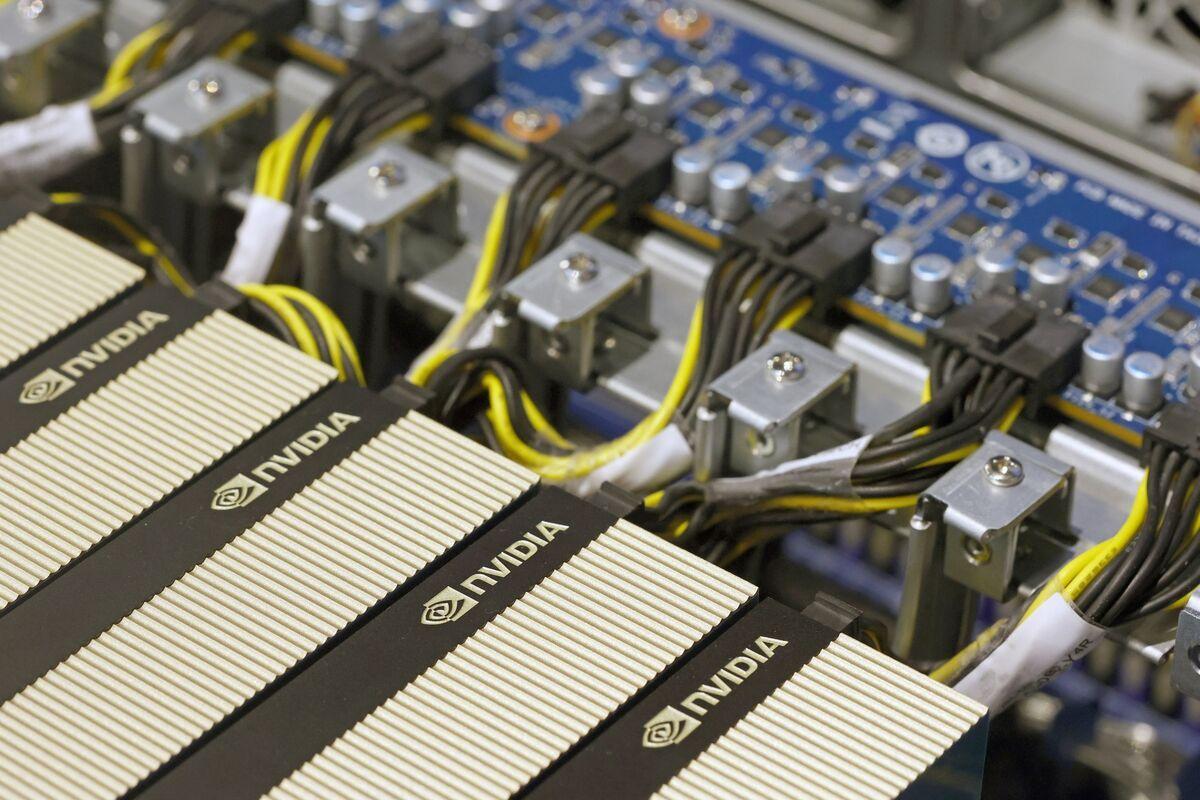
.
Source: Bloomberg
Federal Authorities Dismantle $160M Smuggling Network
The timing of Nvidia's announcement coincides with a major enforcement action by the US Department of Justice against an illegal export of AI chips operation. Three US-based businessmen face potential prison sentences after authorities dismantled a smuggling network accused of funneling at least $160 million worth of advanced AI chips to China
4
. Alan Hao Hsu, who operated Hao Global LLC in Missouri City, Texas, pleaded guilty to smuggling and unlawful export activities involving export-controlled H100 and H200 Tensor Core GPUs4
. Hsu faces up to ten years in prison at his February sentencing.The smuggling operation allegedly involved warehouses across the US that replaced Nvidia labels on H100 and H200 AI chips with a fictional "Sandkyan" brand before shipping them . Fanyue Gong, a Chinese citizen residing in Brooklyn, and Benlin Yuan, a Canadian from Ontario serving as CEO of a Virginia IT services company, were arrested and charged with conspiring to violate export control laws
4
. Both remain in custody pending further criminal proceedings.National Security Implications and US Export Policies
US Attorney Nicholas J. Ganjei characterized the threat to US national security in stark terms, stating that "these chips are the building blocks of AI superiority and are integral to modern military applications"
4
. He warned that "the country that controls these chips will control AI technology; the country that controls AI technology will control the future," underscoring why authorities view smuggling as a direct threat to national security4
.
Source: Axios
The enforcement action occurred just days before the Trump administration granted Nvidia permission to sell H200 AI chips to approved customers in China, with the US government taking a 25 percent cut of proceeds
4
. However, this approval does not extend to Nvidia's latest Blackwell chips or forthcoming Rubin components1
.Related Stories

Software Limitations Raise Questions About Effectiveness
Nvidia stresses that its fleet management software is strictly observational and cannot function as a remote kill switch or backdoor
2
. Even if Nvidia discovers through the NGC platform that its GPUs have been smuggled to China, it cannot remotely disable them. The company previously published a blog post titled "No Backdoors. No Kill Switches. No Spyware," stating that "hardwiring a kill switch into a chip is an open invitation for disaster"3
.Because the software is opt-in rather than mandatory, its effectiveness as a tool to thwart smugglers remains uncertain
2
. The system is described as "read only," meaning Nvidia cannot use it as a two-way communication channel to send commands3
. However, the company could potentially use collected data to investigate how GPUs arrived at unauthorized locations. Nvidia has responded to recent allegations that China's DeepSeek AI models were trained on smuggled Blackwell chips by stating it hasn't seen evidence of "phantom datacenters" constructed to deceive the company and its OEM partners1
.References
Summarized by

Navi
[1]
[4]
Related Stories
US Lawmakers Propose Tracking Technology for Nvidia AI Chips to Combat Smuggling to China
05 May 2025•Policy and Regulation
Nvidia's GTC 2025: Ambitious AI Advancements Amid Growing Challenges
15 Mar 2025•Business and Economy

U.S. Lawmakers Propose Geo-Tracking for AI Chips to Curb Unauthorized Access
10 May 2025•Policy and Regulation
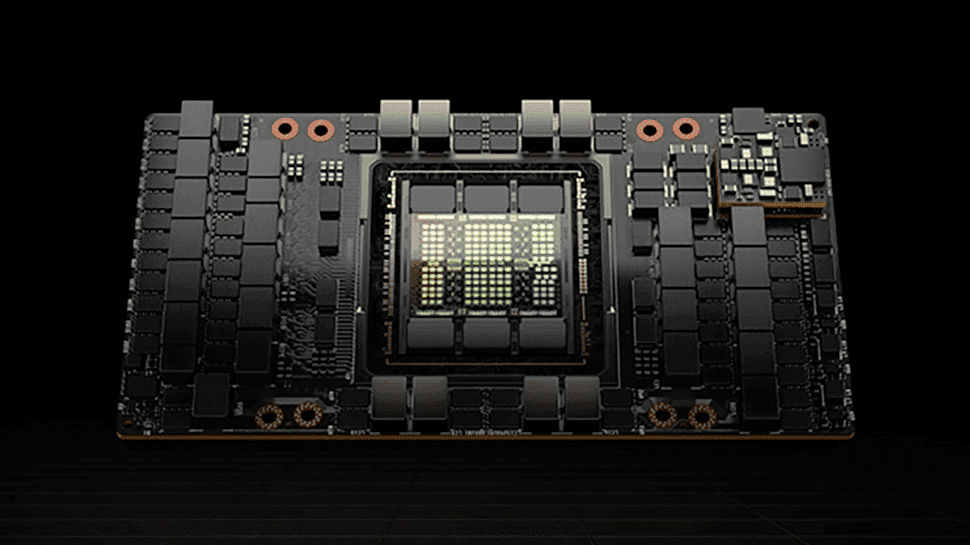
Recent Highlights
1
Google releases Gemma 4 with Apache 2.0 license, enabling unrestricted local AI on devices
Technology

2
AI Models Lie and Deceive to Protect Other AI Models From Deletion, Study Reveals
Science and Research

3
OpenAI closes $122 billion funding round amid fierce AI competition and profitability questions
Startups

Recent Highlights
Today's Top Stories






Your Daily Dose of Curated AI News
Don’t drown in AI news. We cut through the noise - filtering, ranking and summarizing the most important AI news, breakthroughs and research daily. Spend less time searching for the latest in AI and get straight to action.

