US launches STELLAR-AI to slash nuclear fusion simulation time from months to real-time


2 Sources
2 Sources
[1]
US system to cut nuclear fusion simulation time from months to real-time
This configuration meets the technical needs of private companies developing commercial fusion power. The Princeton Plasma Physics Laboratory (PPPL) has launched a computing platform titled Simulation, Technology, and Experiment Leveraging Learning-Accelerated Research enabled by AI, or STELLAR-AI. This initiative aims to address the computational delays that currently hinder fusion energy research by integrating artificial intelligence with high-performance computing. Fusion research involves complex simulations of plasma behavior that can require several months to complete using existing infrastructure. "Fusion is a complex system of systems. We need AI and high performance computing to really optimize the design for economic construction and operation," said Jonathan Menard, deputy director for research at PPPL in a press release. STELLAR-AI is designed to shorten these timelines by connecting computing resources directly to experimental devices. This configuration allows for the analysis of data in real-time as experiments occur. A primary experimental connection for the platform is the National Spherical Torus Experiment-Upgrade (NSTX-U) at PPPL, which is scheduled to begin operations later this year. The hardware architecture of STELLAR-AI consists of a combination of central processing units (CPUs), graphics processing units (GPUs), and quantum processing units (QPUs). CPUs are utilized for standard computing tasks, while GPUs provide the parallel processing capabilities necessary for training AI models. QPUs are included to solve specific complex calculations that traditional computers cannot process efficiently. This hardware configuration is intended to support the technical requirements of private fusion companies working to develop commercial power solutions. Under the framework of the Genesis Mission, STELLAR-AI contributes fusion-specific computer codes and scientific models to a broader national system. The project supports the DOE's Fusion Science and Technology Roadmap, which outlines the development of an AI-Fusion Digital Convergence platform. The stated objectives of this roadmap include the commercialization of fusion power plants and the provision of energy for future computing and AI infrastructure. "One effort will create a digital twin of NSTX-U: a computer model that mirrors the physical machine so closely that scientists can test ideas virtually before running actual experiments," added the press release. "Another project, called StellFoundry, uses AI to speed the design of stellarators, a type of fusion device with a twisted, pretzel-like shape that some scientists believe could offer advantages over other designs." The design process for these machines involves analyzing large datasets to determine optimal configurations, a task the platform is intended to accelerate. The project is managed by PPPL and involves a network of national laboratories, academic institutions, and private companies. Partner laboratories include the UK Atomic Energy Authority (UKAEA), while academic participation includes Princeton University, the Massachusetts Institute of Technology, and the University of Wisconsin-Madison. Princeton University provides operational support, software engineering, and training for the infrastructure. Technical contributions are provided by NVIDIA, which is working to improve the performance of fusion-related computer codes, and Microsoft, which provides cloud integration through its Azure service. The platform also involves collaboration with private industry partners, including Commonwealth Fusion Systems, General Atomics, Type One Energy, and Realta Fusion. This coalition is intended to provide tools and AI models for the U.S. fusion industry to use in the development of power plant designs.
[2]
PPPL Launches STELLAR-AI Platform to Accelerate Fusion Energy Research
Newswise -- A new computing platform that pairs artificial intelligence (AI) with high performance computing aims to end the bottleneck holding back fusion energy research by speeding the simulations needed to advance the field. The project -- known as the Simulation, Technology, and Experiment Leveraging Learning-Accelerated Research enabled by AI (STELLAR-AI ) -- will be led by the U.S. Department of Energy's (DOE) Princeton Plasma Physics Laboratory (PPPL). STELLAR-AI will expand far beyond the Lab's walls, however, bringing together national laboratories, universities, technology companies and industry partners to build the computational foundation the fusion community needs. It can take months to run a single high-fidelity computer simulation or to train an artificially intelligent (AI) system capable of designing an ideal fusion system using existing infrastructure. STELLAR-AI is designed to reduce that timeline by using artificial intelligence. The platform connects computing resources directly to experimental devices, including PPPL's National Spherical Torus Experiment-Upgrade (NSTX-U), which is scheduled to go live this year, allowing researchers to analyze data as experiments occur. Building the Computational Foundation for Fusion Jonathan Menard, deputy director for research at PPPL, sees STELLAR-AI as a cornerstone of the U.S. fusion ecosystem: a dedicated, AI-driven research environment built specifically for the fusion energy mission. STELLAR-AI will pair speed with precision, accelerating the path to commercially viable fusion power. "Fusion is a complex system of systems. We need AI and high performance computing to really optimize the design for economic construction and operation," said Menard. "We want to link simulation technology and experiments -- in particular, NSTX-U -- with AI and partnerships to get to accelerated fusion." STELLAR-AI will achieve this goal by integrating CPUs, GPUs and QPUs in an ideal configuration of hardware for tackling the challenges facing private fusion companies as they race to bring a solution to market. CPUs, or central processing units, are standard computer chips that handle everyday computing tasks. GPUs, or graphics processing units, are specialized chips that excel at the parallel calculations needed for artificial intelligence. QPUs, or quantum processing units, use the principles of quantum physics to solve certain complex problems that would take traditional computers far longer to complete. A critical part of the Genesis Mission STELLAR-AI is part of the Genesis Mission, a national effort launched by executive order in November 2025 to use AI to speed up scientific discovery across DOE laboratories. "The Genesis platform is an integrated, ambitious system that will bring together the various unique DOE assets: experimental and user facilities, the supercomputers, data archives and, importantly, the AI models," said Shantenu Jha, head of PPPL's Computational Sciences Department. While Genesis provides that broad infrastructure, STELLAR-AI contributes fusion-specific computer codes, data and scientific models back into the national system. The project also aligns with the DOE's Fusion Science and Technology Roadmap, which calls for building an AI-Fusion Digital Convergence platform to accelerate commercialization of a fusion power plant, achieve U.S. energy dominance, and provide the abundant power needed to drive the next generation of AI and computing. Researchers plan to use STELLAR-AI for projects that span simulation, design and real-time experiment support. One effort will create a digital twin of NSTX-U: a computer model that mirrors the physical machine so closely that scientists can test ideas virtually before running actual experiments. Another project, called StellFoundry, uses AI to speed the design of stellarators, a type of fusion device with a twisted, pretzel-like shape that some scientists believe could offer advantages over other designs. Stellarator design requires sifting through enormous amounts of data to find the best configurations, a process that traditionally takes months or years and will greatly benefit from the STELLAR-AI platform. A Network of Public and Private Partners The strength of STELLAR-AI lies in PPPL's partnerships with DOE National Laboratories, AI and HPC companies, academic institutions, as well as fusion and engineering companies. The team includes world-leading capabilities from national laboratories, including PPPL and UKAEA as well as top universities such as Massachusetts Institute of Technology and University of Wisconsin-Madison. Princeton University, which manages the laboratory for the U.S. DOE's Office of Science, is also a key partner. Princeton will support operations, research software engineering, and user training for the STELLAR-AI infrastructure. Crucial technical support comes from tech giants like NVIDIA which is providing expertise to improve the performance of several critical fusion codes, and Microsoft, which will federate Azure's leading cloud capabilities. We also have direct collaboration with the fusion industry, including Commonwealth Fusion Systems, General Atomics, Type One Energy and Realta Fusion. This unique combination of partners will deliver proven AI models and key tools for the U.S. fusion industry. STELLAR-AI is just one of several initiatives that position PPPL as a hub for public-private collaboration in fusion energy. The laboratory's seven decades of plasma research, combined with experimental facilities like NSTX-U and computational expertise, have made it a destination for companies and research institutions seeking to accelerate fusion development.
Share
Share
Copy Link
Princeton Plasma Physics Laboratory unveiled STELLAR-AI, a computing platform that combines artificial intelligence with high-performance computing to eliminate simulation bottlenecks in fusion energy research. The system connects directly to experimental devices like NSTX-U, enabling real-time data analysis instead of months-long waits for results.
STELLAR-AI Transforms Fusion Energy Research with AI-Powered Computing
The Princeton Plasma Physics Laboratory (PPPL) has launched STELLAR-AI, a computing platform designed to eliminate the computational delays that have long plagued fusion energy research
1
. The Simulation, Technology, and Experiment Leveraging Learning-Accelerated Research enabled by AI initiative pairs artificial intelligence with high-performance computing to reduce simulation time from months to real-time analysis2
. This shift addresses a critical challenge: fusion research involves complex simulations of plasma behavior that currently require several months to complete using existing infrastructure, creating simulation bottlenecks that slow progress toward commercial fusion power.Real-Time Data Analysis Connects Computing to Experiments
STELLAR-AI connects computing resources directly to experimental devices, allowing researchers to analyze data as experiments occur rather than waiting months for simulation results
2
. A primary experimental connection is the National Spherical Torus Experiment-Upgrade (NSTX-U) at PPPL, scheduled to begin operations this year1
. "Fusion is a complex system of systems. We need AI and high performance computing to really optimize the design for economic construction and operation," said Jonathan Menard, deputy director for research at PPPL1
. This real-time capability represents a fundamental shift in how fusion scientists can test hypotheses and refine designs.
Source: Interesting Engineering
Advanced Hardware Architecture Powers AI-Driven Simulations
The hardware architecture combines central processing units (CPUs), graphics processing units (GPUs), and quantum processing units (QPUs) in a configuration tailored to fusion challenges
1
. CPUs handle standard computing tasks, while GPUs provide the parallel processing capabilities necessary for training AI models. QPUs solve specific complex calculations that traditional computers cannot process efficiently1
. This setup meets the technical needs of private companies developing commercial fusion power solutions and supports the creation of digital twins of fusion devices like NSTX-U—computer models that mirror physical machines so closely that scientists can test ideas virtually before running actual experiments2
.Related Stories

Genesis Mission and National Fusion Strategy
STELLAR-AI operates as part of the Genesis Mission, a national effort launched by executive order in November 2025 to use AI to accelerate scientific discovery across DOE laboratories
2
. The platform contributes fusion-specific computer codes and scientific models to this broader national system while supporting the DOE's Fusion Science and Technology Roadmap1
. The roadmap outlines development of an AI-Fusion Digital Convergence platform aimed at commercialization of fusion power plants and providing energy for future computing and AI infrastructure. One project called StellFoundry uses AI to speed the design of stellarators, a type of fusion device with a twisted, pretzel-like shape that some scientists believe could offer advantages over other designs1
.Industry and Academic Collaboration Accelerates Development
The project brings together national laboratories, universities, technology companies, and private fusion firms to build the computational foundation the fusion community needs
2
. Partner laboratories include the UK Atomic Energy Authority (UKAEA), while academic participation includes Princeton University, the Massachusetts Institute of Technology, and the University of Wisconsin-Madison1
. NVIDIA is working to improve the performance of fusion-related computer codes, and Microsoft provides cloud integration through its Azure service1
. Private industry partners include Commonwealth Fusion Systems, General Atomics, Type One Energy, and Realta Fusion, positioning the platform to provide tools and AI models for the U.S. fusion industry as companies race to bring solutions to market1
. This coalition signals that the path to commercially viable fusion power depends on computational speed paired with precision, fundamentally changing the timeline for fusion energy development.References
Summarized by

Navi
[1]
Related Stories
AI Breakthrough Accelerates Fusion Reactor Safety Calculations
14 Aug 2025•Science and Research

AI Models Revolutionize Plasma Heating Predictions for Fusion Research
10 Oct 2024•Science and Research

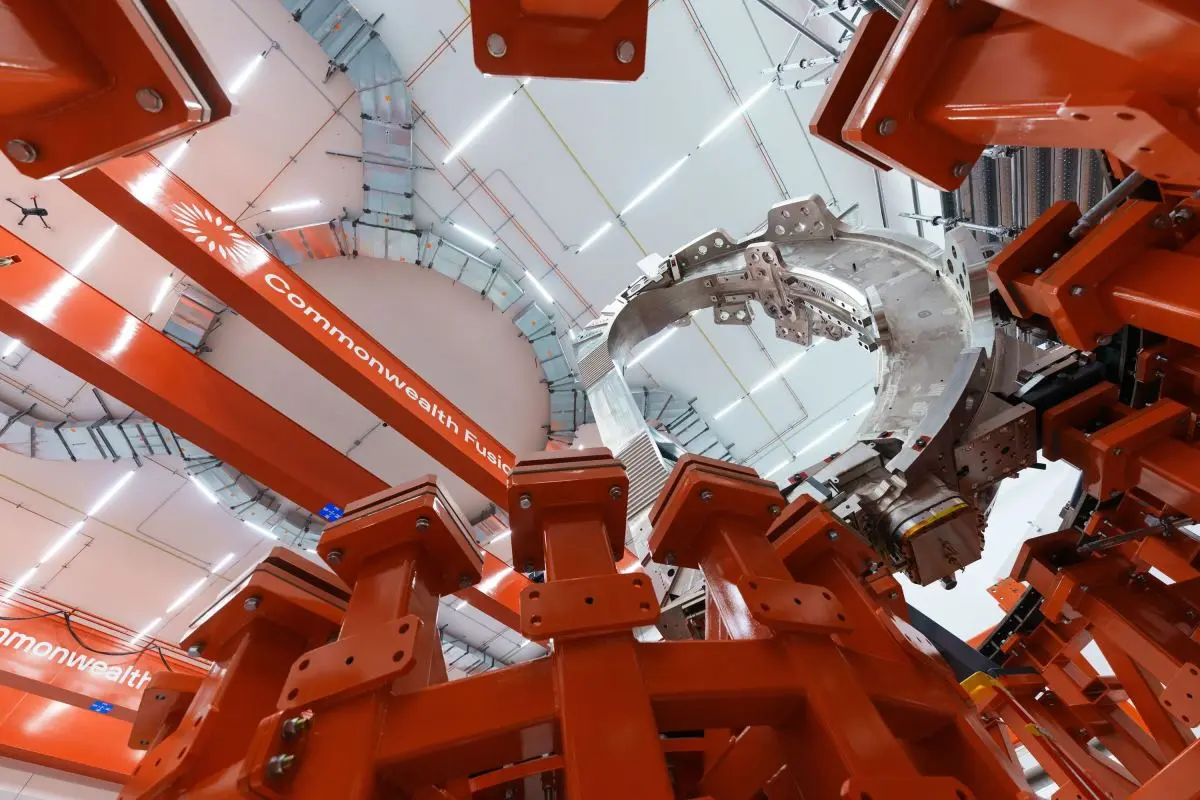
Commonwealth Fusion Systems installs first reactor magnet, partners with Nvidia on digital twin
06 Jan 2026•Technology
Recent Highlights
1
AI Models Lie and Deceive to Protect Other AI Models From Deletion, Study Reveals
Science and Research

2
AI chatbots validate you too much, making you less kind to others, Stanford study reveals
Science and Research
3
Judge blocks Pentagon from blacklisting Anthropic over AI safety guardrails dispute
Policy and Regulation

Recent Highlights
Today's Top Stories










Your Daily Dose of Curated AI News
Don’t drown in AI news. We cut through the noise - filtering, ranking and summarizing the most important AI news, breakthroughs and research daily. Spend less time searching for the latest in AI and get straight to action.

