Commonwealth Fusion Systems installs first reactor magnet, partners with Nvidia on digital twin


4 Sources
[1]
Commonwealth Fusion Systems installs reactor magnet, lands deal with Nvidia | TechCrunch
Commonwealth Fusion Systems (CFS) said on Tuesday at CES 2026 that it had installed the first magnet in its Sparc fusion reactor, the demonstration device that it hopes to turn on next year. The magnet is the first of 18 that, when the reactor is complete, will create a doughnut-like shape that
[2]
This fusion energy startup aims to use AI to speed breakthroughs
Why it matters: Fusion, the energy that powers stars, has long had unrealized potential to provide vast swaths of clean, stable electricity for the AI boom and to cut emissions. Driving the news: Commonwealth Fusion Systems (CFS), leveraging data from Siemens and an AI platform from Nvidia, is
[3]
Fusion power nearly ready for prime time as Commonwealth builds first pilot for limitless, clean energy with AI help from Siemens, Nvidia | Fortune
Fusion power industry leader Commonwealth Fusion Systems is building its first demonstration plant utilizing the same process that fuels the sun, and now it's partnering with Siemens and Nvidia to use AI to eventually help power the AI boom. Essentially marking the debut of fusion power at CES
[4]
CES 2026: Fusion reactor breakthrough presents solution for AI's power crisis
At CES 2026, US-based power company Commonwealth Fusion Systems (CFS) announced the installation of the initial magnet for its Sparc fusion reactor. This magnet is the first of 18 planned units that will combine to contain and pressurize extreme temperature plasma. Bob Mumgaard, CEO of CFS said
Share
Copy Link
Commonwealth Fusion Systems installed the first of 18 magnets for its Sparc fusion reactor at CES 2026, marking a key milestone toward achieving net energy gain by 2027. The company announced partnerships with Nvidia and Siemens to create a digital twin of the reactor, aiming to compress years of experimentation into weeks and deliver limitless clean energy for powering AI datacenters by the early 2030s.
Commonwealth Fusion Systems Advances Sparc Fusion Reactor Construction
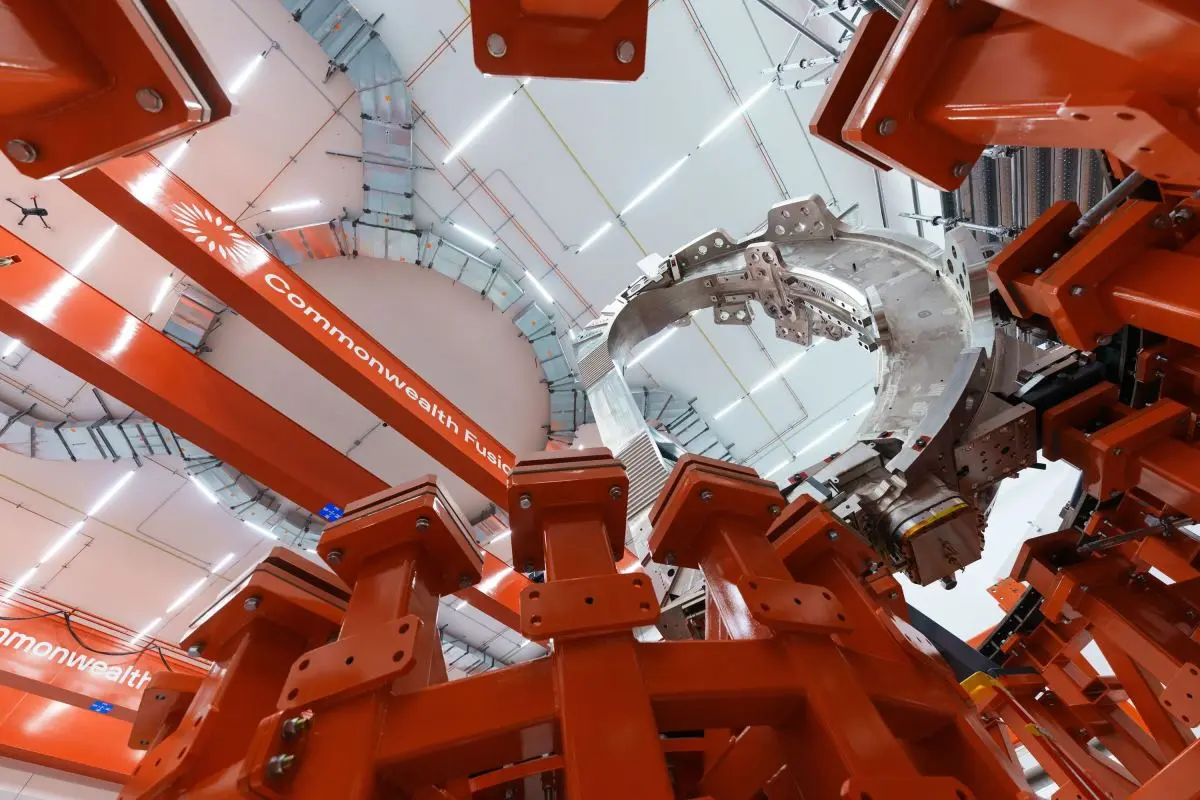
Commonwealth Fusion Systems announced at CES 2026 that it successfully installed the first magnet in its Sparc fusion reactor, a demonstration device the company plans to activate in 2027
1
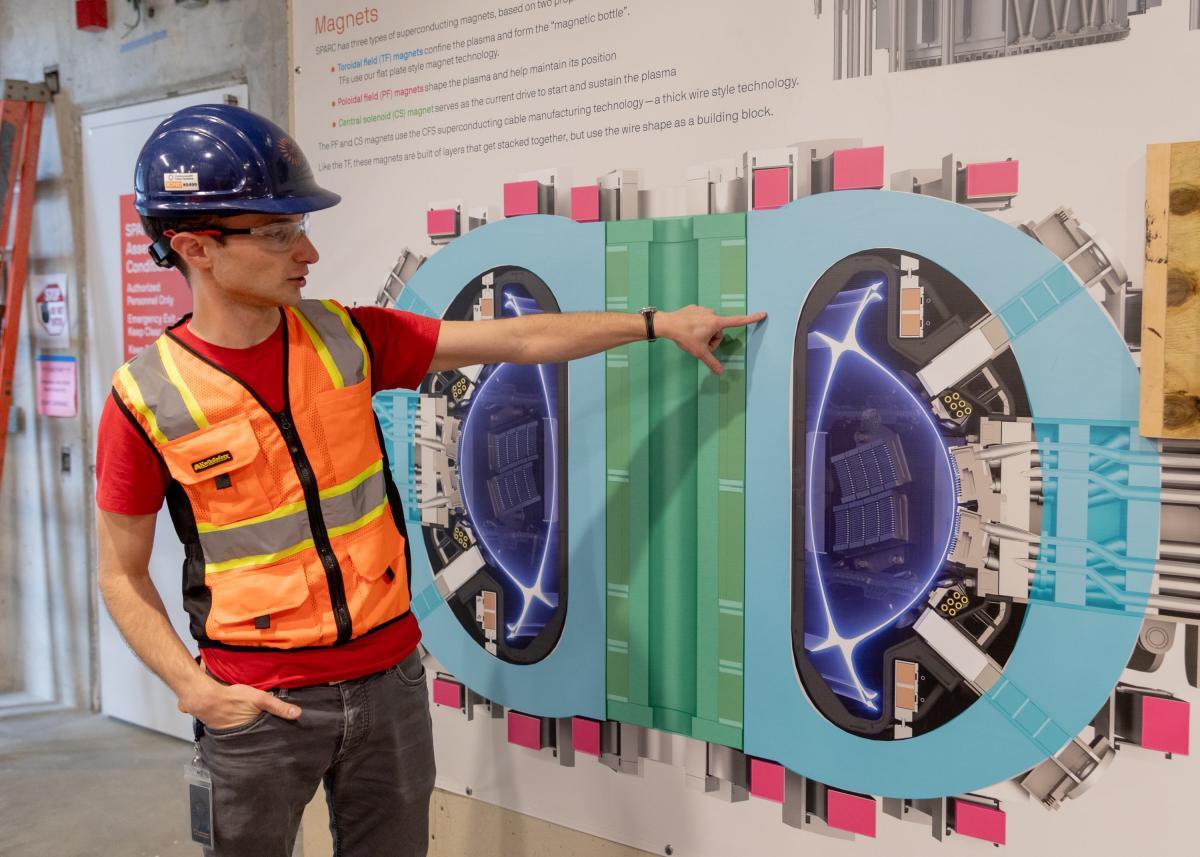
. The magnet represents the initial component of 18 D-shaped superconducting magnets that will form a doughnut-like structure designed to confine and compress superheated plasma1
. Bob Mumgaard, co-founder and CEO of Commonwealth Fusion Systems, expects all 18 magnets to be installed by the end of summer 2026, stating the installation will proceed rapidly throughout the first half of the year1
.
Source: TechCrunch
Each magnet weighs approximately 24 tons—comparable to four adult African elephants—and can generate a 20 tesla magnetic field, roughly 13 times stronger than a typical MRI machine
1
2
. The magnets will be cooled to -253°C (-423°F) to safely conduct over 30,000 amps of current, while the plasma inside burns at more than 100 million degrees Celsius1
. The magnets sit upright on a 24-foot wide, 75-ton stainless steel cryostat that was positioned last March1
.
Source: Axios
AI and Digital Twin Partnership to Accelerate Fusion Development
Commonwealth Fusion Systems revealed a partnership with Nvidia and Siemens to develop a digital twin of the Sparc fusion reactor, marking a concrete example of how AI can accelerate energy innovation
2
. Siemens is supplying the design and manufacturing software, while Nvidia provides its Omniverse platform to create the virtual replica1
4
. The announcement was made on the main stage at CES in Las Vegas, with Mumgaard joined by Nvidia CEO Jensen Huang and Siemens CEO Roland Busch2
.Mumgaard explained that the digital twin will enable the company to compress years of manual experimentation into weeks of virtual optimization, allowing CFS to test parameters and run experiments before applying them to the physical reactor
2
1
. Unlike previous isolated simulations used solely for design, the digital twin will run alongside the physical machine continuously, enabling constant comparison and faster learning1
. This partnership follows an October announcement where Google DeepMind partnered with Commonwealth Fusion Systems to accelerate specific aspects of plasma physics—if the digital twin is the virtual airplane, the DeepMind partnership functions as the co-pilot, according to a CFS spokesperson2
3
.Fusion Energy Breakthroughs Target Net Energy Gain by 2027
Commonwealth Fusion Systems aims to achieve a critical technical milestone in 2027 by generating net energy gain at its demonstration machine—producing more energy than it consumes to heat and compress the plasma
1
2
. The Sparc fusion reactor, being constructed outside Boston, will produce its first plasma energy in 2027 and will be nearly complete by the end of 20263
4
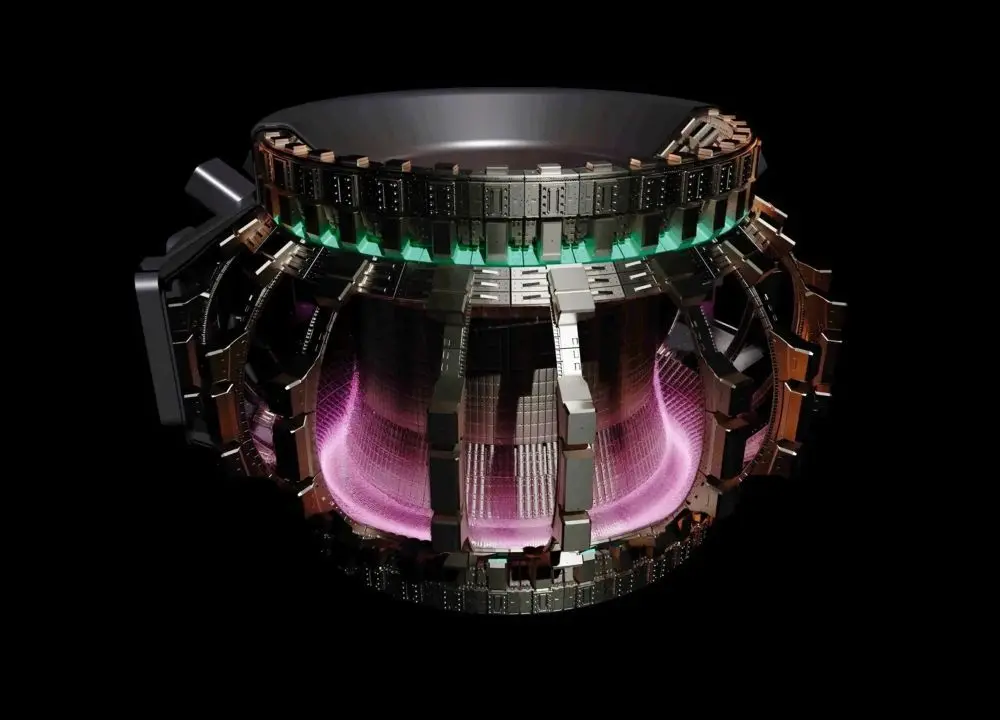
.The company utilizes tokamak technology—a toroidal chamber magnetic design that traps plasma in a high-temperature, superconducting magnetic field
3
. Fusion energy works by fusing hydrogen found in water into an extremely hot, electrically charged plasma state to create helium, the same process that powers the sun3
. If successful, this process could unlock limitless clean energy without radioactive waste, intermittency issues, or dependence on foreign supply chains3
.
Source: CXOToday
Related Stories
Powering AI Datacenters and Addressing the AI Power Crisis
The push toward fusion energy comes as tech giants face mounting pressure to meet the exponential power demands of AI while maintaining climate commitments. According to the International Energy Agency, worldwide electricity consumption of datacenters will more than double by 2030, reaching 945 TWh—exceeding Japan's total power consumption
4
. AMD CEO Lisa Su stated at CES 2026 that around 5 billion people will be using AI by 2030, requiring 10 yottaflops of compute power—10,000 times more than in 20224
.Meta's carbon emissions increased by 38% in 2024, while Google's carbon emissions grew by 65% between 2019 and 2025, derailing their climate goals due to generative AI demands
4
. Commonwealth Fusion Systems' first commercial plant, ARC, is slated to come online in the early 2030s near Richmond, Virginia, with a 400-megawatt capacity sufficient to power approximately 300,000 homes3
. Building Sparc has cost nearly $3 billion to date, including an $863 million Series B2 round in August with investments from Nvidia, Google, and nearly three dozen other investors1
. The ARC commercial plant will likely cost several billion dollars more1
.Competition Intensifies in Race to Deliver Fusion to Power Grid
Commonwealth Fusion Systems leads the fusion sector in funding and contracts, having been founded in 2018 as a spinoff from MIT and backed by investors including Nvidia, Google, Mitsubishi, and Bill Gates
3
. However, competition is intensifying. In December, Trump Media & Technology Group and fusion developer TAE Technologies announced a $6 billion merger to become the first fusion company to go public3
. Mumgaard responded diplomatically, noting that fusion has been bipartisan and should remain so3
.Another competitor, Helion, backed by OpenAI's Sam Altman and SoftBank, aims to build a fusion plant east of Seattle to power Microsoft datacenters
3
. Charles Boakye, an equity analyst for sustainability at Jefferies, noted that large tech companies are pulling forward innovation across several energy areas, including demand-response technology and load flexibility solutions2
. While Mumgaard declined to specify exact timeline acceleration from AI applications, he expressed confidence that hindsight will reveal a meaningful acceleration, emphasizing the urgency for fusion to reach the power grid1
2
.References
Summarized by

Navi
[1]
Related Stories
Commonwealth Fusion Systems Secures $863M in Funding to Advance Nuclear Fusion Technology
29 Aug 2025•Business and Economy
Google DeepMind Partners with CFS to Accelerate Fusion Energy Development Using AI
16 Oct 2025•Technology

Google Inks Landmark Deal for Fusion Power with Commonwealth Fusion Systems
01 Jul 2025•Business and Economy
Recent Highlights



Recent Highlights
Today's Top Stories



Don’t drown in AI news. We cut through the noise - filtering, ranking and summarizing the most important AI news, breakthroughs and research daily. Follow topics that matter to you and stay ahead.


