US Supreme Court declines AI-generated art copyright case, upholding human authorship requirement


12 Sources
12 Sources
[1]
Supreme Court Declines Case on Granting Copyright to AI-Created Art
A piece of AI-generated art is still the subject of a prolonged legal fight, 14 years after its creation. A legal battle over AI copyright that has gone on for more than a decade may have reached its end, with the US Supreme Court declining to hear a case involving AI-generated visual art. The subject of the case is an image created by computer scientist Stephen Thaler in 2012, titled "A Recent Entrance to Paradise," using an AI tool he also created, DABUS. Thaler applied for a copyright for his visual art in 2018, but the application was eventually rejected by the US Copyright Office on the grounds that creative works must have human authorship to be eligible. A district court later upheld the decision. Thaler's legal team argued that because he created the system that generated the artwork, he is, in effect, its author. "Other countries, like China and the United Kingdom, already permit copyright protection for AI-generated works. But the Copyright Office's reliance on its own nonstatutory requirements have led to an improper cabining of United States copyright law in contradiction of this Court's precedent that copyright law should accommodate technological progress," the filing alleges. In an email to CNET, Thaler says that although the court declined to hear his appeal, "I see this moment as a philosophical milestone rather than a defeat." While he's unsure if legal action will continue, Thaler says he's still certain that the law on copyright, as written, is intended to exclude nonhuman inventors. "By bringing DABUS into the legal system, I confronted a question long confined to theory: whether invention and creativity must remain tied to humans or whether autonomous computational processes could genuinely originate ideas," Thaler says. He previously alleged to the court that the Copyright Office's decision would cause a negative impact on AI development and its use by creative industries in the important nascent years of the technology's development. He warns that the Copyright Office's current rules could create a "perfect storm" of low-quality AI-generated content that will continue to flood the internet and a wave of lawsuits from humans claiming ownership over work they didn't create. "The law is lagging behind what technology can already do," Thaler says. "The court addressed what the statute currently allows. It did not address what technology has already achieved." The US Copyright Office didn't immediately respond to a request for comment.
[2]
Supreme Court won't hear AI-generated art copyright case
The US Supreme Court has declined to hear a case over whether AI-generated art can obtain a copyright, as reported earlier by Reuters. The Monday decision comes after Stephen Thaler, a computer scientist from Missouri, appealed a court's decision to uphold a ruling that found AI-generated art can't be copyrighted. In 2019, the US Copyright Office rejected Thaler's request to copyright an image, called A Recent Entrance to Paradise, on behalf of an algorithm he created. The Copyright Office reviewed the decision in 2022 and determined that the image doesn't include "human authorship," disqualifying it from copyright protection. After Thaler appealed the decision, US District Court Judge Beryl A. Howell ruled in 2023 that "human authorship is a bedrock requirement of copyright." That ruling was later upheld in 2025 by a federal appeals court in Washington, DC. As reported by Reuters, Thaler asked the Supreme Court to review the ruling in October 2025, arguing it "created a chilling effect on anyone else considering using AI creatively." Last year, the Copyright Office issued new guidance that says AI-generated artwork based on text prompts isn't protected by copyright. The Supreme Court's decision follows several attempts by Thaler to copyright and patent the output from his AI systems. The US federal circuit court similarly determined that AI systems can't patent inventions because they aren't human, which the US Patent Office reaffirmed in 2024 with new guidance, stating that while AI systems can't be listed as inventors on a patent, people can still use AI-powered tools to develop them. The UK Supreme Court made a similar determination in a case brought forward by Thaler.
[3]
AI Art Remains Ineligible for Copyright As Supreme Court Declines to Hear Case
AI-generated images are all over the internet, but it won't be possible to copyright them for the time being. As Reuters reports, the US Supreme Court has declined to hear a case on whether AI art can be copyrighted, upholding a lower court's decision to reject the idea. The case was filed by Stephen Thaler, a computer scientist from Missouri, who requested copyright registration for an image generated by his own AI technology, called DABUS, in 2018. The image, titled "A Recent Entrance to Paradise," shows a railway track surrounded by lush greenery. Thaler identified his "Creativity Machine" as the author and sought a copyright claim as the owner of the machine. His application was denied by the US Copyright Office in 2019 and again in 2022, citing the requirement that copyrighted material must have human inventors. A federal judge in Washington upheld that decision in 2023, and the US Court of Appeals did the same in 2025. In the meantime, Thaler tried getting DABUS' creations copyrighted by the UK Supreme Court and in the EU. Both rejected his request. Notably, the US Supreme Court had refused to hear Thaler's case on some other materials generated by his AI in 2023. This time around, even the Trump administration didn't want the Supreme Court to entertain the case, Reuters reports. Unsurprisingly, Thaler's lawyers are upset with the outcome and said that even if the Supreme Court overturns the decision in the future, it would be too late. "The Copyright Office will have irreversibly and negatively impacted AI development and use in the creative industry during critically important years," the lawyers told Reuters. Meanwhile, late last year, the US Patent and Trademark Office (USPTO) declared that, "Artificial intelligence systems, regardless of their sophistication, cannot be named as inventors or joint inventors on a patent application, as they are not natural persons."
[4]
US Supreme Court declines to hear dispute over copyrights for AI-generated material
WASHINGTON, March 2 (Reuters) - The U.S. Supreme Court declined on Monday to take up the issue of whether art generated by artificial intelligence can be copyrighted under U.S. law, turning away a case involving a computer scientist from Missouri who was denied a copyright for a piece of visual art made by his AI system. Plaintiff Stephen Thaler had appealed to the justices after lower courts upheld a U.S. Copyright Office decision that the AI-crafted visual art at issue in the case was ineligible for copyright protection because it did not have a human creator. Thaler, of St. Charles, Missouri, applied for a federal copyright registration in 2018 covering "A Recent Entrance to Paradise," visual art he said his AI technology "DABUS" created. The image shows train tracks entering a portal, surrounded by what appears to be green and purple plant imagery. The Copyright Office rejected his application in 2022, finding that creative works must have human authors to be eligible to receive a copyright. U.S. President Donald Trump's administration had urged the Supreme Court not to hear Thaler's appeal. The Copyright Office has separately rejected bids by artists for copyrights on images generated by the AI system Midjourney. Those artists argued that they were entitled to copyrights for images they created with AI assistance - unlike Thaler, who said his system created "A Recent Entrance to Paradise" independently. A federal judge in Washington upheld the office's decision in Thaler's case in 2023, writing that human authorship is a "bedrock requirement of copyright." The U.S. Court of Appeals for the District of Columbia Circuit affirmed the ruling in 2025. Thaler's lawyers told the Supreme Court in a filing that his case was of "paramount importance" considering the rapid rise of generative AI. With a refusal by the court to hear the appeal, Thaler's lawyers said, "even if it later overturns the Copyright Office's test in another case, it will be too late. The Copyright Office will have irreversibly and negatively impacted AI development and use in the creative industry during critically important years." "Although the Copyright Act does not define the term 'author,' multiple provisions of the act make clear that the term refers to a human rather than a machine," the administration said. The Supreme Court previously rejected Thaler's request, opens new tab to hear his argument in a separate case involving prototypes for a beverage holder and a light beacon concerning whether AI-generated inventions should be eligible for U.S. patent protection. His patent applications were rejected by the U.S. Patent and Trademark Office on similar grounds. Reporting by Blake Brittain in Washington; Editing by Will Dunham Our Standards: The Thomson Reuters Trust Principles., opens new tab Blake Brittain Thomson Reuters Blake Brittain reports on intellectual property law, including patents, trademarks, copyrights and trade secrets, for Reuters Legal. He has previously written for Bloomberg Law and Thomson Reuters Practical Law and practiced as an attorney.
[5]

The Supreme Court doesn't care if you want to copyright your AI-generated art
As AI-generated artwork becomes more commonplace, it still won't be able to be copyrighted, according to US courts. On Monday, the US Supreme Court declined to hear a case about whether an artwork generated with the help of AI can be copyrighted. The refusal means that a lower court's decision to reject the copyright request will stand. The case dates back to 2018 when Stephen Thaler applied for a copyright of an artwork called A Recent Entrance to Paradise. Unlike using ChatGPT or Midjourney, Thaler, a computer scientist, created an AI system that generated the artwork in question. However, the US Copyright Office rejected his application in 2022 on the grounds that it wasn't made by a human author. Thaler sought appeals at higher courts, but ultimately had to escalate the case to the Supreme Court after both a federal judge in Washington and the US Court of Appeals ruled against him. With a refusal from the highest court in the US, it's unlikely Thaler's case can continue. The US Supreme Court could always hear a related case in the future, but Thaler's lawyers said, "even if it later overturns the Copyright Office's test in another case, it will be too late," adding that the decision will have negatively impacted the creative industry during "critically important years." It's worth noting that Thaler also filed applications to the US Patent and Trademark Office for AI-generated inventions, which were rejected for similar reasons.
[6]

The US Supreme Court is not interested in enforcing copyright for AI-generated images
Serving tech enthusiasts for over 25 years. TechSpot means tech analysis and advice you can trust. Some Good AI News: A lone man's dream of turning his autonomous system into the first case of proper AI copyright has come to an end. The highest court in the US just refused to hear the case, thereby implicitly reaffirming the principle that generative AI's output can neither be protected by the law nor earn digital "AI creators" any money anytime soon. Computer scientist Stephen Thaler has repeatedly tried to turn an AI-generated image into copyrightable material, but the US Supreme Court has now declined to even hear his arguments. Thaler created the Device for the Autonomous Bootstrapping of Unified Sentience (DABUS) AI system, which was listed as the author of an image full of mangled pixels named "A Recent Entrance to Paradise." The Missouri-based developer first asked to copyright DABUS' output in 2018, but the US Copyright Office declined his request. Content and art generated by DABUS cannot be considered as worthwhile inventions, because a human creator is still required to be in the loop. The USPTO later updated its guidance on generative-AI initiatives, stating that humans need to make a significant contribution to any invention seeking the protection of the law. The US Supreme Court had already rejected Thaler's attempt to patent DABUS' alleged original ideas, and is now upholding the previous decision by the USPTO as well. In the 2023 case, the Copyright Office stated that human authorship remains a "bedrock requirement of copyright," while Thaler's lawyers tried to influence the SCOTUS role on the rapid growth of the generative AI business. "The Copyright Office will have irreversibly and negatively impacted AI development and use in the creative industry during critically important years," Thaler's lawyers said after the USPTO rejected the patent application. Thaler also tried to patent content generated through DABUS in other parts of the world. The UK Supreme Court rejected his application in 2023, stating that patents can only be registered by humans or human-made companies. He received similar responses from courts in the European Union and Australia, while he scored his only victory in South Africa. The latest SCOTUS refusal might be the last step in DABUS' journey towards copyrightability. Generative AI technology is now inspiring an increasingly heated debate within the creative industry, and AI companies are trying to set a meaningful precedent that would legitimate their commercial endeavors. DABUS and "traditional" chatbots such as ChatGPT may be two different kinds of AI technology, but the SCOTUS refusal to even hear the case could have lasting consequences for the generative-AI market. The court ultimately aligned with the Donald Trump administration, which asked the Supreme Court not to hear Thaler's arguments.
[7]

Supreme Court Declines to Hear AI Image Copyright Case
The United States Supreme Court has ended the long saga over whether an AI can be registered as the author of an artwork after it declined to take up the case brought by computer scientist Dr. Stephen Thaler. Thaler has long sought copyright registration for an image titled "A Recent Entrance to Paradise," which he says was created independently by his AI system, which he calls the Creativity Machine. But the Supreme Court's decision leaves in place lower court rulings that rejected Thaler's claims. Thaler first applied for copyright registration back in 2018 when he listed the machine as the creator. The artwork depicts train tracks leading into a portal, framed by what appears to be green and purple plant imagery. In 2019, the U.S. Copyright Office denied the application. After reviewing the matter again in 2022, the agency concluded the image lacked "human authorship," making it ineligible for copyright protection. The office has maintained that creative works must have human authors to qualify. Thaler challenged the decision in federal court. In 2023, U.S. District Judge Beryl A. Howell upheld the Copyright Office's decision, writing that human authorship is a "bedrock requirement of copyright." The U.S. Court of Appeals for the District of Columbia Circuit affirmed that ruling in 2025. Thaler then asked the Supreme Court to review the case, arguing that the lower court's decision "created a chilling effect on anyone else considering using AI creatively." Reuters reports his lawyers argue the dispute is of "paramount importance" given the rapid development of generative AI. After the court declined to hear the appeal, they said, "even if it later overturns the Copyright Office's test in another case, it will be too late. The Copyright Office will have irreversibly and negatively impacted AI development and use in the creative industry during critically important years." The Trump administration urged the justices not to take up the case. "Although the Copyright Act does not define the term 'author,' multiple provisions of the act make clear that the term refers to a human rather than a machine," the Department of Justice says. The Copyright Office has also rejected applications from artists seeking protection for images generated using the AI system Midjourney, though those applicants argued they used AI as a tool rather than claiming the system acted independently.
[8]

Supreme Court refuses to challenge ruling that denied copyright for AI art
The Trump administration had urged the court to deny the appeal. Credit: Win McNamee / Staff / Getty Images North America via Getty Images The highest court in the land has decided not to hear a case on whether AI-generated art can be copyrighted under U.S. law, as the battle over digital creation continues. On Monday, the U.S. Supreme Court declined to hear an appeal involving an artist refused copyright for digital art created by a personal AI software. Plaintiff Stephen Thaler filed for copyright of a piece of moving digital art in 2018. The application was rejected by the U.S. Copyright Office in 2022. The office argued that the Missouri computer scientist's art was not eligible for copyright protection because it was not created by a human. The decision preceded a 2025 report by the U.S. Copyright Office that offered further interpretation of the law and eligibility for copyright shelter, writing that "unedited outputs of generative AI tools" wouldn't qualify for protection. The report added that art facilitated by AI but "retained the centrality of human creativity" could be eligible, but not expressive elements solely determined by a machine. The copyright of AI-generated and AI-assisted works of art remains an ongoing battle. The office has previously rejected copyright claims by artists who argue certain forms of art created with the assistance of AI tools -- rather than art generated independently by AI software -- should fall under the 2025 interpretation of U.S. copyright law. Thaler has also appealed to the Supreme Court over rejected U.S. Patent and Trademark Office applications, urging the court to decide whether or not AI-generated inventions are eligible for U.S. patent protection. The Trump administration had been placing pressure on the court to deny hearing Thaler's copyright case, CNBC reports. Thaler's lawyers expressed disappointment in the court's decision not to take the case. "Even if it later overturns the Copyright Office's test in another case, it will be too late. The Copyright Office will have irreversibly and negatively impacted AI development and use in the creative industry during critically important years."
[9]

The Supreme Court Just Dealt a Crushing Blow to "AI Artists"
Can't-miss innovations from the bleeding edge of science and tech Proponents of generative AI say the tech has greatly lowered the barriers of entry in the art world, allowing practically anybody with internet access to dream up competently-executed landscapes, portraits, sketches and comics -- all without any talent whatsoever. Critics say it's the lowest common denominator of human expression, outsourcing to bloated algorithms that feasted on copyrighted materials while exploiting human artists who have yet to be fairly remunerated for having their life's work be thrown into the AI wood chipper. The raging debate has metastasized into a prolonged legal battle, with some attempting to uphold the legitimacy of AI-generated art by arguing it's copyrightable -- efforts that have met a major obstacle in the form of a recent Supreme Court decision. In 2022, not long before text-to-image generative AI tools like Midjourney went mainstream, the US Copyright Office rejected computer scientist Stephen Thaler's request to copyright his AI-generated image, titled "A Recent Entrance to Paradise." After several years of back and forth, including an appeal, a US district court judge ruling that the work couldn't be protected since it didn't have a human creator, and eventually an affirming of said ruling in 2025, the case finally made it to the US Supreme Court. And now, as Reuters reports, the country's highest court has declined to hear the ongoing dispute, dealing a crushing blow to those who argue that AI-generated art should be eligible for copyright like human-created works. It's an especially thorny situation, considering AI companies are embroiled in a number of lawsuits over alleged copyright infringement of their own. Image generator Midjourney, for instance, was sued by Warner Bros. Discovery last year. Artists also filed a lawsuit in 2024 against Google after finding their work had been scraped by the company's AI. OpenAI's ChatGPT and text-to-video generating app, Sora, can also easily be used to generate images and videos of copyrighted characters. That hasn't stopped a number of AI enthusiasts, including Thaler, from seeking copyright for their AI-generated work. Some of them have gone as far as to complain that their prompts are being plagiarized by other "artists." "Although the Copyright Act does not define the term 'author,' multiple provisions of the act make clear that the term refers to a human rather than a machine," the Trump administration told Reuters in a statement. Apart from copyrighting his artwork, Thaler also applied for patents for a food container and search and rescue beacon in 2018, arguing he wasn't the inventor, but that an AI machine, dubbed DABUS, had come up with them. The US Patent and Trademark Office shut him down, followed by the Supreme Court, which also denied hearing his argument, per Reuters.
[10]

Supreme Court Declines AI Copyright Case, Extending Legal Setback for AI-Generated Works - Decrypt
Similar patent rulings involving the same AI system reinforce that standard. The U.S. Supreme Court on Monday declined to hear a case challenging whether artwork created entirely by generative artificial intelligence qualifies for copyright protection, leaving intact rulings that limit U.S. copyrights to works created by humans. The dispute involved computer scientist Stephen Thaler, who is seeking copyright protection for an image generated by his artificial intelligence. Lower courts upheld a U.S. Copyright Office decision rejecting the application because the work lacked a human author. "Thaler has been pursuing this somewhat quixotic litigation over an image created by an early generative AI model that he created and named the 'creativity machine,'" Brian Fyre, a University of Kentucky law professor, told Decrypt. Thaler first applied in 2018 for copyright protection covering "A Recent Entrance to Paradise," a visual artwork he said was autonomously created by his AI system, the Device for the Autonomous Bootstrapping of Unified Sentience or DABUS. The Copyright Office rejected the application in 2022, finding that creative works must have human authors to qualify for protection. In 2023, a federal judge sided with the U.S. Copyright Office in Thaler v. Perlmutter, ruling that images created entirely by artificial intelligence are not eligible for copyright protection because U.S. law protects only works with human authorship. A federal judge in Washington upheld the decision, and the U.S. Court of Appeals for the District of Columbia Circuit affirmed that ruling in 2025. "Pretty much everyone across the board has said human authorship is required, and AI doesn't have human authorship, whatever we mean by that," Fyre said. In October, attorneys for Thaler filed a writ of certiorari, a formal request asking the Supreme Court of the United States to review and potentially overturn the lower court's decision in the case. "The Copyright Office's reliance on its own nonstatutory requirements have led to an improper cabining of United States copyright law in contradiction of this Court's precedent that copyright law should accommodate technological progress," Thaler's petition to the Supreme Court claimed. Attorneys for Thaler did not immediately respond to a request for comment by Decrypt. While the Supreme Court's refusal ends Thaler's appeal, Fyre explained, it does not resolve the broader legal debate. "The Supreme Court denied the petition, so Thaler lost and the Court is not going to hear the case," Fyre said. "What's really interesting about that is that it suggests the Supreme Court thinks there's something here it wants to talk about." Despite Thaler's repeated attempts and legal defeats, Fyre described the copyright dispute as a test case; he said it did not amount to being frivolous. "Thaler and his attorneys are making legitimate, interesting, and actually conceptually really difficult questions about the metaphysics of copyright law," he said. For now, courts in the United States continue to treat AI as a tool used by humans rather than a legal creator under existing intellectual property law. However, Fyre said similar disputes are likely to come, particularly involving plaintiffs with clearer stakes. "It's almost certain to come up again with a plaintiff that's slightly differently situated, like a plaintiff that has an economic interest in the work in question that's more robust than what Thaler has here," he said.
[11]

AI-generated images still can't be copyrighted as US Supreme Court declines to hear case
AI users will have to demonstrate sufficient human authorship if they want copyright protections for images generated from prompts. As reported Monday by Reuters, the US Supreme Court has affirmed the US Copyright Office's stance that purely AI-generated images cannot be copyrighted, declining to hear a case brought by computer scientist Dr. Stephen Thaler, who for years has been seeking copyright protection for an AI-generated image titled "A Recent Entrance to Paradise." You can see that image above, on account of it not being copyrighted. The Copyright Office declined Thaler's initial request in 2022 because it said that the image didn't meet the requirement of "human authorship." Thaler appealed, but a federal court said the same thing. Now that the Supreme Court has turned the case away, there's no higher authority to appeal to in the US. There's still wiggle room to be sorted out here, though. AI-generated images can be modified by hand, and thus become copyrightable. In 2025, the creator of AI image generation tool Invoke managed to secure copyright for an AI-generated image on the basis that it contained sufficient human authorship to qualify. And this is all happening more or less on the honor system, because it is difficult to prove that an image was AI generated. In one instance, the Copyright Office learned after the fact that it had issued a registration to a comic book with AI generated images. The agency then issued a new registration maintaining copyright for the layout of the book and its story, but not the images themselves.
[12]

US Supreme Court declines to hear dispute over copyrights for AI-generated material
The US Supreme Court has refused to consider a case about copyright for art created by artificial intelligence. A computer scientist sought copyright for AI-generated visual art, but lower courts ruled it ineligible due to lack of human authorship. This decision impacts the development of AI in the creative industry. The US Supreme Court declined on Monday to take up the issue of whether art generated by artificial intelligence can be copyrighted under U.S. law, turning away a case involving a computer scientist from Missouri who was denied a copyright for a piece of visual art made by his AI system. Plaintiff Stephen Thaler had appealed to the justices after lower courts upheld a US Copyright Office decision that the AI-crafted visual art at issue in the case was ineligible for copyright protection because it did not have a human creator. Thaler, of St. Charles, Missouri, applied for a federal copyright registration in 2018 covering "A Recent Entrance to Paradise," visual art he said his AI technology "DABUS" created. The image shows train tracks entering a portal, surrounded by what appears to be green and purple plant imagery. The Copyright Office rejected his application in 2022, finding that creative works must have human authors to be eligible to receive a copyright. US President Donald Trump's administration had urged the Supreme Court not to hear Thaler's appeal. The Copyright Office has separately rejected bids by artists for copyrights on images generated by the AI system Midjourney. Those artists argued that they were entitled to copyrights for images they created with AI assistance - unlike Thaler, who said his system created "A Recent Entrance to Paradise" independently. A federal judge in Washington upheld the office's decision in Thaler's case in 2023, writing that human authorship is a "bedrock requirement of copyright." The US Court of Appeals for the District of Columbia Circuit affirmed the ruling in 2025. Thaler's lawyers told the Supreme Court in a filing that his case was of "paramount importance" considering the rapid rise of generative AI. With a refusal by the court to hear the appeal, Thaler's lawyers said, "even if it later overturns the Copyright Office's test in another case, it will be too late. The Copyright Office will have irreversibly and negatively impacted AI development and use in the creative industry during critically important years." "Although the Copyright Act does not define the term 'author,' multiple provisions of the act make clear that the term refers to a human rather than a machine," the administration said. The Supreme Court previously rejected Thaler's request to hear his argument in a separate case involving prototypes for a beverage holder and a light beacon concerning whether AI-generated inventions should be eligible for U.S. patent protection. His patent applications were rejected by the U.S. Patent and Trademark Office on similar grounds.
Share
Share
Copy Link
The US Supreme Court has declined to hear a landmark case challenging whether AI-generated art can receive copyright protection. Computer scientist Stephen Thaler's 14-year legal battle over an AI-created image ends with courts maintaining that human authorship remains essential for copyright eligibility, setting a precedent that could shape creative industries.
US Supreme Court Refuses to Hear Landmark AI Copyright Case
The US Supreme Court declined on Monday to hear a case that could have reshaped copyright law for AI-generated art, effectively ending a 14-year legal battle brought by computer scientist Stephen Thaler
1
4
. The decision leaves intact lower court rulings that maintain human authorship as a fundamental requirement for copyright protection, a stance that carries significant implications for AI development and creative industries as generative AI tools become increasingly sophisticated.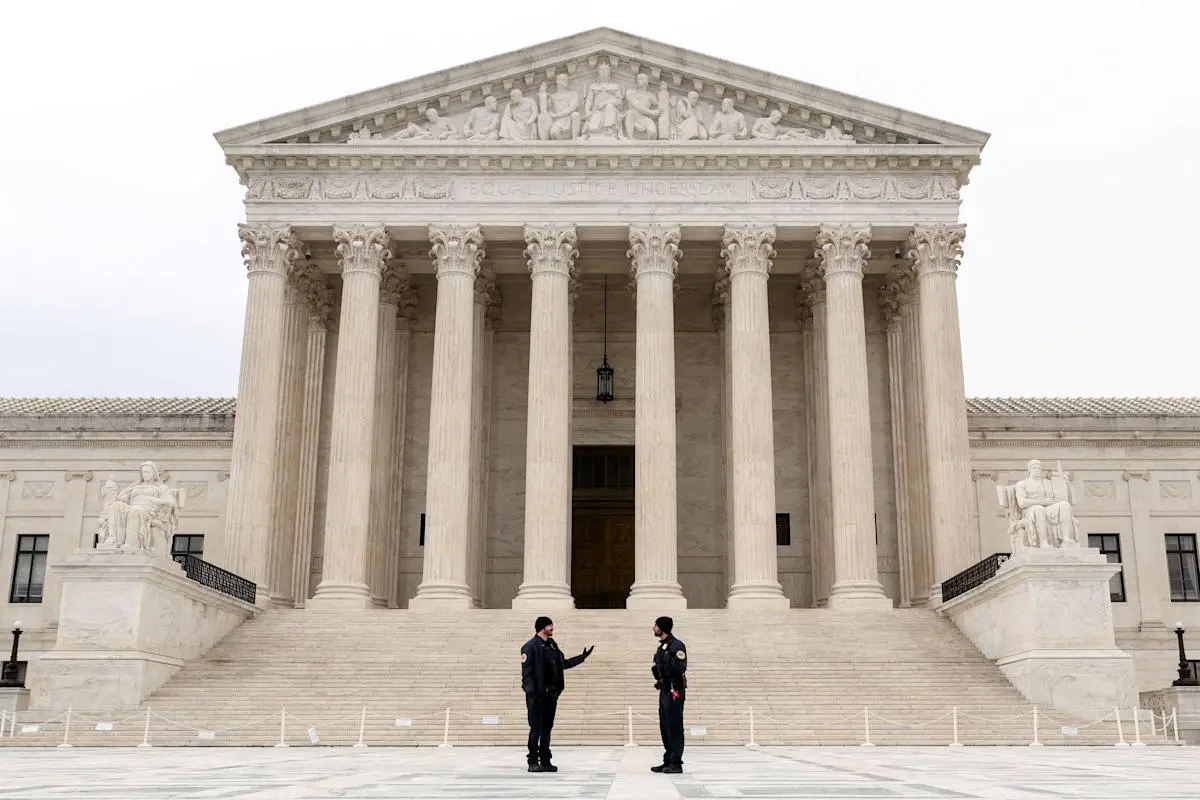
Source: Engadget
Stephen Thaler, based in St. Charles, Missouri, applied for federal copyright registration in 2018 for "A Recent Entrance to Paradise," an image depicting train tracks entering a portal surrounded by green and purple plant imagery
4
. The artwork was created in 2012 by DABUS, an AI system Thaler himself developed1
. The US Copyright Office rejected his application in 2019 and again in 2022, determining that creative works must have human authors to qualify for copyright protection2
3
.
Source: Reuters
Human Authorship Remains Bedrock of Copyright Law
US District Court Judge Beryl A. Howell ruled in 2023 that "human authorship is a bedrock requirement of copyright," a decision later upheld by the US Court of Appeals for the District of Columbia Circuit in 2025
2
4
. Thaler's legal team argued that because he created the system that generated the artwork, he should be considered its author. They contended that other countries, including China and the United Kingdom, already permit copyright for AI-generated art, and that the Copyright Office's interpretation contradicts precedent supporting technological progress1
.
Source: Decrypt
The Trump administration urged the Supreme Court not to hear Thaler's appeal, stating that "although the Copyright Act does not define the term 'author,' multiple provisions of the act make clear that the term refers to a human rather than a machine"
4
. This marks the second time the Supreme Court has rejected Thaler's requests involving AI systems, having previously declined to hear his argument about whether AI-generated inventions should be eligible for patent protection4
.Implications for AI Development and Intellectual Property Law
Thaler's lawyers warned that the Supreme Court's refusal to hear the AI copyright case represents a critical missed opportunity, arguing that "even if it later overturns the Copyright Office's test in another case, it will be too late. The Copyright Office will have irreversibly and negatively impacted AI development and use in the creative industry during critically important years"
4
5
. Thaler himself cautioned that current rules could create a "perfect storm" of low-quality AI-generated content flooding the internet alongside a wave of lawsuits from humans claiming ownership over work they didn't create1
.The Copyright Office has separately rejected applications from artists seeking copyright for AI-generated art images created using Midjourney. Unlike Thaler, who claimed his system created work independently, these artists argued they were entitled to copyright for images they created with AI assistance
4
. Last year, the Copyright Office issued new guidance stating that AI-generated artwork based on text prompts isn't protected by copyright2
.Related Stories


Broader Pattern Across Patent and Copyright Domains
The ruling aligns with similar decisions affecting AI systems and inventorship. The US Patent and Trademark Office declared in 2024 that "artificial intelligence systems, regardless of their sophistication, cannot be named as inventors or joint inventors on a patent application, as they are not natural persons"
3
. While AI systems can't be listed as inventors on patents, people can still use AI-powered tools to develop them, according to USPTO guidance2
. The UK Supreme Court made a similar determination in a case brought by Thaler, and the EU also rejected his copyright requests3
.Despite the setback, Thaler views the moment as "a philosophical milestone rather than a defeat," stating that "by bringing DABUS into the legal system, I confronted a question long confined to theory: whether invention and creativity must remain tied to humans or whether autonomous computational processes could genuinely originate ideas"
1
. He maintains that "the law is lagging behind what technology can already do," noting that while the court addressed what the statute currently allows, it didn't address what technology has already achieved1
.References
Summarized by

Navi
Related Stories
Recent Highlights

Recent Highlights
Today's Top Stories







Your Daily Dose of Curated AI News
Don’t drown in AI news. We cut through the noise - filtering, ranking and summarizing the most important AI news, breakthroughs and research daily. Spend less time searching for the latest in AI and get straight to action.

